That’s the view of Gordon Angus, Executive Director of the South African Engineers and Founders Association (SAEFA). SAEFA have appointed an independent lead negotiator to represent employers in the current wage negotiations with engineering and steel sector workers and their unions.
“The reality is that strike action will be extremely detrimental to employees and the sector as a whole,” Angus emphasizes, “not to mention the additional pressure that it will bring to bear on the already tenuous economic situation in the country.”
Gordon Angus, Executive Director of the South African Engineers and Founders Association (SAEFA).
Angus points to Jonathan Goldberg’s appointment as an independent negotiator by SAEFA, at their own expense, as a clear indication by the Association and the more than 400 businesses it represents of their sincere desire to reach a solution that will prevent strike action while also setting a solid and realistic foundation on which the sector can build going forward.
However, he points out that reaching such a solution requires the same level of commitment by the labour representatives to acting in the best interests of all parties, particularly the financial wellbeing of the employees they represent. “Offers presented by employers have been summarily dismissed by unions, indicating the absence of a sincere desire to reach a sustainable solution that benefits all parties,” Angus explains, “but rather a predisposition by the union towards strike action.”
He points in particular to NUMSA’s outright rejection of a proposal of a reduced entrylevel wage for new employees in the sector as indications of the union’s unwillingness to find solution that promotes the long-term sustainability of the sector.
“SAEFA and the other employer representative associations have repeatedly assured employees that the proposed lower hourly wage (initially proposed at R20 per hour, the same level as the national minimum wage) is only for new, unskilled employees in the sector,” he says “and that this will never be passed on to existing employed, trained and experienced workers.” However, he says that unions appear unwilling to trust that this is the case, nor that the intention behind the lower entry-level wage structure is to make it financially viable for the industry to provide further work opportunities and training to even more South Africans, thereby helping to reduce the sharply rising and wholly unsustainable SA unemployment rates.
“I am confident that, if the parties are willing to come to the table with an open mind, and a willingness to consider all viewpoints and concerns, a solution can be found that avoids the potentially devastating consequences of industrial action, Angus concludes, “but agreeing on that solution will require a sincere commitment by the employers and the union to set aside any other agendas they may have and negotiate with the best interests – both current and future – of the entire industry in mind.”
The idea of creating new high-speed mass transit systems is a hot topic for many scientists around the world.
Spurred on by technology engineering entrepreneur, Elon Musk, the race is on to create pods that can transport passengers and cargo at high speeds. Musk – the founder and cofounder of several innovative companies including Tesla (premium electric cars), SolarCity (solar energy supply), and PayPal (online payment portal) – has inaugurated the Hyperloop project with one of his companies, SpaceX. Although SpaceX was originally set up to explore aerospace manufacture and transport, with the ultimate goal of enabling colonization of other planets, Musk recognized that harnessing the expertise of aeronautical engineers could revolutionise ground transport and so set up Hyperloop.
The Hyperloop concept is being developed so that pods will travel at very high speeds along a tube, to provide an alternative to flying, rail transportation and driving, while also being safe, convenient and kinder to the environment in not using power that is dependent on fossil fuels. There are several Hyperloop sites being established around the world and in 2015 Musk launched a competition to encourage the best international student groups to push the boundaries of science and create their ideas of how pods could operate.
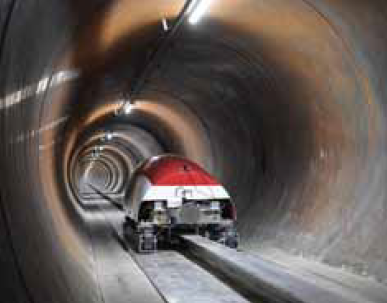
MIT’s pod carries out its test run at the SpaceX Hyperloop tunnel in California.
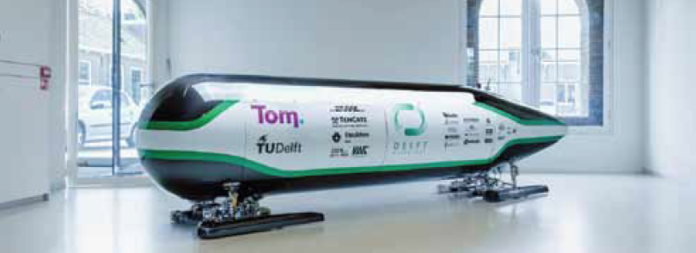
Two such top universities – Massachusetts Institute of Technology (MIT, in the US) and Delft University of Technology (TU Delft, in the Netherlands) – took part in the first phase of a competition in January this year to unveil their prototype pods at a Hyperloop test track in California. Challenged with a tunnel of one mile in length and six-feet diameter, the teams had to demonstrate that their pods could safely accelerate to speeds of up to 250 mph and break to a standstill without crashing. Both teams used magnetic levitation as their method of propulsion.
The future of transport innovation
Max Opgenoord, a PhD student who is researching transonic aeroelasticity (the interaction between the aerodynamics and the structural dynamics of aircraft) was the project leader for the MIT Hyperloop team. “It has been an exciting ride,” he says. “When we started with the competition, no one knew what a Hyperloop pod should look like, so we had incredible design freedom. And now, almost two years later, we have demonstrated that a Hyperloop pod can be built. The levitation was definitely the most challenging part of the project, because there were so many options.”
As part of the competition, the rules stipulated that participants from different study areas such as engineering, technology, manufacturing and business management should work together. Musk realized that in order for innovative ideas to become a realistic proposition for high-speed, low-carbon and scalable mass transit, a practical all-round approach would be needed.
Edouard Schneiders, an applied physics student was on the team for TU Delft’s competition entry. “It was very exciting to take part in this competition – the atmosphere was ecstatic,” he says. “Hyperloop is extremely fast and extremely efficient. It will have enormous social and economic consequences whilst vastly reducing emissions.
“Transportation has not significantly progressed since the release of the Boeing 747 and the invention of MagLev trains in 1970. The transportation industry needs to evolve and look for completely new solutions like Hyperloop in order to make a real impact.”
Experts from SpaceX and Tesla, along with university professors, judged the competititon entries. The TU Delft Hyperloop team won first prize overall, while MIT Hyperloop won an award for safety and reliability.
At the forefront of technology
Max and Edouard conducted a workshop at CWIEME Berlin to talk about their groundbreaking designs for the SpaceX Hyperloop competition and the future of transport. Both are excited to see what else is on offer at the show and hear from experts about how technology has a beneficial impact on different industries.
CWIEME Berlin is the world’s leading exhibition for coil winding, electric motor and transformer manufacturing. With seminar and workshop speakers from disciplines such as design engineering, manufacturing, R&D, procurement and management, visitors were informed about the latest trends in electronics, electric motor, transformer, generator, automotive and energy sectors.
Land scarcity has severely limited Singapore’s adoption of solar power.
Floating solar panels may be a viable alternative for the city-state surrounded by water. Floating panels could be eleven percent more efficient than solar panels placed on precious land. Pioneering technology leader ABB is providing critical components on a landmark one megawatt floating solar photovoltaic test-bed. It measures 1 hectare or 1.5 football fields. The energy generated will be fed into the national energy grid, providing electricity for up to 250 households.
“We are proud to support this important project in Singapore with our technological expertise and domain knowledge,” said Tarak Mehta, president of ABB’s Electrification Products division. “This project is perfectly aligned with our Next Level strategy around the energy revolution and is an important step in collaborating with partners to bring more renewables into the future energy mix.”
Located in the Tengeh Reservoir in west Singapore, the installation features multiple solar solutions from providers to study the performance and cost-effectiveness of floating solar platforms. ABB supplied 100 kW of market-leading TRIO-50 solar inverters to Phoenix Solar, one of several system integrators for the project. These essential components convert the direct current produced in solar panels into alternating current for use in electrical grids. Additionally, ABB low-voltage molded case and miniature circuit breakers protect the electrical circuits on the water.
In Singapore – a country with an area of only 719 square km and a population of 5.6 million – high average annual solar irradiation of about 1,500 kWh/m2 makes solar an attractive source of renewable energy. Floating solar platforms will be naturally cooled by the surrounding water, which increases the efficiency of the energy yields significantly. A study has found that the natural cooling effect of the water beneath the solar cells makes them up to 11 percent more efficient than solar panels placed on land. In a synergistic effect, the floating platform helps reduce evaporation of the valuable water.
Although exports from the European machine tool industry were 3% lower in 2016, CECIMO members were outperforming internationally as the global MT trade decreased around 7%.
The global machine tool consumption contracted 6-8% in 2016. CECIMO countries exported machine tools worth around 18.3 billion euro in 2016, accounting for the clear majority (96%) of the European exports in the sector and for almost one of every two machine tools sold in the foreign markets. It is difficult to make a forecast for 2017, as plans for international trade barriers seem to emerge. Though, if the business climate remains unchanged, CECIM0 exports are likely to grow to a level of 19 billion euro. Amongst the reasons of this positive trend, Dr Frank Brinken, Chairman of the CECIMO Economic Committee and Vice-Chairman of Starrag Holding AG, points out that “digitization and future proven high quality standards increase the attractiveness of the European MT portfolio in foreign markets”.
Luigi Galdabini, CECIMO President
On the domestic European side, modernization of production equipment and previously postponed investments for capital goods will likely contribute to a rise in machine tool sales. The European consumption is expected to pass 18 billion euro in 2017 and to retain a solid market share in global MT consumption above 26%. Such increment relates to an annual market expansion of nearly 3.5 percent.
Finally, the levels of investment, necessary to modernize manufacturing with digital ready equipment, are still insufficient. However, the growing acceptance and speed of the digitization of our industry support the economic recovery in Europe, while political stimuli and the positive sentiment among European businesses should drive investment in the MT sector upwards.
Filip Geerts, CECIMO Director General
European machine tool builders favour data-driven business models
Data is one of the most important production factors and European machine tool builders favour data-driven solutions that improve machine performance, maintenance and environmental efficiency. Nevertheless, the industry is still at the early phases of understanding the full scope of data-driven solutions, and we need a future-proof public policy to underpin the growth of European machine tool builders.
Frank Brinken, Chairman of the CECIMO Economic Committee and Vice-Chairman of Starrag Holding AG.
“We are glad to see that European policymakers put connectivity in industrial context at the forefront, and that they foresee a dialogue with trade associations for a EU framework on machine-generated data. Yet, we remind policy-makers that industrial data mirrors processes, products and systems, so it’s context-sensitive and often contains trade secrets. The goal is not to implement new premature rules, but rather, to increase our companies’ technical and organizational capacity. Together with policy-makers we should generate a common understanding fit for the digital era” says Mr Filip Geerts, CECIMO Director General.
So, MT industry does not favour strict regulations on access rights to data with a top-down approach, which might hamper legal certainty and trust in data economy. Access to data generated by machines is defined by bilateral contracts between businesses, which seems to work sufficiently well for now. “To build a thriving data economy in Europe, the complex manufacturing sector needs the European institutions to be cautious in designing policies on data rights. Any strict regulation might be perceived as an intervention in the market and block investment in data-driven solutions. Businesses should negotiate and decide freely the extent of the industrial data to be shared” adds Mr Luigi Galdabini, CECIMO President. Policy-makers should rather provide long-term certainty, raise awareness on new business models, and support highspeed internet across Europe, with a focus on SMEs.
Lastly, the machine tool sector is becoming increasingly global, trading within and beyond Europe. As data economy cannot be built at national level, the EU should increase its efforts on free flow of data across the EU and on data exchange with third countries.
The world’s passenger aircraft fleet above 100 seats is set to more than double in the next 20 years to over 40,000 planes as traffic is set to grow at 4.4 percent per year, according to Airbus’ latest Global Market Forecast 2017-2036.
Over this period, increasing numbers of first time flyers, rising disposable income spent on air travel, expanding tourism, industry liberalization, new routes and evolving airline business models are driving a need for 34,170 passenger and 730 freighter aircraft worth a combined total of US$5.3 trillion. Over 70 percent of new units are single aisle with 60 percent for growth and 40 percent for replacement of less fuel efficient aircraft.
A doubling in the commercial fleet over the next 20 years sees a need for 530,000 new pilots and 550,000 new maintenance engineers and provides Airbus’ global services business a catalyst to grow. Airbus has expanded its global network of training locations from five to 16 in the space of three years.
Air traffic growth is highest in emerging markets such as China, India, the rest of Asia and Latin America and almost double the 3.2 percent per year growth forecast in mature markets such as North America and Western Europe. Emerging markets currently home to 6.4 billion of the world’s 7.4 billion population will account for nearly 50 percent of the world’s private consumption by 2036.
“Air travel is remarkably resilient to external shocks and doubles every 15 years,” said John Leahy, Chief Operating Officer – Customers, Airbus Commercial Aircraft. “Asia Pacific continues to be an engine for growth, with domestic China to become the world’s largest market. Disposable incomes are growing and in emerging economies the number of people taking a flight will nearly triple between now and 2036.” Over the next 20 years Asia Pacific is set to take 41 percent of new deliveries, followed by Europe with 20 percent and North America at 16 percent. Middle class numbers will almost double to nearly five billion as wealth creation makes aviation even more accessible particularly in emerging economies where spending on air travel services is set to double.
In the twin aisle segment, such as the A330 Family, A350 XWB Family and the A380, Airbus forecasts a requirement for some 10,100 aircraft valued at US$2.9 trillion.
In the single aisle segment, such at the A320neo Family, Airbus forecasts a requirement for some 24,810 aircraft valued at US$2.4 trillion. Airlines adding capacity by upsizing to the largest single aisle, the A321, will find even more business opportunities with the A321neo thanks to its range up to 4,000nm and unbeatable fuel efficiency. In 2016, the A321 represented over 40 percent of single aisle deliveries and over 60 percent of single aisle orders.
Airbus envisage de renoncer au grand escalier caractéristique de l'A380 alors qu'il s'efforce de relancer les ventes de son superjumbo, a appris Reuters de sources industrielles. /Photo d'archives/REUTERS/Pascal Rossignol
Providing strong evidence that the commercial aircraft market remains healthy, Airbus announced $39.7 billion worth of new business during the 2017 Paris Air Show.
The company won commitments for a total of 326 aircraft, including firm orders for 144 aircraft worth $18.5 billion and MoUs for 182 aircraft worth $21.2 billion.
A320 Family aircraft sales and commitments were robust, with business accounting for a total of 306 aircraft worth $33.8 billion. This total comprises 132 firm orders worth $14.7 billion and MoUs for 174 aircraft worth 19.1 billion. In the Widebody segment, Airbus won business for 20 aircraft worth $5.9 billion, comprising 12 firm orders worth $3.6 billion and MoUs for eight aircraft worth 2.3 billion.
John Leahy, Chief Operating Officer Customers, Airbus Commercial Aircraft said, “our commercial success this week at Paris extends our already diversified order backlog to a new industry record of over 6,800 aircraft, with 326 orders worth $40 billion.”
Further to the new orders, the show also saw a repeat order from DHL Express for four more A330-300 Passenger-To-Freighter conversions, in partnership with EFW and ST Aerospace.
At this year’s show, Airbus not only marked a solid sales tally but also extended its value offering at both ends of its commercial product portfolio. In the Single-Aisle family Airbus decided to offer the Airspace Cabin brand – which, on the A320, includes the biggest overhead bin in its class. For the A380, Airbus has increased revenue-earning potential with even better fuel efficiency, thanks to enhanced large winglets, greater cabin capacity and a new higher take-off weight capability to increase its payload-range.
In addition, Airbus this week launched a new open aviation data platform called Skywise to support the digital transformation of the industry and add value for our customers’ operations. Skywise combines Airbus’ aerospace expertise with advanced data analytics solution provided by Palantir Technologies.
India Day at EMO Hannover 2017 will be showcasing potentials for production technology and capital investment.
Are Modinomics fuelling an industrial renaissance in India? This question will be addressed during the India Day hosted by the VDW (German Machine Tool Builders’ Association) at EMO Hannover 2017 on 20 September. Investors and rating agencies on the Indian stock exchange, at least, are anticipating good business opportunities in the medium term. Jeremy Leonard, Director of Global Industry Services at the British research institute Oxford Economics notes that “more scope for proactive economic stimuli when it comes to the refinancing costs of the commercial banks, plus the planned tax reform for goods and services, could unleash some accelerated dynamics.”
A view that’s confirmed by V. Anbu, Director General & CEO of the Indian Machine Tool Manufacturers’ Association. “Game-changing initiatives such as Make in India, opening up of strategic sectors to foreign direct investments and the implementation of One nation, one tax for goods and services have spurred manufacturing growth”, is his firm conviction.
India’s economy is growing
India’s economy is indeed expanding, as is its industrial production output. In the machine tool industry, the nation ranks 8th among the world’s largest markets, with a volume of most recently 1.7 bn euros in 2016. This corresponds to growth of eleven per cent in euros. For 2017/2018, too, a continuingly moderate increase in consumption is predicted. India imports around 70 percent of the machine tools it needs. In 2016, these were worth approximately 1.2 bn euros.
EMO’s India Day aims in particular to elucidate the perspectives for the mechanical engineering, automaking and aviation user sectors. Dr. Andreas Wolf from Bosch Ltd., for example, sees potential in the automotive industry. “Triggered by the new legislation in regard to vehicle safety and emissions, we’re going to be seeing rapid implementation of modern-day technologies,” he says. Milind Madhav Shahane, Member of the Board of Directors at Tata Advanced Materials Ltd., sees major opportunities in the growing importance of privately owned companies: “since the turn of the century, India’s aviation industry has been experiencing dynamic growth at privately managed companies, supported by large conglomerates and their engineering expertise.” This is one of the main reasons why United Grinding has opened a subsidiary in Bangalore and set up a technology centre. “This enables us to perform meaningful tests on customers’ components and to offer realistic training for machine operators,” says C.R. Sudheendra, President India Operations of United Grinding.
India’s government keen to attract investors
EMO’s India Day will also be supported by the Indian government. We shall be honoured to host Shri N. Sivanand, Joint Secretary of the Department of Heavy Industry in the Ministry of Heavy Industry & Public Enterprises. He will be spotlighting the government’s initiative for boosting the manufacturing sector. We shall also be welcoming six delegations of high-ranking Indian entrepreneurs, which will be organized and accompanied by various Indian customer associations and the staff of the VDMA’s liaison office in Kolkata.
“We are particularly gratified to note that it will be almost exclusively Indian speakers or pundits who are thoroughly familiar with the country from their own career experience there who will be presenting their expertise on the India Day,” says Gerhard Hein, who is the co-organiser of the India Day at the VDW, who are hosting EMO. “So we’re expecting an exciting event, offering exceptional added value to everyone involved.”
Production scientists of the Fraunhofer Institute for Production Systems and Design Technology (IPK) are able to foresee the future of machine tools a lot more clearly and accurately with the aid of predictive maintenance: it helps its users to identify the optimum juncture for maintenance work, to avoid lost production, and to optimise the processes involved.
In our interview, Eckhard Hohwieler, Head of Production Machines and Line Management and Claudio Geisert, both from the Fraunhofer Institute for Production Systems and Design Technology (IPK) in Berlin, report on the salient considerations and the role EMO Hannover 2017 plays in their work.
To quote Eckhard Hohwieler, Department Manager Production Machines and Line Management, “perhaps at EMO Hannover 2017 someone will already be presenting the Machine Tool 4.0, which tweets on Twitter and lets visitors communicate with it on their smartphones.” Photo: IPK
Eckhard Hohwieler, how does predictive maintenance (PM) differ from condition monitoring?
EH: Condition monitoring detects and monitors the wear-and-tear status, whereas predictive maintenance forecasts the putative development of the machine’s future status, and plans the appropriate maintenance work required.
Claudio Geisert, how does PM specifically benefit the owner of machine tools?
To quote Claudio Geisert, the manager responsible at the IPK for condition monitoring and maintenance, “thanks to complete-coverage data acquisition and storage, service personnel can see when and under what circumstances problems occurred for the first time, and thus find it easier to identify how they can be remedied.” Photo: IPK
CG: Care and maintenance are governed by the condition of the machine. This means the staff concerned carry out precisely the care and maintenance work that is actually required. Effective PM reduces the number of maintenance routines needed and increases machine availability levels. It also enables line use to be more efficiently planned, because care and maintenance work will now be carried out on pre-specified dates.
One of your specialisms is process monitoring and condition diagnostics: can you give us a highlight from your research work?
EH: For one machinery manufacturer, we have created a tool monitoring feature without any additional sensors or other electronics. A software package integrated into the control system monitors tool wear-and tear and fracturing. On this basis, we developed further algorithms enabling the machine’s condition and behaviour to be checked. This allows an employee to determine weak points with astonishing accuracy using the characteristic values of the drive shafts: even textile flaws in belt drives have been discovered in this way.
Where are the data actually located – at the IPK or the company concerned? Who owns the data, and who is entitled to use them?
CG: The data created during the utilization phase belong (unless something to the contrary has been contractually agreed) to the operating company. As a rule, the companies concerned will not reveal these data to outsiders, since they fear that sensitive information will be among them, or can be derived from them. One solution commonly adopted is to install an appropriate server inside the company’s own network. This, however, will in its turn deprive the manufacturer of an option for gaining additional insights into the behaviour of his machines in the field. In order to master this problem, a relationship of mutual trust between the manufacturer and the operator is always imperative, though contractual safeguarding for utilization of the data is indubitably helpful.
How has this new form of monitoring evolved into PM at your institute?
EH: While working on a project on e-maintenance, we took a long, close look at how information from condition monitoring can be utilized for planning maintenance work. As an aid here, we used an electronic service checkbook that specifies the next worksteps required. It also explains how users are supposed to prepare and carryout the maintenance routines; and where they can order the requisite tools.
Is there a practical example of a PM solution that you’ve developed together with a machine tool manufacturer?
CG: The automotive industry demands guarantees on availability from the machinery manufacturers, plus particulars of the anticipated lifecycle costs. This, however, necessitates complete-coverage monitoring of the machine involved. Our solution developed in conjunction with the grinding machine manufacturer Schaudt-Mikrosa – electronic monitoring of the drive elements using the machine’s own control system – acquires and evaluates all messages and signals from the machine, which the system then uses to determine the dynamic behaviour of the drive shafts and spindles over a lengthy time period. This solution is meanwhile being utilized in all machines.
How does the PM tool benefit the manufacturer?
EH: Schaudt-Mikrosa is already using it as an important tool for purposes of quality assurance – in machinery acceptancetesting, for example, or in the warranty phase to clarify the causes of damage, such as collisions between drive elements, tools and components.
CG: The service personnel use the tool for looking backwards into the past: thanks to complete-coverage data acquisition and storage, they see when and under what circumstances problems occurred for the first time, and can thus more easily identify how they can be remedied.
Monitoring and condition diagnostics involve huge quantities of data. When acquiring 20 values (64 bits) per millisecond, the electronics will already be storing more than four gigabytes during an 8-hour shift, according to the Machine Tool Laboratory in Aachen. How do you proceed for evaluating this kind of big data?
EH: It’s not a problem for us, because we don’t acquire the raw data, but true to our motto of smart data, not big data, we determine and store only the typical characteristic values. My impression is, you know, that quite often, big data accumulate merely because it’s possible to store huge quantities and generate redundant data copies. It’s more sensible to make an intelligent pre-selection near the machine concerned before storage, so that a reduced data record is then transferred to the cloud.
How can users ensure that a reduced data record does not overlook effects that can then no longer be reconstructed? What options are already available for making a selection?
CG: Compression of raw data to selected characteristic values always entails concomitant losses. So the possibility cannot be ruled out that some effects will be overlooked. However, this also applies to data acquisition: what physical variables are to be actually acquired using what sensors with what accuracy? Without a certain amount of domain-specific expert knowledge, a monitoring concept cannot be translated into viable reality.
In order to make the correct selection, users can utilise machine learning processes in the development phase. This helps the expert to choose meaningful characteristic values. It must always be remembered that for developing a sustainable monitoring concept you need both knowledge of the fundamental theory involved and experiential knowledge as well.
What are the long-term benefits of predictive maintenance for the manufacturer?
EH: You get a fleet effect: over the course of the production lines’ lifecycle at the customer’s facility, you see, huge amounts of information are created, which enables the manufacturer’s service capabilities to be improved.
Please tell us about your personal vision: what – in conjunction with Industry 4.0 – might an optimum PM solution look like?
EH: It would be conceivable that the machine itself utilises the information created in order to optimise its process or to call the maintenance service.
What are you expecting (not least in regard to your research work and predictive maintenance) from your visit to EMO Hannover 2017, the world’s premier trade fair for the metalworking sector?
EH: I’m keenly looking forward to seeing how the machinery manufacturers are responding to the issue, and what apps they will be presenting. Perhaps, too, someone will even be premiering the Machine Tool 4.0, one that tweets on Twitter and allows visitors to the EMO to contact it on their smartphones.
The interview was conducted by Nikolaus Fecht, specialist journalist from Gelsenkirchen
A look at actual practice: predictive maintenance in the machine tool industry
To quote Dr. Holger Rudzio, Managing Director of DMG Mori Software Solutions GmbH from xsKempten, “predictive maintenance can be implemented even without an Industry 4.0 approach.”
Machine tool customers’ interest in and requirements for predictive maintenance are increasing. Industry 4.0 is perceived here as an accelerating factor. “Predictive maintenance is also a part of Industry 4.0, even though our customers definitely view them in a highly differentiated context,” says Dr. Holger Rudzio, Managing Director of DMG Mori Software Solutions from Kempten. “Thus predictive maintenance can be implemented even without an Industry 4.0 approach.”
Predictive maintenance, and thus the requirements of DMG Mori’s customers, aim to detect possible defects of a machine or problems in a process before they actually occur. The company possesses the requisite predictive maintenance components, including the relevant programs for acquisition, evaluation and visualisation (see “Joint development of Machine Tool 4.0 with INA Schaeffler”) sensors in the machine record even the tiniest of changes, which are compared with the relevant limit values so as to predict future events from them.
Artificial intelligence in the data cloud
The acceptance and the success of predictive maintenance stand and fall with the quality of the information obtained and the benefits to the customer of the predictions concerned. This is why DMG Mori is prioritizing the development of high-performance evaluation logics, so as to join forces with its customers to effectively filter out the necessary information from the mass data and to use it to calculate dependable predictions for its machines and its customers’ processes. To quote Dr. Rudzio, “in future, cloud-based solutions featuring artificial intelligence will gain steadily in perceived importance. We shall be presenting the relevant results to the trade public at EMO Hannover 2017 in Hall 2.”
For more than ten years now, Schwäbische Werkzeugmaschinen from Waldmössingen has been working on comprehensive data acquisition, under the term life data, designed to support predictive maintenance. There’s increasing interest in this, as Sandra Schuster, Industrial Data Services, has observed, “in the past one or two years, it’s been increasingly evident that due to the trend towards Industry 4.0, we are seeing significantly greater acceptance of the cloud concept, or at least the will and the desire to engage with it.”
Changing awareness among customers
To quote Sandra Schuster, Industrial Data Services, Schwäbische Werkzeugmaschinen GmbH from Waldmössingen, “the trend towards Industry 4.0 has created significantly greater acceptance of the cloud concept.” Photo: Schwäbische Werkzeugmaschinen
The company used to have to take the initiative in approaching customers in order to talk to them about data acquisition, and in some cases this needed a lot of persuasion. But meanwhile, many customers are keen to use the products from Waldmössingen, and in most cases are grateful for advice as well. To quote Sandra Schuster, “the requirements involved, however – meaning cost reduction, transparency in the production and maintenance processes, plus better resource planning – have basically remained the same.” It’s only that awareness has altered in terms of how companies are approaching the issue, she adds.
Digital transparency is also a major priority with the manufacturers of systems for sheetmetal forming. For example, the Machine Monitoring System (MaMS) from Schuler in Göppingen provides entirely new insights into presses: thanks to comprehensive line monitoring, the user can upgrade availability levels, improve production and part quality, and downsize the energy consumption involved. The MaMS is part of Schuler’s Smart Press Shop, in which the company collects solutions for networking in the field of forming technology. It brings together data for intelligent diagnostics, condition, process and energy monitoring, and production data. This means a company can use the MaMS to collect and analyse characteristic values and data of all kinds. Line owners can thus obtain an overview of the production status and the requisite basis for calculating the overall equipment efficiency (OEE). The system also acquires and archives for every part produced all the data of importance for quality (e.g. typical process parameters like cycle time or mechanical strength of the formed materials). This enables the user to provide the requisite documentary evidence regarding safety-related components in the automotive or aircraft industries, for example – experts speak of parts subject to mandatory documentation.
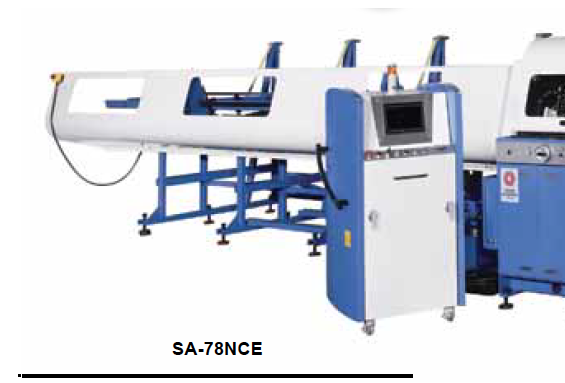
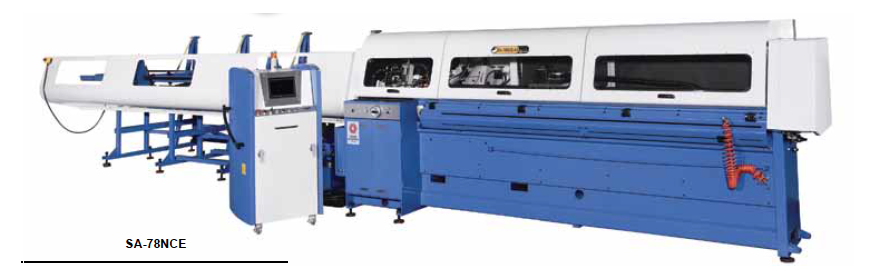
The SA-78NCe high tensile steel tube cutting line together with the DeF-FA/76-V chamfering system can connect to the SOCO BDB-70 deburring system by an automation cell, covering loading, cutting, end-finishing, washing, length measuring and stacking.
Cutting lines with deburring system
In general, the deburring method has been more widely used within the tubing industry. Using wire brushes, the operator can easily remove the burrs at the end of the tubes through manual and automatic systems and for single or double tube ends.
The brushes are able to reach the entire surface, both internal and external through different movements that are perpendicular to the tube, as well as remove burrs on the face of the tube. Variations of this process may include different types of brushes for specific applications, as caused by requirements such as deeper burr removal depths, tube material and deburring cycle time. Further automating existing cutting processes, SOCO offers the SA-78NCE high speed cutting line together with the SOCO BDB-70 double tube ends deburring machine. This powerful combination is capable of cutting and deburring various tube shapes and profiles such as round, rectangular, square and oval tubing.
Cutting lines with chamfering system
Tube chamfering usually involves a set of tooling made to size, clamping the part while the chamfering head moves in and out of the tube ends.
It is able to form an exact chamfering angle, allowing the tube to fit into other parts for future processing. It may also chamfer the external and internal parts of the tube, while creating a smoothened surface. It can also be executed with one or two sides of the tube at the same time. Since the stroke of the chamfering head may sometimes be controlled, so can the tube length after cutting and chamfering, as well as the chamfering depth. In SOCO, besides the standard functions of SA-76NC, the SA-76NC in-line may also be a part of complete Automation Cells for tubing. The working process includes loading, feeding, cutting, chamfering, deburring , air clearing and tube collecting. It brings time saving as well as higher throughput and performance.
Co-existing solutions
Until recent years, the deburring process through wire brushes has been the preferred method due to its encompassing range and in general, it also required less set-up time. However, as production requirements changed, and through new developments in the chamfering field, the deburring systems have been gradually replaced by chamfering machines in high production environments for different reasons and needs. Overall, both end finishing processes will continue to co-exist in the global market for different requirements and needs, but it is up to each company to decide and choose the most suitable and efficient method for their production environment.
For more information, contact PIM – Tel: 011 022 4648
The history of Amada cutting-edge bandsaw technology dates back to 1946; ever since our goals have been to provide customers with increased productivity and reliability.
While technology evolved, we embraced CNC automation as a core strength, thus improving throughput. Today we are uniquely positioned to help customers expand production capabilities and growing their business.
No two customers’ needs are exactly alike. Finding the right solution means thoroughly understanding objectives and configuring a solution that matches them precisely. Our engineers have decades of industry experience which promote achieving specified goals with a process that fits and enhances a customer’s work flow.
From the early beginnings of bandsaw machinery produced by Amada, (many of which are still running today), Amada has strived to offer machines that not only meet customers’ needs, but exceed them by offering features that were once considered impossible.
The technology of the bandsaw demonstrates the ability and limitations of the blade. As blades advance in technology, so do the machines utilizing them. Amada, as a proud manufacturer of both the machines and the blades, continues to research these developments and incorporates customer feedback to produce constantly evolving solutions.
Amada supplies bandsaw machinery and blades, such as the HK / HD series for mitre cutting, the semi-automatic H series, fully automatic HA / HFA series and the VM vertical series. The latest bandsaw technology is reflected in models such as the Dynasaw 430, the PCSAW with pulse cutting technology and CMB high speed circular saws.
Some features include out of square cutting detection, motion detectors to monitor the blade for jamming or breakage while cutting and quick approach arms. Add to this no work limit switches and work lights, hydraulic blade tensioning, variable blade speed control, vice pressure control units and positively driven wire brushes. 9 times feed for cutting long lengths and cut-off counters ensure the correct number of cuts. All these features, assist semi-skilled workers in the operation of the machines.
Certain models can be left to run unmanned on larger batch runs, thus allowing staff to do other important jobs at the same time. Take-up conveyors and tripod stands are available making material handling simple during the loading and cutting process.
Models available start with the entry level of 250mm capacity, which are highly popular and favourably priced. With larger steel suppliers all utilizing Amada bandsaws daily, testimony is given to their accuracy, reliability and longevity. Cutting accuracies are obtained right down to 0,2mm. With such accuracies, the need for secondary machining processes is greatly reduced and in some cases eliminated.
The latest additions to the Amada bandsaw range is the PCSAW, with either single pulse cutting action or double pulse cutting action. The PCSAW series is designed to offer high cutting rates, high precision, low noise and long blade life.
Vibration has always been an unwanted characteristic of metal sawing when cutting too fast. It leads to decreased blade life, noise and uneven or inaccurate cutting. By introducing a controlled pulsating motion to the blade through either an induction motor or a servo motor, all unwanted vibrations are eliminated and most efficient metal cutting is achieved. Blade temperature is reduced considerably during the process, and this together with positive chip removal through a twin wire brush system and a large area chip conveyor all enhance blade life and reduce running costs. All PCSAW bandsaws are operated through the on-board userfriendly CNC control.
The HPSaw (High Performance Saw) is possibly the fastest bandsaw in its class with the latest in cutting speed innovation and the ability to cut at up to 1.5 times faster than the high speed circular saws.
The specially designed AXCELA HP1 blade for this machine also reduces material wastage by up to 60% and guarantees accurate cutting.
Circular sawing machines are the optimal technology for realizing reduction in cycle time and high-precision cutting needed for steel bar cutting at high speed. An automatic loading table for continued cutting operation is supported by a CNC powered cut-in control for ease of operation. In perfecting functionality of these machines, Amada has developed a unique carbide tip circular blade that cuts cleanly, generating virtually no burrs.
A full range of bi-metal bandsaw blades are produced by Amada to compliment machine technology. As mentioned previously, a bandsaw demonstrates the ability and limitations of a blade. This means that a machine is only as good as the blade being used. Amada blades have earned the reputation of extreme reliability and longevity. All blades are manufactured in Japan to the most stringent quality standards and utilizing the latest in electron beam welding methods. These measures ensure that premature blade breakage is almost unheard of. The comprehensive range of blades available is tailor-made for all types of cutting conditions on all types of steels and profiles.
Robustness of Amada machinery, combined with longevity of Amada blades and a highly dedicated backup policy provide Amada customers, with total peace of mind.
For more information, contact Amada – Tel: 011 453 5459











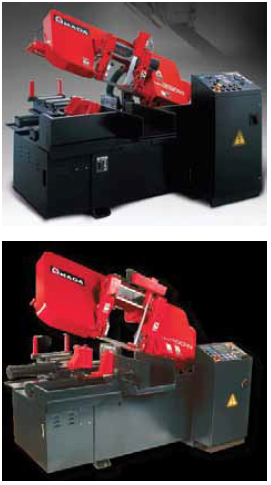 Amada supplies bandsaw machinery and blades, such as the HK / HD series for mitre cutting, the semi-automatic H series, fully automatic HA / HFA series and the VM vertical series. The latest bandsaw technology is reflected in models such as the Dynasaw 430, the PCSAW with pulse cutting technology and CMB high speed circular saws.
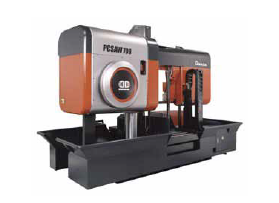 Models available start with the entry level of 250mm capacity, which are highly popular and favourably priced. With larger steel suppliers all utilizing Amada bandsaws daily, testimony is given to their accuracy, reliability and longevity. Cutting accuracies are obtained right down to 0,2mm. With such accuracies, the need for secondary machining processes is greatly reduced and in some cases eliminated.
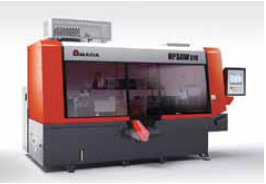 Vibration has always been an unwanted characteristic of metal sawing when cutting too fast. It leads to decreased blade life, noise and uneven or inaccurate cutting. By introducing a controlled pulsating motion to the blade through either an induction motor or a servo motor, all unwanted vibrations are eliminated and most efficient metal cutting is achieved. Blade temperature is reduced considerably during the process, and this together with positive chip removal through a twin wire brush system and a large area chip conveyor all enhance blade life and reduce running costs. All PCSAW bandsaws are operated through the on-board userfriendly CNC control.