Home Blog Page 85

EURODRIVE Opens New Office In Kenya

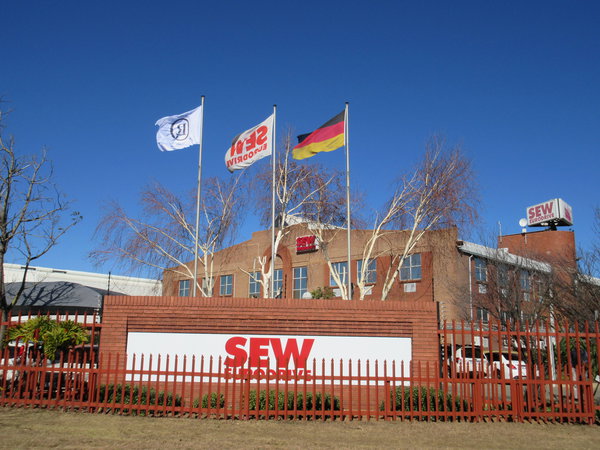
East Africa represents a major growth area for the drive and automation technology specialist, SEW-EURODRIVE South Africa MD Raymond Obermeyer comments.

“We have managed to secure a lot of business in Africa, and I see it contributing a large percentage of our turnover going forward.”

This growth is largely due to the fact that the SEW-EURODRIVE brand is well-entrenched in Africa, especially in diverse sectors such as mining and agriculture. In addition, the outward focus on expansion on the continent is necessary to counter the prevailing socioeconomic climate in South Africa. “That is the determining factor. We need growth, political stability and business confidence in order to ensure the continued sustainability of the business.”

SEW-EURODRIVE remains fully committed to South Africa, however, with the main Johannesburg manufacturing facility relocating to a new 50 000m2 site in an adjacent industrial business park. Property rights for the new development are expected to be secured by September, following which a decision will be taken as to the exact makeup of the new facility. This is because South and east Africa now fall under the ambit of the South African head office, including Tanzania, Kenya, and 14 other countries.

“At present we are looking after 22 countries in Africa from the South African operation. Therefore the construction of the new facility will very much be in line with our expansion strategy for the continent. We will have to ensure that we are able to accommodate future growth in all of these markets. We are very confident about our prospects in Africa, and continue to do well in a lot of countries.” SEW-EURODRIVE’s new branch in Tanzania, staffed by 13 people and functioning as an independent subsidiary, looks after a number of countries in East Africa itself, including the DRC, Uganda, South Sudan, Ethiopia and Somalia, among others. The importance of Tanzania as a regional hub is underscored by the fact that it is undergoing significant infrastructure development. “We have full technical back-up and service facilities in support of the many projects we are involved with there, from road to rail and ports and harbours,” Obermeyer concludes.

HURCO South Africa Appoints Agent In The Eastern Cape

Anzoset has been appointed Eastern Cape agent for Hurco South Africa.

While Anzoset will take care of existing Hurco customers in the Port Elizabeth and East London area, the company will promote the entire range of Hurco products in the Eastern Cape.

Shaun Schoeman of Anzoset can be contacted on 041 364 2078 or alternatively Carl Barkhuizen on 071 360 5286.

Social Compact For Stability And Investment

In the face of slow economic growth and rising unemployment, South Africa needs a social compact between the government, business and labour to foster labour market stability and foreign investment, Steel and Engineering Industries Federation of Southern Africa CEO Kaizer Nyatsumba said recently.

Steel and Engineering Industries Federation of Southern Africa CEO Kaizer Nyatsumba

Speaking at the recent Southern African Metals and Engineering Indaba, held at the IDC Conference Centre in Sandton, Nyatsumba emphasized the importance of a social dialogue on matters affecting the country’s social partners.

“The recent conclusion of the threeyear wage settlement in the metals and engineering sector bears testimony to the commitment to collaborate and cooperate for social benefits. SEIFSA is delighted that the wage agreement was reached without industrial action. Companies in this sector are taking strain from various factors, including the influx of cheap imports and soft demand for exports.“There is no doubt that any form of industrial action would have brought the sector to its knees. With the negotiations behind us, we now look forward to further collaborations with government and labour to ensure the sector’s sustainability and global competitiveness. The cooperation which led to the successful conclusion of the negotiations sent the right signals because there is a correlation between labour stability and foreign investment,” Nyatsumba said.


APDP – Success Despite Difficult Global Economic Conditions

Speaking at the 3rd Southern African Metals and Engineering Indaba in Sandton recently, Renai Moothilal of the National Association of Automotive Components and Allied Manufacturers said the APDP was a success despite difficult global economic conditions.

“The APDP stabilized production that could have gone significantly south if there was not that kind of support,” Moothilal said.

He said the programme was designed in 2007/08 when there was a view that automotive production in South Africa could grow to 1.2 million. “It did not turn out that way. We all understand what happened in the global economy,” he said, referring to the global economic crisis.

Renai Moothilal of the National Association of Automotive Components and Allied Manufacturers

Speaking during a session on the APDP at the two-day conference, National Association of Automobile Manufacturers of South Africa (Naamsa) Director Nico Vermeulen said the automotive industry had grown significantly since 2000. He said the industry represented one third of all manufacturing in South Africa. “The industry is heading for a million vehicles produced in this country, the bulk of which will be exported, within the next four to five years.

“The important point is, as the automotive production expands and as exports expand, the metal and engineering sector will benefit. As localization deepens, the metal and engineering industry will benefit,” Vermeulen said.

He said the automotive industry was fortunate that government had provided support and policy certainty, enabling multinational companies to make significant investments. He, however, highlighted the importance of labour stability for the industry to reach the one million units mark.

Nico Vermeulen Director of the National Association of Automobile Manufacturers of South Africa (Naamsa)

Vermeulen was also optimistic about prospects of exports to the rest of Africa. Most African countries were reeling from the effects of the low oil price and poor policy choices. “That will change. Africa will offer opportunities going forward,” he said.

Speakers on the first day of the conference included ANC Treasurer-General Dr Zweli Mkhize, Minister of Economic Development Ebrahim Patel, ANC Member of Parliament Dr Makhosi Khoza, independent director of companies Dr Mamphela Ramphele, Manufacturing, Engineering and Related Services Sector Education and Training Authority (merSETA) CEO Dr Raymond Patel, Manufacturing Circle CEO Philippa Rodseth and Aurik Business Accelerator CEO Pavlo Phitidis.

South Sudan Is Open For Business

A group of South Sudanese businesspeople who are in South Africa on a mission to woo investors to the world’s youngest country are optimistic that their message will touch the right cord amongst the local business community.

The visit of the six-member group is funded by the Department of Trade and Industry (the dti). It is part of the department’s efforts to increase trade and investments between South Africa and South Sudan.

The group also got an opportunity to market their country’s investment opportunities at the two-day Infrastructure Africa Business Forum which was held in Sandton.

The leader of the mission and the General Secretary of the South Sudan Chamber of Commerce, Mr Simon Akuei Deng is optimistic that the mission will bear good results that will see more South African companies investing in his country.

“There is already a presence of South African companies in South Sudan and we are on a mission to woo more companies to follow the example of SAB Miller, MTN and Standard Bank to come to our country and invest,” said Deng.

He added that another objective of the mission was to identify investment and trade opportunities in South Africa that companies in South Sudan can take advantage of.

“South Sudan is open for business with unlimited investment opportunities in the mining, agricultural and road infrastructure sectors. The SA companies already doing business there can testify to this,” said Deng.

He expressed confidence that businesspeople who are willing to venture into South Sudan will not be discouraged by the country’s political situation.

“Businesspeople are risk takers by nature and are willing to take calculated risks everywhere they invest their money. All countries have their own risks and daring businesspeople turn risks into opportunities. For instance, investors take calculated risks when they invest their money in South Africa, as they do anywhere else in the world. Risks have not stopped companies investing in South Sudan and doing good business there,” stressed Deng.

Speaking during a panel discussion on potential investments in South Sudan at the Infrastructure Africa Business Forum, the dti’s Foreign Economic Representative in South Sudan, Dr Julius Nyalunga said the country has a huge economic potential despite the socio-political challenges that it experiences.

SA Committed To Increasing Two-Way Trade With Mozambique

The High Commissioner of South Africa to Mozambique, Mandisi Mpahlwa says South Africa is committed to increasing a two-way trade between South Africa and Mozambique.

Mpahlwa was speaking during the South Africa-Mozambique business networking session that was hosted by the South African Embassy in Maputo recently. The session was attended by businesspeople from South Africa who participated in the Maputo International Trade Fair, FACIM, as well as key stakeholders from the Mozambican business community and government.

“It is important for businesspeople in our countries to recognise that the bilateral relationship between SA and Mozambique is not just about opportunities for the South African companies in Mozambique, but it is also about opportunities for Mozambican businesspeople in the South African economy. We are committed to ensuring that there is growth in trade in both directions. Even though the trade balance is still heavily skewed in favour of SA, we are happy that there has been a huge growth of Mozambican exports to South Africa over a period of time,” said Mpahlwa.

Total bilateral trade between South Africa and Mozambique totalled R43.6 billion in 2016 with trade balance amounting to R23.4bn in favour of South Africa. However, Mozambican exports to South Africa have increased from R3.8bn in 2010 to R10.1bn in 2016, while SA exports to the neighbouring country increased from R13.7bn to R33.5bn in the same period.

“The consistent and noticeable increase of Mozambican exports to South Africa is a positive trend that we need to work together even more to make sure that it is continuing. South Africa is a huge market and there are opportunities that are available there for the Mozambican companies to take advantage of. As we interact with the Mozambican business community through platforms like FACIM, there is a lot that businesspeople from the two countries can benefit from learning about each other’s economies so that opportunities are identified in both countries. Partnerships and joint ventures that should result from these interactions will ensure that trade continues to increase in both directions,” added Mpahlwa.

Mpahlwa also said that SA’s annual participation in FACIM helps to achieve a multiplicity of objectives that speak to the broader African Agenda.

“First of all we are neighbours, and through these kinds of platforms we are able to enhance that neighbourliness. We are also working together to achieve the objectives of the Southern African Development Community, which is committed to deepening integration across the spectrum, be it infrastructure, trade, political, social, trade or business. This is also another mechanism of achieving the broader African agenda of promoting and increasing intra-Africa trade,” stressed Mpahlwa.

FACIM is an international multi-sectoral trade fair held annually to showcase Mozambique as an attractive destination for trade and investment.

The participation of the twenty SA companies in the popular exhibition, was made possible by the Department of Trade and Industry (the dti) through its Export Marketing and Investment Assistance (EMIA) scheme with the aim of increasing exports of South African manufactured products to Mozambique. The objective of the scheme is to develop export markets for South African products and services and to recruit new foreign direct investment into the country.

South Africa And The United Kingdom Recommit To Enhance Trade Post Brexit

The Minister of Trade and Industry, Dr Rob Davies held a bilateral meeting with the United Kingdom Secretary of State for International Trade, Dr Liam Fox in Pretoria recently.

The meeting was a continuation of the on-going high-level engagement between South Africa and the United Kingdom. The two Ministers meeting follows SACU’s trade ministers meeting with the United Kingdom in July this year. In that meeting SACU member states and the UK agreed that their trade relations should not be disrupted due to the Brexit process.

Both Ministers recommitted themselves to a seamless post Brexit in terms of trade and that technical work will be intensified to ensure that the interim arrangements will be finalized before the United Kingdom leaves the European Union in 2019. The meeting also committed to further developing mutually beneficial trade and investment relations.

According to Davies, UK remains a key investment partner for South Africa in terms of the total inward Foreign Direct Investment (FDI) flows received from the rest of the world. He explained that UK has invested a total of 333 FDI projects in South Africa with direct capital investment estimated at about R159.01 billion over the period 2003- May 2017.

“The UK has been a significant trading partner of SA over the past years and ranks as South Africa’s 7th largest export partner in the world and 2nd largest export partner in the EU region. There is a need to discuss an arrangement on technical issues in order to ensure smooth trade post Brexit,” said Davies.

Fox announced that UK Export Finance (UKEF), UK’s export credit agency, has made additional funds available for UK companies exporting to South Africa and for South African buyers of UK goods and services to bolster trade between the two countries after Brexit.

Fox toured the national One-Stop-Shop with Davies at the campus. InvestSA is the brand that connects and coordinates the 3 spheres of government through a partnership roll out into the provinces. National Government and agencies connect and service the Provinces such as the newly established InvestSA Western Cape. Future roll out will be in Gauteng and KwaZulu-Natal this year, expanding the investors facilitation service to all investors. One-Stop-Shop will be rolled out to other provinces over a period of two years. InvestSA One-Stop- Shop is government’s initiative to improve our investment environment.

U.S. Manufacturing Markets And Economy Improving

US Manufacturing Technology Orders (USMTO) continued to expand in July, up 23% from July 2016 order levels.

The July rate of increase is a notable acceleration in growth relative to the 10% increase in June orders posted over the previous year.

The nearly three-year decline in the U.S. manufacturing technology market turned the corner last March with a string of year-overyear improvements in order levels. IMTS 2016 rekindled the market last fall but it was not until March that year-over-year numbers began to consistently show a positive, accelerating trend upwards. At the current expansion rates, manufacturing technology orders are likely to outpace the growth rates analysts forecasted at last October’s Global Forecasting and Marketing Conference hosted by AMT.

“It is encouraging to see the U.S. manufacturing markets and economy improving, especially when the European and Asian markets are not doing as well,” said Doug Woods. “AMT is excited about the prospects for 2017 and the possibilities in 2018, particularly if Washington takes steps to address tax reform and infrastructure spending.”

Orders posted in July are typically down 15% from the previous month. This year, orders followed that historical summer trend coming in at $320 million, off 19% from June orders of $397 million. “AMT members noted the marked difference in the start of this summer season,” said Pat McGibbon, AMT Vice President of Strategic Analytics. “Usually quotations and leads start to slow in the summer but that has not been the case in 2017.”

Several large projects converted mature quotations into major orders with bundled addons such as special tooling and automation. The contract machine shop sector, where companies typically buy one or two machines at a time, was one of the stronger markets in July, representing 41 percent of all the units ordered in July and 32 percent of the total July dollar value. The big surprise was a jump in defense orders from less than one percent of total orders to 4 percent in July – more than a 10-fold increase. Medical equipment and agricultural equipment sectors were up 10 percent and seven percent respectively.

The southeast region registered one the largest month-to-month declines in the past three years falling 34 percent relative to June and down 10 percent relative to July 2016. Almost the entire decline can be attributed to a dramatic drop in aerospace activity in the region. The northeast region posted the only regional increase over June figures of the six USMTO regions.

ABB Drives The Expansion Of E-Mobility Fast Charging Infrastructure In Germany

The latest generation of charging columns is connected to the Internet via a cloud solution, enabling cashless payments, among other things.

Last year, EnBW awarded an order to ABB for 68 such rapid-charging stations with a high-charging capacity of 50 kilowatts (kW). With this latest order, ABB is further expanding its market leading position in the charging infrastructure for electric mobility in Germany. In Europe and the US, ABB is already the market leader, with no other company having such a large installed base.

“This latest major order demonstrates that ABB is also the preferred partner in the charging infrastructure sector for electric and hybrid vehicles in Germany,” says ABB CEO Ulrich Spiesshofer.

“This is why we are delighted that EnBW has once again chosen our technically advanced products in this forward-looking project. The need to rapidly expand the charging infrastructure network has once again been shown during this year’s International Motor Show in Frankfurt, where nearly all automotive companies have announced a massive expansion of their electric vehicle ranges.”

ABB has been investing in electromobility since the turn of the century. Since 2010, the group has been offering rapid charging solutions. More than 5,000 networked systems for passenger cars and commercial vehicles have been installed worldwide.

ABB’s portfolio in DC fast charging solutions ranges from 20kW wall boxes to Ultra-Fast Charging solutions for cars and 600kW electric buses.

The fast-charging stations, which are now being installed in cooperation with EnBW, have a charging capacity of 50 kW and are very compact, which makes them particularly suitable for highway rest stops, service stations, car dealerships, business locations and highly frequented inner-city areas. The charging stations can be installed in almost every parking configuration and vehicles can be recharged within 30 minutes.

Digital solutions from the ABB AbilityTM portfolio are testament to ABB’s technology leadership. ABB Connected Services offers round-the-clock monitoring of each individual charging station overseen by a team from our Network Operating Center.

Internet-based services – based on Microsoft’s Azure cloud computing platform – enable predictive control, which leads to a reduction in operating costs and increased uptime. ABB Ability is the industry-leading portfolio of more than 180 digital solutions for power, industrial, transportation and infrastructure companies. The range is based on the pioneering achievements of ABB and the more than 40 years of experience as an innovator in industrial digitization.


Airbus Perlan Mission II


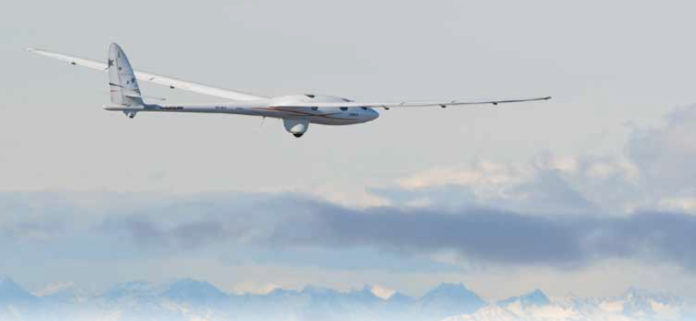
Airbus Perlan Mission II, an initiative to fly a glider without an engine to the edge of space to collect ground-breaking insights on climate change, weather and high-altitude flight, recently reached a new high altitude in its second season of flight testing in El Calafate, Argentina.

Pilots Jim Payne, Morgan Sandercock, Tim Gardner and Miguel Iturmendi have soared the pressurized Perlan 2 glider in a series of flights reaching a maximum altitude to date of 32,500 feet.

Image from the tail camera of Perlan 2 taken at 30 000 feet. ©Perlan Project.

El Calafate, in the Patagonian region of Argentina, is in one of a few places on earth where a combination of mountain winds and the polar vortex create the world’s highest stratospheric mountain waves – rising air currents that Perlan pilots believe can eventually carry their experimental aircraft to the edge of space.

Over the next few weeks, the all-volunteer exploration team sponsored by Airbus will seek for the rare waves in an attempt to break the world gliding altitude record of 50,727 feet, set by Einar Enevoldsen and Steve Fossett in Perlan 1 in 2006. Along the way, the aircraft will continue to collect scientific data on the atmosphere made possible by the Perlan 2 aircraft’s unique attributes.

“Just recently the world witnessed another reminder of the importance of understanding climate change, with the fracture from the Antarctic ice shelf of an iceberg the size of the state of Delaware,” said Perlan Project CEO Ed Warnock. “Airbus Perlan Mission II will allow us to study a range of atmospheric phenomenon that ultimately will give us more accurate models of our upper atmosphere and the climatic changes that matter to every world citizen.”

The engineless design of the Perlan 2 sail plane enables it to collect uncontaminated air samples from a range of altitudes. Unlike a weather balloon, it can be steered, can stay in one area, and can take off and land in the same location.

Besides studying factors influencing climate change, Airbus Perlan Mission II will also provide insights into high altitude turbulence and radiation effects on pilots and aircraft.

“As demand for air travel rises, and we are faced with questions about how to safely and more efficiently transport a growing population, the insights that Airbus Perlan Mission II will be collecting are invaluable,” said Allan McArtor, Chairman of Airbus Americas. “Perlan’s discoveries will help us shape the future of aerospace with innovations related to design and engineering, more efficient air travel and even aviation science related to travel on Mars.”