Home Blog Page 95

Turning: CVD Coated Carbide Grade For Steel Turning – MC6015

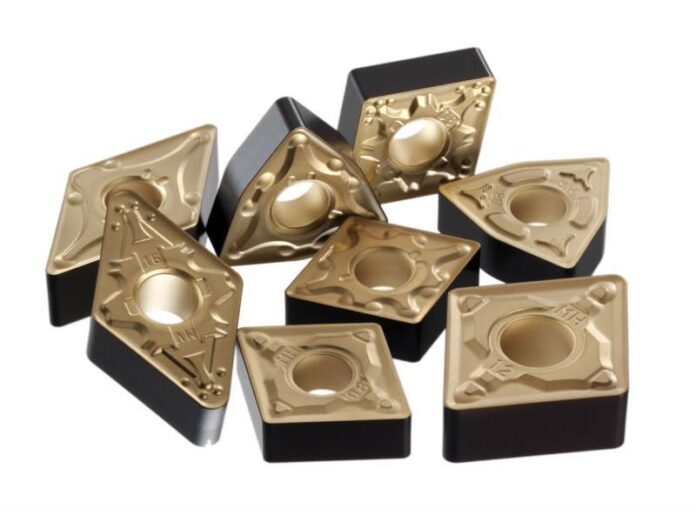
An insert with excellent wear and fracture resistance was needed for turning steels at cutting speeds that exceed 300m/min. The MC6015 grade for steel turning fulfils that need by delivering substantially better wear resistance through the adoption of an optimized crystal growth, Nano-Texture Coating Technology. This coating technology permits high speed, efficient machining even at high temperatures. 

MC6025 expanded the range of applications it could be applied to by adding a chip breaker for the medium interrupted and general purpose machining area.

Features of the CVD coated carbide grade, MC6015, for steel turning include proprietary Nano- Texture Coating Technology which achieves overwhelmingly high wear and chipping resistance and TOUGH-GRIP Technology which prevents the delamination of the coating because the interface structure of the coating layers is controlled at a nano level. The chipbreakers are available as standard items to complement the existing range of LP breaker for light cutting, MP breaker for medium cutting and RP breaker for rough machining.

For more information, contact Multitrade Distributors – Tel: 087 803-2377.

Turning: Ultra-Heavyweight Colchester Magnum Lathe

The new ultra-heavyweight Colchester Magnum centre lathe which made its debut at MACH 2016, is a much-heralded addition to the Colchester centre lathe range. 600 UK have now announced extra long bed lengths, offering increased quality and value for money. 

While the Colchester Magnum is still available with either 660 and 800mm swing over bed options, it can now be ordered in centre distances up to 6000mm, up from the previous 4000mm.

With spindle bore options up to 230mm and fitted with 20kW spindle motors, the Magnum is designed to be totally comfortable with any heavy metal turning requirement thrown at it.

Colchester’s heavy duty centre lathes are renowned for outstanding quality and reliability, with minimum maintenance requirements.

The lathes have all the power, strength and standard production features to meet almost any large turning requirement in the field of oil and gas, utilities and the shipbuilding industries.

For more information, contact F&H Machine Tools – Tel: (011) 397-4050.


Turning: L2600SY Multi-Tasking Turning Center – Wedge Type Y-Axis CNC Lathe

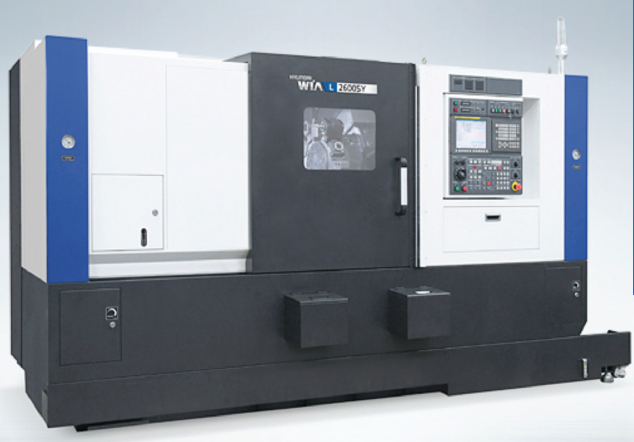
The Hyundai-Wia L2600SY Multi-Tasking Turning Center features box guideways in all axes, and incorporates a wedge type Y-Axis in the milling mode.

Through the use of the wedge style design, the height of the slide is reduced, and the center of gravity is much closer to the box guideway system. This results in the ability to perform heavy cutting in the Y Axis milling mode, while maintaining precision finishing in the turning mode. With the additional sub-spindle, complex parts can be machined complete in a single setup. The L2600SY features a 10 inch chuck on the main spindle, with a bar capacity of 81mm. Spindle output of 30/25 hp. (max/cont.) provides 440 foot pounds of torque.

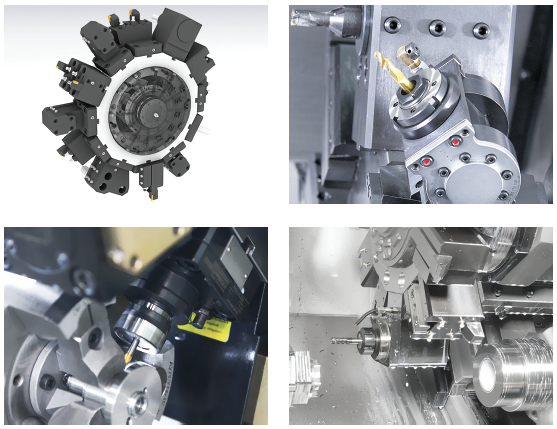
The L2600SY 12 station turret utilizes BMT65 tool blocks and can accommodate either static or rotary tools at each station. Rotary tool speed has been increased to 6,000 rpm, and turret indexing speed is a fast 0.15 seconds, station-to-station. Rapid positioning in the X and Z axis is performed at 1,181 inches/ minute, fastest in its class for a box guideway machine.
Standard accessories include part catcher, chip conveyor and Q-Setter. Variant of the L2600SY Multi-Tasking Turning Center includes a tailstock in lieu of a sub-spindle. Optional peripherals include a barfeeder/barloader, special purpose chip conveyor, special parts unloader, high pressure coolant system, part probing, oil separator and mist collector.

Features

  • Cycle time reducing structure for productivity
  • Integrated processing through synchronized control of main Spindle and sub spindle
  • Box guideways in all axes providing long life and for heavy duty machining applications
  • Lubrication unit located in the front allowing for ease of maintenance.


For more information, contact Rothco – Tel: (011) 970-1930.


Okuma Launches New Generation Of Machine Tools

Okuma presented a new line of machine tools at the 28th Japan International Machine Tool Fair recently. The manufacturer’s trade innovations included state-of-the-art 5-axis vertical machining centres and a new type of intelligent multitasking machine. Among the highlights was the introduction of the world’s first multitasking machines capable of milling, turning, and grinding as well as laser-hardening and 3D metal printing.

Smart factory, just-in-time-production, varying order sizes – production and machining requirements are higher than ever. To meet those demands, Okuma’s latest machine tools take multitasking machining to the next level. The new models will be available in Europe in mid-2017.

Intelligent horizontal multitasking machine 

To facilitate process-intensive production in a smart factory, Okuma has added the MULTUS U5000 to its line-up of multitasking machines. Designed for machining medium and large-sized components for the aerospace, energy and infrastructure industries, the MULTUS U5000 handles even difficult-to-cut materials, such as Titanium and Inconel. With the strongest turning spindle of its class, the MULTUS U5000 achieves unrivalled machining efficiency.

In an effort to allow operators to perform gear machining in-house, Okuma has made skiving and hobbing operations available on their multitasking machines with the accompanying software package enabling faster and easier programming.

With Industry 4.0 no longer a thing of the future, the MULTUS U5000 comes equipped with the latest generation of CNC control – OSP suite – as well as Okuma’s Intelligent Technology. These applications offer supreme connectivity and allow for a seamless integration of the machine tool into an Internet of Things – based production environment.

Smart Machine for 5-axis vertical machining 

Designed to stand at the heart of a smart factory, Okuma’s latest 5-Axis vertical machining centre MU-S600V is able to instantly respond to changed lead-times and accommodates production formats ranging from high-mix, low volume to mass production.

The compact MU-S600V has a very small footprint with a machine-width of 1,400mm and is able to cut workpieces of up to 600mm in diameter. The machine’s compact dimensions and structural design allow for outstanding ease-of-use and easier crane jobs. Its robotic table enables completely unmanned, automated operations, eliminating manual handling of parts between set-ups in different machines. Production line layouts are easily adjusted in accordance with changes in production volume.

Laser technology for process-intensive machining 

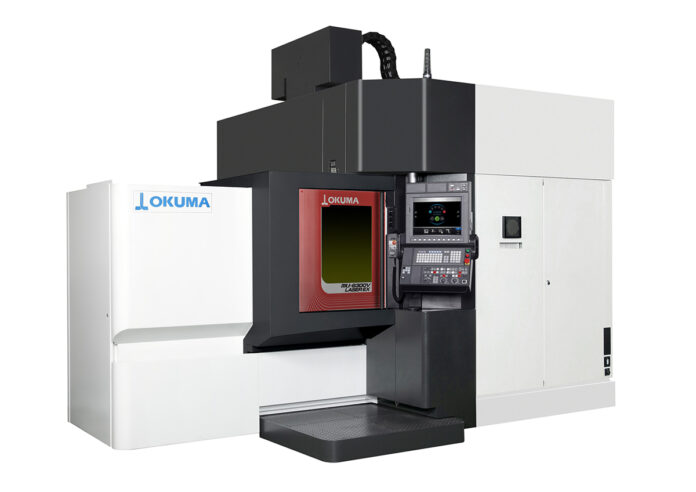
Designed to be the world’s first done-on-one – machines, the Okuma MU-6300V LASER EX and the MULTUS U3000 LASER EX are capable of milling, turning, grinding, 3D metal printing and heat treatment for a wide range of workpiece sizes and shapes. On-machine hardening provides the solution to a major bottleneck in production. Compared to hardening by conventional heat treatment, the process is quick and causes less distortion, resulting in dramatically increased throughput. The machine tools fully support agile manufacturing and process-intensive applications.

With a high-quality TRUMPF laser beam source at its core, Okuma’s LASER EX series enables stable laser processing over long runs. The machines allow for Laser Metal Deposition – LMD – for both large-capacity and high definition additive manufacturing. 0.4 to 8.5mm laser spot diameters enable unparalleled throughput regardless of the application. 3D moulding, coating and sectional repair of heat-resistant alloys and highly rigid materials are available on the machine as well.

Okuma’s OSP control meanwhile monitors and controls the entire process, ensuring reliable and stable additive manufacturing for products on par with forged components. The machine tools therefore meet the quality requirements of even the most demanding applications and industries such as aerospace machining.

Additional Okuma models with laser applications will be available shortly.


Okuma Opens Third Aerospace Centre Of Excellence

Okuma has recently opened a third technology centre for aerospace clients.

Following the successful opening of their European and U.S. locations in Paris and Charlotte, North Carolina, the CNC-provider’s latest Aerospace Centre of Excellence in Aichi makes equipment, parts and engineering services available to the Japanese market. Okuma therefore consolidates its status as a reliable partner for aerospace manufacturers around the globe.

Given the complexity of aerospace parts, new production solutions and technologies for demanding applications and difficult-to-cut materials, such as titanium and Inconel, need to continually be identified and developed. Okuma’s Aerospace Centres of Excellence provide manufacturers with a testing and proving ground for advanced CNC machining technology to enhance productivity and to continually meet the demands of all tiers of aerospace manufacturing.

At Okuma’s Aerospace Centres of Excellence, joint research efforts from academia, industry and government meet practical application. On-site, manufacturers can experience the latest in 5-axis machining, innovative tools, new processes and Okuma’s performance-enhancing Intelligent Technology. Best practices provide manufacturers with expertise based on the experience of renowned aerospace clients from all over the world. Given Okuma’s close collaboration with CAM providers, tool and fixture manufacturers as well as manufacturers of automation equipment, on-site engineering experts offer extensive resources for optimizing each aspect of the manufacturing process.

All three Aerospace Centres of Excellence are closely linked, so that advances at one facility are shared with the other two. No matter the location, manufacturers therefore benefit from the combined know-how and global resources of Okuma’s Aerospace experts. The facilities’ global connectivity also enables test-cuts requested by a client in Japan to be performed at Okuma’s European or U.S. centres and vice versa.

Ultrasensitive Sensors Ensure Optimum Sight Conditions

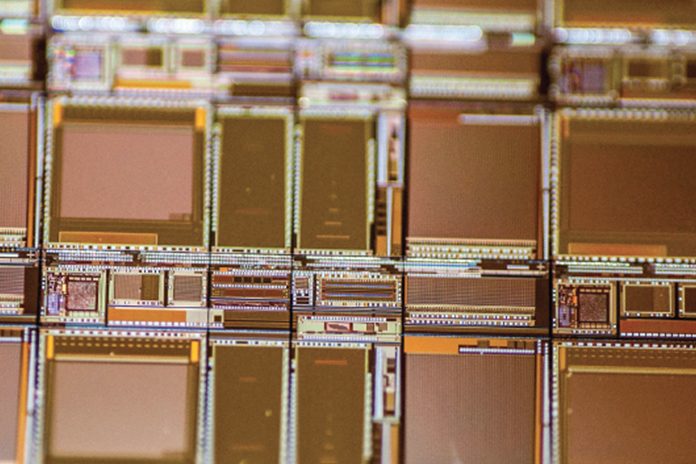
SPAD sensor chips are implemented in CMOS technology. © Photo Fraunhofer IMS

Automotive industry research is strongly focused on technology that enables automated driving. A new sensor system developed by Fraunhofer researchers should help increase passenger safety. 

News of the first serious accident involving an automated electric vehicle made headlines recently. The vehicle in question collided with a truck while in autopilot mode. According to the manufacturer, the front cameras could not perceive the oncoming semitrailer properly. Additionally, incorrect radar measurement prevented activation of the emergency brakes.

“A camera’s accuracy depends very much on the lighting available. In this case, it failed. The radar system recognized the obstacle, but couldn’t locate it precisely and mistook the truck for a road sign,” says Werner Brockherde, head of the CMOS Image Sensors business unit at the Fraunhofer Institute for Microelectronic Circuits and Systems IMS in Duisburg. Instead, the researcher and his team are counting on light detection and ranging (LiDAR) technology, which they have refined for this purpose. In combination with other components, this technology fulfills the requirements for independent steering, braking and acceleration. “LiDAR could have probably prevented the crash,” Brockherde surmises. The system could complement currently used camera and radar technology in automated driving to obtain a complete view of the driving environment and thus better perceive traffic obstacles.

A LiDAR system works by emitting pulsed laser beams, which reflect on the surface of objects, and capturing any signals that are reflected back with the help of time-of-flight cameras. It can then use the time it took for the light to travel to and from the objects to calculate the distance, position and relative speed of surrounding vehicles, cyclists, pedestrians or construction sites. This data makes it possible to avoid collisions.

In a flash, the scene is set

Conventional LiDAR devices aim a single laser beam at a rotating mirror to capture the surroundings through 360 degrees. Google uses this technology for its driverless cars, for example. However, these mirror-based systems are rather bulky and prone to mechanical error, leading many car manufacturers to forgo installing the LiDAR system in their vehicles. For this reason, Brockherde and his team at Fraunhofer IMS use ultrasensitive sensors that can capture the car’s entire surroundings with just one laser flash and no need for mirrors. The researchers have dubbed the new generation of sensors “Flash iDAR.” They are composed of photodiodes developed at Fraunhofer IMS known as single photon avalanche diodes (SPAD). “Unlike standard LiDAR, which illuminates just one point, our system generates a rectangular measuring field,” Brockherde explains.

SPADs are a hundred times more sensitive than the photodiodes integrated into smart-phones. Their advantage over the original LiDAR system is that both the sensor and the electronic evaluation unit can be integrated on a single chip, meaning that the new devices will be considerably smaller and sleeker. As a result, car manufacturers can easily fit them behind the windshield or a headlamp. IMS researchers’ ultimate goal is for Flash LiDAR to be able to sense road obstacles from a distance of up to 100 meters.

“The first systems with our sensors will go into production in 2018,” Brockherde says. The sensitive sensors are also of interest for other application fields such as medicine, analytics and microscopy, as they also function in low light intensity.

Report Highlights South African Auto Component Manufacturers’ Progress

Industry body the National Association of Automotive Component and Allied Manufacturers of South Africa (NAACAM) says figures released by the South African Automotive Benchmarking Club (SAABC) report are noteworthy. 

Dave Coffey, NAACAM President

“We need to acknowledge what has been achieved but most importantly the report suggests that difficult targets, previously considered unattainable, can and must be reached,’’ said NAACAM President Dave Coffey.

“Many local component manufacturing firms are truly world class, but we have the dual challenge of keeping up with rapidly progressing global best practice while also developing the tail of firms yet to fully adopt fundamental lean practices, which are essential to localization contracts,” Coffey said.

According to the SAABC report, South Africa’s component manufacturers have made strong improvements over the past decade. Such an example is quality improvements. In 2006, customer return rates were 1,208 parts per million, in 2015 this was down to 84 ppm, a gain of 93.1%.

“This statistic is telling” says NAACAM Executive Director Renai Moothilal. “In a week where automotive quality and reliability issues have come to the fore, evidence is being brought to bear that South African component producers are making huge strides in supplying products at the highest quality standards”.

Other noteworthy gains include a 45% improvement in the time to do machine/ tool changeovers whilst the supply chains’ reliability, measured relative to customer delivery expectations rose by 70.0%.

Referring to the upcoming NAACAM Show, Coffey said the Automotive Industry Conference would include a session purely reflecting on World Class Manufacturing and Best Practices. This would be led by international experts with a global view of manufacturing best practice and foresight of emerging trends.

In addition to international experts, leading government and other automotive stakeholders including OEM CEOs and tier one executives would address participants on a range of topical issues. The NAACAM SHOW is being held in conjunction with the National Localisation Indaba from 5-7 April in Durban, and aims to showcase the capabilities of South Africa’s diverse automotive components sector. It is commonly known that the largest economic spinoffs in any autos sector lies in its base of component production.

MVD Machinery South Africa Opens Its Doors

MVD Machinery (Pty) Ltd South Africa, a subsidiary and distributer of MVD sheet metal machinery from well known manufacturer MVD Makina Sanayi A.S. in Konya, Turkey recently opened its doors in Robertsham, Johannesburg.

The local subsidiary is headed by Carlos Figueiredo who has over 20 years experience in the marketing of sheet metal machinery

MVD Makian Sanayi A.S started sheet metal manufacturing in 1950 and today produces 350 machines per year, which are exported to all major markets.

MVD manufactures CNC fibre laser cutting machines, CNC punching machines, CNC press brakes, CNC plasma cutting machines and shears.

A full range of fibre laser cutting machines ranging from 3 x 1.5m, 4 x 2m and 6 x 2m sheet size and from 2kW up to 8kW is available. MVD incorporates power sources from IPG Photonics and cutting heads from Precitec, respectively.

Press brakes we are able to supply from 40 ton 1.2m right up to 1 000 ton 6m and even larger by special application including tandem machines. Machines are available with CNC controls including ESA, Cybelec and Delem.

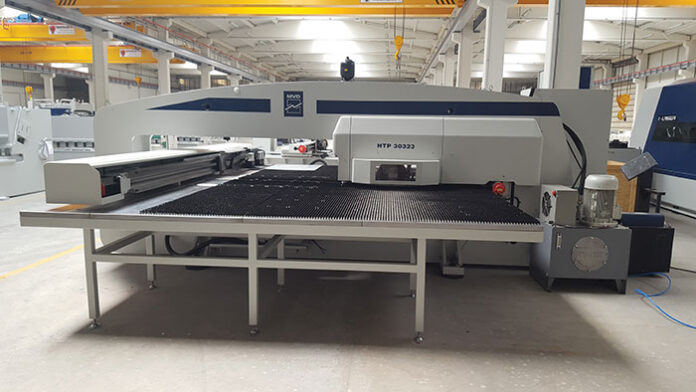
CNC punching machines are supplied in two sizes and specifications, both 30 tons and different turret layouts according to customer’s needs. Shears from 2.5m width with 4mm thickness right up to 6m and 20mm thickness are available with bigger sizes on request.

CNC plasma is available in sheet sizes of 3 x 1.5m, 4 x 2m and 6 x 2m and bigger in special applications, while power ranges available are from 120 Amp to 400 Amp high definition power sources.

Milestone In Graphene Production

The Fraunhofer Institute for Organic Electronics, Electron Beam and Plasma Technology FEP from Dresden, together with partners, has succeeded for the first time in producing OLED electrodes from graphene.

The electrodes have an area of 2 . 1 square centimeters. “This was a real breakthrough in research and integration of extremely demanding materials,” says FEP’s project leader Dr. Beatrice Beyer. The process was developed and optimized in the EU-funded project Gladiator (Graphene Layers: Production, Characterization and Integration) together with partners from industry and research.

Graphene is considered a new miracle material. The advantages of the carbon compound are impressive – graphene is light, transparent and extremely hard and has more tensile strength than steel. Moreover, it is flexible and extremely conductive for heat or electricity. Graphene consists of a single layer of carbon atoms which are assembled in a kind of honeycomb pattern. It is only 0.3 nanometers thick, which is about one hundred thousandth of a human hair. Graphene has a variety of applications – for example, as a touchscreen in smartphones.

Graphene and Graphite 

Anyone who thinks about graphite pencils when they hear graphite is not so far off. Graphite is also a carbon compound. However, the difference is that graphite consists of at least ten atomic layers, while graphene has only one.

Chemical reaction of copper, methane and hydrogen 

The production of the OLED electrodes takes place in a vacuum. In a steel chamber, a wafer plate of high-purity copper is heated to about 800 degrees. The research team then supplies a mixture of methane and hydrogen and initiates a chemical reaction. The methane dissolves in the copper and forms carbon atoms, which spread on the surface. This process only takes a few minutes. After a cooling phase, a carrier polymer is placed on the graphene and the copper plate is etched away.

Gladiator project was launched in November 2013. The Fraunhofer team is working on the next steps until the conclusion in April 2017. During the remainder of the project, impurities and defects which occur during the transfer of the wafer-thin graphene to another carrier material are to be minimized. The project is supported by the EU Commission with a total of 12.4 million euros. The Fraunhofer Institute’s important industrial partners are the Spanish company Graphenea S.A., which is responsible for the production of the graphene electrodes, as well as the British Aixtron Ltd., which is responsible for the construction of the production CVD reactors.

Applications from photovoltaics to medicine 

“The first products could already be launched in two to three years”, says Beyer with confidence. Due to their flexibility, the graphene electrodes are ideal for touch screens. They do not break when the device drops to the ground. Instead of glass, one would use a transparent polymer film. Many other applications are also conceivable – in windows, the transparent graphene could regulate the light transmission or serve as an electrode in polarization filters. Graphene can also be used in photovoltaics, high-tech textiles and even in medicine.


Trumpf Venture Invests In Sensor Technology Startup XARION Laser Acoustics

Laser-based optical microphone technology.

XARION Laser Acoustics announced the completion of its Series A round of financing with a seven-digit investment volume. XARION succeeded in winning the newly-founded TRUMPF Venture as the largest investor. As a result, the TRUMPF venture capital company is now placing its first investment. In addition to TRUMPF Venture, the circle of investors also includes Hans-Peter Porsche. 

Balthasar Fischer, CEO of XARION Laser Acoustics GmbH

XARION develops and produces the world’s first laser-based optical microphone, enabling the measurement of ultrasonic waves in the air or in liquids. Its use will be instrumental in the development of fields such as non-destructive material testing, process control in industrial environments and medical diagnostics.

“Our membrane-less laser sensors can be used profitably in a whole range of industrial applications. Crucially important here is the ten-fold frequency range compared to state-of-the-art acoustic sensors,” said Balthasar Fischer, CEO of XARION Laser Acoustics, describing his company’s field of technology.


Christoph Siebert, Head of Technology Management at TRUMPF GmbH + Co. KG

The investment underlines XARION’s and TRUMPF’s joint intention to work together closely on the use of optical sensors in industrial process monitoring. The technological proximity of TRUMPF, and its deep roots in industry, offer good opportunities for the further development and growth of XARION. “With these unprecedented opportunities in process monitoring, XARION is a key contributor to further quality increases and new applications in the Industry 4.0 environment,” said Christof Siebert, Head of Technology Management at TRUMPF, describing the background of the investment.

In 2016, after several years of development, XARION successfully entered the market. In addition to various high-precision sensors, it also supplies the necessary software for data analysis.