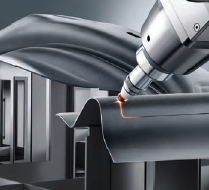
This unique machine offers significant benefits in the design and manufacture of plastic injection mould tools through its combination of metal additive manufacturing to create cooling channels of optimum shape and geometry – which often cannot be machined by conventional means – with the high speed milling necessary for tool finishing.
So, how does it work? In the simplest terms the process is as follows – first, a metal powder is uniformly coated and then melted and solidified by scanning with a laser beam (this process can be repeated up to ten times) after which the surface is subjected to high speed milling with a rotary tool, creating the high quality accuracy, precision and finish which are not achievable with a laser process alone, after which the metal powder is uniformly coated again and the process is repeated, again and again, until the component geometry is complete.
Benefits for Mould Tool and Parts Making
The OPM250L can achieve accuracies of within ± 1/100mm, free-form surfaces with complex water cooling geometries, perfect-fit mating parts, and surface finish of Ra 0.19 microns.
The ability to create optimally designed cooling channels offers two major benefits – firstly, by improving the layout and functionality of the cooling channels to avoid heat build up in particular areas, making it possible to reduce the moulding cycle and secondly, by increasing the length of time between maintenance cycles and therefore increasing overall productivity.
Another benefit of the OPM250L in the manufacture is the ability to set the optimal laser condition. The adoption of a laser with a maximum output of 500W enables the selection of either Speed mode or Quality mode, enabling the achievement of excellent surface quality, for example in plastic moulds where a high gloss finish is required.
The machine can also be used for manufacturing of parts with complex cooling channels/ holes inside the component.
The development of the OPM250L has been based on Sodick’s many years of research and development, resulting in a machine that provides a one-stop solution for the practical use of metal additive manufacturing combined with the latest machining centre technology.
For more information, contact Rothco – Tel: (011) 970-1930.
Prior to opening his job shop, Larry Rosevear honed his sheet metal fabrication skills by building dune buggies … a lot of dune buggies.
“My company, Suspensions Unlimited was selling 100 cars per year,” reflects Rosevear. “I purchased my first used laser in 2000. As I went through the process of cutting dune buggy parts, I realized that the laser cut much faster than my plasma cutter. I was getting my work done in two hours, and the laser was sitting idle for six hours a day. So I began doing little odd jobs and cutting my own parts. Soon I began cutting parts for other people and we received more and more orders. Eventually, the business grew so quickly that the company evolved into a 100% job shop.” Rosevear named his new company Laser Innovations and opened up shop in Anaheim, CA, in 2001.
The fledgling company began operations with just a laser, a water jet and a press brake. “The job shop business was easier to predict than the dune buggy business,” explains Rosevear. My early clientele were my customers who had purchased dune buggies. They saw the quality of the laser. We were getting business through word of mouth and soon I was building parts for my previous dune buggy competitors.”
Today, the company has grown into two 8,700-square-foot buildings for a total of 17,400 square feet. The equipment list and services have also grown to include multiple CO2 lasers, waterjet cutting, welding fabrications, sheet metal and all types of customer fabrication. And the company’s customer list has evolved by adding the following industries – medical, display, military, automotive, construction and manufacturing.
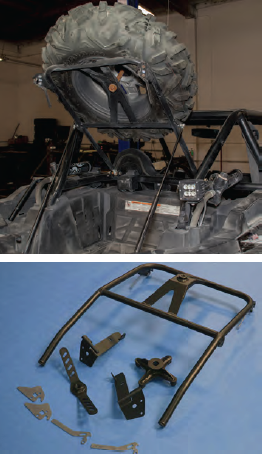
Prior to opening his job shop, Larry Rosevear honed his sheet metal fabrication skills by building dune buggies. Today, Laser Innovations services a wide variety of industries, however, he still makes some dune buggy parts such as this spare tire hydraulic auto-assist power mount.
By 2014, Laser Innovations continued its growth and Rosevear began his search for additional laser capacity. He attended the 2014 FABTECH show in Atlanta with a friend who owned a job shop in Utah. “My friend owns three Prima Power CO2 lasers that have automation, and he told me that I was missing the boat if I didn’t consider automation on my next laser. We had been studying the fiber lasers for some time and I pretty much decided that I was going to do thinner sheet metal work on an automated laser. I planned on running large quantities of 16, 18 and 20 gauge material on a continuing basis. While at FABTECH, I decided to purchase the Platino Fiber Laser for its speed. I also made the decision to automate the laser.”
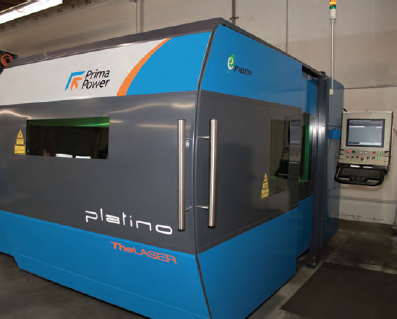
Prima Power Platino® Fiber Laser
Laser Innovations purchased the Prima Power 4000 watt Platino Fiber Laser with a 3-station tower. The laser was installed in March, 2015 and the tower was installed a few months later.
The Platino Fiber Laser cutting machine is the perfect balance of innovation and experience. This product combines state-of-the-art efficient and ecological fiber laser technology, with the proven reliability and flexibility of the Platino platform. It is the right choice for sheet metal manufacturers looking for a production tool which is:
efficient, granting energy and maintenance savings
productive, particularly on thin and medium-gauge sheets
flexible, suitable for a wide range of materials, including highly-reflective metals
reliable and capable of meeting any production need, with a variety of automation modules
user-friendly, easy to install, use and maintain
The Platino Fiber Laser can be used to cut a wide range of materials. Fiber lasers are more effective than other laser sources for cutting highly-reflective materials (e.g. aluminum alloys, copper, brass). Platino Fiber cuts various thicknesses, up to 20 mm of mild steel, with efficiency and quality. Productivity increases particularly with thin and medium-gauge sheet metal.
The Platino Fiber Laser can be used to cut a wide range of materials. Fiber lasers are more effective than other laser sources for cutting highly-reflective materials (e.g. aluminium alloys, copper, brass). The Platino Fiber cuts various thicknesses, up to 20mm of mild steel, with efficiency and quality. Productivity increases particularly with thin and medium-gauge sheet metal.
Other features and benefits include:
Very low power consumption
No laser gases
Minimum maintenance and low consumables
Floor space saving – compact automatic loading, unloading and storage
Easy and fast operating interface – fast setup
Less energy, less waste of material, no laser gases
Unique machine design using a synthetic granite frame offering the best thermal stability and vibration damping
Cantilever design for maximum accessibility to the machine
Protection cabin with roof, fiber-safe windows and fully-opening sliding doors – total safety, visibility of the work area and accessibility
Flexible Automation
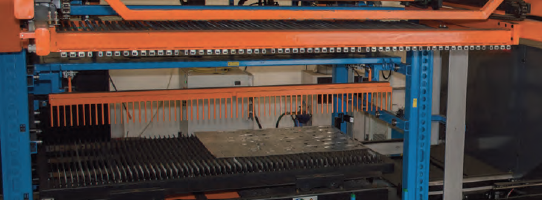
Prima Power’s Compact TowerServer allows easy loading/unloading for blanks and processed sheets. It has an elevator for loading and unloading the pallets on and off the tower and features single sheet separating, control systems, and sheet reference.
The Platino Fiber is particularly suitable for 24/7 operation, often performed in unattended mode. It is a fully independent machine, with no need for manual intervention during machine operation. Once the production schedule is programmed, the Platino Fiber laser takes care of the necessary settings, tip replacement, sheet change and storage, etc.
“With the Platino Fiber Laser we often cut 3/8″ and 5/16″ material at night,” says Rosevear. “It is reliable and cuts all night long on these thicker materials. With the automated tower we can run unmanned and lights out. We love the tower … we just load all our sheets, automatically transfers them and then unloads the parts. It is a real time saver. The sheets are heavy for one operator to load manually. The tower eliminates manual labor and material handling. It loads the sheet to the laser, laser cuts, unloads, and we’re up and running again. The Platino Fiber Laser has worked out beautifully. Compared to a CO2 laser, we’ve only had to replace one lens in the Platino Fiber to date. And the speed is awesome. We can cut up to 1200″/minute with the Platino Fiber. The fastest my CO2 laser cuts is 400″/minute.”
Prima Power’s Compact TowerServer allows easy loading/unloading for blanks and processed sheets. It has an elevator for loading and unloading the pallets on and off the tower, and features single sheet separating, control systems and sheet reference. The Platino Fiber is particularly suitable for 24/7 operation, often performed in unattended mode.
Attracting New Business
“We have picked up a few new customers because of the fiber laser,” concludes Rosevear. “On long runs we can actually charge a lower price for the same hourly work because of the speed of the machine. The Platino Fiber Laser has allowed us to pick up the larger jobs … jobs we weren’t getting with just the CO2 lasers. Since installing the Prima Power 4000W Platino Fiber Laser my business has increased 35%. Profit margins are up, and production time is down.”
For more information, contact Talmac Machine Tools – Tel: (011) 827-6539.
One-process milling machining is a new fully automated machining method available from Sodick. It facilitates the continuous process of melting by irradiation of metallic powder with laser light followed by finish machining, while milling with rotating tools. Complex shapes such as three dimensional cooling channels and deep ribs can be manufactured with this single printer, which is particularly suitable in the production of dies for plastic molded products.
The new machining method (parallel mode) can print multiple spots simultaneously by controlling a single laser source at high speed. Cutting machining time can be reduced significantly by optimizing the balance of lamination count by laser and cutting finish machining with tools depending on the three-dimensional shape to be machined. Continuous operation has been enabled by developing an optional Material Recovery System (MRS) for metallic powder.
The Sodick in-house developed and manufactured CNC unit, LN4RP, is used along with an in-house developed and manufactured high-performance linear motor.
A die with a built-in three-dimensional cooling channel is designed with CAD and resin temperature simulation is implemented with CAE. NC programming with dedicated CAM, OS-FLASH, using the designed CAD data is followed by die manufacturing with OPM350L in a one-stop process.
For more information, contact Rothco – Tel: (011) 970-1930.
The Amada range of laser cutting machinery has evolved over many years and the latest fiber laser cutting machines are a combination of the proven design of the CO2 series together with Amada’s latest in-house fiber laser technology.
This has resulted in not only setting new standards in terms of speed and precision but also the most economical machine solution available for the mid-range segment.
This versatile and highly efficient laser system offers either a 2kW or 4kW fiber laser output option, which permits exceptional machining speeds while simultaneously achieving high precision results. The use of high-speed non-contact sensor technology ensures that the laser beam remains focused on the sheet during processing.
Considerably shortened manufacturing times coupled with the fiber laser’s excellent energy consumption figures ensure considerable cost savings while preserving resources.
Thanks to shorter wave length of the fiber systems, previously difficult to cut materials such as copper and brass, can now be cut with ease and thinner ferrous materials can be processed at far higher cutting speeds than with CO2 systems. The combination of high-performance control technology and highly dynamic drive systems, guarantee both outstanding cutting accuracy and optimum product quality. The elimination of beam path mirrors and utilization of fiber optic cable transfer methods, drastically reduce costs on mirror maintenance.
With the fiber laser beam being generated from diodes as opposed to laser gas on CO2 systems, the elimination of a turbo blower and tubes is also a great cost saver.
The versatile fiber laser machine layouts offer a common working area of 3000mm x 1500mm and tables can carry a sheet weight of up to 920kg, which is easily positioned by the operator thanks to the free roller bearing system. Much the same as the F.O. series, these systems possess a unique machine frame featuring a structure and low centre of gravity which eliminates the need for any special machine base. Even at very high machining speeds, the distortion resistant, low vibration cast machine bed guarantees manufacturing operations are conducted under optimum conditions.
Amada fiber lasers are extremely versatile, which when coupled with appropriate automation technology, perform complex tasks for long periods of time without the need for manual intervention.
The layout of this machine can be individually adapted to meet the needs of different users permitting variable assembly of machine components. The machine is compact, always providing optimum access and permitting shortest possible travel paths even during multi machine operation.
The use of the proven AMNC-PC control together with Amada AP100 programming and nesting software guarantees a high level of safety and ergonomic efficiency, while promoting great ease of operation.
Energy conservation and cost reduction.
For more information, contact Amada – Tel: (011) 453-5459.
Laser job shop owners need to differentiate their businesses and own their markets. The challenge is to lower costs per part, reduce lead times and downtime, and increase overall productivity. The solution is to be found in the 10kW ByStar Fibre, which, from the outset, was designed from the ground up to be a high-powered fibre laser.
The Bystar embraces both a revolutionary new machine design and new levels of control, fully exploiting the speed which 10kW affords. The ByStar Fibre new cutter head delivers the highest part output through the full spectrum of sheet thicknesses, from thin gauge up to 30mm with an impressive part accuracy. It also cuts other exotic metals such as aluminium, brass and copper without the need for deburring.
Regarding productivity, the ByStar Fibre is up to five times faster than a 4kW CO2 laser. When cutting 6mm sheet, a 45-minute job could be reduced to ten, while the cost per part could be slashed by 70%. Even compared to a 6kW fibre laser, the time to complete a job on 6mm steel could be cut in half and the cost per part reduced by as much as 35%.
To handle the greater power, Bystronic combined linear motors, which enable the cutting head to move exceptionally fast with a revolutionary new triangular bridge frame design, which positions the laser accurately at high speed. The triangular bridge frame weighs 25% less than earlier designs so it can travel much faster. Also the triangular bridge frame has 60% more torsional rigidity. This results in almost no frame distortion for greater accuracy and better edge quality.
When handling material, the Bystar’s redesigned pallet shuttle gives enhanced operation. A further advantage is Bystronic’s eye detection technology, which identifies the edge of the sheet in six seconds. This allows cutting right up to the edge of the sheet with great accuracy. The combined advantage of the pallet shuttle and detection eye gives a head start per sheet of 28 seconds, adding about one hour of productivity to every eight-hour shift.
To harness the power of a 10kW fibre laser, Bystronic created its own 10kW cutting head. This new head enables operators to change the beam diameter and focal length of the laser on the fly for greater speed and accuracy.
With the speed of the ByStar 10kW laser, enhanced support automation is essential. As ancillaries to the ByStar, Bystronic offers standardized and customized automation of material handling and sorting to fully support the greatly increased productivity of the ByStar Fibre.
Control is key to efficient workflow. Conveniently positioned on the machine, the 55-cm high-definition ByVision cutting screen gives a clear view of everything that is happening inside the machine. With a smartphone type interface, the ByVision is easy to understand and use.
Cutting plans can be quickly uploaded, and it is possible to monitor machine performance using real time read-outs. The ByVision’s intuitive design guides an operator through the menu without losing any precious time, while also collecting operational data to give an owner a macro picture of workflow.
The ByStar Fibre will not only cut steel, but also time and costs, while greatly increasing the profitability of any laser cutting business.
For more information, contact First Cut – Tel: (011) 614-1112.
The machine’s increased productivity is due primarily to the highly dynamic rotational changer and the new rotary indexing table, which features three workstations.
The ObserveLine function reliably detects slugs, increasing process reliability. It is the fastest system currently on the market.
The areas for machine loading and unloading are completely separate from each other, facilitating semi-automated solutions. For example, an operator and an optional robot could work simultaneously while the laser cuts the component. This substantially increases the machine’s productivity.
In conjunction with the TruDisk 2000 with 2-kilowatt laser power, the energy efficiency of the TruLaser Cell 8030 improves. The disk laser’s beam quality has doubled to 2mm mrad, and its winning combination of low power consumption and low investment costs also brings down costs per part. When greater power is required, however, the new TruLaser Cell 8030 is also available with the trusty TruDisk 3001 and TruDisk 4001 disk lasers, with 3- and 4-kilowatt laser power, respectively.
The second-generation TruLaser Cell 8030 has a compact footprint and is easily accessible from all sides.
Laser-cutting of a B-pillar using the new TruLaser Cell 8030
TRUMPF has also improved the process reliability and stability of the TruLaser Cell 8030 with functions such as ObserveLine visual slug detection, which has very fast and dependable sensors. The complete cycle lasts a mere 135 milliseconds, making it more than twice as fast as other systems currently available on the market. Another new feature is the residual runtime display built into the front of the machine, which shows how much processing time remains for the current component along with further information about the status of the respective production order. This helps operators keep a close eye on the production cycle and efficiently sequence their tasks, increasing the machine’s output. Meanwhile, shift managers can visualize the current production situation and refine their plans for the remaining production steps accordingly.
Occupying less than 50 square meters, TruLaser Cell 8030 has a decidedly compact footprint. Because the electrical control units are built into the body of the machine, the system can be swiftly and easily integrated and commissioned even within existing production environments. TRUMPF has successfully reduced installation costs for the new TruLaser Cell 8030. Whereas the old system required three supply cables to the machine, the centralized power supply now requires only one.
For more information, contact Retecon – Tel: (011) 976-8600.
With their enormous pulse peak powers of several gigawatts and extremely short pulse durations of approximately one trillionth of a second, ultra-short pulse lasers are the perfect tool for high-precision machining of virtually any material. These sources are now well established not only in various fields of research, but also in industrial applications such as drilling and texturing of metal parts for the car industry, or ablative cutting of transparent materials such as the high-strength cover glasses used for optical displays.
Surrounded by mirrored prism retroreflectors, the YAG disk generates multi-kilowatt laser output. Photo: TRUMPF
However, today the volume of material that can be modified or removed with each laser pulse – and therefore the resulting process throughput – is limited by the available laser pulse energy. This limitation sets the starting point for the new ScULPT project where the partners will be aiming to accelerate process throughput at least proportionally in relation to the increase in laser power.
New beam sources aside, transforming increased laser power into faster machining processes requires additional developments which also form part of the ScULPT project. These include the construction of application-specific machining modules with suitable, fiber-based beam guidance and beam shape adaptations for individual processes, as well as optimized synchronization between laser and beam scanning systems.
Using a TruMicro ultra-short pulse laser to cut glass minimizes the mechanical stress on the material. This method does not produce any cracks on the edges – and that means it is no longer necessary to grind the components after cutting. Photo: TRUMPF
Combined expertise of project partners
The project team is formed by corporate partners TRUMPF, SCHOTT and BOSCH as well as the Universities of Jena (Institute for Applied Physics) and Stuttgart (Institut für Strahlwerkzeuge). Between them the project partners combine the necessary expertise to cover the entire value chain from basic research, ruggedization of beam sources, to laser machining of glasses and metals on an industrial scale.
For more information, contact Retecon – Tel: (011) 976-8600.
Increased participation by black owned suppliers in the country’s automotive sector and greater use of local components will be major themes of National Association of Automotive Component and Allied Manufacturers (NAACAM) Show incorporating the Durban Automotive Cluster’s National Localisation Indaba in Durban on April 5-6 2017.
NAACAM Executive Director Renai Moothilal said that working with its value chain partners, including the SA based OEMs, the Department of Trade and Industry and supporting agencies such as the AIDC, the NAACAM Show would be a practical tool to progress these issues.
Besides an exhibition focus of bringing in and highlighting black supplier companies, there are two conference sessions, dedicated to Black Supplier Development and Transformation, which would reflect on industry’s commitment while also showcasing existing success stories. The mainstream automotive economy, represented by an estimated 400 executive level delegates, including OEMS, tier 1s, tier 2s (including black-owned manufacturers) and stakeholders will gather to engage on these and other pertinent issues relevant to this crucial South African manufacturing sector.
“There are opportunities to drive transformation. Especially within the tier two space, it will be possible to develop a cache of black industrialists, reshaping the owner dynamics within this sector”, Moothilal says. “The entire sector is committed to transformation objectives and is taking proactive steps to foster and accelerate this development.”
Given the levels of government support for the automotive industry through the current Automotive Production and Development Programme (APDP) and other supporting instruments, such as the Black Industrialists Scheme, it is accepted that government will continue to push the automotive sector towards an ownership profile that matches demographic representation, with the most realistic way for this to happen being through the lower-tiered component segments, says Moothilal.
The inaugural NAACAM Show will take place in conjunction with the Durban Automotive Cluster’s National Localisation Indaba at the Durban ICC from April 5-6. It will be held every two years rotating across South Africa’s major automotive hubs.
Moothilal believes the Show will be a great platform for the sector to showcase its true capability. “We would like to see a deepening of the use of parts manufactured in South Africa, with many parts being imported by OEMs and component manufacturers. We must deepen our value chains.” Moothilal said The National Localisation Indaba delivered through NAACAM Show would connect qualified suppliers to buyers where these opportunities are known to exist.
The NAACAM Show conference will also deal with topics including Manufacturing Best Practice, The Automotive Vision and Masterplan, The Future of the Automobile, Leadership and Logistics and Supply Chain Management, delivered by industry, government and academic leaders in these fields.
In his budget speech, Finance Minister Pravin Gordhan earmarked R95-million for the establishment of a Steel Development Fund over the Medium-Term Expenditure horizon. This fund will be controlled by the Industrial Development Corporation (IDC) for the benefit of the sector.
SEIFSA Senior Economist Tafadzwa Chibanguza.
SEIFSA Senior Economist Tafadzwa Chibanguza welcomed Gordhan’s announcement, saying the Fund could improve the competiveness of foundries and steel fabricators in the metals and engineering sector, contributing to efforts to reverse the crisis that has long beset the sector.
Chibanguza said the Minister’s announcement was a product of numerous engagements between various stakeholders in the metals and engineering industry, including SEIFSA, with the IDC, the Department of Trade and Industry and the Finance Ministry about the importance and need for a dedicated fund for the sector.
“We believe that this allocation for the Fund takes those engagements significantly forward, indicating the Government’s commitment to assist the sector,” said Chibanguza.
In his speech, Gordhan indicated that over the 2017/2018 fiscal year, the Finance Ministry is expected to spend R1.56 trillion but forecasts to collect only R1.41 trillion, leaving a budget deficit of R149 billion, which equals 3.1% of GDP at a consolidated level. However, revenue compared to non-interest expenditure yields a R21 billion surplus.
Chibanguza said that there is no doubt that preparing the current budget was a very challenging exercise for the Minister, his colleagues and the Treasury team. “It was a delicate balancing act between maintaining spending commitments, particularly in higher education, health and social obligations, while ensuring responsible management of public finances,” he said.
In his toughest budget speech yet, Gordhan seemed to tighten control as the expenditure celling will be reduced by R10 billion in 2017/18 through reducing national departments’ operating budgets, lower transfers to entities, provinces and local government and real locations.
In order to induce additional revenues of R28 billion needed for the 2017/18 period, income taxes for individuals earning more than R1.5 million will be increased to 45% and dividend withholding taxes will be increased from 15% to 20%. The fuel and road accident fund fuel levies will also be increased by 30c/l and 9c/l respectively.
Chibanguza said that of importance to the metals and engineering sector was the fact that, broadly, manufacturing incentives will receive R9.6 billion over the medium term expenditure framework (roughly R3.2 billion per annum), which includes roughly R433 million per year dedicated to boosting competitiveness. He said that the sector will either directly or indirectly benefit from a medium-term R4.2 billion that has been allocated for industrial infrastructure projects over the medium term. This budget includes 32 strategic projects expected to be approved for special economic zones and industrial parks.
The Federation, which launched the SEIFSA Awards for Excellence in 2015, has invited manufacturers operating in the metals and engineering sector with the Southern African region to submit their entries for the 2017 Awards. The entries are for companies that will be assessed on their performance in the period 1 January 2016 to 31 December 2016.
Winners of the 2017 SEIFSA Awards for Excellence will be honoured at a ceremony that will take place in Sandton on 25 May 2017. Born out of the need to encourage growth and celebrate excellence in the metals and engineering sector, the SEIFSA Awards for Excellence offer a great opportunity for companies operating in this vital sector to receive well-deserved recognition by industry peers for their capabilities, expertise and innovation.
SEIFSA Chief Executive Officer Kaizer Nyatsumba.
SEIFSA Chief Executive Officer Kaizer Nyatsumba said although the metals and engineering sector was faced with many challenges and uncertainty, there were companies that still managed to excel under these difficult circumstances.
“It is during crisis times that innovation and sustainability become paramount. We have seen companies that have managed to excel and retain operations in the sector, in the process not only saving jobs, but also ensuring that the industry still provides its goods and services,” Nyatsumba said.
Nyatsumba said these companies need to be highlighted and celebrated so that it is demonstrated that there are other ways to keep the sector going until the crisis period lapses.
The SEIFSA Awards for Excellence have seven different categories – The Most Innovative Company of the Year, which will be awarded to a company which showed the highest level of innovation in research and development or production in 2016; The Health and Safety Award of the Year will be offered to a company with the best legal compliance record in Health and Safety or the lowest Lost-Time Injury Frequency Rate in 2016; Entries are also invited from companies whose Corporate Social Investment (CSI) programme/s in 2016 had a major impact on the lives of their beneficiaries;
Companies rated the highest in customer service performance in 2016 will receive the Customer Service Award of the Year; The Most Transformed Company of the Year Award will go to a company that showed the highest transformation level in the composition of its Board of Directors, Executive Management and Managerial Team in 2016 (this award category pits companies employing fewer than 100 people against those of similar size, and companies employing more than 100 companies against others of similar size).
This is the Decade of the Artisan and an award will be made to the company that trained the highest number of artisans in 2016 and The Environment Stewardship Award will go to a company that has made the biggest or best strides towards conserving the environment or mitigating the impact of its operations on the environment in 2016. Nyatsumba has encouraged manufacturers operating in the metals and engineering sector to submit their entries for the seven categories as soon as possible. The Awards are open to both SEIFSA members and non-members.
Scaw Metals, ABB Group, Hazelton Pumps International and Voith Turbo, were among the winners last year.




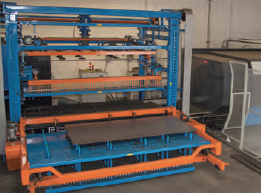 Prima Power’s Compact TowerServer allows easy loading/unloading for blanks and processed sheets. It has an elevator for loading and unloading the pallets on and off the tower and features single sheet separating, control systems, and sheet reference.