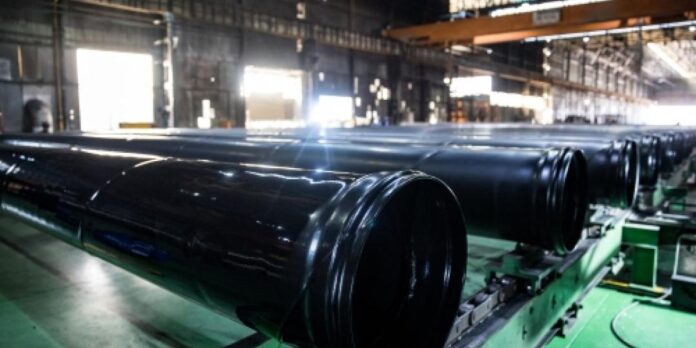
The Council for Scientific and Industrial Research (CSIR) has developed a polymer composite solution for one of Africa’s largest steel pipe manufacturers, Hall Longmore, which takes them one step closer to offering the South African water industry a localised push-fit application for pressurised steel pipelines.
Using the DSI-CSIR Nanomaterials Industrial Development Facility, CSIR researchers developed a uniquely formulated polymer composite material for the steel pipe manufacturer and performed coating trials at their facility.
“The coating trials proved to be a success and an indication of a fruitful collaboration between local institutions working together to localise technology solutions for industry, “says Managing Director of Hall Longmore, KC Van Rooyen.
The South African-based steel pipe manufacturer imports a special polymer to coat pipes through a fluidised bed technology. However, fluctuations in the USD/ZAR exchange rate made it increasingly challenging to budget for projects. In response to this, Hall Longmore approached and contracted the CSIR to develop a composite material from locally produced polymers.
“We have expertise in formulation design, polymer modification, processing and characterisation, and an array of other capabilities that we leverage to provide our clients with a holistic solution,” says CSIR research group leader for advanced polymer composites, Dr Vincent Ojijo.
“This created a conducive environment for us to co-design and construct a test-rig with Hall Longmore. The project procured services from a local third-party polymer compounder for successful industrial optimisation and production of test materials at scale. The ultimate success of this project is credited to a strong collaborative and consultative effort by the parties,” says Ojijo.
The CSIR undertook preliminary research that outlined the desired developmental approach to be taken. This was followed by lab-scale material development and the technical validation of its performance. Concurrently, a lab-scale fluidised bed for rapid coating trials was co-designed by the CSIR and Hall Longmore. The company co-constructed, installed and commissioned it for use in testing the developed material. After successful lab-scale validations, the pilot-scale optimisation process for the developed material was completed.
The project is now in production phase at the third-party compounder, with the steel-pipe supplier having ordered 150 tons of the CSIR co-developed material.
“One of the CSIR’s strategic objectives is to collaboratively improve the competitiveness of high-impact industries to support South Africa’s re-industrialisation; therefore, the successful collaboration between the CSIR and Hall Longmore shows our commitment to supporting South Africa’s industry and growing our impact on the continent and around the world,” says Dr Jan van De Loosdrecht, Cluster Executive Manager, CSIR Future Production, Chemicals.
A team of researchers from Sasol and the Catalysis Institute at the University of Cape Town (UCT) has made advancements in the use of commercial iron catalyst, produced cheaply and at large scale at Sasol’s Secunda plant, which would enable conversion of unavoidable or biogenically- derived carbon dioxide (CO2) and green hydrogen directly to a variety of green chemicals and jet fuel. This development is a significant step towards the implementation of CO2 hydrogenation technology in South Africa.
For decades, Sasol has been using its Fischer Tropsch (FT) technology to convert low-grade coal and gas into synthetic fuels and chemicals. The largest scale example of the commercial application of this technology is its Secunda plant in Mpumalanga, which converts synthesis gas – a mixture of carbon monoxide (CO) and hydrogen (H2) – derived from coal gasification and supplemented by reformed natural gas into 160 000 bbl of products per day.
With its announced intention to leverage its existing FT technology and skillset to lead the development of South Africa’s hydrogen economy, Sasol and UCT have been working on finding innovative ways to use this chemistry to convert CO2 and hydrogen into a range of useful and green products.
“Conversion of green hydrogen together with CO2, a process called CO2 hydrogenation, is gaining significant interest worldwide and is a promising way to produce sustainable aviation fuels and chemicals which have a significantly lower carbon footprint,” said Dr Cathy Dwyer, Vice President, Science Research at Sasol Research & Technology.
The collaboration with UCT has revealed that Sasol’s iron catalyst can achieve CO2 conversions greater than 40%, producing ethylene and light olefins which can be used as chemical feedstocks, and significant quantities of kerosene-range hydrocarbons (jet fuel).
There are two ways to convert CO2 into a useful range of products using FT chemistry. In the indirect pathway, CO2 and green hydrogen are first converted to synthesis gas either by co-electrolysis or over a catalyst. The synthesis gas is then reacted over a suitable FT catalyst, to produce hydrocarbons and water. Sasol’s suite of cobalt catalysts is highly efficient for the latter process. Alternatively, hydrogen and CO2 can be converted directly over a single catalyst to a useful range of products, using what is termed “tandem” catalysis, and this is where the iron catalysts have been found to be advantageous.
UCT’s Professor Michael Claeys said Sasol and UCT have a longstanding collaboration on the fundamental aspects of FT technology, on both commercial cobalt and iron catalysts, which provides workable solutions for operating plants. The partnership brings together Sasol’s established expertise around FT catalysis and synthesis gas conversion and UCT’s modelling and in-situ characterisation capabilities.
In recent years, the university has also been working on CO2 conversion technology and has built up extensive experience in CO2 hydrogenation.
Ford South Africa is celebrating significant milestones this year for its local production of the Ranger pickup. At the beginning of September the Ford Silverton Assembly Plant in Pretoria produced its 500 000th Ranger for export, which is a fitting achievement since it is also the current model’s 10th anniversary this year.
Exports of locally assembled Ford Rangers initially commenced in 2000 for the previous-generation model, but it was the 2009 announcement of a R3.4-billion investment in Ford’s local operations that transformed the Silverton Assembly Plant to build the current and, at the time, most advanced Ranger yet. The export-driven investment programme also encompassed the Struandale Engine Plant in Gqeberha (formerly Port Elizabeth), which commenced production of the 3.2 and 2.2-litre Duratorq TDCi engines and components for domestic assembly, and for exports to other Ford plants around the world.
The then all-new Ranger was launched in South Africa in October 2011, and has gone on to become one of the country’s best-selling vehicles, the leading light commercial vehicle (LCV) export, and an important contributor to the success and growth of the domestic automotive industry and the economy as a whole. By virtue of its local vehicle operations, Ford South Africa currently employs around 4 300 people, and supports approximately 50 000 jobs in the total value chain. More jobs are on the cards resulting from the $1.05-billion investment announced in February 2021 for the next-generation Ranger.
“The launch of the new Ford Ranger in 2011 was a watershed moment for Ford South Africa, for the domestic market and the broader pickup segment internationally,” says Neale Hill, MD of Ford South Africa. “It immediately set entirely new benchmarks in the pickup sector for performance, technology, safety, comfort, refinement and capability.
“Having shifted the goalposts for the segment, the Ranger was a key driver in the rapid growth in popularity of double cab pickups as practical, lifestyle-oriented vehicles that are equally at home in the urban jungle as they are traversing the most challenging off-road terrain,” Hill says. “The Ranger double cab helped redefine the concept of a family vehicle, while the versatile Ranger SuperCab and trusty Single Cab models bolstered the line-up for leisure and workhorse applications.”
At launch in 2011, the installed capacity for local Ranger production was 110 000 vehicles per annum, but ongoing investment in Ford’s local operations ramped up production capacity to 168 000 units by 2018. A total of R11-billion was invested in Ford’s South African manufacturing plants over this period to facilitate the volume growth, as well as to introduce new technologies such as the impressive new 2.0-litre Bi-Turbo and Single Turbo engines assembled at the Struandale Engine Plant. These engines were launched in 2019 as part of a comprehensive Ranger upgrade which included the sophisticated new 10-speed automatic transmission.
It also enabled the launch of the first-ever Ford Ranger Raptor which didn’t just set new benchmarks, it created an entirely new segment for high-performance off-road pickups with its true Ford Performance DNA. The Ranger Raptor remains in a class of its own for capability and off-road performance, and its popularity continues to grow in South Africa and around the world.
“Achieving 500 000 exports for Ranger is a fantastic milestone for the South African team,” says Ockert Berry, VP Operations at Ford South Africa. “The investment and subsequent launch of the current Ranger in 2011 transformed our manufacturing operations, and put South Africa firmly on the map as a high-volume single platform manufacturer for Ranger, both for the domestic market and, crucially, for exports to more than 100 global markets, including Europe where Ranger is now the top-selling pickup.
“Although the milestone 500 000 exports extends from 2000 to 2021, the start of the new Ranger export programme in 2011 took our manufacturing operations to new heights,” Berry says. “We went from a total export volume of around 16 500 units of the previous Ranger between 2000 and 2011 to just shy of half a million units of the current model between 2011 and 2021. We are exceptionally proud of the legacy that has been built for Ford in South Africa, and our ongoing commitment to the country.”
Along with the 500 000th export in September 2021, the current Ford Ranger has notched several other notable achievements over the years. The Silverton Assembly Plant produced its half-millionth current-generation Ranger in August 2018, and the tally now stands at over 732 000 units three years later.
In 2013, Ford also celebrated the 100th anniversary of Henry Ford’s industry-defining moving assembly line. The same year, former Ford Motor Company president and CEO, Alan Mulally, visited the Silverton Assembly Plant to celebrate the three-millionth Ford to roll off a South African production line. Appropriately, it was the recently launched Ford Ranger.
Another highlight was April 2021, when Ford achieved its highest-yet export Ranger volume, shipping 13 079 to export markets. Combined with the 2 416 Rangers sold in South Africa that month, Ford achieved an all-time record of 15 495 Rangers in a single month for domestic and global customers.
Ford’s legacy in South Africa dates back to 1923, with the establishment of the country’s first motor vehicle assembly plant in Port Elizabeth (now Gqeberha) in a converted wool store, which was capable of assembling 10 vehicles per day. The Silverton plant, which has now introduced a third shift, is able to produce up to 720 vehicles per day – which equates to one Ranger every two minutes, right around the clock.
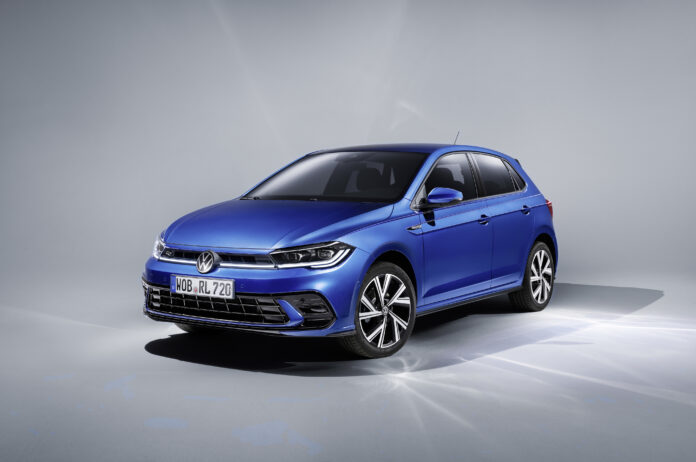
Production of the new Polo recently commenced at Volkswagen’s manufacturing plant in Kariega (formerly known as Uitenhage).
The Volkswagen manufacturing plant is currently operating on a three-shift pattern and building the new Polo (including the Polo GTI) for local and international markets.
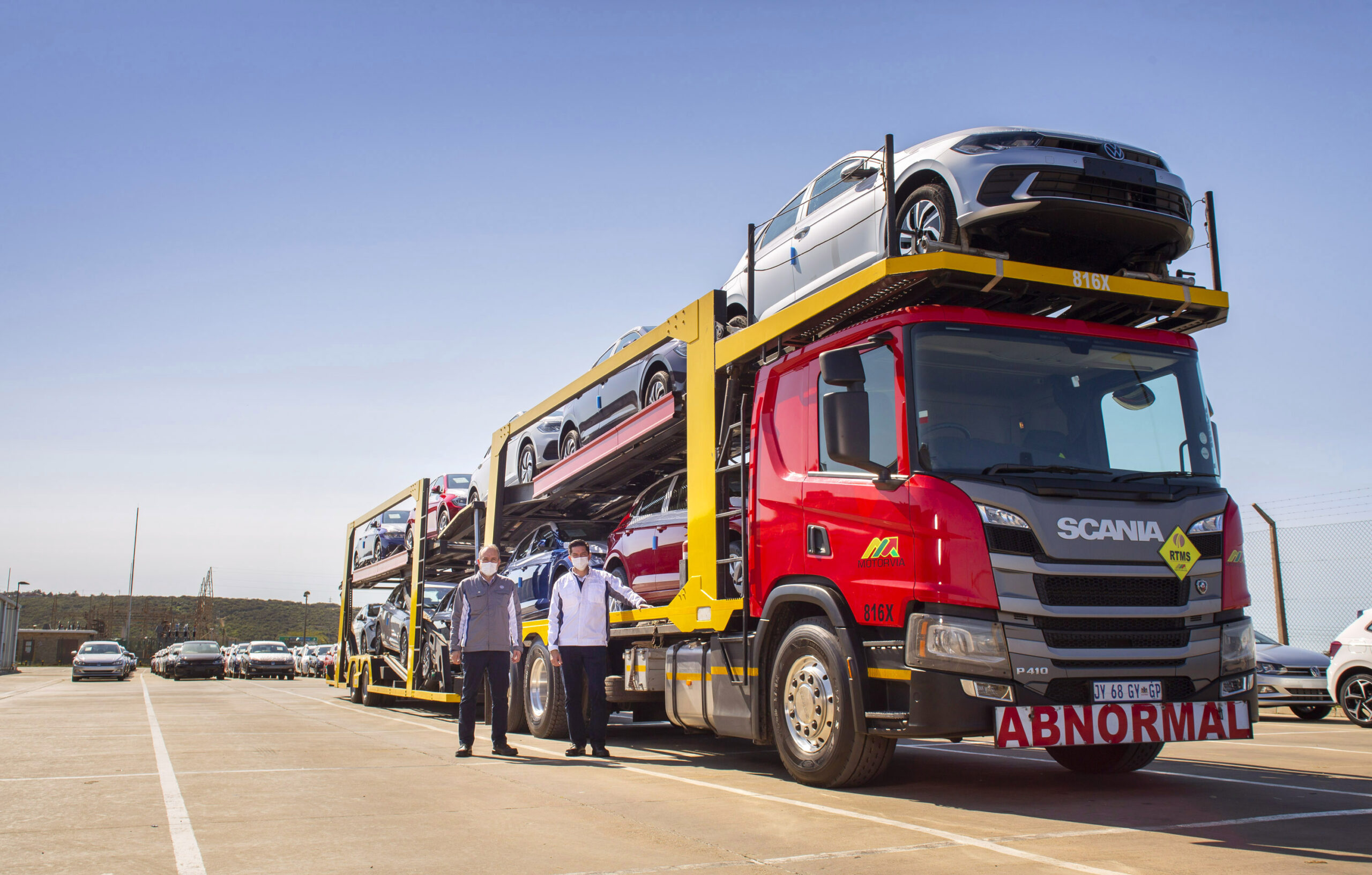
The first consignment of new Polos left the Volkswagen manufacturing plant in the last week of August 2021. The vehicles will be shipped to overseas markets from the Gqeberha harbour.
The Volkswagen Polo is currently manufactured in Brazil, China, Spain and South Africa. The Polos built in Kariega are exported to all right-hand-drive markets worldwide and Volkswagen also supplements production for left-hand-drive markets. Kariega is also the sole manufacturer of the Polo GTI.
The Volkswagen Polo was first launched in South Africa in October 1996 and has continued to be a sales success over the past 25 years.
Since the sixth generation Volkswagen Polo was launched in the local market in January 2018, over 400 000 units have been manufactured in Kariega, with more than 326 000 units (over 80% of the total volume) being exported to international markets. In the three years since the sixth generation of the hatchback was launched in the local market, it has sold a total of 73 439 units.
VWSA Production Director, Ulrich Schwabe (left) and VWSA Chairman and Managing Director, Dr Robert Cisek with the first consignment of new Polos as they leave Volkswagen’s Kariega manufacturing plant.
“The Volkswagen Polo is the second best-selling passenger vehicle in South Africa (behind the Polo Vivo) and an important derivative for our brand. In 2021 alone, we have sold over 10 000 Polos in the local market giving Volkswagen a share of 21.8% in the A0 Hatch segment,” said Steffen Knapp, Head of the Volkswagen Passenger Cars Brand.
The new Volkswagen Polo will retail from Volkswagen Dealers in the first quarter of 2022.
Volkswagen has taken the next step in its electric mobility strategy.
Volkswagen’s electric mobility strategy kicked off in 2020 with the launch of an e-Golf test fleet. The e-Golfs were used for research purposes and testing by motoring media as well as Volkswagen dealers in an effort to gain valuable insights into the experiences of living with an electric vehicle in South Africa.
“It is important for us to conduct thorough research on electric vehicles before introducing them in South Africa. With the e-Golf test fleet, we exposed hundreds of Volkswagen customers to electric vehicles and over 90% of those customers indicated that they would consider buying an electric vehicle in the future,” said Steffen Knapp, Head of the Volkswagen Passenger Car Brand.
“This year, we also brought in a fleet of Volkswagen ID.3 vehicles which were used for experiential events for corporate clients, dealers as well as motoring media,” added Knapp.
The second phase of Volkswagen’s strategy will see the introduction of an all-electric ID.4 test fleet in 2022.
“Most South African drivers currently prefer internal combustion engine cars. In order to be South Africa’s best-selling electric vehicle brand, we first need to educate our consumers by getting as many of them as possible to experience electric vehicles with the hope of changing perceptions. The introduction of the all-electric and best-selling ID.4 will assist us with gaining valuable insights which will pave the way for Volkswagen to include electric vehicles in the future product portfolio in South Africa,” concluded Knapp.
The ID.4, which is the current World Car of the Year, is Volkswagen’s first all-electric compact SUV and the Volkswagen Group’s best-selling electric model. The ID.4 is a one-of-a-kind electric SUV which offers customers a sporty driving experience that is also effortlessly comfortable. With its striking exterior design, it offers a spacious interior and cutting-edge solutions for displays, infotainment and assist systems. The ID.4 also offers ranges of up to 522 kilometres.
The third phase of the electric mobility strategy will see the first fully electric Volkswagen vehicles going on sale in South Africa.
Efficient drilling inclined surfaces is not a problem for flat bottom heads.
Back in the early 2000s, the introduction of ISCAR’s MULTI-MASTER system of rotating tools with interchangeable carbide heads played a significant role in the development of cutting tools. Tool assemblies with exchangeable heads were known long before ISCAR’s MULTI-MASTER. This was a product that changed the traditional view of the design concept of such systems.
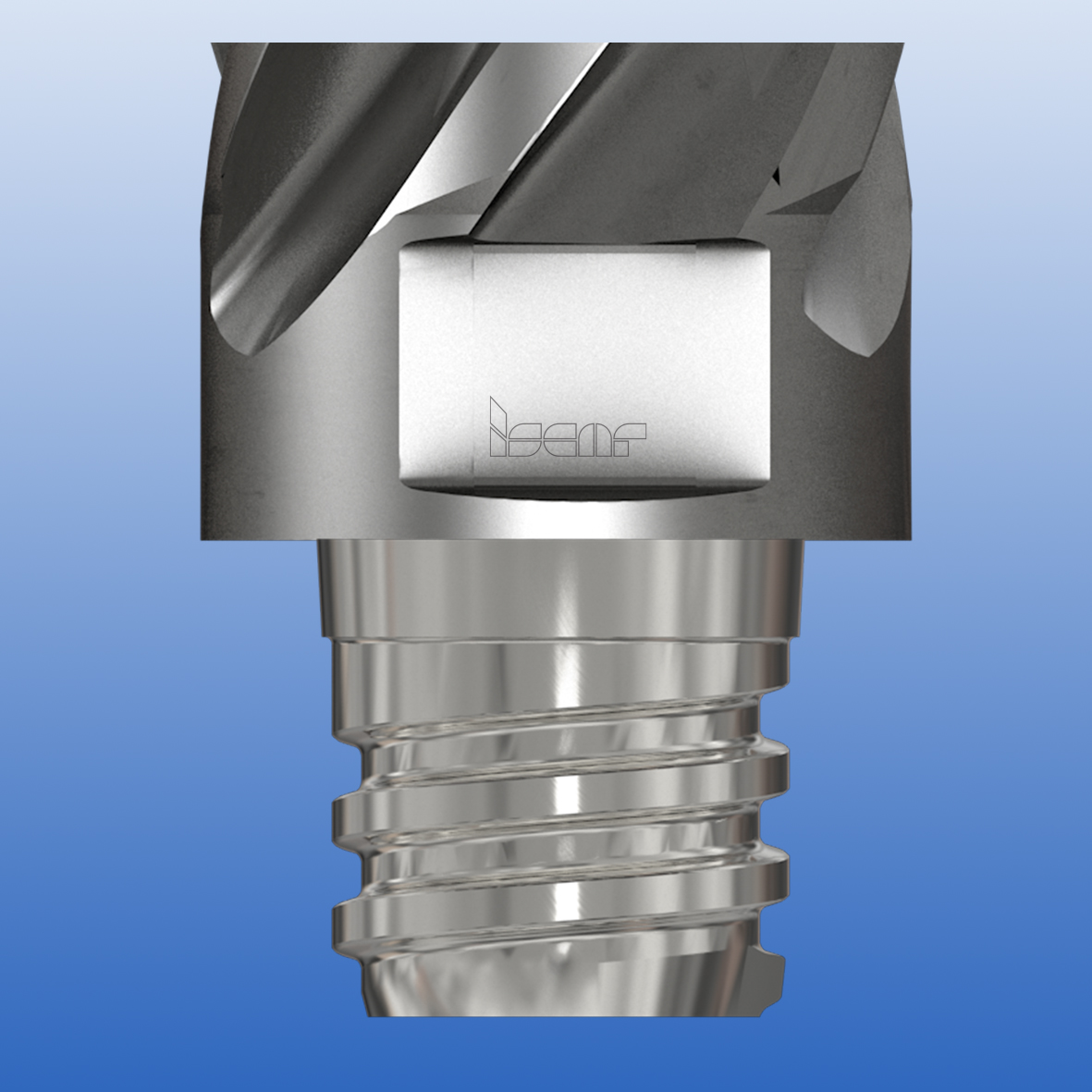
Within the MULTI-MASTER product line, heads are secured by using a thread connection. Cemented carbide is a very hard and wear-resistant material and has lower impact strength when compared to high-speed steel. In a threaded carbide part, the thread is a source of stress concentrators that is crucial for tool functioning, especially under cyclic loading. Rotating tools with exchangeable carbide heads are reasonable in a relatively small diameter range, typically 6-25 mm (.25″-1.00″), which limits appropriate thread diameters and the height of a thread profile.
The above points make it problematic to use standard threads and strong
A special profile thread facilitates reliability and robustness of the MULTI-MASTER line.
ly determine a special thread shape to comply with the specifications of the connection. Therefore, a thread connection as the head clamping element was highly questionable. Fortunately, the MULTI-MASTER, which is based on the threads of a specially designed profile,
dismissed all doubts and its success led to a new look on common canons. Sometime after that, almost every tool manufacturer developed its own system for rotating tools with exchangeable threaded carbide heads.
Tools with threaded heads have significant advantages as they demonstrate impressive versatility, provide rational utilization of cemented carbide and are user-friendly with simple head replacement. It has been frequently asked what are the secrets are of the MULTI-MASTER’s success and what are the features that ensure its popularity and longevity of the product.
Aside from the benefits outlined above, which are crucial for tools with exchangeable threaded heads, the MULTI-MASTER provides high dimensional repeatability with its face-contact design concept. This concept holds the “no setup” principle for replacing a worn head – no additional setup operations for adjustment are necessary and the head can be changed without removing the tool from the machine.
Another unique aspect of the MULTI-MASTER is its very wide variety of heads that cover a broad-spectrum of applications in milling, hole making, engraving, and gearing. In milling operations, these cover square shoulders, faces, 3D surfaces, chamfers, cavities and pockets, slots and grooves, threads and machining by high-speed- and high-feed milling methods. And in hole-making operations, center and spot drilling, countersinking, etc.
Combining two types of heads is a beneficial combination of two design approaches, such as fully ground heads from solid blanks and heads from pre-shaped sintered inserts. Together with a wide choice of shanks, adaptors, and reducers significantly simplifies the process of finding the best tool configuration for a variety of metal cutting operations. Apart from that, the line and its products are ideal for tailor-made products, which make tool customization much easier. All of this turns the robust MULTI-MASTER line into a powerful tool for improving productivity and cutting production costs while ensuring longstanding customer commitment.
A new horizon of applications starts with ISCAR’s new thread size T12, intended for end milling heads with a 32 mm (1.25″) diameter. Even though solid carbide endmills in this diameter are not common due to their high cost, there are industrial sectors, such as aerospace that need such tools.
Assemblies with exchangeable heads provide a much more cost-efficient solution and ISCAR is enthusiastic about its prospects of new developments. It’s important to note that among ISCAR’s introduced products, there are 5-flute endmill heads with variable helix that were designed specifically for machining difficult-to-cut titanium alloys and high temperature materials (ISO S group of application). The heads have a corner radius of 4 and 5 mm (.120″, .250″, .375″), which are typical for aircraft part production.
In the aerospace industry, the line was enhanced with 6-flute endmill heads in diameters of 8-25 mm (.315″-1.00″) for machining titanium, including hard-to-cut β- and near β-alloys especially by the trochoidal milling method. The heads feature a combination of different helix and variable angular pitch to improve chatter stability.
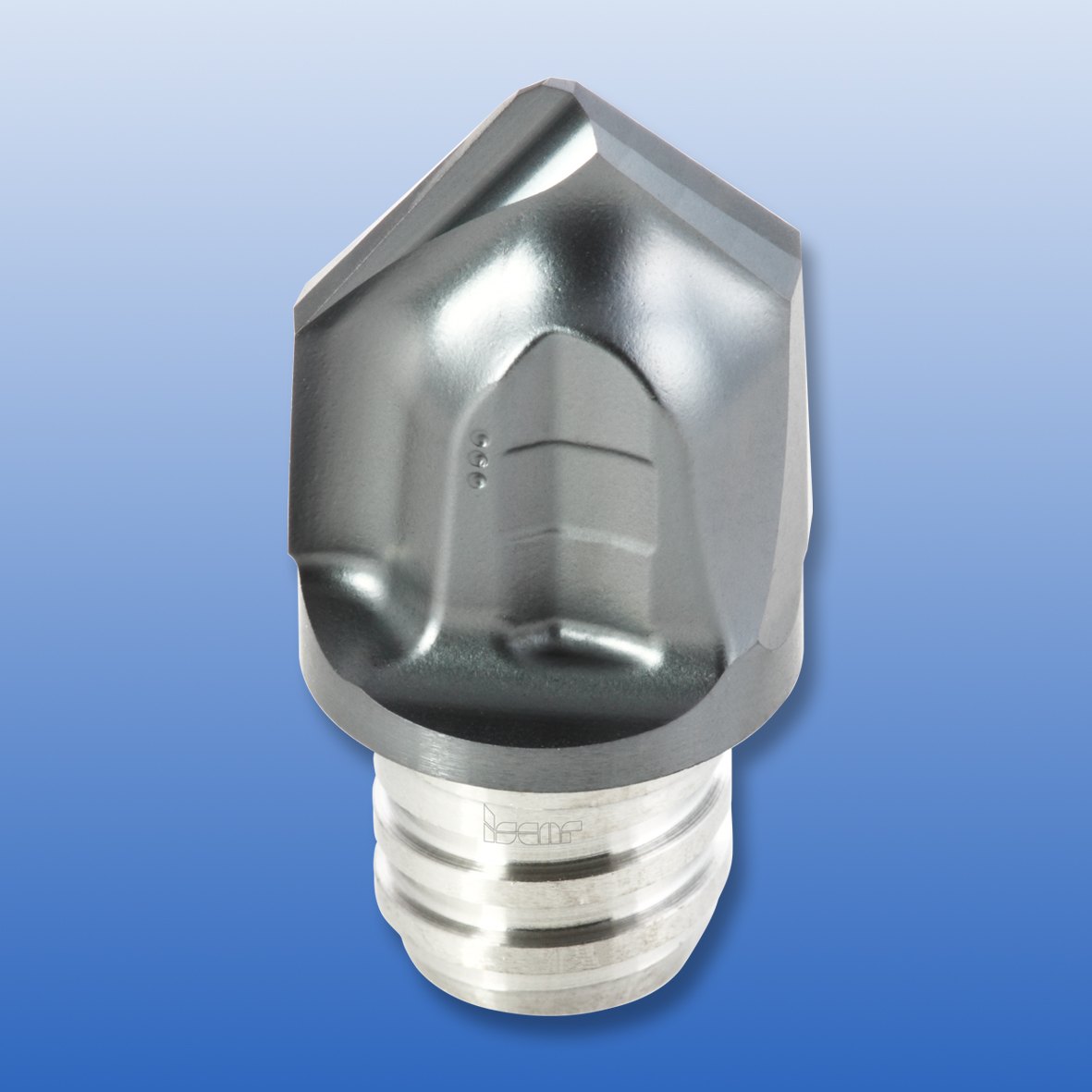
A 100°countersink head is commonly used in manufacturing aircraft parts.
A typical aircraft countersunk screw requires a 100°countersink. The same angle is often needed for riveting. The MULTI-MASTER provides an appropriate solution with its newly developed 2-flute countersink heads with 100°-point angle in diameters 9.525-19.05 mm (.375″-.750″). The heads are also suitable for chamfering and spot drilling.
The growth of 5-axis CNC machines has brought new efficient strategies for milling complex 3D shapes. This has increased the demands for cutting tools with a specific geometry, i.e., barrel endmills.
Following new needs, MULTI-MASTER replenished its range with appropriate heads that were successfully adopted by the customer, particularly in the aerospace, medical, and die and mould industries.
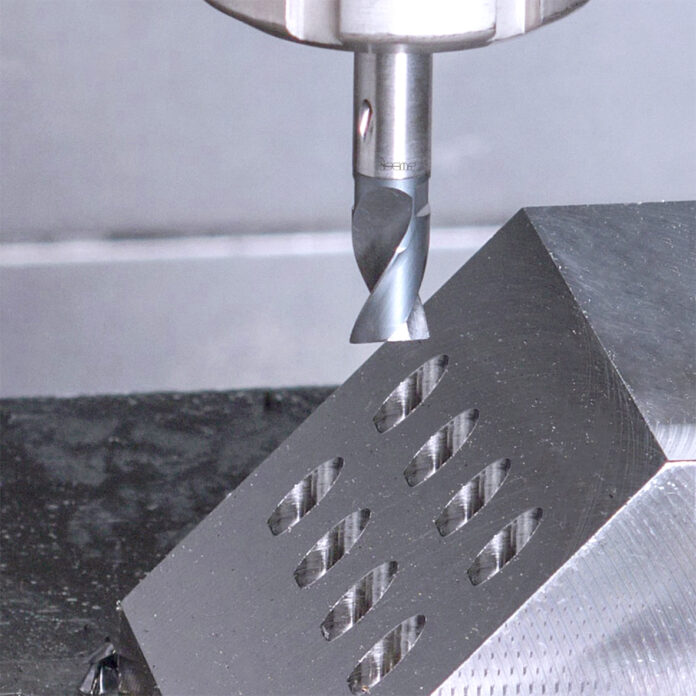
Efficient drilling inclined surfaces is not a problem for flat bottom heads.
In hole making, the recently introduced precise flat bottom drilling heads have considerably expanded the line applicability in shallow drilling operations for steel, stainless steel and cast iron (ISO P and K groups of application) including direct drilling inclined surfaces. The head diameter tolerance meets the accuracy grade h7, while the head drilling capabilities extend up to 1.2 of the diameters.
ISCAR’s motto “be more user- friendly” relates to the recent upgrade of the MULTI-MASTER groove milling head with a new clamping option. Incorporating a hexalobular TORX recess into a head design enables securing the head with ISCAR’s fix- or adjustable torque wrenches for reliable clamping.
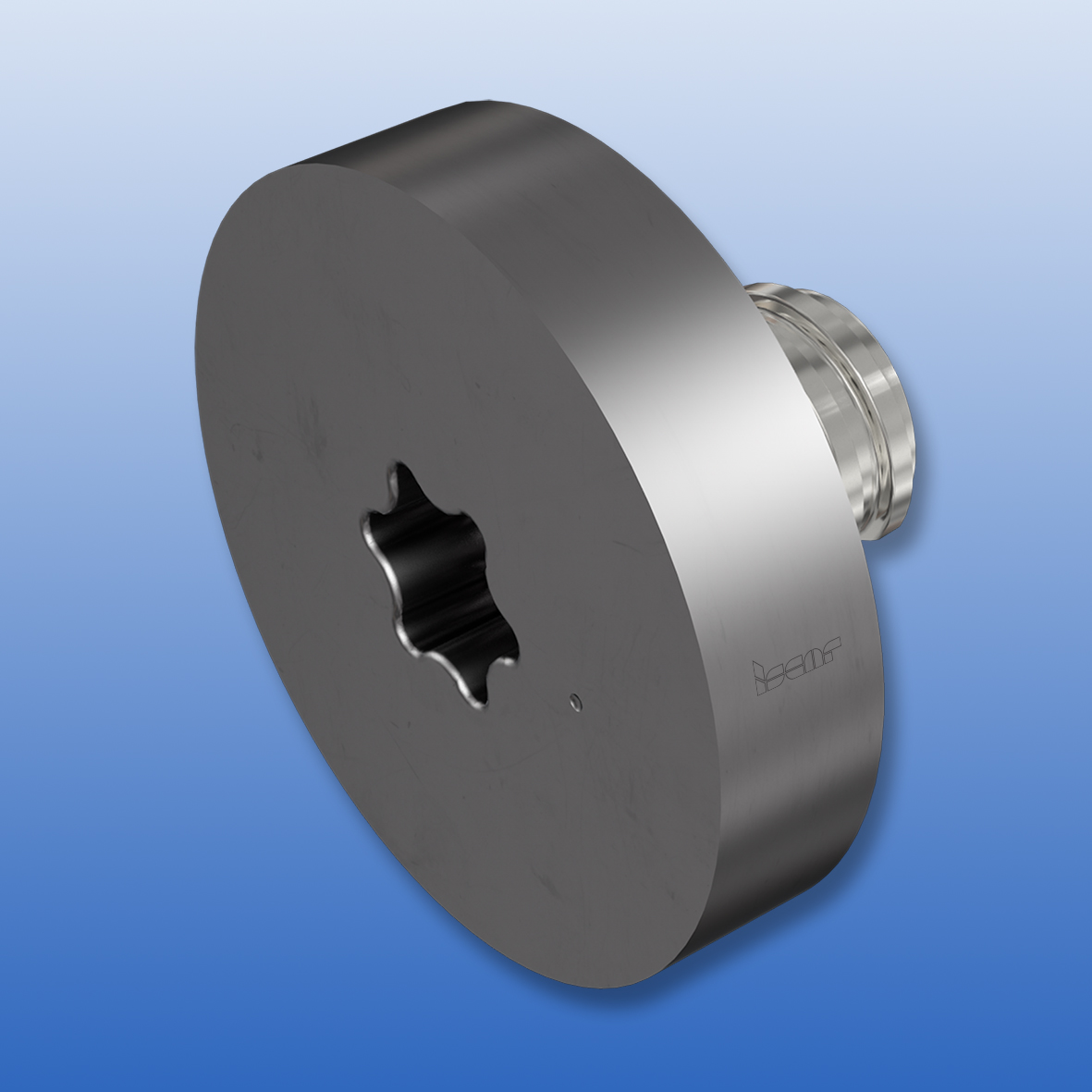
A disc-type blank head is ideal for customized solutions in milling slots and grooves. The hexalobular recess in a head face is intended for applying TORX-tipped wrenches with controlled torque for reliable clamping.
An advantage of the MULTI-MASTER is that the heads are excellent to produce special profiles. This line contains several threaded blanks from uncoated cemented carbides for tailor-made products. A short time ago the range of available blanks was expanded by disc-shape semi-finished heads, which are successfully used for customized solutions in milling slots, grooves, threads, splines, and many more.
The above examples not only illustrate the development directions of one of the leading rotating tool systems with exchangeable carbide heads, but distinctly show that the sources for development and improvement of system capabilities are far from being exhausted.
The needs of modern manufacturing bring more and more requests and open new application fields that require an appropriate tooling response. The history of ISCAR’s MULTI-MASTER concludes with high versatility of tools with exchangeable heads and highlights their ability to meet growing industrial demands.
For more information, please contact ISCAR South Africa (PTY) LTD – Tel: 011 997-2700.
Ford South Africa has created around 1 200 incremental jobs by adding a third shift as part of the $1.05-billion investment in its Silverton Assembly Plant.
The local workforce has increased from the current 4 200 Ford South Africa employees to approximately 5 000, along with an additional 440 jobs at the plant’s on-site service provider. This takes the total Ford employees at the Silverton facility to over 4 100, with 850 people employed at Ford’s Struandale Engine Plant in Gqeberha (formerly Port Elizabeth). The reintroduction of the third shift will support expanded production of the current Ranger pickup to meet strong local and international demand. It will also enable an increased production capacity for the next-generation Ranger, starting in 2022.
This is the first use of a three-shift production schedule since it was implemented as a temporary measure during the second half of 2019 to fulfil higher production volumes required for the current Ranger – and will see the Silverton Assembly Plant operating around the clock, five days a week.
“Our key objectives with the $1.05-billion investment in the Silverton Assembly Plant and our supplier facilities are to expand our production capacity, and to introduce the most advanced technologies and systems as we modernise our manufacturing operations to bring them in line with the best in the world,” says Ockert Berry, VP Operations at Ford South Africa.
“Crucially for our communities, the higher production volumes mean more jobs, and we are delighted to add the 1 200 jobs that now fill the third shift from the beginning of September,” Berry says. “We first ran three shifts and 24-hour production for a limited period in 2019 to meet higher volume targets, and we are delighted to reinstate this extra shift as a permanent fixture as we ramp up our production.
“The employees that were brought on board and trained in 2019 were given first option to take up the new positions, and it is fantastic to see our Ford family growing as we head into the most exciting and dynamic chapter of Ford’s history in South Africa yet as we prepare for the next-generation Ranger in 2022,” Berry adds.
Ford Silverton assembly line.
With the additional shift, the Silverton Assembly Plant will be capable of producing up to 720 vehicles per day, or 240 units per shift – which equates to one new Ranger coming off the line every two minutes. Two-thirds of the Rangers produced are exported to more than 100 global markets, including Europe where it is the top-selling pickup. The balance is sold in South Africa, regularly achieving overall top-three sales.
When the next-generation Ranger is launched in 2022, the facility will have an annual installed capacity for 200 000 vehicles – which is nearly double the 110 000 units it was capable of when production of the current Ranger pickup began in 2011, and a significant increase from the 168 000 units prior to the commencement of the latest investment.
Modernised, more efficient, higher-volume assembly line
To realise the new production targets, the Silverton plant’s assembly line has undergone an extensive transformation focused on wide-ranging upgrades to modernise the facility, enhance efficiency and improve production quality throughout the plant. Additionally, Ford is currently constructing an all-new Body Shop and Stamping Plant on the Silverton site, along with a new in-house Frame Line in the adjacent Tshwane Automotive Special Economic Zone (TASEZ).
Ford Silverton Body Shop and Stamping Plant.
Most of the assembly line changes were completed during a strategic seven-week shutdown of the plant in July and August this year, with construction and engineering teams swooping in to remove the old equipment and install the latest technologies and production systems.
“The seven-week shutdown enabled us to implement the largest and most comprehensive upgrade and modernisation of the Silverton Assembly Plant to date,” says Plant Manager Tim Day. “Our entire focus is on being world-class and comparable with the best Ford manufacturing plants globally. This is essential as we work towards delivering the required production volumes and achieving the highest quality levels for our customers.
Ford Silverton Stamping Plant.
“The biggest change has been a total redesign of the plant layout,” Day says. “The progressive evolution of the plant saw it growing organically over the years, which resulted in a less-than-ideal layout. Accordingly, we’ve completely reworked the assembly line to maximise efficiency through the vehicle assembly and validation processes.
“We’ve removed roughly a kilometre and 20 transactions out of the previous assembly line flow by eliminating the back-and-forth movement of vehicles within the plant during the various stages of production,” he adds. “This will result in all of the manufacturing processes and quality checks being performed in the zone where it’s manufactured, contributing towards greater efficiency and more effective quality control before the vehicle moves to the next station.”
High-tech skillet system with moving platforms
Aside from the immensely complex logistics of keeping a fast-moving assembly line running optimally, ergonomics has gained new emphasis for the operators too. Most notably, the shift from fixed vehicle carriers to a flexible new skillet system has transformed the way individual tasks are performed by employees on the line.
“We did away with the previous vehicle carriers and replicated the skillet system which is used at Ford’s leading plants around the world, including the Ranger plant in Thailand and the F-150 plant in the US,” Day explains. “The skillet system is far less bulky and restrictive, and eliminates the various platforms and levels that people had to work around previously.”
With the skillets, the vehicle is automatically raised or lowered based on the ideal height for the completion of the required assembly task. It can also be adjusted to suit the height of the individual operators – thereby greatly improving the ergonomics and working conditions for the employees, improving cycle times and contributing to enhanced safety.
“An additional benefit of the skillet system is that it is based on a moving platform, which eliminates the need for the operators to continuously reposition themselves to perform the assembly operations while keeping up with the vehicle as it progresses down the line,” Day says. “This allows the operators to focus all of their attention on building the vehicle, driving big improvements in efficiency, quality and first-time-through (FTT).”
The plant has also installed an all-new Box Line for the Ranger’s load compartment, a new fully automated robotic station for the precise application of the windscreen seal, and a specially designed instrument panel sub-assembly line. There’s an advanced new ‘Vac and Fill’ facility that integrates the filling of the Ranger’s liquids (fuel, brake fluid and engine coolant) and the air-conditioner gas – the new system replacing the inefficient multi-station configuration used previously.
The final integration of the automated Wheel and Tyre Facility, which was launched in September last year, has been completed. The fitted wheels and tyres are now automatically sequenced onto the assembly line via the roof of the main plant, eliminating the use of trolleys and the movement of vehicles and people. A series of latest-generation wheel and headlight alignment booths are another important new feature of the plant upgrades, complemented by a rigorous new water test facility that uses high-pressure jets to pinpoint any water intrusion into the cabin of the vehicle.
Uncompromising world-class quality
Taking the unwavering focus on product quality to even greater heights, a completely new Customer Acceptance Line (CAL) facility has been installed where specialised quality inspectors scrutinise every aspect of the vehicle on a brightly lit audit line – validating the accurate fitment of parts, paint and bodywork quality, and the operation of all vehicle systems.
Thereafter the Ranger is driven on a newly constructed ‘rattle and squeak’ track which incorporates a variety of road surfaces to ensure the build integrity of the vehicle. A new ‘clear vision’ track has been constructed, which checks that the vehicle’s wheel alignment is accurately set when driving on the perfectly level surface, ensuring that it doesn’t pull to one side. Only after passing these final quality checks is it signed off and ready for delivery to local or export customers.
A new Vehicle Modification Centre is being constructed too, for the on-site fitment of a variety of optional Ford-approved accessories. This facility will have its own dedicated rattle and squeak track to make sure Ford’s stringent quality standards are maintained in the final fitment process.
“We have invested extensively in the complete integration and centralisation of our quality systems,” Day points out. “This allows every operator, team leader, process coach, supervisor or manager to actively track quality performance throughout the assembly line, and immediately identify and correct any concerns that appear. Buffer areas have also been introduced between the different sections of the assembly line, which allows any off-line work or repairs to be conducted without impacting the rest of the line.”
Investing in people
Extensive training has been completed with the existing and new Silverton Assembly Plant employees and suppliers to facilitate the smooth transition and implementation of the new technologies and systems. “People are our most important and valuable asset, so along with the plant upgrades and associated training, we have also invested in the aesthetics and practical elements of the entire facility to turn it into a more modern, relaxed, respectful and welcoming work environment,” Day says.
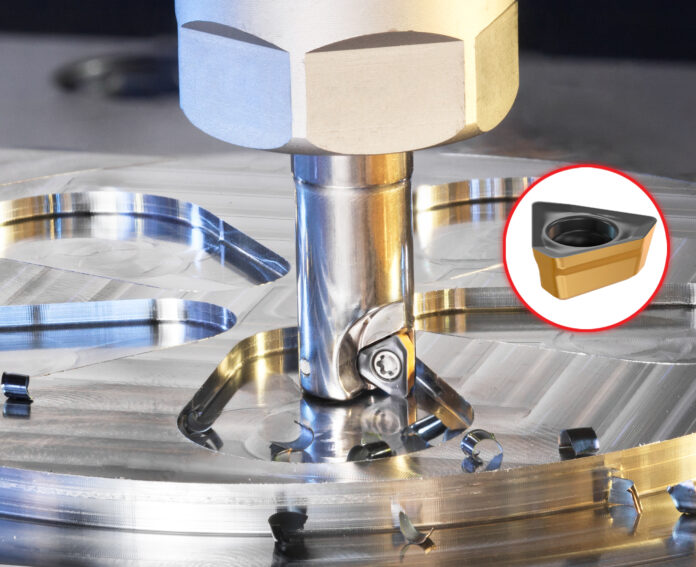
ISCAR recently expanded its HM390 line of milling tools with triangular insert line with HELI-3-MILL – a family of indexable cutters carrying the HM390 TPKT 0502PDR 5 mm edge triangular insert. The design, based on its successful predecessors, provides a smaller insert, enables high metal removal rates, and offers an effective and economical solution for milling 90º shoulders.
The HELI-3-MILL tools are intended for applications that are traditionally aimed for solid carbide endmills. Designed for productive rough milling at high feed rates of compact parts, small-size cavities, pockets, etc., the new tools are particularly applicable to miniature parts manufacturing, medical components and more. While they offer an ideal solution for low power machining centers and turn-milling machine tools, the low power consumption allows the cutters to be applied on machine tools with limited power, small capacity machining centers and turn-milling machines.
Available in a 10 – 16 mm diameter range, the tools feature a 90º cutting edge angle, advanced cutting geometry to reduce cutting forces and provides smooth cutting, ramping down ability and a maximum 3.5 mm depth of cut. Coolant holes are directed to each cutting edge and the cutter body has a special protective polished coating for uninterrupted chip flow and protection from corrosion and wear.
Reduced feed per tooth working values contribute to decreasing impact load and ensure soft and light cutting action, while the high tooth density, enabled by the small-size insert facilitates stable cutting due to several teeth engaging in the material during milling.
The HM390 TPKT 0502PDR single-sided triangular inserts feature three helical cutting edges, with progressive cutting geometry providing positive radial and axial rake angles on the cutter, and a wiper flat for improved surface finish. The inserts are produced from ISCAR’s latest SUMO TEC carbide grades, which significantly increase productivity.
The HM390 TPCT 0502PDR peripherally ground inserts integrate a sharp cutting edge used for semi-finishing and finishing applications. The insert enables smooth machining, exerting low cutting forces, and is specially designed for milling various high-temperature alloys. These features allow a higher table feed to be applied in shallow milling applications.
The following HELI-3-MILL cutter types are available at this stage: HM390 ETP…-05 endmills carrying the triangular HM390 TPKT 0502PDR inserts in a diameter range of 10 – 16 mm, and HM390 ETP…MM-05 endmills with MULTI-MASTER threaded adaptation in 10, 12, 14 and 16 mm diameters, carrying HM390 TPKT 0502PDR triangular inserts. The MULTI-MASTER connection expands the variety of tool configurations.
Shank types are available in cylindrical and conical shanks in a wide selection of diameters, lengths and materials, allowing operators to choose the proper shank according to their application requirements. Indexing is fast and convenient due to the threaded connection. Since the tool is not removed from the machine, no set-up time is required for tool head replacement.
The HELI-3-MILL family offers a productive solution in a broad spectrum of milling applications, including rough to finish machining on main engineering materials and milling square shoulders, planes (especially next to shoulders), slots, and inclined surfaces and cavities by ramping or helical interpolation. The unique tool design significantly minimizes and even eliminates mismatch in multi-pass milling of high shoulders.
For more information, please contact ISCAR South Africa (PTY) LTD – Tel: 011 997-2700.
Left to right, Philip Thompson, Managing Director, Gavin Kriek, Director, Thomas Zackey, Director Fred Thompson, Director.
Irishmen and Brothers Fred and Frank Thompson, founders of Benoni based Thompson Machine Tools in October 1971, started the company as a two- man enterprise focussing on the buying and selling of used machine tools.
Irishmen and Brothers Fred and Frank Thompson, founders of Benoni based Thompson Machine Tools in October 1971.
Their youngest brother, Philip, joined the company in 1972 serving his apprenticeship as a fitter and turner, while familiarizing himself with machine tools, after which he took over the position as a sales representative.
With another brother, John Thompson, joining the company as a sales representative in 1974, Thompson Machine Tools developed more and more into a family business and even today in 2021 is still a family business.
Business grew rapidly, and in 1973 a large showroom was built in Elston Avenue, Benoni, with staff numbers jumping to twelve people. Just two years later the company decided to purchase a three acre industrial stand in Apex, on which a 5500 square metre building, with workshop, showroom and offices, was built. It was the most modern and up-to- date machine tool workshop and showroom in southern Africa with a floor space of 2800 square metres. “This was to be the largest machine tool showroom in the southern hemisphere,” reflects Fred Thompson as he recalls the halcyon days of the late Seventies and early Eighties.”
A Newspaper Clip showing the Thompson Brothers 40 Years ago during Thompson Machine Tools’ 10th Anniversary. Left to right, John Thompson, Fred Thompson, Frank Thompson and Philip Thompson.
“But sadly, all good things must come to an end and so it was that between 1982 and 1987, the machine tool industry went through what must rank as one of its worst ever recessions.”
“In the spring of 1983, Frank decided to sell his shares to his two younger brothers, John and Philip, both of whom had been involved with the company for many years. With sales at an all-time low and interest rates at an all-time high, the next four years were to be the toughest, but ironically the most rewarding, for the company.” Thompson Machine Tools positioned itself at the top amongst the leading machine tool dealers in South Africa.
While in those days a major part of the company’s used machine tools was imported from Britain and Europe, Thompson Machine Tools not only expanded locally in the former province of South Africa, then called Transvaal but all over the Republic, and exports to neighbouring states were on the increase.
Patrick Zackey subsequently joined the company in 1987 as a shareholder and director when Interprovince Engineering Supplies was formed. Several years later he was also instrumental in the forming of Craft Machine Tools but subsequently retired in 2013 when his son Thomas Zackey took over his shares in the company.
Thompson Machine Tools became a major player in the Used Machine Tool Merchants Association (UMTMA), an organisation of reliable, established machinery dealers working together for the betterment of the industrial body of machine tool users. The association was primarily founded to protect the end user of machine tools from unscrupulous dealers. Both brothers, Fred and Frank Thompson, served as chairman of UMTMA on several occasions.
While over the years Thompson Machine Tools became synonymous with used machine tools, back in the early nineties, the company saw a gap in the new machine tool market and it was then that Craft Machine Tools was born. Craft Machine Tools became the dominant force and ever since has been challenging in a market that is extremely competitive.
The Craft Machine Tools Showroom
The company is southern African sole agent for Craft from Taiwan and China, the Dalian Machine Tool Group from China, Fair Friend (Feeler) and WinHo both from Taiwan.
Left to right, Philip Thompson, Managing Director, Gavin Kriek, Director, Thomas Zackey, Director Fred Thompson, Director.
Craft Machine Tools’ product portfolio includes CNC turning centres, CNC machining centres, guillotines, pressbrakes, centre lathes, turret mills, radial & pedestal drills, slotting machines, sawing machines and universal iron workers.
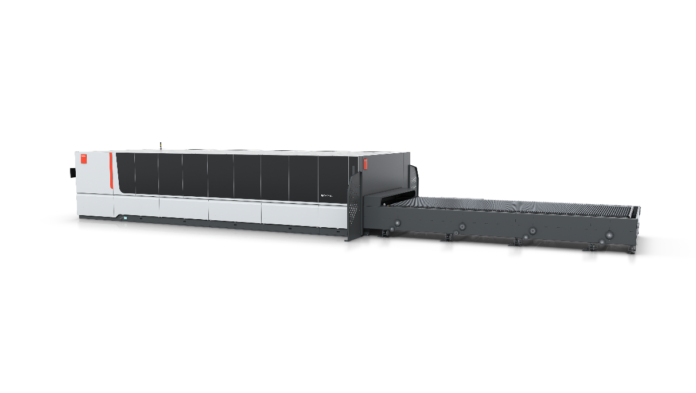
Now in the large format of 6.2 x 2.5 meters: Bystronic introduces the ByCut Smart fiber laser in the new 6225 large format.
More sheet metal, more parts, more variety and a new design. The ByCut Smart 6225 further optimizes sheet utilization thanks to the 6225 cutting format. The new system features up to 10 kilowatts of laser power with the optional BeamShaper and all this at an advantageous price.
More sheet metal, more parts, more variety. Laser cutting systems for larger formats offer users the opportunity to distinguish themselves from the competition without excessive financial investment. That is why Bystronic is expanding its fiber laser product line ByCut Smart with the 6225 format in a new design. The machine can also be equipped with a choice of the Fiber 3000, 4000, 6000, 8000, or 10000 laser sources.
With the new large format, users can process sheet metal with lengths of up to 6.2 meters and widths of 2.5 meters on the ByCut Smart. This increases the productivity of the machine, because cut parts can be nested more efficiently on large-format sheet metal. At the same time, undesirable raw material waste is significantly reduced due to a high degree of material utilization. The BySoft CAM process software supports users in this process with intelligent nesting procedures.
Broad range of cutting applications
Furthermore, the new format increases the variety of cutting applications on the ByCut Smart. Along with various small parts, large parts can also be cut from large-format sheet metal as needed, without interrupting the machine during the laser cutting. This is another competitive advantage not offered by laser cutting systems in current standard formats.
Besides cutting applications with extra-large sheet metal, it is also possible to process sheet metal in smaller formats, lined up on the ByCut Smart’s long cutting table. In this process, users can prepare enough raw material for the fiber laser system to subsequently run in cutting mode for longer.
In addition to ByCut Smart 6225, Bystronic offers the fiber laser in 12020, 8020, 6520, 4020 and 3015 formats.
For more information on the please see www.bystronic.co.za or contact Bystronic on 010 410 0200.