Home Blog Page 32

TUBE PROCESSING – LIMITLESS APPLICATIONS


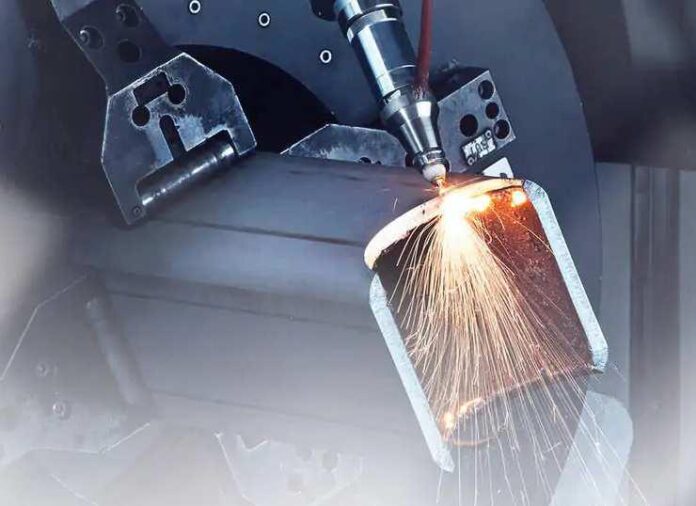
The application of processed tubes and profiles is manifold, whether in the automotive industry, furniture design, architecture, petrochemical industry or commercial vehicle construction. In many industries, the laser-assisted processing of tubes and profiles offers an almost unlimited manufacturing spectrum for components and unique design possibilities.
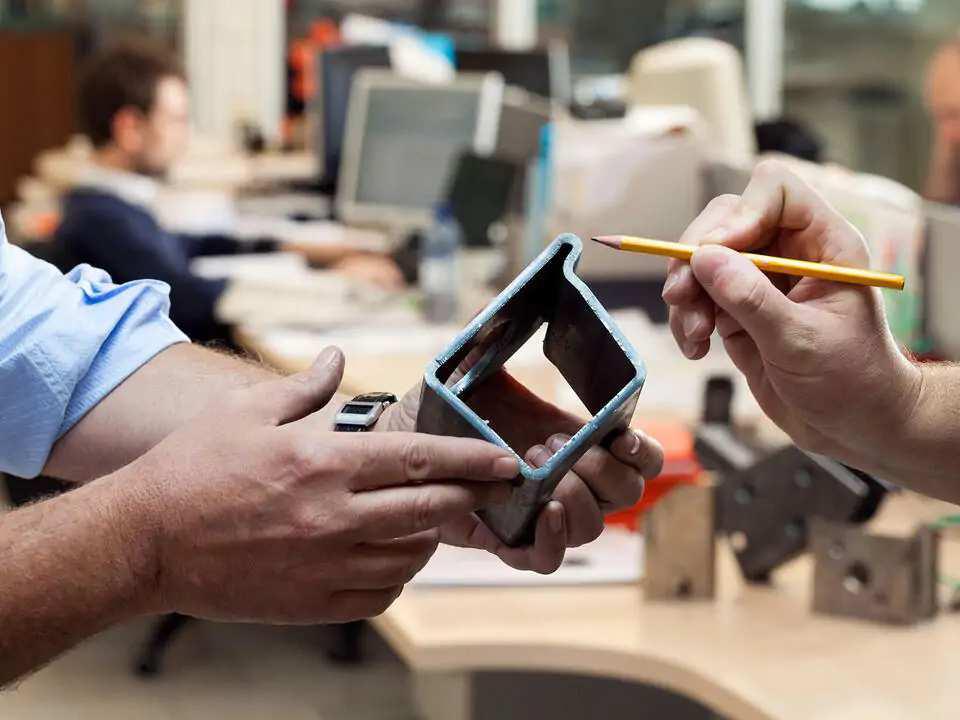
With diameters ranging from 10 to 324 millimetres and pipe and profile lengths up to 12.5 meters, our system solutions offer the largest available selection for the flexible production of small and large series.

CO₂ and fiber laser technology

The right cutting technology for every requirement is important. Depending on the materials that are to be processed and the desired cutting quality and level of productivity, users have the choice between CO2 laser cutting systems and fiber laser cutting systems.

Fiber lasers achieve high cutting speeds in thin material thicknesses. Additionally they boast low power consumption while requiring little maintenance. The special properties of this laser cutting technology enable applications in steel, stainless steel, aluminium and non-ferrous metals, such as copper and brass.

CO2 lasers are characterized by their high cutting quality. Their primary area of application lies in the medium to high range of material thicknesses. The cutting edges achieved with the laser beam excel through burr-free cutting and low scoring. This means that the cut parts can be processed further without reworking.
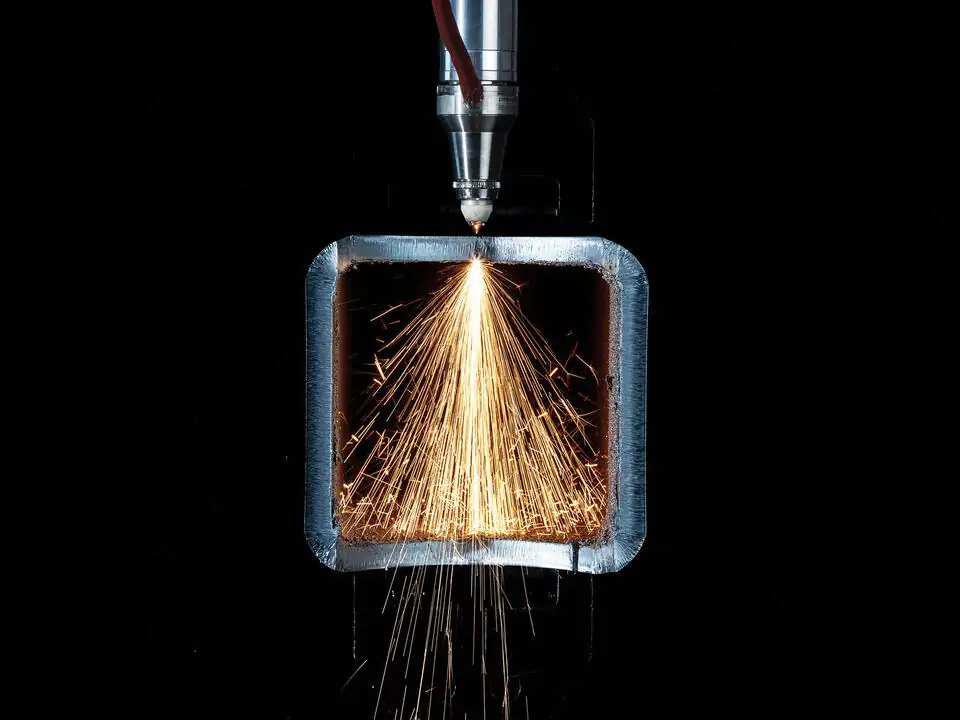
2D and 3D processing

The ability to choose between 2D and 3D laser cutting technology opens up the possibility of individually customized and precise cutting of parts in a very wide variety, such as tubes with round, square, and rectangular shapes as well as profiles with diverse open cross-sections (for example H, L, T, and U cross-sections). In addition to straight cutting edges, the 3D technology also enables bevel cuts up to 45 degrees. This versatility eliminates the need for costly milling, drilling, punching, or sawing processes.
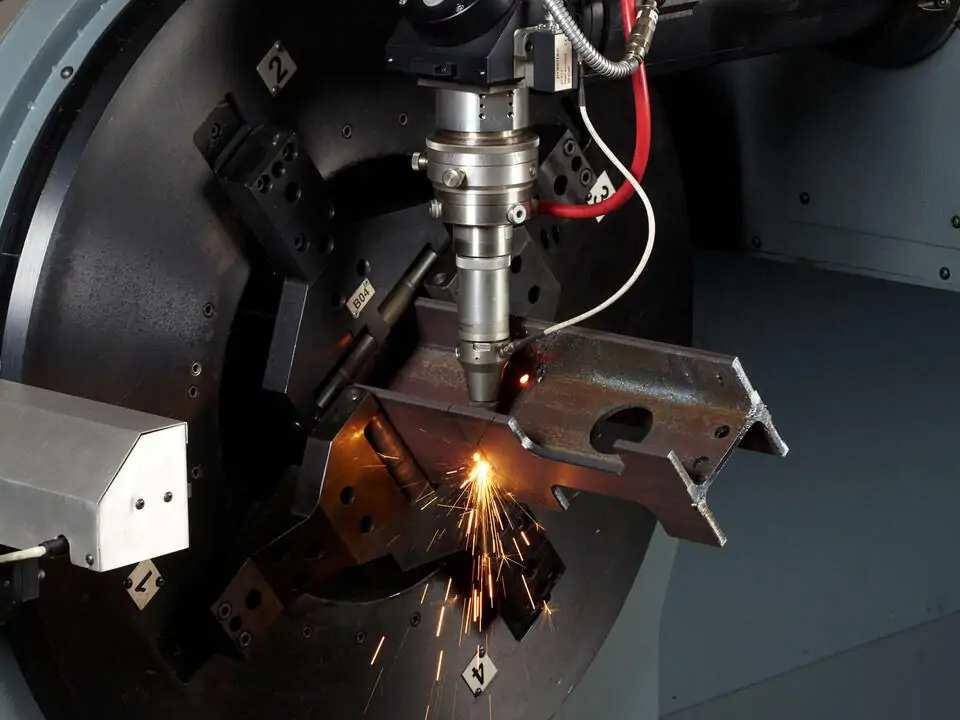
BYTUBE STAR 130 WATCH VIDEO

All you need for your tube laser business is quality and performance in one machine – now also for open sections
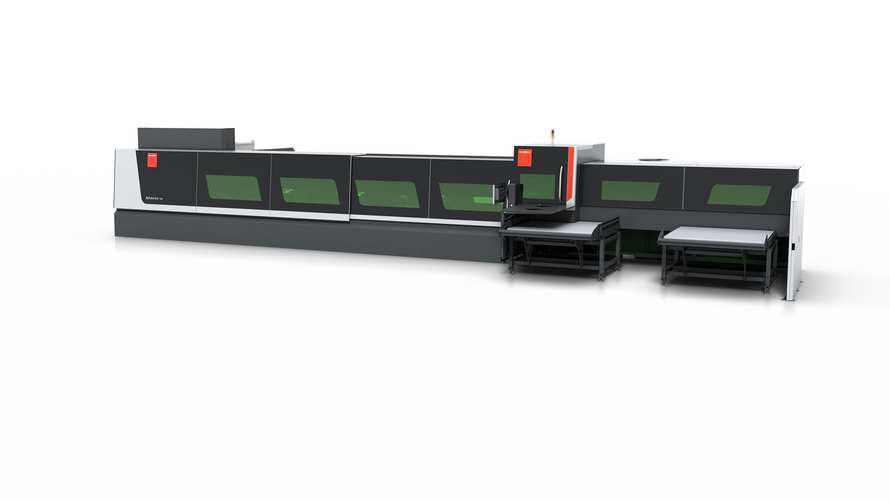
  • The easiest step into the tube laser process is established technology, user-friendly interface (ByVision Tube) plus one machine which does it all without set up/change over.
  • Fully automatic set up also with open profiles and ellipses from 10 to 130 mm full range and for open profiles, no down time for set up, therefore more time for cutting, less human mistakes and more safety for the operators.
  • Quick cut performance and quality in just one feature. Additional linear axis of the cutting head for highest speed and quality in all cutting circumstances and quality guaranteed even with very small tubes.
  • Laserscan and active tube support during the cutting process with real time compensation of tube bending to improve cutting precision and accuracy also for low quality material and with minor impact on process speed.
  • While machine configurations are suitable for all logistics needs, the machine can be left hand or right hand depending on specific flow of the material, resulting in cost reduction thanks to optimization of space and logistic operation.
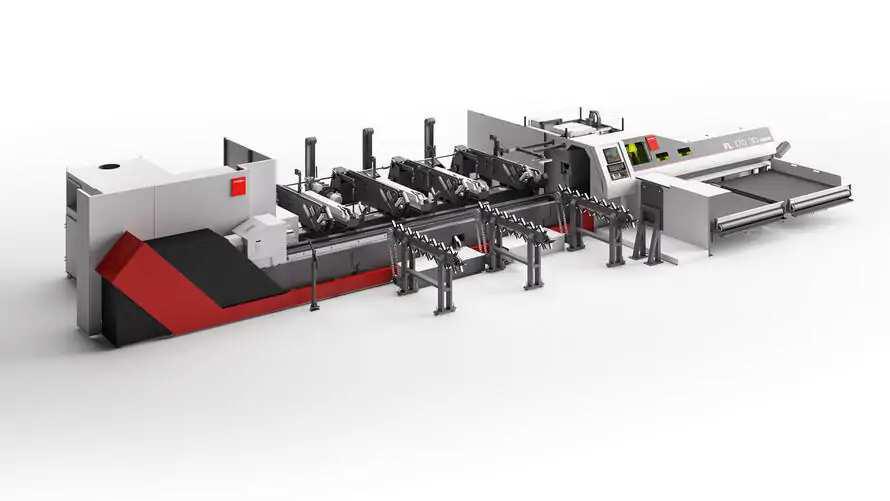
FL 170 WATCH VIDEO


The fiber laser for fast and versatile applications

 Concentrated technology with the cutting system combining the unique benefits of fiber laser technology with the versatility of 3D cutting.

  • Wide range of applications for the cutting of steel, stainless steel, aluminium and non-ferrous metals in diameters from 12 to 168 millimetres and workpiece lengths up to 6 meters.
  • More profit per part as fast cutting processes are combined with comparatively low operating costs and low maintenance requirements.
  • In addition to straight cutting edges, the 3D technology also enables bevel cuts of up to 45 degrees. This versatility eliminates the need for costly milling, drilling, punching or sawing processes.

FL 300

The tube laser for highest demands on productivity and flexibility
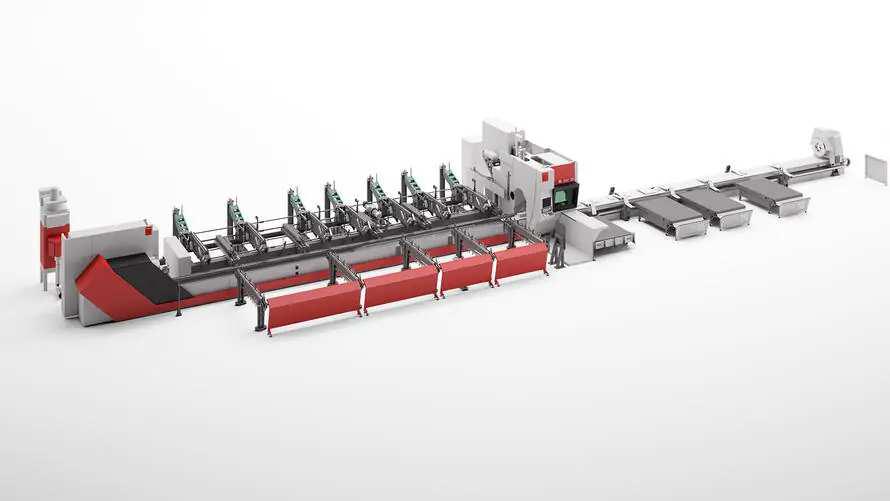
FL 300 WATCH VIDEO

  • Outstanding cutting quality right up to high material thicknesses: The CO₂ laser technology achieves excellent cutting edges with minimal scoring. In addition to straight cutting edges, the 3D cutting head also enables bevel cuts of up to 45 degrees. This versatility eliminates the need for costly milling, drilling, punching or sawing processes.
  • Wide spectrum of applications: Users cut steel, stainless steel and aluminium in diameters between 20 and 324 millimetres and workpiece lengths up to 12 meters.
  • Flexible loading from bundle loading or from chain loading system for open profiles is provided, while subsequently, the precise clamping of the tubes and profiles ensures high-precision processing.
  • Intelligent unloading increases system productivity and reduces downtime when removing finished parts.
  • For longer workpieces, the unloading system’s controllable axes enable any type of tube or profile to be clamped during processing.

For more information on the please see www.bystronic.co.za or contact Bystronic on 010 410 0200.
Visit Bystronic

SBX500 DOUBLETURN M.C.Y

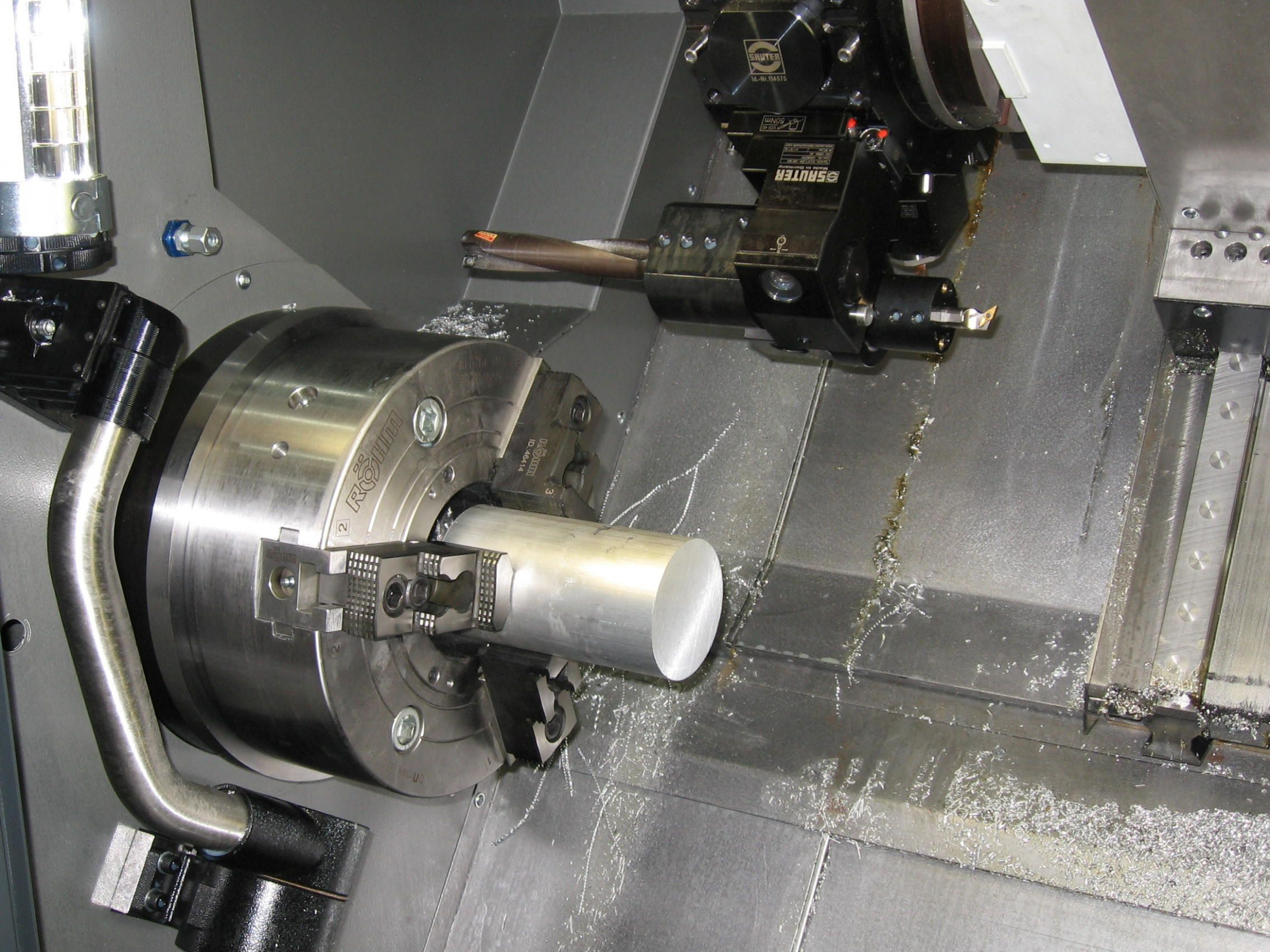
The SBX500 DoubleTurn M.C.Y is a high productivity turning center of a rigid design suitable for medium to large production of simple as well as complex geometrical shapes. Machine execution with Y-axis and live tools allows machining of complex shaped workpieces on a single machine which significantly reduces production time and increases workpiece accuracy. The machine seriously contributes to increased productivity while decreasing investment costs.


Notable features include a modular conception allowing configuring the machine for a wide range of technologies and materials, a counter spindle with passing hole clamping allowing complete machining, Y axis with saddle wedge contributing to increased stability of cutting process and a fast turret with 12 live tools size VDI 40.

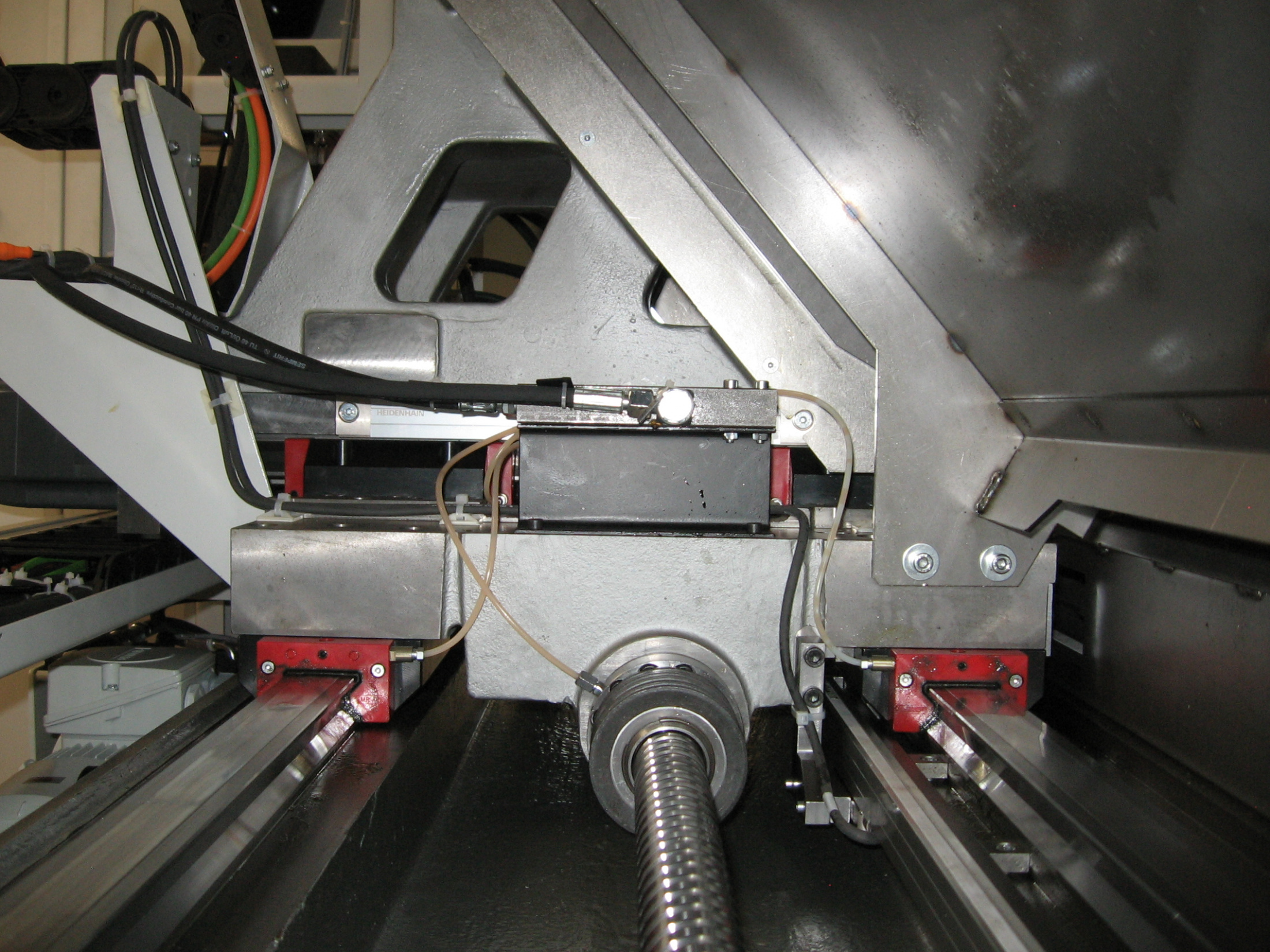
Add to this the C-axes with independent servomotors for achieving precise and stable work piece positioning, linear roller guide ways with bearing capacity dimensioned for hard roughing but also precision of finishing operations, while increased spindle bores extend the machining possibilities for a wider assortment of work pieces.

The integrated control panel improves machine control ergonomics for the operator, while programming in 3D through cycles is provided.

Servo drives with electric energy saving features and an option for industrial robot integration for manipulation of raw material and work pieces add to an impressive line-up.

The SBX500 DoubleTurn M.C.Y  features a max swing diameter of 650 mm, max turning diameter of 550 mm and a max bar diameter of  74/117* mm. The max diameter of bars with spindle reduction sleeve or with spindle prolongation is 66/103* mm.

The max weight of workpiece in centres is 1000 kg with the max weight of overhung workpiece 372 kg.

*valid for optional execution

For more information, contact 600 SA Machine Tools – Cell: 072 157 6003.

Visit 600 SA Machine Tools

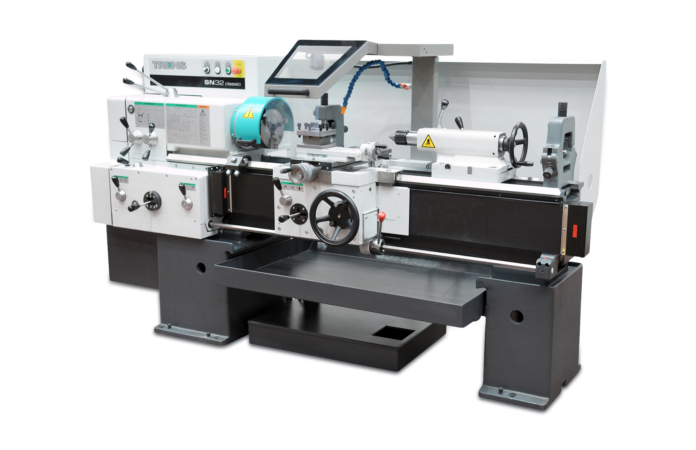
TRENS SN32 UNIVERSAL CENTRE LATHE

SN32 is universal centre lathe with main motor output of 4 kW. A wide operating speed range and its unique design ensure high stability during material turning. This machine delivers outstanding performance and is also suitable for vocational schools. Designed for piece and small-lot production, the SN32 is frequently used in maintenance and repair divisions. TRENS lathes are precise and reliable machines in wide range of versions and optional accessories.

Main characteristic features include a simple and ergonomic control and high precision during machining. Add to this long life time, low operating costs and easy maintenance.

While all important parts are hand scraped, the requirements of safety standard EN ISO 23 125 are provided.

The machine can cut various types of threads with a wide range of pitches.

For more information, contact 600 SA Machine Tools – Cell: 072 157 6003.

Visit 600 SA Machine Tools

TRENS SBL500 SINGLETURN M.C.Y

TRENS SBL500 SINGLETURN M.C.Y

The TRENS SBL500 turning centre with rigid construction slant bed is designed not only for heavy roughing but for demanding finishing operations with focus on high accuracy and surface quality too. Exceptional steadiness of cutting process is ensured by high stiffness of the individual machine components.

Long-term operational reliability designates this machine for turning workshops with continuous operation and high productivity demands. The turning centre can be operated in fully automated mode when equipped with devices for automatic workpiece manipulation.

The machine is equipped with a 12-position turret VDI 40 with live tool positions, C-axis with independent servomotor for achieving precise and stabile work piece position during cutting forces loading and comes with remote diagnostics and data management. Other features include 1500 mm distance between centres, direct measuring of spindle position – high precision at out-of-axis machining of large diameter workpieces, a  wide range of executions and accessories –  hydraulic clamping with chucks or collets, bar feeders, tool probes, automatic door opening, oil mist filtration from work area and covers with reinforced zones providing high level of operator´s safety.

The TRENS SBL500 features a max swing diameter of 600 mm, max turning diameter of 410 mm,     max bar diameter of74/117* mm and a max diameter of bars with spindle reduction sleeve or with spindle prolongation of66/109* mm.

The max weight of workpiece in centres  is 420 kg and max weight of overhung workpiece 215 kg.

*valid for optional execution

For more information, contact 600 SA Machine Tools – Cell: 072 157 6003.

Visit 600 SA Machine Tools

RHINO-M-TURN

ECONOMICAL DOUBLE-SIDED MINI SIZE INSERTS AND HOLDERS

RHINO-M-TURN is a compact, double-sided mini size insert that is suitable for the internal and external turning of small parts and can replace standard positive small inserts like CCMT 06 and DCMT 07.

Although the insert is a double-sided type, it has the same edge angle as the conventional positive insert type when mounted to the holder. This results in minimal vibration due to the low cutting force, as well as good workpiece surface finish and machining accuracy particularly at low depths of cut. In addition, the strong screw clamping design exerts stable machining during operations.

The inserts are available as CNMX, DNMX, WNMX type for finishing and a precise DNGX type suitable for Swiss type automatic lathes. The square holders are available in shank sizes 1212, 1616 for Swiss type automatic lathes and 1616, 2020 for general machining, while the boring bars are available in Ø12 mm and Ø16 mm.

Visit TaeguTec

THE TAEGUTEC POS-S-TURN LINE

The POS-S-TURN line dramatically improves productivity due to its all-directional and high feed turning capabilities.

The XNMV 1105 is a double-sided 4-corner insert with a 70-degree angle. It combines the advantages of the ISO CNMG and DNMG inserts for various machining applications such as external turning, face turning and external profiling.

Highly efficient machining with a maximum 3.5 mm depth of cut in external forward turning and face turning as well as good chip control.

An additional advantage of the XNMV 1105 insert is its unique high feed backward turning capability. This technologically advanced capability is made possible due to the insert’s helical cutting edge that works to reduce cutting forces as well as the insert’s lower entering angle – both features greatly contribute towards higher productivity.

In addition, the insert’s rigidity is strengthened by its increased thickness, while its stability is improved by the insert’s wide support surface.


The T-holder’s strong clamping mechanism enhances stability, which offers excellence in the mass production of automotive parts. By using the existing TXJNR/L-TB high-pressure coolant holder, customers can expect improved productivity, good tool life and chip control.

Visit TaeguTec

GRADE UPGRADE FROM ISCAR

Building a house begins with laying the foundation. The strength and the reliability of the whole house depend on how strong the foundation is. In cutting tool engineering, this foundation is a cutting material. There are various types of cutting materials, such as cemented carbide, polycrystalline diamond, high speed steel, ceramics etc., and each type contains different grades. At various stages in metal cutting history, the introduction of each cutting material and its use has led to a significant change in the level of cutting speeds and, consequently, productivity. However, if the previous century, especially its second half, was marked by the rapid progress of tool materials, today we do not see any significant new solutions in this field. Does this mean that the development of new tool materials has already reached its peak and is experiencing stagnation?

Of course not, it is simply that the new developments are deep within the cutting material and are focused on its structure and can be observed only with the help of scanning electron microscopy (SEM), X-ray diffraction (XRD), electron backscatter diffraction (EBCD), and other sophisticated methods. They cover a tremendously complicated world of coatings that is extremely diverse despite its very small thickness, measured only by microns.

The most commonly available cutting material today is cemented carbide, primarily coated. In terms of performance, it represents a reasonable balance between efficiency, tool life and cost. Cemented carbide is known also as “hard metal”, “tungsten carbide” or simply “carbide.” A combination of cemented carbide, coating, and post-coating treatment produces a carbide grade. Only one of these components – the cemented carbide – is an essential element in the grade, the others are optional.

Cemented carbide is a composite material comprising hard carbide particles that are cemented together by binding metal, mainly cobalt. Most cemented carbides used for producing cutting tools integrate wear-resistant coatings. There are also various treatment processes that are applied to already coated cemented carbide, for example the rake surface of an indexable insert. New developments in cemented carbide as a tool material are concentrated in three directions, such as carbide production technologies, advanced coating methods and innovative post-coating techniques. Considerable success has been achieved in each of these directions, which is reflected in the wealth of new products introduced to the market by leading cutting tool manufacturers.

Cutting tool customers might analyze the grades using parameters such as productivity, tool life and performance. Indeed, the question of how a new product was created to meet customer requirements fades into the background as applicability and efficiency form the main measure of progress from the customer’s point of view.

In upgrading carbide grades, ISCAR is very sensitive to a challenge faced by the metalworking industries. In this context, ISCAR’s tool material solutions, which are developed considering the trends of modern metalworking, can be quite indicative. Take, for example, difficult-to-cut materials such as titanium and heat-resistant steels and exotic super alloys. Recently, the share of their application in industry has increased significantly. Along with the aircraft industry, a traditional consumer of these materials, they may be increasingly found in power engineering, automotive and oil and gas branches. The growing usage of the materials demands technological solutions, including machinery and cutting tools. The new tools require an appropriate foundation made of advanced cutting tool materials to achieve the desired cutting geometry. And for the construction of this foundation, ISCAR offers its new effective “bricks” – upgraded carbide grades developed by company metallurgists in the last few years.

In milling, ISCAR has developed PVD coated IC882 and CVD coated IC5820 grades– two chocolate-color carbide grades for cutting titanium, high-temperature alloys, and stainless steel. An integral component of the grades is a post coating treatment that facilitates longer tool life, due to increased resistance to chipping, notch wear and build-up edge formation. The IC882 grade demonstrates impressive performance when machining conditions are hard, and the advantages of the IC5820 are most fully manifested when applied to milling with pinpointed high-pressure coolant supply.

For drilling applications, the company introduced IC5500, a new grade that features a multi-layer CVD coating and a post-coating treatment to prolong tool life. Following the grade’s success, IC5500 has been utilized in milling products as well, while the new round insert in cutters for machining 3D surfaces such as blades in turbomachinery, for example, are produced solely from this grade.

The PVD coated carbide grade IC806 was designed especially for turning high-temperature superalloys. As a result of the high mark that the grade received from the manufacturers of aerospace components, ISCAR expanded the application range of IC806 for laydown threading inserts.

In addition to cemented carbide, the metalworking industry consumes other hard cutting materials such as ceramics, diamond and cubic boron nitride (CBN). Their application to machining difficult-to-cut materials facilitates considerable increases in productivity. In recent years, ISCAR has enriched its cutting material range by introducing several new non-carbide grades, including the SiAlON grades IS25 and IS35 for cutting high-temperature alloys and the CBN grade IB20H for hard part turning.

At the same time, customer demands are not limited to the effective machining of exotic superalloys or titanium. Steel is still the main structural material, and cutting tool manufacturers are constantly searching for the most advanced appropriate solutions, including the development of advanced cutting material grades. ISCAR also does not stand aside. An example may be the last innovation in parting and grooving, namely the two new PVD coated carbide grades, IC1010 and IC1030, which were utilized in inserts from the TANG-GRIP and DO-GRIP families.

The grades are intended for machining stainless steel and steel. While the hard submicron grade IC1010 is recommended for productive parting and grooving with high cutting speed, the tough IC1030 is more suitable for interrupted cut and unstable machining conditions.

Upgrading cutting material grades is an essential component for tool manufacturers’ success, and innovations in cutting tools should have a strong foundation. This is why ISCAR’s motto “to be on the upgrade” guides and inspires new tool material developments.

For more information, please contact ISCAR South Africa (PTY) LTD – Tel: 011 997-2700.

Visit ISCAR

CUTGRIP GIMT GROOVING AND TURNING INSERTS WITH NEW CHIPFORMER FROM ISCAR

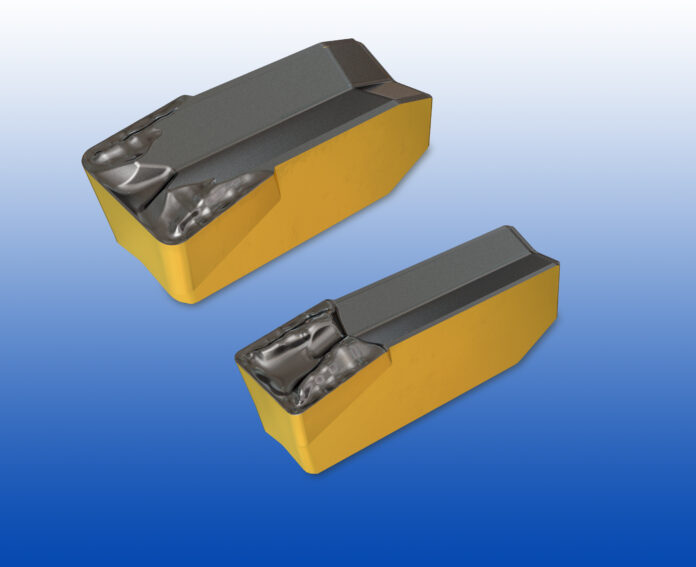
ISCAR’s new groove-turn chipformers for CUTGRIP GIMT pressed inserts are optimized for four applications, such as grooving, partial grooving, turning and finish turning.  Most chipformers available on the market perform well in one or two of the above-mentioned four applications but very rarely in all of them.

Based on ISCAR’s accumulated experience and intensive R&D, the GIMT excels in all four applications, providing efficient chip control in a wide range of machining conditions. The GIMT inserts were optimized for steel materials but they also function very well on stainless steel and high temperature material groups.

The GIMT inserts are available in standard widths of 3, 4, 5 and 6 mm.

The new inserts provide a high-performance and cost-effective solution that can eliminate the use of different insert types for each application, reduce stock requirements and provide end users with higher flexibility.

Chipformer elements include a side-turning land with constantly varying rake angle for better chip formation, variable width in the frontal land for earlier chip control at low feed rates, a wave-contoured deflector, an optimized radius area for excellent chip control in small ap for both partial grooving and finish turning and, for 5 and 6 mm widths only, an “F” style frontal deflector for improved chip control in full width grooving.

For more information, please contact ISCAR South Africa (PTY) LTD – Tel: 011 997-2700.

Visit ISCAR

SALVAGNINI S4+P4 LINE – PIONEER IN FMS

THE S4+P4 LINE – PIONEER IN FMS

The S4+P4 line is one of Salvagnini’s most popular solutions. It punches, shears and bends sheet metal totally automatically. The first prototype dates back to 1979 and is a landmark in the development of systems for integrated logistics. It remains the most efficient flexible manufacturing system (FMS) on the market today.

View Our YouTube Video

Since the beginning the S4+P4 was and remains the most efficient flexible manufacturing system (FMS) on the market.

Guaranteed flexible automation and kit production

The Salvagnini S4+P4 system punches, shears and bends metal parts from standard blanks with no intermediate handling of the partly machined workpieces.

Designed to operate in a totally automatic and integrated manner, the Salvagnini FMS S4+P4 line optimizes production lead-times and improves workshop logistics, thanks to the flexibility and capability of its proprietary control and programming software which make unmanned “lights-out” production a reality.

Automatic set-up in masked time ensures excellent levels of productivity and makes “batch one” production truly possible. The multi-press head, integrated shear, proprietary software, Punch&Cut function and flexible universal bending tool make kit and unmanned “lights-out” production a reality.

Exceptional modularity

The S4+P4 lines can be configured in a variety of ways, from the simplest to the most complex and highly automated, with devices for loading and unloading to and from automatic storage systems. This makes the installation extremely flexible and allows it to be fully personalized according to the space available and the characteristics of the production process.

Process Software

Opera-OPA is the package capable of satisfying requests from company resource management systems. The software receives production orders from ERP systems, analyses typical parameters such as quantity, codes, delivery and job priorities, generates the single part program by interfacing with the CAD/CAM software and creates work programs for the machines in the system.

If installed, the WMS software, which also interfaces in real-time with the management systems, fully monitors raw and semi-finished material over the entire production process, optimizing tray localization, permitting multi-pack storage and dynamically searching for free positions.

For more information, contact PIM Machine Tools – Tel: 011 022 4648.

Visit PIM Machine Tools

600 SA MACHINE TOOLS

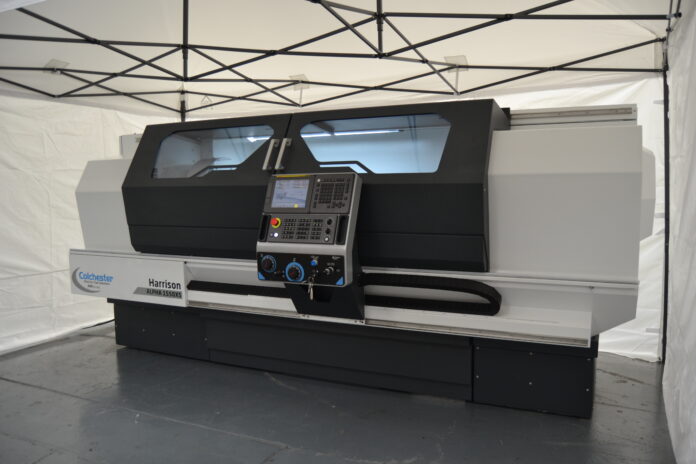
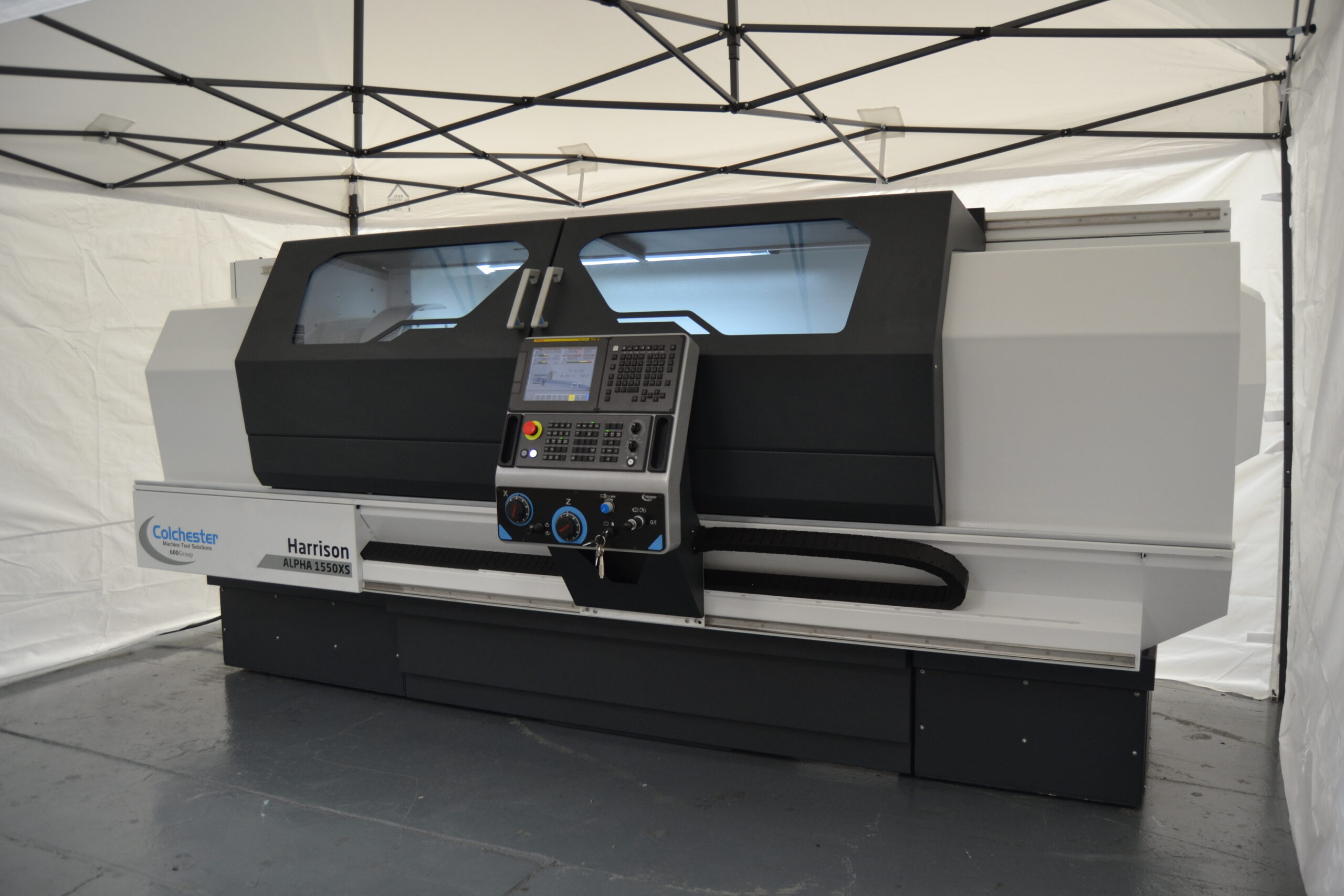
ALPHA X SERIES – THE WORLD’S FINEST CNC COMBINATION LATHES

All Alpha X Series lathes are perfectly suited to producing detailed and intricate one-offs to the highest standard of finish and accuracy. With their advanced Fanuc control and software systems, they are ideal for turning small-to medium sized batches with fast, high quality repeatability, excellent accuracy and surface finish and, most importantly of all, lower component production costs.

Alpha quality, plus a wide range of training options, has made Alpha lathes the favourite choice for industry, colleges and training centres around the world. Ideal training features include compatibility with industry standard ISO programs and Colchester’s AlphaLink software which enables multi-desk training to be given.

Machine Bed

Colchester Machine Tool Solutions’ cutting-edge lathe design and construction quality begins with the machine bed. Alpha beds use high performance cast iron, with a unique ‘Warren’ type construction for maximum strength and optimum swarf clearance.

In addition, all Alpha lathe beds are mounted on cast-iron plinths to neutralise stress in the machine bed and slideways are hardened and specially ground to ensure high-precision, parallel operation of the lathe at all times.


Operators Console

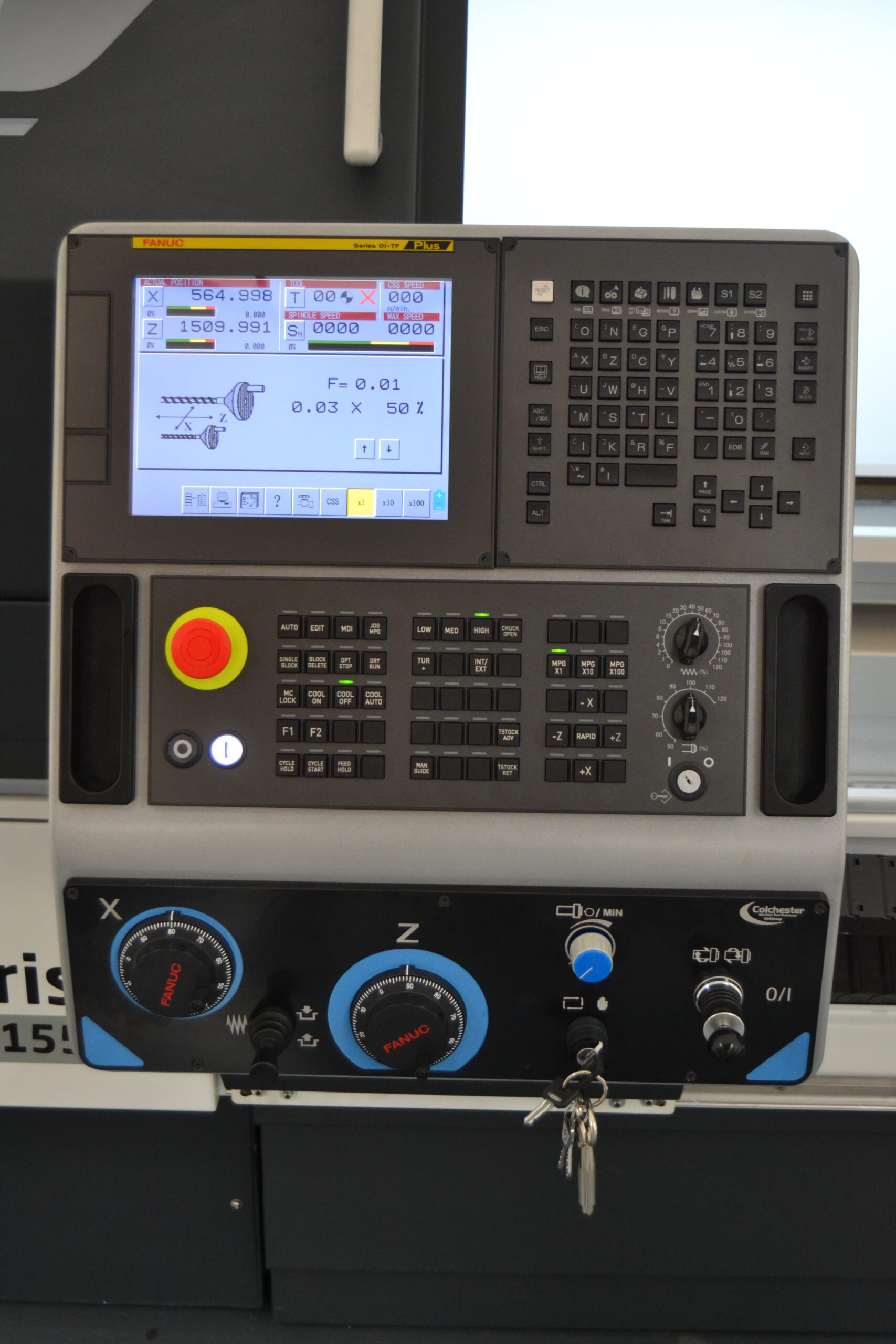
The operator’s console is located, for optimum operator convenience and efficiency, directly in line-of-sight with the cutting tool. The hand wheels are installed at the ideal ergonomic height for ease of use and have the Alpha’s popular “one-click-one-micron” rotational feel sensitivity.

The complete operator’s control panel moves on its own independent carriage which allows it to be moved quickly and effortlessly aside during loading and setting up.

Drive Train

Into the design and development of all Alpha lathes goes the technical expertise of specialists from Colchester Machine Tool Solutions’ partner company Pratt Burnerd chucking systems. Their combined research programs ensure that all new Alpha XS lathes feature the most advanced developments in spindle bearing technology and chuck design. This provides the highest possible spindle speeds and optimum chuck performance for high accuracy turning with maximum load carrying capacity.

Headstock

Crucial to turning precision and quality is the design and capability of the headstock. These lathes have top rated Fanuc spindle motors for extra power and more torque in all speed ranges. This means that ‘bottom end’ torque has been increased by over 75% giving excellent, extremely accurate metal cutting performance at lower speeds.

All Alpha XS lathes are equipped with auto gearbox change – maximising efficiency and productivity.

Alpha XS and XC Range – Fanuc 0i TF Plus Control

All Alpha XS and XC lathes are fitted with a customised Fanuc control that gives you the option of manual or automatic operation via a simple key switch. In manual mode, the control employs the latest upgraded version of Colchester Machine Tool Solutions’ own “Alpha System” which is acclaimed by thousands of Alpha users to be the simplest and most shop floor friendly teach lathe control in the world.

In automatic mode, the full strength of Fanuc’s latest technology is brought into play with the Manual Guide I programming system.

This conversational system has been completely revamped from previous generations to become an outstandingly powerful and comprehensive conversational programming system.

The combination of these two systems on one machine means that the Alpha XS is the most versatile and capable lathe ever produced. It will do virtually anything you ask of it!

The Alpha System

Specifically developed unique control software will enable users to double, triple or even quadruple productivity when compared with other turning methods.

Alpha System uses easily recognisable screen graphics along with simple question and answer prompts to guide you. It is also the reason that the Alpha System uses a touch screen, so you can work directly on screen rather than hunt for the right button to press..

Manual Turning

Turn the key and you are turning manually. It’s as simple as that! The manual screen display shows X and Z positions just like a DRO plus spindle speed, tool number and feed rate.

Even if you haven’t used a lathe since your schooldays you could walk up to an Alpha XS now and cut metal.

Semi-Automatic Turning

With the Colchester Alpha System, a wealth of semi-automatic turning operations can be performed. These include parallel turning to stop positions, chamfers and radii, tapers, threads, grooves, box cycles and even contour shapes. These can be linked consecutively to produce even the most complex of components quickly and efficiently.

What’s more, the easy to understand shop floor language coupled with touch screen simplicity means that a turner can learn to machine parts quickly.

Most operators will learn to use the Alpha System in less than half a day!

Manual Guide i for Alpha XS and XC

Automatic Turning

Manual Guide i is the latest and most powerful conversational programming system from Fanuc. It offers the most comprehensive and feature laden aid that any lathe programmer could want and becomes available on the Alpha XS when the key switch on the control panel is turned to the automatic position.

Simulation and Animation

Manual Guide I has a more powerful graphics package than many commercial CAD/CAM systems. After a programme has been created, a simulated component can be viewed in any direction, or as a 3D model that can be cut or sectioned or magnified to see detail.

This simulated component can then be animated to show the cutting process, the toolpath, metal removal and the finished component to ensure that what you get is what you have programmed and exactly what you want.

Customised Pages

Despite the enormous strength of the Manual Guide I system, engineers have been able to bring their turning experience into play to develop customised cycles especially for the needs of a manual/CNC type of lathe. These Colchester unique developed cycles will save you a considerable amount of time and button pushing.

This is the most user friendly and cost effective entry level combination lathe control in the world!

The absolute minimum of training is needed to get these machines cutting metal and making you money.

CNC Turning

The real strength of Manual Guide i is that it is effectively a CNC Graphical user interface. All the time you are working in Manual Guide i, the 0i TF is creating a CNC programme in the background. This means that conversion from conversational mode to CNC mode is instant. It also means that you can work in either CNC or conversational mode or even both at the same time. Furthermore it means that industry standard CNC programmes can be loaded into and out of the control at any time.

The Alpha XS and XC are powerful conversational lathes that can also run CNC programmes developed elsewhere or to create CNC programmes for use on other machines.

Alpha XS Range with large working envelope

The heavyweight 1660 and 1760XS models are both available in bed lengths of up to 6 metres and spindle bore up to 230mm.

The heavyweight versions – of the best-selling combination lathe in the world – are designed to exceed customer demands for turning larger diameter components efficiently and are truly class leaders in terms of overall performance.

Alpha XC NEW 3 Axis CNC Combination Lathes

The Alpha XC introduces full milling, drilling and tapping functions to the Alpha range, fully harnessing the Fanuc Oi-TF control combined with the Manual Guide i conversational programming system to reduce the need for second machine load and operation production – specifically for one-off components and small batch production.

The Alpha XC 3-axis CNC combination lathe is identical in functionality to the Alpha XS range of machines, but now has the addition of a fully interpolating c-axis, while still retaining the operational simplicity that makes the Alpha range the leading choice worldwide.

The manual / CNC lathe is mounted with a newly developed headstock, allowing programmed selection of the c–axis drive, allowing milling / drilling cycles to be achieved with the use of driven tooling.

To allow for these extra lathe operations, full c-axis cycles are available through the Manual Guide i conversational programming system.

For more information, contact 600 SA Machine Tools – Cell: 072 157 6003.

Visit 600 SA Machine Tools