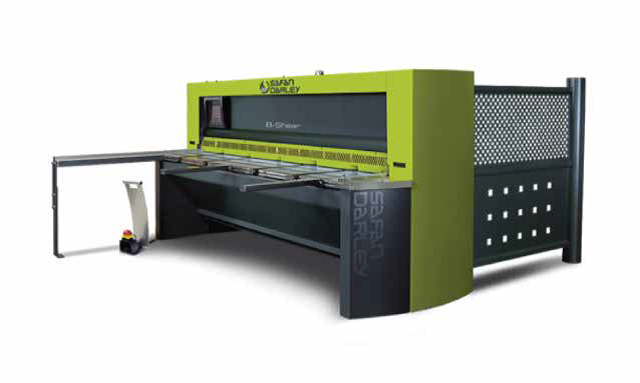
The Safan M-Shear’s extremely functional design satisfies current and future requirements with possible expansion plans, such as material-handling systems, already provided for. At its core is the advanced hybrid drive for the cutting beam consisting of a servo-electronic motor and hydraulic pump, a combination producing a remarkably quiet and energy-saving system.
While the robust hydraulic systems are controlled by modern electronics increasing both productivity and quality of products, the servo-electronic motor powering the hybrid drive only runs when the cutting beam is in motion thus saving energy and reducing noise levels while cutting.
Maximum ease of operation is provided by the Safan Touch Screen control TS 200 while the settings are indicated by clear symbols on the TFT colour monitor. The control operates with Microsoft Windows®.
With blades having four cutting edges, on both top and bottom, shearing is done very economically as blade wear is spread over the blade’s entire length, thanks to the programmable starting position of the cutting beam. Another feature includes independent left and right clearance adjustment and built-in measuring sensor with an accuracy of ±0.01mm. Due to the special frame construction, clearance is self- compensating so that, even with a load in the middle of the shear, the clearance remains constant over the entire length. When the clearance is changed, the back gauge setting is automatically corrected. Size of cut can be directly entered, after which the position of the back gauge is adjusted. The back gauge adjustment occurs by means of play-free guides and ball screws. Setting precision is 0.01mm and repetitions are accurate to within ±0.03mm.
The shear has extensive guards on the back and sides. These consist of mechanical side covers on the right and left sides plus a photo-electrical guard on the back. The machine’s foot-operated console is fitted with an emergency stop. Robust finger guards have been installed. For up to and including 6mm cuts, openings have been made in these guards, allowing the operator to safely get closer to the blade.
As an option, the M-Shear can be supplied with pneumatic sheet support equipment making cutting easier, especially when dealing with largersize blank sizes. The sheet to be cut is supported at the back of the shear, ensuring it can be accurately positioned against the back gauge, which can be equipped with sheet support arms, if requested.
In combination with the pneumatic sheet support system, a scrap separation feature is available.
For more information, please contact CML Machine Tools – Tel: 083 232 9470.
The new-generation Advanced Version ROBODRILL promises unrivalled quality and precision at great hourly rates.
With an unbeatable tool change time of 0.7 seconds and a turret capable of handling tools weighing up to 4kg, the new advanced version is both the fastest and strongest Robodrill yet. With by far the shortest cycle times on most machining operations, all ROBODRILL machines offer incredible performance and unbeatable efficiency.
Designed to meet every need, the ROBODRILL α-DiB5 series comprises of six completely redesigned models in Space Saver, Medium and Long sizes, available in either standard or advanced versions. With a rigid servo drive control and a highly dynamic BT30 spindle, these high-speed all-rounders are suitable for all vertical machining applications, from short production runs requiring fast turnaround times to flawless mass production. With well over 200 000 machines installed worldwide, its future-proof versatility and easy adaptability make the ROBODRILL the best-selling machine in its class.
Spreading your machining work across several ROBODRILLs instead of relying on a dedicated transfer machine, allows you to benefit from cheaper production and higher flexibility in the face of changing production numbers. Inherently adaptable, FANUC ROBODRILL also represents a great addition to your production facilities, since you can use it to absorb extra demand, thereby freeing up your larger vertical machining centres for bigger jobs.
The Advanced Version offers many unique improvements:
Improved swarf evacuation
To maximize uptime, the ROBODRILL α-DiB5 series can be fitted with a number of swarf evacuation options: from the coolant tank and chip flush methods to a piping system for wall coolant. Advanced versions minimize swarf interference with a mountain-shaped Y-axis front cover. It also offers an optional fully-enclosed spindle cover that separates the machining area from the mechanism.
Stronger Turret for bigger Tools
At the heart of every ROBODRILL is a patented high-speed tool changer that can carry up to 21 tools and offers the best reliability in its class. Its manufactured efficiency lies in its solid metal construction and optional BIG-PLUS BBT30 spindle. This makes it extremely resistant to radial forces and enables it to deliver unbelievably efficient machining.
Advanced version ROBODRILLs feature an even stronger turret. Offering even more versatility, this enables the tool changer to handle heavy, customized cutting tools weighing up to 4kg while still realizing ultraquick tool changing times.
Power Failure Backup Module
Power interruptions can be costly. Avoid unnecessary workpiece damage or tool damage with FANUCs Power Failure Backup module. This will prevent the tool from dropping into the workpiece or the axis from slowly decelerating to a stop potentially causing a collision with the spindle, or jigs and fixtures.
All of the new model ROBODRILLS can be fitted with the improved Direct Drive 4th axis with built in brake. For ultra high speed indexing, or 4 axis simultaneous work, the new DDRiB offers unrivalled speed and accuracy.
When you have longer workpieces or want to put many on the table at the same time, the new DDR-TiB offers a factory built 4th axis with tail support, base plate, and angle brackets for a swing plate. Available in 300mm, 500mm or 700mm in X direction, this allows maximum use of the ROBODRILLS travel space.
Need a 5 axis machine? No problem!
ROBODRILLs are available with 5 axis simultaneous control allowing machining of complex workpieces. Control functions like Tool Certer Point Control and smart smoothing functions mean you can manufacture high quality parts quickly and accurately.
Smart Automation and Robotization
As the worlds largest manufacturer of Industrial robots, FANUC offers the advantage of full automation and robotization from a single supplier.
Through a single Package called QSSR, or Quick and Simple Start of Robotization, robot loading can be quickly configured.
IoT and Information Management
In todays world information is everything. FANUC offers a solution for production monitoring for the factory floor. Information from each machine is gathered and presented graphically. Production count or time, tool life information, alarm diagnosis, program details, feed & speed details etc can be viewed and stored for every machine connected to the system.
FANUCs legendary reliability coupled with easy preventative maintenance procedures keeps downtime to an absolute minimum. And thanks to their extreme longevity, ROBODRILL machines also provide an unbeatable return on investment.
FANUC ROBODRILL is proudly made in Japan and comes with a 2 year mechanical and control warranty.
For more information, please contact FANUC South Africa – Tel: 011 392 3610
High productivity and performance in the XXL format at a favourable price
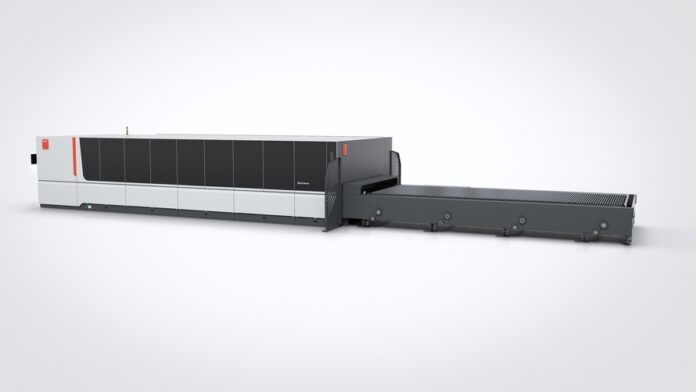
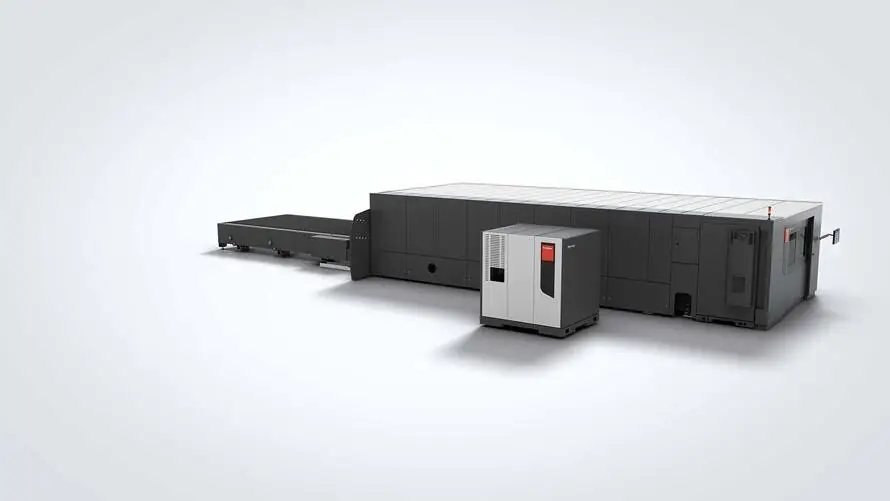
The ByCut Smart 6225 can be equipped with the Fiber 3000, 4000, 6000, 8000 or 10000 laser sources, depending on the user’s requirements.
More sheet metal, more parts: The 6225 format increases productivity thanks to a high degree of material utilization.
The new ByCut Smart 6225 from Bystronic provides a high degree of material utilization thanks to a cutting length of up to 6.2 meters and a width of 2.5 meters. The machine cuts not only large parts, but also many small parts with high efficiency thanks to its outstanding nesting processes.
High-end productivity and more parts per cycle are guaranteed, while a wide range of materials can be cut without interrupting the cutting process, hence reducing non-productive time. Users can now enjoy high productivity and performance in the XXL format at a favourable price.
While weighing 21 000 kg, the machine can accommodate a maximum workpiece weight of 3650 kg and produce a table change-over time of 72 s.
The latest version of the high-performance Bystronic cutting head excels with maximum precision and high speed thanks to laser outputs of up to 10 kW.
Using a 21.5-inch touch screen, Bystronic’s ByVision Cutting software is operated just as simply as a smartphone. Ease of use and an intuitive user interface guarantee excellent results even when operators are inexperienced.
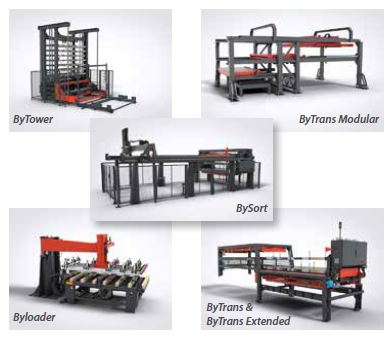
Several automation solutions are available including the Byloader, which automatically lays plates onto the shuttle table of the laser cutting system, the ByTrans and ByTrans Extended which takes over loading – and unloading of the laser cutting system and the BySort for fully automatic sorting of parts. Also available are the ByTower, a flexible storage tower to store sheets for laser cutting, the ByTower Compact, which enables lightly manned or even unmanned production for any size of company thanks to automated cassette changing and minimal space requirements. Finally there is the ByTrans Modular load and unload system providing a range of possibilities and layouts for ultimate automation needs both in large series or small job batches.
For more information on the please see www.bystronic.co.za or contact Bystronic on 010 410 0200.
Tiger·tec Silver WSM45X indexable inserts for other shoulder and copy milling cutters from Walter
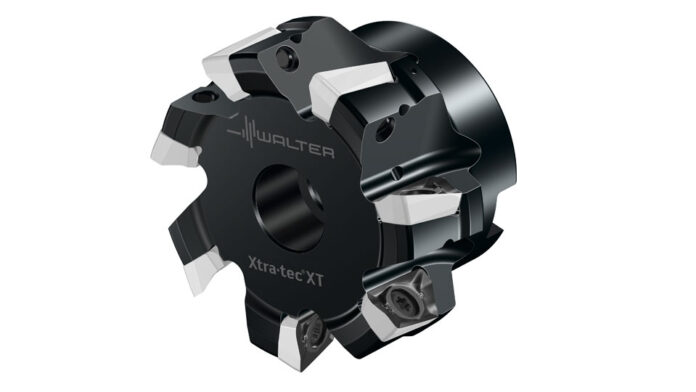
Walter now offers the high-performance Tiger·tec Silver WSM45X indexable insert grade for ISO S and M for the Xtra·tec XT M5130 shoulder milling cutters, the Xtra·tec XT M5468 copying milling cutters, the Xtra·tec XT M5008 high-feed milling cutters and the BLAXX F5041 and F5141 shoulder milling cutters too.
The combination of the special substrate, which is wear-resistant yet tough, with an Al2O3 coating is the only one of its kind on the market and ensures a high level of process reliability. The coating protects the substrate against excessive heat ingress and enables a high level of productivity. This makes the Tiger·tec Silver WSM45X grade a proven problem-solver, particularly when it comes to roughing titanium alloys in the aerospace industry and when machining stainless steels. The extremely smooth surface of the Tiger·tec Silver indexable inserts reduces the formation of build-up on the cutting edge. A two-tone Tiger·tec Silver coating also makes reliable wear detection possible.
Typical components that are machined using WSM45X indexable inserts are exhaust turbochargers, turbine blades and titanium structural components for the aircraft industry. In addition to the new indexable inserts, the Tiger·tec Silver WSM45X range already includes cutting tool materials for many common Xtra·tec XT shoulder milling cutters, high-feed milling cutters, octagonal and copy milling cutters, and face and shoulder milling cutters from the M4000 series.
For more information contact Spectra Carbide – Tel: 021 555 4144
presents Xtra·tec® XT M5460 milling cutter with internal coolant channel
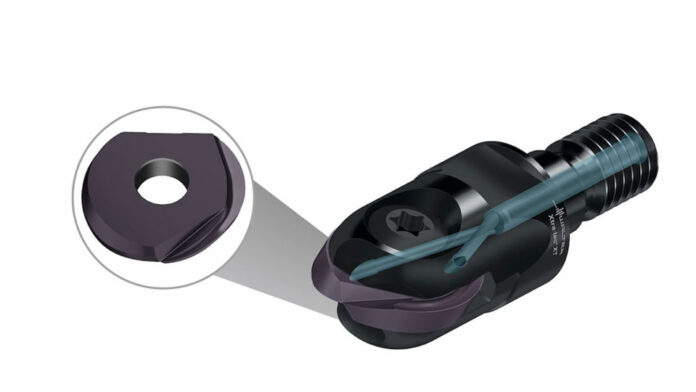
With the Xtra·tec® XT M5460, Walter is launching a new profile milling cutter on the market. It has been designed specifically for highly precise machining of freeform surfaces and deep cavities. The profile milling cutter features an internal coolant channel, which enables chip evacuation using compressed air or minimum quantity lubrication.
This is necessary for deep pockets in particular, because it allows the user to blow out the chips. Walter offers the M5460 both with a Weldon and cylindrical shank, as well as with the cylindrical modular interface that is commonly used in mould and die making. When using the profile milling cutter, this potential group of customers enjoys benefits such as the possibility of continuing to use existing adaptors. As a first step, Walter is launching the milling cutter for diameters of 8–32 mm (or ⅜–1″).
The M5460 is a specialist for materials with difficult cutting properties, particularly for hard machining of steels up to 63 HRC. Alongside the geometry of the indexable inserts with extremely stable cutting edges, the key to its success is the WHH15X grade developed by Walter. This is extremely wear-resistant, therefore achieving high precision and long tool edge life. In field tests, Walter achieved increases in tool life of up to 500%. Thanks to an extensive range of cutting tool materials, the profile milling cutter can be used in steel, cast iron and stainless steels alike. This means that, in addition to mould and die making, it also offers advantages for the aerospace or energy industry. The M5460 promises high productivity with maximum process reliability.
For more information contact Spectra Carbide – Tel: 021 555 4144
Sandvik Coromant launches new high-feed milling solution
Leader in metal cutting, Sandvik Coromant has launched a new high-feed milling tool. The CoroMill® MH20 is primarily designed for milling cavities, or pockets, in ISO S, M and P materials. Ensuring secure and vibration-free machining, especially at long overhangs, the CoroMill® MH20 delivers best-in-class edge security for a variety of industries and is particularly suited for machining aerospace components.
The CoroMill® MH20 complements existing products in the CoroMill® range, and fills a strategic gap in the high feed indexable milling product line. Designed to deliver reliability with minimal vibration, the CoroMill® MH20 has been adapted for applications where components are notoriously difficult to machine, such as in the oil and gas, mould and die and aerospace sectors.
The tool’s ability to machine at long overhangs makes it especially beneficial to the aerospace sector. This method is an important requirement when machining deep, narrow pockets to produce the components that form an aircraft’s frame, such as its supporting beams found within the sub segment aerospace frame. These beams are often machined from forged titanium and when paired with the requirement for long overhangs, this creates a difficult machining environment with a high risk of vibration.
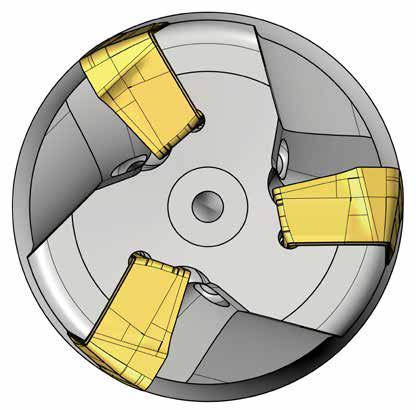
In contrast to the conventional four-edge concept, the CoroMill® MH20 is designed with a two-edge insert. This is especially beneficial as it means the weakest section of the insert is far away from the main cutting zone, delivering greater reliability and protection against wear. It also means that machining against a corner or wall will not impact the next edge or leading corner, ensuring an equal performance per edge.
Another area of innovation is the CoroMill® MH20’s insert cutting edge geometry. While the sloped edge design delivers a gradual and light-cutting action that requires less power consumption to enable the use of smaller machines, the optimized edge line of main cutting edge and insert corner radius delivers further process security and enables reliable, unmanned machining.
“Machining components for industries like aerospace, oil and gas and mould and die can be challenging,” said Sangram Dash, Application Manager at Sandvik Coromant. “In the aerospace sector alone, manufacturers must handle conditions such as thin floors and walls, deep pockets and tight corners. When designing the CoroMill® MH20, we kept the stringent requirements of all these sectors at the fore. For example, the tool is capable of completing several different operations to reduce the number of tools, changeovers and tool handling required during manufacturing, thus reducing cycle times and improving manufacturing economics. Furthermore, for the first time within high feed concepts, Sandvik Coromant is introducing dedicated insert geometries for different ISO areas to deliver greater optimized process security and productivity.
“In particular, engineers working in aerospace machining cannot afford to make mistakes, especially when the quality control standards for aircraft engine components are so high, so being able to deliver reliable tools with consistent tool life is a top priority for Sandvik Coromant.”
When designing the CoroMill® MH20, extending tool life with higher reliability was of great importance. In fact, when compared to another Sandvik Coromant high feed milling tool, CoroMill® 415, it demonstrated a 32% increase in tool life with a significantly better component quality when machining a titanium aerospace wing support component. In addition, further testing against competing tools has demonstrated superior reliability and a more secure machining performance when machining steel and stainless steel workpieces.
For more information contact Sandvic Coromant – Tel: +27(0)10 500 2295
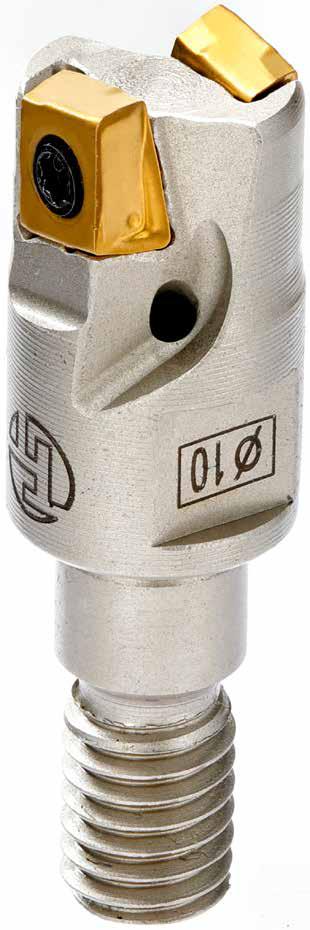
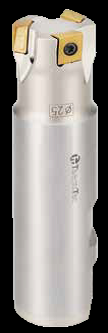
Soon after TaeguTec’s launch of the TANG-SFEED line, the manufacturer expanded the line with LPKU 05, LPHU 05 inserts and end mills by introducing a small 05 size insert to the Ø10 (2 teeth) end mill TANG-SFEED product line.
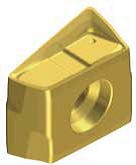
Along with the smaller size end mills, two new inserts have been added, namely the LPKU 05 utility type and a LPHU 05 precision type. Both inserts, along with the end mills modular head type, are available in a 10 to 32 mm diameter range and extended flute end mills in a 16 to 25 mm diameter range.
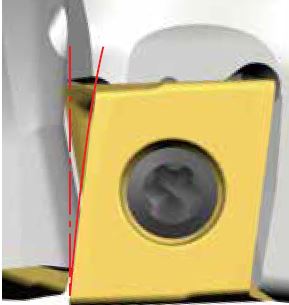
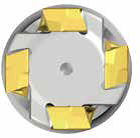
TANG-SFEED product features include a strong tangential type 4-corner insert, exact 90 degree shouldering and optimized geometry for smooth machining and improved stability.
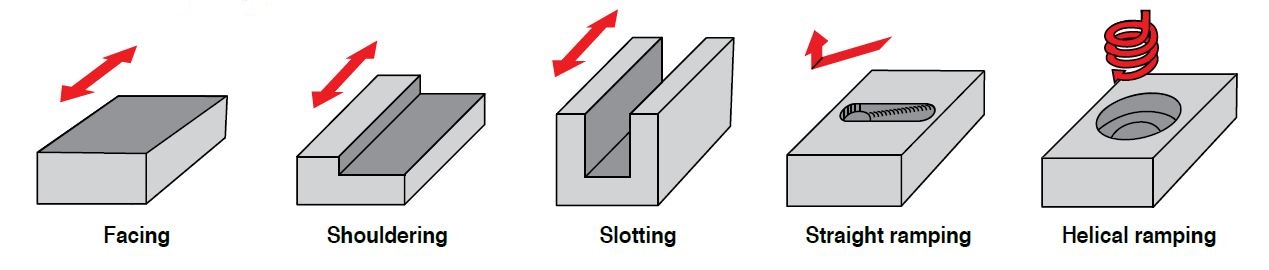
Capable of straight and helical ramping machining, the tangential cutter’s larger diameter core offers a higher stiffness compared to the radial type cutter.
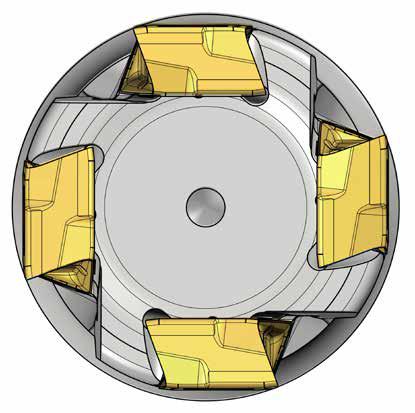
Radial type
Tangential type (TANG-SFEED)
For more information please contact TaeguTec – Tel; 011 362 1500
Available from TaeguTec is a high productivity perpendicular machining solution, the latest tangential type TANG-SFEED inserts and cutter line.
The TANG-SFEED line is a double-sided four-corner tangential insert line ideal for ramping applications.
Furthermore, the insert’s high positive helical cutting edge design means high machining performance.
The line is available in two insert sizes: 09, 14 mm and related cutters. Also included is a general purpose LPKU insert and a high precision LPHU insert.
While the TANG-SFEED line not only offers the advantages of a tangential insert, its unique geometry promotes increased productivity across a diverse range of high feed applications.
Features
Capable of helical and straight ramping applications
Insert’s helical cutting edge enables for smooth machining
Enhanced cutting stability due to the reinforced cutting edge
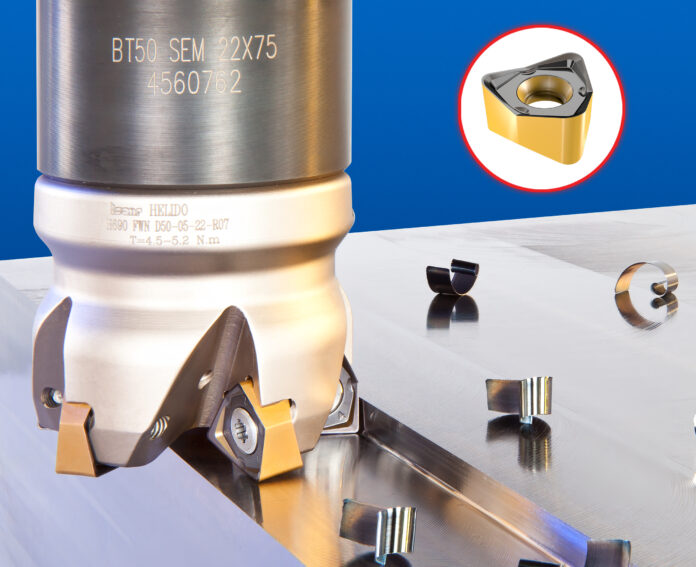
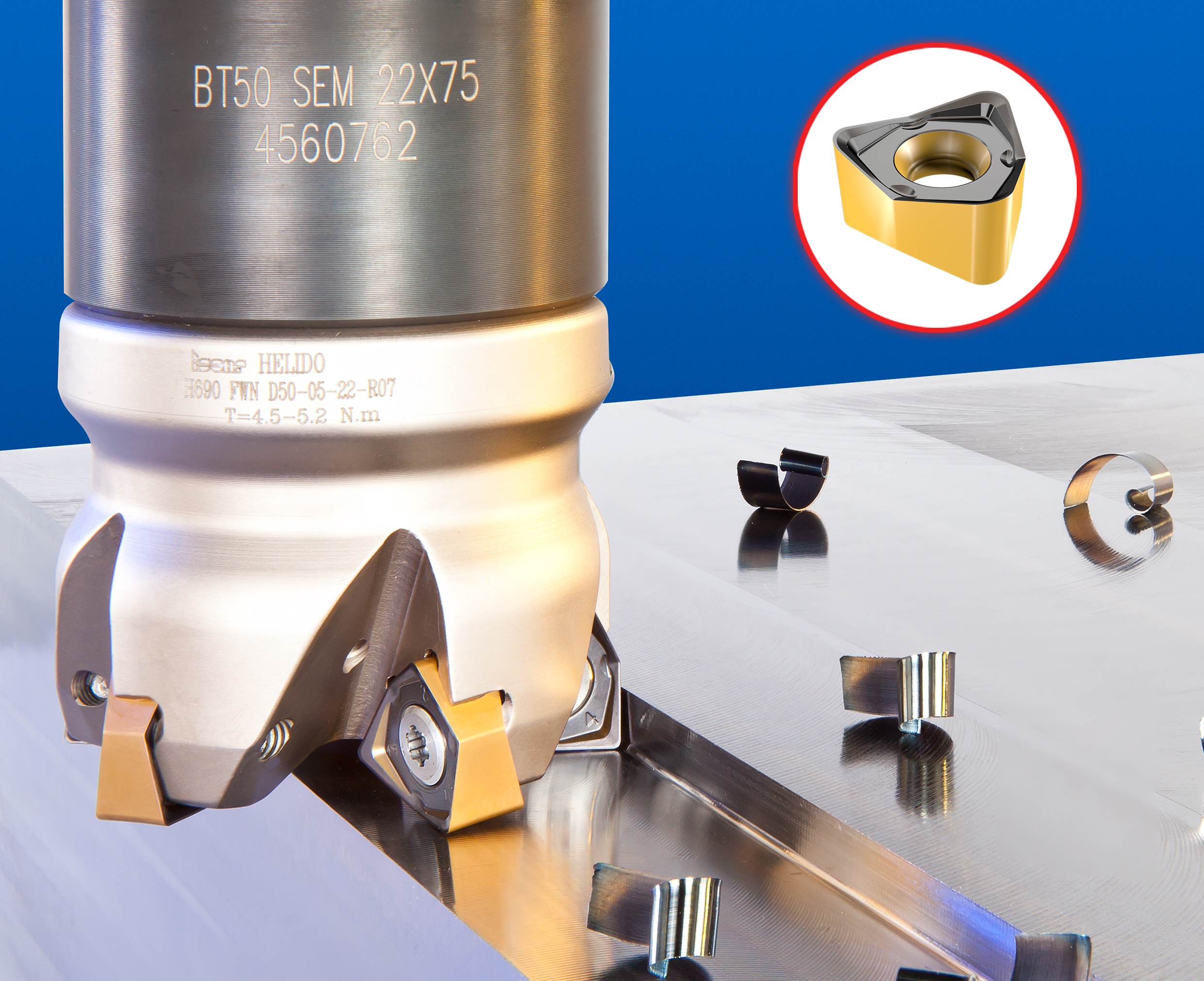
Following excellent market response, ISCAR is expanding the HELIDO Trigon Line with the following insert options:
H690 WNMU 0705-PNTR – a general use insert with 6 right-hand cutting edges for milling a variety of steel grades. The new insert is produced from grade IC845 – a new carbide grade that was developed for milling steel and ferritic and martensitic stainless steel, especially when machining at unfavourable conditions.
H690 WNMU 0705PNN-MM – an insert with 6 neutral cutting edges intended for machining steel. The neutral cutting geometry can be used for left-hand specially tailored milling tools.The new insert is available in grade IC808 and expands the range of the already available 0.8 mm corner radius insert.
H690 WNMU 0705PNR-RM – an insert featuring a reinforced cutting edge designed for unfavourable conditions, heavy roughing and interrupted cuts. The RM chipformer has a reinforced T-land when compared to the currently available inserts.
Insert features include a reinforced cutting edge, high resistance to edge breakage and chipping, reduced heat transfer and high edge security. It is recommended for milling at unfavourable conditions and heavy interrupted cuts.
The new inserts will provide customers with productive solutions for a broad spectrum of milling applications.
For more information, please contact ISCAR South Africa (PTY) LTD – Tel: 011 997-2700.
ISCAR's 7 flute solid carbide endmill, intended for HSM, features different helix angles, variable pitch, and chip-splitting grooves on the cutting edges.
High-speed machining (HSM) has not only led to a significant difference between machine tools but has also brought awareness to the high-speed spindle; perhaps, the most important and central component of high-speed machine tools and a key factor for the success of HSM.
Operating a spindle with high rotation speed and gaining the optimal balance between the provided speed and torque is the main task of high spindle engineering. The spindle’s performance depends on several different factors. One of the main factors relates to the design concept of a single- or combined twin-motor bearing system, seal components and a tool retention method.
When machining, the spindle is not in direct contact with the workpiece but interacts with it through another technological system – the cutting tool. This connection acts as a conductor and should transform the impressive capabilities of a high-speed spindle into improved machining results. Another element between the cutting tool and the spindle is the toolholder which is fitted into the spindle. The poor performance of this small assembly, the cutting tool and toolholder, may reduce the function of the spindle to zero. Therefore, HSM toughens the accuracy, reliability and safety requirements for the assembly of the spindle extension.
High-speed rotation generates centrifugal forces. In HSM, when compared with traditional machining methods, these forces grow exponentially and turn into a significant load on a cutting tool which determines the tool’s durability. In indexable milling, high centrifugal forces may cause insert clamping screws to break, inserts to loosen and a cutter body to fail. Formed fragments can not only damage a machine and a machined part but can be very dangerous to the operator.
In such conditions, cutting tool manufacturers are compelled to consider the design and technological means necessary to ensure appropriate reliability of their products. Hence, the focus on indexable milling cutters should consider secure insert mounting and a robust body structure.
Modular fixed torque keys provide effective options for reliable securing of indexable milling inserts.
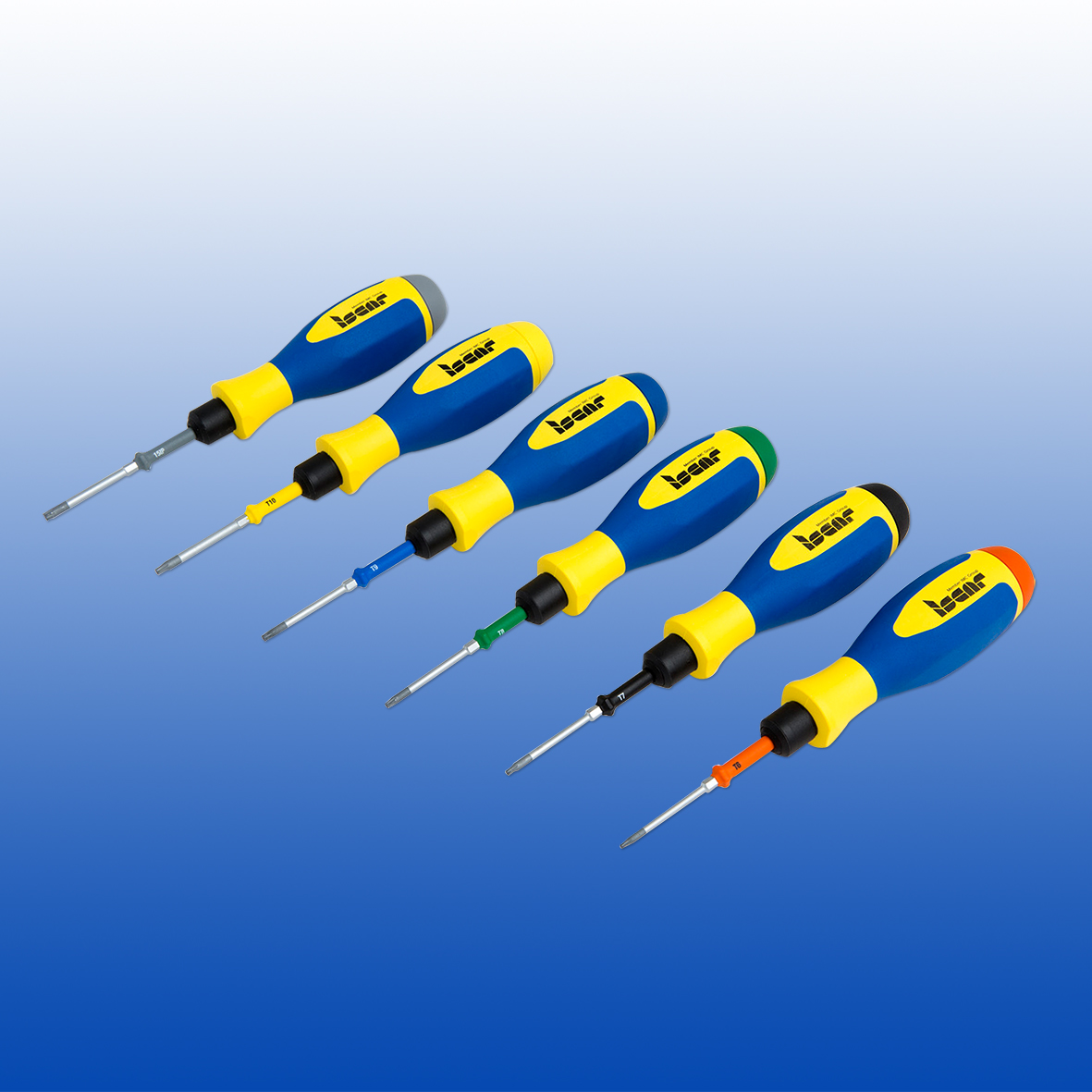
Let us start with a clamping screw, the smallest and weakest element of a whole technological system with a great impact on the system’s reliability. The same can be said about the clamping screw in relation to a high-speed indexable milling cutter. Applying dynamometric keys controls the tightening of the clamping screw. However, ensuring the torque is tightened sufficiently is not enough to reliably operate the cutter. Intelligent design is directed to minimize the dynamic load on the clamping screw.
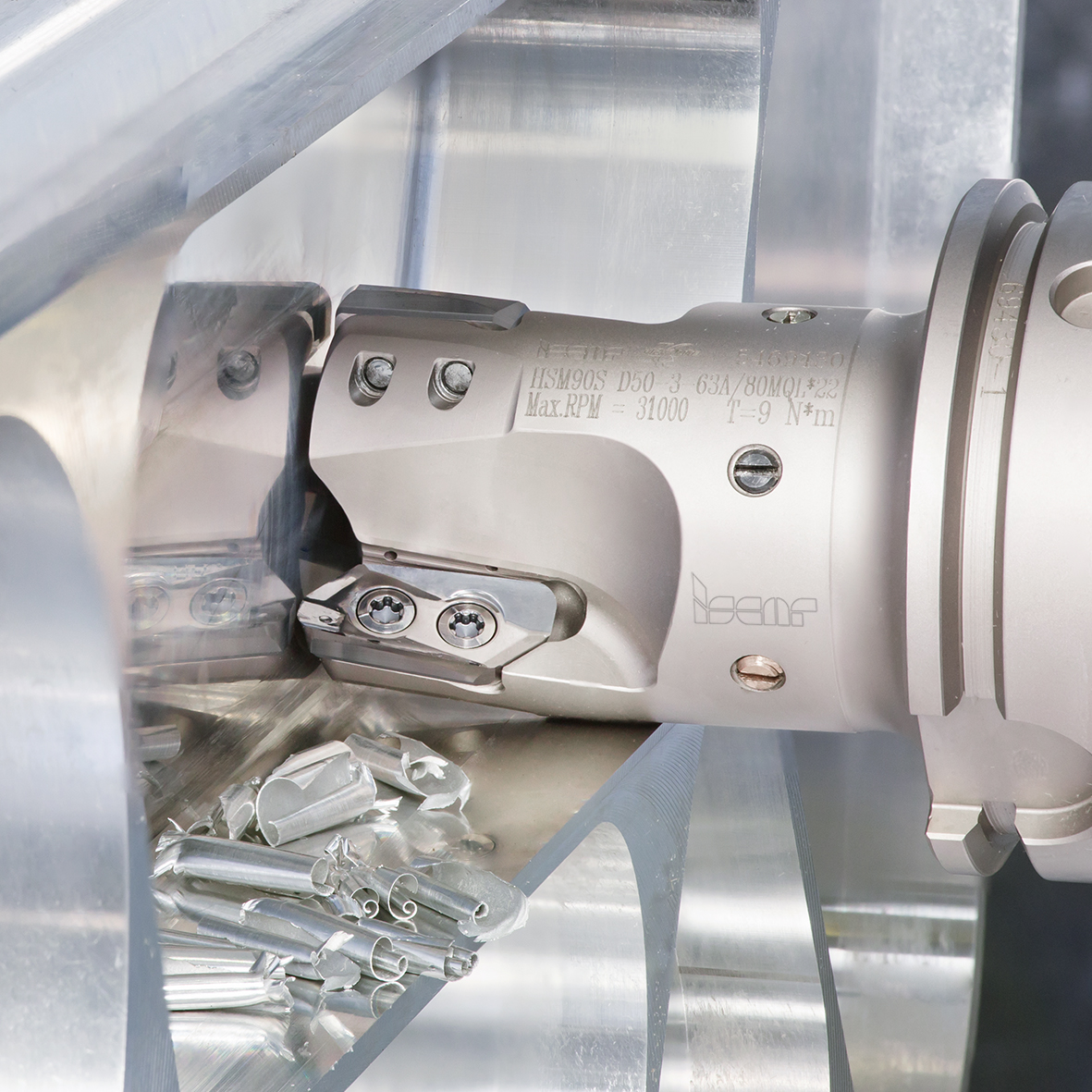
ISCAR’s milling cutters HSM90S FAL-22 are intended for efficient milling of aluminium at high-speed rates. They carry large-size inserts that enable up to 22 mm (0.866″) depth of cut. The cutter insert pocket has a protruding ridge on the seat bottom surface, and the lower face of the insert has a matching groove which fits into a ridge when assembled. This eliminates insert radial displacement due to strong centrifugal forces at high-speed milling and improves load distribution on the insert clamping screw. The cutter design facilitates reliable milling in a rotational speed range of up to 31000 rpm.
rugged design of 90° indexable milling cutter ensures efficient milling aircraft components from aluminium at high-speed rates. The required tightening torque for an insert clamping screw and maximum RPM are necessary marking details.
To reduce centrifugal forces, a cutter body should be axially symmetric and highly balanced. There are international and national standards and norms that specify tool balancing grades. When designing indexable milling tools intended for HSM, it is very important to ensure the mass distribution of the body is symmetrical with the body axis. As this theoretical balance relates to a virtual object, it cannot replace the physical balancing of a real body if needed but can substantially diminish the mass unbalance of a future product making the “physical” balance much easier.
It is known that the ambition of a tool design engineer is to make an indexable cutter body, and in particular, an insert pocket surface, as hard as possible in order to increase wear resistance. However, the higher the hardness, the faster the body of a rapidly rotating tool breaks down. Hence, finding an optimal equilibrium between strength and wear is another important task in searching for effective HSM tool solutions.
Solid tools feature higher accuracy and better axial symmetry when compared with indexable cutters. Typically, solid tools are less in diameter and naturally require higher RPM, even for the same cutting speed. This explains why the majority of HSM tools are solid.
Normally, such tools are made from coated cemented carbides, although in recent times cutting ceramics as a tool material has become popular for high-speed machining of high-temperature superalloys. Nevertheless, selecting a solid tool, especially milling cutters for HSM may be difficult.
Normally, the overhang-to-diameter ratio for solid carbide endmills (SCEM) is greater when compared with indexable tools. Such a feature, in combination with a flute shape that weakens a tool cross-section, demands specific attention to the vibration strength of a SCEM.
ISCAR’s 7 flute solid carbide endmill, intended for HSM, features different helix angles, variable pitch, and chip-splitting grooves on the cutting edges.
To improve chatter stability, tool engineers often make a tooth angular pitch unequal, and a flute helix variable. This violates the principle of axial symmetry and may give a reverse result. Therefore, an optimal, intelligent design for solid carbide endmills requires engineer ingenuity and appropriate compromising.
Having highly engineered a balanced vibration-proof tool is half the battle. We have already mentioned the toolholder that is mounted on a high-speed spindle. So, what’s the use of an ideal tool if a far more massive toolholder is not suitable for HSM?
In HSM, the dynamic characteristics of the tool cannot be separated from a toolholder. For example, balancing the tool should be done in assembly with the toolholder – this is a single way to fulfil requirements of accuracy, reliability and safety.
Modern CAD/CAM systems ensure estimating the dynamic behaviour of various products based on their 3D models. Providing such models for cutting tools, toolholders and various accessories is a typical feature of today’s serious tool manufacturer. In fact, we are proud to acknowledge that in recent years, ISCAR has significantly expanded its digital twin assembly options in the e-catalogue.
To conclude, high-speed machining has influenced the need for specific requirements of a cutting tool and toolholder. By meeting these demands, HSM has become a trusted highly engineered, high-speed spindle operation with maximum efficiency.
For more information, please contact ISCAR South Africa (PTY) LTD – Tel: 011 997-2700.