Home Blog Page 94

EMO Hannover 2017 Heading For Record

Just under a year before the fair begins, the figures for official registration at EMO Hannover 2017 are looking rather impressive – more than 1,700 firms from 40 different countries have registered for the world’s most important trade fair for the metalworking sector, booking a stand area totalling 152,000 square metres for the period from 18 to 23 September 2017 in Hanover. This means the current registration status lies significantly above the comparable result of the previous event. “It looks very much as if EMO Hannover 2017 will end up with a record number of exhibitors,” declares EMO General Commissioner Carl Martin Welcker. 

Carl Martin Welcker, General Commissioner of the EMO Hannover 2017.

The reasons he cites for the substantial rise are firstly that after four years EMO is returning to Hanover, the venue that ever since the first event in the 1970s has been acknowledged as an international sectoral highlight and a superlative platform for showcasing innovations. Secondly, the early-booker offer presented to the exhibitors for the first time has taken full effect. It has already produced a definite plus in terms of area and the number of exhibitors, explains EMO’s General Commissioner. Not only have German manufacturers registered for sizeable stands, but more especially Asian companies too. They have once again increased their areas in comparison to the previous event, a development that’s been observable for years now. Overall, Asia currently accounts for more than a fifth of EMO’s exhibitors.

Under the motto of Connecting systems for intelligent production, the world’s upcoming premier trade fair for the metalworking sector focuses fruitfully on the megatrend of digitization and networking under the aegis of Industry 4.0. To quote Carl Martin Welcker, “with our new motto, we’ve certainly hit the bulls-eye with our exhibitors. Numerous firms can identify with this slogan, and will be showcasing their solutions in the field of Industry 4.0 either on their own stands or in the Industry 4.0 Area”. This, believes EMO’s General Commissioner, has created the optimum foundation for progressing the success story generated by former events in Hannover.


Turning: Making All The Right ‘Turns’

However, Craft Machine Tools is aware that even in this digital age of ever changing technology there is still a need for the traditional conventional lathe. Given this understanding, Craft Machine Tools offer both, a comprehensive range of CNC – and conventional turning products from Taiwanese based Feeler, a member of the Fair Friend Group.

Feeler enjoys a worldwide reputation for product excellence and reliability. This success is the result of their innovative design, in-house manufacturing capabilities and rigorous quality control.

As testimony to this success Feeler have received numerous awards including being named in Taiwan’s Top 100 Brands; add to this Machine Tool Industry Awards for Excellence in Research and Innovation in 2011.

The Best Quality and Service Machine Tool Manufacturer from Taiwan (by Asia Pacific Equipment News) and a double award for National Quality and National Award of Excellence.

Feeler offers a comprehensive range of CNC turning centers, including but not limited to:

For companies interested in purchasing a conventional lathe at competitive prices and without sacrificing quality and precision, Craft Machine Tools offer a high speed precision lathe with inverter transmission. The Craft conventional lathe is in a class of its own boasting features such as selective bed widths of 300mm, 350mm or 400mm.Varied spindle bore diameters of 58mm, 80mm, 85mm and 120mm, added protection to the shaft and gears in the headstock, thermal treated and precision ground alloy gears, overload device to ensure safety when operating, wear-resistant phosphor bronze lead screw nuts, thermal treated Meehanite bed casting and a one-piece base for high rigidity and low vibration.

Craft Machine Tools have extended their offering to cater for those looking for larger conventional lathes and have partnered with renowned Chinese’s manufacturers Dalian Machine Tools and Gongtao Machine Tools.

All conventional lathes supplied by Craft Machine Tools come complete with a 3 and 4 Jaw Chuck, DRO, rapid traverse, work light, coolant system, steadies, tool kit and an oil gun.

On the purchase of a machine tool from Craft Machine Tools, your purchase includes commissioning and training.

[wpsm_comparison_table id=”1″ class=””] [wpsm_comparison_table id=”2″ class=””] [wpsm_comparison_table id=”3″ class=””]


For more information, contact Craft Machine Tools – Tel: (011) 845-2030.

Turning: Hurco CNC Lathe Considerations And Terminology

I am often amazed at the number of highly skilled CNC machinists and operators who can accomplish almost anything on a milling machine, but who are very uneasy and intimidated around a lathe because they don’t really understand the meaning of basic lathe terminology.

Michael Cope, Senior Applications Engineer & Product Specialist at Hurco Companies, Inc.

That is the purpose of this article. I will try to clarify the meaning and benefit of a few of the “not-so-obvious” features that exist on a typical lathe spec sheet, and attempt to clarify their definition and explain why they might be an important consideration when purchasing a CNC lathe.

Maximum Turning Diameter: This simply indicates the largest size of part that can be turned on the machine – using standard length tooling – without interference or collision with guarding or other machine components.

With the X-axis retracted all the way positive, what size of part can be turned safely, as it relates to X-axis travels of the machine tool. For example: if you are looking at a machine with a max turning diameter of 16″, and the parts that you run on a regular basis are 15″ in diameter or larger, then you would probably want to look at a machine with a larger maximum turning diameter.

Even though, in our example above, the part would technically “fit” in this case, you must realize that you are running on the very edge of the envelope, and if you had to hang a tool out of the turret farther than normal – for one reason or another – you would likely NOT have enough X-axis travel to accommodate the part.

Maximum Swing: Refers to the largest diameter part that can be spun in the chuck without mechanical interference with guarding, cross-slide, or other machine components located near the chucking area. Depending on the style and design of the machine tool in question, this value could be larger than the maximum turning diameter mentioned above, however this does NOT mean that you can turn a part larger than that specified in the maximum turning diameter specification.

Horsepower & Torque: Horsepower and torque are obvious considerations when purchasing a new machine, but their necessity may not be so obvious in all cases. If you are running work such as castings and forgings, drilling large diameter holes in steel, or generally turning features on large diameter parts, then horsepower and torque are going to be very important to you, and you should be certain that the machine in question has enough for your application. However, if you are more focused on high production or general turning of small to medium sized parts, then spindle RPM may become more important than power in your case.

Just as we have seen in the milling arena over the past several years, high-speed machining is quickly making its way into turning as well. As the technology of turning tooling is advancing, and through the tool coolant options are more prevalent, the principles of cutting shallower but faster are becoming more common. Spindle speed, rapid traverse, and maximum programmable feed rates become much more important than sheer horsepower and torque.

Maximum Turning Length: Very similar to the maximum turning diameter, this specification indicates the longest part that can be turned based on the mechanical limitations and axis travels of the machine tool. Keep in mind – the effective maximum turning length, for a particular part, can be less than specified by the use of larger or deeper chucks, or tooling that sticks out from the face of the turret farther than what is considered “normal”. In both cases you would be introducing the possibility for mechanical interferences – which would restrict the length of the part that could be machined, even though the physical travels and limits of the machine have not been changed.


Bed design 

Now let’s discuss the ins and outs of the two main bed designs – the true slant bed and the flatbed “flying wedge” configurations.

First we will dive into the true slant bed design. Unlike the flatbed flying wedge design – where the slant is achieved by the addition of a bolt-on wedge that is mounted on the cross slide – the true slant bed machine casting is manufactured with the slant built in. This not only offers more rigidity and thermal stability, but also proves to give the casting more overall mass, and means you have a much heavier machine with a smaller footprint. Typically the true slant bed design is offered in one of two slant angles, 30 degree and 45 degree, but there are also some 60 degree models available.

There are many advantages to the true slant bed design, and it is probably the most common configuration in modern CNC lathes. One of the most well-known and obvious advantages to the true slant bed is better chip evacuation. As the chips are created during the machining process, they are immediately washed down toward the chip bed by gravity and the normal flow of the coolant. This keeps chips from accumulating on flat surfaces, which not only helps control the chips in high volume production applications, but can also aid in prolonging the overall life of a machine – by reducing undue wear on the ways and other moving parts.

Another advantage to the true slant design is larger X-axis travels. Unlike the flatbed lathes where guide rail length is limited to the horizontal depth of the casting, the true slant bed design allows for longer X-axis rails. Just like in a square box, the straight sides of the box are one specific length, but the angular distance from one corner to the other is much longer. The same is true for the slant bed casting design which obviously means a larger part capacity in a smaller machine footprint. Although the flying wedge design, with the bolt-on slant, can also offer some increased X-axis travels over traditional flatbed machines, it can also magnify the lack of rigidity that is present in the bolt-on approach. You just cannot substitute for a sturdy casting design.

Thermal dynamics are also a big consideration in any machining process. The angular configuration of the base casting, and extended X-axis guideways, also offer better rigidity and part accuracies. Since the linear rails are longer, the base saddle casting that carries the turret can also be longer, providing a much sturdier base of support for the turret. And as the machine components begin to heat-up during the machining process, the headstock, tailstock and cross slide will all begin to grow along the same 30, 45, or 60 degree plane as the X-axis – unlike the flatbed flying wedge design, where the X-axis is mounted on a slant, but the rest of the machine components are mounted on the horizontal flatbed plane.

For more information, contact Hurco – Tel: (011) 849-5600.

Efamatic Introduces New WT24

As these are heavy duty operations requiring high speeds and feeds, the WT 24 features an extremely robust design, while only requiring a small foot print which makes it ideal for robot cells. 

The WT uses Rexroth roller type linear guides and large 50mm diameter ballscrews, while the Royal A11 spindle is driven by a powerful Fanuc Alpha 40 digital spindle motor which has a continuous rating of 37 kW and a 30 minute rating of 45 kW.

The axes are fitted with Fanuc Alpha 22 servo motors which provide the thrust for fast acceleration, rapid traverse and heavy duty turning. Backlash free couplings fitted to the Rexroth ballscrews ensure long term working accuracy.

Special chucks, manufactured by Efamatic prevent any movement of the wheel during heavy cutting operations. As the material removal rates are extremely high, the working area has been designed to allow for free fall of the shavings onto screw type conveyors which the customer has requested.

This free flow of shavings is assisted by two high volume coolant pumps which flood the working area during cutting.

The Baruffaldi TB 320 VDI turret has a diameter 490 PCD which reduces tool interference, while through coolant is standard, and doors provide easy access for inspection, cleaning and maintenance.


For more information, contact Efamatic Machine Tools – Tel: (011) 626-2720.

Turning: More Than 20% Higher Productivity With Turning-Milling Spindle CompactMaster® At Multivac

Das 4-Achsen-Drehzentrum NZX 4000 ist fürs produktive Bearbeiten langer Werkstücke mit großen Durchmessern konzipiert. Bilder: DMG Mori

As worldwide leading supplier of thermoformed packaging, MULTIVAC – with headquarters in Wolfertschwenden, Germany – has been developing and building customized solutions for over 50 years, amongst others for the food industry, the industrial and consumer goods markets as well as the medical and pharmaceutical industries. The company focuses on high manufacturing competence and innovative machining solutions at its production sites all over the world. For example, MULTIVAC invested in a CTX beta 800 TC from DMG MORI in its factory in Lechaschau in Austria in 2014, to further increase productivity in manufacturing.

When purchasing the CTX beta 800 TC,
productivity and flexibility were crucial
criteria for Glöckler, International
Investment Manager at MULTIVAC

MULTIVAC is what is generally called a hidden champion. Being a long way ahead of its competitors, the packaging experts are market leader in a branch of industry, which has been comparatively stable even in times of crisis. “Packaging solutions, particularly for foodstuffs, are always needed”, says Uwe Glöckler, Deputy Division Manager of manufacturing in Lechaschau. MULTIVAC proves this with continuous growth. Customers from various industries rely on the tailored solutions of the packaging experts. Glöckler states, “almost every machine is one of a kind, as it is adapted with millimetre accuracy to the framework conditions at the customer”. This customer-oriented approach as well as the flair for quality are important properties with which MULTIVAC defends its pole position.

The compactMASTER® is an ultracompact turning-milling spindle with which MULTIVAC can also economically manufacture pure milled parts on the CTX beta 800 TC.

MULTIVAC combines its enormous development competence with a high degree of vertical integration, which is continuously improved, “while other companies outsource various tasks to service providers, we attach importance to internal solutions.” This makes the company faster and more flexible, and it is easier to control the quality of the products. Glöckler mentions another advantage, “we have also determined that we can produce more cost-efficiently compared to many service providers.” The result of this insourcing can be found in the company structure – with more than 70 subsidiaries and branch offices, MULTIVAC truly has a worldwide sales and service network, which ensures customer proximity. In addition, the many subsidiaries and branch offices guarantee that the in-house manufacturing capacities can always be fully used even in economically difficult times.

The tool changer provides space for
80 tools, reducing retooling and thus idle times to a minimum.

Insourcing on the one hand requires the willingness to be intensively concerned with new topics, and on the other, it requires comprehensive know-how to fully utilise strengths in already present fields of activity. Glöckler illustrates the importance of employees based on the example of Lechaschau, “we completely rely on good skilled personnel in all areas.” Out of about 360 employees, around 50 are currently in training – a proportion that MULTIVAC is going to increase further. “We will not be able to meet our personnel requirements on the labour market.”

Intelligent complete machining on the CTX beta 800 TC 

Good skilled personnel is a crucial part of any success-oriented production as much as modern manufacturing technologies. Glöckler, responsible for machine and system investments worldwide, refers to the example of chip removal, “if we want to work more

The space gain in the CTX beta 800 TC
due to the compactMASTER® is thus large that up to 150 mm long workpieces can be drilled through horizontally or hollow turned.

economically than efficient contract manufacturers, we must use the CNC machines to their full potential.” Work often reaches the technological limits in this area. One of the most recent installations in the machine park is a CTX beta 800 TC from DMG MORI. MULTIVAC has been setting new standards since 2014 with the turning-milling centre in the highly productive complete machining of complex workpieces. The focus here is mostly on individual parts or very small batch sizes.

The CTX beta 800 TC is characterised by an ultra-compact turning-milling spindle. DMG MORI has developed this compactMASTER® to create more space in the work area. This has resulted in a space increase of 170 mm. The CTX beta 800 TC can thus drill through up to 150 mm long workpieces horizontally and turn them out. The HSK A63 fitting transfers the high torque to the tool. “The milling performance is so high that we even produce pure milled parts on the machine”, says Glöckler about the possible uses. Thanks to the counter spindle, 6-sided complete machining in one setup is possible, whereas the part would have to be manually retooled on a milling centre.

As MULTIVAC exclusively produces single parts or very small batch sizes, the flexible and productive CTX beta 800 TC is an asset for production.

An important factor for productive manufacturing are the idle times for Glöckler, “the more we need to re-tool, the more machining time we lose.” For this reason, the large tool magazine of the CTX beta 800 TC was a crucial argument in favour of the acquisition.

“We can machine a multitude of different components with 80 tool pockets, without constantly having to load new tools.” The Trifix® quick changeover system is also a great bonus in this case. Glöckler mentions the results of evaluations, “we were able to drastically lower idle times again.”

As versatile and complex as the customer specific packaging machines of MULTIVAC are its components required for it.

As with past investments in the field of lathes – MULTIVAC is already working with an automated CTX beta 1250 TC in Lechaschau – the CTX beta 800 TC has also quickly proven itself. “The turning-milling centre has absolutely met our expectations of flexibility and productivity”, says Glöckler. Complete machining will also play a big role for further investments. These take place regularly. On the one hand, additional acquisitions are required to manage the increasing number of orders, on the other MULTIVAC replaces CNC machines after about eight years. Glöckler adds, “we significantly increase our production capacity with the changeover to more modern manufacturing solutions.”

For more information, contact Retecon – Tel: (011) 976-8600.

Turning: Heavy Duty Turning Inserts From Mitsubishi Materials

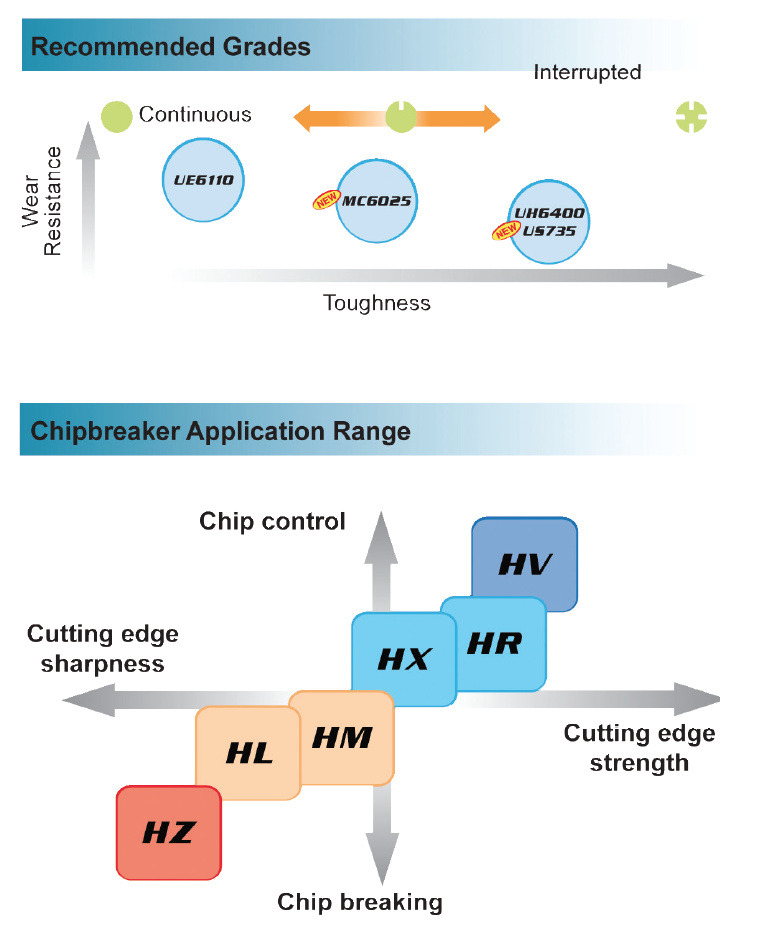
The MC6025 grade utilizes Mitsubishi’s 2 in 1 technology of coating and substrate that merges perfectly to provide the ultimate overall cutting performance.

The smooth surface of the coating prevents chip welding and combines with the Al2O3 and TiCN coating layers to deliver the excellent heat and wear resistance for outstanding tool life during heavy duty cutting. The substrate of MC6025 also uses a new technology that provides a tough outer edge layer for vastly improved resistance to crack development.

For stainless steels and Nickel based super alloys, the well-known US735 grade has been added to complement the existing grades. The extremely tough carbide substrate of US735 is coated with a specially formulated, thin but tough Ti compound. This compound has super high adhesion strength to ensure it protects the substrate during the extreme conditions faced when turning difficult-to-cut materials.

Without modern chipbreaking geometries any large enhancements in performance would be difficult. With this in mind, the HR chipbreaker was designed for heavy cutting of general and alloy steels and covers the application area between the existing HX and HV chipbreakers. Compared to the HX breaker, the slightly larger cutting edge land of the HR type provides strength, but with a smooth cutting action. The HR breaker targets outstanding efficiency levels and exhibits good chip control during the high feed rates that are demanded by today’s metal cutting industry.

A large range of standard geometries, including the round type RC and a comprehensive series of chip breakers are available to ensure a huge range of turning applications can be effectively machined with Mitsubishi’s heavy duty insert series.

For more information, contact Multitrade Distributors – Tel: 087 803-2377.

Turning: ISCAR Gives Aerospace Manufacturing The Cutting-Edge

To ensure that the most efficient, cost-effective cutting tools are designed and made available to the global Aerospace manufacturing industry, ISCAR’s Aerospace Industry Manager remains in constant communication with all of the major sub-sectors involved. Continual technical liaison allows ISCAR’s R&D department to remain aware of all relevant trends in areas such as material developments and machine tool advancements.

This high-level contact and co-operation has supported the development and launch of a wide range of high-quality ISCAR cutting tools that have boosted the global Aerospace manufacturing sector’s productivity and assisted in assuring product quality across many machining disciplines.

Typical of the challenges shared with ISCAR were those related to the difficulties encountered when machining Ni based and titanium alloys that feature very high hardness values (40-47 HRC).

The answer to the problems when machining these materials, that are used in newly designed jet engine parts can now be found in ISCAR’s newly launched IC804 grade and the extension of the company’s selection of uncoated IC4 items.

As the continuing trend is towards ever-harder parts, IC804 and IC4 provide users with substantial improvements regarding tool life and the application of higher cutting speeds, they also provide advantages when machining more conventional Ni based and titanium alloys at stable machining conditions.

IC804 features a hard submicron substrate, IC4 with an AlTiN PVD coating and a special post-coating treatment that provides substantially improved tool life and excellent levels of reliability.

In addition, uncoated IC4 standard items are ideal for the efficient machining of titanium alloys and aluminium alloys with high silicon content. Both IC4 and IC804 feature high hardness, especially suited for hard nickel base and titanium alloys.

Shared features include, outstanding flaking and chipping resistance, continuous turning of nickel base super alloys at stable conditions and reliable and repeatable results.

For more information, contact Iscar South Africa – Tel: (011) 997-2700.

Turning: Oil And Gas Industry Overcoming The Crisis

At this time, the accumulative effects of the slow-down of economic growth throughout the industrialized world and the decision by OPEC (Organization of the Petroleum Exporting Countries) at the end of 2014, not to reduce production to protect prices, were further intensified by the remarkable growth of oil production and slowing global demand. This perfect storm inevitably led to a major drop of crude oil price.

The effects on Oil & Gas producers have been dramatic – many previously embarked upon projects that began to make little or no economic sense. To help maintain their profitability or to assist in curtailing their losses, throughout this slowdown, countless companies reduced their expenditure. Many major projects were cancelled or postponed, proposed mergers and acquisitions in the oil & gas industry collapsed, as sellers and buyers were unable to settle on a fundamental agreement.

As a consequence of reduced activity in this important sector, global cutting tool manufacturers experienced a significant drop in business. In keeping with company’s reduced revenues, buyers were instructed to utilize existing inventories and to purchase cutting tools only when necessary, without keeping back-up stock.

Despite the global recession in the oil & gas market, there remained several important sectors that continued to run at full capacity. To aid the efficiency of these busy consumables sectors, cutting tool producers have been, and continue to be, approached with requests for help in reducing machined part costs, to further optimize manufacturing processes and to reduce cycle times. These demands have been satisfied by the launch of a new generation of advanced cutting tools.

These tools may appear more expensive, but importantly they deliver significant savings. Although cutting tools represent only 2-4% of total production costs, they have a massive effect on the overall efficiency of a process. The use of today’s minimally more expensive, innovative tools that deliver longer life, ensure faster cycle times and guarantee the continued quality of machined parts, makes undoubted economic sense.

The application of increased cutting speeds, in addition to the use of custom solutions (combination tools) that enable multiple steps to be combined into one, result in significantly reduced cycle times. The shares of machine, labor and administrative costs are decreased, delivering a total cost saving as well as the benefit of improved lead times. The result – added capacity and improved productivity!

ISCAR offers a range of innovative tooling solutions that are designed to simplify production, reduce costs and maximize productivity. Solutions with leading SUMOTEC Grade products provide improved tool life and enhanced reliability across a range of different materials. In addition to a comprehensive collection of cutting tools, ISCAR also provides superior technical support to all users.

Machining Solutions for Oil Country Tubular Goods

Tubing, Casing, Coupling, Line Pipes, Drill Pipes and Rotary Drill Bits 

The aggressive conditions encountered in the oil & gas industries necessitate the use of the most appropriate high-quality materials – as a result these challenging materials require the use of the best available cutting tools.

Innovative system solutions by ISCAR include tools for pipe end machining seamlessly hot-rolled or welded steel pipes, for turning, peeling the cone, seal seat machining and thread connections.

The SUMOTEC grade technology offers a new level of toughness and wear resistance for a wide range of applications and greater performance.

Parting Tubes and Rings
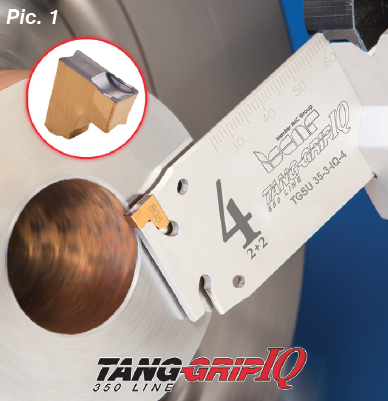
Tailor-made tooling combined with the revolutionary TANG-GRIP system, an extremely rigid clamping arrangement that ensures the highest levels of stability along with excellent chip control in most of materials, enables machining at high feed rates and provides excellent straightness and surface finish characteristics.

Included is a wide range of engineered holders and blades for parting tubes. (Pic. 1) 

Turning and Threading
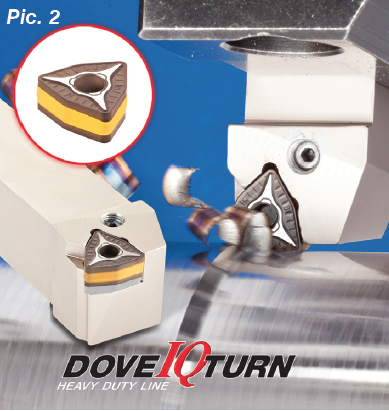
External and internal rough turning operations require a high quality surface and consistent results. High feed turning with DOVEIQ TURN and HELITURN TG turning inserts is a heavy duty ISCAR range that is ideal for rough turning operations and provides the benefits of a high depth of cut and high feed rates. (Pic. 2)
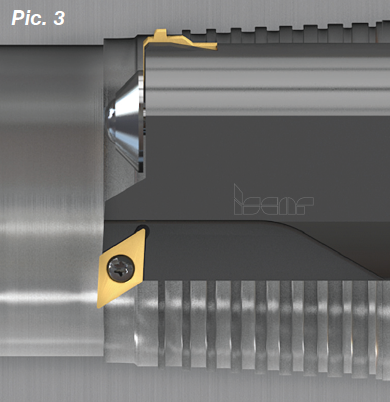
Multifunction tools for turning and threading operations are accurate indexing tools for a wide range of tubing and casing applications, and thus reduce cycle time and increase productivity. This product range provides tool solutions for high-performance thread cutting machines for API and premium threaded tubing and casing connections.

  • Wide solution for API and premium threading
  • High precision engineered tooling
  • Optimized grade and geometry range for different materials (Pic. 3)

Multi-Tooth Threading Inserts and Chasers 

Multi-tooth inserts are specially designed for high-volume production. Less passes are needed to cut the required thread and the cycle time is substantially decreased. ISCAR offers a wide range of threading inserts and chasers for the oil & gas industry, dedicated for the most common API standard threads and premium profiles.

External and Internal Skiving of Welded Seam 

ISCAR’s scarfing solutions consist of both external and internal tools, in addition to the comprehensive range of indexable scarfing inserts for finishing operations of the welded joint.

Rock Drill Bits 

Drill bits are cutting tools used to remove material through a cutting action provided by cones which have either steel teeth or tungsten carbide bit inserts.

The SUMOCHAM Chamdrill Line comprises a revolutionary clamping system that delivers improvements in productivity, while enabling more insert indexes. ISCAR offers tailor-made inserts with the appropriate point angle, corner radius and accuracy.

Machining Solutions for Wellheads, Valves and Frac Pumps 

Wellhead and Subsea Equipment 

Complex and highly engineered materials have become a standard demand for wellhead and subsea components.

Valves, Pumps and Connectors 

Valves, pumps and connectors are fundamental components in pressure control systems, operating under aggressive conditions on both surface and subsea operations. The high strength of stainless steels, duplex and super duplex alloys with their high mechanical strength, and other exotic materials have long been a focus for ISCAR.

In order to meet the current and foreseeable challenges, ISCAR offers a range of advanced tooling solutions, suitable for machining exotic materials that can withstand deep-water hostile environments. This new generation of tools is an essential solution for productivity improvement in today’s oil & gas industry.

Holemaking 

ISCAR’s all-embracing holemaking range provides all of the tools and technology needed for oil & gas component manufacturing. In this area, the key is to achieve the correct balance between the cutting edge, grade and geometry and the material being machined. ISCAR offers a complete package of hole making solutions for various machining challenges with a wide range of drilling tools including solid carbide drills and indexable inserts that meet all of the demands of accuracy and performance.
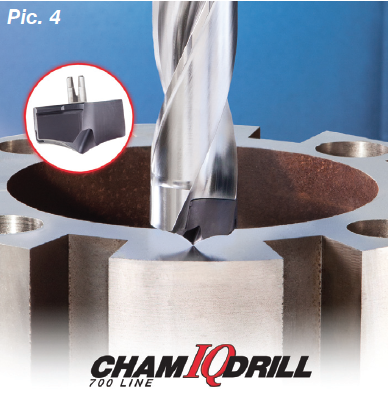
The CHAMIQDRILL features a unique design, utilizing the flexibility of carbide for self-locking, eliminating the need for clamping accessories. The robust structure of the drill with its concave cutting edge design enables drilling at high feed rates, providing very accurate adherence to tolerance. (Pic. 4)

The SUMOGUN is the only gundrill in the market with an indexable drilling head. It features two effective cutting edges, enabling the drilling of deep holes at much higher feed rates, when compared to most other gundrills.

For large diameter drilling applications, the COMBICHAM drilling system is the ideal solution to boost productivity and efficiency regarding oil & gas deep drilling applications.

Milling 
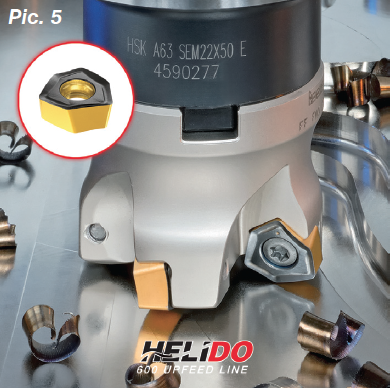
Innovation has always been an essential part of ISCAR’s milling range. All areas of oil & gas component machining can benefit from our knowledge. Cutters for face milling, helical interpolation, slotting, shouldering, plunge milling, high speed machining and many more solutions are available, along with the advice needed for their successful application. (Pic. 5)

Thread Milling 

Solid thread milling cutters are available in addition to thread milling indexable inserts for different thread profiles, providing a flexible and capable approach for high-quality threaded holes. This approach enables the production of precision threads, eliminates the problem of broken taps, reduces cutting forces and delivers shorter cycle times and increases productivity.

Solid Carbide End Mills – CHATTERFREE 

The most advanced machining technology is ISCAR’s all-in-one solid EFP carbide cutter with its high-tech design providing a great advantage when cavity milling. A winning combination of ISCAR’s three most innovative endmills – unique cutting edge geometry, high stability performance during cutting and the delivery of higher feed rates, even with long tooling overhang. These unique features enable high metal removal rates when machining pockets and cavities in high-temperature alloys. As a result, the cutter delivers a significant reduction in cycle time, increasing productivity.

Customized Tooling 

ISCAR designed its extensive standard product range to cover all of the most common applications. In addition, ISCAR is able to use its extensive knowledge to develop and produce the best solutions for customers’ processes not covered by standard products.

The Oil and Gas market faces many challenges to overcome the present situation, and ISCAR believes that effective collaboration with cutting tool manufacturers play an important role in helping the industry meet these challenges.

In addition to the latest technologies, we can see an industry focused on searching for creative methods and efficient processes. As a leading cutting tools manufacturer, ISCAR’s approach is to work closely with customers and provide them with innovating solutions by thinking outside the box to address these requirements and take productivity to the next level.

For more information, contact Iscar South Africa – Tel: (011) 997-2700.

Turning: Enhanced Speed And Toughness With New Hard Turning Grades

Hard part turning with optimized insert grades can reduce machining time and costs by 70% or more in comparison with conventional grinding techniques.

To help manufacturers enjoy benefits such as reduced cycle times and greater tool life when performing hard part turning, Sandvik Coromant has strengthened its existing offer in the ISO H05 to H15 application area with the introduction of two new grades, CB7105 and CB7115. The grades will be of particular benefit to those machining transmission components for the automotive industry, where lower cost per part can be achieved. 

Hard part turning has been proven to reduce machining time and costs by 70% or more in comparison with conventional grinding techniques, while also offering improved flexibility, better lead-times and higher quality. However, these gains can only be realized using optimized insert grades. With CB7105, Sandvik Coromant has created a grade for hard part turning that offers enhanced crater wear resistance in comparison with existing solutions, while CB7115 is designed to provide users with better fracture resistance than today’s available grades. These benefits equate to higher speed and improved edge line toughness respectively.

Hard part turning is usually a finishing or semi-finishing process where typical machining challenges include high surface and dimensional tolerance demands, along with competitive tool life. CB7105 and CB7115 have been developed to tackle these challenges through the application of a high performing PCBN grade material and coating, as well as appropriately adjusted edge preparation on the inserts. In combination with high quality control during insert manufacturing, this results in a number of end user benefits.

“CB7105 allows machine shops to achieve lower cost per part when used as part of a high speed machining strategy,” states Torbjörn Ågren, Product Manager Turning at Sandvik Coromant. “Alternatively, users of this grade can benefit from longer tool life at lower speeds. CB7115 is also designed to deliver lower cost per component, typically though the adoption of one-cut strategies at higher speeds.”

A case in point saw one trial site increase production of case-hardened 16MnCrS5 (HRc 57-62) automotive components by at least 15% after switching to CB7105 and CB7115. In fact, CB7115 surpassed 600 components (at 0.15 minutes time-in-cut) with predictable surface generation and lower Rz value. The cutting speed was 170 m/min (557 ft/min), while feed rate was 0.22 mm/ rev (0.087 inch/rev) with a cutting depth of 0.15 mm (0.059 inch).

Ultimately, reliable and predictable machining is always the aim when it comes to machining case-hardened or induction-hardened steel components such as transmission shafts and gears. CB7105 and CB7115 offers updated PCBN material, edge preparations and improved edge line quality to ensure better and more predictable tool life and edge line security.

For more information, contact Sandvik Coromant – Tel: (011) 570-9615

Turning: RhinoRush Eases Machining Operations

With the screw clamping type boring bar, the current hook lever, T-Holder and wedge clamp types, the RhinoRush line of boring bars meets the needs of more demanding machining applications.

The screw clamping type boring bar has a simple clamping structure, minimizes chip evacuation interference during internal machining and is stable plus durable during demanding operations.

Advantages of the ground type ML chip breaker include reduced cutting force due to its very sharp cutting edge and extended tool life with improved surface quality due to minimal built-up-edge during machining.

By combining the chip breaker’s sharp geometry and polished uncoated grade, this addition makes the RhinoRush line the perfect choice for aluminium and super alloy machining.

RhinoRush’s mini turning inserts have gained a huge following across many sectors within the manufacturing arena due to their reduced machining cost, increased output and competitiveness while keeping an eye on the environment.


RhinoRush is characterized by a tough and smaller double-sided insert that enables improved machining time and better surface finish. Its unique two directional clamping force outperforms other ISO directional clamping force tools on the market.