Caterpillar and the South African Department of Trade and Industry officially launched the largest ever Equity Equivalent Investment Program (EEIP) in the country.
Caterpillar has committed to source components and related services in South Africa worth a total estimated value of approximately 1.3 billion Rand (about $96 million) over the next 10 years in support of local enterprise and supplier development.
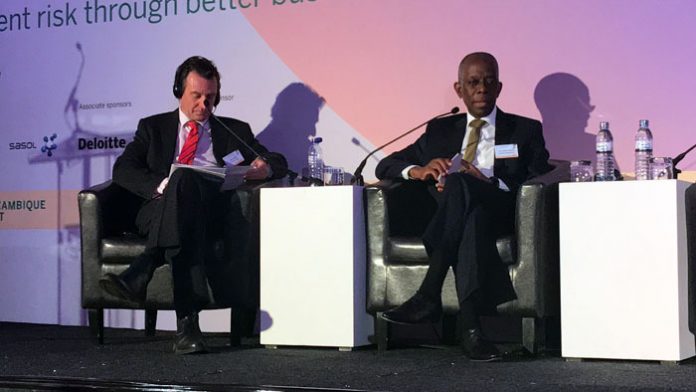
“We see that these agreements are also positive for the companies which participate in the Equity Equivalent Investment Programme. I want to commend Caterpillar for embarking on this journey with us as partners to stimulate and grow the South African economy. I look forward to see these commitments being executed,” said the South African Minister of Trade and Industry, Rob Davies at the launch event at Barlow Park near Johannesburg.
This commitment is one of Caterpillar’s largest engagements in Africa to date, and is part of the previously announced plan of Caterpillar, its independent dealers and the Caterpillar Foundation to invest more than $1 billion in countries throughout Africa over five years.
“Our multi-year commitment will help develop South Africa’s industrial local supplier base, generate more inclusive economic growth, and support our goal to be a leading B-BBEE (Broad-Based Black Economic Empowerment) organization in the industries we serve,” said Chris Monge, Caterpillar Director for Southern Africa. “We look forward to working with the South African government towards transformation and industrialization.”
“Our participation in the EEIP supports the development of local suppliers and enterprises, local content, skills transfer and development and job creation,” added Zakieya Parker, Managing Director, Caterpillar Industries. “The localization opportunities we are looking at include sourcing components locally to support the mining, construction, energy, and transportation industries.”
Caterpillar and the South African Department of Trade and Industry officially launched the largest ever Equity Equivalent Investment Program (EEIP) in the country.
Caterpillar has committed to source components and related services in South Africa worth a total estimated value of approximately 1.3 billion Rand (about $96 million) over the next 10 years in support of local enterprise and supplier development.
“We see that these agreements are also positive for the companies which participate in the Equity Equivalent Investment Programme. I want to commend Caterpillar for embarking on this journey with us as partners to stimulate and grow the South African economy. I look forward to see these commitments being executed,” said the South African Minister of Trade and Industry, Rob Davies at the launch event at Barlow Park near Johannesburg.
This commitment is one of Caterpillar’s largest engagements in Africa to date, and is part of the previously announced plan of Caterpillar, its independent dealers and the Caterpillar Foundation to invest more than $1 billion in countries throughout Africa over five years.
“Our multi-year commitment will help develop South Africa’s industrial local supplier base, generate more inclusive economic growth, and support our goal to be a leading B-BBEE (Broad-Based Black Economic Empowerment) organization in the industries we serve,” said Chris Monge, Caterpillar Director for Southern Africa. “We look forward to working with the South African government towards transformation and industrialization.”
“Our participation in the EEIP supports the development of local suppliers and enterprises, local content, skills transfer and development and job creation,” added Zakieya Parker, Managing Director, Caterpillar Industries. “The localization opportunities we are looking at include sourcing components locally to support the mining, construction, energy, and transportation industries.”
Commenting on the new vehicle sales statistics for the month of September, 2017 NAAMSA said that, for the fourth month in succession, aggregate domestic new vehicle sales had recorded gains.
Despite the subdued economy, compounded by political and economic policy uncertainty, the new vehicle market had registered encouraging gains lead by upward momentum in the new light commercial vehicle and new car segments. New vehicle exports had also registered strong gains. The recent sharp increase in the Reserve Bank’s leading indicator and the improvement in the Purchasing Manager’s Index suggested that further improvement in domestic sales could be expected in the months ahead.
September 2017 aggregate new vehicle sales at 50 675 units had increased by 3 318 units or 7.0% from the 47 357 vehicles sold in September last year. September, 2017 export sales at 36 359 vehicles had registered an improvement of 3 595 units or a gain of 11.0% compared to the 32 764 vehicles exported in September last year.
Overall, out of the total reported Industry sales of 50 675 vehicles, an estimated 40 654 units or 80.2% represented dealer sales, an estimated 13.9% represented sales to the vehicle rental Industry, 3.0% to government and 2.9% to Industry corporate fleets. The contribution by the car rental sector to sales remained difficult to determine exactly since four companies did not report sales by channel.
The September, 2017 new car market had reflected further upward momentum and at 33 669 units had recorded a gain of 1 868 cars or an improvement of 5.9% compared to the 31 801 new cars sold in September last year. The car rental Industry had accounted for an estimated 18.9% of new car sales in September, 2017.
Domestic sales of industry new light commercial vehicles, bakkies and mini buses at 14 523 units during September, 2017 reflected a substantial gain of 1 520 vehicles or an improvement of 11.7% compared to the 13 003 light commercial vehicles sold during the corresponding month last year. This was on top of the improvement in light commercial vehicle sales in recent months.
The medium and heavy truck segments of the Industry reflected a mixed performance and at 692 units and 1 791 units, respectively, had recorded a fall of 80 vehicles or a decline of 10.4%, in the case of medium commercial vehicles, and in the case of heavy trucks and buses, a slight improvement of 10 vehicles or an increase of 0.6 % – compared to the corresponding month last year. The figures reflected generally poor investment sentiment in the economy.
The strong gains in the September vehicle exports were in line with expectations and total 2017 export numbers were expected to post a marginal improvement on 2016.
Over the past four months, the domestic automotive industry had held up well in the current challenging economic environment. A number of factors had contributed to the improved momentum in local sales and these included reduced new vehicle pricing pressures currently at an annualized rate lower than inflation, the July, 2017 reduction in interest rates and continued highly attractive sales incentives. Normally sales during the second half of the year were higher than aggregate sales in the first half and an overall year-on-year improvement of around 1.5% for 2017 was therefore likely. In the case of vehicle exports, continued positive global economic growth prospects should support new vehicle export sales.
Delivering his presidential address in Parktown recently, Pimstein said the slow pace of transformation in the sector continued to be a matter of concern while urging companies to embrace change and advocate for transformation.
Steel and Engineering Industries Federation of Southern Africa (SEIFSA) President Michael Pimstein
He said that the manufacturing industry in general and the metals and engineering sector in particular were desperately in need of transformation not only when it comes to general business ownership, but also with regards to occupation of senior leadership.
“As a sector, we need to embrace change and advocate transformation. This is not only in South Africa’s interest, but also in business’s own long-term interest. It is of critical importance that a concerted effort is made by the sector towards creating meaningful opportunities for all South Africans to play a crucial role in taking our industry to new heights,” Pimstein said.
He expressed his concern that it reflected very poorly on South Africa that the country was placed number 165 out of 175 countries, currently reflecting an economic growth rate better than zero. This growth rate, he explained, was around the same position as that of the Republic of Congo, but significantly below rates experienced in Ethiopia (7,5%), Tanzania and Senegal (6,8%), Ghana (5,8%), Malawi and Mozambique (4,5%), Botswana (4,1%), Namibia and Egypt (3,5%) and even Zimbabwe (2%).
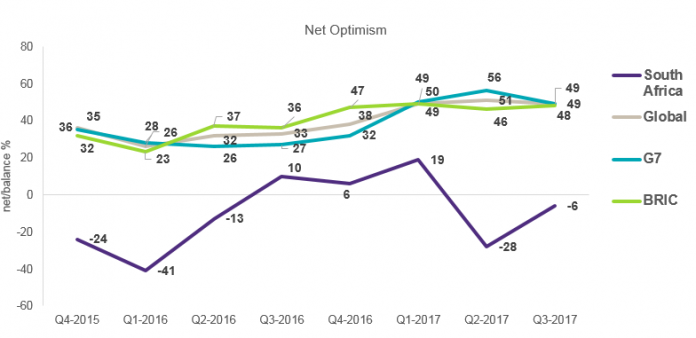
Pimstein pointed out that South Africa’s share of the global economy was declining year on year, with the country’s position aggravated by the fact that our economic growth continues to weaken whilst the rest of the world’s is improving.
He said that business in South Africa operated in an environment challenged by weak economic conditions and a radical disregard for good governance throughout the governing hierarchy.
“Failure to respond to allegations of State capture and corruption, ineffective Boards and delinquent management, political (and other) appointees that disregard accountability, integrity and competence as non-negotiable elements of office, selective law enforcement, absence of a sound strategic plan to recover from junk status, inability and/or reluctance to eliminate wasteful expenditure by organs of the State, shocking audit revelations from the Auditor General, ill-considered regulatory impositions and attacks on independent institutions such as the South African Reserve Bank would be alarming if considered individually. Together, they indicate contempt for good and responsible governance,” he said.
He continued that it was time for business, labour, civil society, community bodies and politicians to take South Africa back, “ultimately, we must recognise the resilience, character and goodwill of most South Africans. Standing together against all the evils permeating our activities would be a good start.”
Pimstein stressed that SEIFSA’s strategic role in influencing policy could not be underestimated. He said that it was important for all stakeholders within the sector to work together, with Government, business and labour partnering to find solutions to increase the country’s GDP significantly and, in the process, South Africa’s apparent steel consumption beyond the moribund five million tons level.
South Africa also needed to reposition for growth in key areas such as agriculture and agro-processing, mining and related beneficiation, manufacturing, urban development and rural infrastructure and development, water supply and storage, desalination and recovery, transport and logistics, as well as energy and tourism he said. “We simply have to create decent jobs and, to sustain them, we have to grow our economic pie,” Pimstein advised.
Pimstein welcomed the fact that the 2017 wage negotiations in the sector were concluded without any strike action, marking the fourth time in SEIFSA’s 74-year history that a three-year agreement was concluded with labour and the first time in the last 10 years that this has been achieved without industrial action.
By positioning suppliers of HEV & EV motors along a route through the show, the leading exhibition for coil winding, transformer and electric motor manufacturing aimed to make it even easier and more efficient for visitors and exhibitors to connect with the right business partners.
“The introduction of the EV Trail reflects an important change in the CWIEME community around the world,” says Haf Cennydd, CWIEME portfolio director. “We are seeing increased attendance from automotive OEMs – Tesla Motors is now a regular participant – while exhibitors are launching new products, tailored to the needs of hybrid and electric vehicle motor designers.”
At CWIEME Berlin in June, ArcelorMittal launched the second generation of its iCARe® electrical steels, while Essex Furukawa presented its new high voltage winding wire – both specifically for EVs.
CWIEME Chicago also hosted a series of special sessions that focused on key electric motor and powertrain developments, as well as advancements in core adjacent EV technologies, from battery technology to interoperability. The discussions were led by speakers from McKinsey, Tesla, Mississippi State University, Protean Electric, DHX Machines, University of Kentucky, Charged EV and more. Together, they looked to explore the opportunities and challenges in making EV the dominant reality across domestic and commercial transportation systems over the next five years.
Once previously a relatively niche application for electric motors, hybrid and electric vehicles are rising in popularity. According to a McKinsey & Company seminar at CWIEME Berlin, more than 200,000 electric vehicles were sold in Europe last year – a 110% increase from 2014. While they still represent only 2% of the overall automotive market, sales are on a growth curve – moving from innovators to early adopters. In a 2016 McKinsey survey, 30- 45% of US and German vehicle buyers said they would consider an EV purchase in the near future.
“Governments around the world have pledged to reduce CO2 emissions, while metropolitan mayors in cities, such as Mexico City, Paris and London, are taking a strong stance on air quality in their regions,” said Prof. David Greenwood of Warwick Manufacturing Group at CWIEME Berlin. “Consumers are thinking twice about purchasing diesel cars they might not be able to drive everywhere they want to. At the same time, consumers are starting to realise that EVs are quieter, more comfortable and have better driving characteristics.”
Cennydd adds, “rapid technological progress combined with tipping points in consumer behaviour make it difficult to predict exactly when the EV market will reach its potential but we are seeing a lot of investment in electric motor design, materials and manufacturing for this application. Since it is such a new area, there is not an established supply chain, meaning there are huge opportunities for the CWIEME community to grow along with the market. We look forward to supporting this growth.”
EuroBLECH 2018, the 25th International Sheet Metal Working Technology Exhibition, will take place from 23 – 26 October 2018 at the Hanover Exhibition Grounds in Germany.
One year ahead of the world’s leading sheet metal working technology exhibition, which is once again occupying eight halls in Hanover, the stand reservation at the organizers Mack Brooks Exhibitions has already begun. The last event in 2016 closed with very positive results: with 1,505 exhibitors from 41 countries exhibiting on a net exhibition space of 87,800 square metres and 60,636 visitors from 102 countries.
For the next event, besides major topics such as lightweight construction, hybrid production processes and additive manufacturing, the main focus will be on networked manufacturing. Increasing efficiency, improvement in performance of machines and systems, networking of components and predictive maintenance to reduce downtimes – these are the key points of Industry 4.0. To implement this trend in production reality it is vital to introduce high-quality sophisticated systems as well as innovative software and all-in-one systems. In addition, the Factory of the Future is based upon increased data security as well as company-wide cooperation to develop new solutions.
“The first applicable systems of Industry 4.0 have already been presented at EuroBLECH 2016. In the meantime, the development continues rapidly. Now it will be exciting to see how this trend further evolves and will be established in the production industry – from small and medium-sized companies to large corporations. Hence, this offers enormous opportunities and potential to manufacturers and suppliers of machinery and solutions in the sheet metal working industry”, says Nicola Hamann, Managing Director of the organizers of EuroBLECH, Mack Brooks Exhibitions.
“We are therefore very pleased to offer our exhibitors once again a high-quality international platform for the presentation of their latest machines, systems and solutions. At EuroBLECH 2018, they will be able to present these to a specialized trade audience who are ready to invest in the latest technology. EuroBLECH 2018 will take place for the 25th time in its history, and as the world’s leading sheet metal working technology exhibition, will once again be the showcase for technological development and the economic trend barometer. It will be building the platform to support the sheet metal working industry in its long-term development”, continues Nicola Hamann.
EuroBLECH 2018 is once again occupying halls 11, 12, 13, 14, 15, 16, 17 and 27 at the Hanover Exhibition Grounds. From conventional machines and systems to latest technologies, the EuroBLECH exhibition profile is clearly structured and covers the entire sheet metal working technology chain: sheet metal, semifinished and finished products, handling, separation, forming, flexible sheet metal working, joining, welding, tube/section processing, surface treatment, processing of hybrid structures, tools, machine elements, quality control, CAD/CAM/CIM systems, factory equipment and research & development. For interested companies to be placed in their respective technology sector, the organizers suggest to reserve their stand space as soon as possible.
Current studies prove that German companies see greater potential in digitalization. The surveyed decision- makers are optimistic that Industry 4.0 can help them achieve higher sales while simultaneously reducing costs.
The GEWATEC web Factory, a fully automated production process based on Industry 4.0 criteria, will be presented at AMB 2018. (Photo source: Gewatec)
The surveyed companies are expecting sales and cost savings to increase within a space of three years by an average of more than 10 percent, especially due to higher productivity among employees and improved efficiency of machines. “Mechanical engineering and plant construction in Germany is one of the strongest national industries, but also in an international comparison. This position must be strengthened and extended still further. This objective can only be achieved through a leading edge in digitalization within the framework of Industry 4.0. By staging the Digital Way special show during AMB in September 2018, we want to make the metal cutting industry even more aware of this topic and take account of the high demand for information,” added Ulrich Kromer von Baerle.
The aims of AMB 2018 are to act as a platform for providers and users, and show digital paths. “With this new format AMB will underline its position as the leading exhibition for metal working. Everyone is talking about digitalization – in the Digital Way special show we will show how business and production processes can be optimized in very specific terms and what digital business models are available,” explained Kromer von Baerle, CEO of Messe Stuttgart.
Industry 4,0 and digitalization processes can be experienced live in the “Digital Way” special show during AMB 2018. (Photo source: Messe Stuttgart)
In addition to a first-class expert conference, which is being developed in cooperation with the Software and Digitalization Association in the German Engineering Federation (VDMA) and a supplementary accompanying exhibition, interactive showcases will demonstrate the interaction between networked processes in companies and will explain their valueadded. The accompanying exhibition will feature manufacturers of software solutions in the areas of digital business models, digital production, digital product development, digital services and customer service and software development, as well as service providers and manufacturers of hardware. Further opportunities for matchmaking between Digital Way exhibitors, visitors and exhibitors at AMB and conference delegates will be available due to the extended opening hours of Digital Way on the first day of the exhibition with an additional networking event.
“Companies want to know how Industry 4.0 and digitalization of processes can be implemented. What providers have already successfully implemented projects? What applications or models are available and are relevant to the respective company? The Digital Way special show at AMB 2018 will enable us to bring solution-oriented supply and demand together,” explained Gunnar Mey, Department Director Industry at Messe Stuttgart. Messe Stuttgart itself is also exploring new avenues: as of now, exhibition areas can be booked online at www.amb-messe.de/digitalway while socalled digital handshakes and live streaming of selected conference topics are planned at AMB 2018.
Prof. Claus Oetter, Deputy Managing Director of the Software and Digitalization Association in the German Engineering Federation (VDMA), said that the reasons for cooperating in the Digital Way special show during AMB are as follows, “Innovation in digitalization is actually created by the synergy between IT and the software industry and mechanical engineering and plant construction. In the digitalized world only industry can manufacture new products which are beneficial to producers and customers.” Oetter added, “digitalization permits entirely new solutions and business models for future products and services in industry. Whether in areas such as usability or user experience, the digital twin for simulation and commissioning, or machine learning for optimizing machining processes and maintenance, the range of topics is enormous and also helps to increase customer loyalty.” The German Engineering Federation will provide information on the spot about its numerous activities and will present new technologies during a live demonstration. These topics will also be examined more closely during an exclusive conference on digitalization in production.
The 20th International Exhibition for Metalworking Technologies, which will take place from 20 to 24 February in Düsseldorf, shows the entire value added chain in an overall organic view.
The classical topics of metalworking are found at the core of METAV, such as machine tools, production systems, high-precision tools, automated material flows, computer technology, industrial electronics and accessories.
Classical metalworking and innovation are of course not a contradiction at METAV. The latest technologies in traditional production technology can be seen at the fair, as can current solutions for Industry 4.0. With the core area, METAV addresses numerous user industries including the automotive industry and its component suppliers, machine manufacturing, medical technology and aircraft construction, electrical engineering and electronics as well as the ironworking, sheet metal cutting and metalworking industries.
This heart of the fair is intrinsically connected with the so-called Areas, which were successfully introduced with the new METAV concept in 2016. The fair thus represents the reality of modern industrial manufacturing compressed into its grounds. Two areas are dedicated to special topics of production technology and two others are focused on special industrial sectors.
Areas demonstrate synergies in production technologies
The Quality Area shows how inseparably measurement technology is connected to industrial manufacturing. In the era of digital transformation, these categories are gaining steadily in perceived importance. Not least the measuring and testing technologies involved will become a supporting pillar for smart and big data concepts.
The Additive Manufacturing Area, in contrast, illustrates that the corresponding manufacturing processes have firmly established their place in the factories. They are an outstanding complement to classical metalworking that joins in with the entire bandwidth of the process chain – even though mechanical post-processing is required in any case. This is made clear not least by the numerous exhibitors that rely on hybrid machines, i.e. production technology that combines additive with machining manufacturing.
In the Moulding Area, it’s all about tool, mould and model building. Moulding is considered to be one of the most demanding fields of application in metalworking. The standards of precision and quality involved are extremely high, which encourages innovation in this area. Besides conventional processes, new process technologies are always finding their way in, such as laser-based manufacturing for fine texturing of design surfaces. Therefore, the requirements that apply and how they can be solved with innovative production technology are central topics of the Moulding Area.
As the second user-based Area, the Medical Area focuses on medical technology. With its stringent requirements and massive innovation potential, it is a driver of technological progress in production technology. There is a good reason why medical technology ranks highly in the worldwide registration of patents. On the other hand, it is a segment with outstanding, long-term market perspectives. Demographic development of the world population is fuelling the demand, above all including the increasing average age in industrialized countries and the rising standard of living in numerous emerging countries.
METAV covers a broad range of specialisms dealing with numerous aspects of production technology. Its soul remains the entire bandwidth of metalworking, an area that has once again gained considerable innovative potential with the digital transformation. At the same time, METAV showcases the connections to the numerous, flanking industrial topics that decisively codetermine production technology. And it does so at a time in which Industry 4.0 is causing us to conceive value creation in a more extensive, universal and more effectively networked form.
EMO Hannover (18. bis 23. September 2017) - Weltleitmesse der Metallbearbeitung.
A veritable hotbed for business success; a fantastic window onto the global market; a pacesetter for the future of manufacturing − those are just a few of the ways in which participating exhibitors have described the outcome of EMO Hannover 2017.
“EMO has once again lived up to its reputation as the leading global tradeshow for the world of metalworking,” remarked Carl Martin Welcker, General Commissioner for EMO Hannover 2017, adding that it was also the definitive exhibition for machine tool makers worldwide and a pacesetter for the future of production technology. Welcker also pointed out that EMO had had a major impact on business activity, quoting a survey in which EMO visitors indicated their intent to invest a total of over 20 billion euros in production technology over the course of the next 24 months. Deals worth 8 billion euros were sealed during the one-week event.
The show’s chosen motto of Connecting systems for intelligent production proved to be right on the mark, effectively pulling in the crowds, especially from abroad. In this spirit, most exhibitors were touting connectivity solutions, data analysis applications and innovative services. The emphasis was on systems capable of interconnecting multiple partners, cloudbased machine monitoring solutions, simulation software, augmented reality for machine maintenance, blockchain technology for secure data transfer, new business models and much more.
Foreign industry professionals were particularly keen on attending EMO Hannover to get a grip on the future of manufacturing. More than half of the show’s total of approximately 130,000 attendees came from abroad, with 70 percent of these foreign visitors originating from European countries. Attendance from Asia, in particular, was found to have risen sharply. “Foreign visitors were keenly interested in seeing how the market leaders are leveraging digitization to benefit the various process chains. They were also eager to see how new business models are growing up out of all the harvested data,” explained Welcker. Alongside digitization and connectivity, additive manufacturing was also very high on the agenda for a great many EMO visitors.
The show’s supporting program provided even more insight into today’s and tomorrow’s manufacturing technology trends. A rich array of conferences, seminars and special displays put the spotlight on key topics like Industry 4.0, future production scenarios, additive manufacturing, intelligent tools, machine safety, training for factory workers and promising markets from India to the U.S. and Mexico and everywhere in between. The supporting program was a major magnet for anyone keen on grasping and gearing up for tomorrow’s realities.
Industry is already looking forward to another edition of EMO in the year 2019. “The themes of digitization and connectivity will still be high on the agenda in two years’ time,” reported General Commissioner Welcker. “And by then we will have an even better grasp of what lies ahead.”
The next EMO Hannover will be staged from 16 to 21 September 2019.
The orders include one 737, four BBJs, three BBJ MAXs, one BBJ 787-8, two BBJ 777-300ERs and three BBJ 747-8s.
“It has been a really strong year for us at Boeing Business Jets,” said Greg Laxton, Head of Boeing Business Jets. “Our customers are seeing the value our products provide across our entire portfolio, from the current generation BBJ, to the future BBJ MAX, all the way up to the BBJ 747-8.”
Boeing Business Jets also unveiled a new interior design concept for the BBJ MAX 7. Created by renowned Paris based design firm, Alberto Pinto, it features a design customized to the BBJ MAX 7’s spacious interior.
“At BBJ, we are always innovating our products and that includes the cabin interior,” said Laxton. “What really sets Boeing Business Jets apart from our competition is that we offer our customers incredible range and incredible cabin space. Our customers can take advantage of multiple living areas, a full bedroom and full size bathrooms and the new design beautifully highlights these advantages.”