Home Blog Page 78

Airbus And Williams To Explore Technology Collaboration

Airbus and Williams Advanced Engineering, the innovative engineering and technology business of Williams Grand Prix Engineering, are to explore potential areas of technological collaboration.

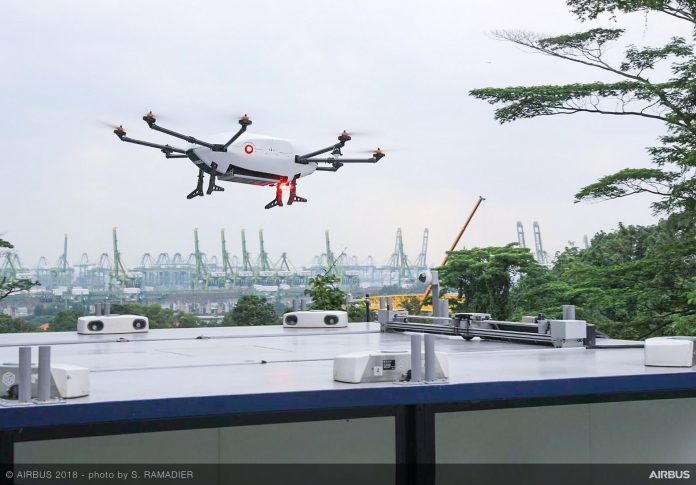
Under the terms of a newly signed MoU, the two companies will examine in particular applications that may combine Williams’ innovation culture, lightweight composites and battery expertise with Airbus’ Zephyr High Altitude Pseudo-Satellite (HAPS) programme.

Zephyr is a record-breaking, solar-powered, unmanned aerial system (UAS), or drone, with unique communications and surveillance capabilities. It will fly at more than 65,000ft, above commercial air traffic, for months at a time. The first production examples are being manufactured at Farnborough for the UK Ministry of Defence.

As sole battery supplier to the FIA Formula E championship since its inception, Williams Advanced Engineering’s battery technology has been tried and tested, and its world-leading expertise in electrification has become core to the business. And with four decades of experience at the pinnacle of motor racing, where lightweight materials and structures are crucial, Williams is now developing these technologies and finding innovative solutions to weight saving.

Emirates To Acquire 36 Additional A380 Aircraft

Dubai-based Emirates Airline has signed a Memorandum of Understanding (MoU) to acquire up to 36 additional A380 aircraft.

The agreement was signed recently at the airline’s headquarters in Dubai by HH Sheikh Ahmed bin Saeed Al Maktoum, Chairman and Chief Executive, Emirates Airline and Group and John Leahy, Chief Operating Officer – Customers, Airbus Commercial Aircraft. The commitment is for 20 A380s and an option for 16 more with deliveries to start in 2020, valued at US$16 billion at latest list prices.

Following delivery of its first A380 in July 2008, Emirates took its 100th A380 on the 3rd November 2017 in Hamburg, Germany.

The A380 is an essential part of the solution to sustainable growth, alleviating traffic congestion at busy airports by transporting more passengers with fewer flights. The A380 is the best way to capture growing world air traffic, which doubles every 15 years. It flies 8,200 nautical miles (15,200 kilometres) nonstop and can accommodate 575 passengers in four classes.

The spacious, quiet cabin, smooth and most comfortable ride have made the A380 today’s passenger favourite, resulting in higher load factors wherever it flies. The A380 is the world’s largest passenger aircraft, with two full widebody decks, offering the widest seats, wide aisles and more floor space. It has the unique capability to generate revenue, stimulate traffic and attract passengers, who can now specifically select the A380 when booking a flight via the innovative iflyA380.com website.

To date, over 200 million passengers have already enjoyed the unique experience of flying on board an A380. Every two minutes an A380 either takes off or lands at one of the 240 airports around the world, ready to accommodate this magnificent aircraft. To date, 222 A380s have been delivered to 13 airlines.

Boeing Sets Airplane Delivery Record

Boeing delivered more commercial airplanes than any manufacturer for the sixth consecutive year and set an industry record with 763 deliveries in 2017, driven by high output of the market-leading 737 and 787 jets. At the same time, the company grew its backlog with 912 net orders, reflecting healthy demand for its single-aisle and twin-aisle airplanes.

Boeing reached a new high on the 737 program as it raised production to 47 airplanes a month during the year and began delivering the new 737 MAX, contributing to a record 529 deliveries, including 74 of the MAX variety. On the 787 Dreamliner program, Boeing continued building at the highest production rate for a twin-aisle jet, leading to 136 deliveries for the year.

“The record-setting performance is a testament to our employees and supplier partners who continue to innovate new ways to design, build and deliver the most fuel-efficient airplanes to customers around the world,” said Boeing Commercial Airplanes President & CEO Kevin McAllister.

On the orders front, 71 customers placed the 912 net orders, valued at $134.8 billion at list prices. The total extends Boeing’s backlog to a record 5,864 airplanes – at year end – which is equal to about seven years of production.

“The strong sales activity reflects continuing strong demand for the 737 MAX family, including the ultra-efficient MAX 10 variant that we launched last year, and the market’s increasing preference for Boeing’s family of twin-aisle jets,” said McAllister. “Our planned production increases over the coming years are designed to satisfy this robust demand.”

While in 2017, the 787 Dreamliner family racked up nearly 100 net orders and the 777 family 60 net orders, other major commercial airplane milestones include the first flights of the 737 MAX 9 and the 787-10 Dreamliner, as well as the start of production of the 737 MAX 7 and the new 777X

Dr Roland Feichtl New CECIMO President

The CECIMO General Assembly recently elected Dr Roland Feichtl as President for a period of two years.

Feichtl has been entrusted with the responsibility of leading the European Association that represents more than a third of the world machine tool (MT) production.

Dr Roland Feichtl, President of CECIMO

Feichtl is responsible for machine-tools and automation within the MTB-Group (1.000 m revenue and 5500 employees), and Group CEO of several traditional machine-tool companies like, for example, 200 years’ Mauser-Werke Oberndorf (Germany) or fineboring specialist Krauseco in Vienna (Austria) which has more than 100 years of experience. Here, Feichtl developed Krause+Mauser Group to become the world market leader for connecting-rodmachines and laser-cracking-technology and a premium supplier of the international automotive industry. He is, also, co-owner and Chairman of the Supervisory Board of the company Feiba in Traun (Austria), specializing in Automation and Robot-Application.

Feichtl joined CECIMO in 1999 as a Delegate, was Chairman of Technical Committee, CECIMO Vice-President and Board Member for the last 17 years.


Inside 3D Printing – Sounding Out The Future

For example, new technologies – in line with the Gartner Hype Cycle – usually pass through five stages of public attention.

A technological trigger seizes people’s imagination and generates exaggerated expectations, which rapidly give way to disillusionment. Only then will realistic assessments come to the fore, enabling the technology concerned to be productively used.

A productive plateau of this kind has been achieved in the 30-year history of technology by rapid prototyping, for example, by layerby- layer construction of single pieces and sample components from CAD data and by 3D printing of hearing aids. Applications in the fields of dental technology and automaking have left the disillusionment phase behind and have long since been evolving into successful models. Other processes like 3D printing of consumable materials, surgical implants or bioprinting of human tissue still have a long way to go.

What business models for additive manufacturing might look like is exemplified by Protiq GmbH, a subsidiary of Phoenix Contact GmbH & Co. KG and represented at Inside 3D Printing by Johannes Lohn. Industrial customers upload the data of their 3D models to Protiq’s website, select the material they want, and place a printing order. The models will then be printed within a few days, and dispatched worldwide. “The quality is in some processes so high that intensive reworking is not needed. It suffices to polish the workpieces at certain points, and they can be used directly,” emphasizes Stefan de Groot, Additive Manufacturing Technologist at METAV’s Press Forum in Blomberg. He sees the advantages in significant cost reductions, particularly for small batch sizes, but also in greater functional depth. Close-to-contour cooling and weight reductions based on topological optimization, for example, are reflected in simpler handling.

“As an international meet-up for the sector, Inside 3D Printing provides an opportunity to talk with top-ranking speakers and companies,” explains Prof. Dr.-Ing. Franz- Josef Villmer from Ostwestfalen-Lippe University, who will be acting as the host for this conference. “In the shape of Dr. Phil Reeves and Prof. Thierry Rayna, for example, we have brought on board true pioneers and visionaries of additive manufacturing, whose keynotes are definitely something for visitors to look forward to.”

Visitors to METAV will thus perceive Inside 3D Printing as an ideal supplement to the fair’s other attractions. While at the exhibitors’ stands they will experience the latest state of the art, the conference at the fair will provide them with insights into what companies have in the pipeline for the future. But trade visitors who travel to Düsseldorf only for the Inside 3D Printing event will also find it definitely worthwhile. To quote Prof. Villmer: “Because we are moving away from frontal lectures and giving preference to meaningful interaction between speakers and conferees, a visit is well worthwhile for all stakeholders in 3D printing. They will meet experts with huge funds of specialized knowledge, able to provide a crucial boost for their own work.”

Collaboration For Curative Technology

The requirements applying to production systems for medical technology are enormously stringent: the certified lines have to operate faultlessly, meet strict hygiene regulations, and document every important step in the production process.

Unsurprisingly, innovative firms opt for intercompany teamwork here: the Medical Area of METAV 2018 will open new interesting chapters of collaboration here in 2018 – in Düsseldorf, the IMSTec company from Rhineland-Palatinate will be showcasing a new production line that it has developed together with the machine tool manufacturer Schütte from Cologne, Germany.

“We develop end-to-end solutions for medical technology,” explains Edgar Mähringer- Kunz, Managing Director of IMSTec, Klein- Winternheim (near Mainz, Germany). “The customers come to us with a job profile: we transfer this to a specification and analyse it for weaknesses and risks.” This is followed by line manufacture, commissioning and support within the framework of maintenance agreements.

Collaboration is usually arranged in three different ways: IMSTec, for example, has developed and built a fully automatic line including all production processes, on which a customer is manufacturing implants that are fitted directly in the eye, and supply it with medication. The technical term used for this is “complete process development outsourcing”. To quote Mähringer-Kunz, “this was an ideal case, where we developed the processes in parallel to the product, and at the same time built the complete line.” Other customers have developed a production process that’s already been clinically approved, which IMSTec is then progressing from laboratory status to an industrial process. The third variant involves optimizing, expanding and automating an already-existing production operation.

All three variants are characterized by a common denominator: for example, manufacturers of lines for medical technology have to comply not least with the stipulations laid down in DIN EN ISO 13485 (a standard covering a comprehensive management system for the design and manufacture of medical products), stringent statutory specifications like those of the USA’s FDA and the GMP rules (Good Manufacturing Practice). In addition, they have to pass various audits by customers. “So the quality and documentation system is already very unusual,” emphasizes IMSTec’s Managing Director. “What’s more, you have to remember that this sector, like the aviation industry, cannot permit itself any mistakes whatsoever. For example, we automated a line for packing orthopaedic components, because within two years a part had been mixed up one single time during manual packing. This is why systems for dependable monitoring and tracking of process conditions, known as traceability, play an extremely important role.

New EU stipulations for medical products already met

The European Union has taken on board these stringent requirements with the new legal framework for medical products in force since 2017 (Medical Device Regulation – MDR), which obligates manufacturers of medical products to modify their processes appropriately and provide their products with UDI (Unique Device Identification) by May 2020 at the latest. “All our lines already possess the appropriate systems for individual-part tracking,” says Mähringer-Kunz. “We can label, unambiguously identify and trace each individual part. It’s also possible to acquire all parameters of a product lifecycle – so for years now we’ve already been implementing parts of Industry 4.0.” This means that on these lines products can be dependably manufactured in ultra-small series or even Batch Size One. The highlights here include the world’s first fully automated lines for producing eye implants, for example.

When it comes to automation, the company has recently begun to collaborate with the machine tool manufacturer Alfred H. Schütte from Cologne in developing automated production lines, which can be used to completely machine cast knee implants, for example. To quote Mähringer-Kunz, “we’re already engaged in contractual negotiations with the first customers.” So far, he continues, the solution concerned possesses a unique selling point in that knee implants, for example, can be manufactured significantly more efficiently and productively – and this “with an attractive return on investment”.

Turning: Intelligent Machine Productivity In A Compact Footprint

Okuma Corporation has developed a large 2-saddle CNC lathe, the SIMUL TURN LU7000EX, for the large, difficult-to-cut parts of heavy industry.

The LU7000 EX has a large work envelope that handles super-large diameter, long parts with a maximum turning diameter of ø900mm and spindle bore diameter of ø560mm (optional). It is a 2-Saddle CNC lathe that achieves high productivity, including simultaneous turning with upper and lower turrets and follower rest applications.

A high output, high torque spindle enables heavy-duty cutting with turning capacity of 10mm2, while a first-in-thisclass, newly-developed milling turret achieves process-intensive machining of large parts in with powerful millingtool spindles that have an axial milling capacity of 120 cm3/min. Four different main spindles are available to match the workpiece, from a bore diameter of ø200mm and spindle speed of 1,500 min- 1 to ø560mm and 350 min-1, respectively, for the best machining with the best spindle. Innovative production is achieved with a rich array of applications, including simultaneous machining with upper and lower turrets, a long boring bar attached to the upper turret and a follower rest mounted on the lower turret.

The range of functions provided with Okuma’s next-generation CNC, the “OSP suite”, supports smart manufacturing with advanced Okuma Intelligent Technologies including the Thermo-Friendly Concept to maintain stable machining accuracies during long runs, Machining Navi for optimal cutting conditions required for turning, milling and threading and the Maintenance suite visual control tool for maintenance activities.

For more information contact F&H Machine Tools – Tel: (011) 397 4050

Turning: Innovating Production With A Large Smart Machine


Okuma Corporation has developed a large 2-saddle CNC lathe, the SIMUL TURN LU7000EX, for the large, difficult-to-cut parts of heavy industry.

The LU7000 EX has a large work envelope that handles super-large diameter, long parts with a maximum turning diameter of ø900mm and spindle bore diameter of ø560mm (optional). It is a 2-Saddle CNC lathe that achieves high productivity, including simultaneous turning with upper and lower turrets and follower rest applications.

A high output, high torque spindle enables heavy-duty cutting with turning capacity of 10mm2, while a first-in-thisclass, newly-developed milling turret achieves process-intensive machining of large parts in with powerful millingtool spindles that have an axial milling capacity of 120 cm3/min. Four different main spindles are available to match the workpiece, from a bore diameter of ø200mm and spindle speed of 1,500 min- 1 to ø560mm and 350 min-1, respectively, for the best machining with the best spindle. Innovative production is achieved with a rich array of applications, including simultaneous machining with upper and lower turrets, a long boring bar attached to the upper turret and a follower rest mounted on the lower turret.

The range of functions provided with Okuma’s next-generation CNC, the “OSP suite”, supports smart manufacturing with advanced Okuma Intelligent Technologies including the Thermo-Friendly Concept to maintain stable machining accuracies during long runs, Machining Navi for optimal cutting conditions required for turning, milling and threading and the Maintenance suite visual control tool for maintenance activities.

For more information contact F&H Machine Tools – Tel: (011) 397 4050


Turning: Colchester Multiturn CNC Lathe

The MultiTurn takes a highly established, robustly engineered lathe concept from Colchester that makes it the perfect machine for many of today’s CNC turning applications.

The MultiTurn is everything that you come to expect from a Colchester lathe – robust, stable and highly precise, irrespective of the component size handled. The Siemens 828D control with Shopturn has a well-earned reputation for being highly user-friendly and intuitive, ensuring that operators can cut quickly and easily with very little training. However, the Shopturn system is also powerful enough for more advanced CNC users to output maximum productivity quickly.

The Colchester MultiTurn lathe has been designed specifically for CNC users looking for increased versatility on one-off and small batch production, first time CNC buyers and jobbing shops looking for real programming simplicity and education and training establishments needing a real lathe with step-by-step simplicity.

600 UK offer 6 Colchester MultiTurn models, starting with the compact MultiTurn 1000, which has a 330mm swing over bed, a 7.5kW motor, outputting spindle speeds of 3500 rpm, right through to the heavyweight MultiTurn 6000, which has a massive 760mm swing over bed and an 18.5kW motor giving spindle speeds of up to 1400 rpm.

The MultiTurn 6000 also has bed length options ranging from 1.5 to 6 metres, ensuring that the MultiTurn is capable of turning any component, regardless of size, right through to long shafts, billets, bar stock and castings.

For more information contact F&H Machine Tools – Tel: (011) 397 4050


Turning: Multi-Spindle Automatic Lathes For Swisstype Machining

The MULTISPRINT 25 and MULTISPRINT 36 set a new standard in series production with six spindles.

Each spindle position already has a Y-axis in the standard. On the basis of countless technology studies and a wide range of customer requirements, the developers have fulfilled the requirements for reducing throughput times and setup times, lowering the cost of process development and integration and also dealing with the increasing degree of complexity. Nozzles in fluid technology, implants in dental technology and shafts in car construction are just three examples of complex components which can be manufactured in a highly productive way on the versatile machines. The result is a manufacturing solution for scalable requirements from series production startup to series production itself.

With the new multi-spindle automatic lathes, DMG MORI has developed a highly flexible machine concept which productively manufactures complex turned and milled parts in both chuck and bar machining.

The bar capacity is a diameter of 25mm with the MULTISPRINT 25 and 36mm in the MULTISPRINT 36. The cross-slides on the six spindles (optionally up to eight) all have a Y-axis with travel distance of 100mm and an X-axis with travel distance of 50mm. The Z-axis travel distances are 100m in the standard version, and 180m in combination with the SWISSTYPEkit. With this, the MULTISPRINT machines can be converted from a short automatic lathe to a long automatic lathe in less than two hours. The maximum turning speed is 7500 rpm.

The MULTISPRINT 25 and MULTISPRINT 36 can manufacture even extremely complex workpieces effortlessly because of their up to 28 tools. Up to 24 driven tools can be used. The speeds go up to 13,800 rpm or maximum torque of 14.2 Nm.

For rear machining the MULTISPRINT machines can be optionally equipped with a pick-up spindle or one or two counter-spindles. The cycle times can be reduced by up to 35 percent in this way. The pick-up spindle move 230mm along the Z-axis. The one or two counter-spindles move 280mm along the X-axis, 320mm along the Y-axis and 370mm along the Z-axis. A double tool station with three driven and two fixed tools completes the scope of the equipment. Demanding off-centre machining is also possible. The indexing of the counter-spindles is a highprecision 0.002° in both configurations.

On the automation front the MULTISPRINT machines can be equipped with a bar loader. DMG MORI has developed its own bar loader especially for the new MULTISPRINT machines. Up to two robots can be used directly in the work area for machining chuck components. These take care of simultaneous loading and unloading and the turning of chuck components with diameters of up to 50 x 80mm.

For more information contact Retecon – Tel: (011) 976 8600