Home Blog Page 72

Continuous Improvement Of Metals And Engineering Output

“The progress shows that local businesses are gradually responding to the generally improving consumer and business confidence, which is characteristic of the Ramaphosa era. Hitherto, the concern had generally been that despite improving sentiments from the start of the year, supply-side data as evidenced by lead economic indicators were still nondescript.

“The output data for the M&E cluster is encouraging, considering its significance to gross domestic product and the fact that the economy cannot entirely depend on positive sentiments to expand,” said SEIFSA Economist Marique Kruger.

The latest preliminary seasonally-adjusted production data for the M&E sector published by Statistics South Africa (Stats SA) today indicated that output improved to 10,3 percent in March 2018, on a year-on-year basis, when compared to March 2017. The performance is recorded despite a reduction in production in the broader manufacturing sector, which decreased by 1,3 percent in March 2018, compared to March 2017. Similarly, the M&E sector performed well on a month-to-month basis, registering a growth of 9,0 percent in March 2018 when compared to February 2018, in line with the broader manufacturing which increased by 1,3 percent.

SEIFSA Economist Marique Kruger.

“Businesses in the cluster should build on this performance by capitalizing on existing initiatives aimed at igniting domestic growth by both the public and private sectors, expand output, boost sales and margins and possibly claw back lost jobs,” Kruger said.

She added that SEIFSA expects a continuous improvement in output in the M&E sector, given an up-tick in the composite purchasing managers index (PMI), which is a lead indicator for the sector. She said the constant improvement of the business activity subindex of the PMI also provides solace to potential investors and stakeholders.

“Accordingly, higher productivity and better capacity utilization is necessary for businesses to cushion the negative effects of volatile and increasing input costs,” said Kruger.

Skills Development Is Critical

An Atlantis based Lesedi Skills Development Academy was established to address the need for skilled artisans and to close the skills gap in the nuclear and broader energy sector as well as associated industries.

Davies said it was increasingly evident that as a requirement to get any industrial job one needed to have skills. He said at all levels of employment one now requires to be skilled. Government is aware that skills development in the past was limited to the minority and the majority of the people had less access, yet it is a critical requirement for the majority to get jobs.

“This is the reason why every time we engage with business we insist on skills development which is a non-negotiable for all. To underpin the importance of skills development government launched the Youth Empowerment Service Programme. This programme aims to improve the grim employment outlook for young job seekers by offering work opportunities and therefore inclusion in the economy,” added Davies.

Minister of Trade and Industry Rob Davies launches the Lesedi Skills Development Academy in Atlantis, Western Cape.

He indicated that Business agreed to partner and create 300 000 internships per year for the unemployed youth for the next three years.

“Every bit counts as a means to address the issue of skills development and unemployment. We therefore cannot compromise if we need more people to participate meaningfully in the economy. The skills that the academy develops will assist the Atlantis people to tap into the proposed Atlantis Special Economic Zone amongst others. The zone is anticipated to be designated by the end of 2018,” concluded Davies.

US Decision To Impose Larger Tariffs On SA Steel Industry

The Steel and Engineering Industries Federation of Southern Africa (SEIFSA) is worried about the impact the US’s decision to permanently impose large tariffs on the importation of steel and aluminium products would have on the broader South African steel industry.

Despite South African exports of steel and aluminium to the US accounting for only 1.4 percent and 1.6 percent of U.S global imports respectively, these were still deemed as significant enough to threaten or impair US national security. The import tariffs of 25% on steel and 10% on aluminium products initiated under section 232 of the action plan on the basis of safeguarding US national security are effective from June 1 2018.

“The decision by the US to reject SA’s application for exemption is a travesty. It is clear that efforts by the South African government representatives, including the formal submission by the Minister of Trade and Industry, Dr Rob Davies, to the US requesting the exclusion of South Africa from the imposition of the duties on the basis that steel and aluminium exports to the US are a source of strategic primary and secondary products used for further value-added manufacturing in the US, thereby contributing to jobs in both countries, did not prevail,” SEIFSA Chief Economist Michael Ade said.

He added that it now seems the only option available for South African exporters is to individually convince their buyers in the US to lobby for exclusions for individual companies from SA on a case-by-case basis, rather than all South African exporters benefitting from a blanket exemption.

The decision by the US government still favours the original list of countries and regions that were initially temporarily excluded, including the European Union, Argentina, Australia, Brazil, Canada, Mexico and South Korea.

“The proclamation by the US will directly cost South African exporters roughly R3 billion worth of steel products and R474 million worth of aluminium products, respectively. This will not only starve the local industry of foreign currency, but it will also have a negative impact on the country’s foreign reserves. A further disruption on trade will include possible reductions in the quantity of steel and aluminium products exported to the US as local companies seek alternative export markets, thus negatively affecting exports competitiveness,” Ade said.

He added that the second-round effects will invariably be felt by South African companies largely dependent on the US market for exports. He warned that local companies facing the stiff duties may effectively seek ways of reducing costs, including cutting jobs, given their increasing input costs baskets.

In conclusion, Ade said that given the reduction in demand from the US and a possible oversupply from China, there is a possibility of a fall in global commodity prices and eventual dumping of steel and aluminium products into the SA markets.

“In this regard, SA needs to establish a steel import monitoring system that will verify any significant change in imported volumes, given the implementation of the US Section 232 tariffs, should exports to SA rise due to the US restrictions,” said Ade.


EuroBLECH 2018 – Step Into The Digital Reality

EuroBLECH 2018, the 25th International Sheet Metal Working Technology Exhibition, takes place from 23 – 26 October 2018 at the Hanover Exhibition Grounds in Germany. Around 1,400 exhibitors from 38 countries already secured their stand space at the world’s leading trade exhibition for the sheet metal working industry.

Currently, major exhibitor countries are Germany, Italy, Turkey, China, the Netherlands, Spain, Switzerland, Austria and the USA. At present, the exhibiting companies have secured almost the entire exhibition space from the previous event. EuroBLECH 2016 concluded with a record net exhibition space of 87,800 square metres.

Every two years, EuroBLECH is the must-attend event for design engineers, production managers, quality managers, buyers, manufacturers, technical directors and experts from associations and R&D in order to discover the latest trends and machinery in sheet metal working. Visitors to this year’s show can expect the complete spectrum of intelligent solutions and innovative machinery for modern production in sheet metal working, which are presented in form of numerous live demonstrations at the exhibition stands.

Digital transformation is playing a major role in the industry, which enables an increased efficiency and thus a higher level of automation and predictive maintenance. These developments are reflected in this year’s motto for EuroBLECH Step into the digital reality, since Industry 4.0 and the relating Smart Factory have become major topics in sheet metal working.

“The digital transformation is momentarily an important topic in the industry. This requires a close collaboration along the entire value chain, from production control to maintenance,” says Evelyn Warwick, Exhibition Director of EuroBLECH, on behalf of the organiser Mack Brooks Exhibitions.

“The biggest challenge for companies in the sheet metal working industry is to create an intelligent manufacturing environment which is based on the secure exchange of data and the networking of machines and processes. EuroBLECH 2018 offers its visitors the possibility to find solutions for these challenges and to connect with business partners to help them with the integration of these processes, machines and systems into their production,” concludes Evelyn Warwick.


Volvo Cars Working With Google

Volvo Cars partners with Google to build Android into next generation connected cars

Volvo Cars’ intended partnership with Google will further enhance the way Volvo customers engage with and interact with their cars. Apps and services developed by Google and Volvo Cars are embedded in the car, plus thousands of additional apps are available through the Google Play Store that is optimized and adapted for Android-based car infotainment systems.

Since the next generation of Sensus will run on Android, new apps and software updates will be available in real-time and can be automatically applied. This allows future Volvo cars to react to customer needs and offer drivers up-to-date information and predictive services.

The Google Assistant provides a central voice interface for the car that allows drivers to control in-car functions such as air conditioning, and use apps to play music and send messages. This integration contributes to reducing driver distraction, helping drivers keep their eyes on the road at all times.

Google Maps will also enable the next generation of Sensus to provide refreshed map and traffic data in real time, keeping drivers informed about upcoming traffic situations and proactively suggesting alternative routes.

This announcement builds on the strategic relationship between Volvo Cars and Google, which began in 2017 when Volvo Cars announced the new generation of its infotainment system will be based on Google’s Android platform. The first Android-based system is intended to be launched in a couple of years from now.


Wire And Tube 2018 Reflects Positive Global Business Climate

Investment has gone up worldwide – in infrastructure, the automotive sector, the electrical industry, regenerative energy projects and in oil and gas pipelines. And the upstream supplies industries wire, cable and pipes have substantially benefited from this development at the international No.1 trade fairs wire and Tube in Düsseldorf from 16 to 20 April 2018.

Across Germany steel and metal processing counts among the ten major sectors of industry. These sectors are strongly characterized by SMEs, by traditional growth and innovation. But even major groups of companies are now re-aligning their operations, following digital optimization processes and reorganizing their distribution channels, both nationally and internationally.

Orders for capital goods like machinery, plants and vehicles are very high and the German economy is benefiting from the positive global business climate. More than 71,500 trade visitors from 134 countries came to Düsseldorf over the five days to find out about industry innovations and conclude business deals.

A total of 2,683 companies from 67 countries presented their technology highlights in 16 exhibition halls on more than 117,000 square metres – some 7,000 square metres of space more than at the previous event in 2016!

Wire

2018 Wire and cable machines, wire and cable production, trade with these materials as well as fibre glass technologies, mesh welding machinery, spring making, fastener technologies and the China Pavilion meet china’s expertise were presented in exhibition halls 9 to 16. A total of 1,442 exhibitors from 53 countries showcased their innovations on space exceeding 65,000 square metres.

Most wire exhibitors came from the major producer countries Italy, Germany, Turkey, Great Britain, France, Spain, Austria, the Netherlands and Switzerland. From overseas many exhibitors from the USA, India, Taiwan, South Korea and China travelled to the exhibition halls on the Rhine.

Tube

2018 The ranges at Tube 2018 encompassed pipe and tube materials, manufacturing, finishing, processing, pipe and tube accessories, trade and forming technology including profiles, plastic tubes, machinery and plants as well as the China Pavilion meet china’s expertise. Tube was held in Halls 3 to 7a, 7.0 and 16 to 18 occupying in excess of 52,000 square metres of exhibition space. 1,241 companies from 57 countries were presented.”

At Tube most exhibitors hailed from Italy, Germany, Turkey, Spain, the Netherlands, Great Britain, Switzerland, Austria and France. Most overseas exhibitors travelled from the USA, China, India, South Korea and Taiwan”
“to Düsseldorf.”

Airbus And Rolls-Royce Sign Collaboration Agreement

Airbus and Rolls-Royce have signed a collaboration agreement for the integration of Rolls-Royce’s UltraFan® demonstrator for flight testing. The integration solutions demonstration will be co-funded by Clean Sky 2, the European Union research programme focused on developing technology to reduce emissions.

UltraFan is a scalable jet engine design suitable for widebody or single-aisle aircraft and offers a 25 percent fuel efficiency improvement over the first-generation of Rolls-Royce Trent engine.

One element of the UltraFan programme is planning for ground and flight tests and to support this, Rolls-Royce has signed an agreement with Airbus to provide both nacelle and engine/aircraft integration architecture and technology enablers.

Airbus’ integration solutions will play an important part in achieving the overall fuel efficiency improvement of higher bypass ratio engines such as UltraFan, through innovative architecture and associated technologies.

UltraFan features a new engine core architecture and lean-burn combustion system which will contribute to improved fuel burn efficiency and lower emissions, along with a carbon titanium fan blade system and composite casing which reduce weight. The engine also introduces a geared design to deliver efficient power at high-bypass ratios.

For Airbus, the project will enable it to fully integrate the overall powerplant system – composed of engine, pylon and nacelle – onto future long-range aircraft products, as well as facilitating scalability for future short-range aircraft. It will also build on Airbus’ expertise in advanced manufacturing technologies, such as high-deposition-rate additive manufacture, welded assembly and high production rate thermoplastics.


Boeing HorizonX Invests In Reaction Engines UK

Boeing announced its investment in Reaction Engines Limited, a leader in advanced propulsion systems based in Oxfordshire, United Kingdom. Reaction Engines’ technology will contribute to the next generation of hypersonic flight and space access vehicles.

Reaction Engines is known for its Synergetic Air-Breathing Rocket Engine (SABRE), a hybrid engine blending jet and rocket technology that is capable of Mach 5 in air-breathing mode and Mach 25 in rocket mode for space flight. As part of the SABRE program, Reaction Engines developed an ultra-lightweight heat exchanger that stops engine components from overheating at high speeds, thus improving access to hypersonic flight and space.

“As Reaction Engines unlocks advanced propulsion that could change the future of air and space travel, we expect to leverage their revolutionary technology to support Boeing’s pursuit of hypersonic flight,” said Steve Nordlund, vice president of Boeing HorizonX.

Founded by three propulsion engineers in 1989, Reaction Engines produces robust technical designs for advanced heat exchangers, air-breathing engines and the vehicles they could power. These capabilities may lead to high-speed point-to-point transport that is cost-effective and sustainable.

Artist’s impression of the release of an
upper-stage from a next-generation SABREpowered
reusable launch vehicle. The
development of the SABRE technology
will enable low-cost, high-cadence space
access. (Reaction Engines image)

“Boeing is a world-leader in many fields, bringing invaluable expertise in hypersonic research and space systems. I am thrilled and honored that Boeing HorizonX has chosen Reaction Engines as its first UK investment,” said Mark Thomas, CEO of Reaction Engines. “This is a very exciting step that will contribute to our efforts to develop a commercial technology business and accelerate opportunities to further the future of air and space travel through SABRE technology.”

Boeing HorizonX Ventures participated in this $37.3 million Series B funding round alongside Rolls-Royce Plc and BAE Systems. The Boeing HorizonX Ventures investment portfolio is made up of companies specializing in technologies for aerospace and manufacturing innovations, including autonomous systems, energy storage, advanced materials, augmented reality systems and software, machine learning, hybrid-electric propulsion and Internet of Things connectivity.

Club Of Metalworking Hits The Jackpot Within Hours

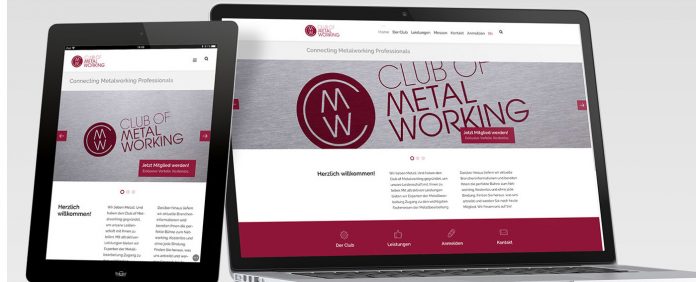
Making a visit to EMO and METAV simpler, faster and better is the goal pursued by the Club of Metalworking, which the VDW launched recently. Membership is free of charge and offers attractive services for international metalworking experts. Within a few hours, more than 1,000 registration enquiries were received from all over the world.

Following free-of-charge registration at www.clubofmetalworking.de, members receive an individual welcome package with their personal club card. A newsletter informs them every six to eight weeks about news from the sector and important trade fairs, while the club automatically provides freeof- charge season tickets for EMO Hannover and METAV. In addition to free use of the public transport network for visiting the fair, members can also use their club cards to enjoy numerous services free of charge, like a fast lane for accelerated admission, the cloakroom or the Club of Metalworking’s lounge. What’s more, exclusive club meetings provide ideal opportunities for networking, so as to give the club a personal face.
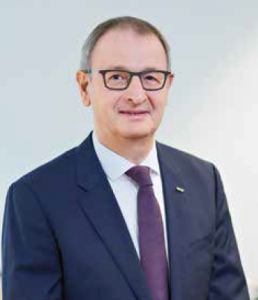

Dr. Wilfried Schäfer, Executive Director of the VDW.

In a first step, visitors to EMO Hannover and METAV were invited to join the Club of Metalworking. The registration figures so far thus reflect the perceived international importance of these fairs. The majority of members already registered come from all parts of Europe, besides Germany primarily from Scandinavia, the Baltic states, plus Central and Eastern Europe. The Club of Metalworking is also seeing strong registration figures both in the traditionally important markets of Japan, USA, South Korea, China and Taiwan and in the emergent markets of Mexico, Russia, India and Brazil. Even in Iceland, Australia, Thailand and South Africa, trade visitors have been enthusiastically applying for membership.

“We’ve been receiving positive feedback from all over the world, which is of course very gratifying. But we also see this as a vote of confidence that we have to live up to,” says Dr. Wilfried Schäfer, Executive Director of the VDW. “It is accordingly our declared goal to progress the capabilities of the Club of Metalworking and to bring additional partners on board. We’re already talking to some initial interested parties and are confident we’re on the right track.”

For example, after a successful first contact, the aim is also to place communication on a broader basis. The club is open to all metalworking experts, irrespective of their job descriptions and qualifications, emphasizes Schäfer, “what our members have in common is a passion for metalworking. From trainees to purchasers, from skilled workers to managing directors, every member is more than welcome.”
Kennametal’s Successful Line Of Mill 4 Indexable Milling Cutters Gains An Important New Member

The issue with many square shoulder indexable milling cutters is the stair-step effect they leave on workpiece walls.

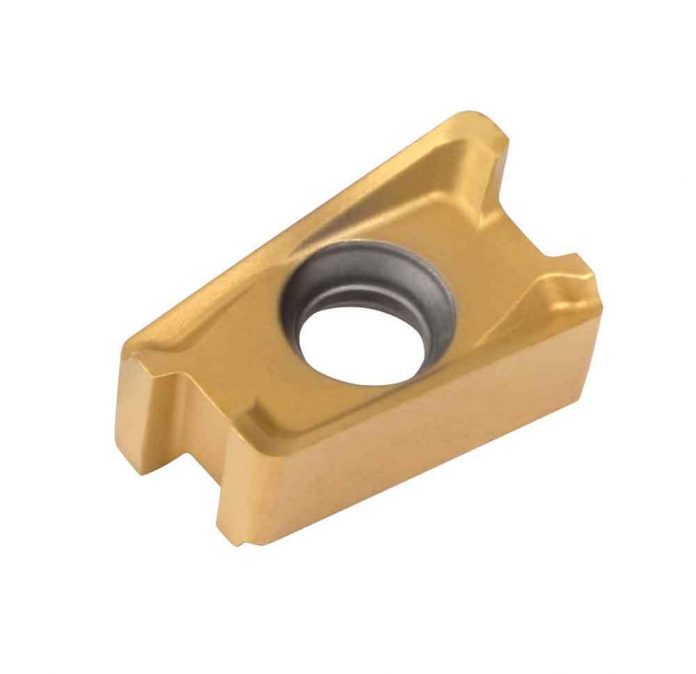
Two years ago, Kennametal introduced a double-sided 90º milling platform that eliminates this issue while providing manufacturers a cost-effective machining solution to boot. The Mill 4™ Series of indexable shoulder mills is now a proven performer, offering high metal removal rates, excellent tool life and surface finish that frequently eliminates semi-finishing operations — and in some cases, can even be used as a finishing cutter, reducing reliance on expensive solid carbide end mills.

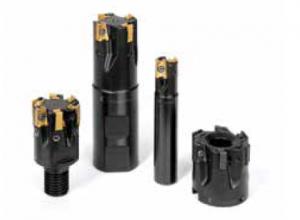
Kennametal is expanding its game-changing Mill 4 family with a new cutting tool, the Mill 4-11. Designed for smaller machining centers, the Mill 4-11 accommodates 40-taper CAT and BT, HSK50 and similarly-sized spindles. Due to its free-cutting capabilities, it is ideal for successful metal removal in less-thanrigid setups and on light-duty machine tools, multitaskers and live-tool lathes.

Tim Marshall, Senior Global Product Manager for Indexable Milling, says the Mill 4-11 enjoys the same strong insert design as its larger cousin, the Mill 4-15, but is 24% shorter and 34% narrower. With an 11mm maximum cut length, this addresses the needs of those job shops and manufacturers producing smaller parts and part features while still offering high metal removal rates and excellent tool life.

“What’s unique about it is the step down,” says Marshall. “Because of the insert design and precision, there’s very little mismatch between passes — for example, using a 63mm diameter tool and our SGE geometry, we were able to achieve less than 8μm deviation between successive 6mm deep passes. One of our largest automotive customers completely eliminated a finishing operation on a steel alloy housing because of it, saving them thousands of dollars annually.”

The Mill 4-11 is also easy to use. Each insert is securely locked in place with a single M3 screw and marked with a series of dimples to indicate geometry and insert style. Marshall recommends customers keep the tool clean and the screws lubricated with a small amount of grease, and says it’s a good idea to mount all of the inserts with the dimples or markings facing the same direction. “This improves accuracy during indexing, no matter whose cutting tools you’re using.”

The cutter has uneven pocket spacing designed to break up machine harmonics and reduce chatter. Because of its complex insert geometry and positive placement in the pocket, it has an effective radial rake angle between 1° to 11°, depending on the cutter diameter, and an axial rake angle of 3°, this despite the Mill 4-11’s double-sided design.

When taking cuts up to approximately 6.5mm axial engagement, the cutter is essentially stepless, although Marshall says cuts up to 11mm deep are possible while still maintaining square, smooth walls. Best of all, it removes material quickly. “We’ve performed extensive testing,” Marshall says. “Time and again we beat the competition, in some cases by 35% greater metal removal rates and 40% or longer tool life. It’s quite simply a great addition to our portfolio.”

Staying positive: with a unique insert geometry and extremely accurate pocket positioning, the Mill 4-11 offers the free cutting action of a single-sided insert at the low cost per edge of a double-sided. The Mill 4-11 is also available in a variety of mounting options, with cutter diameters ranging from 16mm to 80mm.

The Mill 4-11’s has a complex, double-sided geometry that provides low cutting forces for light duty machine tools and less-than-rigid setups, and one of the lowest tooling costs per part in the industry.

For more information, please contact Spectra Carbide – Tel: 0860 23 23 23.