Home Blog Page 70

Wire And Tube 2018 Reflects Positive Global Business Climate

Investment has gone up worldwide – in infrastructure, the automotive sector, the electrical industry, regenerative energy projects and in oil and gas pipelines. And the upstream supplies industries wire, cable and pipes have substantially benefited from this development at the international No.1 trade fairs wire and Tube in Düsseldorf from 16 to 20 April 2018.

Across Germany steel and metal processing counts among the ten major sectors of industry. These sectors are strongly characterized by SMEs, by traditional growth and innovation. But even major groups of companies are now re-aligning their operations, following digital optimization processes and reorganizing their distribution channels, both nationally and internationally.

Orders for capital goods like machinery, plants and vehicles are very high and the German economy is benefiting from the positive global business climate. More than 71,500 trade visitors from 134 countries came to Düsseldorf over the five days to find out about industry innovations and conclude business deals.

A total of 2,683 companies from 67 countries presented their technology highlights in 16 exhibition halls on more than 117,000 square metres – some 7,000 square metres of space more than at the previous event in 2016!

Wire

2018 Wire and cable machines, wire and cable production, trade with these materials as well as fibre glass technologies, mesh welding machinery, spring making, fastener technologies and the China Pavilion meet china’s expertise were presented in exhibition halls 9 to 16. A total of 1,442 exhibitors from 53 countries showcased their innovations on space exceeding 65,000 square metres.

Most wire exhibitors came from the major producer countries Italy, Germany, Turkey, Great Britain, France, Spain, Austria, the Netherlands and Switzerland. From overseas many exhibitors from the USA, India, Taiwan, South Korea and China travelled to the exhibition halls on the Rhine.

Tube

2018 The ranges at Tube 2018 encompassed pipe and tube materials, manufacturing, finishing, processing, pipe and tube accessories, trade and forming technology including profiles, plastic tubes, machinery and plants as well as the China Pavilion meet china’s expertise. Tube was held in Halls 3 to 7a, 7.0 and 16 to 18 occupying in excess of 52,000 square metres of exhibition space. 1,241 companies from 57 countries were presented.”

At Tube most exhibitors hailed from Italy, Germany, Turkey, Spain, the Netherlands, Great Britain, Switzerland, Austria and France. Most overseas exhibitors travelled from the USA, China, India, South Korea and Taiwan”
“to Düsseldorf.”

Airbus And Rolls-Royce Sign Collaboration Agreement

Airbus and Rolls-Royce have signed a collaboration agreement for the integration of Rolls-Royce’s UltraFan® demonstrator for flight testing. The integration solutions demonstration will be co-funded by Clean Sky 2, the European Union research programme focused on developing technology to reduce emissions.

UltraFan is a scalable jet engine design suitable for widebody or single-aisle aircraft and offers a 25 percent fuel efficiency improvement over the first-generation of Rolls-Royce Trent engine.

One element of the UltraFan programme is planning for ground and flight tests and to support this, Rolls-Royce has signed an agreement with Airbus to provide both nacelle and engine/aircraft integration architecture and technology enablers.

Airbus’ integration solutions will play an important part in achieving the overall fuel efficiency improvement of higher bypass ratio engines such as UltraFan, through innovative architecture and associated technologies.

UltraFan features a new engine core architecture and lean-burn combustion system which will contribute to improved fuel burn efficiency and lower emissions, along with a carbon titanium fan blade system and composite casing which reduce weight. The engine also introduces a geared design to deliver efficient power at high-bypass ratios.

For Airbus, the project will enable it to fully integrate the overall powerplant system – composed of engine, pylon and nacelle – onto future long-range aircraft products, as well as facilitating scalability for future short-range aircraft. It will also build on Airbus’ expertise in advanced manufacturing technologies, such as high-deposition-rate additive manufacture, welded assembly and high production rate thermoplastics.


Boeing HorizonX Invests In Reaction Engines UK

Boeing announced its investment in Reaction Engines Limited, a leader in advanced propulsion systems based in Oxfordshire, United Kingdom. Reaction Engines’ technology will contribute to the next generation of hypersonic flight and space access vehicles.

Reaction Engines is known for its Synergetic Air-Breathing Rocket Engine (SABRE), a hybrid engine blending jet and rocket technology that is capable of Mach 5 in air-breathing mode and Mach 25 in rocket mode for space flight. As part of the SABRE program, Reaction Engines developed an ultra-lightweight heat exchanger that stops engine components from overheating at high speeds, thus improving access to hypersonic flight and space.

“As Reaction Engines unlocks advanced propulsion that could change the future of air and space travel, we expect to leverage their revolutionary technology to support Boeing’s pursuit of hypersonic flight,” said Steve Nordlund, vice president of Boeing HorizonX.

Founded by three propulsion engineers in 1989, Reaction Engines produces robust technical designs for advanced heat exchangers, air-breathing engines and the vehicles they could power. These capabilities may lead to high-speed point-to-point transport that is cost-effective and sustainable.

Artist’s impression of the release of an
upper-stage from a next-generation SABREpowered
reusable launch vehicle. The
development of the SABRE technology
will enable low-cost, high-cadence space
access. (Reaction Engines image)

“Boeing is a world-leader in many fields, bringing invaluable expertise in hypersonic research and space systems. I am thrilled and honored that Boeing HorizonX has chosen Reaction Engines as its first UK investment,” said Mark Thomas, CEO of Reaction Engines. “This is a very exciting step that will contribute to our efforts to develop a commercial technology business and accelerate opportunities to further the future of air and space travel through SABRE technology.”

Boeing HorizonX Ventures participated in this $37.3 million Series B funding round alongside Rolls-Royce Plc and BAE Systems. The Boeing HorizonX Ventures investment portfolio is made up of companies specializing in technologies for aerospace and manufacturing innovations, including autonomous systems, energy storage, advanced materials, augmented reality systems and software, machine learning, hybrid-electric propulsion and Internet of Things connectivity.

Club Of Metalworking Hits The Jackpot Within Hours

Making a visit to EMO and METAV simpler, faster and better is the goal pursued by the Club of Metalworking, which the VDW launched recently. Membership is free of charge and offers attractive services for international metalworking experts. Within a few hours, more than 1,000 registration enquiries were received from all over the world.

Following free-of-charge registration at www.clubofmetalworking.de, members receive an individual welcome package with their personal club card. A newsletter informs them every six to eight weeks about news from the sector and important trade fairs, while the club automatically provides freeof- charge season tickets for EMO Hannover and METAV. In addition to free use of the public transport network for visiting the fair, members can also use their club cards to enjoy numerous services free of charge, like a fast lane for accelerated admission, the cloakroom or the Club of Metalworking’s lounge. What’s more, exclusive club meetings provide ideal opportunities for networking, so as to give the club a personal face.

Dr. Wilfried Schäfer, Executive Director of the VDW.

In a first step, visitors to EMO Hannover and METAV were invited to join the Club of Metalworking. The registration figures so far thus reflect the perceived international importance of these fairs. The majority of members already registered come from all parts of Europe, besides Germany primarily from Scandinavia, the Baltic states, plus Central and Eastern Europe. The Club of Metalworking is also seeing strong registration figures both in the traditionally important markets of Japan, USA, South Korea, China and Taiwan and in the emergent markets of Mexico, Russia, India and Brazil. Even in Iceland, Australia, Thailand and South Africa, trade visitors have been enthusiastically applying for membership.

“We’ve been receiving positive feedback from all over the world, which is of course very gratifying. But we also see this as a vote of confidence that we have to live up to,” says Dr. Wilfried Schäfer, Executive Director of the VDW. “It is accordingly our declared goal to progress the capabilities of the Club of Metalworking and to bring additional partners on board. We’re already talking to some initial interested parties and are confident we’re on the right track.”

For example, after a successful first contact, the aim is also to place communication on a broader basis. The club is open to all metalworking experts, irrespective of their job descriptions and qualifications, emphasizes Schäfer, “what our members have in common is a passion for metalworking. From trainees to purchasers, from skilled workers to managing directors, every member is more than welcome.”

Kennametal’s Successful Line Of Mill 4 Indexable Milling Cutters Gains An Important New Member

The issue with many square shoulder indexable milling cutters is the stair-step effect they leave on workpiece walls.

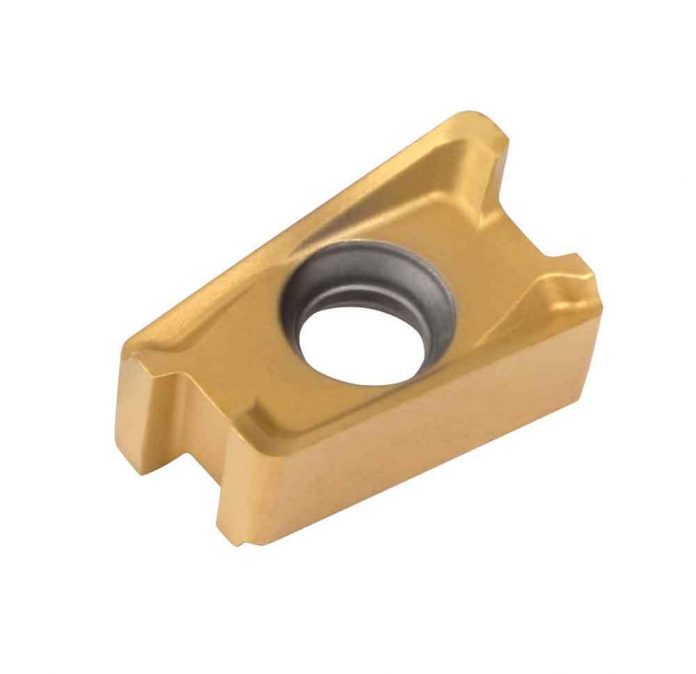
Two years ago, Kennametal introduced a double-sided 90º milling platform that eliminates this issue while providing manufacturers a cost-effective machining solution to boot. The Mill 4™ Series of indexable shoulder mills is now a proven performer, offering high metal removal rates, excellent tool life and surface finish that frequently eliminates semi-finishing operations — and in some cases, can even be used as a finishing cutter, reducing reliance on expensive solid carbide end mills.

Kennametal is expanding its game-changing Mill 4 family with a new cutting tool, the Mill 4-11. Designed for smaller machining centers, the Mill 4-11 accommodates 40-taper CAT and BT, HSK50 and similarly-sized spindles. Due to its free-cutting capabilities, it is ideal for successful metal removal in less-thanrigid setups and on light-duty machine tools, multitaskers and live-tool lathes.

Tim Marshall, Senior Global Product Manager for Indexable Milling, says the Mill 4-11 enjoys the same strong insert design as its larger cousin, the Mill 4-15, but is 24% shorter and 34% narrower. With an 11mm maximum cut length, this addresses the needs of those job shops and manufacturers producing smaller parts and part features while still offering high metal removal rates and excellent tool life.

“What’s unique about it is the step down,” says Marshall. “Because of the insert design and precision, there’s very little mismatch between passes — for example, using a 63mm diameter tool and our SGE geometry, we were able to achieve less than 8μm deviation between successive 6mm deep passes. One of our largest automotive customers completely eliminated a finishing operation on a steel alloy housing because of it, saving them thousands of dollars annually.”

The Mill 4-11 is also easy to use. Each insert is securely locked in place with a single M3 screw and marked with a series of dimples to indicate geometry and insert style. Marshall recommends customers keep the tool clean and the screws lubricated with a small amount of grease, and says it’s a good idea to mount all of the inserts with the dimples or markings facing the same direction. “This improves accuracy during indexing, no matter whose cutting tools you’re using.”

The cutter has uneven pocket spacing designed to break up machine harmonics and reduce chatter. Because of its complex insert geometry and positive placement in the pocket, it has an effective radial rake angle between 1° to 11°, depending on the cutter diameter, and an axial rake angle of 3°, this despite the Mill 4-11’s double-sided design.

When taking cuts up to approximately 6.5mm axial engagement, the cutter is essentially stepless, although Marshall says cuts up to 11mm deep are possible while still maintaining square, smooth walls. Best of all, it removes material quickly. “We’ve performed extensive testing,” Marshall says. “Time and again we beat the competition, in some cases by 35% greater metal removal rates and 40% or longer tool life. It’s quite simply a great addition to our portfolio.”

Staying positive: with a unique insert geometry and extremely accurate pocket positioning, the Mill 4-11 offers the free cutting action of a single-sided insert at the low cost per edge of a double-sided. The Mill 4-11 is also available in a variety of mounting options, with cutter diameters ranging from 16mm to 80mm.

The Mill 4-11’s has a complex, double-sided geometry that provides low cutting forces for light duty machine tools and less-than-rigid setups, and one of the lowest tooling costs per part in the industry.

For more information, please contact Spectra Carbide – Tel: 0860 23 23 23.

System Driven Strengths

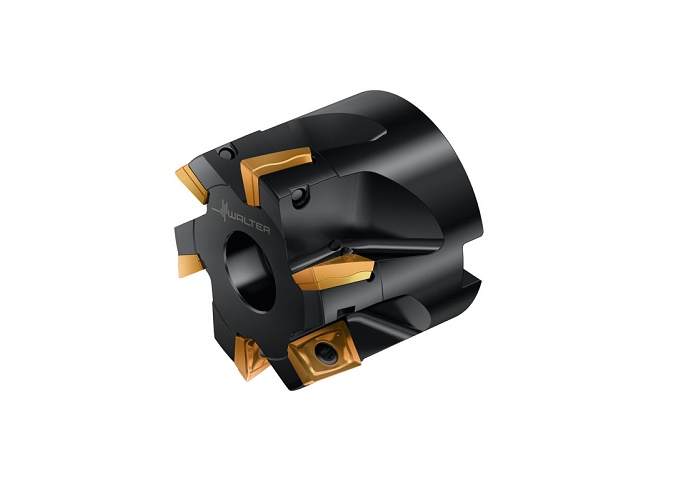
Walter AG is presenting a shoulder milling cutter that is a logical continuation of the M4000 system concept in the form of the M4130. The idea behind this is to reduce costs through the ability to use universal system inserts in different applications and tools. In the case of the M4130, this applies to the system inserts with rhombic basic shape and a 15° clearance angle, which can also be used either in the routing cutters or porcupine milling cutters from the M4000 range. The double-edged inserts with sintered circumference are available in three sizes each with three CVD-coated and three PVD-coated grades. In addition to its high level of flexibility, it also stands out thanks to its cost efficiency.

According to Walter, their soft cutting action makes the M4130 shoulder milling cutters ideal for roughing operations involving steel, cast iron, stainless steels and materials with difficult cutting properties and are also capable of plunge milling. Specifically, these operations are shoulder milling, ramping, pocket milling and circular interpolation milling. The milling cutter with a 90° approach angle is available as standard with depths of cut of 8, 13 and 16mm, in the 16–100mm diameter range. It is also available as a special tool in a considerably wider diameter range. The M4130 milling cutter is part of the Walter Xpress fast delivery range and is manufactured in a CO2-compensated process.

For more information, please contact Spectra Carbide – Tel: 0860 23 23 23.

High Performance Taps

NORIS taps for processing a wide variety of steel alloys, cast iron and various nonferrous alloys are well known under the names SALOREX UNI for blind holes and STABIL UNI for through-hole. REIME NORIS now extends the UNI series to high performance taps made of HSSE-PM (HSS-PS) with improved cutting geometry and TiCN coating.

NORIS SALOREX UNI – the specialist for deep blind hole threads up to 3 x D thread depth – has 42° right-hand helix flutes. These provide secure chip removal against the cutting direction.

NORIS STABIL UNI stands for the production of through hole threads up to 4 x D thread depth. The special STABIL-flutes move the chips in the cutting direction. The drills are available in metric sizes from M3 to M20 and M8 x 1 to M16 x 1,5 in stock. In both versions, the use of powder metallurgical high-speed steel permits higher cutting speeds while increasing tool life.

The user benefits by increasing the cycle times and a reduction in tool costs. With the ability to process a very wide range of materials, additional cost of storage and tool investment can be reduced. The proven cutting edge geometries were further optimized in detail. They are specially adapted to the characteristics of the HSSEPM substrate and the coating.

REIME NORIS thus promises significant performance gains and expects especially in the production of small- and medium-sized series, the greatest economic advantages of using these high performance taps.

For more information, please contact Duncan Macdonald – Tel: 011 444-4345.

Even Better Groove Milling

Trouble-free precision groove milling in an easy-to-use format is what manufacturers are set to enjoy by using the latest CoroMill® 331 indexable insert cutter from cutting tool and tooling systems specialist Sandvik Coromant. New features set to deliver multiple advantages to customers include internal coolant and light cutting geometries for stable and secure machining.

“We have introduced a number of new features that help meet customer demands such as process security, component quality and cost,” explains Jenny Häll, Product Manager Groove Milling at Sandvik Coromant. “Arguably most notable is the addition of internal coolant, which helps regulate heat in the cutting zone for long and predictable insert tool life. This factor is especially beneficial in ISO M and ISO S materials [stainless steel and heat-resistant alloys], which exhibit poor thermal conductivity. Additionally, internal coolant provides excellent chip evacuation, a key factor for groove quality and process security.”

Enhanced process security promotes trouble-free machining, a factor that is further supported through the introduction of light cutting geometries. For ISO M and ISO S materials, L30 and L50 geometries replace the company’s existing assortment for good conditions/light applications and tougher conditions/heavy applications respectively. For ISO P (steel) and ISO K (cast iron) materials, the M30 geometry now complements the existing assortment. M30 is purpose-designed for the delivery of secure machining where weak set-ups and long overhangs are present.

Another factor underpinning process security is enhanced cutter rigidity. In applications where long overhang or elevated levels of vibration are likely to be present, CoroMill 331 can be deployed with Silent Tools™ damped adaptors. Here, the shorter arbor cutter bodies of CoroMill 331 bring the cutting edge closer to the Silent Tools damping mechanism, thus providing an even more stable tool with a reliable performance.

Extra process security and stability deliver higher component quality to manufacturers in industries such as energy, aerospace and automotive. Typical parts to benefit include hour glass valve bodies, aerospace brackets, flap tracks and steering knuckles, to list but a few. CoroMill 331 offers high levels of versatility that render it suitable not just for groove milling, but for parting, double half-side machining, shoulder milling, face milling, back-face milling, gang milling and circular interpolation.

Better security in machining also promotes productivity. CoroMill 331 offers true 90° corners and excellent metal removal rates that make this cutter the most productive of its kind.

Ease-of-use is a further requirement of machine shops the world over. For this reason, CoroMill 331 makes use of spring-loaded cassettes with serrations that provide security and easy setting for the desired width. Moreover, a pin-controlled adjustment range enables manufacturers to set the cutter with high accuracy for precise groove dimensions.

Available is a wide range of tools in an extensive choice of diameters, widths, insert geometries, corner radii and grades, along with a large selection of mounting options.

For more information, please contact Sandvik Coromant – Tel: 011 570-9615.


IC882 And IC5820 New High Performance Milling Grades For Machining Titanium, Stainless Steel And High Temperature Alloys

Today, as more and more titanium parts are necessary for the construction of modern airplanes, the aerospace industry is in constant demand to increase cutting tool performance for machining titanium. To comply with this high market demand, ISCAR introduces new IC882 and IC5820 carbide grades that feature a more productive means of machining titanium alloys.

These include the common Ti6Al4V and tougher, harder to cut titanium alloys such as Ti-5Al-5V- 5Mo-3Cr (Ti 5-5-5-3), Titanium Ti-10V-2Fe-3Al (Ti 10-2-3) and other super alloys.

Grade IC882 features a particularly tough and strong substrate. The fracture toughness (K1c) that measures the resistance of material to the propagation of a crack in the substrate is at least 20% higher when compared to competing carbide grades. The IC882 with its tough carbide substrate, new PVD hard coating and SUMO TEC® post-coating treatment substantially improves impact strength, hot hardness, oxidation resistance, notch wear and built-up edge resistance; all contributing to longer tool life, reliable results on wear and chipping resistance for higher metal removal rates and reduced production costs per part.

The new IC882 grade is intended mainly for machining titanium alloys and heat resistant steels. In addition, it can be used successfully for milling stainless steel and high-temperature super alloys (HTSA) at medium to high cutting speeds, even under unfavourable machining conditions or interrupted cuts. The ISO application range of grade IC882 is M25-M45 / S20-S30.

Grade IC5820 has a very tough, strong carbide substrate combined with CVD new hard coating and SUMO TEC® post coating treatment. It features a substantially improved impact strength, higher hot hardness, oxidation, notch wear and built-up edge formation resistance. These contribute to longer tool life, reliable wear and chipping resistance. The IC5820 grade enables the increase of cutting speeds that result in higher metal removal rates and reduced production cost per part; it is mainly used for milling titanium alloys.

The ISO application ranges of grade IC5820 are M20-M35 / S15-S25. With 20% – 30% higher cutting speeds vs. existing known carbide grades, the grade requires high flow rate and pin-pointed coolant; its best performance can be achieved with highpressure coolant.

For more information, please contact ISCAR South Africa – Tel: 011 997-2700.


Indexable Tools Challenge Solid Carbide For Small Diameters

Solid carbide tool accuracy compares favorably with that of indexable tools, particularly for small-diameter endmills and for tools with diameters beyond the range. However, the role of reduced accuracy for tools of small diameter (for example, a milling cutter’s radial runout) increases in significance as a factor affecting tool life.

An indexable tool is made up of a tool body, replaceable inserts and mechanical parts such as clamping screws or wedges, which secure the inserts in the body. Decreasing the tool diameter necessitates reducing dimensions of the assembly components. Reducing the size of the securing elements leads to weakening their strength and the tool becomes unable to withstand cutting loads under normal machining data. This seriously limits the tool application; further decreasing may cause degradation of the entire assembly structure.

The prices of small rotating tools are often high compared to the assembled concept, which adds to the perceived limitations of indexable tools in the small diameter range.

The Indexable Option.

Indexable tools possess several distinct advantages that makes applying these tools within the above range very attractive in the eyes of the customer. In many cases, especially in rough machining, changing a worn cutting edge by simple indexing provides economic benefits compared with having to replace a whole life-expired solid tool with a new tool. In addition, there is no need to use up time and resources on regrinding and recoating worn-out onepiece cutters.

Tool manufacturers have made significant progress in developing reliable designs thatcould be commercially viable against the solid carbide concept. Work in this direction has shown results already and assembled mills and drills with interchangeable cutting heads are proving to be a realistic alternative to solid carbide tools.

Competitive Performance

The introduction of tools with replaceable solid carbide cutting heads signifies a change in focus. ISCAR provides two examples of this concept with the ISCAR MULTI-MASTER milling line and the CHAMDRILL line in drilling.

Performance and accuracy characteristics have positioned the new tools to be functionally competitive with solid carbide designs. Versatility of these lines, where a head can be mounted in different bodies and vice versa where a single body can carry different heads, facilitates various assembly combinations and contributes to reducing items in tool stock.

Another important design approach – “no setup time” – characterizes these lines, as a wornout head does not require spending time on set-up and can be replaced while the tool is still clamped in the machine tool spindle. This cuts cycle time and consequently, reduces production costs. In contrast, replacing a worn-out solid carbide mill or drill inevitably leads to a new set-up procedure.

In addition, the concept ensures sustainable use of cemented carbide with all the associated advantages. The principle of indexable carbide tools has distinct merits and features strongly in tool design within the diameter range that is under discussion. The minimal diameter of MULTI-MASTER milling heads is 5mm and that of SUMOCHAM drilling heads is 6mm, while the MULTI-MASTER combined countersink heads for center drilling feature a minimal 1mm diameter.

The LOGIQ factor

ISCAR has recently introduced a new range of small-size indexable rotating tools under its new LOGIQ line campaign. The company proposes several families of cutters with a nominal diameter of up to 20 mm. A brief look at some of these families can provide a clearer understanding as to whether the new tools will be able to breach the solid stronghold wall.

The new families of indexable milling cutters within the diameter range of 8-16 mm attract the most interest. They have several common features: the cutters carry triangularshape inserts with 3 cutting edges and the mechanical part that secures the inserts is represented by a screw. These families are intended for milling square shoulder or fast feed (high feed) milling. But here the similarity ends, and the difference begins. While the design of the HELI3MILL and MICRO3FEED families for tool diameter 10-16 mm is committed to the classical principle of insert securing, by clamping screw through the central hole of an insert, the NANMILL and NANFEED families for tool diameter 8-10 mm have adopted another concept.
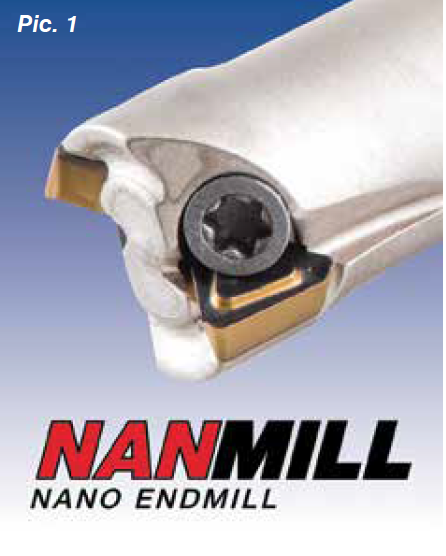
Within such a small diameter range, the central clamping screw, as noted previously, does not provide an acceptable solution. According to the new concept, the screw is located above the insert, and the screw head plays the role of a wedge (Pic. 1). This approach provides reliable and rigid clamping, ensures a durable homogeneous insert structure with no hole, and allows insert indexing to be quick and simple.

It is predicted that these new families will be particularly effective in manufacturing compact parts and in machining smallin- size cavities, pockets and small parts utilized in industrial sectors such as die and mold making, as well as in producing miniature components.
Small change, large impact

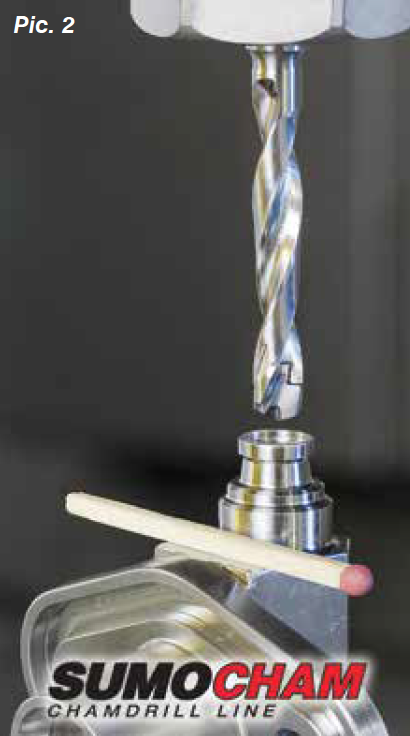
A 1mm change in size: is this a lot or a little? For indexable tools in the small diameter range, it makes a noticeable difference. ISCAR’s new SUMOCHAM 5mm diameter drilling head represents an important step ahead in expanding the application fields of indexable drills (Pic. 2).

Within the small diameter range, indexable tools can offer precision and performance advantages that position them competitively against the more traditional solid carbide tools. Indexable tools are beginning to shear their way into metalworking practices – and the industry is taking note.

For more information, please contact ISCAR South Africa – Tel: 011 997-2700.