Home Blog Page 69

CFRP Recycling – Into The Battery Instead Of The Garbage

Carbon fiber-reinforced plastics are gaining importance as components of aircraft. The trend is increasing the need for sustainable recycling concepts. At the ILA in Berlin recently Fraunhofer presented a technology that converts recycled carbon fibers into materials for batteries and fuel cells. This saves costs, improves the CO2 balance and opens up new means of recycling in aircraft production.

Modern wide-body aircrafts today consist of over 50 percent carbon fiber reinforced plastics (CFRP). The material is installed, for example, over a large area in the wings or fuselage. With carbon fibers embedded in a plastic matrix, the composite is lighter than previously used materials, while still being very stable. The decisive advantage for aviation: due to their lower weight, airplanes need less fuel. “The manufacturing and processing of the CFRP is currently very time-consuming. The demand for sustainable recycling concepts is therefore steadily increasing,” observes Elisa Seiler, scientist at the Fraunhofer Institute for Chemical Technology ICT in Pfinztal, Germany. The amounts of CFRP recycling material are tremendous: for the Airbus 350, for example, they add up to over 65 tons. “In addition to this there are other relevant scrap quantities that already arise during production,” adds Seiler.

The Fraunhofer ICT has many years of experience in the development of technologies for fiber-reinforced plastics. At the ILA, the aviation and aerospace innovation trade fair, the scientists are presenting a concept that will be used to recover materials for batteries and fuel cells out of recycled carbon fibers. Together with partners, it has been possible to use recovered carbon fibers to produce a prototype of a bipolar plate – an electrode – on an industrial scale. The result is based on research from the “Graphit 2.0” and “RETRO” projects.

“Electric drives are now also a serious topic in the aviation industry. Manufacturers can directly perform value-preserving recycling by transferring materials from one application to the next,” says Seiler. The carbon fibers are electrically conductive and are suitable as a substitute for natural graphite, which also consists of carbon, a resource- critical raw material for the German economy that currently has to be imported from China at great expense. Recycled CFRP can be used for additive manufacturing processes such as 3D printing. “This is also a trending topic in the industry that makes production processes more efficient and saves costs,” says Seiler. After all, aircraft manufacturers also have to comply with the European Union (EU) requirements that have been in force since 2015; up to 85 percent of the average weight of a used vehicle has to be recycled.

Pyrolysis with microwave radiation

The CFRP experts have developed a special process with which carbon fibers can be recovered from the plastic matrix. To do so, they use microwave radiation to burn the plastic matrix that surrounds the fibers. So that the fibers do not burn up at temperatures of up to 900 degrees Celsius, the combustion has to be performed without oxygen. “In technical jargon, this is called pyrolytic decomposition,” Seiler explains.

The advantage of microwave radiation includes energy efficiency as a whole oven no longer needs to be heated, just the component itself. The colleagues of the Polymer Engineering department at the Fraunhofer ICT embed the recovered fibers in thermoplastic material. This composite material has similar properties to graphite and is suitable for the production of bipolar plates. “Our prototype passed all the tests for conductivity, density and corrosion resistance perfectly,” reports Seiler.

“We’ve proven that it’s generally feasible to use recycled CFRP fibers to produce bipolar plates for batteries and fuel cells. This shows that recycling works in a holistic approach. This is particularly interesting for the aviation industry,” says Seiler in summarizing the added value of the research work. The next steps are the characterization of the bipolar plates in the battery cell network and studies concerning the life cycle assessment. “Then, we want to tune the technology so that we can manufacture bipolar plates from recycled CFRP in series – for example, with an aviation partner,” concludes Seiler.

NAACAM Show 2019

The National Association of Automotive Component and Allied Manufacturers (NAACAM) announced that the NAACAM Show 2019 will be hosted by eThekwini Municipality in partnership with the Durban Automotive Cluster (DAC). This will take place at the Durban International Convention Centre (ICC) (Inkhosi Albert Luthuli ICC Complex) on 12 – 14 March 2019.

The inaugural NAACAM Show in April 2017 was held at the Durban ICC and saw 1 304 delegates participate in a two-day conference and exhibition. Delegates engaged with 46 speakers on nine conference themes, including manufacturing best practice; black supplier development and transformation; the future of the automobile; and the South African Automotive Masterplan.

The NAACAM Show 2017 exhibition saw 183 automotive component manufacturers, government and support service agencies present their offerings to delegates and key automotive stakeholders – this included the profiling of 38 black-owned suppliers. A highlight of the 2017 Show was the facilitation of 122 prearranged buyer-supplier linkage meetings, as a key goal of the Show is to deliver significant localization benefits.

In 2019, with the support and endorsement of the Department of Trade and Industry, the Original Equipment Manufacturers (OEM) Purchasing Council, Automotive Supply Chain Competitiveness Initiative (ASCCI), as well as National Association of Automobile Manufacturers of South Africa (NAAMSA) and National Union of Metalworkers of South Africa (NUMSA), the NAACAM Show aims to be the premier automotive manufacturing growth, technology, transformation and stakeholder engagement forum in Africa.

Renai Moothilal, NAACAM’s Executive Director.

The NAACAM Show is an initiative wholly owned by industry, with senior component manufacturing leaders providing oversight to its delivery. Renai Moothilal, NAACAM’s Executive Director stated that “direct supplier oversight of the initiative is key to ensure that we deliver an event which reflects on the sector’s most relevant issues and opportunities, whilst also clearly showcasing the capability and capacity of the SA automotive value chain.

”The NAACAM Show 2019 will have an increased focus on Sub-Saharan African opportunities and alignment with the Automotive Masterplan objectives. The attraction and hosting of international technology suppliers and foreign direct investors is also a priority for the 2019 iteration of the Show.


FAW Becomes SA’s Second Biggest Truck Exporter

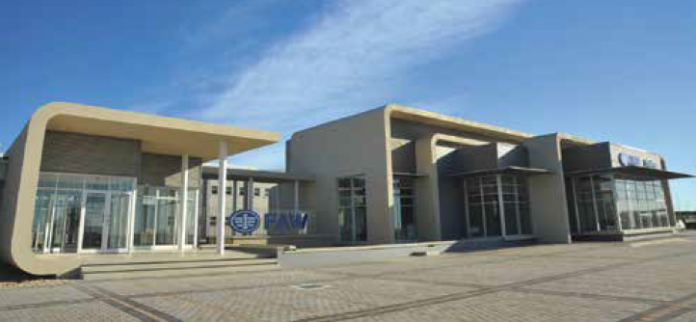
The fortune 500 company with a truck assembly plant worth R600 million and located at the Coega Special Economic Zone (SEZ) spent the greater part of 2017 raving up its export numbers to 212 units.

“Nothing gives us greater pleasure than to see the extent of success that accumulates with investments located at the Coega SEZ. It validates the findings of an independent study on the Coega SEZ, which found that 90% of operational investors described the SEZ and its logistics park as the ideal location for industries,” says Dr Ayanda Vilakazi, Marketing, Brand and Communications.

The success of FAW in the year 2017, is compounded by a further record year in terms of domestic sales having grown from 929 units in 2016 to 1 032 units in 2017.

“As the CDC we were very proud to hear of the company having rolled of its 3 000th locally built truck off the production line in 2017,” concludes Vilakazi.

First BMW X3S Leave Rosslyn For Export To Europe

X3's awaiting shipment.

BMW Group South Africa despatched the first BMW X3 cars for export recently, transporting more than 100 units on 27 wagons via train to the Port of Durban. This marks a significant day for BMW Group South Africa as the company’s manufacturing plant at Rosslyn continues to ramp up production of the BMW X3.

In terms of the Automotive Production and Development Programme (APDP), BMW Group announced a R6.1bn investment to prepare the Rosslyn facility and the associates who work there, for X3 production. It is one of the biggest single automotive investments in South African history. In February 2018, Plant Rosslyn produced the last of 1 191 604 BMW 3 Series cars built over five model generations and 35 years.

Upgrading the plant for X3 production has represented the largest infrastructure upgrade in the plant’s history, but it has gone ahead on time and without any unplanned disruptions. The BMW Vehicle Distribution Centre in Rosslyn can accommodate up to three train dispatches a week, with each transport capable of carrying up to 160 cars.

BMW Group Plant Rosslyn is a state-of-theart facility, with BMW X3 production initially planned with a maximum capacity of 71000 units a year. However, BMW under-estimated the phenomenal demand for the new BMW X3 and after a further R160m investment to increase linespeed, the maximum capacity of the plant was raised almost 10% to 76000 units a year.

Within this maximum capacity, BMW Group South Africa is confident that the plant will produce record volumes next year. This will add to the growing success of BMW’s X models across the world, which now make up more than 30% of BMW’s global volume.


SEIFSA Encouraged By PMI

The Steel and Engineering Industries Federation of Southern Africa (SEIFSA) is encouraged by the improvement in the Absa Purchasing Managers Index (PMI) released recently, with the data showing that businesses are slowly responding to a buoyant consumer, business and investor confidence.

SEIFSA Chief Economist Michael Ade said that, following Cyril Ramaphosa’s election in December as new ANC president, domestic economic data were expected to catch up with growing domestic sentiments resulting from the Nasrec conference. He said that was more so after Ramaphosa assumed the country’s presidency.

However, Ade cautioned that, in addition to positive consumer and business confidence, there was a need for an equal up-tick in demand and supply side dynamics.

SEIFSA Chief Economist Michael Ade.

SEIFSA is, therefore, encouraged by the improvement in the latest PMI numbers, which had previously dipped below the 50-neutral level, which separates expansion from contraction, in February 2018,” Ade said.

The latest seasonally-adjusted preliminary PMI data show that the composite PMI improved to 50.9 in April 2018, from a lower 46.9 in March 2018. However, the headline PMI data still exhibit a lot of uncertainty and the volatility is driven by volatile input prices, because of factors affecting supply, including the variable exchange rate. Enhanced volatility is also evident in the oscillating performance of the business activity, inventory levels and new sales orders sub-indices of the composite PMI index, which have been largely unpredictable.


Continuous Improvement Of Metals And Engineering Output

“The progress shows that local businesses are gradually responding to the generally improving consumer and business confidence, which is characteristic of the Ramaphosa era. Hitherto, the concern had generally been that despite improving sentiments from the start of the year, supply-side data as evidenced by lead economic indicators were still nondescript.

“The output data for the M&E cluster is encouraging, considering its significance to gross domestic product and the fact that the economy cannot entirely depend on positive sentiments to expand,” said SEIFSA Economist Marique Kruger.

The latest preliminary seasonally-adjusted production data for the M&E sector published by Statistics South Africa (Stats SA) today indicated that output improved to 10,3 percent in March 2018, on a year-on-year basis, when compared to March 2017. The performance is recorded despite a reduction in production in the broader manufacturing sector, which decreased by 1,3 percent in March 2018, compared to March 2017. Similarly, the M&E sector performed well on a month-to-month basis, registering a growth of 9,0 percent in March 2018 when compared to February 2018, in line with the broader manufacturing which increased by 1,3 percent.

SEIFSA Economist Marique Kruger.

“Businesses in the cluster should build on this performance by capitalizing on existing initiatives aimed at igniting domestic growth by both the public and private sectors, expand output, boost sales and margins and possibly claw back lost jobs,” Kruger said.

She added that SEIFSA expects a continuous improvement in output in the M&E sector, given an up-tick in the composite purchasing managers index (PMI), which is a lead indicator for the sector. She said the constant improvement of the business activity subindex of the PMI also provides solace to potential investors and stakeholders.

“Accordingly, higher productivity and better capacity utilization is necessary for businesses to cushion the negative effects of volatile and increasing input costs,” said Kruger.

Skills Development Is Critical

An Atlantis based Lesedi Skills Development Academy was established to address the need for skilled artisans and to close the skills gap in the nuclear and broader energy sector as well as associated industries.

Davies said it was increasingly evident that as a requirement to get any industrial job one needed to have skills. He said at all levels of employment one now requires to be skilled. Government is aware that skills development in the past was limited to the minority and the majority of the people had less access, yet it is a critical requirement for the majority to get jobs.

“This is the reason why every time we engage with business we insist on skills development which is a non-negotiable for all. To underpin the importance of skills development government launched the Youth Empowerment Service Programme. This programme aims to improve the grim employment outlook for young job seekers by offering work opportunities and therefore inclusion in the economy,” added Davies.

Minister of Trade and Industry Rob Davies launches the Lesedi Skills Development Academy in Atlantis, Western Cape.

He indicated that Business agreed to partner and create 300 000 internships per year for the unemployed youth for the next three years.

“Every bit counts as a means to address the issue of skills development and unemployment. We therefore cannot compromise if we need more people to participate meaningfully in the economy. The skills that the academy develops will assist the Atlantis people to tap into the proposed Atlantis Special Economic Zone amongst others. The zone is anticipated to be designated by the end of 2018,” concluded Davies.

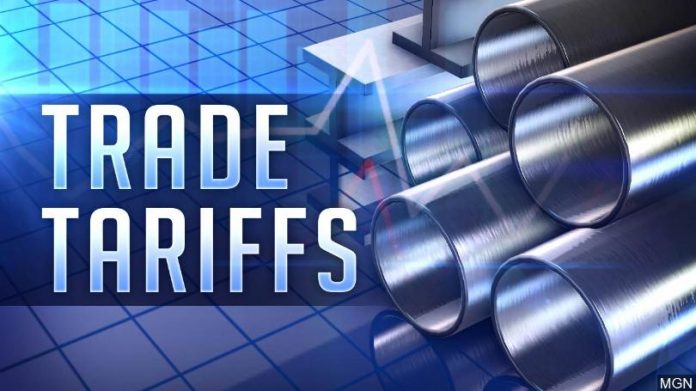
US Decision To Impose Larger Tariffs On SA Steel Industry

The Steel and Engineering Industries Federation of Southern Africa (SEIFSA) is worried about the impact the US’s decision to permanently impose large tariffs on the importation of steel and aluminium products would have on the broader South African steel industry.

Despite South African exports of steel and aluminium to the US accounting for only 1.4 percent and 1.6 percent of U.S global imports respectively, these were still deemed as significant enough to threaten or impair US national security. The import tariffs of 25% on steel and 10% on aluminium products initiated under section 232 of the action plan on the basis of safeguarding US national security are effective from June 1 2018.

“The decision by the US to reject SA’s application for exemption is a travesty. It is clear that efforts by the South African government representatives, including the formal submission by the Minister of Trade and Industry, Dr Rob Davies, to the US requesting the exclusion of South Africa from the imposition of the duties on the basis that steel and aluminium exports to the US are a source of strategic primary and secondary products used for further value-added manufacturing in the US, thereby contributing to jobs in both countries, did not prevail,” SEIFSA Chief Economist Michael Ade said.

He added that it now seems the only option available for South African exporters is to individually convince their buyers in the US to lobby for exclusions for individual companies from SA on a case-by-case basis, rather than all South African exporters benefitting from a blanket exemption.

The decision by the US government still favours the original list of countries and regions that were initially temporarily excluded, including the European Union, Argentina, Australia, Brazil, Canada, Mexico and South Korea.

“The proclamation by the US will directly cost South African exporters roughly R3 billion worth of steel products and R474 million worth of aluminium products, respectively. This will not only starve the local industry of foreign currency, but it will also have a negative impact on the country’s foreign reserves. A further disruption on trade will include possible reductions in the quantity of steel and aluminium products exported to the US as local companies seek alternative export markets, thus negatively affecting exports competitiveness,” Ade said.

He added that the second-round effects will invariably be felt by South African companies largely dependent on the US market for exports. He warned that local companies facing the stiff duties may effectively seek ways of reducing costs, including cutting jobs, given their increasing input costs baskets.

In conclusion, Ade said that given the reduction in demand from the US and a possible oversupply from China, there is a possibility of a fall in global commodity prices and eventual dumping of steel and aluminium products into the SA markets.

“In this regard, SA needs to establish a steel import monitoring system that will verify any significant change in imported volumes, given the implementation of the US Section 232 tariffs, should exports to SA rise due to the US restrictions,” said Ade.


EuroBLECH 2018 – Step Into The Digital Reality

EuroBLECH 2018, the 25th International Sheet Metal Working Technology Exhibition, takes place from 23 – 26 October 2018 at the Hanover Exhibition Grounds in Germany. Around 1,400 exhibitors from 38 countries already secured their stand space at the world’s leading trade exhibition for the sheet metal working industry.

Currently, major exhibitor countries are Germany, Italy, Turkey, China, the Netherlands, Spain, Switzerland, Austria and the USA. At present, the exhibiting companies have secured almost the entire exhibition space from the previous event. EuroBLECH 2016 concluded with a record net exhibition space of 87,800 square metres.

Every two years, EuroBLECH is the must-attend event for design engineers, production managers, quality managers, buyers, manufacturers, technical directors and experts from associations and R&D in order to discover the latest trends and machinery in sheet metal working. Visitors to this year’s show can expect the complete spectrum of intelligent solutions and innovative machinery for modern production in sheet metal working, which are presented in form of numerous live demonstrations at the exhibition stands.

Digital transformation is playing a major role in the industry, which enables an increased efficiency and thus a higher level of automation and predictive maintenance. These developments are reflected in this year’s motto for EuroBLECH Step into the digital reality, since Industry 4.0 and the relating Smart Factory have become major topics in sheet metal working.

“The digital transformation is momentarily an important topic in the industry. This requires a close collaboration along the entire value chain, from production control to maintenance,” says Evelyn Warwick, Exhibition Director of EuroBLECH, on behalf of the organiser Mack Brooks Exhibitions.

“The biggest challenge for companies in the sheet metal working industry is to create an intelligent manufacturing environment which is based on the secure exchange of data and the networking of machines and processes. EuroBLECH 2018 offers its visitors the possibility to find solutions for these challenges and to connect with business partners to help them with the integration of these processes, machines and systems into their production,” concludes Evelyn Warwick.


Volvo Cars Working With Google

Volvo Cars partners with Google to build Android into next generation connected cars

Volvo Cars’ intended partnership with Google will further enhance the way Volvo customers engage with and interact with their cars. Apps and services developed by Google and Volvo Cars are embedded in the car, plus thousands of additional apps are available through the Google Play Store that is optimized and adapted for Android-based car infotainment systems.

Since the next generation of Sensus will run on Android, new apps and software updates will be available in real-time and can be automatically applied. This allows future Volvo cars to react to customer needs and offer drivers up-to-date information and predictive services.

The Google Assistant provides a central voice interface for the car that allows drivers to control in-car functions such as air conditioning, and use apps to play music and send messages. This integration contributes to reducing driver distraction, helping drivers keep their eyes on the road at all times.

Google Maps will also enable the next generation of Sensus to provide refreshed map and traffic data in real time, keeping drivers informed about upcoming traffic situations and proactively suggesting alternative routes.

This announcement builds on the strategic relationship between Volvo Cars and Google, which began in 2017 when Volvo Cars announced the new generation of its infotainment system will be based on Google’s Android platform. The first Android-based system is intended to be launched in a couple of years from now.