Home Blog Page 67

Close To Finalising SA Automotive Masterplan

The Department of Trade and Industry (dti) and the motor industry are now close to finalizing the South African Automotive Masterplan which will come into effect in January 2021 and run until 2035.

This was the message given by Lionel October, the director general of the dti, addressing delegates at the NAAMSA Automotive Conference, which was held at the Kyalami Grand Prix Circuit and Conference Centre.

October said that the dti and industry were 99% there in getting agreement on the Automotive Masterplan which is due to replace the Automotive Production and Development Programme.

He stressed the importance of the automotive industry as a player in the SA economy, where it formed half of annual manufacturing input. He said that increasing industrialization through more local content and higher production volumes were important components of the Masterplan.

“Higher production volumes result in economies of scale and improve an industry’s competitiveness, which impacts on its ability to localise components, with 60% local content being a Masterplan target,” explained October. “It is therefore very important that we hit the point where we are producing more than a million vehicles a year in South Africa, rather than the current level of about 600 000.”

He said another key component of the Masterplan was to speed up transformation of the industry with special focus on creating viable black-owned companies in the supply chain as well as the promotion of skilled black employees in the ranks of senior management at major manufacturers, with a score of 4 on the manufacturers’ scoreboard for Broadbased Black Economic Empowerment (BBBEE) being the target.

Local empowerment in companies operating in SA is a major pillar of BBBEE. So, last year the Big 7 in the SA vehicle manufacturing industry proposed creating a transformation empowerment capital fund of R3.5-billion over a 10-year period as the equity equivalent of having empowerment shareholders in the wholly-owned subsidiaries of multinational companies. The fund will be used to facilitate the entry of black companies and industrialists into all aspects of the local automotive value chain including component suppliers and dealerships.

SA Motor Industry To Overcome Major Challenges

Andrew Kirby, chairman of the National Association of Automobile Manufacturers of South Africa (NAAMSA) and president and CEO of Toyota SA Motors, says he is confident that the local motor industry will overcome its major challenges and that the industry will grow substantially into the future.

He was addressing delegates at the NAAMSA Automotive Conference recently.

Kirby said that in his view, there were five main challenges facing the SA automotive industry, including responding to market changes, optimizing regional integration, establishing infrastructure as an enabler, achieving global competitiveness and developing an inclusive value chain.

He said that the South African motor industry is undergoing its biggest disruption since the introduction of the Motor Industry Development Programme (MIDP) in 1995, when the country exported only 11 000 vehicles and imported 20 000, to the situation today where it is projected that production this year will total 609 000 vehicles and exports 340 000 units.

Kirby added that the market was changing fundamentally, driven by rapid technological developments in vehicles and the growth in digital media applications which were affecting customer behaviour as well as the overall automotive business environment, both wholesale and retail.

“Increasing exports into other African countries is a vital part of growing production volumes,” explained Kirby. “Increasing motorization on the continent through a growing middle class is a key which could lead to the African market expanding from the current 1.2-million new cars and commercial vehicles to 2-million vehicles in 5-10 years. However, a big obstacle to new vehicle sales growth is that many countries in Africa permit the importation of thousands of used vehicles. Fortunately, there are moves to curb this trend in the interests of growing the motor industry in several African countries.”

When discussing the infrastructural challenges faced by the local industry, Kirby said that one of the most important was the introduction of cleaner fuels, which will permit the importation of cleaner burning and more fuel-efficient engines. Most African countries still permit fuels to be sold which only meet requirements for Euro 2 or 3, at a time when many countries in Europe already require engines to meet Euro 5 or 6 standards.

Paved roads are another aspect of infrastructure that requires urgent attention when growing the vehicle market in SA, according to Kirby. He explained that only 21% of roads in SA are paved, amounting to 154 000km with a further 140 000km of roads in the planning stage but few new roads being built.

He added that ports and the rail network are other infrastructural aspects requiring attention if the SA motor industry is to become globally competitive and producing a million or more vehicles a year.

Kirby was adamant about the need for making the motor industry far more inclusive through empowerment and training initiatives in both down- and up-stream operations.

“Despite the many challenges we face, there is an air of optimism among all members of the South African motor industry regarding the aspirational vision of the upcoming Automotive Masterplan as the path to the future,” concluded the NAAMSA chairman.

The overall message from the NAAMSA Automotive Conference was that the South African motor industry is on the cusp of another growth spurt at a time when the global automotive environment is undergoing its biggest upheaval in more than 100 years.

Tapping – Challenge Inconel 718

The tough super alloy Inconel 718 features extremely high strength and extraordinary high corrosion – and temperature resistance.

Because of these properties, the material is often used in aerospace applications, where highest safety requirements are necessary for process reliability of thread production.

To meet these special requirements, REIME NORIS has developed a tap which, thanks to the use of powder metallurgical substrate (HSSE-PM) and a specially adapted cutting and clearance geometry, is convincing with extraordinary performance and highest process reliability. A PVD-TICN coating protects the cutting edges from abrasive wear and cold pressure weldings, while providing long tool life.

With over 100 years of experience in the production of threading tools and the use of state-of-the-art production technologies, REIME NORIS guarantees superior quality and performance for all its products.

For more information contact Sandvik Coromant – Tel: 011 570 9615

All-Directional Turning Goes Inside Out

Following last year’s launch of PrimeTurning™ methodology and tools for external turning operations, Sandvik Coromant is now introducing a dedicated CoroTurn® Prime SL head that makes this groundbreaking process available for internal turning operations.

The new SL head will cater for the needs of oil and gas, aerospace and other manufacturers machining diameters in excess of 90mm and overhangs up to 8-10xD.

“The inside-out machining capability provided by the CoroTurn Prime SL head solution in combination with PrimeTurning techniques, promotes excellent chip evacuation and chip control,” states Hakan Ericksson, Product Manager – General Turning, Sandvik Coromant. “In turn, manufacturers can achieve an excellent surface finish, matched by high productivity, longer tool life and high machine utilization.”

In contrast to conventional internal turning, PrimeTurning sees the tool enter the material at the chuck end of the component and remove metal as it travels back out towards the bore exit (inside-out direction). This allows for the application of a small entering angle that offers significant productivity gains. However, if required, another variant is also available with a reversed tip seat that makes it possible to perform PrimeTurning in the opposite direction (outside-in).

There are two insert types for internal PrimeTurning: A-type for profiling, finishing and light roughing and B-type for roughing to finishing operations.

Speed and feed rates can effectively be doubled with PrimeTurning. This is because the small entering angle and higher lead angle create thinner, wider chips that spread the load and heat away from the nose radius, resulting in increased cutting data and/or tool life. Furthermore, as cutting is performed in the direction moving away from the shoulder, there is no danger of chip jamming, a common and highly undesirable effect of conventional internal turning.

With CoroTurn Prime SL heads, customers can create a wide range of tool combinations from a small inventory of adaptors and cutting heads. SL heads are available in 40mm diameter and fit with solid steel bars  and carbide bars, as well as with Silent Tools™ damped boring bars for vibration-free internal machining.

In a further development, Sandvik Coromant now offers the new -H3 geometry to eliminate any concerns about chip control, which can be challenging when machining low-carbon and high-strength steels. The -H3 geometry is available for B-type inserts in grades GC4325, GC1115 and H13A.

For more information contact Sandvik Coromant – Tel: 011 570 9615

With The New MC232 Perform Milling Cutter Line, Walter Is Expanding Its Most Cost-Efficient Segment

With the MC232 Perform product line, Walter is adding to its range of solid carbide milling cutters.

Three new cutter types, with 2, 3 or 4 teeth, in a diameter range of 2 to 20mm from a 6mm shank diameter with a Weldon shank. It is the first time that solid carbide milling cutters have been included in the Perform line. The Perform line is designed to be highly economical and suitable for use in a wide range of applications, which is what makes it so advantageous, particularly when machining small and medium quantities. The properties of the new MC232 Perform milling cutters are beneficial for those users whose top priority is the universal applicability of their tools, not tool life – as a long tool life is often not measurable or exploitable when machining small quantities anyway.

Universal applicability is also mirrored in the MC232 Perform milling cutters’ technical features. Thanks to their geometry with centre cutting edge and 35° spiral, as well as the WJ30ED grade, the new corner/slot milling cutters are suitable for all common milling operations such as lateral milling, full slotting, pocket milling, ramping and helical plunging. They can be used in industries ranging from mechanical engineering, mould and die, to the automotive and energy industries. The milling cutters are universally applicable in all steel materials, stainless steels and cast iron (ISO P, M and K).

For more information contact Spectra Carbide Tooling Technology – Tel: 0860 23 23 23

Walter Extends Its TC115/TC216 Perform Line

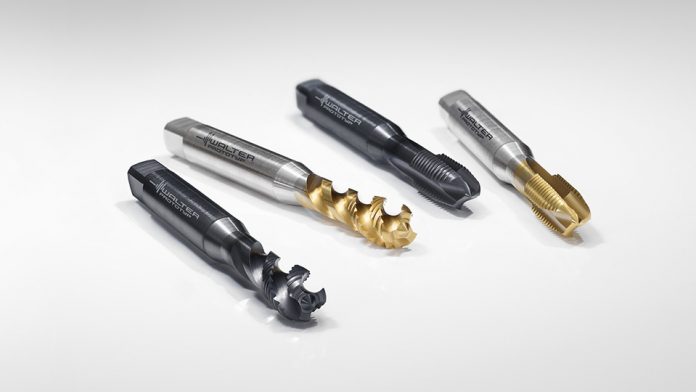
Manufacturer for precision tools, Walter, is extending its Perform line with new metric fine taps from the Walter Protoyp TC115/TC216 Perform line for blind-hole and throughhole machining operations.

The same benefits apply to metric fine taps with regard to the excellent profitability of small and medium-sized batches and the extensive range of applications in the Perform line.

Other advantages that also apply to the new metric fine taps in dimensions M8 Å~ 1 up to M18 Å~ 1.5 include threads on load-bearing components which need higher load-bearing capacity, threads for adjusting screws, e.g. on measuring devices which require a high level of precision during adjustment.

Another benefit is the self-clamping system due to the lower thread pitch. Like their metric counterparts, Walter also offers the new metric fine taps with two different coatings, including TiNcoated for exceptionally long tool life, vaporised for excellent chip control and reduced weld formation. For UNC threads, the ANSI shank diameter has been added to the product range.

These variants which differ from the DIN version are primarily of interest for countries in the NAFTA market. The primary applications of the new taps are ISO P: 350–1000 N/mm2, for ISO M: < 800 N/mm2 and for ISO K: GJS (GGG). Secondary application for blind-hole machining operations and additional primary application for through holes is ISO N aluminium wrought alloy and AlSi < 4% silicon.

For more information contact Spectra Carbide Tooling Technology – Tel: 0860 23 23 23

Volkswagen Continues Expansion In Sub-Saharan Africa

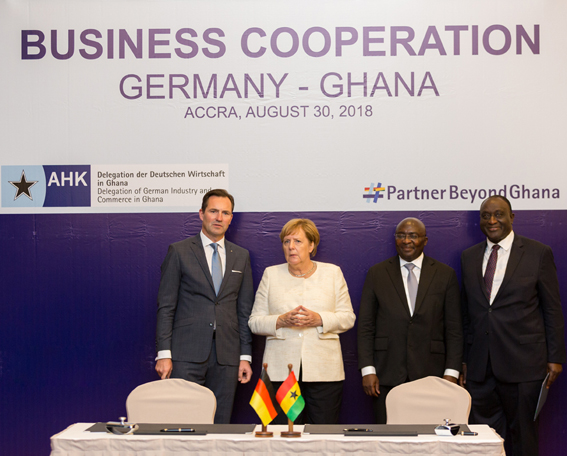
Thomas Schaefer, VW Head of the Sub-Saharan Region and the Minister of Trade and Industry, Alan Kyerenmaten of Ghana signed a Memorandum of Understanding (MOU) in the presence of Angela Merkel, Chancellor of Germany and Mahamudu Bawumia, Vice-President of the Republic of Ghana to establishing a vehicle assembly facility and to assess the feasibility of a modern Mobility Concept for Ghana.

This would also include developing a fully-fledged sales and service network in Ghana as well as establishing a Training Academy for production and after sales.

Volkswagen undertook to commence with a feasibility study for an integrated mobility solution which will include a review of the commercial viability of introducing car sharing, ride hailing and shuttle services by way of a Ghanaian subsidiary of VWSA or the appointment of a local service provider.

In turn, the Ghanaian Government undertook to develop a comprehensive Automotive Industry Policy which will incentivise and facilitate vehicle manufacturing and assembly in Ghana. This includes a preferential procurement policy for locally assembled vehicles.

Schaefer commented, “we are impressed with the determination and desire of the Ghanaian Government to develop a motor industry. As the second biggest economy in West Africa, Ghana is the ideal next building block in our Sub-Saharan Africa development strategy. The realization of the MOU should see our assembly locations increase from four to five, the other locations are in South Africa, Kenya, Rwanda and Nigeria. Our long term commitment to this region is real and sustainable. We believe that our committed actions and delivery of the last two years are proof of this.“

“The first locally assembled vehicles are planned to be on the streets in Accra in early 2019,“ added Schaefer.

VW Signs MoU To Develop Automotive Hub In Nigeria

During the visit of the Chancellor of Germany Angela Merkel to Nigeria, Volkswagen took the opportunity to sign a Memorandum of Understanding (MoU) in the presence of both, the Chancellor, and President of the Federal Republic of Nigeria, Muhammadu Buhari in Abuja to develop a joint vision for an automotive hub in that country.

The Head of Volkswagen Sub-Saharan Region, Thomas Schaefer signed the agreement on behalf of Volkswagen with the Nigeria’s Minister of Industry, Trade and Investment, Dr. Okey Enelamah.

The Volkswagen Brand thus took the next step in expanding its influence and presence in Sub-Saharan Africa. This comes a day after the signing of the MoU in Ghana in the presence of Chancellor Merkel and Vice President of Ghana, Mahamudu Bawumia whereby Volkswagen committed to set up a vehicle assembly and conduct a detailed feasibility study for the development of an integrated Mobility Solution in Ghana.

In the MoU, Volkswagen undertakes to implement a phased approach in relation to the assembly of vehicles, initially from assembly kits with the long term view of establishing Nigeria as an automotive hub on the West Coast of Africa. This will include establishing a training academy in conjunction with the German Government, which will train initial employees. The academy will also provide broader technical training in automotive skills.

In turn the Nigerian Government undertakes to accelerate the approval of the Nigerian Automotive Policy, currently under consideration. This includes the gradual transition from the importation of used cars to the manufacture and distribution of new passenger vehicles.

The Government has committed to providing a conducive legislative environment that will encourage the manufacturing of motor vehicles in Nigeria.

Volkswagen has a fully-fledged manufacturing facility in South Africa, and assembles vehicles in Kenya, Algeria as well as in Rwanda, in conjunction with an Integrated Mobility Solution offering Community Car Sharing and shortly to be launched Ride Hailing.

Euroblech 2018 – Digitalization And Industry 4.0

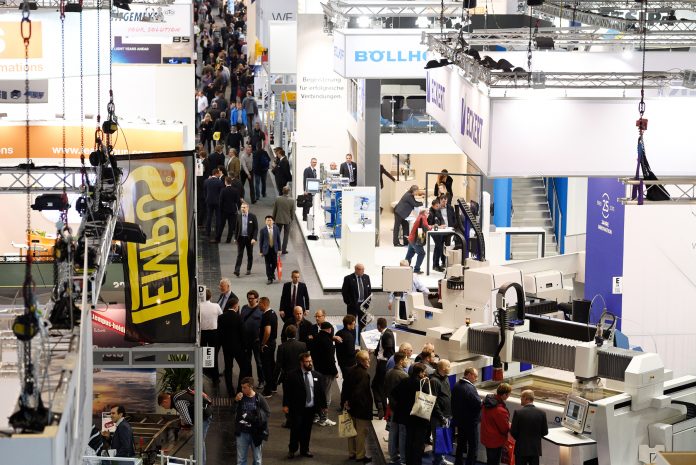
This year’s 25th International Sheet Metal Working Technology Exhibition will take place from 23rd – 26th October 2018 in Hanover, Germany.

A total of 1,500 exhibitors from 39 countries secured their stand at the world’s leading sheet metal working technology exhibition. This year, the show is mainly influenced by the topics Digitalization and Industry 4.0. The Online Show Preview, which was recently published, provides an overview of new products and technological innovations which will be presented at the show in October.

A total of 1,500 exhibitors from 39 countries have booked their stands at the world’s leading exhibition for the sheet metal working industry. EuroBLECH 2018 will feature more than 89,000 square metres net exhibition space, another growth of around 2% compared to the previous event. The most important exhibitor countries are Germany, Italy, China, Turkey, the Netherlands, Spain, Switzerland, Denmark and the USA.

For this year’s 25th edition of EuroBLECH, the main topics are Industry 4.0, big data and digitalization. Especially for small and medium-sized companies these developments offer enormous potential. These new business approaches offer advantages in terms of streamlined and less complex processes as well as improvement of productivity and efficiency. “While an app for maintenance control of machines or the interaction of machines and robots across the whole production process were still a vision of the future a couple of years ago, today this is the reality in sheet metal working. Currently, not only large companies are gaining ground in this area, SMEs have also recognised their potential here. Their company size usually allows them to react flexibly and quickly to such transitions, therefore they are in a good position to use digitalization to their advantage”, says Evelyn Warwick, Exhibition Director of EuroBLECH on behalf of the organisers Mack Brooks Exhibitions. “At EuroBLECH 2018 as the world’s largest sheet metal working exhibition, visitors can expect the most comprehensive technology range in terms of industrial digitalization of sheet metal working.”

The comprehensive Online Show Preview, with detailed information on many exhibitors and their products, is now available. In preparation of their visit, users will be able to sort entries by product categories or halls, to discover their personal highlights of this year’s exhibition. In this way, visitors can search exhibitor profiles including products and services presented at EuroBLECH 2018 and create their personalised version of the show preview.

Digitalization, E-mobility, Lightweight construction – these topics currently play a crucial role in the sheet metal working industry. Networked manufacturing is a key development in Industry 4.0 to increase productivity and reduce downtime of machines. E-mobility bears a lot of challenges for sheet metal working, due to the different manufacturing processes and materials required for electric cars. This goes hand in hand with lightweight construction, where composites and new technologies become increasingly important and bear certain challenges when joining or separating materials. The new EuroBLECH White Papers covering these three topics will shed some light on the recent developments within these areas and will provide some insight into new trends in the industry. All three White Papers are now available free of charge on the exhibition website www.euroblech.com

Aluminium 2018 Shows Potential Of Recycling

Aluminium recycling is gaining in importance as a source of raw materials.

Today, aluminium scrap is already one of the most economically valuable secondary raw materials. Around 20 percent of the world’s aluminium requirements are covered by post-consumer scrap. ALUMINIUM – the world’s largest industry event – will present the latest developments and potential of aluminium recycling from 9 to 11 October in Düsseldorf.


Its significance is increasing in a time of shrinking raw material reserves and scarce and above all expensive, energy. Recycled aluminium is produced in the form of cast and wrought alloys. There are no qualitative differences between alloys made from the primary metal and those made from recycled aluminium.

Scrap supply is the bottleneck for the aluminium material cycle, since aluminium is used mostly in products with long service lives, e.g. in construction applications like windows or in cars. Windows, e.g., can have a service life of well over 50 years. That makes it necessary to wait a long time before the scrap can be recycled.

Long before the need for sustainable development became a widely discussed topic, the global aluminium industry had already been running its material through a largely closed-loop cycle of metal production, processing, use and recovery. Product-related material cycles from production to processing and use to recovery of the metal are already largely closed today – depending on the application market. This has always been true for long-lived applications in cars and buildings – with recycling rates of about 95 per cent – and now for relatively short-lived product applications in packaging. Recycling rates of more than 80 per cent have been reached in this segment in Germany and recycling rates continue to rise in the EU area, as well.

According to estimates by the International Aluminium Institute, about 17 million tonnes of post-consumer scrap accumulated worldwide in 2016. This volume will increase to about 21 million tonnes in 2020, representing a share of more than one third of today’s global production of primary aluminium. Today, about 20 per cent of aluminium demand is covered by old scrap – i.e. metal from products that have served their purpose. Another source of raw materials besides old scrap is new scrap. New scrap refers to, for example, waste generated in the production of semi-finished goods, sprues from casting foundries, or shavings from the mechanical processing of semi-finished goods and other products. Initially, increasing aluminium demand leads to higher demand for semi-finished goods, which results in a higher volume of scrap – unless process optimization steps can be implemented to reduce the amount of accrued scrap. This is done to the extent possible, in part because it’s economically beneficial to companies: more scrap means less product and thus less efficient production.

Aluminium scrap is among the most economically valuable secondary raw materials. Recovering and recycling it conserves resources and makes an important contribution to limiting the rise of greenhouse gases. For that reason alone, using existing scrap is in the aluminium industry’s very own interest.

Recycling Pavilion at ALUMINIUM 2018

From 9 to 11 October, the ALUMINIUM trade fair in Düsseldorf will present the latest developments and potential of light metal recycling. The world’s largest industry event for the aluminium industry will dedicate its own exhibition space to the subject of recycling. A total of around 1,000 exhibitors and 27,000 visitors from 100 nations are expected. This year, the exhibition area will grow to 80,000 square metres – a record and a clear sign of the current dynamism in the aluminium industry.

In six exhibition halls, global players, specialists and young innovative companies will present the complete range of the industry, from aluminium production to machines and plants for processing, semi-finished products, products for the application industries and recycling.

In addition to the aluminium producing and processing industry, the fair will also focus on processes and product innovations for the most important aluminium application industries: automotive, mechanical engineering, construction, aerospace, electronics, packaging and rail transport.