Home Blog Page 67

Chase2Hepta Expanded For Wide Range Of Applications

TaeguTec has expanded the Chase2Hepta family series of cutters with new right-handed, neutral and wiper inserts which will cover a wide range of applications and considerably save on cutting loads.

Because of its 14 true cutting edges and double-sided 45 degree entry angle, the Chase2Hepta is an economical solution for a competitive world.

The dual usage inserts can be used on both cutter types a screw type cutter for steel machining and a wedge type cutter for cast iron machining at high feed rates. The new line of inserts’ efficient and smooth machining is due to its optimized cutting edges that lower cutting loads during machining.

The sharp – ML geometries of the new right-handed XNMU 0906 ANTR-ML insert with a full length helical cutting edge is perfect for milling steel under unstable machining conditions such as weak fixtures and clamping, long tool overhang and work pieces with weak cross-sections.

Moreover, this right-handed – ML geometry insert reduces cutting loads by as much as 9 percent compared to the – M geometry while machining alloy steel on a 25 kilowatt, BT50 spindle machine.

While machining a high-tempered alloy steel manifold, the XNHU 0906 ANTR-ML with the versatile TT9080 coating grade increased tool life from 12 to 15 pieces while machining at a cutting speed of 144 meters per minute, a table feed of 360 millimeters per minute and depth of cut of 0.5 millimeters. The case study noted that this insert was ideal for smooth machining and offered a small burr size.

The – ML geometry on the newly introduced Chase2Hepta neutral insert, the XNHU 0906 ANTN-ML, is dedicated to cast iron machining in unstable machining conditions. Its sharp and tight chipformer showed up to 11 percent reduction in cutting loads while machining ductile cast iron as compared to the – MM geometry inserts.

This neutral insert, with its TT6080 grade, helped decrease burr size and more than doubled its tool life while machining a cast iron bracket at 157 meters per minute with a 0.06 millimeter per tooth feed rate and a depth of cut at 0.5 millimeters.

For those looking for superior surface finishing in milling applications, TaeguTec also introduced the XNHU 0906 ANTN-W wiper insert which has two right-handed and two left-handed cutting edges.

As for the current geometries, the XNHU 0906 ANTN-MM handles cast iron and general milling, while the XNMU 0906 ANTR-M is more suitable for steel and general milling. The XNHU 0906 ANTN-CE, with its ceramic grade, is perfect for high speed machining of cast iron roughing.

By expanding the Chase2Hepta family of cutters, TaeguTec offers a greater amount of versatility for machining different types of materials while its 14 cutting edges lowers machining cost, extends tool life and increases productivity.

For more information contact TaeguTec – Tel: 011 362 1500

Walter Indexable Inserts Maximise Efficiency

Walter’s LNHU… indexable inserts with a fully ground circumference have repeatedly proven themselves in various milling applications.

They can be used in F5041, F5141 and F5241 tangential Walter BLAXX shoulder milling cutters as well as porcupine milling cutters and adjustable cartridge cutters and have been gradually developed to become a system insert. Now Walter is adding a new sintered variant which is primarily characterized by its efficiency. The new LNMU… indexable inserts with L55T geometry will initially launch on the market in Tiger·tec® Gold, grade WKP35G and Tiger·tec® Silver, grades WKP25S, WK45S and WKK25.

As with the previous LNHU… ground indexable inserts, the new range has four cutting edges on each circumference-sintered insert, displaying extremely high levels of concentricity and run-out accuracy when used in Walter BLAXX milling cutters. Key features include soft cutting action due to helical cutting edges, high feeds and precise 90° approach angles plus high process reliability and efficiency.

For more information contact Spectra Carbide Tooling Technology – Tel: 086 023 2323

Walter Perform Line ISO Turning Indexable Inserts

Walter’s Perform line combines increased standards of quality with maximum cost-effectiveness.

These Perform line characteristics will continue with the new ISO turning indexable inserts. The negative indexable inserts with four to eight cutting edges are available in three proven Walter geometries: FV5 (finishing), MV5 (medium machining) and RV5 (roughing). The WPV10 (for: ISO P10/M10/K20) and WPV20 (for: ISO P20/M20/K30) grades are CVD-coated universal grades with extremely high resistance to flank face wear. The inserts fit in all standard ISO turning toolholders in accordance with DIN ISO 1832, which makes them, not only cost-effective but also extremely versatile and easily identifiable by the “V” for “versatile” in the designation.

The coating composition provides maximum tool life at moderate cutting speeds (up to 250 m/min). During turning operations, the cutting parameters are limited, for example, by machines in the medium power range or by a corresponding component design (e.g. imbalance, size, etc.) with the aim to offer the most cost-effective, price-performance ratio for any application. In addition to excellent cost-effectiveness, the Perform line is also designed to offer users maximum reliability, versatility, easy handling and maximum process reliability.

For more information contact Spectra Carbide Tooling Technology – Tel: 086 023 2323

DCNT – New Sumocham Pre-Thread Hole Drills

As pre-thread hole drilling is very popular in many industrial tapping applications, ISCAR is upgrading the DCT CHAMDRILL family to include similar drills that carry the more advanced SUMOCHAM drilling heads.

The new DCNT drills have been designed for M8 to M24 ISO M standard pre-thread holes and carry two standard chamfering inserts designated AOMT 060204-45DT IC908, symmetrically mounted so that the cutting forces are balanced for optimal performance.

The AOMT 060204-45DT IC908 chamfering inserts were designed for chamfering on a wide range of materials with optimal chip formation.

The new AOMT 060204-45HD IC908 inserts were designed for chamfering low carbon steel and soft materials.

They can be used on a wide range of workpiece materials and for blind as well as through hole applications, with no vibrations during chamfering due to a balanced drill construction.

SUMOCHAM is capable of using a range of drilling heads on each drill body, which facilitates diametric versatility and offers a substantial advantage for users who change drills for the same tap operation, as the same DCNT drill can be applied for ISO M (coarse pitch thread) and for ISO MF (fine pitch thread).

For more information contact ISCAR South Africa – Tel: 011 997 2700

Kasto High-Performance Band Saw Reduces Cutting Times By Up To 50 Percent

Users will appreciate its short cutting times, long tool life and intuitive operation. The fully automatic machine is optimized for bimetallic and carbide blades and can be applied in areas such as the steel trade, steel production, forging mills, machine manufacturing and the automotive industry.

Besides helping to reduce tool costs, it significantly increases production speed and efficiency. Depending on the type of blade, cutting times can be reduced by 50 percent and more.

The KASTOwin pro AC 5.6 is designed for a wide range of applications and delivers top performance with both carbide and bimetallic saw blades. An important feature is its innovative feed system, which is controlled by means of two ball screw spindles, each with a servo drive for precise, infinitely variable control. The KASTOwin pro also has a retraction unit on each side for lifting the band from the surface when the saw head moves back. This makes for particularly efficient, exact sawing with minimal tool wear.

The fully automatic machine is optimised for bimetallic and carbide blades and can be applied in areas such as the steel trade, steel production, forging mills, machine manufacturing and the automotive industry.

The KASTOwin pro AC 5.6 is driven by an 11-kilowatt frequency-controlled motor, which provides plenty of capacity for use with carbide blades. The cutting range is 560 millimetres and the smallest dimension to be cut is 25 x 25 millimetres. The shortest residual length is ten millimetres for individual offcuts and 35 millimetres for automatic operation, enabling operators to reduce waste to a minimum. Two electrically driven plastic brushes keep the band free of chips. They are easy to replace and are automatically adjusted throughout their service life. The sawing unit has a heavy, torsionally rigid welded structure with vibration-optimized ribbing, ensuring quiet operation with shorter cutting times and a long tool life.

The KASTOwin pro AC 5.6 also has a powerful coolant pump and a large coolant reservoir so that difficult-to-machine materials can be cut with minimal tool wear. In addition, this fully automatic saw comes with EasyControl, a high-performance control unit. It is easy to use and reduces idle times in automatic operation for maximum cutting performance. All parameters can be optimized to match the type of blade being used.

For more information contact Retecon – Tel: 011 976 8600

Cut Steel Processing Costs With The BLM SC425 Sawing Machine

While the operator needs to position the workpieces manually, thereafter, the clamping and blade motion is automatic.

Overall, the machine has been designed to be simple to operate and to save time when switching from one type of production to another. Adjusting the SC425 requires no tools and adjustment controls are conveniently located within easy reach of the operator.

The SC425’s highly robust construction and small footprint make this machine suitable for the most demanding and continuous applications. The full range of safety devices – as stipulated in international regulations – such as a stop button, electrical overload protection and electrically interlocked accesses – guarantee operator safety under all operating conditions.

The cutting head is equipped with backlash-free helicoidal gears and interchangeable reduction gears. These, together with the two-speed motor, allow 10 different cutting speeds. The cutting head’s stroke can be quickly adjusted by means of a graduated manual control wheel located on the front of the base frame.

The feed can be regulated up to 3,000mm/ min. The work-piece is clamped between an adjustable reference support at the rear of the machine, an adjustable hydraulic clamp in the vertical axis and two front side stops. The rotating table on which the cutting head is mounted can be swivelled  and locked at 9°, both in the left- and righthand positions. There are also positioning stops set at commonly used angles such as 0° and 45°.

Once the cut is complete, the workpiece is raised from the rotating table by two hydraulically operated rollers, one on each side of the machine. This makes it easy for the operator to reposition the workpiece in preparation for the next cut. A closed circuit lubrication cooling system comes into operation during the cutting cycle.

Collection and removal of cutting debris is quick and easy. Cutting chips are collected in an easy-to-remove container located inside the SC425’s base frame.

A threshold control on electrical current being supplied to the motor protects the blade from possible overloading. All the clamping jaws can be easily closed and opened by using a single centrally-located switch. For heightened ergonomic efficiency, the operator can quickly execute all the steps of the production cycle without having to move from his operating position.

This versatile workhorse sawing machine will increase the speed and efficiency of any type of steel manufacturing business. For example, the SC425 can be used for carrying out trim cuts on bent tubes such as exhaust pipes and structural tubing, as it is possible to fit suitably shaped clamping fixtures to the cutting table.

At 90°, the SC425 is capable of cutting round bar to maximum diameter of 145mm and square bar to a maximum of 130mm. The machine is fitted with a 425mm diameter blade which can be powered by either a 1,3kW or 2,6kW motor.

As an optional extra, roller tables for loading and unloading can be supplied as can a micro-lubrication system.

With a footprint of only 1020mm x 950mm and a height of 1,8 metres, this compact yet powerful circular saw will provide both a valuable boost to productivity and an increase in profits for any busy steel manufacturing operation.

For more information contact First Cut – Tel: 011 614 1112

Everising’s Upgraded E- And P-Series Sawing Machines

In response to its customers’ requests, Everising has upgraded its P- and E-series sawing machines so that they can now process steel sections in the 300mm to 800mm range.

The overall aim of Everising with these upgrades is to reduce its customers’ production costs by speeding up actual cutting times.

The P-series also has a user-friendly touchscreen with easy-to-follow graphics, with all cutting parameters clearly displayed on the touchscreen controller. A bonus for operators is the self-diagnostic function which allows for immediate on-screen troubleshooting.

P-series circular saws are fitted with an accurate length index device, which is driven by a servomotor and ball screw. Hydraulic-clamped front and vertical vices hold work pieces firmly in place.

A floating shuttle device and hydraulic sorting chute speeds up production, while a scraper chain type chip conveyor ensures efficient removal of cutting debris. The speed of the blade is controlled by an inverter and is infinitely variable.

The P-series gear transmission driver provides high efficiency and consistent cutting speed. Carbide guide pads are used to strengthen the rigidity of the saw blades, which means not only accuracy, but an extended saw blade life.

Other features include an air filter, a cutting-fluid coolant system, an air compressor, a smart bar collecting system, an air blower for tube cutting and variable vice pressure.

Importantly, the P-series requires only one operator to set up and load the machine. Excessive re-work is avoided as P-series machines give a milling cutter finish with a tolerance of 0.02mm. Remnant or scrap pieces are sorted into a separate bin. With its versatility, a P-series sawing machine could replace a number of other types of circular saws, thereby saving valuable production space.

As with the P-series, Everising’s E-series band saws are CNC-controlled and also feature advanced touchscreen control. To ensure extended machine life, E-series band saws are equipped with high efficiency gearboxes lubricated by a controlled oil-feed system. An inverter controls the variable speed of the blade, which is tensioned hydraulically. An idler wheel motion detector serves to detect blade stalls thereby preventing blade damage.

The robust electronics on the E-series ensure that downtime is minimized, while an anti-vibration roller serves to protect the blade, which is cleaned by two automatically adjusting wire brushes. An advanced quick approach device and an automatic tracking blade guide protect the machine against accidental damage.

All E-series machines are manufactured with a solid steel frame with two pre-loaded linear guides for accurate, repeatable cutting. In addition, E-series machines have a safety device to ensure that blade changes are risk-free.

A dual front and rear floating vice holds work-pieces securely in place, while an out-of-square detector detects any flaws in the operator’s setting up procedure. To ensure there is no swarf build up, E-series machines are fitted with a drainage and chip removal device.

Once a particular job has been completed, the sawing machine’s computerized control system can produce machine utilization analyses for monitoring and optimizing machine usage.

Everising continues to improve the performance of its equipment by evaluating competitor products and responding to international demand. Based on these findings, the company invests in research and development to continually improve performance.

Improved Efficiency Of Aircraft Engines

Combustion chambers of modern aircraft engines produce temperatures of over 2,000 Kelvin during combustion.

This value is several hundred degrees above the melting temperatures of the materials used and certain areas of the thermally high loaded components must be cooled and provided with special thermal barrier coatings, both internally and externally. After landing, the engines cool down again quickly. The constant change of heating and cooling places enormous stress on the components in the engines. Therefore they have to be checked and serviced regularly.

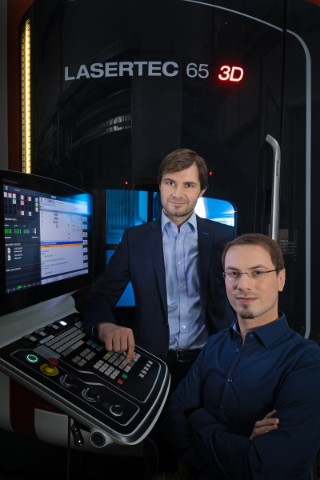
After years of research, Professor Frank Brückner and Mirko Riede of the Fraunhofer Institute for Material and Beam Technology IWS have developed laser-fabricated microstructures that extend the life of the thermal barrier coatings and contribute to a significant reduction in kerosene consumption and pollutant emissions. The research project was performed in close cooperation with the renowned engine manufacturer Rolls-Royce.

At its core, the IWS technology bases on filigree, additively manufactured microstructures.

These are used to build innovative Thermal Barrier Coatings (TBCs) on the turbine components and ensure that a metallic, oxidation-resistant adhesion promoter layer and a ceramic insulating layer are clamped together.

The Fraunhofer researchers have solved a further issue that occurs during the rapid expansion and contraction of the components. The expansion creates mechanical stresses in the insulation layer, which are caused by different expansion degrees of the materials. This can lead to horizontal cracks in the ceramic layer, which could subsequently flake off. The microstructures therefore specifically initiate vertical segmentation cracks in the ceramic layer. These reduce tensile stresses in the material and thus prevent the formation of the dreaded horizontal cracks.

Additive manufacturing technology using single-mode fiber laser

To generate filigree microstructures, the researchers had to further develop existing production techniques. A high-precision single-mode fiber laser generates microstructures down to the order of 30 microns. The columnar arrangement of the microstructures increases the expansion tolerance of the insulating layer.

The knowledge needed to design the structures for the TBCs and for the sophisticated manufacturing processes have not only been gained in practical experiments. “The simulations and the theoretical modeling with which we have worked in addition to the experiments also play a major role in the success,” explains Brückner.

Professor Frank Brückner and Mirko
Riede (from the left) have developed
microstructures that, among other things, extend the life of the thermal barrier coatings. © Fraunhofer

Kerosene consumption drops by 10 percent

The many years of work on the joint research project has paid off. The new technology can further improve the efficiency of the jet engines, along with increasing the combustion temperature. The more efficient combustion results in decreasing fuel consumption by ten percent and reduces greenhouse gas emissions. In conjunction with other measures, there are significant cost savings per year and aircraft amounting to approximately USD 2.9 million.

The joint team of Fraunhofer researchers and engineers from Rolls-Royce has succeeded in transferring the research work into production-ready manufacturing that meets the stringent safety standards of the aviation industry. After first successful test flights of the engines with Fraunhofer IWS technology in November 2015, the official aviation approval of the European Aviation Safety Agency (EASA) was issued. Since February 2018, the engines have been used in long-haul aircraft for the Airbus A350-1000. The Trent XWB-97 is the exclusive propulsion of this aircraft model and the most efficient large-capacity engine in the world today. The Fraunhofer experts expect that other jet engines will also be equipped with the innovative IWS technologies in the future.

For their scientific achievements, Frank Brückner and Mirko Riede as well as Dr. Dan Roth-Fagaraseanu from the industrial partner Rolls-Royce received the 2018 Joseph von Fraunhofer Prize of the Year 2018.

New Kinematics For Milling – Customized, High-Precision Manufacturing

Manufacturers generally must offer high-quality products at low prices in order to remain competitive.

Three Fraunhofer Institutes are therefore working on the next generation of industrial robots which will facilitate cost-effective production processes. The researchers are focusing on developing a new kinematics for milling lightweight materials, metals and steels. The aim: achieving a production tolerance of just 0.1 millimeters all over the robot workspace starting with the very first component.

More and more consumers are demanding made-to-order, customized products. The production facilities of tomorrow will need to be efficient and versatile if they hope to meet increasingly stringent requirements and the specific needs of each customer – all while mastering the pressure of rising costs. High-precision machine tools that impart a certain geometrical shape to workpieces remain the solution of choice. Conventional industrial robots have simply been unable, due to their insufficient precision, to supplant such machine tools. Using robots for milling operations remains particularly challenging. Primarily due to the gear units, low robot stiffness deflects the tool – reducing its appeal for use. Indeed, production staff must comply with extremely tight production tolerances every time they machine lightweight materials, such as aluminium or carbon fiber reinforced plastic (CFRP), as well as metals, and steels.

Customized production, even for a batch size of one

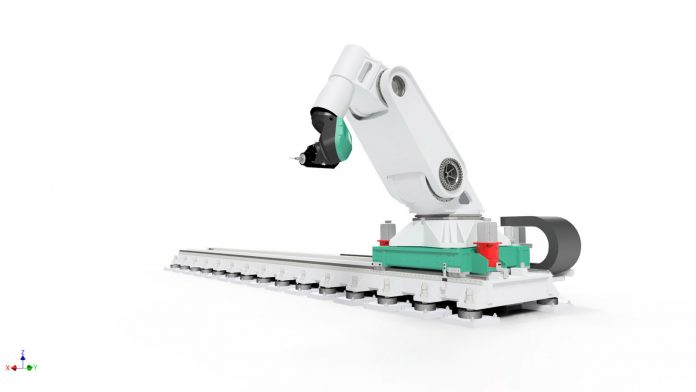
Researchers working on Fraunhofer’s Flexmatik 4.1 joint research project are developing an industrial robot designed for the high-precision milling of lightweight materials. The project partners are the Fraunhofer Institutes for Production Systems and Design Technology IPK, for Manufacturing Technology and Advanced Materials IFAM and for Structural Durability and System Reliability LBF. The researchers must overhaul the kinematics if the robot is to prove successful. Sascha Reinkober, department head at Fraunhofer IPK, explains, “we’re engineering a multi-axis kinematic chain that is specially designed for continuous path processes.” The robot proceeds from point A to point B of the component being machined by traversing a linear unit, a type of rail. “The system simulations we conducted during the design phase indicate that we can achieve a precision objective of plus/minus 0.1 millimeters. This will be possible starting from the very first component, despite the process forces acting on it. Manufacturers can therefore customize production, even for a batch size of just one unit,” says Jan Hansmann, project leader at Fraunhofer LBF. “Under the exposure of process forces, the robot will stray far less from its programmed target path. The robot can consequently drill a hole at the intended spot of the component with far greater precision, for instance.”

To ensure high precision, the team of researchers is developing a new drive concept for individual axes. Partially direct drives are used, which are considerably stiffer during operation than today’s high-tech gear units. And a new climate-control strategy minimizes imprecision due to temperature fluctuations. The robot is also equipped with a CNC control for machine tools. Last but not least, the new Flexmatik features an active vibration control system.

The new designed robot offers key benefits compared to machine tools: the cost of acquisition decreases by as much as a factor of 10 and the energy consumption by as much as a factor of 15. Thanks to its linear unit, the Flexmatik exhibits a workspace on par with large portal milling machines – and better accessibility. Compared to a portal milling machine, the Flexmatik does not require a special heavy foundation. This keeps construction costs lower and grants users flexibility in setting it up. Fraunhofer researchers want to complete a functional prototype by the end of 2018.

Their innovative milling robot can handle a broad range of applications – including the machining of large CFRP structures such as fuselages, the milling of components for gas turbines, and the re-contouring of press tools. “The Flexmatik is a suitable choice for many applications in practically all sectors which use machine tools. But it’s not about replacing machine tools. The Flexmatik can instead be a useful addition that shares workloads. The ultimate goal is to make production processes more costeffective,” emphasizes Sven Philipp von Stürmer, project leader at Fraunhofer IFAM.

Advanced Manufacturing Awards Kick Off In PE

The National Advanced Manufacturing Innovation Awards, is hosted under the auspices of the DTI co-funded, national Composites Cluster with a wide scope including the key drivers of the 4th industrial revolution.

Andy Radford

All companies operating in the advanced manufacturing field, including 3D printing, robotics, automation, AI, laser cutting and etching, CNC machining, software, big data, IOT and composites will be eligible for national recognition.

Companies or organizations may make submissions in six categories including: Scholarly impact in advanced manufacturing, Industry advancement in advanced manufacturing, Export proficiency, Contribution to Import replacement, Composites Innovation and Most promising start-up or newcomer.

Composites Cluster MD, Andy Radford, formerly an industrialist at the CSIR, before the Composites Cluster was established with the support of the South African government, said the awards would play a key role in accelerating the country’s advanced manufacturing agenda.

Radford said the awards, which would be made annually at the African Advanced Manufacturing and Composites Show (with the inaugural event set to take place from November 7-9) would also aim to showcase South Africa’s capabilities and popularise Advanced Manufacturing in industry and to learners.

The National Advanced Manufacturing Innovation Awards will take place as part of the African Advanced Manufacturing and Composites Show which will include a dynamic, interactive exhibition, conferences and factory tours at the Nelson Mandela Bay Stadium in Port Elizabeth from November 7-9.

Organizers say several international delegations have already confirmed, including leading Advanced manufacturing companies from France and Germany, while a focused campaign will draw dominant advanced manufacturers from Africa.