Renault and Nissan, the French and Japanese automotive alliance partners, recently announced the establishment of a new research and development joint venture in Shanghai, China, the Alliance Automotive Research and Development (Shanghai), Ltd., which will be referred to as Alliance Innovation Lab Shanghai (AIL-SH).
Renault and Nissan each hold 50% of this new entity which will conduct research and development focusing on autonomous drive, connected vehicles and electric vehicles. Technologies pioneered by the innovation hub will be potentially applied to Renault and Nissan vehicles sold in China and around the world.
Under the Alliance 2022 mid-term plan, 12 new zero-emission electric vehicles are due to be launched by 2022, and 40 vehicles are to be introduced with different levels of autonomy and over 90% of vehicles will be connected cars globally. The plan also includes a commitment to operating robo-vehicle ride-hailing mobility services.
The African National Congress (ANC), the Democratic Alliance (DA) and the Inkatha Freedom Party (IFP) committed to continue working with business leaders to pull the economy out of the doldrums and create much-needed jobs.
The parties – represented by ANC Economic Transformation Committee Head Enoch Godongwana, DA National Chairman Athol Trollip and IFP spokesman and Member of Parliament Mkhuleko Hlengwa – addressed delegates attending the Political Parties Seminar hosted by the Steel and Engineering Industries Federation of Southern Africa (SEIFSA) at the Johannesburg Country Club recently.
The parties collectively agreed that the stagnant economy, high levels of unemployment – particularly youth unemployment – and rampant corruption, among other socioeconomic woes, were of great concern and that Government needed to work closely with the business community to address these challenges. They also agreed that there is a need for Government to work with manufacturing sector leaders to reverse the fortunes of this sector, which has over the years struggled to operate in a low-demand and high-administered costs environment.
In addition to working closely with the business community to grow the economy, Hlengwa said Government needed to invest in infrastructure in the form of electricity and water, among others, to ensure that businesses thrive and subsequently contribute to economic growth. He said it was also of critical importance that the Government overhauls the education system to ensure that the country produces skills relevant to the fourth industrial revolution, as required by the economy.
Trollip said policy incoherence was detrimental to the economy and that the Government should do whatever it takes to address this challenge if investors were to come on board. He said the Government also needs to continue to create sector-specific incentives that reward investing in the local economy and job creation.
Businesses that are successful in effecting major transformation changes especially with black equity partners, will secure a sustained competitive advantage under the South African Automotive Masterplan 2035.
That is the view of Electrocoat MD, Angelique Adcock, one of a number of women leading companies in the pressured automotive sector.
Angelique Adcock, MD Electrocoat.
Adcock, whose family founded the e-coating business eleven years ago with a loan from a financier, sees transformation as key to future growth. That is why, she says, Electrocoat is engaging with potential black partners for a stake of at least 51% of the business.
“Taking on an equity partner would be a happy and healthy progression for Electrocoat. There are many black business people in the sector that would add great value to the business, she says.
“My family established Electrocoat eleven years ago by lending a significant sum and has subsequently developed the business to the success it is today and as the MD of the company, I am entrusted with its continued success.
“We are not looking for an equity partner with no operational value. The partnership that we are soliciting is one in which each partner has operational value to bring, which is what we believe will ensure the company’s long term success and longevity.’’
Adcock said the principle and imperative of growing black ownership in the supply chain, which is reflected in SAAM 2035, was clear. Transformation presents opportunities for our country and individual businesses,’ she said.
Approached for comment, NAACAM executive director, Renai Moothilal, says the Electrocoat example gave credence to the potential for transformation linked activities to be mutually beneficial and growth stimulating within the lower value chain tiers. “All sector players should be finding ways of unlocking localization opportunities deep into supply chains and simultaneously leveraging transformation outcomes. The policies of the SA Automotive Masterplan process have created the demand conditions to support this.”
Electrocoat, based in Port Elizabeth, supplies coating to a wide spectrum of component manufacturers and assemblers in all sectors and is a supply chain partner to South African based OEMS.
There will be three major focus areas at this year’s Automechanika Johannesburg. The trade fair for the automotive aftermarket takes place at Expo Centre, Nasrec, from 18-21 September 2019.
Each of the first three days is being dedicated to a specific focus area: innovation on the Wednesday, skills development on the Thursday and buy local on the Friday.
This year’s event will mark the sixth time that a world-renowned Automechanika trade fair is staged in South Africa and the second time that it is co-located with the Futuroad Expo, sub-Saharan Africa’s leading professional event for the truck, bus and commercial vehicle industry. Futuroad is the magnet that attracts buyers and suppliers in the region to see new products, innovations, technologies and services while sharing ideas and building relationships across the truck and bus industries. Expect industry heavy weights such as Everstar, MCV, Serco, Tata, UD Trucks and Volvo, to display their latest models.
The number of exhibitors and visitors to the biennial Automechanika Johannesburg trade fair has grown steadily since the first show was staged at Expo Centre in 2009. Some of the Automechanika exhibitors at this year’s show includes Trysome Auto Electrical, Centlube, Aer-o-cure, Diesel Electric, Launch Technologies, Engen, Dixon Batteries and Turbo Direct – to name just a few. This year the organizers are targeting to attract more than 600 local and international exhibitors. A big thrust is being made into Africa to attract more visitors from the sub- Saharan region, following an increase of 80% in visitors from north of South Africa to the 2017 event, when visitors came from Botswana, Kenya, Mozambique, Namibia, Zambia and Zimbabwe.
“Focusing on innovation, skills development and buy local, we have identified three important topics to build on for the first three days of the show,” says Joshua Low, Group Exhibitions Director of Messe Frankfurt South Africa. “We are encouraging exhibitors as well as the organizers of conferences and workshops to link into these themes as they play a vital role in building a strong support base for the automotive aftermarket in South Africa. Our local vehicle manufacturing industry is embarking on a new programme to encourage increased local content, upskilling of employees and the development of innovative products and processes,” adds Low.
The first day of the event will include the Innovation Awards presentation, where innovative ideas from local and international companies will be rewarded.
Automechanika is not only the shop window for innovations in the automotive aftermarket across the entire value chain, but is also the ideal meeting place for all involved in the industry, dealerships and trade stores as well as the maintenance and repair segment. It provides a platform for business and technological knowledge transfer. To this end, the organisers are setting up a businessto- business matchmaking programme to facilitate meetings between exhibitors and potential buyers.
There will also be a host of conferences and workshops, with many organizations arranging these events to tie-in with the staging of Automechanika Johannesburg.
Denel and Airbus have reached a mutual agreement to transfer the manufacturing of aircraft parts for the A400M military airlifter out of Denel, subject to fulfilling applicable legal prescripts.
Danie du Toit, the Group Chief Executive of Denel, says that in light of Denel’s ongoing strategic review of its operations, the two companies agreed that the continued manufacturing of aircraft parts by Denel is no longer sustainable in its current form. Alternative options are now being considered between the two parties.
Denel and Airbus continue to collaborate in other areas and intend to build, expand and strengthen their strategic industrial partnership.
South Africa decided to join the A400M programme in 2005 with an order for several aircraft. Airbus transferred skills and technology to enable Denel to design, develop and manufacture the A400M wing-to-fuselage fairing and top shells. Additional A400M work packages were subsequently awarded to Denel for the vertical tail-plane’s ribs, swords and spars, the cargo deck floor ISO locks and the Central Guide Vertical Restraint System. These items are manufactured at Denel Aeronautics in Kempton Park.
Denel is currently implementing a new longterm strategy to reposition the company and return it to profitability. The new approach includes the exiting of noncore areas of activity, divesting from nonviable core business areas and focussing on viable core business activities that will lead to long-term sustainability and repositioning the core viable business areas to leverage capital and market access as well as focussing on export opportunities through strategic equity partnerships and joint ventures.
President Cyril Ramaphosa attended Nissan’s announcement of a R3 billion investment in its facility in Rosslyn, Pretoria to prepare the plant for production of the next generation Nissan Navara pickup.
The move expands the role of the plant as a Light Commercial Vehicle manufacturing hub for Nissan. The Navara will join the popular NP200 and NP300 models, which are already built at Rosslyn and sold in the domestic market, as well as up to 45 pan-African countries.
Production is expected to start in 2020 and will create around 1,200 new jobs directly at the facility as well as across the local supply chain. Depending on market conditions, it is anticipated Navara’s arrival will add 30,000 units to Rosslyn’s current annual production volume of 35,000, creating the need for a new, second shift at the plant.
The announcement made at the Rosslyn plant was attended by President Cyril Ramaphosa, Peyman Kargar, chairman of Nissan’s Africa, Middle East and India region (AMI) and Mike Whitfield, managing director for the Nissan Group of Africa.
The investment in Navara production will result in further modernization of the Rosslyn plant, including a new, flexible production line and additional facilities, as well as training and upskilling of staff.
Working with the Automotive Industry Development Centre (AIDC), a local Government agency that promotes small businesses in the supply chain and skills development, Nissan has identified 15 black-owned companies that it will support in step with its preparations for the new Navara. It plans to partner with these businesses as it ramps up production and increases its spending on local content.
To date, Nissan together with the AIDC has incubated 8 new component manufacturers and related companies from its Broad Based Black Economic Empowerment start up programme. In total Nissan has 318 BBBEE suppliers which make up 34% of the total number of suppliers in South Africa.
Mike Whitfield, managing director for the Nissan Group of Africa, commented: “The new Navara is the perfect model for South Africa and our workforce is ready to build it, supported crucially by the government’s Automotive Production and Development Programme (APDP). Vehicles already account for around 14% of total exports from South Africa. Navara production will allow us to expand Rosslyn’s role as an export hub for Light Commercial Vehicles and contribute further to the local automotive sector, fully in line with the goals in the next phase of the APDP.”
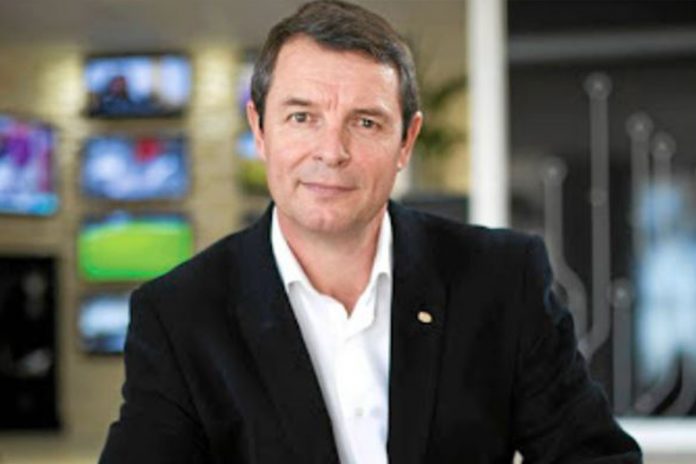
The latest Producer Price Index (PPI) data for intermediate manufactured goods indicating a further improvement in selling price inflation in the Metals and Engineering (M&E) sector for March 2019 is encouraging, says the Steel and Engineering Industries Federation of Southern Africa (SEIFSA).
The data, recently released by Statistics South Africa (Stats SA), shows that the annual percentage change in the PPI for intermediate manufactured goods – which is a proxy for selling price inflation for the M&E cluster – improved alongside the PPI for final manufactured goods. On a year-on-year basis, the PPI for intermediate manufactured goods increased to 6.3 percent in March 2019, from the 3.9 percent recorded in February 2019. The main contributors to the annual rate of 6.3 percent were basic and fabricated metals and chemicals, rubber and plastic products. Contemporaneously, the PPI for final manufactured goods for the broader manufacturing sector also registered an increase of 6.2 percent in March 2019 from 4.7 percent in February 2019.
“Against the backdrop of stalled domestic demand, unpredictable energy supply, ballooning petrol prices which add to increasing logistics costs, the improvement in the PPI for intermediate manufactured goods augurs well for the sub-components of the M&E cluster, which now have more leeway to manoeuvre around high operational and intermediate costs,” SEIFSFA Chief Economist Michael Ade said.
He added that the second-round effects of fuel price increases are usually difficult for small and medium enterprises. Given that businesses in the value chain and service providers – including logistics companies – gradually pass the increases in fuel prices on to their customers, resulting in high operational costs, the improvement in PPI is encouraging.
Ade said better selling prices enable businesses to improve on existing margins and it is, therefore, imperative that a positive differential between input cost inflation and selling price inflation be maintained.
The Steel and Engineering Industries Federation of Southern Africa (SEIFSA) notes with optimism the increase in the seasonally-adjusted Absa Purchasing Managers’ Index (PMI) released for April 2019, as the rebounding indicator is encouraging for production processes, Chief Economist Michael Ade said today.
Based on a survey of purchasing executives, the composite PMI data for April 2019 show an improved level of industrial activity, recording 47.2 points compared to 45.0 points in March 2019. A reading above 50 indicates an expansion, while one below 50 indicate a contraction, compared with the previous months. The improving trend corroborates data released by Statistics South Africa (Stats SA) earlier this year, which still reflect a positively trending year-on-year growth in manufacturing volume, albeit slowing down.
“Encouragingly, the latest seasonally-adjusted preliminary data arrest a declining trend in vthe composite PMI since the beginning of the year, with the numbers moving from a nondescript 49.9 to 46.2 and a lower 45.0 points in the respective months of January, February and March of 2019. Moreover, the deterioration in production activity during quarter one of 2019, as a proxy by the aggregate PMI, contemporaneously mimics the slump in key indicators such as the business expectation, business confidence and consumer confidence indices.
“The current performance of the PMI is also against the backdrop of a rebound in expected business conditions in April 2019 and is reassuring,” Ade said.
Of greater concern, though, according to Ade, is the high volatility and heightened uncertainty in the trajectory of the PMI subindices – namely business activity, inventories, suppliers’ performance, employment and new sales orders – which do not provide much confidence to purchasing executives. He said particular references are made to the slight dip in suppliers’ performance and employment indices and the acute decrease in the inventories sub-index, recording 53.4, 41.9 and 42.5 points respectively.
Ade said the April reading of the inventory sub-index indicates a sharp contraction from an expansionary zone in March and is worrisome. He said the trend could delay or even clog chain manufacturing processes, thus spelling serious trouble for manufacturing production lines in a subdued domestic economic growth environment.
“Typically, manufacturing entails division of tasks and capital or labour is supposed to complete a particular task before a product moves to the next position in the production chain. In a situation where there is nonperformance by contractors, shortage of material, inventory or labour, including partial delivery as reflected by the divergent data of the PMI sub-indices, there will be a negative impact on a set of sequential manufacturing operations.
“These include negative effects on production lines in smelters, mills or factories, where inputs are refined to produce intermediate or final products, with grave implications for the broader economy,” Ade said.
He added that the improved performance of the composite PMI is encouraging, given the tough economic environment for local businesses, which must also worry about galloping petrol prices as well as rising energy and input costs, while planning production processes.
This is according to Prof. Marcia Mkansi, an Associate Professor at the Department of Operations Management at UNISA and one of the organizers of the upcoming African Operations Management Conference, to be staged alongside Africa Automation Fair in June this year.
Prof. Marcia Mkansi, an Associate Professor at the Department of Operations Management at UNISA and one of the organizers of the upcoming African Operations Management Conference.
Mkansi says South Africa still lags world automation leaders such as Germany and China and even fellow BRICS country India in terms of industrial automation progress. “We shouldn’t fall behind and become consumers and adopters of foreign intellectual property. We need to see sectors such as mining, agriculture, manufacturing and healthcare innovating to address challenges unique to our continent.”
Mkansi says that while South Africa has made slow progress, lacking the necessary skills, scale and business confidence to build globally competitive factories, there are still significant opportunities for 4th Industrial Revolution progress, “there is still a chance for South Africa to take the lead in Africa, but it needs a national effort,” she says.
She notes that automation cuts across all sectors and is not limited to manufacturing or industry. “Automation is the future – it is the basis of the 4th Industrial Revolution. You see it in the service industry, for example, where airports use scanners instead of staff to check passports and where restaurants have automated payment terminals.”
To make 4th Industrial Revolution progress, South Africa needs to embrace a triple helix approach in which government, industry and academia make a coherent commitment to work together to support the country’s ambitions, she says. “We need more emphasis on STEM skills and innovation development at grassroots level. We need industry and academia to collaborate to ensure that skills meet industry needs,” she says. Mkansi notes that UNISA is currently collaborating with the Society for Automation, Instrumentation, Measurement and Control (SAIMC) to introduce South Africa’s first formal automation qualification, to be delivered through UNISA’s department of Mechanical and Industrial Engineering.
“Our partnership with Africa Automation Fair is another example of us being proactive in bringing together stakeholders across academia, industry and government to improve collaboration,” she says. The African Operations Management Conference will run alongside Africa Automation Fair for the first time this year, allowing conference delegates access to the Africa Automation Fair exhibition area and networking opportunities.
The African Operations Management Conference will bring together over 100 industry giants and experienced academics to exchange ideas, concepts and research. Speakers at this year’s conference will include the likes of Professor Norman McLennan of the Robert Gordon University in Aberdeen, who is a trusted business improvement advisor across the breadth of commercial and supply chain activities and is currently advising the China Ocean Engineering Shanghai Co; and Simon Carpenter, Chief Technology Advisor at SAP Africa responsible for leading SAP Africa’s Digital Transformation initiatives with a focus on Business Innovation and Thought leadership and providing direction to SAP’s customers and partners on emerging business and technology issues such as OT/ IT Convergence, Big Data, Business Network Transformation, Mobility, Cloud Computing and Business Process Management.
The 2nd African Operations Management Conference will be held from 4 – 6 June 2019 at the Ticketpro Dome in Northgate, Johannesburg. Running alongside Africa Automation Fair, the African Operations Management Conference will be presented by UNISA and supported by the National Research Foundation. The theme for this year’s conference will be ‘Competitive Operations Management for Driving Automation in Africa Forward’. For more information, please visit www.aomc.co.za
The Connected Industries Conference at Africa Automation Fair 2019 will focus on the economic impact of the Fourth Industrial Revolution (Industry 4.0 / IIoT) on South – and Sub-Saharan Africa, and how to bring this technology shift to South Africa. The Africa Automation Fair 2019 exhibition and conference will illustrate ways to overcome manufacturing stagnation and fast track growth, by showcasing the latest technologies, solutions and models for next generation manufacturing.
Africa Automation Fair is a focused networking platform for the Automation and Control Industry and works closely with industry associations including the IIG and SAIMC. The fair targets senior buyers from South Africa, the rest of Africa and invites participation from international buyers. Presented by Reed Exhibitions, Africa Automation Fair and the Connected Industries Conference will be staged from 4 – 6 June 2019 at the Ticketpro Dome, Northgate, Johannesburg.
CECIMO, the European Association for the additive manufacturing (AM) sector, welcomes the introduction of a new classification provision for AM machines in the product nomenclature, used by more than 200 countries.
Maintained by the World Customs Organizations (WCO), this product nomenclature is technically known as Harmonized System and is used by authorities to classify goods in international trade. The introduction of this new classification code, initially proposed by the EU on the basis of CECIMO’s inputs, will improve the collection of statistics on international trade of AM machines by material used. It will also facilitate the inclusion of AM machines in bilateral or multilateral trade deal talks across the world, as this product nomenclature is used as common language in trade negotiations.
“Standardization is of vital importance in the industrialization of AM. Work is progressing on standards on materials, processes and applications. In addition to standardization, we are glad to have contributed to the inclusion of AM machines in the systematic list of commodities applied by most trading nations in the world. This action will fill another vacuum in the standards’ landscape, leading to greater official intelligence on AM machine market dynamics and therefore, helping to draft more accurate strategies for the AM sector’’, said Filip Geerts, Director General at CECIMO.
Officially approved by parties adhering to the WCO’s Harmonized System, the new classification code for AM machines will enter into force from 1 January 2022 as part of a revised product nomenclature. CECIMO is now supporting EU custom officials on the formal definition of an AM machine, which will intend to describe the new code.