In a market where skilled artisans are becoming more and more scarce, it has become necessary to look at alternative ways of machining, whether it be for general engineering, tool-making or production work.
CNC machining is quicker and certainly more accurate than conventional milling machines and there is no need for constant monitoring while in use. Taking this into account, MJH Machine Tools have a solution to suit customers’ needs. Featuring an entry level CNC control, our Ctek CNC milling machine is the first step to CNC machining.
Ctek CNC Milling Machine.
As long as the operator has basic knowledge on using a DRO, he can, within a few hours, be taught how to program and run the machine. There is no need for G code knowledge as the control is conversational, using a question and answer format. The software is simple to use with graphic input in basic machinist language. The control has options for standard operation modes such as drill, tap, bore, contour and pocket programming, which is ideally suited to general engineering work without a need for external programming packages.
The latest Ctek’s come with linear guides on all three axes for better accuracy and speed, as well as a direct spindle drive motor and an improved Z axis motor with inline break which eliminates the need for a counterbalance. The Ctek can be fitted with a 4th axis within a matter of hours and programmed from the standard Ctek control.
The Ctek range has six x-travel sizes, 800mm, 1 000mm, 1 500mm, 1 800mm, 2 000mm and 2 500mm. These machines are available in open type or fully enclosed depending on the customer’s requirements. All spares are available ex stock at a fraction of the cost compared to other controls. With hundreds of these machines sold throughout South Africa since 1997, it is not surprising that Ctek CNC milling machines have been the first step to full CNC machining in many workshops.
Should there be a requirement for a high performance machining centre for super fine finishing and accuracy, the Akira Seiki is the machine to consider. Spindle power ranging from 15HP on the Junior series to 42HP on the Super Vertical range and spindle speeds from 9 000rpm to 15 000rpm guarantee high quality surface finish.
Akira Seiki machines come standard with spindle oil chillers, inner spindle air chiller, coolant through spindle, pneumatic counter balance, chip screw conveyor, quick change ATC and 4th axis preparation.
The DMU 75 monoBLOCK® combines top features for five-axis simultaneous machining and a large working space with 750mm X-travel. Equipped with CELOS® with MAPPS on FANUC from DMG MORI. Highly demanding industries require machine tools that are up to the challenge of realizing best quality in the most economical way. The monoBLOCK® series developed by DMG MORI has set a benchmark in almost every sector: aerospace, automotive or medical, among others, relies on the machine tools’ precision, stability and flexibility. With the new DMU 75 monoBLOCK® the world leading machine tool manufacturer addresses in particular price-conscious as well as innovation oriented customers. Therefore, the package contains the latest five-axis simultaneous machining technology, 60 pockets as magazine, speedMASTER® spindle with 20.000 rpm and as CELOS® with MAPPS on FANUC.
The extremely compact footprint of less than 8m2 and the spacious working area (X/Y/Z: 750/650/560mm) suitable for various work pieces of up to 840mm diameter and 600kg are the most obvious characteristics of the DMU 75 monoBLOCK®. Since the easily accessible working area can be loaded with a crane from directly above, the table users are provided with a maximum of comfort during their work. Apart from that the working area is cased with durable stainless steel for a long-term value. Another user-friendly factor that additionally guarantees best working results is the optimized chip fall and chip disposal from the machine to the rear.
Looking at the inner values of the DMU 75 monoBLOCK ® DMG MORI has ensured a maximum of precision. Whereas direct scale feedback allow exact machining, a one-piece stand, stable slides, 45mm roller guides in all axes plus a FEM optimization of all components stand for highest rigidity. The stability is continued in the swivel rotary table with its large bearing as well as the large ball screws in all axes, whereas weight optimized X- and Y-slides as well as the Z-ram promise highest dynamics. The linear axes achieve rapid traverse speeds of up to 40 m/min and an acceleration of 6 m/s2. Consequently, the table is the basis for reliable and challenging five-axis simultaneous machining of complex work pieces.
The DMU 75 monoBLOCK® package is completed by a powerful SK40 speedMASTER® motor spindle with 20,000 rpm, 130 Nm (40% ED) and 35 kW (40% ED) and a vertical chain magazine for 60 tools. Offering CELOS® with MAPPS on FANUC, DMG MORI is able to meet the preference of even more customers.
Included with the most important technological innovations of the
ULTRASONIC 20 linear are a new, completely digitally controlled ultrasonic
generator and the ULTRASONIC actuators with higher capacity.
Sporting a new look, and more capacity throughout for all functions, the new ULTRASONIC 20 linear impresses with ultrasonic machining of advanced materials.
For many years, DMG MORI has been offering high-performance machine tools with ULTRASONIC technology for 5-axis machining of complex workpieces made of advanced materials. With the new ULTRASONIC 20 linear, this series now captures a completely new class. Spindle speeds with optionally up to 60,000 rpm, more powerful drive motors, an even smaller footprint plus CELOS with apps specifically developed for the ULTRASONIC are all part of the innovations which users from the fields of optics, precision engineering and clocks, medicine and high precision mould manufacturing will benefit from in the future.
Reduced process forces for filigree structures, surface qualities up to Ra <0.1 μm and longer tool service life
Included with the most important technological innovations of the ULTRASONIC 20 linear are a new, completely digitally controlled ultrasonic generator and the ULTRASONIC actuators with higher capacity and rotational speeds of up to 50,000 rpm. The tool holders with adapted actuator technology can be easily and fully automatically replaced in the milling spindle. Each of these holders is equipped with piezo elements, which are activated via a program-controlled induction system with high frequency between 20 and 50 kHz. The original tool rotation is thus superimposed with additional tool movement with defined amplitude in longitudinal direction. The resulting deflection of the cutting edges or grinding areas is controlled via the NC program and can be in a range of up to 10μm or even higher. During grinding, drilling and milling, these superimposed vibrations have a direct, positive impact on the process forces, the removal volume and the tool service life and thus result in reduced costs and higher productivity.
In detail, the ULTRASONIC technology achieves a higher removal volume, more precise edge processing and up to 40 percent reduced process forces during machining of advanced materials like glass, ceramics, sapphire, hard metal and composite materials as well as carbide. The precision of the workpieces and reliability of the process are increased at the same time. Furthermore, the oscillating interruption of the tool contact with the workpiece results in an improved lubrication and cooling of the cutting edges and the optimum removal of stripped particles from the work area. The outcome is longer service life of the tools and excellent surface quality of up to <0.1 μ for hard-brittle highperformance materials. The ULTRASONIC 20 linear ideally combines high speed cutting with highly efficient ULTRASONIC grinding of advanced materials on a single machine. It enables the machining of an unprecedented range of different materials.
The option MT for the internal and external cylindrical grinding of the ULTRASONIC 20 linear enables complete machining of rotational-symmetric workpieces with grinding and drilling as well as internal and external machining in a single setup.
Intelligent ULTRASONIC technology with process-optimized amplitudes
“ULTRASONIC Parameter Detection” of the ULTRASONIC 20 linear ensures automatic detection of the ultrasonic frequency most suitable for the actuator and tool with powerful functions for process monitoring. Another function used for the first time worldwide is the monitoring and tracking as well as of frequency and amplitude during the ongoing machining process. For this purpose, UAT (Ultrasonic Auto Tuning) automatically tracks the frequency response and compensates all exterior influences like the dampening of ultrasonic vibrations by means of the primary process forces. This way, a consistent readjustment to the nominal amplitude or the value specified in the NC program can be achieved. With this, users can fully exhaust their processes and increase tool utilization, reduce cycle times and, particularly by reducing the process forces, achieve even more filigree, precise and high quality machining results.
Highly dynamic, long-term stable 5-axis machine concept – compact on just 3.5 m² footprint
With the ULTRASONIC 20 linear, DMG MORI relies on a long-term stable gantry machine design, to be able to safely meet all demands of ultrasonic machining. Despite this, the machine tool manufacturer was able to reduce the footprint of the machine to only 3.5m². A double drive for the Y-axis and the concept of integrated cooling, which uses the temperature monitoring of drives, spindles and the control as well as all media guarantee highest precision and workpiece quality. The linear measuring systems from MAGNASCALE are a good example for the high-tech components which DMG MORI has used here.
DMG MORI has significantly increased the capacity of the drives for the new development: by 47 percent for the A-axis, 27 percent for the C-axis and 34 percent for the Z-axis. The linear drives achieve maximum acceleration of more than 2 g and provide rapid traverse speeds of up to 40 metres per minute. Due to the large swivel range of the A-axis of the work table, ranging from -15° to 130° and the fully integrated 360° endless rotation axis – both with torque technology, the ULTRASONIC 20 linear is optimally suited to 5-axis simultaneous machining. The rotational speed of 1500 rpm that can optionally be achieved for the C-axis also enables circular milling/circular grinding as well as turning/milling operations.
After the revamp, the ULTRASONIC 20 linear can now be used with larger tool diameters of up to 50mm and an increased maximum workpiece weight from 10kg to 15kg. The basic version of the machine is equipped with a powerful 15 kW motor spindle and a HSK-32 tool holder, the maximum rotational speed is at 42,000 rpm. Higher demands on the rotational speed can be achieved with an optional spindle, which reaches an impressive 60,000 rpm. The range in this segment is rounded off by an HSK-40 spindle with permanent lubrication.
The modular concept of DMG MORI enables a wide-ranging application-specific configuration of the machines – of course this also applies to the ULTRASONIC 20 linear. For example, the machine can be supplied with a 1,500 rpm turning/milling table, which extends complete machining of rotation-symmetric workpieces in a single setup to the operations of milling, turning and grinding. In addition to the tool magazine with 24 pockets and minute wheel, a 60-pocket chain magazine is optionally available.
Unique integration of technologies
The ULTRASONIC 20 linear with its special features enables the use of ultrasonic support for specific materials, namely the milling and drilling of nickel or titanium super alloys or of materials like magnesium, tungsten as well as composite materials. Process forces have been reduced for milling applications in titanium by up to 30 percent. For steel, double feed speeds are possible, for other materials, like magnesium, the feed speeds can be increased by up to five-fold. In addition, an improved surface quality can be achieved. The ULTRASONIC process has a significant impact on chip breaking behaviour and chip removal from the tool. Further to shorter chips, this also results in drastically reduced tool wear, making the technology interesting for almost all future-oriented target markets with high-tech products. The specific benefits associated with the option of using the ULTRASONIC technology have also taken the flexibility to a new level. It is now possible to machine workpieces from very different materials from soft to hardbrittle, in five axes for mould making, medical technology, the automotive and aerospace industry.
ULTRASONIC 20 linear with new design and CELOS
High-quality, long-lasting covers as an external distinguishing feature with functional added value thanks to optimum accessibility are the most important properties of the new standardized DMG MORI design. The ULTRASONIC 20 linear also has this new look, whose impact on value retention must not be underestimated and furthermore, the machines offer CELOS. This user interface with its unique multi-touchscreen can be used as easily as a smartphone. The user friendliness is further increased by CELOS apps which were specifically developed for ultrasonic machining. They visualise the ULTRASONIC technology cycles and the most important process parameters like frequency, amplitude and output power. At the same time, the apps monitor the process forces of the actuators and also support configuration of the tools.
"High performance machine tools touch every aspect of our lives,”
says MD of Specialised Exhibitions Montgomery Gary Corin
Experts are optimistic about the global machine tool market, which is expected to grow from USD 77.0 billion in 2019 to USD 98.3 billion in 2027, with a compound annual growth rate of around 3.2% during the forecasted period, according to ResearchAndMarkets.com (Global Machine Tools market by product type; global forecast to 2027). The growth in industries such as process automation, vehicle production, and high precision fabricated components and products being the primary drivers for the global machine tool market going forward.
The nature of the industry is changing fast, with three core trends influencing the scope of the current machine tool industry, namely process automation, additive manufacturing and the rise of electric vehicles. Process automation can deliver high quality products with better precision and increased throughput and productivity. Machines can be maintained with simple quality checks, enabling timely repairs, therefore reducing down-times and costs.
Additive manufacturing or 3D printing has altered the landscape of the machine tool industry and is widely used in the automotive, defense and medical sectors. It offers a resource efficient and cost effective solution for concept validation, bringing design and innovation to the forefront.
Growing support for electric vehicles has seen countries around the globe trialing innovative ways to get this technology into the marketplace. It’s likely that initially there will be a high proportion of hybrid vehicles with a combination of combustion engines and electric motors, which could offer the machine tool sector opportunities for growth.
These core trends all strongly indicate a need for the machine tool market to integrate the latest technologies in order to come up with smart solutions for the changing market scenario.
Machine Tools Africa (MTA) will take place from 12 to 15 May 2020 at the Expo Centre in Johannesburg, South Africa. While the show is the biggest trade exhibition of its kind in Africa, it presents the perfect opportunity for local industry players to brainstorm and think of innovative new ways to seize the future market. MTA will showcase all the latest developments and technologies available, while providing a platform for business expansion as the local market grows. Enjoying strong industry support, the expo will remain a standalone show as it was in 2017 when 5900 visitors attend
The MTA exhibition is a Machine Tools Merchants’ Association of South Africa (MTMA) event in partnership with the organisers, Specialised Exhibitions Montgomery. “High performance machine tools touch every aspect of our lives,” says MD of Specialised Exhibitions Montgomery Gary Corin. “Machine Tools Africa 2020 will showcase everything that twists, turns, rotates, cuts, forms, bends or shapes,” concludes Corin.
Several African standardisation bodies convened in Cape Town recently, to discuss how standards can support the African Continental Free Trade Area agreement (AfCFTA) which will be implemented in 2020. This meeting was a bi-lateral meeting on the occasion of International Organization for Standardization (ISO) week.
The agreement establishing AfCFTA has resulted in the biggest trade agreement since the World Trade Organisation was established in 1994. It is expected that with the reduced barriers to trade, the growth in intra-Africa trade, of an estimated USD 2 trillion, will be traded internally – within the next year.
Most African standards bodies are member of the African Organisation for Standardisation (ARSO), which established itself in 1977 to develop tools for standards development and regional harmonisation to enhance Africa’s internal trading capacity, increase product and service competitiveness globally, and uplift of the welfare of African consumers.
“The development and harmonisation of African standards and best practices must serve the needs of African member countries and that of the region. The harmonisation of technical regulations, standards, conformity assessment procedures, enforcement protocols and a dispute settlement process need to support the African free trade agreement. African standards bodies have an important role to play in developing their nations to become active and inclusive members of this new regional market, through the promotion of standards to ensure that maximum benefits can be derived,” says Hermogène Nsengimana, secretary general of ARSO.
Several technical infrastructure organisations in Africa, in addition to ARSO will contribute to the development of standardisation, conformity assessments and quality assurance, including the Pan-African Quality Infrastructure (PAQI), African Accreditation Cooperation (AFRAC), Intra-Africa Metrology System (AFRIMETS), African Electro Technical Standardisation Commission (AFSEC) and the African Union Commission (AUC).
“Standard bodies across the region need to collaboratively develop common systems and standards that sustainably support social, economic, trade and industrial integration. For South Africa, the benefits of enhanced access to regional markets could significantly boost our economy, ignite industrialisation and foster regional harmony. The opportunities for capacity building, job creation, sharing of resources and technologies – could be the elixir for our economic woes,” says Garth Strachan, Acting CEO of the South African Bureau of standards.
Africa is currently the second-largest export destination for South Africa, topped by Asia. South Africa exported 26.2% of its products into Africa in 2017, while importing only 9.9%. AfCFTA is expected to expand and diversify export destinations within the region.
The ushering in of President Cyril Ramaphosa as the new Head of State in February 2018 brought with it the promise of “A New Dawn” underpinned by four pillars, namely clean governance, anti-corruption, the re-building of a broken economy and improvement of education and training but 18 months later, South Africa still finds itself confronted by pedestrian economic growth, high unemployment rate as well as poverty and inequality.
“We were also, in 2018, promised by then Minister of Finance Malusi Gigaba that ‘drastic measures would be put in place to implement meaningful and far-reaching reforms in State-owned Entities (SOEs). It is now 2019, and South African Airways still doesn’t have a new board, while Eskom does not have a CEO,” Accountant and Commentator Khaya Sithole said at the Southern African Metals and Engineering Indaba taking place at the IDC recently.
Sithole attributes the lack of implementation of the New Dawn to indecision, leadership vacuum and Luthuli House civil wars, among other factors. This, he said has, in turn negatively impacted business confidence.
Speaking on the same panel, Massmart and Aspen Holdings Chairman Kuseni Dlamini said we have to accept the fact that there are elements of the New Dawn that are good and there are elements that are not.
“There are elements of success in the New Dawn including the fact that there is a new style of engagement between Government and business that is honest and transparent, the New Dawn has also brought with it hope amongst the business community.”
He said while the New Dawn appears to be waning amongst South Africans, the international community remains positive about South Africa as one of the emerging markets.
“The reform of SOEs hasn’t worked and yes there are other challenges but this challenges all of us to work together to deliver on the promise of the New Dawn, Government will not do it alone,” said Dlamini.
Meanwhile, South African Chamber of Commerce and Industry CEO Allan Mukoki said for South Africa’s economy to grow and its credit ratings to improve, we need to restructure, change and renew the public service by bringing to the public sector highly-skilled and competent individuals to lead the sector.
“We also need to solve the problems with our SOEs. It is incorrect to expect a Minister who has never worked outside the public sector to be able to choose SOE board members. We need to reconsider how Board members are elected. If we don’t get these fundamental things right. We will not be able to deal with the bigger challenges confronting the country.
The recently launched South African Automotive Masterplan (SAAM) bodes well for companies operating in the metals and engineering (M&E) sector, National Association of Automotive Component & Allied Manufacturers, Executive Director Renai Moothilal said at the Southern African Metals and Engineering Indaba.
“The New Masterplan is very likely to have a positive impact on the M&E sector provided companies operating in the sector put competitive measures in place to take advantage of the opportunities provided by the plan,”Moothilal said.
He pointed out that given the fact that the SAAM places local content at the centre of any future support for the industry, with government having set a target of raising local content from less than 40% currently to 60% by 2035, the M&E sector, which is a supplier to the automotive industry, can expect positive outcomes.
“There will be a role for the whole sector to play. Component manufacturing is currently dominated by multinational manufacturers. This will change going forward. These companies will be compelled to contribute towards the growth of smaller local manufacturers by sourcing certain components from them, thus making them part of the value chain.
The outlook is, therefore, positive. Yes there will be challenges but there are companies in the M&E sector who are doing well inspite of the current challenges facing the economy because they have adopted a positive mindeset and invested in skills development, etc. More companies need to adopt a positive, growth oriented mindset and most importantly ensure they enhance their competitivenes,” Moothilal said.
In addition to the local content, the SAAM, adopted by Cabinet in November last year also aims to double employment in the sector to 224 000 jobs by 2035, from 112 00 currently, and position South Africa to produce 1% of global vehicle production, or 1.4-million vehicles.
Speaking on the same panel, SEIFSA Chief Economist Michael Ade said policy has a role to play in ensuring that the plan does benefit the domestic M&E sector.
“Active support for pro-South Africa approach to industrilalisation within the World Trade Organisation rules should characterise trade policy to provide an immediate boost to align busineses in both the metals and engineering and automotive industries,” said Dr Ade.
He said empirical evidence shows that the M&E cluster benefifted from previous and existing auto industrial policies namely the Motor Industry Development Plan and the Automotive Production and Development Programme.
South Africa is facing significant headwinds, coupled with a growing sense of negativity as illustrated by an announcement of the business confidence index having reached a 20-year low, so said BUSA Vice President Martin Kingston.
Martin Kingston
Delivering a closing address at the Southern African Metals and Engineering Indaba at the IDC Conference Centre in Sandton recently Kingston said the environment facing the country is one that is hallmarked by a constrained global macro environment, aided and abetted by unprecedented geopolitical tensions and stubbornlyhigh unemployment. Add to this SouthAfrica’s expanded definition of unemployment at almost 40%, whilst youth unemployment is 55%, infrastructure challenges, a hostile labour market and the need to address the skills shortage as well as the country’s credit rating at risk of being downgraded to sub investment grade.
“We are in the eye of the storm where we need to take responsibility for the circumstances confronting us. All stakeholders need to urgently accelerate efforts to create an environment conducive to stability and investment given the significant headwinds we need to navigate. The private sector, including the metals and manufacturing sectors, has a critical role to play in assisting the State to achieve inclusive economic growth and reach its developmental goals, primarily through investment but also through collaboration with government and its social partners.”
Remarking on the role of the metals and engineering sector in turning South Africa’s economy around , Kingston said the mining, metals, engineering and manufacturing sectors have long been viewed as labour-absorbing industries that could provide a significant solution to South Africa’s structural unemployment and assist in driving GDP growth. However, both manufacturing and mining industries have seen a decline in their contribution to the overall South African economy.
He said the downturn in South Africa’s manufacturing sector has been driven largely by unreliable and uncompetitive electricity supply, high administrative costs, inadequate skills, outdated technologies, cheaper global competition and weak demand.
“Rectifying this is critical as manufacturing is a key enabler of development given its role in promoting productivity growth, skills development and relatively high income elasticity of demand in world markets. The metals sector has a significant role to play in South Africa’s economic trajectory.”
Commenting on Eskom, Kingston said the manufacturing, metals and mining sectors account for just under two thirds of South Africa’s electricity consumption. Eskom’s current financial crisis (in excess of R440bn in debt), represents a material threat to these industries (as it does for the rest of the South African economy), with the key issues relating to the reliability, predictability and competiveness of electricity.
He said failing to deal comprehensively with Eskom is no longer an option. It must be restructured, a significant proportion of its debt must be assumed by the state directly, its workforce must be right sized, its cost base and clients addressed and competition introduced.
“It is critical that all stakeholders recognise that economic growth is the most effective instrument to address South Africa’s challenges. Whilst the private and public sectors are collectively looking to drive growth and attract investment, it is in fact private sector investment that is the key lever to delivers sustainable and inclusive growth given public sector constraints.”
“I fully agree that neither government not business can achieve this independently of one another. We need to harness the energy that I have seen here, speak openly and directly and commit to implementable actions where we take individual and collective responsibility for navigating our problems thus ensuring that South Africa properly positions itself for success,” Kingston concluded.
Mureza, a new African car brand, made its debut at Automechanika Johannesburg, recently. Mureza initially is a joint venture with the SAIPA Group in Iran for platform-sharing and the supply of some of the other major components, but Mureza’s ultimate objective is to design and manufacture vehicles in Africa for African drivers.
The prototype Prim8 has been converted from left-hand to right-hand drive locally, but the future SKD and CKD kits will be set up for right-hand drive. A three-year warranty will cover the car.
The Prim8 uses a 1.5-litre petrol engine developing 87kW and drives the front wheels through either a five-speed manual or CVT transmission. The target is to offer the fully equipped top model at between R180 000 and R200 000.
The comprehensive specification of the top model includes keyless entry, 7-inch touchscreen, Bluetooth, satnav, reversing camera, cruise control, parking sensors, audio system, air conditioning, power-adjustable driver’s seat, four airbags, electronic stability control, ABS brakes and tyre pressure monitoring.
The initial local content target is 40% with significant increases in the short to medium term, according to Tatenda Mungofa, representing a group of Africans from various countries who are driving this ambitious project.
Mungofa explains that there is a void between the new vehicles and used vehicles currently sold in African countries and says this is the gap his team proposes to fill with new models priced not much above the cost of a used import, which are heavily taxed in certain markets.
“We will also engage with the people selling used imports to retail our new models and will assist them in setting up service facilities where this is viable, or else we will appoint independent servicing outlets in the various SADEC countries that we are targeting as a first step for our new company,” explained Mungofa.
“Here in South Africa we are also looking to sell our various Mureza models through used vehicle outlets instead of setting up new car franchised dealerships. Online selling will be important for us too,” he added.
Iran is the largest vehicle market in the Middle East and also the largest manufacturer, while SAPIA is the second largest local vehicle maker which assembles cars for European, Chinese, and Japanese companies as well as developing a growing domestic design and manufacturing ability.
South Africa is seen as the hub of the automotive business in Africa and it is for this reason that we are using this country as our headquarters and first assembly plant.” said Mungofa.
“We are looking at cooperating with smaller component suppliers who not yet able to handle big production runs and our business will help them grow their businesses. We are also looking for local entrepreneurs to get involved with the various facets of our business to give it a true African flavour,” Mungofa concluded.
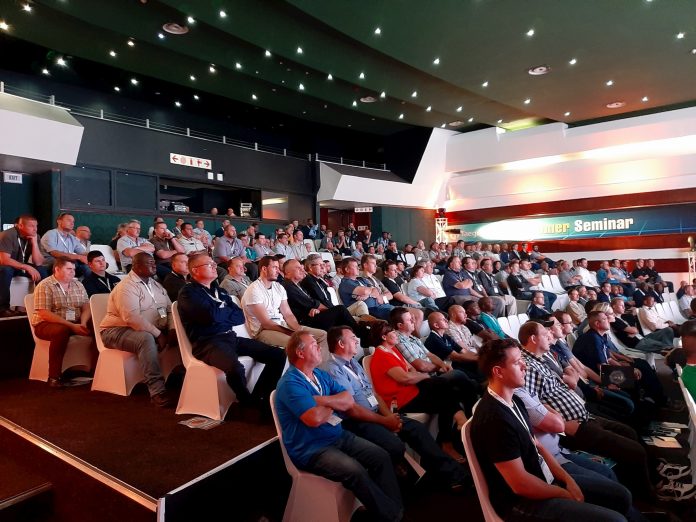
The recent Automechanika Johannesburg trade fair for the automotive aftermarket, staged at Expo Centre, Nasrec, provided an excellent blend of product displays, activations, a focus on training and a strong “Buy South African” component.
This was the sixth time that the Automechanika trade fair has taken place in Johannesburg. This year it was co-located with the Futuroad truck and bus show and Scalex logistics expo for the second time. Once again, this event proved the place to be for all those in southern Africa involved in the transport, logistics and aftermarket sectors.
There were in excess of 600 exhibitors from 28 countries spread over more than 18 000 m2 of exhibition space in four halls with various displays and truck test driving in the spacious outdoor areas.
Besides the many product and service provider stands there were a host of business-to-business meetings, conferences and workshops held during the four-day show period. Prior to the show, the organisers also undertook an extensive roadshow programme in Sub-Saharan Africa to promote the event and attract visitors from the SADEC region.
Many industry associations, organisations and companies used the show period to stage important conferences. A total of 12 of these events were staged, covering a multitude of topics.
The organising team from Messe Frankfurt structured an excellent and very comprehensive skills development programme for the automotive industry for three of the four show days, with six topics being handled each day, ranging from automotive batteries and powertrain technologies to a demonstration of how a diesel fuel injector functions and the advancement of the turbocharger.
As part of the focus to support local businesses, the ABSA Enterprise Development Den initiative took place at Automechanika and saw three AFRICAN STANDARDS FOR AFRICA – REGIONAL HARMONISATION locally owned SMEs win up to R200,000 to support their business as well as business mentorship programmes sponsored by ABSA.
“We focussed on making a visit to Automechanika Johannesburg 2019 a fully-rounded experience, with a wide selection of exhibitors as well as offering extensive training and interactive opportunities,” explained Joshua Low, Managing Director of Messe Frankfurt South Africa. “We were very pleased that exhibitors seemed satisfied with the quality of visitors we attracted to our biennial trade fair and the networking it offered.