FAW Trucks ended the month of April on a high note when the 7 000th locally assembled vehicle rolled out of its Coega manufacturing plant. This marked another significant milestone for the Chinese brand that took top spot in the Heavy Commercial Vehicle (HCV) segment of the local market for the first time in the first quarter of this year.
The unit in question was a JH6 28.500FT model, which has since been delivered to a well-established strategic fleet customer.
The largest of the truck tractors from FAW Trucks, the JH6 28.500FT features a full floating extended-roof cab with an innovative flat floor design for optimal comfort and interior space. Its 13-litre, six-cylinder common-rail turbocharged and intercooled diesel powerplant produces 370 kW at 1 800 r/min, has 2 300 Nm of peak torque on tap at 1 400 r/min and is commonly referred to as China’s most efficient engine. It is mated to a ZF 12-speed TraXon AMT transmission, with parabolic spring suspension front and rear to address vehicle weight requirements. A full air dual circuit WABCO braking system with ABS enhances the long hauler’s safety features.
Says Jianyu Hao, CEO of FAW South Africa: “This is an understandably proud moment for us. It reaffirms our commitment to the local market and is the result of one of the largest investments made by a Chinese entity in this country.
“Since first entering the South African market 27 years ago, we have gone from strength to strength, providing local buyers with products of high quality that are not only well suited to local conditions, but also boast high levels of safety, convenience and comfort. We have managed to combine this with competitive pricing, low running costs and excellent aftersales service.”
Funded by the China FAW Group Corporation and the China-Africa Development Fund, the first vehicle rolled off the Coega assembly line in July 2014. The facility was built at a cost of R600 million and spans some 30 000m². This includes a state-of-the-art training facility, a body shop and a paint shop. As a responsible corporate citizen, it provides employment for 148 staff members.
All units arrive in South Africa in semi knocked-down form and are then assembled at Coega.
Currently, the Coega facility has a production capacity of 3 000 units per annum, but this is scalable to 5 000 in order to be able to meet growing demand for FAW Truck models.
“The reason for our continued growth in South Africa is the fact that we cater to virtually every need within the highly competitive commercial vehicle market,” explains Hao. In addition, all models are assembled to exacting standards in order to be able to withstand the harsh conditions of the African continent.
“All current models in the local FAW Trucks range represent the strength, reliability, affordability and ease of operation that the brand and its products are renowned for. Most importantly, though, each model delivers on the promise of a ‘truck built in South Africa for Africa’,” Hao concludes.
The new-generation Advanced Version ROBODRILL promises unrivalled quality and precision at great hourly rates.
With an unbeatable tool change time of 0.7 seconds and a turret capable of handling tools weighing up to 4kg, the new advanced version is both the fastest and strongest Robodrill yet. With by far the shortest cycle times on most machining operations, all ROBODRILL machines offer incredible performance and unbeatable efficiency.
Designed to meet every need, the ROBODRILL α-DiB5 series comprises of six completely redesigned models in Space Saver, Medium and Long sizes, available in either standard or advanced versions. With a rigid servo drive control and a highly dynamic BT30 spindle, these high-speed all-rounders are suitable for all vertical machining applications, from short production runs requiring fast turnaround times to flawless mass production. With well over 200 000 machines installed worldwide, its future-proof versatility and easy adaptability make the ROBODRILL the best-selling machine in its class.
Spreading your machining work across several ROBODRILLs instead of relying on a dedicated transfer machine, allows you to benefit from cheaper production and higher flexibility in the face of changing production numbers. Inherently adaptable, FANUC ROBODRILL also represents a great addition to your production facilities, since you can use it to absorb extra demand, thereby freeing up your larger vertical machining centres for bigger jobs.
Spreading your machining work across several ROBODRILLs instead of relying on a dedicated transfer machine, allows you to benefit from cheaper production and higher flexibility in the face of changing production numbers. Inherently adaptable, FANUC ROBODRILL also represents a great addition to your production facilities, since you can use it to absorb extra demand, thereby freeing up your larger vertical machining centres for bigger jobs.
The Advanced Version offers many unique improvements:
Improved swarf evacuation
To maximize uptime, the ROBODRILL α-DiB5 series can be fitted with a number of swarf evacuation options: from the coolant tank and chip flush methods to a piping system for wall coolant. Advanced versions minimize swarf interference with a mountain-shaped Y-axis front cover. It also offers an optional fully-enclosed spindle cover that separates the machining area from the mechanism.
Stronger Turret for bigger Tools
At the heart of every ROBODRILL is a patented high-speed tool changer that can carry up to 21 tools and offers the best reliability in its class. Its manufactured efficiency lies in its solid metal construction and optional BIG-PLUS BBT30 spindle.
This makes it extremely resistant to radial forces and enables it to deliver unbelievably efficient machining.
Advanced version ROBODRILLs feature an even stronger turret. Offering even more versatility, this enables the tool changer to handle heavy, customized cutting tools weighing up to 4kg while still realizing ultraquick tool changing times.
Power Failure Backup Module
Power interruptions can be costly. Avoid unnecessary workpiece damage or tool damage with FANUCs Power Failure Backup module. This will prevent the tool from dropping into the workpiece or the axis from slowly decelerating to a stop potentially causing a collision with the spindle, or jigs and fixtures.
All of the new model ROBODRILLS can be fitted with the improved Direct Drive 4th axis with built in brake. For ultra high speed indexing, or 4 axis simultaneous work, the new DDRiB offers unrivalled speed and accuracy.
When you have longer workpieces or want to put many on the table at the same time, the new DDR-TiB offers a factory built 4th axis with tail support, base plate, and angle brackets for a swing plate. Available in 300mm, 500mm or 700mm in X direction, this allows maximum use of the ROBODRILLS travel space.
Need a 5 axis machine? No problem!
ROBODRILLs are available with 5 axis simultaneous control allowing machining of complex workpieces. Control functions like Tool Certer Point Control and smart smoothing functions mean you can manufacture high quality parts quickly and accurately.
Smart Automation and Robotization
As the worlds largest manufacturer of Industrial robots, FANUC offers the advantage of full automation and robotization from a single supplier.
Through a single Package called QSSR, or Quick and Simple Start of Robotization, robot loading can be quickly configured.
IoT and Information Management
In todays world information is everything. FANUC offers a solution for production monitoring for the factory floor. Information from each machine is gathered and presented graphically. Production count or time, tool life information, alarm diagnosis, program details, feed & speed details etc can be viewed and stored for every machine connected to the system.
FANUCs legendary reliability coupled with easy preventative maintenance procedures keeps downtime to an absolute minimum. And thanks to their extreme longevity, ROBODRILL machines also provide an unbeatable return on investment.
FANUC ROBODRILL is proudly made in Japan and comes with a 2 year mechanical and control warranty.
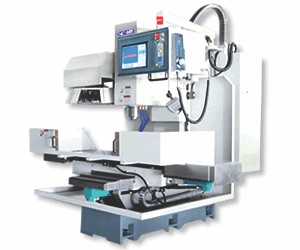
In a market where skilled artisans are becoming more and more scarce, it has become necessary to look at alternative ways of machining, whether it be for general engineering, tool-making or production work CNC machining is quicker and certainly more accurate than conventional milling machines and there is no need for constant monitoring while in use. Taking this into account, MJH Machine Tools have a solution to suit customers’ needs. Featuring an entry level CNC control, our Ctek CNC milling machine is the first step to CNC machining. As long as the operator has basic knowledge on using a DRO, he can, within a few hours, be taught how to program and run the machine. There is no need for G code knowledge as the control is conversational, using a question and answer format. The software is simple to use with graphic input in basic machinist language. The control has options for standard operation modes such as drill, tap, bore, contour and pocket programming, which is ideally suited to general engineering work without a need for external programming packages. The latest Ctek’s come with linear guides on all three axes for better accuracy and speed, as well as a direct spindle drive motor and an improved Z axis motor with inline break which eliminates the need for a counterbalance. The Ctek can be fitted with a 4th axis within a matter of hours and programmed from the standard Ctek control.
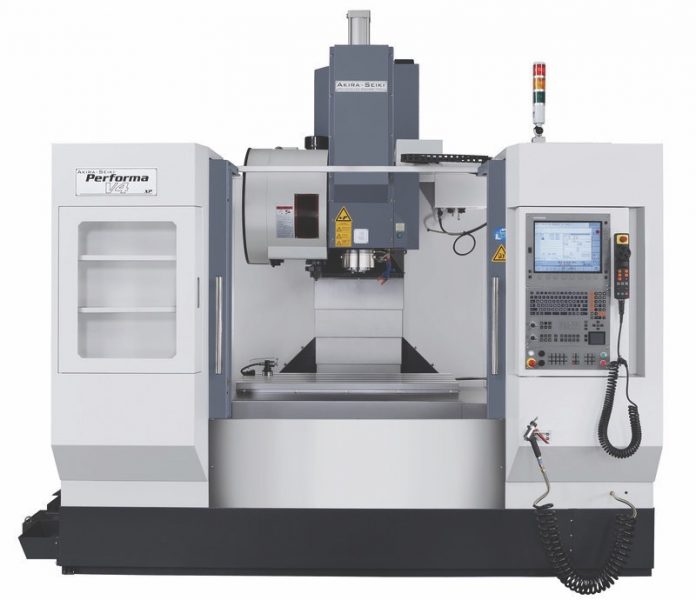
The Ctek range has six x-travel sizes, 800mm, 1 000mm, 1 500mm, 1 800mm, 2 000mm and 2 500mm. These machines are available in open type or fully enclosed depending on the customer’s requirements. All spares are available ex stock at a fraction of the cost compared to other controls. With hundreds of these machines sold throughout South Africa since 1997, it is not surprising that Ctek CNC milling machines have been the first step to full CNC machining in many workshops. Should there be a requirement for a high performance machining centre for super fine finishing and accuracy, the Akira Seiki is the machine to consider. Spindle power ranging from 15HP on the Junior series to 42HP on the Super Vertical range and spindle speeds from 9 000rpm to 15 000rpm guarantee high quality surface finish. Akira Seiki machines come standard with spindle oil chillers, inner spindle air chiller, coolant through spindle, pneumatic counter balance, chip screw conveyor, quick change ATC and 4th axis preparation.
For further information, please contact MJH Machine Tools – Tel: (031) 705 7514.
NORIS STABIL UNI HSS-PS TiCN in machining situation through hole: Chips are evacuated in the
cutting direction.
NORIS taps for processing a wide variety of steel alloys, cast iron and various nonferrous alloys are well known under the names SALOREX UNI for blind holes and STABIL UNI for through-hole. REIME NORIS now extends the UNI series to high performance taps made of HSSE-PM (HSS-PS) with improved cutting geometry and TiCN coating. NORIS SALOREX UNI – the specialist for deep blind hole threads up to 3 x D thread depth – has 42° right-hand helix flutes. These provide secure chip removal against the cutting direction. NORIS STABIL UNI stands for the production of through hole threads up to 4 x D thread depth. The special STABIL-flutes move the chips in the cutting direction. The drills are available in metric sizes from M3 to M20 and M8 x 1 to M16 x 1,5 in stock. In both versions, the use of powder metallurgical high-speed steel permits higher cutting speeds while increasing tool life. The user benefits by increasing the cycle times and a reduction in tool costs. With the ability to process a very wide range of materials, additional cost of storage and tool investment can be reduced. The proven cutting edge geometries were further optimized in detail. They are specially adapted to the characteristics of the HSSE-PM substrate and the coating. REIME NORIS thus promises significant performance gains and expects especially in the production of small- and medium-sized series, the greatest economic advantages of using these high performance taps.
For more information, please contact Duncan Macdonald – Tel: 011 444-4345.
As the need for machining smaller volume work pieces made from cast iron and steel has grown, so has the need for smaller size tools that can enhance productivity and reduce operating cost. Therefore TaeguTec offers a smaller size insert for its highly popular Chase2Hepta milling line. The Chase2Hepta 6mm inserts and cutters are available to meet the challenges posed by technical trends in forging and casting technologies which is demanding higher productivity and economical tools that can handle lower depth of cut conditions. The Chase2Hepta line is renowned for offering 14 corners on one insert.
The double-sided and highly effective 45 degrees entry angle is the ideal solution for high performance on cast iron and steel machining, while its positive cutting edge geometry lowers cutting loads during rough machining making it an efficient and smooth set of tools. Covering a wider range of machining applications, the dual usage TaeguTec Chase2Hepta 6mm inserts are screw type. The line of mini cutters comes in three geometries – the M, MM and ML.
M Geometry
MM Geometry
The M geometry 6mm Chase2Hepta line is used for roughing applications of steel and cast iron work pieces and its smooth machining with good tool life is due to its reinforced, positive rake angle. For general cast iron machining applications, the optimized cutting edges of TaeguTec’s MM geometry chip breakers on the Chase2Hepta 6mm line means low cutting forces in cast iron machining.
ML Geometry
The ML geometry for the 6mm line is ideal for cast iron light machining and difficult to cut materials such as stainless steel and heat resistant alloys. Its sharp, positive cutting edge was designed for minimal cutting force.
For more information please contact TaeguTec – Tel: 011 362-1500.
To meet market demand, TaeguTec has released an expansion to the CHASE-4-FEED family – BLMP 04, 11 inserts and cutters. They are, smaller double-sided four corner BLMP 04 inserts for small and high feed machining applications. The smaller size inserts mean more inserts can be mounted to the same diameter cutters, which will greatly improve productivity over the existing BLMP 06 type under similar conditions. Available in Ø8(1z) and Ø10(2z) sizes, these are an alternative to solid end mills for roughing operations. While both the BLMP 11 and BLMP 13 cover a similar machining range, the BLMP 11 inserts give an advantage as they make it a finer pitch same diameter cutter for better productivity. The cutters come in all types, including face mill, end mill and modular types. While, as part of the new campaign, the design for the new CHASE-4- FEED line highlights TaeguTec’s
new direction, the new CHASE-4-FEED logo will be applied to the BLMP 06, 09 inserts and cutters as well.
For more information please contact TaeguTec – Tel: 011 362-1500.
I am often amazed at the number of highly skilled CNC machinists and operators who can accomplish almost anything on a milling machine, but who are very uneasy and intimidated around a lathe because they don’t really understand the meaning of basic lathe terminology.
Michael Cope, Senior Applications Engineer & Product Specialist at Hurco Companies, Inc.
That is the purpose of this article. I will try to clarify the meaning and benefit of a few of the “not-so-obvious” features that exist on a typical lathe spec sheet, and attempt to clarify their definition and explain why they might be an important consideration when purchasing a CNC lathe.
Maximum Turning Diameter: This simply indicates the largest size of part that can be turned on the machine – using standard length tooling – without interference or collision with guarding or other machine components.
With the X-axis retracted all the way positive, what size of part can be turned safely, as it relates to X-axis travels of the machine tool. For example: if you are looking at a machine with a max turning diameter of 16″, and the parts that you run on a regular basis are 15″ in diameter or larger, then you would probably want to look at a machine with a larger maximum turning diameter.
Even though, in our example above, the part would technically “fit” in this case, you must realize that you are running on the very edge of the envelope, and if you had to hang a tool out of the turret farther than normal – for one reason or another – you would likely NOT have enough X-axis travel to accommodate the part.
Maximum Swing: Refers to the largest diameter part that can be spun in the chuck without mechanical interference with guarding, cross-slide, or other machine components located near the chucking area. Depending on the style and design of the machine tool in question, this value could be larger than the maximum turning diameter mentioned above, however this does NOT mean that you can turn a part larger than that specified in the maximum turning diameter specification.
Horsepower & Torque: Horsepower and torque are obvious considerations when purchasing a new machine, but their necessity may not be so obvious in all cases. If you are running work such as castings and forgings, drilling large diameter holes in steel, or generally turning features on large diameter parts, then horsepower and torque are going to be very important to you, and you should be certain that the machine in question has enough for your application. However, if you are more focused on high production or general turning of small to medium sized parts, then spindle RPM may become more important than power in your case.
Just as we have seen in the milling arena over the past several years, high-speed machining is quickly making its way into turning as well. As the technology of turning tooling is advancing, and through the tool coolant options are more prevalent, the principles of cutting shallower but faster are becoming more common. Spindle speed, rapid traverse, and maximum programmable feed rates become much more important than sheer horsepower and torque.
Maximum Turning Length: Very similar to the maximum turning diameter, this specification indicates the longest part that can be turned based on the mechanical limitations and axis travels of the machine tool. Keep in mind – the effective maximum turning length, for a particular part, can be less than specified by the use of larger or deeper chucks, or tooling that sticks out from the face of the turret farther than what is considered “normal”. In both cases you would be introducing the possibility for mechanical interferences – which would restrict the length of the part that could be machined, even though the physical travels and limits of the machine have not been changed.
Bed design
Now let’s discuss the ins and outs of the two main bed designs – the true slant bed and the flatbed “flying wedge” configurations.
First we will dive into the true slant bed design. Unlike the flatbed flying wedge design – where the slant is achieved by the addition of a bolt-on wedge that is mounted on the cross slide – the true slant bed machine casting is manufactured with the slant built in. This not only offers more rigidity and thermal stability, but also proves to give the casting more overall mass, and means you have a much heavier machine with a smaller footprint. Typically the true slant bed design is offered in one of two slant angles, 30 degree and 45 degree, but there are also some 60 degree models available.
There are many advantages to the true slant bed design, and it is probably the most common configuration in modern CNC lathes. One of the most well-known and obvious advantages to the true slant bed is better chip evacuation. As the chips are created during the machining process, they are immediately washed down toward the chip bed by gravity and the normal flow of the coolant. This keeps chips from accumulating on flat surfaces, which not only helps control the chips in high volume production applications, but can also aid in prolonging the overall life of a machine – by reducing undue wear on the ways and other moving parts.
Another advantage to the true slant design is larger X-axis travels. Unlike the flatbed lathes where guide rail length is limited to the horizontal depth of the casting, the true slant bed design allows for longer X-axis rails. Just like in a square box, the straight sides of the box are one specific length, but the angular distance from one corner to the other is much longer. The same is true for the slant bed casting design which obviously means a larger part capacity in a smaller machine footprint. Although the flying wedge design, with the bolt-on slant, can also offer some increased X-axis travels over traditional flatbed machines, it can also magnify the lack of rigidity that is present in the bolt-on approach. You just cannot substitute for a sturdy casting design.
Thermal dynamics are also a big consideration in any machining process. The angular configuration of the base casting, and extended X-axis guideways, also offer better rigidity and part accuracies. Since the linear rails are longer, the base saddle casting that carries the turret can also be longer, providing a much sturdier base of support for the turret. And as the machine components begin to heat-up during the machining process, the headstock, tailstock and cross slide will all begin to grow along the same 30, 45, or 60 degree plane as the X-axis – unlike the flatbed flying wedge design, where the X-axis is mounted on a slant, but the rest of the machine components are mounted on the horizontal flatbed plane.
For more information, contact Hurco – Tel: (011) 849-5600.
NORIS STABIL UNI HSS-PS TiCN in machining situation through hole: Chips are evacuated in the
cutting direction.
NORIS taps for processing a wide variety of steel alloys, cast iron and various nonferrous alloys are well known under the names SALOREX UNI for blind holes and STABIL UNI for through-hole. REIME NORIS now extends the UNI series to high performance taps made of HSSE-PM (HSS-PS) with improved cutting geometry and TiCN coating. NORIS SALOREX UNI – the specialist for deep blind hole threads up to 3 x D thread depth – has 42° right-hand helix flutes. These provide secure chip removal against the cutting direction. NORIS STABIL UNI stands for the production of through hole threads up to 4 x D thread depth. The special STABIL-flutes move the chips in the cutting direction. The drills are available in metric sizes from M3 to M20 and M8 x 1 to M16 x 1,5 in stock. In both versions, the use of powder metallurgical high-speed steel permits higher cutting speeds while increasing tool life. The user benefits by increasing the cycle times and a reduction in tool costs. With the ability to process a very wide range of materials, additional cost of storage and tool investment can be reduced. The proven cutting edge geometries were further optimized in detail. They are specially adapted to the characteristics of the HSSE-PM substrate and the coating. REIME NORIS thus promises significant performance gains and expects especially in the production of small- and medium-sized series, the greatest economic advantages of using these high performance taps.
For more information, please contact Duncan Macdonald – Tel: 011 444-4345.
In a market where skilled artisans are becoming more and more scarce, it has become necessary to look at alternative ways of machining, whether it be for general engineering, tool-making or production work CNC machining is quicker and certainly more accurate than conventional milling machines and there is no need for constant monitoring while in use. Taking this into account, MJH Machine Tools have a solution to suit customers’ needs. Featuring an entry level CNC control, our Ctek CNC milling machine is the first step to CNC machining. As long as the operator has basic knowledge on using a DRO, he can, within a few hours, be taught how to program and run the machine. There is no need for G code knowledge as the control is conversational, using a question and answer format. The software is simple to use with graphic input in basic machinist language. The control has options for standard operation modes such as drill, tap, bore, contour and pocket programming, which is ideally suited to general engineering work without a need for external programming packages. The latest Ctek’s come with linear guides on all three axes for better accuracy and speed, as well as a direct spindle drive motor and an improved Z axis motor with inline break which eliminates the need for a counterbalance. The Ctek can be fitted with a 4th axis within a matter of hours and programmed from the standard Ctek control.
The Ctek range has six x-travel sizes, 800mm, 1 000mm, 1 500mm, 1 800mm, 2 000mm and 2 500mm. These machines are available in open type or fully enclosed depending on the customer’s requirements. All spares are available ex stock at a fraction of the cost compared to other controls. With hundreds of these machines sold throughout South Africa since 1997, it is not surprising that Ctek CNC milling machines have been the first step to full CNC machining in many workshops. Should there be a requirement for a high performance machining centre for super fine finishing and accuracy, the Akira Seiki is the machine to consider. Spindle power ranging from 15HP on the Junior series to 42HP on the Super Vertical range and spindle speeds from 9 000rpm to 15 000rpm guarantee high quality surface finish. Akira Seiki machines come standard with spindle oil chillers, inner spindle air chiller, coolant through spindle, pneumatic counter balance, chip screw conveyor, quick change ATC and 4th axis preparation.
For further information, please contact MJH Machine Tools – Tel: (031) 705 7514.
Several years ago, ISCAR launched a unique and innovative LOGIQ product line – a campaign that brought new families of cutting tools to the world market. These families were designed to address challenges in metalworking industries, from increasing productivity to finding cost-effective indexable alternatives to small-in-diameter solid carbide tools.
Today, ISCAR introduces NEOLOGIQ, a logical extension to the previous campaign comprising of an entire range of advanced products and technological solutions for metal cutting tools – a quantum leap in the field. What are the main targets of the NEO product lines? ISCAR believes that NEOLOGIQ provides the answers to typical questions that modern metalworking faces today due to the latest changes in technology. Today, we are witnessing serious upheaval with far-reaching effects on manufacturing.
A distinct course for electric and hybrid cars will lead to a gradual abandonment of traditional cars with an internal combustion engine and a lot of parts that need to be machined.
NEOLOGIQ products. An intelligent tool to expand machining boundaries.
A rise of accurate metal shaping methods, such as precision investment casting, precision forging, and 3D printing, which are all capable of shaping a part very close to its final profile, significantly diminishes the stock that is traditionally intended for chip-removal processes. A logical result of this is the considerably reduced share of machining operations in a part manufacturing cycle and this trend is already noticeable in the market today. Does it mean that a few good metalworking shops, factories, or even whole branches will abandon machining? Of course not, but the requirements for machining operations in engineering processes will be changed. The role of productive and accurate cutting with a small allowance at high speeds and feeds will substantially grow, and metalworking industries will require a wide range of suitable tools that are expected to be more precise and durable.
Digitized manufacturing, which is dictated by INDUSTRY 4.0 momentum, has its own demand and expects a new level of a cutting tool “intellect” to be suitable for smart manufacturing.
In preparing for the upcoming changes, ISCAR considers NEOLOGIQ as the next logical step to the cutting tool for the smart factory. ‘Machining with no Boundaries’ is the motto of ISCAR’s NEOLOGIQ products.
How do we overstep the customary boundaries of metal cutting? A short overview of some of the new products will help you understand how this is viewed by ISCAR.
Logical Milling
High feed milling (HFM), also referred to as fast feed milling, is considered a commonly used effective method for rough machining both complex and plane surfaces. ISCAR has an extremely wide range of HFM products to meet the requirements of a customer. However, even in this niche of products, there is place for new innovations.
LOGIQ4FEED, a family of high feed milling cutters carrying specific bone-shaped inserts, was enriched by new tools with greater insert sizes. These new tools have several features that substantially improve performance in high feed milling, especially when machining big cavities and pockets in steel parts.
NEOFEED high feed milling cutter carries cost-effective inserts with 8 cutting edges.
Another HFM product that provides the customer with a reasonable cost saving solution is NEOFEED, a family of mills with square, double-sided inserts. This insert has 8 indexable cutting edges to use on cemented carbide and a dovetail-shaped insert pocket that ensures reliable mounting to withstand heavy loads to enable higher cutting data and increased productivity.
The progress in 5-axis machining and CAD/CAM systems opens new horizons for machining 3D surfaces using barrelshaped endmills. Although such endmills are still not common in the metalworking industry, advanced accurate metal shaping methods will dramatically increase the demand for these barrelshaped endmills. Therefore, the development of effective “cutting barrels” is one of ISCAR’s highest priorities. In the NEOLOGIQ product range, the barrel-shaped endmills are represented by two configurations: a solid carbide design and a MULTI-MASTER head. Combining MULTI-MASTER advantages with the precise barrel profile of a cutting-edge will result in a cost-effective and sustainable solution for finishing complex-shape surfaces by milling with minimum machining stock.
The MULTI-MASTER family has expanded the boundaries of its product range by introducing a new threaded connection size, T21, which enables increasing the nominal diameter of an exchangeable endmill head to 32 mm (1.25″).
Intelligent Turning
Anti-vibration boring bars WHISPERLINE enable stable cutting with the overhang up to fourteen diameters.
In internal turning, a boring bar is the main factor of tool rigidity. A large bar overhang to diameter ratio leads to the tool deflection and vibrations; and is the bane of machining accuracy and surface finish. WHISPERLINE, a family of anti-vibration boring bars, was developed to exceed the ratio bounds. These bars have a specially designed built-in absorber and a vibration-dampening mechanism that enables stable cutting with an overhang of up to 14 diameters.
WHISPERLINE bars are important elements of the new versatile modular system NEOMODU, providing a rich variety of assembly options for turning tools. A combination of different system units such as shanks, anti-vibration capsules, and interchangeable heads with indexable carbide inserts result in a tool assembly, which is maximally customized to a specific application. The shanks may be cylindrical, square, or with a polygon taper interface in accordance with ISO 26623 standard.
Speaking of new turning products, one cannot pass the XNMG insert. It is a beneficial combination of two famous ISO rhombic insert shapes: CNMG and DNMG inserts with 80° and 55° including angles. This intelligent integration resulted in the XNMG 70° angle insert that features improved clearance and ramping angles, when compared to the CNMG, and strengthened cutting corners against DNMG. The advantages of the new insert are visible in efficient multi-directional turning applications. The cartridges carrying insert XNMG, which are intended for mounting on NEOMODU units, are available as well.
Competent Parting
ISCAR began its leadership with just parting tools. That is why every company’s innovation in parting gains special interest.
A JETCROWN accessory provides pinpointed high-pressure coolant, maximizing productivity in parting.
Adapters and holders occupy a prominent place among ISCAR’s NEOLOGIQ parting products. The concept of the LOGIQFGRIP family is based on a 4-pocket adapter that is clamped in a reinforced tool block. High rigidity of such an assembly in combination with an inner highpressure coolant supply (HPC) option facilitates productive cutting with extremely high feed rates.
In parting, one of the secrets to success is well-directed highpressure cooling. If an adaptor has no HPC channels, mounting a specially designed crownshaped accessory pushes the boundaries of application limits and enables effective pinpointed coolant flow to the active cutting edge of an insert.
Growing capabilities of modern multitasking machines and turning centers pushed the common boundaries of cutting strategies. Particularly, they brought the method of efficient turning along Y-axis. In quite a few cases, it is a worthy alternative to the traditional X-axis machining. In Y-axis turning, the dissipation of cutting force components is more favourable, and the main load is directed to a holder. The cutting process becomes more stable, and this facilitates increasing cutting data to improve productivity. Therefore, providing appropriate cutting tools for turning operations along the Y-axis is one of the central points of NEOLOGIQ.
LOGIQYGRIP, a new Y-axis parting modular system enables vibration-free machining with high-efficiency. A wide range of exchangeable TAGPAD-T adapters for inserts ensures the exceptional versatility of the system.
Efficient Holemaking
Helical flutes with variable helix angle in a LOGIQCAM drill body improve the dynamic behavior of the drill and increase the drilling depth to eight drill diameters.
One of the more impressive product lines introduced in the LOGIQ campaign is LOGIQCHAM, a family of drills with replaceable carbide heads and three cutting edges, providing an effective tool for significantly increasing productivity for drilling depths up to five drill diameters.
In drilling, especially in drilling deep holes, efficient chip evacuation is extremely important. It is not enough to optimize chip control by an advanced design of the head geometry. The flute shape should ensure seamless chip flow. Undoubtedly, the need to organize three grooves weakens the body: when comparing a two-helicalflute drill of the same diameter, the three-flute body is less rigid. When the depth grows, longitudinal vibrations may occur, and this reduces tool life and adversely affects the accuracy and roughness of a machined hole. It was the decrease in stiffness that determined the barrier for the drilling depth and limiting it by five diameters maximum.
A new design of the three-flute drill body is based on a variable flute helix angle. Such a concept considerably improves the dynamic behaviour of the drill and results in expanding the drilling depth boundaries: the maximum depth can now reach eight diameters.
The metalworking community faces new challenges and must find the shortest way to get out of the maze. ISCAR believes that new innovative solutions, which take machining to a whole new level, can become the new “Ariadne’s thread”. NEOLOGIQ, a logic of development for a new range of tools, has expanded the boundaries of intelligent machining.
For more information, please contact ISCAR South Africa (PTY) LTD – Tel: 011 997-2700.





 The smaller size inserts mean more inserts can be mounted to the same diameter cutters, which will greatly improve productivity over the existing BLMP 06 type under similar conditions. Available in Ø8(1z) and Ø10(2z) sizes, these are an alternative to solid end mills for roughing operations. While both the BLMP 11 and BLMP 13 cover a simi
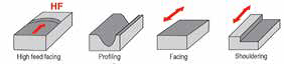 lar machining range, the BLMP 11 inserts give an advantage as they make it a finer pitch same diameter cutter for better productivity. The cutters come in all types, including face m
 ill, end mill and modular types. While, as part of the new campaign, the design for the new CHASE-4- FEED line highlights TaeguTec’s


 First we will dive into the true slant bed design. Unlike the flatbed flying wedge design – where the slant is achieved by the addition of a bolt-on wedge that is mounted on the cross slide – the true slant bed machine casting is manufactured with the slant built in. This not only offers more rigidity and thermal stability, but also proves to give the casting more overall mass, and means you have a much heavier machine with a smaller footprint. Typically the true slant bed design is offered in one of two slant angles, 30 degree and 45 degree, but there are also some 60 degree models available.
 There are many advantages to the true slant bed design, and it is probably the most common configuration in modern CNC lathes. One of the most well-known and obvious advantages to the true slant bed is better chip evacuation. As the chips are created during the machining process, they are immediately washed down toward the chip bed by gravity and the normal flow of the coolant. This keeps chips from accumulating on flat surfaces, which not only helps control the chips in high volume production applications, but can also aid in prolonging the overall life of a machine – by reducing undue wear on the ways and other moving parts.
 Another advantage to the true slant design is larger X-axis travels. Unlike the flatbed lathes where guide rail length is limited to the horizontal depth of the casting, the true slant bed design allows for longer X-axis rails. Just like in a square box, the straight sides of the box are one specific length, but the angular distance from one corner to the other is much longer. The same is true for the slant bed casting design which obviously means a larger part capacity in a smaller machine footprint. Although the flying wedge design, with the bolt-on slant, can also offer some increased X-axis travels over traditional flatbed machines, it can also magnify the lack of rigidity that is present in the bolt-on approach. You just cannot substitute for a sturdy casting design.