Following years of successful experience with MULTI-MASTER milling heads, ISCAR is expanding their application range by increasing the depth of cut vs. tool diameter ratio from the current 0.7xD to 1.5xD.
The new milling heads have been designed for shoulder roughing, semi-finishing and finishing applications with ramping down capability and are available in an 8 to 25 mm diameter range. The range includes the MM EC-CF-Z7/9-1.5xD interchangeable 7-9 flute solid carbide endmill heads with 1.5xD flute lengths, different helix, variable pitch and various corner radii, the MM EC-CF-Z4-1.5xD interchangeable solid carbide heads with variable pitch and 1.5xD flute lengths for chatter free roughing and finishing operations with high material removal rates and the MM ERS-1.5xD interchangeable solid carbide rough milling heads with 1.5xD flute lengths, for high metal removal applications.
For more information, please contact ISCAR South Africa (PTY) LTD – Tel: 011 997-2700
Endmills featuring a cutting edge that is actually the segment of a large-diameter arc were introduced approximately 25 years ago. As the cutting-edge shape of these endmills is reminiscent of a barrel profile, terms such as “barrel milling cutters”, “barrel endmills” or, in shop talk, often simply “barrels” soon became common when referring to these types of endmill.
At first, the use of these barrel-shape mills was limited more or less to a few specific applications, such as machining 3D surfaces of complex dies and turbomachinery components. However, advances in 5-axis machining and in CAM systems have significantly expanded the boundaries of barrel endmill applications.
At the same time, the design principle of a cutting edge as the segment of a large-diameter arc, has been realized successfully in other types of milling cutters – the tools for high feed milling (HFM), also referred to as “fast feed” (FF) milling. The concept provides a toroidal cutting geometry that ensures productive rough machining at extremely high feed rates due to a chip thinning effect. Unlike high feed milling tools, barrel endmills are intended not for roughing but for finish – and semi-finish machining of 3D surfaces with low stock removal.
Traditionally, ball-nose and toroidal cutters perform these machining operations. However, the large-diameter arc of the endmill cutting edge results in a substantial reduction of the cusp height generated between passes machined by a ball-nose or toroidal cutter. Another advantage of this type of cutting edge versus ball-nose and toroidal cutters is a significant increase in the distance between passes (a step-over or a step-down, depending on the direction of a cutter displacement after every pass) – at least five times more without degradation of the surface finish parameters! This means that the number of passes and, subsequently, machining time can be noticeably reduced. Increasing the distance between passes also improves tool life and, therefore, diminishes tool cost per part.
The classical barrel shape in endmills has undergone some changes to make these cutters more versatile. Combining a ball-nose tip with peripheral large-arc cutting edges creates a multi-purpose “cutting oval,” which facilitates the use of a barrel endmill as a ball-nose milling tool.
In taper endmills, transforming the profile of a major cutting edge into a large-arc segment generates another cutting oval – a taper barrel. When compared with a common taper endmill, the taper barrel provides pinpoint contact between the major cutting edge and a machined surface that decreases accuracy errors, while preventing re-cutting of a produced shape. The taper shape also contributes to reducing tool overhang, an important factor for improving tool performance.
Barrel and oval endmills are mainly utilized for cutting side surfaces. If machining a complex bottom surface is needed, a lens-shape endmill offers a good solution. This tool features barrel cutting edges on its end surface to ensure milling with a large stepover.
The barrel endmills – classical barrel-, oval- and lens-shaped cutters – provide efficient tools for machining 3D surfaces. Nevertheless, for a long time the complexity of CNC programming for applying barrel endmills was a constraining factor in actively integrating these promising tools into the appropriate branches of the metalworking industry. The growing use of 5-axis machine tools and the latest progress in CAM software has changed the situation dramatically and today, we see intensive utilization of barrel endmills in manufacturing various parts with geometrically complex surfaces. The main consumers of these “cutting barrels” are producers of aerospace, die and mold, medicine, turbine and compressor components.
Cutting tool companies in turn have strengthened their efforts to develop and manufacture more advanced barrel endmill designs to meet increased customer demands. Some of ISCAR’s latest products, barrel endmills in the SOLIDMILL and MULTI-MASTER families, offer good examples of this trend.
The MULTI-MASTER Advantage
ISCAR offers oval- and lens- shape endmills in diameter ranges of 8 – 16 mm and .312″ – .500″.In addition to their availability in sold carbide design configurations, the new barrel endmills have been manufactured as exchangeable carbide heads with MULTI-MASTER threaded adaptation. MULTI-MASTER’s distinctive “no set-up time” feature, which enables the replacement of a worn head without withdrawing a tool from the machine spindle, can be particularly effective in the case of barrel tool applications in semi-finish and finish milling operations.
Additional factors in favour of applying the MULTI-MASTER concept to barrel endmills are economic feasibility and sustainability. Due to the complicated shape of its cutting edges, a barrel endmill is designed as a throwaway tool. When the wear limit is reached, the entire carbide endmill simply becomes waste. In contrast to solid tools, the MULTI-MASTER design provides a valuable option for careful and cost-effective use of cemented carbide materials. And, of course, a rich variety of available MULTI-MASTER shanks, reducers and extensions enables optimal assembly of a required tool from these elements.
At present, barrel milling cutters are not in incredibly high demand by the metalworking industry as they are intended for very specific parts and effective application of such cutters requires highly engineered multi-axis machines and, especially important, leading-edge CAM systems. However, advanced workpiece manufacturing technologies, such as metal injection molding, 3D printing, investment casting, close-tolerance forging and innovative machine tools plus a quantum leap in digitizing of manufacturing will increase the need for finishing complex surfaces with minimum machining stock. In this light, ISCAR’s specialists estimate that barrel endmill consumption in the metalworking industry will increase exponentially, and cutting tool manufacturers should be shaping up to what is evidently a promising new industrial trend.
For more information, please contact ISCAR South Africa (PTY) LTD – Tel: 011 997-2700.
The management and staff of First Cut, together with local and international colleagues mourn the loss of First Cut’s Sales Director Gary Willis, who passed away on Thursday evening 1st April at the age of 51. Gary bravely fought an 18 months battle with cancer, remaining resolutely positive until the end.
Since starting work at his late father’s tungsten carbide tool tip business in 1990, he gained a wealth of experience in the industrial tool sector and the supply of cutting consumables.
Gary had a 25 year history with First Cut, some 15 years in a senior management position, followed by his appointment as Sales Director, heading up the consumables division. He took his role extremely serious, was highly diligent and always thought deeply about his responsibilities.
Gary was a ‘hands-on’ person, practical, logical and with a talent for dealing with detail. These skills came to the fore when implementing a sales strategy. Gary’s careful and consistent approach contributed substantially to the successful management of the First Cut consumables division – very much the ‘heart’ of the business.
He was always well prepared, whether for an Exco meeting, a meeting with a customer or his weekly Friday afternoon sales meeting and never missed to consider the well-being of his staff, his customers and suppliers before making a decision. Gary will indeed be sorely missed by the staff and management of First Cut.
While he was open – ear, heart and mind – to the people around him, he listened carefully, considering everyone’s viewpoints with calm and sensitivity. He was a very loyal manager, who always fought for the benefit of his team and therefore, Gary was trusted and respected by all.
Gary leaves his wife Katy, daughter Lauren, his mother and his brother David. He was a dedicated family man, loving and highly protective over his family, while always focussing on their safety and well-being. He put the loves of his life – Katy and Lauren – first. Our thoughts and prayers go to his family during this very difficult time.
It has been an honour and privilege working with and getting to know Gary over the past 25 years. We complemented one another’s strengths and weaknesses, forming a close and cohesive partnership with much mutual synergy and benefit. He was both a colleague of the highest order and a genuine friend. We worked hard together, we laughed, we celebrated, we dug deep when necessary – but most of all, we enjoyed and valued his company.
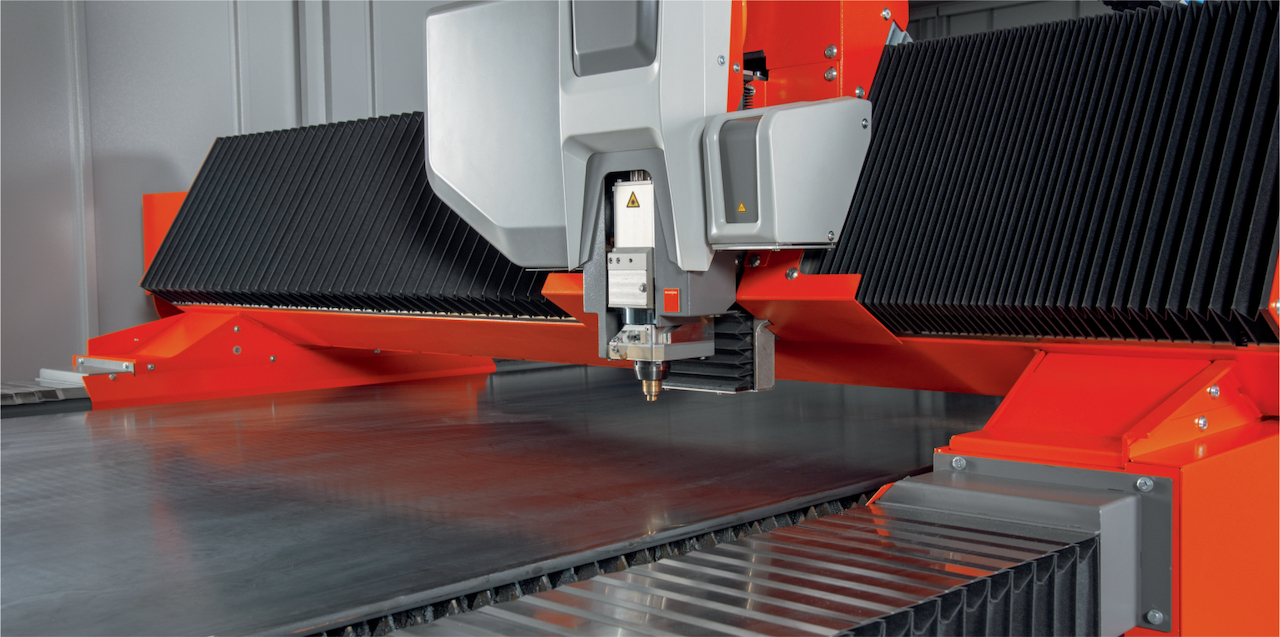
When purchasing a laser cutting system, there are a number of things to consider, this goes far beyond the purchase price or service intervals. But what exactly has to be taken into consideration? This guideline might help.
What are the differences between a CO2 laser and a fiber laser?
As the name suggests, the CO2 laser uses a gas mixture that is based on carbon dioxide. This mixture, which usually consists of CO2, nitrogen, and helium, is electrically excited to generate the laser beam. Solid-state lasers are available in the form of fiber or disk lasers in similar power levels to their CO2 counterparts. As with the CO2 laser, the laser-active medium gives the fiber laser its name, which in this case is a glass-like or crystalline solid in the form of a fiber or a disk.
While with the CO2 laser, the laser beam is guided through a beam path using optics, the beam of the fiber laser is generated in an active fiber and guided to the machine’s cutting head via a transport fiber. One of the key differences, apart from the laser medium as such, is its wavelength. With a fiber laser, the laser wavelength is around 1µm and with a CO2 laser 10µm. The fiber laser’s shorter wavelength results in a higher absorption rate when cutting steel, stainless steel and aluminum. A higher absorption rate means lower heat generation in the material that is being processed, which is, of course, a positive attribute.
CO2 technology is ideal for all-rounders who process a wide variety of materials and thick metal sheets. A fiber laser cutting system, on the other hand, is capable of processing the thin to thick range of sheet thicknesses with materials ranging from steel, stainless steel, and aluminum, right through to non-ferrous metals (copper and brass).
What are the benefits of a fiber laser compared to a CO2 laser?
The advantage of the CO2 laser is its superior cutting quality in thick steel (mild steel). The fiber laser, on the other hand, offers high cutting speeds and lower operating costs per hour. Fiber lasers require nowhere near as much energy as CO2 lasers and their electrical efficiency is up to 5 times higher. What is more, the beam path of fiber lasers is simpler. Another big bonus is the more compact footprint: A fiber laser system with 8 to 10 kW laser power requires only about one fifth of the floor space of a CO2 laser system of comparable power.
Fiber laser technology has advanced rapidly in recent years. However, it is important to consider more factors than just the laser power and cutting speeds. Success in the sheet metal processing sector is dependent on an entire array of diverse and individual factors, all of which revolve around the core question: What is the optimal workflow? Even the most high-performance machine can only be cost-effective if its potential is fully exploited.
What should be considered when purchasing a laser cutting machine?
The factors vary enormously. In order to be able to evaluate which machine is best suited, one must first understand the intended application and define not only its requirements, but also its limits. One should also consider potential new objectives on the horizon and other options. After all, the purchase of a laser cutting system represents a major investment, and the decision concerns not just the machine itself. The purchase has an impact on the entire manufacturing process, covering everything from manpower, service and maintenance, consumables, right through to know-how.
Other factors are also involved: The fiber laser allows companies to increase the speed of a single process step. However, this may make it necessary to automate loading and unloading, since otherwise the machine will frequently be idle because its operators cannot keep up.
The prime objective is clear: Reduce costs while increasing product quality and productivity. Achieving this objective with the purchase of a new system requires know-how that may not yet be available within the company. The capacity and performance of the system must correspond to the needs. If you invest a significant sum in a fiber laser cutting system in combination with complex material management solutions, you naturally expect to achieve a favourable ROI.
How has the laser cutting system market developed in recent years?
15 years ago, there were perhaps no more than 20 laser cutting machine OEMs, and the industry was dominated by a handful of leading suppliers. In the meantime, however, the market has opened up, and today, there is a multitude of laser cutting machine manufacturers on the market. The number of suppliers of other components, such as software and CNC controls, has also increased dramatically, with the result that virtually anyone with a modicum of know-how can now produce a fiber laser cutting machine.
This development has resulted in the market being flooded with cheap equipment, and this is precisely where the problem lies: Sheet metal processing companies are faced with a large number of new suppliers who have little process knowledge, do not guarantee spare parts availability and do not offer any customer services, because their only goal is to sell at low costs in order to increase their own market share. This often results in the fact being overlooked that rather than being a plug-and-play solution, a laser cutting system only works when countless components interact flawlessly.
The industry has experienced significant technological advancements over the past 25 years – and major technological rollouts are always challenging.
How important is customer service?
Architekturfotograf
Very important! Current fiber technology does not require the same level of maintenance as CO2 technology, but if a machine breaks down, it is imperative to get it back up and running as soon as possible.
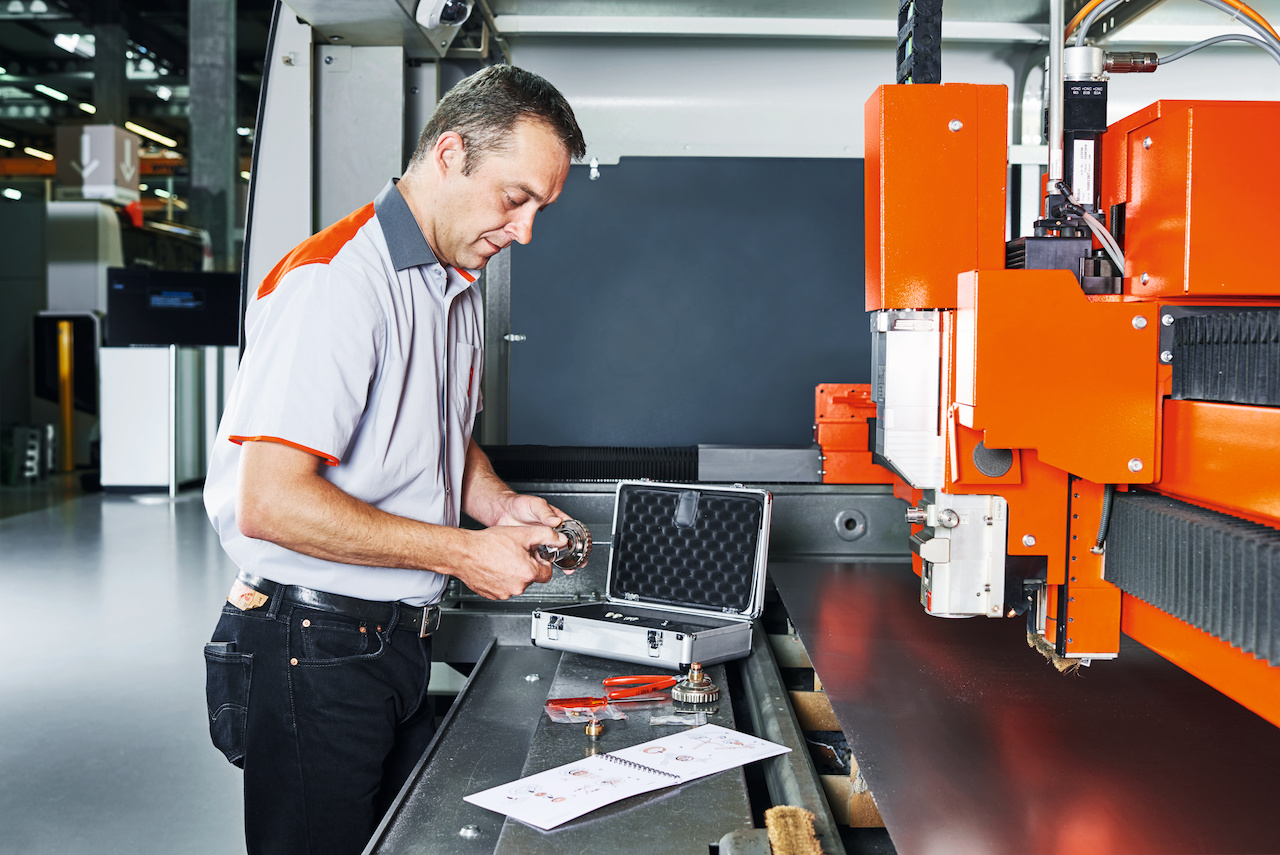
CO2 lasers require extensive and time-consuming maintenance. It is not unusual for a service technician to be on site for up to three straight days. CO2 lasers require servicing every 12 months or every 2,000 operating hours. With increasing service life, the overhauls required (for example of the resonator, optical components and beam path) increase.
In comparison, the maintenance of fiber laser machines is considerably less time and cost intensive. A fiber laser has fewer parts that require maintenance, which translates into real cost and time savings. Thus, the time required for maintenance and inspection of fiber lasers is significantly reduced and usually takes just a few hours.
However, both laser technologies require the service intervals to be adapted in the event of shift operation. Naturally, a laser cutting machine that is in operation 24/7 requires more frequent overhauls. This has an impact on both the maintenance costs and the downtime for servicing.
At the end of the day, the choice of a laser cutting machine should be based not only on the purchase price, but also on the total cost of ownership, calculated over the machine’s entire service life. Maintenance and energy costs as well as machine downtime should definitely be factored in. The energy costs, which can make up a considerable portion of the total annual expenses, are significantly lower with fiber lasers.
For all these reasons, potential buyers should obtain information about the availability and supply of spare parts, so their machine can be promptly repaired in the event of a breakdown. They should also clarify whether the supplier has a service technician stationed nearby who speaks their language.
When you use sophisticated, highly complex technologies, you have to reckon with hiccups. A laser cutting machine that is unable to cut because of a single damaged part is simply not an asset for the customer.
What is the service life of a laser cutting machine?
A laser cutting machine can last a long time, provided that a few points are observed:
A suitable environment for the machine (air temperature and humidity), regular cleaning, and above all regular and professional maintenance are essential. These are the basic factors that ensure a long service life.
How much must one be prepared to invest?
There is no simple answer to this question, because it depends on so many factors. As previously mentioned, the demands you place on the laser cutting machine play a key role. This has an impact on the size and capacity of the system. The peripheral equipment is also an aspect that must be considered: For example, do the workflows require an automatic loading and unloading system?
If you decide to buy a laser cutting machine, you should not only focus on the costs of the purchase itself, but also evaluate the total cost of ownership, calculated over the machine’s entire service life, including maintenance costs and machine downtime.
In addition, your staff’s current technical skills and their training needs must also be addressed.
Companies that do not consider these factors often make decisions that can have dire and long-lasting consequences: They choose a cheap system. Poor quality, the lack of know-how and experience, no spare parts and poor service can, in the worst case, rapidly shut down the entire production process.
An integrated concept that takes into account all the points mentioned above is absolutely essential. In the final analysis, it is a matter of working in partnership to find the optimal solution for you, because only a satisfied customer is a good customer.
For more information on the Bystronic range of laser machine and press brakes, please see www.bystronic.co.za or contact us on 010 410 0200.
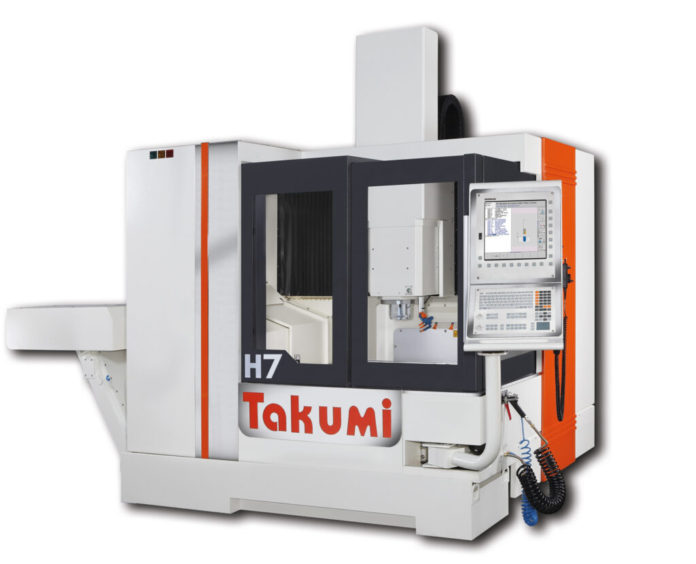
Exceptional rigidity, accuracy and dynamic performance are the key features of Takumi’s high-speed portal machines.
The H series machines operate with outstanding accuracy and achieve an exceptional surface quality thanks to their sophisticated measuring and sensor control systems. Absolute direct measuring systems, internal coolant feed through the high-speed spindle, direct drives on all axes and electronic temperature compensation come as standard. Despite their relatively low procurement costs, the technical performance characteristics and values of Takumi’s H series machines are all top of the range.
Fast and accurate: the Takumi H7 and H10 models
These two machining portals have the shortest travel paths in the H series. The H7 and H10 models focus on the high-speed applications involved in tool-making, mould-making, medical technology, and the aviation and aerospace industries. They are designed to work with exceptional precision to create the optimum surface finish even in the very tightest spaces. The robust and stable portal design and resistance to high temperatures are the cornerstones of the machines’ operating excellence.
The designers have made a lasting improvement to load distribution on the spindle head by designing the portal frame as a ladder-type structure. The H7 and H10 machining portals can handle maximum table loads of up to 500 or 800 kilograms. All of Takumi’s H series models come equipped with a Heidenhain control system as standard. Together with the Heidenhain components integrated in the machining centers, they make a huge contribution to the accuracy of the result. The control systems allow programming in dialog and in parallel mode. They also have functions for freely programming contours and options for ISO-NC programming.
The Volkswagen Group Components plant in Braunschweig is significantly expanding its production of battery systems for the latest electric vehicle generation.
Following the first expansion stage with a maximum capacity of 250,000 battery systems, the second expansion stage has started up with the same capacity. This means that once the site is fully ramped up it will now be able to fit up to 500,000 batteries a year for models based on the modular electric drive matrix (MEB) ‒ in this case for the fully electric Volkswagen ID.31 and ID.42, as well as the ŠKODA ENYAQ iV3, which should soon be quietly and powerfully cruising the streets of Europe with a battery heart from Braunschweig. In addition to that, up to 100,000 battery systems for the beloved models e-up!4, SEAT Mii electric5, ŠKODA Citigoe iV6 and as well as for hybrid vehicles such as the Volkswagen Golf GTE7.
In total, the site can bring more than 600,000 battery systems into the vehicles each year. “The strong demand for attractive and affordable electric models based on the modular electric drive matrix has the lines of the first expansion stage working at full capacity, so we have fired up the second stage. As such, the component is underpinning the Group’s unprecedented electric campaign”, explains CEO of Volkswagen Group Components and member of the Group Board of Management for Technology, Thomas Schmall. “Volkswagen Group Components has taken on the management of the ‘Battery Cell & Battery System’ and ‘Charging & Energy’ business units within the Volkswagen Group, and plans to use its economies of scale and innovative power to develop optimum batteries and charging offers for Volkswagen customers. Within this, thanks to its development and manufacturing competence for battery systems, the Braunschweig site has been assigned a key role”, continues Schmall.
And the next ramp-up is coming soon: the plant has received approval for expanding PHEV production capacities. While more than 50,000 hybrid battery systems a year are leaving the plant today, as of 2023, this will be up to 300,000 battery systems.
“Through the consistent orientation toward electric mobility and a clear focussing of the product range, the Braunschweig site is lining itself up to be economically future-safe. The transformation of the site goes hand-in-hand with the transformation of its employees, who have been comprehensively qualified for working with batteries. This way, we can contribute to job security at the site”, maintains Plant Manager, Martin Schmuck.
In addition to the battery systems, Braunschweig also produces steering systems, brake discs, suspension struts, wheel bearing housings, wheel drives and subframes, and also front and rear axles, for example.
Series production of MEB batteries takes place using the state-of-the-art, largely fully automated production technology in a new manufacturing hall spread across more than 40,000 m2, and more than 300 million euros have been invested in the new building.
Production of the battery housing employs the latest welding, adhesive and sealing techniques. The housing units are then assembled together with the cell modules and a control unit to form the actual battery systems. Several in-line, air-tightness and end-of-line test beds guarantee uniformly high quality. The development of the battery system, including its hardware and software, also took place at the Braunschweig site. The knowledge gained here sets new standards for the whole Group, and is being used within the international network.
The battery system product provides employment for more than 800 employees. The employees required for the expansion of the production capacities were largely retrained for the new tasks within the site and prepared for working with high voltages through tailored training courses and qualifications.
1 ID.3, combined power consumption in kWh/100 km (NEDC): 15.4-13.1, CO2 emissions in g/km: 0; efficiency class: A+
2 ID.4, power consumption in kWh/100 km (NEDC): 16.9–15.5; CO₂ emission in g/km: 0; efficiency class: A+
3 ŠKODA ENYAQ iV 50, combined power consumption in kWh/100 km: 14.6; CO₂ emissions in g/km: 0; efficiency class: A+
ŠKODA ENYAQ iV 60, combined power consumption in kWh/100 km: 14.4; CO₂ emissions in g/km: 0; efficiency class: A+
ŠKODA ENYAQ iV 80, combined power consumption in kWh/100 km: 16.0; CO₂ emissions in g/km: 0; efficiency class: A+
4e-up!, combined power consumption in kWh/100 km: 12.7; CO₂ emissions in g/km: 0; efficiency class: A+
5SEAT Mii electric, combined power consumption (NEDC) in kWh/100 km: 12.9–12.7; CO₂ emissions in g/km: 0; efficiency class: A+
6 ŠKODA Citigoe iV, combined power consumption (NEDC) in kWh/100 km: 12.8–12.9; CO₂ emissions in g/km: 0; efficiency class: A+
7 Golf GTE, combined fuel consumption in l/100 km (NEDC): 1.5; combined power consumption in kW/h/100 km: 11.4; CO₂ emissions (combined) in g/km: 38; efficiency class: A+
The German automotive industry sees potential in Africa and strengthens its ties to the continent. The German Association of the Automotive Industry (VDA) joined hands with the African Association of Automotive Manufacturers (AAAM) as part of the “PartnerAfrica” project of the German Federal Ministry for Economic Cooperation and Development (BMZ). AAAM is the first automotive association with a pan-African approach, established in 2015 by global Original Equipment Manufacturers (OEMs).
The partnership-based cooperation between VDA and AAAM is mutually beneficial: in cooperation with local and regional structures it helps the automotive industry to improve access to sometimes difficult markets and at the same time it is in the interest of German development policy to improve local prospects by involving the private sector and to create sustainable jobs and sustainable mobility in partner countries.
The VDA-AAAM partnership sees itself as an engine for dynamic growth, high innovation speed and state-of-the-art jobs.
For the VDA, cooperation with Africa focuses on priorities, such as expanding the sustainability strategy beyond products and production to include energy sources, including e-fuels and digital mobility solutions; in addition, strengthening the development partnership, increasing trade volume and investment and further opening market access for manufacturers and suppliers. Equally important is supporting the development of local supply and value chains. In addition to stakeholder management and partnerships, topics such as promoting training and employment are also part of the comprehensive program.
Hildegard Müller, President of the VDA, said: “We highly appreciate our partnership with AAAM as the VDA intends to increase its involvement in Africa. With the joint project, VDA and AAAM are pursuing the goal of creating improved conditions for a flourishing automotive industry on the African continent, in order to increase economic growth and welfare in Africa and enable German as well as African member companies to participate in market growth and foster win-win trade and investments between Europe and Africa. This commitment of the VDA and AAAM is a significant contribution to growth and prosperity in Africa, supported by the investments of car manufacturers and suppliers on this emerging continent.” An in-house cluster for the association partnership at VDA’s headquarters in Berlin and two project offices in South Africa and Ghana are now responsible for project implementation and supporting direct local contacts for members and partners.
Africa has in some countries fast growing economies with a young, growing population and rapid rates of urbanization along with very low rates of motorization. By 2035, the continent is expected to have the largest labour force potential in the world. The automotive and logistics sector holds a key position due to its sustainable value creation in supplier networks, assembly plants, distribution structures and pan-African trade relations. And it offers great potential for innovation, growth and jobs. The motorization rate in Africa is just 45 vehicles per 1,000 inhabitants, which is significantly below the global average of 203 per 1,000.
In 2019, the total volume of new vehicles sold in the African market (passenger cars) was 869,000 vehicles. Africa has great potential as a market and production location for the German automotive industry. In 2019, 62,000 passenger cars were exported from Germany to Africa. 49 percent of these went to South Africa, the most important market in Africa.
In 2019, 355,000 passenger cars were sold in South Africa, with German OEMs accounting for 34 percent or 119,000 cars.
Total passenger car production in Africa in 2019 was around 787,000 units. 44 percent of the total car production in Africa took place with 349,000 units in South Africa. German OEMs have steadily expanded their production in South Africa in recent years. Compared to 2010, their production has increased by 44 percent to 317,000 passenger cars in 2019. This means that 91 percent of passenger car production in South Africa is carried out by German manufacturers.
For the German automotive industry, Africa is becoming more and more important not only as an export destination, but also as a local production site: In recent years, German automotive manufacturers and suppliers have made increasing investments not only in the established markets of the Maghreb region and South Africa, but also in future markets such as Ghana and Rwanda.
The German automotive industry is globally connected. With over 2,500 production facilities abroad, German manufacturers and suppliers contribute to growth and prosperity in over 70 countries around the world. At the same time, the companies use their know-how to contribute to sustainable mobility with environmentally friendly technologies on site.
The untapped demand from Africa is coupled with a steady rise in consumer spending, which has risen over the past few years at an annual rate of 10 percent. The estimated sales forecast of new light vehicles in Africa will be 1.8 million in 2027. This is a doubling compared to the market volume of 2019. Dave Coffey, CEO of AAAM: “Our experts estimate that the African new-vehicle market can initially grow to 3 million by 2035, with the potential of 5m, by implementing effective automotive policies and ecosystems. We are excited about our partnership with the VDA as it will provide expertise, resources and a strong network that will facilitate the development of the automotive industry in Africa.”
VDA and AAAM strongly support the industrialization on the African continent by sharing their industry knowledge, by creating platforms for exchange and by building bridges between countries and between public and private institutions. Furthermore, Africa is expected to play an increasing role in producing and exporting renewable energy. Therefore, a reliable trade framework between Africa and Europe is needed. Also, within Africa trade relations should be eased and intensified.
The Automotive Business Council recently, as it has become a monthly national ritual, released the March 2021 new vehicle statistics and said that the expected new vehicle market turnaround has commenced as the monthly comparisons would from now on, be with the COVID-19 affected months of 2020.
Aggregate domestic sales in March 2021, at 44 217 units, reflected a substantial increase of 10 671 units, or 31,8%, from the 33 546 vehicles sold in March last year. Export sales also recorded a huge increase in March 2021 and at 40 026 units reflected a gain of 11 137 units, or 38,6%, compared to the 28 889 vehicles exported in March 2020.
naamsa CEO, Mikel Mabasa said “the turnaround in the new vehicle market has commenced during March 2021 compared to the corresponding month last year when the country lockdown restrictions resulted in the temporary suspension of vehicle production and sales towards the end of March 2020”.
“The industry is expected to start recapturing lost demand on its recovery path in 2021, considering the close correlation between new vehicle sales and the country’s anticipated annual GDP growth rate in excess of 3%. However, structural constraints, which exist in the economy, coupled with the growing debt of the country and the ongoing electricity capacity limitations that business may be faced with in the future do not bode well for a quick recovery. New vehicle sales in 2021 may also be hampered by stock shortages of some models in the coming months, caused by COVID-19 induced manufacturing supply chain disruptions, such as the current global shortage of semi-conductors, or computer chips, an important part of modern vehicles”, Mabasa said.
Overall, out of the total reported industry sales of 44 217 vehicles, an estimated 37 572 units, or 85,0%, represented dealer sales, an estimated 8,7% represented sales to the vehicle rental industry, 3,7% sales to government, and 2,6% to industry corporate fleets. The March 2021 new passenger car market at 27 330 units had registered an increase of 5 187 cars, or an improvement of 23,4%, compared to the 22 143 new cars sold in March 2020. The car rental industry accounted for a solid 12,3% of car sales in March 2021.
Domestic sales of new light commercial vehicles, bakkies and mini-buses at 14 375 units during March 2021 had recorded an improvement of 4 941 units, or a massive increase of 52,4%, from the 9 434 light commercial vehicles sold during the corresponding month last year. Sales for medium and heavy truck segments of the industry also reflected a positive performance and at 705 units and 1 807 units, respectively, showed an increase of 73 units, or 11,6% in the case of medium commercial vehicles, and, in the case of heavy trucks and buses a substantial gain of 470 vehicles, or an improvement of 35,2%, compared to the corresponding month last year.
The March 2021 exports sales number at 40 026 units reflected a massive increase of 11 137 vehicles or 38,6% compared to the 28 889 vehicles exported in March 2020. For the first three months of 2021 vehicle exports were now 13 019 units, or 16,8% above the corresponding period last year.
Vehicle export numbers gained significant upward momentum during the month and will be supported by the rebound in global economic growth prospects for 2021. In terms of a timeframe for a full recovery to pre-COVID-19 vehicle record export levels, much will depend on the ongoing path of the pandemic and how it is managed by the South African automotive industry’s main trading partners.
All passenger vehicles in Europe are expected to be all-electric by 2030, as Ford invests $1 billion in a new manufacturing centre in Cologne and begins delivery of Mustang Mach-E.
On the road to building a better world for future generations, Ford has announced significant greenhouse gas emission targets in its 2021 Integrated Sustainability and Financial Report summary, milestones that will help the company achieve carbon neutrality by 2050.
Ford has used the approach of the Science Based Targets initiative (SBTi) to set interim emissions targets that are in line with what the latest climate scientists deem necessary to meet the goals of the Paris Agreement.* The 2035 targets consist of reducing absolute greenhouse gas emissions from company global operations by 76 per cent and from new vehicles sold globally by 50 per cent per kilometre.
Key to the reduction of emissions is the development of electrified vehicles. Ford’s strategy in Europe is to go all-in on electrification, with passenger vehicles to be all-electric by 2030. For commercial vehicles, Ford’s product range in Europe will be zero-emissions capable, with all-electric or plug-in hybrid offerings, as early as 2024.
Spearheading the move to electric is the $1 billion investment to transform the company’s vehicle assembly facility in Cologne into a centre for the manufacture of electric vehicles, Ford’s first such facility in Europe. Also, the next generation Ford Transit Custom range will include all-electric models built by Ford Otosan in Turkey, further advancing Ford’s electrification strategy and commercial vehicle leadership in Europe.
“We will lead in achieving carbon neutrality because it’s the right thing for customers, the planet and for Ford,” said Bob Holycross, chief environment and sustainability and safety officer, Ford Motor Company. “Ninety-five per cent of our carbon emissions today come from our vehicles, operations and suppliers, and we’re tackling all three areas with urgency and optimism.”
The company’s 2050 carbon neutrality goal is aligned with the Paris Climate Agreement, which the US recently recommitted to and Ford fully supports.
Shifting to a single Integrated Report for the first time increases transparency and provides a more holistic view of the company’s success.
Alternative energy solutions for the future
Ford is focussed on investing in electric vehicles, autonomous vehicles and connected solutions. The company recently doubled the investment in electric vehicles to $22 billion through 2026 as Ford continues to electrify some of its most popular nameplates – including the highly anticipated Mustang Mach-E SUV, which rolled out in North America in late 2020, followed by Europe in early 2021, and will arrive in China later this year.
In addition to the $1 billion investment to transform the company’s vehicle assembly facility in Cologne into a centre for the manufacture of electric vehicles, construction has already begun on the new Rouge Electric Vehicle Center in Dearborn, in the US, where the all-electric F-150 pick-up truck will be built. These investments – together with another $1 billion announced in February to transform operations in Pretoria, South Africa – will further help reduce Ford’s overall carbon footprint.
Last year, Ford South Africa announced the launch of Project Blue Oval; a renewable energy project which aligns with the company’s global target of using 100 per cent locally sourced renewable energy for all its manufacturing plants by 2035, and achieving carbon neutrality by 2050. In its first phase, construction of solar carports for 4,200 vehicles at the Silverton Assembly Plant will go a long way to seeing the Pretoria property become entirely energy self-sufficient and carbon neutral by 2024 – making it one of the first Ford plants in the world to achieve this status.
Also included in Project Blue Oval planning is the implementation of treated wastewater reuse at the assembly plant. The short-term goal will be to capture 100 per cent of the facility’s wastewater for recycling, and to reuse the maximum available volume back into the manufacturing process. The long-term goal will be to identify and utilise alternative non-fresh water sources to eliminate the use of fresh water in manufacturing entirely.
Building on our success and setting new goals
Ford has a strong history in making its operations more sustainable. Over the past decade, Ford has achieved a 40 per cent reduction in the carbon footprint through improved energy efficiency and conservation at company facilities, as well as manufacturing processes. Ford’s objective of using 100 per cent locally sourced renewable electricity for all manufacturing plants by 2035 is on track and is closely linked with its commitment to electrified vehicles.
Along with the commitment towards zero waste to landfill through the “reduce, reuse, recycle” model and eliminating single-use plastics, the company’s global manufacturing water strategy targets a 15 per cent reduction in absolute freshwater by 2025 from the 2019 baseline, building on the 75 per cent reduction since 2000.
Endorsed by the SBTi, the two targets for 2035 were developed to reduce near-term emissions, addressing the urgency of climate change while helping Ford achieve the ambitious long-term goal of carbon neutrality by 2050:
Reduce absolute Scope 1 and 2 greenhouse gas emissions from global operations by 76 per cent from a 2017 base year. Scope 1 covers direct emissions from company-owned or -controlled sources. Scope 2 addresses indirect emissions from the generation of purchased electricity, steam, heating and cooling used by Ford.
•Reduce Scope 3 greenhouse gas emissions from use of new vehicles globally sold by 50 per cent per kilometre from a 2019 base year. Scope 3 includes in-use emissions from vehicles that Ford sells and emissions from its supply base, among others.
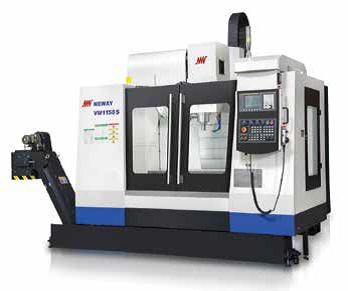
Neway CNC Equipment Co offers a cost effective range of vertical machining centres, which are manufactured at the company’s modern manufacturing plants in Suzhou China. Neway’s excellent manufacturing and quality control capabilities are maximized by the use of latest equipment from well-known international brands including Zayer, Kellenberger, Starragheckert, Swiss SIP, Renishaw and Shenck. They hold ISO and CE certification. Neway’s Chinese manufacturing operation is supported by the group’s head office in Texas USA and a sales and support centre in Germany. Neway CNC Equipment currently offers a range of moving table vertical machining centres which range in table size from 750 x 420mm to 1800 x 800mm. This range is available in the following table sizes, VM740 – 750 x 420mm, VM950 – 950 x 520mm, VM1150 – 1100 x 520mm, VM1260 – 1200 x 600mm, VM1360 – 1350 x 600mm, VM1580 – 1500 x x800mm, VM1780 – 1700 x 800 and VM1880 – 1800 x 800mm. The VM740, VM950 and VM1150 models are fitted with BT40 spindle tapers. These three models are available as a lower specification S series with a Fanuc 0i-Mate-MD controller or a higher specified H series which are supplied with a Fanuc 0i-MD controller. The VM1260 and VM1360 models are fitted with BT 40 spindle taper as standard and can be supplied with a BT50 spindle taper as an option. The VM1580, VM1780 and VM1880 are only available as H series specification with Fanuc 0i-MD controllers and have BT50 spindle tapers as standard. With the exception of the VM740, which has a 20 tool magazine, all models in the range come with a 24 tool magazine and arm type tool changer. The complete series of models from VM740 to VM1880 in the S and H range have linear guideways on all three axis. The additional HR series which is available in sizes from VM950 to VM1780 feature box guideways as opposed to linear guideways. Full enclosure guarding and chip conveyors feature as standard equipment across the entire range. Factory fitted optional equipment includes 4th axis rotary tables, through spindle coolant, workpiece measuring and toolsetting probes systems. Spindle oil cooling systems and coolant water/oil separators are available on request. To complement the range of vertical machining centres, Neway CNC Equipment offers the VM640D drilling and tapping machine. This machine has a table size of 650 x 400mm, a 16 position cam type tool changer with a 1.6 second tool change, a spindle speed of 15 000 rpm, X and Y axis rapid feed rates of 48 meters per minute and a Z axis rapid feed rate of 60 meters per minute. They come fitted with the Fanuc 0i MD controller.
For more information, please contact Machine Tool Promotions – Tel: 016 931 1564.