What are exotic metals, why are they so rare, and how are they machined? To understand this subject, let’s start by defining it.
Mainstream engineering materials are iron-based alloys such as steel, stainless steel and cast iron. Another group of regularly used materials includes alloys based on nonferrous metals, such as aluminum alloys, brass and bronze.
In addition, there are exotic types of material that were developed to answer specific demands. These exotic materials feature a dedicated application, while they are rare, not commonly used and generally more expensive to fabricate.
A strict agreed definition of an exotic material does not exist. Many experts refer to them as metals like Beryllium, Zirconium, etc. and their alloys, ceramics, composites and superalloys. When considering the use of structural materials, superalloys and composites should be distinguished first. The metalworking industry mainly deals with these types of materials for several reasons, including the machining of exotic materials is problematic. Superalloys, or more specifically, high temperature superalloys (HTSA), are intended for operating under a heavy mechanical load in combination with high temperatures. They are largely used in gas turbines and in various valves and petrochemical equipment. The “exoticism” of superalloys is their metallurgical design, which provides high creep resistance to keep strength at high temperatures. According to the main component, HTSA can be divided into three groups: Nickel (Ni)-, Cobalt (Co)-, and Iron (Fe)-based superalloys. A superalloy chemistry, especially in case of Ni- and Co-based HTSA, results in poor machinability.
Composites are multicomponent materials. When compared with a traditional engineering material, such as steel or aluminum, composites workpieces are nearer-to-net shape and do not require significant material removal. Nevertheless, the components of a composite have different properties and when combined, they produce a heterogeneous structure that makes machining problematic. The process of machining composites differs from machining metals and it often looks more like shattering than cutting. High composite abrasiveness can lead to intensive tool dulling and various performance problems, such as a degradation of accuracy or non-repairable machining defects.
The metalworking industry has made significant progress in machining exotic materials. Advanced machining tools and effective machining strategies have already lifted the performance of machining operations to a totally new plane. An impressive leap forward in 3D printing, which may significantly diminish machining operations, looks very promising. But there is one “exception”, which still limits taking full advantage of the considerable increase of machine tool capabilities. This “exception” is the cutting tool. Despite the distinct progress, cutting tools remain the bottleneck for machining efficiency. Hence, the plans for a breakthrough in the productive machining of exotic materials have much to do with the cutting tool.
Cutting tool manufacturers keep up their efforts to find productive and reliable solutions for machining exotic materials. Sometimes, it may seem that traditional sources for a major advance are almost non-existent and that a great step forward is only connected to a real novelty. Regardless, cutting tool manufacturers still manage to provide interesting products that combine available means and resources with new ideas. Recent ISCAR developments are a good example of such products and ISCAR’s attempt to resolve the existing bottleneck, while finding new ways to move forward.
Exotic for Exotic: advantageous ceramics
Cemented carbide is still the main cutting material for machining. Introducing carbide tools revolutionized the metalworking industry ensuring a significant growth of productivity due to sharply increased cutting speeds. However, despite this, even today cutting speeds for difficult-to-machine Ni- and Co-based high-temperature superalloys (HTSA) are low, typically within the range of 25-50 m/min (80-160 sfm). How do we expand the speed boundaries?
Exotic ceramic materials have already found themselves as cutting materials. Using exotic ceramic material ensures a totally different level of cutting speeds. For example, machining the superalloys by ceramic tools, the cutting speed 1000 m/min (3300 sfm) is completely real. Therefore, ceramic tools become more and more common in machining HTSA.
Recently, ISCAR developed a family of indexable shell mills carrying double-sided inserts made from ceramics. The mills are intended mostly for rough and semi-finish machining of planes and 3D surfaces at extremely high cutting speeds. The economical double-sided insert design provides high ceramics utilization. The inserts are made from several ceramic grades such as “black” ceramics, whisker reinforced ceramics and SiAlON (a type of silicon-nitride-based ceramics). Applying the new mills is directed on maximizing metal removal rate (MRR) and dramatic reduction in cycle time.
One more example of successful usage of cutting ceramics is another of ISCAR’s latest products – a family of solid endmills from SiAlON. The endmills were designed specifically for productive rough machining Ni-based superalloys, such as various grades of Inconel, Incoloy, Haynes, etc. in the aerospace industry. In comparison with typical solid carbide endmills, SiAlON endmills allow an increase in cutting speed of up to 50 times!
It should be noted that ceramic tools behave differently from carbide tools. Generally, the end of a tool life is determined by the acceptable level surface finish or generated burrs and not by tool wear size.
Cutting Diamond
In manufacturing parts from composites, drilling is widely regarded as the major cutting operation. Improving capabilities of drilling tools has had a direct impact on the effectiveness of machining composites and composite stacks.
Most recently,  ISCAR introduced a series of new solid drills, in the diameter range of 3.3-12 mm (.130-.500″), which are specially designed for composites. The common feature of these tools is the use of polycrystalline diamond (PCD) or diamond coating to ensure high abrasion wear resistance. There are several types of these new drills; one of them is based on using a PCD nib as a central point of a drill, and another type has a diamond wafer. Both drill types offer a large area for multiple regrinding.
The third type of drills is solid carbide tools with a diamond-coated cutting area. Their wavy cutting edge facilitates reducing burr formation, specifically when drilling carbon fiber reinforced plastics (CFRP) and CFRP-Aluminum stacks.
Coolant Solver
In machining exotic superalloys, effective coolant supply is a cornerstone of success. Pinpointed high-pressure cooling (HPC) can be a significant tool to improve cutting performance. It is a real source for greater tool life, better chip control and higher productivity.
 One of the latest ISCAR’s developments is a family of turning tools with ISO-type indexable inserts. The tool design utilizes an upper clamp for reliable securing of the inserts even during heavy and interrupted cuts. The previous turning tools with the HPC option had a lever clamping mechanism as an upper clamp would obstruct a jet of coolant from reaching the cutting edge.
The newly developed tools integrate a hollow upper clamp that allows for solving two problems:
– strong and rigid insert clampin
– eliminating any obstacle for the coolant jet on its way to the cutting edge
Hence, the clamp, which serves in the new tools as a coolant nozzle, received an additional important functional feature.
The new products with through-tool coolant supply are beneficial not only in machining with HPC. Their applying to turning with conventional external “low” pressure cooling (10-15 bars) also provides better performance.
 In parting and grooving, especially in deep grooving, efficient chip forming has crucial significance. Pinpointed high-pressure cooling of a cutting edge significantly diminishes chip jamming and reduces built-up edge. Within the past year, ISCAR expanded the range of its HPC products by introducing new face grooving tools with HPC option. These tools are suitable for coolant pressure of up to 140 bars.
Geometry Innovation Never Stops
Improving cutting geometry does exhaust all possibilities. Good evidence of such a conclusion is the variety of new solutions that have upgraded existing indexable inserts. Usually, such solutions relate to advanced chip forming, reinforced cutting edge and progressive edge preparation.
ISCAR’s new chipformer F3S for finish turning exotic superalloys was designed for popular ISO-type inserts (CNMG, WNMG etc.). A typical finishing operation is characterized by shallow depth of cut and low feed. Therefore, the success of a chipformer lays in a small area that adjoins the insert cutting edge. It will take real engineering “art” and a lot of effort to redesign this area for much better performance when compared with the existing inserts.
 F3F gives an example of how to do this successfully. It has a reinforced cutting edge to prevent notch wear as well as a specially designed deflector for efficient chip control in finish turning HTSA. In combination with a positive rake, these features ensure a smooth and easy cut, notable chip breaking capabilities and significant reduction in cutting forces.
Machining exotic materials places tool manufacturers before different challenges. In developing a cutting tool that will lead to a breakthrough, tool manufacturers try everything. Sometimes their solutions are really “exotic”, and other times innovative thinking allows going ahead in the traditional direction. In the case of ISCAR, it can be clearly seen that progress towards finding the right response to the needs of the metalworking industry for exotic materials has not stopped.
For more information, please contact ISCAR South Africa (PTY) LTD – Tel: 011 997-2700.







 The new heads are available in 32 mm diameter with 8 teeth, an SP15 spline connection and a maximum 8 mm depth of cut, 40 mm diameter with 10 teeth, an SP17 spline connection and 10 mm depth of cut and in 50 mm diameter with 12 teeth, an SP19 spline connection and 12 mm depth of cut.


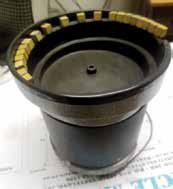
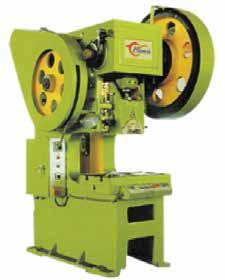 While A.P. Design provides press shop turnkey solutions and automation of presses and guillotines, the company also manufactures vibratory bowl feeders for small parts, servo drive roll feeders and eccentric presses. Our servo roll feeders come in any length required. While the units are controlled by a closed loop servo drive, models are available from 200mm to 1 250mm wide. We have strip feeders available up to 400mm wide and 400mm feed length x 4mm thick. Smallest available 38mm wide and 50mm feed length x 1mm thick with feed accuracy ± 0,15 per 0,5m.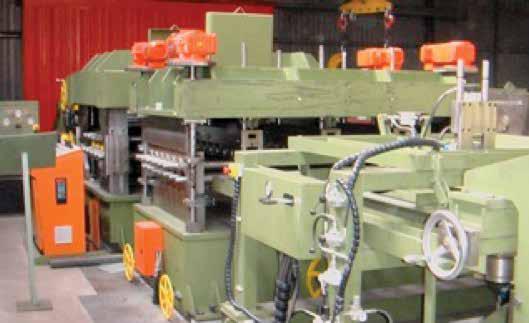
 Our cut to length lines (CTLL) will comprise of a decoiler, feeding the coil into a leveler. The leveler will straighten the steel and an encoder will measure the steel to the correct length for cutting. Most CTLL have guillotines fitted which will do the cutting. Some CTLL have slitters fitted (blanking line) which will cut the material into strips and then recoil the steel onto spools or into coils. Most CTLL are run by a PLC and HMI screen which are programmed to do batch cutting and setting parameters. The operator will programme the length and number of pieces required, and the unit stops when the programme is finished. For increased production a flying shear is incorporated. These units can handle 30 ton coils and widths of material up to 2 020mm.