Home Blog Page 97

Unity And Common Goals Between Government And Private Sector

Day 2 of the Manufacturing Indaba in Ekurhuleni culminated in delegates sitting on the edge of their seats to hear the banter and camaraderie that flowed between various CEOs and governmental representatives at the final afternoon of the two day event.

With a well-subscribed programme, a collaborative approach between government and the private sector was emphasized by many panellists from various manufacturing interest groups.

The theme for the conference was manufacturing the future and what that future will look like, both in the globalized and South African context. The manufacturing sector is the powerhouse behind many top performing global economies.

Government is pulling out all stops to encourage and stimulate growth in manufacturing in the face of tough headwinds anticipated in 2016 and the third annual Manufacturing Indaba was once again the platform for the public and private sector to find collaborative solutions to boosting South Africa’s manufacturing sectors.

Gauteng Premier David Makhura, who gave the closing keynote address after sitting through some of the panel discussions including The Mining Clusters, Localization in Manufacturing and Key Enabling Technologies, spoke about the importance of attending the annual Manufacturing Indaba to ‘keep us on our toes so we don’t miss the train and do things that are late, and lose time and money’.

“I regard this Manufacturing Indaba as a laboratory helping us to re-industrialize our province,” said the Premier. “It is significant that we are having this Indaba in Ekurhuleni because this is our manufacturing hub. This Indaba is a laboratory where we can reflect on and explore strategies to boost and revive this sector,” said Makhura.

The conference enjoyed high profile attendance from both government and the private sector with the Minister of Trade & Industry, Dr Rob Davies and the MMC of the City of Ekurhuleni, Cllr Thumbu Mahlangu hosting a press conference in conjunction with the private sector’s Bruce Strong from Mpact and Manufacturing Circle. Included in deliberations were CEOs of big corporations, cutting edge manufacturers and small business innovators who brainstormed the Fourth Industrial Revolution or Industry 4.0 and what that will look like in South Africa.

“Reindustrialization needs to be placed at the centre of economic policy today. If you’re not converted into a manufacturing activist yet, I hope you will be by the end of today,” said Stavros Nicolaou, Senior Executive of Strategic Trade at Aspen, who moderated sessions yesterday. “Think TMR when you go out of here – Transformation, Modernization and Reindustrialization.”

Despite tough economic times and global volatility, there were good news stories that were shared – South Africa’s thriving automotive sector, the reviving of the country’s textile sectors, the dti’s Black Industrialist Programme and Ekurhuleni’s Aerotropolis vision which sees the City leveraging its location, the presence of OR Tambo International Airport, and its existing industrial base to support rapid industrial growth and redevelopment of its communities.

“Reindustrialization is complicated and there aren’t quick wins. The Black Industrialists Incentive is to ensure that we give a leg up to emerging black industrialists and ensure people in South African local companies are being supported,” said Garth Strachan, Deputy Director General, Industrial Development Division with the Department of Trade and Industry (dti). “We’ve got to collaborate together to get it done. We’ve faced bigger battles as South Africans, we can do it together – let’s do it!” charged Strachan.

Three international manufacturing experts came to South Africa to address South Africa’s biggest manufacturing event.

Emeritus Professor of Economics at the London School of Oriental and African Studies (SOAS), Prof. John Sender spoke about important lessons from abroad and practical tips on implementing industrial policy in South Africa. He encouraged manufacturers to “reject the prevailing concern to catalogue preconditions for successful outcomes and to focus instead on possible paths, unexpected and unintended effects and inverted sequences. Aim for a few islands of excellence and pockets of effectiveness. Build on your strengths and shoot with a rifle, not a scattergun,” said Sender.

Professor Marco Taisch, the Scientific Chairman of World Manufacturing Forum 2016, the world’s leading global manufacturing event, shared with delegates how the digitization of manufacturing is changing the world we live in. “In future, companies will need to go from mass production to customization of mass production. They will have to go from product design to usage, like car sharing and bike sharing for increased value-adds. They will also have to go from real to digital where the physical and digital worlds are synced and matched, and from industrial automation to cognitive automation,” said Taisch.

Professor David Romero spoke on the development of Industry 4.0, sharing examples and lessons from Mexico’s booming manufacturing sector and tips from those nations that are at the forefront of the Fourth Industrial Revolution. Professor Romero is Professor-researcher at the National Graduate School of Science, Engineering and Technology (part of the Tecnologico de Monterrey’s Center for Innovation in Design and Technology in Mexico) and this was his second visit to the Manufacturing Indaba. Both international speakers were brought out by the Department of Science & Technology.

Hundreds of members of the public attended the free exhibition of local manufacturing products and technical workshops which were hosted by the National Cleaner Production Centre of South Africa.

The event and its corresponding exhibition has strategic partnerships with the Department of Trade & Industry (the dti), Department of Science & Technology (DST), host City of Ekurhuleni, Department of Public Enterprises, the Manufacturing Circle and the NCPC-SA.

South Africa is living in a digital era but the country’s transition and re-industrialization will look very different from that of other nations. We are at different levels of development and we have a unique background. What was clear from the 2016 Manufacturing Indaba discussions is that we need to develop our own solutions and make smart choices that encourage innovation, constant learning and skills development. And that is exactly what the Manufacturing Indaba is all about. The 2017 Manufacturing Indaba will take place on the 27th and 28th June 2017.

BC80: Designed To Be Unstoppable

BC80 is a fully automatic system with high throughput, which has been developed for continuous production of bushings, starting from either tubes or solid bars. The bushings with a diameter up to 80mm and lengths from 10 to 350mm are cut, faced and measured at a rate of up to 2,200 pieces per hour.

The fully automatic system is designed to ensure high quality part finish even on delicate bars. All machine settings for diameter changes are handled from a central location.

The control panel has a touch screen and an easy to use graphical interface which simplifies the control parameters settings and the monitoring of the production status, while the entire system is designed to work 24/7, without stopping.

The tube or bar loading system with lengths up to 12.5m can be reloaded while the machine is working, thus never stopping or slowing production and end drops plus chips are collected in independent conveyors that can be easily emptied without stopping the machine.

Finished parts are discharged via a chute containing a two position mechanical separator which can be used to sort out parts that the measuring system rejects.

All finished parts are measured and certified. The dynamic washing system flushes chips from the part allowing accurate and reliable measurements. The operator has the ability to specify what to do if the parts exceed tolerance, for example he may stop the machine when the first error occurs or after a certain number of consecutive mistakes.

For more information, contact First Cut – Tel: (011) 614-1112

NASA’s Next Mars Rover

After an extensive review process and passing a major development milestone, NASA is ready to proceed with final design and construction of its next Mars rover, currently targeted to launch in the summer of 2020 and arrive on the Red Planet in February 2021.

The Mars 2020 rover will investigate a region of Mars where the ancient environment may have been favourable for microbial life, probing the Martian rocks for evidence of past life. Throughout its investigation, it will collect samples of soil and rock and cache them on the surface for potential return to Earth by a future mission. 

This image is from computer assisted design work on the Mars 2020 rover. The design leverages many successful features of NASA’s Curiosity rover, which landed on Mars in 2012, but also adds new science instruments and a sampling system to carry out new goals for the 2020 mission.
Credits: NASA/JPL-Caltech

“The Mars 2020 rover is the first step in a potential multi-mission campaign to return carefully selected and sealed samples of Martian rocks and soil to Earth,” said Geoffrey Yoder, acting associate administrator of NASA’s Science Mission Directorate in Washington. “This mission marks a significant milestone in NASA’s Journey to Mars – to determine whether life has ever existed on Mars, and to advance our goal of sending humans to the Red Planet.”

To reduce risk and provide cost savings, the 2020 rover will look much like its six-wheeled, one-ton predecessor, Curiosity, but with an array of new science instruments and enhancements to explore Mars as never before. For example, the rover will conduct the first investigation into the usability and availability of Martian resources, including oxygen, in preparation for human missions.

Mars 2020 will carry an entirely new subsystem to collect and prepare Martian rocks and soil samples that includes a coring drill on its arm and a rack of sample tubes. About 30 of these sample tubes will be deposited at select locations for return on a potential future sample-retrieval mission. In laboratories on Earth, specimens from Mars could be analyzed for evidence of past life on Mars and possible health hazards for future human missions.

Two science instruments mounted on the rover’s robotic arm will be used to search for signs of past life and determine where to collect samples by analyzing the chemical, mineral, physical and organic characteristics of Martian rocks. On the rover’s mast, two science instruments will provide high-resolution imaging and three types of spectroscopy for characterizing rocks and soil from a distance, also helping to determine which rock targets to explore up close.

A suite of sensors on the mast and deck will monitor weather conditions and the dust environment and a ground-penetrating radar will assess sub-surface geologic structure.

The Mars 2020 rover will use the same sky crane landing system as Curiosity, but will have the ability to land in more challenging terrain with two enhancements, making more rugged sites eligible as safe landing candidates.

“By adding what’s known as range trigger, we can specify where we want the parachute to open, not just at what velocity we want it to open,” said Allen Chen, Mars 2020 entry, descent and landing lead at NASA’s Jet Propulsion Laboratory (JPL) in Pasadena, California. “That shrinks our landing area by nearly half.”

Terrain-relative navigation on the new rover will use on-board analysis of downward-looking images taken during descent, matching them to a map that indicates zones designated unsafe for landing.

“As it is descending, the spacecraft can tell whether it is headed for one of the unsafe zones and divert to safe ground nearby,” said Chen. “With this capability, we can now consider landing areas with unsafe zones that previously would have disqualified the whole area. Also, we can land closer to a specific science destination, for less driving after landing.”

There will be a suite of cameras and a microphone that will capture the never-before-seen or heard imagery and sounds of the entry, descent and landing sequence. Information from the descent cameras and microphone will provide valuable data to assist in planning future Mars landings and make for thrilling video.

“Nobody has ever seen what a parachute looks like as it is opening in the Martian atmosphere,” said JPL’s David Gruel, assistant flight system manager for the Mars 2020 mission. “So this will provide valuable engineering information.”

Microphones have flown on previous missions to Mars, including NASA’s Phoenix Mars Lander in 2008, but never have actually been used on the surface of the Red Planet.

“This will be a great opportunity for the public to hear the sounds of Mars for the first time, and it could also provide useful engineering information,” said Mars 2020 Deputy Project Manager Matt Wallace of JPL.

Once a mission receives preliminary approval, it must go through four rigorous technical and programmatic reviews – known as Key Decision Points (KDP) — to proceed through the phases of development prior to launch. Phase A involves concept and requirements definition, Phase B is preliminary design and technology development, Phase C is final design and fabrication, and Phase D is system assembly, testing and launch. Mars 2020 has just passed its KDP-C milestone.

“Since Mars 2020 is leveraging the design and some spare hardware from Curiosity, a significant amount of the mission’s heritage components have already been built during Phases A and B,” said George Tahu, Mars 2020 program executive at NASA Headquarters in Washington. “With the KDP to enter Phase C completed, the project is proceeding with final design and construction of the new systems, as well as the rest of the heritage elements for the mission.”

The Mars 2020 mission is part of NASA’s Mars Exploration Program. Driven by scientific discovery, the program currently includes two active rovers and three NASA spacecraft orbiting Mars. NASA also plans to launch a stationary Mars lander in 2018, InSight, to study the deep interior of Mars.

JPL manages the Mars 2020 project and the Mars Exploration Program for NASA’s Science Mission Directorate in Washington.

Changes In Solar Cell Technology

Dr. Jan Nekarda and Dr.-Ing. Ralf Preu (from the left) developed the Laser Fired Contact process for series manufacturing of highly efficient PERC solar cells. © Photo Dirk Mahler/Fraunhofer

The transformation of our energy system towards the goal of more electricity from renewable energy sources is one of the major challenges facing our society for the upcoming decades. Solar technology will play a decisive role in reaching that goal. 

“The total amount of electric energy from photovoltaic sources is more than 250 terawatt hours, approximately equivalent to the amount produced by 30 nuclear power plants. In order to help meet international climate objectives, the amount of photovoltaic power newly installed each year will have to increase by ten times over the next 15 years. On the whole, solar technology will have to become more efficient and cost-effective in order to meet the demands of this market,” explains Dr.-Ing. Ralf Preu, Director of the Division‚ PV Production Technology and Quality Assurance, at the Fraunhofer Institute for Solar Energy Systems ISE in Freiburg. The researcher and his colleague Dr. Jan Nekarda have already made an important contribution to climate protection with the development of Laser-Fired Contact (LFC) technology, enabling the manufacture of more efficient solar cells at lower cost.

Today most solar cells are equipped with a wide-surface metallic contact, covering the entire backside of the silicon wafer and allowing electricity to flow from the cell to the electrode. This configuration however limits efficiency. A more high-performance alternative, discovered in 1989, is the Passivated Emitter and Rear Cell technology (PERC). In contrast to conventional cells, this technology includes an additional reflective layer on the backside of the cell and thousands of electric contact points. The LFC process developed by the Fraunhofer researchers has enabled the first industrial mass production of PERC solar cells.

Series Production of Highly Efficient Cells

A very thin non-conductive layer is deposited on the underside of a PERC solar cell between the contact layer and the wafer. Acting as a mirror, this layer reflects the share of sunlight not absorbed when penetrating the wafer back into the silicon wafer. Since the front side also reflects this light back into the wafer, it is also captured in the silicon wafer and the efficiency level of the solar cell increases. Drawing the electricity from the wafer requires many small apertures in the non-conductive layer in order to establish contact between the electrode metal and the silicon wafer. The LFC procedure creates each of these approximately 100,000 contacts per wafer with a single laser pulse. “The challenge was to coordinate the pulses in such a way that contact is completely established, while damage to the silicon is kept to minimal levels. Here it‘s crucial that the laser light effect is limited to between 50 and 2,000 nanoseconds,” explains Nekarda, group manager at the Fraunhofer ISE. An innovative system for guiding the laser beams makes it possible to create all the contacts in approximately one second.

“PERC solar cells made this way have an improved efficiency level of one percent absolute. With today’s solar cell efficiency of approximately 20 percent, that’s about five percent relative. We gain an additional two percent in the system, which means we increase the overall energy yield by seven percent,” Preu is happy to report. The efficiency level is of enormous importance since the majority of costs in photovoltaics are directly proportional to surface area. “Where we need 100 square meters of solar cells today, in the future we’ll only need 93 square meters to produce the same amount of electricity. This not only means less silicon, but also less module material, less material in the systems and ultimately also savings in terms of planning costs.”

Successful Implementation in Industry

Solar cell manufacturers can easily and inexpensively integrate the laser procedure in existing production processes. According to company information, Hanwha Q Cells has already made 20 million cells – using LFC technology since beginning production. Companies around the world have in the meantime put PERC technology into mass production. “In the current year alone manufacturers have invested more than 200 million Euro in the implementation. This finally means the establishment of the next evolutionary stage of the silicon solar cell,” Preu is excited to report.

Ralf Preu and Jan Nekarda have received the 2016 Joseph-von-Fraunhofer prize for their role as initiators and drivers of this change. The jury based the award among other things on the fact that the researchers‘ development helps German companies continue to succeed in the highly competitive photovoltaics market.

Sacrificing The Steel Industry To Save Mittal

I do not claim to fully understand what’s currently happening in this space and the reasons for it. 

The Steel Industry is in troubled waters. There are many indicators to this effect, but job losses is an important one. According to the MEIBC, the Steel Industry has lost 150 000 jobs over the last ten years, of which 40 000 jobs were lost in 2015 and 9 000 in the month of November 2015 alone. The MEIBC is predicting a further 30 000 job losses in the Steel Industry this year.

There is more than one reason for this job-bloodbath. There is of course the effect of the global economy and certain factors over which we have little control. The MEIBC and its continuous unconstitutional and unlawful actions have exacerbated the situation in that it has deprived business of the flexibility to counter the global challenge. The MEIBC and those who benefit by this system, and those opting to sit on the fence, must take a huge amount of blame for the state of the Steel Industry.

For many years there was the impact of the senseless ‘import parity pricing’ arrangement – when that arrangement suited Mittal – and when it no longer suited them, they arranged for the introduction of the current, similarly devastating, protectionist duties and safeguarding measures, all aimed at protecting Mittal. They somehow always find a way to convince government that they deserve some extraordinary arrangement which either benefits or protects them. How they manage to do that only they will know, especially since protecting old, outdated, expensive liquid steel manufacturing facilities, the Industry’s demise will continue and millions of South Africans will suffer under inflated prices of downstream steel products.

Nobody can deny the challenge posed by China. But Mittal, at least for now, is posing a much bigger threat to downstream manufacturers. Since the introduction of protectionist duties in September 2015, and further looming safeguard duties, Mittal has increased its prices on five occasions, the cumulative effect thereof is an increase of approximately 25 percent in the price of steel since September 2015, all the while denying local manufacturers the benefit of imported high quality, but cheaper steel. The effect in the market is severe.

Mittal is not a South African asset, it is foreign owned. There is nothing to suggest that it is doing anything other than pursuing its own short term interests. In this sense its objectives are not dissimilar to that of China. Thus far they have done nothing of concrete significance to improve their operations in order to serve downstream manufacturing better and cheaper.

These repeated Mittal-special arrangements affect all South Africans, either directly or indirectly. Employers and workers are affected immediately. But there will inevitably be a much wider ripple effect. When an industry as important as this one is dying, nobody will escape unscathed.

So, where to from here? The answer isn’t obvious, but there must be a better solution than the one Mittal and the Department of Trade and Industry is pursuing. That, however, can only be the result of honest consultation and solution seeking, not the farce that took place until now.

We urge government to appoint a judicial commission of enquiry to determine the state of the Steel Industry. What the real causes are of the alleged situation Mittal finds itself in, the effect of various very unique arrangements with government, the suitability of current protectionist measures, the effect thereof on downstream manufacturing and to advise government on appropriate measures.

The Minister of Trade and Industry is called upon to take the initiative in this regard.

Presswerk 4.0

Making smart data out of big data. Presswerk 4.0 takes data that today is rarely or never evaluated and integrates it using an analysis and feedback system. This is then connected to create new knowledge, such as solutions for specific problems. The information is then made available to staff, for instance using smart devices, or sent directly where it is needed. © Fraunhofer IWU 

It costs companies a lot of money to have machines out of operation due to failure. This applies to press shops, too, the focus of Fraunhofer’s Presswerk 4.0 project. Researchers want to employ targeted data networking in manufacturing to help employees recognize and correct failures more quickly – and reduce failure-related downtimes by at least half. Smart, connected machines balance out disturbances so that material that normally lands in the scrap pile can be processed.

Steel sheets are delivered in huge rolls to the press shop, where they are first cut to the required size. Then they pass through several presses to be stamped into the desired shape – a car door, for instance. If, however, workers discover a crack in the component, they have to reject it, after all each subsequent process step costs money. Things get really tricky when the fault is not a one-off occurrence but rather affects all the components coming from the press. Then workers have to stop the press and start troubleshooting. Is the problem due to the raw material or the lubrication? Is the tool faulty? Is the press not running properly? It takes a while to check out all the parameters and possible faults – during which time production is at a standstill.


At the joint Fraunhofer booth, IWU researchers made Industry 4.0 visible. A miniature press plant that also served as a projection surface helped visitors experience Industry 4.0 using a tablet computer, virtual information such as data flow from sender to receiver is displayed on the screen over the model. © Fraunhofer IWU

The right information, at the right time, in the right place

Researchers at the Fraunhofer Institute for Machine Tools and Forming Technology IWU have made it their mission to develop Industry 4.0 in the field of mechanical engineering. One of their areas of focus is the press shop of the future. “We combine the various streams of data in our Linked Factory, a data and service platform developed here at the institute. From that, we generate new information that we can provide to staff, for example on mobile devices,” explains Sören Scheffler, a scientist at Fraunhofer IWU. “On the basis of this data, researchers are able to isolate the cause of a failure more quickly and make targeted suggestions to staff as to how to rectify it as quickly as possible.” Together with partners from industry and science, Fraunhofer IWU is working on reducing failure-related downtimes by around 50 percent. However, Presswerk 4.0 is set to not only tap potential related to downtimes. The aim is also to help operators react more quickly and flexibly to market needs and customer preferences, even when plans change at short notice.

The researchers’ first step is to build on data that is already being collected – by sensors or camera systems, for instance. Often these are insufficient for the position where they are connected. In future, a software application will collect this data centrally, associate it with the other information, and thus generate new knowledge. In the case of the faulty door, for example, it will merge data from the sensors in machine tools with information about lubrication and data on the raw material used, then it will check which values lie outside the pre-defined tolerance limits in each case. On the basis of these results, staff will receive suggestions for troubleshooting options to enable them to solve the reported problem in a targeted way.

In the long term, researchers want to develop the system further to the point where it can issue a warning even before a fault has arisen. In order to achieve this, additional data sources are installed in the form of sensors. “For instance, we could examine the material before it goes into production. Is a given sheet in good shape? If not, the employee can discard it before it is formed and other components are mounted onto it. In this way, resources are saved because we don’t have to throw away the entire assembly,” explains Scheffler. The IWU researchers are taking it a step further. With a combination of process sensors and active components, it is possible to optimize the forming process window. “If I provided the press with this newly collected information about the nature of the raw material, it could then carry out appropriate measures to compensate and

balance out disturbances, for instance by using active components such as smart guide shoes or adaptive warehousing. That means I can process raw materials that normally would have landed in the waste container,” says Scheffler.

Making Industry 4.0 visible

Fraunhofer researchers recently presented Presswork 4.0 at Hannover Messe, where the overarching theme was “Making Industry 4.0 visible.” Visitors experienced a miniature press shop model, which also served as a projection surface. By holding up a tablet computer in front of the model, they saw virtual information about the real model. “In this way, we can visualize the stream of information that otherwise remains hidden – in other words, we make Industry 4.0 visible,” says Scheffler. Visitors could take a virtual tour of the various scenarios and saw how Industry 4.0 technologies can be used to save energy, material and time.

Real Environmental Data In Real Time For Simulations

Virtual vehicle development is becoming increasingly important. Researchers at Fraunhofer are offering a system that takes into account realistic environmental influences like road surface, weather and driving maneuvers in driving simulations. © Fraunhofer ITWM

Virtual vehicle development is becoming increasingly important. Researchers at Fraunhofer are offering a system that takes into account realistic environmental influences like road surface, weather and driving maneuvers in driving simulations. © Fraunhofer ITWM 

In computer aided vehicle engineering, you need accurate data on various environmental influences. This is the only way developers can conduct tests that simulate the experience of a real car. At Hannover Messe, researchers at the Fraunhofer Institute presented a quick and inexpensive system that collects real data at normal driving speeds and processes this data in real time as fine-grained and coarse-grained data for 3D driving simulations. 

Engineering departments at large automotive companies today use simulation when conducting virtual tests during the development phase of their new vehicle designs. This involves computing the physical properties of the cars in advance, which significantly shortens the often year-long testing loops with real test vehicles. For example, this is already being done in testing passive safety, acoustics, durability and reliability and for energy efficiency, fuel consumption and carbon emissions. At present, a vehicle can be simulated very well using software tools.

However, it is difficult to simulate environmental influences that have a significant effect on the automobile while driving, such as street conditions, weather and driving maneuvers. Experts often work with assumptions rather than with actual data because generating the actual data and making it relevant for simulations is complex and expensive. “For years we have been working closely with automobile and commercial vehicle manufacturers. We have recognized this need and made it our mission to develop cost-effective solutions to include road and environment into simulation based vehicle engineering”, says Dr. Klaus Dressler of the Fraunhofer Institute for Industrial Mathematics ITWM in Kaiserslautern.

Big Data expertise brings large amounts of data under control

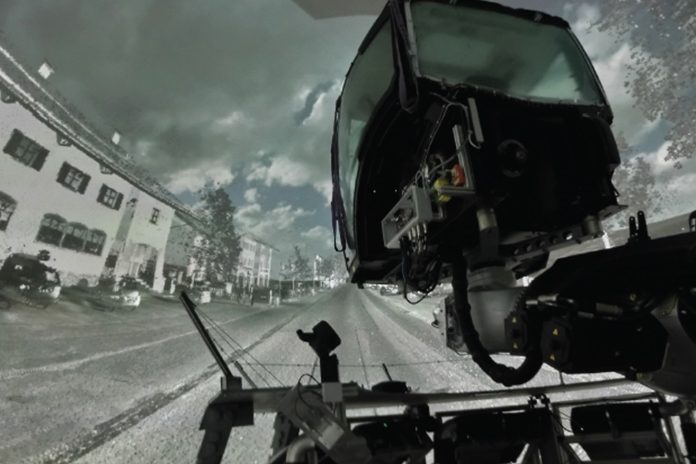
At Hannover Messe 2016, scientists from the Fraunhofer Institute presented a system that consists of a test vehicle, a geo-referenced database and a vehicle simulator. Using two 360-degree laser scanners, the Road & Environmental Data Acquisition Rover (REDAR) captures enormous amounts of environmental data at normal driving speed. “We call it point cloud data. That means for each 3D coordinate we have environmental data,” says Dressler. The ITWM researchers have managed to prepare the terabyte-sized dataset so that it can be used in real time in 3D interactive driving simulations. “The volume of data is so large that the data cannot be easily fed into the memory of a computer system. We have therefore developed an out-of-core method to process only the data necessary for the running time in the simulator.”

REDAR captures data from the building fronts to the left and right and from the street in front and behind of the vehicle at a distance of 200 meters. It also scans the road‘s surface with a resolution of less than half a centimeter. An inertial platform eliminates potential movement of the vehicle from the raw data of the laser scanner so that it can be objectively processed by the software. “To build such a complex measurement system and consistently process the data through appropriate algorithms were our biggest challenges,” Dressler adds. The test vehicle has been in use since 2015 and has already been collecting data for various customer projects.

Merging fine- and coarse-grained data

ITWM‘s own driving simulator RODOS (Robot-based Driving and Operation Simulator) converts the metrics collected by REDAR. The simulator consists of a cabin system in which a steering wheel, gas and brake pedal can be operated. The driver cabin is connected with a 6-axle robot system that realistically simulates accelerations, braking or driving around tight curves. “The test driver moves through a virtual world that feels very realistic after just a few minutes,“ explains Dressler. The simulations are supported with data from the database system known as Virtual Measurement Campaign (VMC). The database provides the world‘s road network with its topography, regulations, weather and additional geo-referenced data. “With the data collected from the data acquisition vehicle we merge real fine-coarsed data with the coarse-grained data from the VMC. Merging the two worlds is an important step in developing test scenarios for the engineering of road-bound vehicles,” says Dressler.

Airbus Delivers Its First Aircraft Produced In The USA

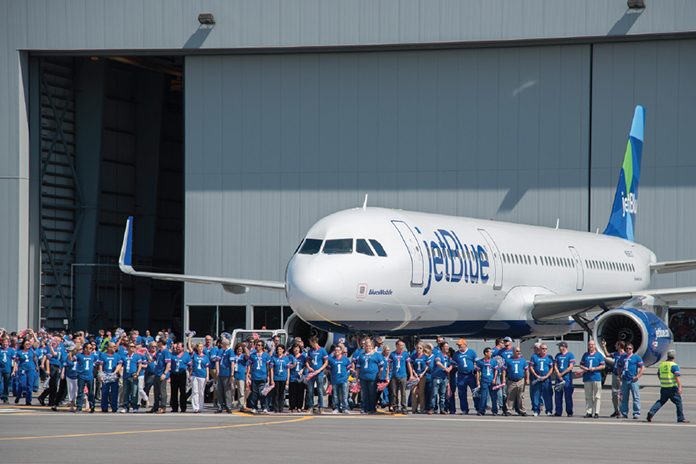
“I am immensely proud to be here to participate in this first delivery from Mobile,” said John Leahy, Airbus Chief Operating Officer – Customers. “Going from breaking ground on this facility three years ago to handing over the first Alabama- produced A321 today is an amazing accomplishment. It’s a testament to how well executed this project was and how strong the teamwork has been here in Mobile and throughout Airbus. The Airbus U.S. Manufacturing Facility has brought together all the best aspects of our other assembly lines around the world, and it shows how Airbus people work hand in hand with our partners to deliver great aircraft to our customers.”

Airbus announced its commitment to build a single-aisle assembly line in Mobile, Alabama in 2012, and less than one year later, broke ground on the $600 million (U.S.) facility. The ceremonial inauguration of the plant came in September 2015.

The aircraft delivered, a JetBlue A321, successfully had its first flight on March 21st, 2016.

In addition to the JetBlue A321, there are currently nine other A320 Family aircraft in production at the facility. Airbus anticipates delivering four aircraft per month from the Mobile plant by the end of 2017. The initial deliveries will all be A320 Family aircraft with the Current Engine Option (CEO), but will begin transitioning to New Engine Option (NEO) derivatives in late 2017.

In addition to hundreds of new Airbus jobs the project has brought to the local community, the Mobile area has seen many Airbus suppliers open new facilities in the region, providing even more employment and a parallel boost to the local economy. Airbus is proud to boast that 87 percent of its new employees are from the Gulf Coast region, with nearly one third being U.S. military veterans.

Demonstrating the adage The Sun Never Sets on Airbus – Airbus aircraft are now produced around the clock, 24 hours a day, at facilities in Mobile Alabama, Hamburg Germany, Toulouse France and Tianjin China.

Continued Infrastructure Development Essential In Unlocking Africa’s Economic Growth Potential

This important topic will be one of those discussed at the 2016 Southern African Metals and Engineering Indaba, scheduled to take place at the IDC Conference Centre in Sandton. Special attention will be paid to the thesis that countries that boast highly-developed infrastructure tend to do better than their less-developed counterparts when it comes to attracting private sector investment and FDI. 

Speaking ahead of the conference, Steel and Engineering Industries Federation of Southern Africa (SEIFSA) Chief Executive Officer Kaizer Nyatsumba said that over the years South Africa’s world-class infrastructure, among other contributing factors, has played a crucial role in positioning the country as the entry point to the rest of the African continent.

“In order to fast-track economic growth in South Africa and the rest of the Southern African Development Community (SADC) region during the prevailing turbulent economic conditions where competition is rife, countries within SADC have to develop infrastructure and transport logistics that would enable them to compete globally.

“Accelerated growth necessitates road and rail links that are continually improving,” Nyatsumba said.

However, current difficult economic conditions make raising money to finance SADC’s huge infrastructure backlog difficult.

“African countries in general and countries within the SADC region in particular are in dire need of FDI. This is one of the contributing factors which saw Finance Minister Pravin Gordhan embarking on an international roadshow to lure foreign investment into South Africa. Infrastructure development has the potential to play a positive role in attracting FDI and private sector investment, but the difficulty in raising finance for infrastructure development poses a threat to accelerating economic growth,” Nyatsumba said.

He added that without reliable infrastructure, it is almost impossible for any developing economy, including South Africa, to prosper.

“It is, therefore, of crucial importance that various stakeholders from government, labour and business get together to deliberate on strategies aimed at unlocking SADC’s economic growth through infrastructure development, among other things,” he said.

Southern Africa and the Huge Infrastructure Backlog – How to finance it will be one of the topics which will be robustly discussed at the 2016 Metals and Engineering Indaba. Debating this crucial topic will be International Monetary Fund Senior Resident Representative Dr Axel Schimmelpfennig, Development Bank of Southern Africa Group Executive Manager Sinazo Sibisi and Industrial Development Corporation Head of Basic Metals and Mining Mazwi Tunyiswa, among others.

Tapping Into The Market With TaeguTec T-Tap

The HSSE-cobalt T-Tap new line expands TaeguTec’s threading range beyond milling and turning applications with carbide tools to high-speed steel. The high cutting speed with low cutting force taps’ universal application is ideal for steel, stainless steel and cast iron applications. Whether it is metric ISO standard or fine threads, the optimized cutting geometries of the new taps line ensures easy chip evacuation for precise and reliable machining.

The material used in the new T-Tap line is offered in three different grades– uncoated, steam tempered or titanium nitride. No matter the coating, the T-Tap HSSE line enables higher productivity and economy on a wide range of materials. Its longer tool life is credited by its innovative cutting geometry and the option of either TiN or steam tempering.

Tale of Two Geometries

TaeguTec’s straight flute with spiral point HSSE taps for through hole threading have a form B 4-5 threads chamfer, a dimension range of M2-M20 (MF8X1.0-MF16X1.5) and an ISO 2-6H tolerance. The innovative geometries of this new series forces the chips forward making tapping an easy, cost-efficient process while its optimal design credit to shallow flutes is only used in combination with cutting fluids (not chip evacuation).

The right hand spiral 40 degree flute’s features for blind hold threading comes with a helix angle, form C 2-3 threads chamfer, the same dimension range and ISO tolerance as the straight flute with spiral point. The difference is that the tap is designed with spiral flute grinding which forces the chips out of the hole and is designed for both cutting fluid and chip evacuation.

Grading Grades

The uncoated T-Tap grade is a perfect economical choice and is recommended for steel up to a maximum 800 newton per square millimeter while the steam tempered coating ferric oxide layer at the cutting edge makes it perfect for chip flow and reduces built-up edges for increased tool life.

For high hardness, chemical stability and heat resistance applications, the physical vapor deposition TiN coating offers a longer tool life due to its balanced characteristics of low heat conductivity and smooth operation at low cutting speeds and universal application on a wide range of materials.

Testing the Life Out of T-Tap

TaeguTec extensively tested the new T-Tap line on various materials and working conditions to make sure that it surpasses every customer’s needs. Its steam tempered tap on machining a sleeve made from carbon steel (AISI 1040, C40) was found to be optimal at a cutting speed of 14 meters per minute and lasted perfectly for 1,300 thread holes. On the other hand, the two TiN coating tests handled low alloy steel and tool steel with ease.

The case study of the TiN coating for a driving wheel made from low alloy steel (AISI 5115, 16 MnCr5) found that the application took 20 meters per minute to machine and lasted 1,800 thread holes while the tool life of a transforming stamp using tool steel (X36CrMo17) continued for 850 thread holes at a cutting speed of 15 meters per minute.

TaeguTec also tested two special coatings for companies that need tailor made tools. The first was on a supply pipe in which the material used was nodular cast iron (GGG40). The titanium aluminium nitride coating’s cutting speed was a mind blowing 25 meters per minute but its true eyebrow raising feature was its tool life of 3,500 thread holes.

But more impressive was the application on an aluminium alloy cylinder head. For this job, TaeguTec tailor made a DLC coating which has a cutting speed of 22 meters per minute with an incredible 8,000 thread hole life.

For more information, contact TaeguTec – Tel: (011) 362-1500.