Airbus envisage de renoncer au grand escalier caractéristique de l'A380 alors qu'il s'efforce de relancer les ventes de son superjumbo, a appris Reuters de sources industrielles. /Photo d'archives/REUTERS/Pascal Rossignol
Providing strong evidence that the commercial aircraft market remains healthy, Airbus announced $39.7 billion worth of new business during the 2017 Paris Air Show.
The company won commitments for a total of 326 aircraft, including firm orders for 144 aircraft worth $18.5 billion and MoUs for 182 aircraft worth $21.2 billion.
A320 Family aircraft sales and commitments were robust, with business accounting for a total of 306 aircraft worth $33.8 billion. This total comprises 132 firm orders worth $14.7 billion and MoUs for 174 aircraft worth 19.1 billion. In the Widebody segment, Airbus won business for 20 aircraft worth $5.9 billion, comprising 12 firm orders worth $3.6 billion and MoUs for eight aircraft worth 2.3 billion.
John Leahy, Chief Operating Officer Customers, Airbus Commercial Aircraft said, “our commercial success this week at Paris extends our already diversified order backlog to a new industry record of over 6,800 aircraft, with 326 orders worth $40 billion.”
Further to the new orders, the show also saw a repeat order from DHL Express for four more A330-300 Passenger-To-Freighter conversions, in partnership with EFW and ST Aerospace.
At this year’s show, Airbus not only marked a solid sales tally but also extended its value offering at both ends of its commercial product portfolio. In the Single-Aisle family Airbus decided to offer the Airspace Cabin brand – which, on the A320, includes the biggest overhead bin in its class. For the A380, Airbus has increased revenue-earning potential with even better fuel efficiency, thanks to enhanced large winglets, greater cabin capacity and a new higher take-off weight capability to increase its payload-range.
In addition, Airbus this week launched a new open aviation data platform called Skywise to support the digital transformation of the industry and add value for our customers’ operations. Skywise combines Airbus’ aerospace expertise with advanced data analytics solution provided by Palantir Technologies.
India Day at EMO Hannover 2017 will be showcasing potentials for production technology and capital investment.
Are Modinomics fuelling an industrial renaissance in India? This question will be addressed during the India Day hosted by the VDW (German Machine Tool Builders’ Association) at EMO Hannover 2017 on 20 September. Investors and rating agencies on the Indian stock exchange, at least, are anticipating good business opportunities in the medium term. Jeremy Leonard, Director of Global Industry Services at the British research institute Oxford Economics notes that “more scope for proactive economic stimuli when it comes to the refinancing costs of the commercial banks, plus the planned tax reform for goods and services, could unleash some accelerated dynamics.”
A view that’s confirmed by V. Anbu, Director General & CEO of the Indian Machine Tool Manufacturers’ Association. “Game-changing initiatives such as Make in India, opening up of strategic sectors to foreign direct investments and the implementation of One nation, one tax for goods and services have spurred manufacturing growth”, is his firm conviction.
India’s economy is growing
India’s economy is indeed expanding, as is its industrial production output. In the machine tool industry, the nation ranks 8th among the world’s largest markets, with a volume of most recently 1.7 bn euros in 2016. This corresponds to growth of eleven per cent in euros. For 2017/2018, too, a continuingly moderate increase in consumption is predicted. India imports around 70 percent of the machine tools it needs. In 2016, these were worth approximately 1.2 bn euros.
EMO’s India Day aims in particular to elucidate the perspectives for the mechanical engineering, automaking and aviation user sectors. Dr. Andreas Wolf from Bosch Ltd., for example, sees potential in the automotive industry. “Triggered by the new legislation in regard to vehicle safety and emissions, we’re going to be seeing rapid implementation of modern-day technologies,” he says. Milind Madhav Shahane, Member of the Board of Directors at Tata Advanced Materials Ltd., sees major opportunities in the growing importance of privately owned companies: “since the turn of the century, India’s aviation industry has been experiencing dynamic growth at privately managed companies, supported by large conglomerates and their engineering expertise.” This is one of the main reasons why United Grinding has opened a subsidiary in Bangalore and set up a technology centre. “This enables us to perform meaningful tests on customers’ components and to offer realistic training for machine operators,” says C.R. Sudheendra, President India Operations of United Grinding.
India’s government keen to attract investors
EMO’s India Day will also be supported by the Indian government. We shall be honoured to host Shri N. Sivanand, Joint Secretary of the Department of Heavy Industry in the Ministry of Heavy Industry & Public Enterprises. He will be spotlighting the government’s initiative for boosting the manufacturing sector. We shall also be welcoming six delegations of high-ranking Indian entrepreneurs, which will be organized and accompanied by various Indian customer associations and the staff of the VDMA’s liaison office in Kolkata.
“We are particularly gratified to note that it will be almost exclusively Indian speakers or pundits who are thoroughly familiar with the country from their own career experience there who will be presenting their expertise on the India Day,” says Gerhard Hein, who is the co-organiser of the India Day at the VDW, who are hosting EMO. “So we’re expecting an exciting event, offering exceptional added value to everyone involved.”
Production scientists of the Fraunhofer Institute for Production Systems and Design Technology (IPK) are able to foresee the future of machine tools a lot more clearly and accurately with the aid of predictive maintenance: it helps its users to identify the optimum juncture for maintenance work, to avoid lost production, and to optimise the processes involved.
In our interview, Eckhard Hohwieler, Head of Production Machines and Line Management and Claudio Geisert, both from the Fraunhofer Institute for Production Systems and Design Technology (IPK) in Berlin, report on the salient considerations and the role EMO Hannover 2017 plays in their work.
To quote Eckhard Hohwieler, Department Manager Production Machines and Line Management, “perhaps at EMO Hannover 2017 someone will already be presenting the Machine Tool 4.0, which tweets on Twitter and lets visitors communicate with it on their smartphones.” Photo: IPK
Eckhard Hohwieler, how does predictive maintenance (PM) differ from condition monitoring?
EH: Condition monitoring detects and monitors the wear-and-tear status, whereas predictive maintenance forecasts the putative development of the machine’s future status, and plans the appropriate maintenance work required.
Claudio Geisert, how does PM specifically benefit the owner of machine tools?
To quote Claudio Geisert, the manager responsible at the IPK for condition monitoring and maintenance, “thanks to complete-coverage data acquisition and storage, service personnel can see when and under what circumstances problems occurred for the first time, and thus find it easier to identify how they can be remedied.” Photo: IPK
CG: Care and maintenance are governed by the condition of the machine. This means the staff concerned carry out precisely the care and maintenance work that is actually required. Effective PM reduces the number of maintenance routines needed and increases machine availability levels. It also enables line use to be more efficiently planned, because care and maintenance work will now be carried out on pre-specified dates.
One of your specialisms is process monitoring and condition diagnostics: can you give us a highlight from your research work?
EH: For one machinery manufacturer, we have created a tool monitoring feature without any additional sensors or other electronics. A software package integrated into the control system monitors tool wear-and tear and fracturing. On this basis, we developed further algorithms enabling the machine’s condition and behaviour to be checked. This allows an employee to determine weak points with astonishing accuracy using the characteristic values of the drive shafts: even textile flaws in belt drives have been discovered in this way.
Where are the data actually located – at the IPK or the company concerned? Who owns the data, and who is entitled to use them?
CG: The data created during the utilization phase belong (unless something to the contrary has been contractually agreed) to the operating company. As a rule, the companies concerned will not reveal these data to outsiders, since they fear that sensitive information will be among them, or can be derived from them. One solution commonly adopted is to install an appropriate server inside the company’s own network. This, however, will in its turn deprive the manufacturer of an option for gaining additional insights into the behaviour of his machines in the field. In order to master this problem, a relationship of mutual trust between the manufacturer and the operator is always imperative, though contractual safeguarding for utilization of the data is indubitably helpful.
How has this new form of monitoring evolved into PM at your institute?
EH: While working on a project on e-maintenance, we took a long, close look at how information from condition monitoring can be utilized for planning maintenance work. As an aid here, we used an electronic service checkbook that specifies the next worksteps required. It also explains how users are supposed to prepare and carryout the maintenance routines; and where they can order the requisite tools.
Is there a practical example of a PM solution that you’ve developed together with a machine tool manufacturer?
CG: The automotive industry demands guarantees on availability from the machinery manufacturers, plus particulars of the anticipated lifecycle costs. This, however, necessitates complete-coverage monitoring of the machine involved. Our solution developed in conjunction with the grinding machine manufacturer Schaudt-Mikrosa – electronic monitoring of the drive elements using the machine’s own control system – acquires and evaluates all messages and signals from the machine, which the system then uses to determine the dynamic behaviour of the drive shafts and spindles over a lengthy time period. This solution is meanwhile being utilized in all machines.
How does the PM tool benefit the manufacturer?
EH: Schaudt-Mikrosa is already using it as an important tool for purposes of quality assurance – in machinery acceptancetesting, for example, or in the warranty phase to clarify the causes of damage, such as collisions between drive elements, tools and components.
CG: The service personnel use the tool for looking backwards into the past: thanks to complete-coverage data acquisition and storage, they see when and under what circumstances problems occurred for the first time, and can thus more easily identify how they can be remedied.
Monitoring and condition diagnostics involve huge quantities of data. When acquiring 20 values (64 bits) per millisecond, the electronics will already be storing more than four gigabytes during an 8-hour shift, according to the Machine Tool Laboratory in Aachen. How do you proceed for evaluating this kind of big data?
EH: It’s not a problem for us, because we don’t acquire the raw data, but true to our motto of smart data, not big data, we determine and store only the typical characteristic values. My impression is, you know, that quite often, big data accumulate merely because it’s possible to store huge quantities and generate redundant data copies. It’s more sensible to make an intelligent pre-selection near the machine concerned before storage, so that a reduced data record is then transferred to the cloud.
How can users ensure that a reduced data record does not overlook effects that can then no longer be reconstructed? What options are already available for making a selection?
CG: Compression of raw data to selected characteristic values always entails concomitant losses. So the possibility cannot be ruled out that some effects will be overlooked. However, this also applies to data acquisition: what physical variables are to be actually acquired using what sensors with what accuracy? Without a certain amount of domain-specific expert knowledge, a monitoring concept cannot be translated into viable reality.
In order to make the correct selection, users can utilise machine learning processes in the development phase. This helps the expert to choose meaningful characteristic values. It must always be remembered that for developing a sustainable monitoring concept you need both knowledge of the fundamental theory involved and experiential knowledge as well.
What are the long-term benefits of predictive maintenance for the manufacturer?
EH: You get a fleet effect: over the course of the production lines’ lifecycle at the customer’s facility, you see, huge amounts of information are created, which enables the manufacturer’s service capabilities to be improved.
Please tell us about your personal vision: what – in conjunction with Industry 4.0 – might an optimum PM solution look like?
EH: It would be conceivable that the machine itself utilises the information created in order to optimise its process or to call the maintenance service.
What are you expecting (not least in regard to your research work and predictive maintenance) from your visit to EMO Hannover 2017, the world’s premier trade fair for the metalworking sector?
EH: I’m keenly looking forward to seeing how the machinery manufacturers are responding to the issue, and what apps they will be presenting. Perhaps, too, someone will even be premiering the Machine Tool 4.0, one that tweets on Twitter and allows visitors to the EMO to contact it on their smartphones.
The interview was conducted by Nikolaus Fecht, specialist journalist from Gelsenkirchen
A look at actual practice: predictive maintenance in the machine tool industry
To quote Dr. Holger Rudzio, Managing Director of DMG Mori Software Solutions GmbH from xsKempten, “predictive maintenance can be implemented even without an Industry 4.0 approach.”
Machine tool customers’ interest in and requirements for predictive maintenance are increasing. Industry 4.0 is perceived here as an accelerating factor. “Predictive maintenance is also a part of Industry 4.0, even though our customers definitely view them in a highly differentiated context,” says Dr. Holger Rudzio, Managing Director of DMG Mori Software Solutions from Kempten. “Thus predictive maintenance can be implemented even without an Industry 4.0 approach.”
Predictive maintenance, and thus the requirements of DMG Mori’s customers, aim to detect possible defects of a machine or problems in a process before they actually occur. The company possesses the requisite predictive maintenance components, including the relevant programs for acquisition, evaluation and visualisation (see “Joint development of Machine Tool 4.0 with INA Schaeffler”) sensors in the machine record even the tiniest of changes, which are compared with the relevant limit values so as to predict future events from them.
Artificial intelligence in the data cloud
The acceptance and the success of predictive maintenance stand and fall with the quality of the information obtained and the benefits to the customer of the predictions concerned. This is why DMG Mori is prioritizing the development of high-performance evaluation logics, so as to join forces with its customers to effectively filter out the necessary information from the mass data and to use it to calculate dependable predictions for its machines and its customers’ processes. To quote Dr. Rudzio, “in future, cloud-based solutions featuring artificial intelligence will gain steadily in perceived importance. We shall be presenting the relevant results to the trade public at EMO Hannover 2017 in Hall 2.”
For more than ten years now, Schwäbische Werkzeugmaschinen from Waldmössingen has been working on comprehensive data acquisition, under the term life data, designed to support predictive maintenance. There’s increasing interest in this, as Sandra Schuster, Industrial Data Services, has observed, “in the past one or two years, it’s been increasingly evident that due to the trend towards Industry 4.0, we are seeing significantly greater acceptance of the cloud concept, or at least the will and the desire to engage with it.”
Changing awareness among customers
To quote Sandra Schuster, Industrial Data Services, Schwäbische Werkzeugmaschinen GmbH from Waldmössingen, “the trend towards Industry 4.0 has created significantly greater acceptance of the cloud concept.” Photo: Schwäbische Werkzeugmaschinen
The company used to have to take the initiative in approaching customers in order to talk to them about data acquisition, and in some cases this needed a lot of persuasion. But meanwhile, many customers are keen to use the products from Waldmössingen, and in most cases are grateful for advice as well. To quote Sandra Schuster, “the requirements involved, however – meaning cost reduction, transparency in the production and maintenance processes, plus better resource planning – have basically remained the same.” It’s only that awareness has altered in terms of how companies are approaching the issue, she adds.
Digital transparency is also a major priority with the manufacturers of systems for sheetmetal forming. For example, the Machine Monitoring System (MaMS) from Schuler in Göppingen provides entirely new insights into presses: thanks to comprehensive line monitoring, the user can upgrade availability levels, improve production and part quality, and downsize the energy consumption involved. The MaMS is part of Schuler’s Smart Press Shop, in which the company collects solutions for networking in the field of forming technology. It brings together data for intelligent diagnostics, condition, process and energy monitoring, and production data. This means a company can use the MaMS to collect and analyse characteristic values and data of all kinds. Line owners can thus obtain an overview of the production status and the requisite basis for calculating the overall equipment efficiency (OEE). The system also acquires and archives for every part produced all the data of importance for quality (e.g. typical process parameters like cycle time or mechanical strength of the formed materials). This enables the user to provide the requisite documentary evidence regarding safety-related components in the automotive or aircraft industries, for example – experts speak of parts subject to mandatory documentation.
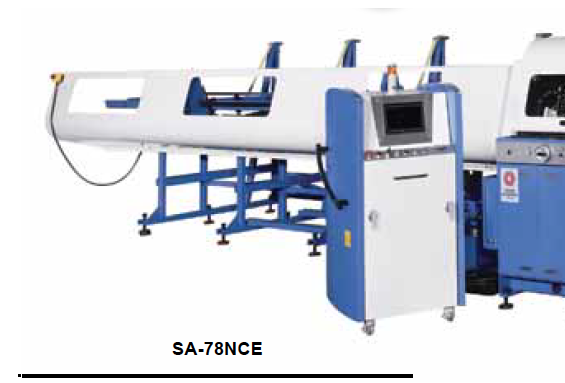
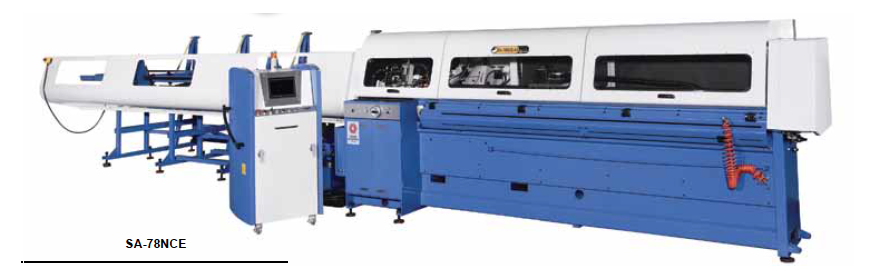
The SA-78NCe high tensile steel tube cutting line together with the DeF-FA/76-V chamfering system can connect to the SOCO BDB-70 deburring system by an automation cell, covering loading, cutting, end-finishing, washing, length measuring and stacking.
Cutting lines with deburring system
In general, the deburring method has been more widely used within the tubing industry. Using wire brushes, the operator can easily remove the burrs at the end of the tubes through manual and automatic systems and for single or double tube ends.
The brushes are able to reach the entire surface, both internal and external through different movements that are perpendicular to the tube, as well as remove burrs on the face of the tube. Variations of this process may include different types of brushes for specific applications, as caused by requirements such as deeper burr removal depths, tube material and deburring cycle time. Further automating existing cutting processes, SOCO offers the SA-78NCE high speed cutting line together with the SOCO BDB-70 double tube ends deburring machine. This powerful combination is capable of cutting and deburring various tube shapes and profiles such as round, rectangular, square and oval tubing.
Cutting lines with chamfering system
Tube chamfering usually involves a set of tooling made to size, clamping the part while the chamfering head moves in and out of the tube ends.
It is able to form an exact chamfering angle, allowing the tube to fit into other parts for future processing. It may also chamfer the external and internal parts of the tube, while creating a smoothened surface. It can also be executed with one or two sides of the tube at the same time. Since the stroke of the chamfering head may sometimes be controlled, so can the tube length after cutting and chamfering, as well as the chamfering depth. In SOCO, besides the standard functions of SA-76NC, the SA-76NC in-line may also be a part of complete Automation Cells for tubing. The working process includes loading, feeding, cutting, chamfering, deburring , air clearing and tube collecting. It brings time saving as well as higher throughput and performance.
Co-existing solutions
Until recent years, the deburring process through wire brushes has been the preferred method due to its encompassing range and in general, it also required less set-up time. However, as production requirements changed, and through new developments in the chamfering field, the deburring systems have been gradually replaced by chamfering machines in high production environments for different reasons and needs. Overall, both end finishing processes will continue to co-exist in the global market for different requirements and needs, but it is up to each company to decide and choose the most suitable and efficient method for their production environment.
For more information, contact PIM – Tel: 011 022 4648
The history of Amada cutting-edge bandsaw technology dates back to 1946; ever since our goals have been to provide customers with increased productivity and reliability.
While technology evolved, we embraced CNC automation as a core strength, thus improving throughput. Today we are uniquely positioned to help customers expand production capabilities and growing their business.
No two customers’ needs are exactly alike. Finding the right solution means thoroughly understanding objectives and configuring a solution that matches them precisely. Our engineers have decades of industry experience which promote achieving specified goals with a process that fits and enhances a customer’s work flow.
From the early beginnings of bandsaw machinery produced by Amada, (many of which are still running today), Amada has strived to offer machines that not only meet customers’ needs, but exceed them by offering features that were once considered impossible.
The technology of the bandsaw demonstrates the ability and limitations of the blade. As blades advance in technology, so do the machines utilizing them. Amada, as a proud manufacturer of both the machines and the blades, continues to research these developments and incorporates customer feedback to produce constantly evolving solutions.
Amada supplies bandsaw machinery and blades, such as the HK / HD series for mitre cutting, the semi-automatic H series, fully automatic HA / HFA series and the VM vertical series. The latest bandsaw technology is reflected in models such as the Dynasaw 430, the PCSAW with pulse cutting technology and CMB high speed circular saws.
Some features include out of square cutting detection, motion detectors to monitor the blade for jamming or breakage while cutting and quick approach arms. Add to this no work limit switches and work lights, hydraulic blade tensioning, variable blade speed control, vice pressure control units and positively driven wire brushes. 9 times feed for cutting long lengths and cut-off counters ensure the correct number of cuts. All these features, assist semi-skilled workers in the operation of the machines.
Certain models can be left to run unmanned on larger batch runs, thus allowing staff to do other important jobs at the same time. Take-up conveyors and tripod stands are available making material handling simple during the loading and cutting process.
Models available start with the entry level of 250mm capacity, which are highly popular and favourably priced. With larger steel suppliers all utilizing Amada bandsaws daily, testimony is given to their accuracy, reliability and longevity. Cutting accuracies are obtained right down to 0,2mm. With such accuracies, the need for secondary machining processes is greatly reduced and in some cases eliminated.
The latest additions to the Amada bandsaw range is the PCSAW, with either single pulse cutting action or double pulse cutting action. The PCSAW series is designed to offer high cutting rates, high precision, low noise and long blade life.
Vibration has always been an unwanted characteristic of metal sawing when cutting too fast. It leads to decreased blade life, noise and uneven or inaccurate cutting. By introducing a controlled pulsating motion to the blade through either an induction motor or a servo motor, all unwanted vibrations are eliminated and most efficient metal cutting is achieved. Blade temperature is reduced considerably during the process, and this together with positive chip removal through a twin wire brush system and a large area chip conveyor all enhance blade life and reduce running costs. All PCSAW bandsaws are operated through the on-board userfriendly CNC control.
The HPSaw (High Performance Saw) is possibly the fastest bandsaw in its class with the latest in cutting speed innovation and the ability to cut at up to 1.5 times faster than the high speed circular saws.
The specially designed AXCELA HP1 blade for this machine also reduces material wastage by up to 60% and guarantees accurate cutting.
Circular sawing machines are the optimal technology for realizing reduction in cycle time and high-precision cutting needed for steel bar cutting at high speed. An automatic loading table for continued cutting operation is supported by a CNC powered cut-in control for ease of operation. In perfecting functionality of these machines, Amada has developed a unique carbide tip circular blade that cuts cleanly, generating virtually no burrs.
A full range of bi-metal bandsaw blades are produced by Amada to compliment machine technology. As mentioned previously, a bandsaw demonstrates the ability and limitations of a blade. This means that a machine is only as good as the blade being used. Amada blades have earned the reputation of extreme reliability and longevity. All blades are manufactured in Japan to the most stringent quality standards and utilizing the latest in electron beam welding methods. These measures ensure that premature blade breakage is almost unheard of. The comprehensive range of blades available is tailor-made for all types of cutting conditions on all types of steels and profiles.
Robustness of Amada machinery, combined with longevity of Amada blades and a highly dedicated backup policy provide Amada customers, with total peace of mind.
For more information, contact Amada – Tel: 011 453 5459
It can cut one by one and also multiple. As bandsaws are fast and inexpensive, they are used commonly in steel plants, craft, aircraft, automotive industries and manufacturing, construction and aluminium sectors.
All mechanical and hydraulic systems of HB and DCB series Durma bandsaws are designed by experienced Durmazlar engineers in the R&D centre by using parametric 3D technology. Electric and electronic systems are designed in-house by computer and mechatronics engineers, while prototypes are forwarded to serial production after numerous tests.
DURMA HB, DCB series bandsaws feature a strong and heavy body design combined with high motor power and fast cutting ability; add to this longer blade life and a low sound level.
Hydraulic movements are facilitated by Rexroth valves, while all electrical control components are selected from Siemens and Schneider.
Bimetal Bandsaw and Cooling System
Standard features include a hydraulic vice, electric cutting speed adjustment with inverter, a bimetal bandsaw and cooling system and a bearing and carbide type blade housing. The NC control system, chip brush and a roller table complete the lineup. Extra tables can be put together to support longer materials.
Optional equipment includes a motorized chip-brush, chip conveyor, a laser marking system and hydraulic top clamping. A micro spray cooling system, automatic cutting pressure control and an extra roller table, measuring 1500mm length is also available.
For more information, contact: Durmazlar – Tel: 011 865 4090
Hard material like inconel, titanium and stainless steel are expensive to cut due to extensive time consumption, tool costs and demand for an experienced operator.
With the Cosen CNC-430 customers are in full control by cutting hard material faster, extending blade life and eliminating guesswork or operator error.
With the CNC-430 blades and work orders can be managed from the office, while cutting with recommended rates storing favourite parameters.
The CNC-430 features a cast iron saw frame, 4 oversized linear rails, large cast iron wheels with reinforcement arms, dual vibration dampeners and extra large/wide guide arms, while a V-Drive further acts to remove harmonics and vibration.
The dual vibration dampeners enhance cutting performance by suppressing the maximum amount of blade vibration.
The heavy duty and rugged cast iron saw frame stabilizes downfeed movement; thereby ensuring the performance and accuracy of the cut and also extending blade life.
Cosen produce metal cutting band saws from the smallest versions up to CNC machines. It is an ideal tool for the machine shop, maintenance shop, metal fabricating shop, school and limited run production work. Its solid construction ensures many years of accurate and reliable performance.
For more information, contact F&H Machine Tools – Tel: 011 397 4050
While WIKUS analyzes in detail all parameters, which influence the cost per cut, this rigorous evaluation of the cutting process is a key factor in achieving reduced cutting costs and with its product portfolio, WIKUS offers highly efficient, long-lasting solutions for any cutting task.
Cutting times and cutting costs can easily be reduced, blade lifetimes increased and additional capacities obtained through highly efficient tool performance. Moreover, innovative top-quality WIKUS bandsaw blades give an excellent finish to any cut, a factor which reduces the number of subsequent process steps. The results are increased efficiency and productivity, reduced cost per cut as well as the realisation of potential savings.
SKALAR® precision metal cutting bandsaw blade
WIKUS introduced the newly developed SKALAR bandsaw blade to the bimetal product family. This high-tech bandsaw blade meets the highest standards in metal cutting.
In developing the SKALAR® blade, Wikus especially took customer requirements into account. The bandsaw blade has many new features resulting from cooperation between Wikus’s Research and Development and Technical Support departments. The SKALAR® blade performs exceptionally well in terms of blade-life when cutting difficult special materials such as stainless- and acid-resistant-steels, while achieving an excellent finish to the cut surfaces. A series of successful internal and external cutting trials verified the performance of this new high-quality blade.
The blade’s ground tooth technology allows high performance cutting of many special steels and metals, namely stainless and acidresistant steels (ferritic), nitriding and highspeed steels, cast iron, tool steels, hardening steels, spring and ball-bearing steels, carbon and heat-treated steels, construction, deepdrawing and cutting steels, non-ferrous metals and aluminium / aluminium alloys.
ParaMaster 3.0 – online cutting data program
This software application has been designed for the optimization of the cutting process, taking into account the materials that need to be cut and the customer’s requirements.
With the online ParaMaster 3.0 cutting software, registered users can enter the parameters for a specific cutting task and receive the appropriate specifications regarding the best choice of bandsaw blade and the particular cutting parameters for the job in hand. This simple, useful tool is available through First Cut on the WIKUS website.
For more information, contact First Cut – Tel: 011 614 1112
Kanefusa’s V-tech™ PCD saw blade, FM Cold Saw™ technology and advanced material technology coating on cutting edges are demonstrations of their innovative strength.
Satisfied users all around the world testify to the reliability of Kanefusa’s products.
Kanefusa’s FM (Ferro Max) cold saw blades (single use) cut on average three times faster than a conventional bandsaw or metal saw, which means one machine can do the job of three. Less energy is needed to power the machines, less oil mist is generated and less space is required.
FM cold saw blades such as the Ferro Max Speed can outlast a conventional saw blade by up to 10 times. In the same period, a conventional saw blade must be reground nine times. This process produces a lot of sludge that requires costly disposal and each time a blade needs regrinding there are associated pickup and delivery costs nine times over. FM cold saw blades also allow for a thinner kerf than resharpened blades, which leads to a better material utilization and less swarf that must be either disposed of or recycled.
Every Kanefusa blade provides a constant cut quality and durability, providing absolute excellence and reliability blade after blade, a factor which is key to timeous and efficient production.
For more information, contact First Cut – Tel: 011 614 1112
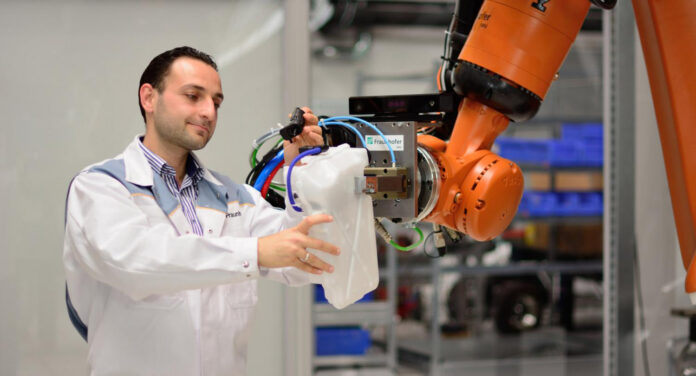
Heavy-duty robots in manufacturing, which can easily lift components weighing 200 kilos, swivel around quickly or move with a speed of up to two meters per second, pose a danger to human lives. To rule out any potential risk to employees, these steel colleagues have so far operated in a separate environment. However, cooperation would be much more efficient if humans and robots worked side by side, without protective barriers. But how does one ensure safety? The Fraunhofer Institute for Machine Tools and Forming Technology IWU has now come up with a solution to this problem.
The experts at Fraunhofer IWU have developed a differentiated safety concept that begins by defining different levels of collaboration. The more intensive the interaction between human and machine, the higher the level and more stringent the safety regulations. For example, if the robot needs to hand over a component to an employee, it moves as slowly and carefully as determined for this level. When working on separate tasks at a safe distance from each other, robots can work at full speed. Fraunhofer researchers have defined a total of four levels of collaboration.
These levels are supplemented by dividing collaborative work areas into spatial zones.
Each zone specifies how close humans and machines are to each other. At the lowest level, there are only two zones – a green and a red zone. If the employee is at a safe distance from the robot, it indicates a green zone and the robot can work at full speed. As soon as an employee approaches, a red zone is activated and the robot immediately stops working. In instances where teamwork is required – for instance to swap components or tools – then a yellow zone of cooperation is added. The heavy-duty robot now moves carefully and at low speed.
Cameras, sensors and intelligent algorithms
In order for the robot to respond properly, it must know the employee’s position and route at all times. It can do this with the help of several cameras that enable it to see. Two cameras are placed above the work area and provide a view of the entire work space. They also show the employee’s current location. An additional camera sits on the head of the robot and captures the close-up area. It helps the robot recognize the face, hand or component in the employee’s hand.
A row of sensors supplement the cameras. To prevent a collision, they register parameters such as the robot’s position, acceleration and power as well as the employee’s position and movement. The intelligent algorithms developed by Fraunhofer IWU help evaluate all this data. They ensure that the robot’s behavior is constantly aligned with all the safety regulations based on the task and situation at hand.
“Our system is already fully functional and has been tested in the lab. This year, the goal is get the trade association to test an application and enable its implementation in the industry,” says Prof. Matthias Putz, Director of Fraunhofer IWU.
Teamwork in virtual reality
This technology has already been tested in virtual reality. Using VR goggles, users can virtually experience teamwork with the machine. The system runs at full speed in virtual reality mode. “VR technology is thus an excellent way to realistically test the interaction with a robot,” says Prof. Putz. Fraunhofer experts want to refine the system in the near future. “Soon it should be able to adjust to the employee’s behavior by analyzing the person’s movements,” explains Putz. “In addition, we are working on gesture recognition, which will enable an employee to control the steel colleague with hand movements. For example, using a hand gesture to ask the robot for a tool.”




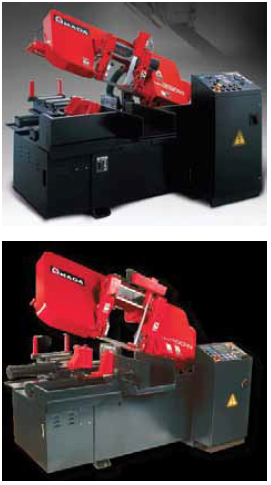 Amada supplies bandsaw machinery and blades, such as the HK / HD series for mitre cutting, the semi-automatic H series, fully automatic HA / HFA series and the VM vertical series. The latest bandsaw technology is reflected in models such as the Dynasaw 430, the PCSAW with pulse cutting technology and CMB high speed circular saws.
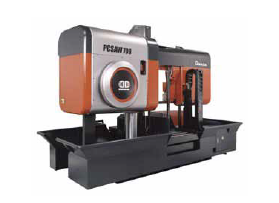 Models available start with the entry level of 250mm capacity, which are highly popular and favourably priced. With larger steel suppliers all utilizing Amada bandsaws daily, testimony is given to their accuracy, reliability and longevity. Cutting accuracies are obtained right down to 0,2mm. With such accuracies, the need for secondary machining processes is greatly reduced and in some cases eliminated.
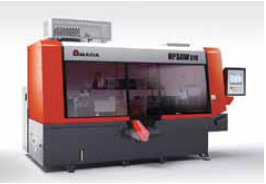 Vibration has always been an unwanted characteristic of metal sawing when cutting too fast. It leads to decreased blade life, noise and uneven or inaccurate cutting. By introducing a controlled pulsating motion to the blade through either an induction motor or a servo motor, all unwanted vibrations are eliminated and most efficient metal cutting is achieved. Blade temperature is reduced considerably during the process, and this together with positive chip removal through a twin wire brush system and a large area chip conveyor all enhance blade life and reduce running costs. All PCSAW bandsaws are operated through the on-board userfriendly CNC control.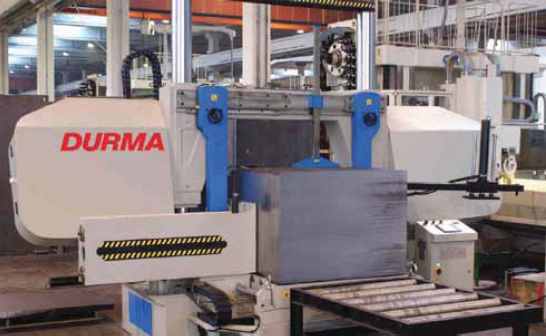
 All mechanical and hydraulic systems of HB and DCB series Durma bandsaws are designed by experienced Durmazlar engineers in the R&D centre by using parametric 3D technology. Electric and electronic systems are designed in-house by computer and mechatronics engineers, while prototypes are forwarded to serial production after numerous tests.