Home Blog Page 88

Whisperline Anti-Vibration Boring Bars With Exchangeable Turning Heads

The maximum overhang for solid steel boring bars is up to 4 x BD. Machining with a longer length of steel shank (more than 4 x BD) can induce unwelcome vibrations due to the elasticity and characteristics of the steel.

Solid carbide boring bars can limit vibrations on a higher overhang of more than 4 x BD and up to 6 x BD and offer an excellent, highly efficient option for boring applications of up to six times the tool’s machining depth. However, even the use of a solid carbide shank can cause vibrations when machining with high overhangs of more than 6 x BD.

WHISPERLINE anti-vibration boring bars have been designed to significantly reduce and even totally eliminate vibrations when working with a high overhang from 7 x BD to 14 x BD, thanks to a unique damping mechanism inside the tool, consisting of a heavy mass supported by a rubber spring element containing oil to increase the required dampening effect.

In addition, the system contains other elements which help to further reduce vibrations. The reactive damping mechanism comes into action during machining with high overhang work depths and acts as an effective counter to vibrations.

The highly effective, anti-vibration damper effect is applicable for large D.O.C and high feed rates and ensures continuous, efficient machining. ISCAR’s inspired WHISPERLINE anti-vibration tools considerably improve machining stability and enhance insert life. These factors enable meaningful increases in productivity to be achieved, improvements in surface quality on high overhangs to be attained, scrap levels to be reduced and users’ profitability to be enhanced.

WHISPERLINE anti-vibration tools enable the delivery of internal coolant to be supplied directly to where it is required – the insert’s cutting edge. Efficient distribution of coolant increases the insert’s tool life by reducing temperature and also improves chip control and chip evacuation.

The WHISPERLINE boring bars represent a cost-effective, modular system with a wide range of standard shanks and eight different interchangeable boring heads.

For more information, contact ISCAR South Africa – Tel: 011 997 2700.

TDM Powered Skills Development Programme Celebrates Milestone

During the past decade, it became clear that the knowledge economy and 4th Industrial Revolution require a different, more flexibly-skilled worker who can contribute to greater profitability and productivity. It was evident that the skills development programmes should align with the needs of industry to ensure successful employment of workers.

The TDM (Tool, Die and Mouldmaking) Powered Skills Development Programme was initiated as a solution to counter the skills erosion and job losses hampering the TDM sector by addressing the challenges identified. This Programme forms part of a multistakeholder initiative that was established in 2009 under the auspices of the Department of Trade and Industry (the dti) and the Toolmaking Association of South Africa (TASA) to implement a turnaround strategy for South Africa’s distressed tooling industry.

To this end it was decided to introduce a comprehensive articulated skills delivery system in South Africa to provide the basic and advanced skills required by the TDM sector. The intervention is based on the following guiding principles: Dedicated career guidance, assessment and selection processes, specialized student support services, strengthening of students’ entry into the Programme, the new qualification structures, new qualification design principles, capacity building through partnerships, deployment of newly skilled resources and sustainability.

Dirk van Dyk, CEO of NTIP said that the training of sufficient skilled people for the tooling industry is of critical importance as manufacturing is one of the cornerstones of a South African economy, facing serious growth challenges. “South Africa has to build its tooling manufacturing capacity to become globally more competitive if the country wants to create more jobs. The TDM Powered Programme plays a pivotal role in providing sufficient skilled people to the aerospace, automotive, chemical, electronics, leisure, marine, medical, mining and packaging industries,” Van Dyk added.

“The programme is a strategic growth stimulator for manufacturing and technical skills development and is a complement to the South African government’s commitment to eradicate poverty and unemployment,” explained Van Dyk. He added that the accomplishment of these candidates receiving their Occupational Certificates: Toolmaker, will contribute towards adding better workmanship, techniques and high standards of knowledge into the somewhat stale and old-fashioned manufacturing industry.

Van Dyk said that handing out these first Occupational Certificates: Toolmaker is a milestone for the TDM Powered Programme, as manufacturing industry has been waiting for qualified Toolmakers with international standards. This group of new-generation Artisans will bring advanced Toolmaking skills to the manufacturing industry. “Our candidates are innovative and can operate independently. During the TDM Programme, they were encouraged to be aware of and adapt to global manufacturing trends. This group of candidates is playing an important part in our company’s mission to alleviate skills shortage in South Africa,” Van Dyk concluded

From left: Aletta Zikalala (Employment Coordinator NTIP), Allen Sithebe (Toolroom Foreman at WaterTech and one of the speakers at the event), Christie Lennon, Travers Gallent, Keiven Kwinda, Ruan Steenekamp, Marie Oosthuysen (TCOE Coordinator NTIP), Juanay Johnson, Andy Berger (Lecturer), Jan Sephalane Mokwena, Moses Cindi, Matthys Uys (Lecturer) Wele Gcwabe, Sizwe Manana and Sandile Lthuli.

Looking Inside Materials The Smart Way

Just as cars in Germany need to be inspected every two years to ensure they are safe, other safety-critical objects – turbines, generators or high-pressure containers, for example – have to be examined regularly as well.

This is especially important when the materials and products used are pushed to their outermost performance limits in order to increase economic efficiency. To carry out these assessments, inspectors receive a printout map of the factory grounds to help them find their way. Once they locate the structure to be inspected – say, a highpressure container – they inspect it with help from a sensor. The difficulty is that they have to inspect the entire surface. But which parts have they already evaluated with the sensor, and what still needs to be done? Inspectors also have to undergo a lengthy training process and need a great deal of experience in order to reliably gauge the condition of the various objects to be examined. It is hard to find experienced engineers for this.

Recording 100 percent of the data

Support is on the way – the Fraunhofer Institute for Nondestructive Testing IZFP has developed 3D SmartInspect for intelligent inspection and quality control. “With it, inspectors know exactly what has already been measured as well as the results of those measurements. The system also automatically generates a digital protocol,” explains Prof. Bernd Valeske, head of department at IZFP and head of the Fraunhofer Innovation Cluster Automotive Quality Saar AQS. Compared to existing processes, 3D SmartIn-spect is a quantum leap. Even relatively inexperienced inspectors could be employed in the future, and the training process could also be shortened significantly.

In day-to-day work, the process would look like this – inspectors wear augmented reality (AR) glasses, though the system works with a tablet PC or a smartphone too. They view the object to be examined – let’s take the high-pressure container again – through the glasses. As the inspectors run the sensor over the object, the corresponding area on the glasses’ display changes to green while the rest of the container retains its original color. This assures inspectors that they have examined every inch of the object. At the same time, the system constantly verifies that the sensor data has been recorded correctly. “Not only can inspectors be sure that they have collected 100 percent of the data, they also know that the measurements are valid,” says Valeske.

A direct route to the digital age

Once all data has been acquired, inspectors can see the results immediately on their AR glasses. Areas with any kind of a defect – a cavity where it doesn’t belong, or corrosion – appear red on the display. Inspectors can immediately indicate where the repair team needs to intervene, either by using chalk on the actual object or via digital means. Control center experts can also examine all the data as soon as it has been collected – how serious is the detected flaw? Does the repair team need to be called out at once, or can maintenance wait a few days?

Digital testing memory

Generating a test protocol will also be much simpler. Currently, inspectors have to laboriously document their work and then allocate the data to the object measured – a method prone to errors. With 3D-SmartInspect, data is automatically and clearly assigned to the object and writing a protocol is unnecessary. Using the smart assistant sensor systems, engineers can accurately collect the relevant data and capitalize on it in the digital product memory – at every stage of the product lifecycle. “Until now, transferring data to the digital world was not a high priority. In the future, we will have a digital testing memory and can embed data automatically in digital systems. This is a very important step, particularly in the context of Industrie 4.0,” explains Valeske. Digital approaches such as these offer enormous economic advantages because they significantly reduce – if not completely eliminate – downtimes.

An initial prototype of 3D SmartInspect has been completed. Fraunhofer researchers recently presented it at Hannover Messe. For the next step, the researchers are working on transferring the system to AR glasses.

Components With Responsibility

Industrial manufacturing usually follows rigidly programmed processes, in which individual work steps and machines are tightly scheduled.

This makes production inflexible and causes problems if devices fail or unscheduled components need to be processed at short notice. Recently, Fraunhofer developers presented new software that allows each individual component to tell the machine what has to be done. By breaking away from central production planning, factories can achieve unprecedented agility and flexibility, very much in the spirit of Industrie 4.0.

In today’s factories, components such as engine blocks or blanks for a turbine blade are processed in linked processes by multiple machines. The systems turn and mill each component and repeatedly measure it automatically as they do so. A timetable precisely defines the sequence of work steps and the machines and devices required to carry them out. However, such timetables work through the individual steps in rigid sequences. If machines fail or other components have to be prioritized because of customer requests, the manufacturer has to laboriously reschedule production or re-tool the machines. This costs time and money.

The component knows

Everything would go much faster if production and the requisite machines were not rigidly set by a control program, but if every component itself knew the best way for it to be moved quickly through the process chain. This is similar to a car’s navigation system, which is able to calculate the fastest route with the latest real-time data. Impossible? Not at all, as developers at the Fraunhofer Institute for Production Technology IPT in Aachen intend to demonstrate. The institute’s engineers are developing a production system in which every workpiece itself carries the necessary information about concrete manufacturing steps it needs to complete. This is what the engineers call service-oriented architecture for adaptive and connected manufacturing. The basic idea is this – the component behaves like an individual. First, the information outlining which production steps each component should pass through is stored. Here, it is deliberately left open just which machine should carry out a specific processing step. Only once a processing step is pending, the system does choose one of the various machines with suitable capabilities one that is available immediately or, failing that, the soonest available one.

The decisive point is that a record is kept for each production step, detailing what task was carried out and what each component has been put through – Hole drilled with machine parameter A and tool X, edge ground with machine parameter B and tool Y, surface milled with machine parameter C and tool Z. Hence, the software chronicles the manufacturing history of each individual component, creating what is known as a digital twin. The components bear a QR code so that they can be individually recognized.

One-of-a-kind production thanks to digital twins and a smart manufacturing network

The goal is to use the software to create a digital twin for every component. This way, manufacturers will always know how each component was processed, which machine or tool was used and which step is coming up next. This strategy is important for companies, for example, whose production machinery handles batches of different components. In conventional manufacturing setups, it is necessary to repeatedly stop, re-program and re-tool systems when switching to the new product. However, with the serviceoriented approach, it’s the product itself that tells the devices what needs to be done. “By connecting components and machines in the future, companies will be able to successively manufacture one-of-a-kind pieces, in other words even batches of one,” says Michael Kulik, who is helping develop the new software as a project manager at Fraunhofer. To this end, a component’s entire process data should be made available in the form of its digital twin in a smart manufacturing network. Subsequently, data sets can be analyzed and reused, thus increasing process robustness and product quality. Fraunhofer researchers used a small, representative production line to demonstrate the features of the digital twin, the service-oriented software and connection to the smart manufacturing network.

Service-oriented software leads to flexible production

What is unique about the service-oriented software is that the production process sequence can be easily configured using a menu – by means of drag and drop, users select individual work steps from a list of all services derived from the production environment – and ultimately from the manufacturing machines – and add them into the relevant process chain. They then line these work steps up in a row. In case a machine fails, a top-down, centrally controlled manufacturing set-up can – at worst – lead to a full production downtime. With serviceoriented software, this should no longer occur. Since the next step for each component is stored in detail in its digital twin concept, users can flexibly redirect the component to another machine that offers the next work step. “Many machines can fulfill multiple tasks in a production line”, says Kulik. “A technically sophisticated 5-axis milling machine, for example, can also do the job of a simpler 3-axis milling machine.” With central production planning, however, there is usually no provision for such switches, because the whole manufacturing process is set up for defined work steps and machines. “Within the smart manufacturing network, the service-oriented software will have the flexibility to decide whether or not to send the job to the 5-axis machine that is free at that moment.”

Plug and produce

Another important prerequisite for flexible manufacturing is the ability to integrate machines from different manufacturers easily into the smart manufacturing network. Consequently, Fraunhofer IPT is working together with partners from science and industry in the Fraunhofer High Performance Center for Connected, Adaptive Production, focusing on the integration of the various manufacturer systems into a shared superordinate software and data platform. “As of yet, there is no equivalent for the sort of plugand- play approach that we’re so familiar with from everyday technology,” says Dr. Thomas Bobek, coordinator of the Fraunhofer High Performance Center. “Our goal is to pave the way for plug and produce.”

Omron Mobile Robots Ramp Up Efficiency In African Warehouse, Distribution Sector

This has resulted in Omron introducing its first industrial mobile robot product line, the LD platform.

“The fact that this latest technology is now available to the broader African market bears testament as to how highly we regard the opportunities presented by the continent to accelerate its uptake of innovation,” Omron Field Application Engineer Evert Janse van Vuuren comments.

Omron Field Application Engineer Evert Janse van Vuuren

Omron mobile robots provide a new level of efficiency and cost-savings when it comes to moving goods around large facilities. This unique family of mobile robots is developed for rapid and reliable materials transport on a 24/7 basis.

Ideal for conveying goods throughout warehouses, distribution centres and manufacturing facilities, the LD mobile robot platform has a payload capacity of up to 130kg, depending on the model. Compared to traditional Automated Guided Vehicles (AGVs), Omron mobile robots can self-navigate entirely based on the natural features of the facility.

No costly and time-consuming infrastructure modifications are necessary, which means no need for floor magnets, tapes or laser beacons, all typically associated with classic AGV deployment.

“The simpler the technology is to get upand- running, the sooner the end user can start to reap the benefits. This is of particular importance in Africa, where skill levels in terms of automation and robotics are scarce,” Janse van Vuuren highlights.

Flexible factory layouts are now also possible, taking into account space and size constraints in industrial areas. “This is now possible as delivery points can be modified for the mobile robots. Omron mobile robots also complement traditional automation, such as conveyors and provide traceable movement of goods,” Janse van Vuuren adds.

This means that the latest Omron technology can integrate seamlessly with the older systems that are quite prevalent in Africa, where technological development lags mature markets like Europe and the US by a significant margin.

Equipped with patented Acuity technology, Omron mobile robots have a robust selfnavigation system, even where there’s constant movement of people, pallets, carts and forklifts and shelves being emptied and restocked.

On-board intelligence allows them to not only avoid obstacles, but also to choose the best path in order to complete a task. This smart movement also makes them safe to operate alongside people.

A typical fleet can comprise up to 100 vehicles, which can now be managed centrally by fleetmanager software, who can interact with the factory or warehouse management software such as MES (Manufacturing Execution Systems) or WMS (Warehouse Management Systems).

In addition, the LD Cart Transporter is an automated materials-handling solution. It includes an automatic engagement device, and is able to adjust its approach path to engage the cart automatically. This makes it an ideal solution to provide lineside replenishment for assembly line or for e-commerce order fulfilment in any distribution centre in Africa.

For more information, contact Omron Electronics – Tel: (011) 579 2600

Breaking Chips With Two Rhinorush Chip Breakers

The process of properly controlling chip formations are important in order to prevent the loss of production due to frequent halts in the machining process as well as safety hazards to the operator, damage to the tools and work-piece.

The FS and MK chip breakers improve machinability by reducing cutting forces and the crater wear of cutting tools while operations are conducted on various alloys and cutting conditions.

RhinoRush MK Chip Breaker

The RhinoRush MK chip breaker is primarily for medium applications while machining stainless steel and heat resistant materials. What makes the MK chip breaker so special is that it is a more stable insert that offers long tool life because of its sharp edge design that minimizes built-up-edges during machining operations.

Case studies prove the effectiveness of the MK chip breaker with tool life being increased by over 300 percent compared to similar offerings by leading competitors.

For example, during the product testing phase of a workpiece made from SUS 304, the MK chip breaker coated with TaeguTec’s famous TT9080 grade witnessed an increase of tool life by 343 percent during continuous cutting conditions where speeds were 160 meters per minutes and cutting conditions were the same.

During another continuous cutting test, but this time on the difficult-to-cut material Inconel 718, tool life was increased by 159 percent with all cutting parameters the same.

RhinoRush FS Chip Breaker

The FS chip breaker is specifically designed to enable excellent chip control on steel finish turning with superior evacuation under low feed and low depth of cut applications.

A further benefit of the FS chip breaker is the insert’s sharp cutting edge which drastically reduces machining load resulting in minimal vibration during operations.

Two case studies worth noting show how efficient the FS chip breaker is on machining chrome alloy steel.

In both tests, TaeguTec’s RhinoRush FS chip breaker was pitted against a leading competitor’s similar cutting tool. The first increased tool life by 50 percent while the other increased tool life by 10 percent; in both cases, cutting conditions where the same with cutting speeds being over 230 m/min.

For more information, contact Taegutec – Tel: (011) 362 1500

TaeguTec T-Tap

The high cutting speed with low cutting force taps’ universal application is ideal for steel, stainless steel and cast iron applications.

Whether it is metric ISO standard or fine threads, the optimized cutting geometry of the taps ensures easy chip evacuation for precise and reliable machining.

The material used in the T-Tap line is offered in three different grades – uncoated, steam tempered or titanium nitride. No matter the coating, the T-Tap HSSE line enables higher productivity and economy on a wide range of materials. Its longer tool life is credited by its innovative cutting geometry and the option of either TiN or steam tempering.

TaeguTec’s straight flute with spiral point HSSE taps for through hole threading have a form B 4-5 threads chamfer, a dimension range of M2-M20 (MF8X1.0-MF16X1.5) and an ISO 2-6H tolerance. The geometries of this series forces chips forward making tapping an easy, cost-efficient process while its optimal design, credit to shallow flutes, is only used in combination with cutting fluids (not chip evacuation).

The right hand spiral 40 degree flute’s features for blind hold threading comes with a helix angle, form C 2-3 threads chamfer, the same dimension range and ISO tolerance as the straight flute with spiral point. The difference is that the tap is designed with spiral flute grinding which forces the chips out of the hole and is designed for both cutting fluid and chip evacuation.

The uncoated T-Tap grade is a perfect economical choice and is recommended for steel up to a maximum 800 newton per square millimeter while the steam tempered coating ferric oxide layer at the cutting edge makes it perfect for chip flow and reduces built-up edges for increased tool life.

For high hardness, chemical stability and heat resistance applications, the physical vapor deposition TiN coating offers a longer tool life due to its balanced characteristics of low heat conductivity and smooth operation at low cutting speeds and universal application on a wide range of materials.

For more information, contact Taegutec – Tel: (011) 362 1500

OTMAR Machine Tools Celebrates 50 Years

“The rented factory space at Radio Road, Dinwiddie, Germiston was about 350m2, with office and change rooms in an adjacent dilapidated shack with outside ablutions.

A small, humble start, but we were there and we meant to stay there,” reminisces Erich Nast, who took over Otmar Machine Tools in 1968. “Our first employees included Karl Schrag, a German trained and qualified machine tool specialist and Elmon an untrained, but willing assistant, for semiskilled work,” he recalls.

“We stayed at Radio Road for 15 years but the small factory space and a shortage of machinery and equipment made expansion virtually impossible. Therefore, suitable grounds were purchased in Alrode, plans were drawn up and a building erected in record time. Basalt Street Alrode Alberton was the new home of Otmar Machine Tools,” explains Nast.

Heading up Otmar Machine Tools (L to R) Dietmar Nast, Erich Nast and Craig Nast.

The company started manufacturing sheet metal and plate working machinery featuring simple, manual and motorized sheet and plate rolls. Soon thereafter guillotines, folders, jennies, section rolls, fly presses, eccentric and pneumatic presses and circle cutters were added to the product line-up. Otmar Machine Tools also designs and builds specialized machines and equipment to customer specifications.

“While our locally manufactured products are found all over South Africa in the industrial sector and training colleges alike, we decided in 1999 to add value to our existing client base by starting a CNC department for the manufacture of quality products with short turn around times and at a reasonable price. From a small start with one CNC lathe we now have eight lathes and four machining centres. We specialize in small batch machining and even one off’s . With up to date software we are able to take on any 3-axis milling job required.

Today, after 50 golden years of Otmar Machine Tools, I am proud to say that three generations of Nasts, are heading up the company. With the help of my son Dietmar and my grandson Craig, Otmar’s destiny is surely sealed for the next 50 years,” ends Erich Nast.

South Africa’s Priority Is To Ensure There’s Certainty And Continuity After Brexit

According to Davies, the Economic Partnership Agreement (EPA) provides a good basis to facilitate trade between South Africa and the UK going forward.

“Our priority now is that we do not want any interruption in our trade relations with the UK. The UK government has given an indication that it will roll-over existing trade arrangements to provide continuity and predictability,” said Davies.

Davies said the EPA represents an improvement on the Trade Development Cooperation Agreement in a number of respects in that it harmonizes the trading regime between Southern Africa Customs Union (SACU) and the European Union (EU) and secures further market access in agriculture beyond the TDCA provisions. SACU is the world’s oldest customs union and predates the EU by 50 years.

“Under the EPA, we have secured an improved market access for wines and some fruit products, as well as negotiated new access for sugar and ethanol.” added Davies.

Davies pointed out that South Africa managed to gain recognition for some of our geographic indications like Rooibos, Honey bush and Karoo lamb under the EPA, as well as some wine names.

The UK remains SA’s historical and strategic trade and investment partner for South Africa and remains a key market for especially agriculture exports accounting for over 20% of SA’s exports of wine and 30% of fruit exports globally. The UK is the biggest destination in the EU for South African investment, accounting for 30% of SA investments into Europe. Bilateral investment relations between the UK and South Africa are strong with a total of 323 FDI projects from the UK to South Africa recorded between January 2003 and September 2016. These projects represent a total capital investment of R63.50 billion which is an average investment of R1.6 billion per project. According to FDI Intelligence during the period, a total of 4,857 jobs were created.

DAVIES WELCOMES GLASS HALF FULL REPORT

The Minister of Trade and Industry, Dr Rob Davies has welcomed the 2017 Annual Foreign Investment Confidence Index release by AT Kearney, a global management company.

The index, entitled the Glass Half Full, ranks South Africa in position 25 which is a ray of sunshine and a more realistic representation of the state and outlook of South Africa’s economic prospects and investment landscape. According to the report SA’s return to the index may be attributed to the short-term improvement of economic prospects and also the long-term investment potential in the country’s manufacturing sector. SA returned to the index after a twoyear absence.

Davies says that in spite of the recent downgrade, South Africa is proactively meeting investors, foreign governments and foreign ambassadors to promote South Africa as an attractive investment destination which is confirmed by the AT Kearney index.

“Investors are convinced about the long term investment prospects in South Africa. With sustained and continued improvements, SA is poised to lead one of the world’s next manufacturing hubs,” states Davies.

According to Davies, SA has performed extremely well compared to other African countries, after having the third highest drop in investment levels in 2015, according to UNCTAD’s World Investment Report, which estimated a 38% increase in investment levels for 2016.

Davies indicates that South Africa’s return to the index is remarkable and FDI inflows are estimated at $2.4 billion according to the AT Kearney index.

“InvestSA on the other hand recorded an investment pipeline of investment projects at R58 billion over the 2016/2017 financial year. Multinationals are expanding their presence in SA. For example, original equipment manufacturers (OEM’s) in the automotives sector continue to invest in new five year platforms and are embracing localization and empowerment. Siemens has achieved a BEE level 2 status and has invested in a black industrialist company through a joint venture to manufacture transformers,” highlights Davies.

Davies expressed his appreciation for these kinds of investments, saying they are welcome and provide greater impetus to industrializing approach adding to productive capacity and creating employment.

Davies adds that the quality and level of FDI inflow into the country is testament to the reforms and initiatives put in place by government to make South Africa an attractive investment destination.

“The One Stop Shop (OSS), is a focal point in government to shorten and simplify administrative procedures and guidelines for foreign companies wishing to invest in South Africa. It brings together key government role players dealing with issues from policy and regulation, permit and licensing, infrastructure and finance and incentives with a view to reducing lengthy bureaucratic procedures, reduce bottlenecks and to provide an enhanced aftercare service,” says Davies.

The OSS approach is supported by an Inter-Ministerial Committee (IMC) on Investment, chaired by President Jacob Zuma. We have enhanced our investor facilitation service with a key focus on investor retention, expansion and aftercare. South Africa is and will always be open for investment.

The index is a product of survey results based on global CEOs’ views regarding investment potential of various economies.

State Capture VS Radical Economic Transformation

It’s all about who owes what and how much of it as well as the colour of the owner – and a deep rooted grievance which still has to be settled.

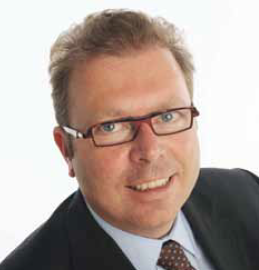
Gerhard Papenfus, Chief Executive of the National Employers’ Association of South Africa (NEASA).

1994 gave us temporary reprieve – but the Rainbow experiment has come to an end – and we’re all to be blamed for it. In 2007 the so-called second phase of the National Democratic Revolution was adopted in Polokwane. It was advanced in 2012 in Mangaung. Business did not take any of that seriously – they thought (perhaps hoped) that things would remain the same. It didn’t.

In recent years the propaganda against white monopoly capital increased. Then came the most recent slogan: radical economic transformation. It’s all in line with official ANC policy as articulated in the National Democratic Revolution. It means only one thing – take from whites and give it to already privileged and politically connected previously disadvantaged individuals, although, off course, it is sold in a manner that creates the impression that everybody, except whites, will benefit.

When President Zuma eventually dismissed Finance Minister Pravin Gordhan, there were voices all round that he had overstepped the boundaries and that the end of his presidency was in sight. It clearly wasn’t. The President knows his party all too well; he knew all along that they will always put personal interests above the national interest – career politicians desperately queuing at the trough. There are off course exceptions, remarkable individuals swimming against the current.

He also knows that for those he relies upon to stay in power, the national interest is of less importance than seeing whites being dispossessed and eliminated from economic life. President Zuma has emerged stronger from the Pravin Gordhan debacle – he made his most daring move, until now, and came out on top, at least within the ANC – and at least for now.

Those already at the trough and those pushing and elbowing to benefit, was initially a bit offended by the President not involving them more directly in implementing his unique form of radical economic transformation – besieging Treasury (one remaining obstacle to complete his drive to capture South Africa) with almost unlimited access to our resources to enrich himself and his allies. Somehow the dissidents in the ANC are no longer offended; they now fully understand his blatantly crooked motives. How this metamorphosis transpired, only they will know. They have humbly apologised for offending the President, undertook to never do it again and declared themselves ready to move on – silently overseeing rapid state capture and the demise of South Africa.

They, and the millions educated in the art of entitlement, will now continue with the much bigger project of their version of radical economic transformation. This is not a type of transformation which will take South Africa forward – bringing about change that will lead to improved service delivery all round, improved education and skills, work ethics and productivity and consequently increased levels of employment – the type of transformation that will lead to economic growth, the type of radical transformation that all sober-thinking South Africans would support.

In contrast, the ANC’s type of radical economic transformation will lead us down the path of accelerated decline, towards the equal society they strive for, not equal in relative prosperity, but in the equal sharing of misery. This is simply so because the different races and ethnical groups within South Africa, which are meant to complement each other, are pretending that we don’t need each other – my race included.

This radical economic transformation-venture is designed to redistribute wealth through various means, but aimed at taking away from a few in order to give to many, in a manner that will eventually benefit only a very few, but which will steadily eliminate a race group that makes a very substantial economic contribution – but this is the motive after all.

Their version of economic transformation will not create anything new, it will simply take from some and give to many, but unlike the case with the five loaves of bread and two fish, the loot will not multiply. It will be a never ending process (which the National Democratic Revolution calls a seamless transformation), always aimed at the obvious and easy targets, going down the race and eventually the ethical hierarchy. With a population that is steadily losing the ability to care for themselves, coupled with envy and hatred, the thirst for redistribution cannot be quenched. As resources become scarcer, even the initial perpetrators will become the victims.

The current dispensation is not sustainable – very few will deny that. However, radical economic transformation will only exacerbate an already dire situation. To erode the ability of a particular minority to play a part in the building of a better South Africa, because of historic events, will inevitably cripple South Africa.

The danger of President Zuma’s access to the South African purse is immense; the danger of race orientated radical economic transformation is even larger. State capture combined with a radical erosion of the tax base is a quick recipe for disaster. This, however, is exactly what the revolutionaries aim for.

In light of this, are we hopeless? Not in the least. There is abundant grace; and consequently abundant hope. Rightminded South Africans will not only take note of what they do, but respond appropriately and with courage. We will also focus more on doing what is right. Instead of withdrawing we will continue to occupy our space; now only with more determination.