Home Blog Page 82

Holographic Measurement Technology At Production Speed

Digitale Holografie im Produktionsakt; Joseph von Fraunhofer Preis 2017; JvF-Preis 2017;

Fault tolerance in automobile production is increasingly diminishing. Until recently, this presented suppliers with a problem: There were no sufficient methods for detecting micro defects during production.

Visual inspection was the solution of choice, but this is not suitable for in-line measurements in the production process. By developing digital holography to become suitable for production, researchers at the Fraunhofer Institute for Physical Measurement Techniques IPM in Freiburg, Germany have resolved this dilemma. Digital holography makes it possible to fully inspect all parts – in a matter of seconds.

Sometimes every thousandth of a millimeter counts – such as with components for the automotive or aviation industry. In order to determine whether the individual component is fault-free and dimensionally stable, digital holography would be the method of choice. However, this method has so far been slow and sensitive to vibrations. It was therefore not suitable for production environments, and only samples could be tested.

Fast, solid results

Three researchers from the Fraunhofer IPM – Dr. Markus Fratz, Dr. Alexander Bertz and Dr. Tobias Beckmann – have now brought the process of digital holography out of the laboratory and into the production hall. “We have been able to eliminate all the disadvantages and have therefore, for the first time, developed a system that allows one hundred percent inspection in production,” says Beckmann, who heads the project together with Fratz. “Our system can measure centimeter-sized rough objects in fractions of a second with micrometer accuracy, thereby compensating for disturbances, such as vibrations.” This allows for in-line measurements during the production process for the first time. Instead of taking samples, as before, each individual part can therefore be checked for dimensional accuracy and, at the same time, for the smallest defects. The challenge the three researchers faced was anything but easy to solve. “The search for defects is like trying to measure the shape of a 25-meter-high football stadium from a height of 300 meters so accurately that you can find the footprint of a baby in the grass – and in fractions of a second, even if the stadium is shaken by a light earthquake,” Fratz explains.

Laser waves of different wavelengths and intelligent algorithms

The system can measure centimeter-sized rough objects in fractions of a second with micrometer accuracy – even under disturbances, such as vibrations. © Fraunhofer IPM

But how did the researchers manage to succeed? Instead of interferometrically measuring the object with laser light only at a single wavelength, they illuminate it successively with laser beams of different wavelengths and assess the resulting images in relation to one another. Another highlight is the evaluation algorithms. The researchers have parallelized them so as to take full advantage of the performance of a highend graphics card. As a result, the system is so fast that it can precisely measure objects to the micrometer within fractions of a second. “For highly accurate threedimensional measurements, our system is the fastest available on the market worldwide,” says Bertz, Group Manager at the Fraunhofer IPM. This speed, in turn, makes the system robust and comparatively insensitive to interferences such as vibrations. This is comparable to taking a photograph: the shorter the exposure time, the less the image blurs.

Production without risk

For Werner Giessler – a medium-sized company that manufactures components for diesel injection systems – the process was a kind of salvation. From its customer, Bosch, the company was commissioned to start delivering 10 million components per year instead of the previous 6.5 million and all without a single defective part. With visual inspection, this would have been impossible. With the help of digital holography, though, the medium-sized company was able to accept the contract. “I’m not enough of a risk taker to do without this technology,” says Managing Director Thomas Giessler. “Companies that have not learned to inspect the quality of their parts will soon disappear.” The system is already integrated into the production process.

Markus Fratz, Alexander Bertz and Tobias Beckmann have received the Joseph von Fraunhofer Prize for the development of production-ready digital holography. The jury justifies the award by mentioning, among other things, “the outstanding scientific work and the first-time presentation of the industrial suitability of the process”.

Machinery That Repairs Itself

In the EU-funded project SelSus, Fraunhofer scientists are collaborating in a consortium with partners from research and industry to develop maintenance technology capable of forecasting machine downtimes in production before they occur.

This allows plant managers to rectify faults before the machine breaks down. The system even corrects some defects automatically.

Unforeseen machine failures during ongoing production – plant managers dread them, technicians detest them and managers just sigh and factor them in. Such incidents prompt frantic repairs, drive up costs, adversely affect delivery reliability and ultimately weaken companies’ competitiveness. Yet often the problem is only a small defect or normal wear and tear. However, if left undetected, these can lead to major disruptions and production downtimes.

What would be helpful is a diagnostic procedure capable of monitoring the status of all components in the production line, identifying problems and weak points and informing the responsible employee in a timely manner. Based on what’s known as a decision-support system, maintenance personnel can then reach a decision and take targeted action to repair the defect. Ideally without having to interrupt production.

Precisely this is one of the underlying ideas, albeit not the only one, behind the ambitious SelSus project within which the Fraunhofer Institute for Manufacturing Engineering and Automation IPA is currently researching. “The aim is not just to monitor the status of the machines and components. Using intelligent software and sensor networks, the plan is to detect potential weak points or signs of wear and tear early enough for the system to be able to predict potential malfunctions,” explains Martin Kasperczyk from Fraunhofer IPA. The developed diagnostic models also directly provide suggestions or recommendations on how to rectify the problem. Project partner Electrolux in Pordenone, Italy, uses such a decisionsupport system. The system is capable of predicting with a certain probability potential failures on a press for washing machine facings and of diagnosing actually occurring malfunctions. The data needed to monitor the machine status is partially provided by sensors. They measure values such as energy consumption, temperature, oil pressure, particles in the oil or vibrations. Fraunhofer IPA and the participating consortium have also proved that the technology functions reliably in practice.

The system repairs itself

The system is even capable of sending control impulses to individual machines. A welding control on which a sensor has failed, for instance, can continue to work almost seamlessly in a secure mode, without any serious disruptions. The capability for selfrepair and sustaining production has also given the project its name. The full project title of SelSus is Health Monitoring and Life-Long Capability Management for Self-Sustaining Manufacturing Systems.

However, first a number of technological hurdles had to be overcome. Kasperczyk says, “one of the biggest challenges was analyzing the flood of data. After all, we’re talking here about predicting malfunctions or breakdowns of machines with a high degree of reliability. You don’t get there just by programming a couple of algorithms.”

Bayesian networks and sensor data

The experts are putting their faith in Bayesian networks. A Bayesian network is a mathematical model that can be used to compute the probabilities of a certain event or state occurring. The model represents a set of variables and their conditional dependencies. With the help of the data collected by the sensors, the software for example computes the probabilities of a specific high-stress cable breaking in the near future and, where applicable, signals that it should be replaced.

But the SelSus software relies not only on sensors. It also takes the technical characteristics of the machine and its performance parameters into account. This data has to be captured during installation and configuration of the system. Moreover, an extensive test run tells the system how the machine and its components behave in continuous operation and under load. Only then is it ready for use. The software also registers new data, for instance as a result of machine upgrades or deterioration in performance due to wear, enabling the system to learn.

The complexity of the SelSus concept is also evident from the fact that the software even interacts with operators by analyzing the causes of potential or existing malfunctions and proposing an appropriate course of action.

A system with self-healing capabilities from Coventry

Project partner The Manufacturing Technology Centre from Coventry, UK, has created a system with self-healing capabilities. In an engine production plant, a dispenser is attached to a robotic arm by means of vacuum. If the dispenser encounters resistance, rather than snapping off, it reacts flexibly. It loses the grip produced under vacuum and drops a few centimeters until it is stopped by springs. The springs then draw the dispenser back to its original position. Subsequent calibration ensures the tool is in the correct position – and after the brief interruption, the work process continues.

Politicians have long recognized the potential offered by the technology. SelSus has received nearly 5.4 million euros in funding from the European Commission. In addition to Fraunhofer IPA, the project consortium includes renowned industry partners such as automaker Ford, household appliance manufacturer Electrolux, welding technology provider HWH Hamburg and automation specialist IEF-Werner. Other participants are universities, such as Loughborough University and the Instituto de sistemas e Robotica, or ICT providers including HUGIN EXPERT, Advanced Data Processing or Inotec, to list but a few.


Large DMG MORI 5-Axis Machining Center Installed At Titanus Slew Rings

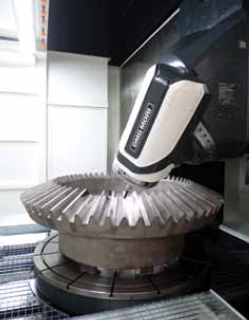
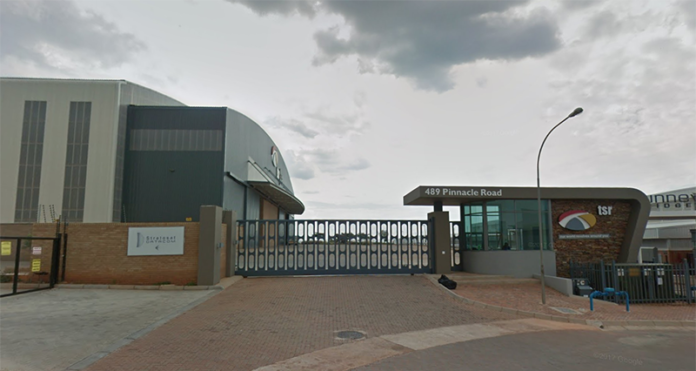
The largest 5-axis machining center ever sold to a South African customer by DMG MORI has recently been installed at Titanus Slew Rings (TSR) in Elandsfontein, near Germiston.

The machine, a DMU 210 P 2nd generation, supplied by local machine tool merchant Retecon, weighs a staggering 60 tons and features a work area of 2,100 x 2,100 x 1,250 mm, while being capable of handling a maximum table load of 8,000 kg.

Titanus Slew Rings was founded by Renato Casagrande in 1975 as a general engineering concern, and then named Titanus Engineering. Excellent workmanship, expertise and outstanding service to the highest standard ensured the company’s steady growth, twice requiring a move to larger premises.

In 1985 a strategic decision was taken to focus and further specialize production facilities towards the manufacture and reconditioning of slew bearings. The company was renamed Titanus Slew Rings and moved to the wholly owned new premises in Elandsfontein. TSR is a privately owned, family controlled business, ensuring flexibility and fast re-alignment of resources towards meeting customer requirements.

Director Marco Casagrande says, “at Titanus Slew Rings we are committed to the implementation of the latest innovative technologies in slew bearing manufacture. Profits are continuously re-invested in new capital equipment and process technologies in order to maintain the highest levels of quality.
“We currently have ten CNC vertical borers capable of machining slew bearings and components from 500 mm in diameter to 6,300 mm in diameter with some of the vertical borers featuring live spindles for maximum efficiency.

“With over ten gear cutters capable of cutting internal and external gears, we are easily able to meet the capacity of our slew bearing range. In addition, we offer gear cutting services to our customers, including the manufacture and reconditioning of girth gears. The maximum size external gear we can gear cut is 7,000 mm in diameter, and on the internal range we can cut a maximum of 4,000 mm in diameter.

“Continuous investment and upgrading of our machine shop is key to our ability to provide our clients with the highest quality products, and that is the reason why we just purchased the 5-axis machining center from DMG MORI,” explains Casagrande.

TSR last month invited customers and the press to an open-day viewing of the new machine.

The modular concept of the DMU 210 P 2nd generation offers an ideal solution for every application – starting with an innovative wheel magazine that can accommodate up to 303 SK50 tools while still requiring only very little floor space and on to include the most extensive range of spindles. The offer ranges from the powerMASTER motor spindle with max. 1,000 Nm to the torqueMASTER gear spindle with up to 1,800 Nm and on to include the speedMASTER spindles with their impressive speeds of up to 30,000 rpm.

The DMU 210 P 2nd generation features rapid traverse rates of 60m/min, 40m/m and 40m/m on XYZ.

EURODRIVE Opens New Office In Kenya

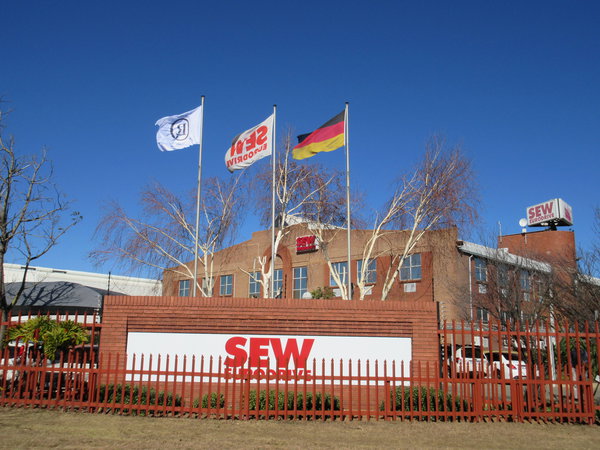
East Africa represents a major growth area for the drive and automation technology specialist, SEW-EURODRIVE South Africa MD Raymond Obermeyer comments.

“We have managed to secure a lot of business in Africa, and I see it contributing a large percentage of our turnover going forward.”

This growth is largely due to the fact that the SEW-EURODRIVE brand is well-entrenched in Africa, especially in diverse sectors such as mining and agriculture. In addition, the outward focus on expansion on the continent is necessary to counter the prevailing socioeconomic climate in South Africa. “That is the determining factor. We need growth, political stability and business confidence in order to ensure the continued sustainability of the business.”

SEW-EURODRIVE remains fully committed to South Africa, however, with the main Johannesburg manufacturing facility relocating to a new 50 000m2 site in an adjacent industrial business park. Property rights for the new development are expected to be secured by September, following which a decision will be taken as to the exact makeup of the new facility. This is because South and east Africa now fall under the ambit of the South African head office, including Tanzania, Kenya, and 14 other countries.

“At present we are looking after 22 countries in Africa from the South African operation. Therefore the construction of the new facility will very much be in line with our expansion strategy for the continent. We will have to ensure that we are able to accommodate future growth in all of these markets. We are very confident about our prospects in Africa, and continue to do well in a lot of countries.” SEW-EURODRIVE’s new branch in Tanzania, staffed by 13 people and functioning as an independent subsidiary, looks after a number of countries in East Africa itself, including the DRC, Uganda, South Sudan, Ethiopia and Somalia, among others. The importance of Tanzania as a regional hub is underscored by the fact that it is undergoing significant infrastructure development. “We have full technical back-up and service facilities in support of the many projects we are involved with there, from road to rail and ports and harbours,” Obermeyer concludes.

HURCO South Africa Appoints Agent In The Eastern Cape

Anzoset has been appointed Eastern Cape agent for Hurco South Africa.

While Anzoset will take care of existing Hurco customers in the Port Elizabeth and East London area, the company will promote the entire range of Hurco products in the Eastern Cape.

Shaun Schoeman of Anzoset can be contacted on 041 364 2078 or alternatively Carl Barkhuizen on 071 360 5286.

Social Compact For Stability And Investment

In the face of slow economic growth and rising unemployment, South Africa needs a social compact between the government, business and labour to foster labour market stability and foreign investment, Steel and Engineering Industries Federation of Southern Africa CEO Kaizer Nyatsumba said recently.

Steel and Engineering Industries Federation of Southern Africa CEO Kaizer Nyatsumba

Speaking at the recent Southern African Metals and Engineering Indaba, held at the IDC Conference Centre in Sandton, Nyatsumba emphasized the importance of a social dialogue on matters affecting the country’s social partners.

“The recent conclusion of the threeyear wage settlement in the metals and engineering sector bears testimony to the commitment to collaborate and cooperate for social benefits. SEIFSA is delighted that the wage agreement was reached without industrial action. Companies in this sector are taking strain from various factors, including the influx of cheap imports and soft demand for exports.“There is no doubt that any form of industrial action would have brought the sector to its knees. With the negotiations behind us, we now look forward to further collaborations with government and labour to ensure the sector’s sustainability and global competitiveness. The cooperation which led to the successful conclusion of the negotiations sent the right signals because there is a correlation between labour stability and foreign investment,” Nyatsumba said.


APDP – Success Despite Difficult Global Economic Conditions

Speaking at the 3rd Southern African Metals and Engineering Indaba in Sandton recently, Renai Moothilal of the National Association of Automotive Components and Allied Manufacturers said the APDP was a success despite difficult global economic conditions.

“The APDP stabilized production that could have gone significantly south if there was not that kind of support,” Moothilal said.

He said the programme was designed in 2007/08 when there was a view that automotive production in South Africa could grow to 1.2 million. “It did not turn out that way. We all understand what happened in the global economy,” he said, referring to the global economic crisis.

Renai Moothilal of the National Association of Automotive Components and Allied Manufacturers

Speaking during a session on the APDP at the two-day conference, National Association of Automobile Manufacturers of South Africa (Naamsa) Director Nico Vermeulen said the automotive industry had grown significantly since 2000. He said the industry represented one third of all manufacturing in South Africa. “The industry is heading for a million vehicles produced in this country, the bulk of which will be exported, within the next four to five years.

“The important point is, as the automotive production expands and as exports expand, the metal and engineering sector will benefit. As localization deepens, the metal and engineering industry will benefit,” Vermeulen said.

He said the automotive industry was fortunate that government had provided support and policy certainty, enabling multinational companies to make significant investments. He, however, highlighted the importance of labour stability for the industry to reach the one million units mark.

Nico Vermeulen Director of the National Association of Automobile Manufacturers of South Africa (Naamsa)

Vermeulen was also optimistic about prospects of exports to the rest of Africa. Most African countries were reeling from the effects of the low oil price and poor policy choices. “That will change. Africa will offer opportunities going forward,” he said.

Speakers on the first day of the conference included ANC Treasurer-General Dr Zweli Mkhize, Minister of Economic Development Ebrahim Patel, ANC Member of Parliament Dr Makhosi Khoza, independent director of companies Dr Mamphela Ramphele, Manufacturing, Engineering and Related Services Sector Education and Training Authority (merSETA) CEO Dr Raymond Patel, Manufacturing Circle CEO Philippa Rodseth and Aurik Business Accelerator CEO Pavlo Phitidis.

South Sudan Is Open For Business

A group of South Sudanese businesspeople who are in South Africa on a mission to woo investors to the world’s youngest country are optimistic that their message will touch the right cord amongst the local business community.

The visit of the six-member group is funded by the Department of Trade and Industry (the dti). It is part of the department’s efforts to increase trade and investments between South Africa and South Sudan.

The group also got an opportunity to market their country’s investment opportunities at the two-day Infrastructure Africa Business Forum which was held in Sandton.

The leader of the mission and the General Secretary of the South Sudan Chamber of Commerce, Mr Simon Akuei Deng is optimistic that the mission will bear good results that will see more South African companies investing in his country.

“There is already a presence of South African companies in South Sudan and we are on a mission to woo more companies to follow the example of SAB Miller, MTN and Standard Bank to come to our country and invest,” said Deng.

He added that another objective of the mission was to identify investment and trade opportunities in South Africa that companies in South Sudan can take advantage of.

“South Sudan is open for business with unlimited investment opportunities in the mining, agricultural and road infrastructure sectors. The SA companies already doing business there can testify to this,” said Deng.

He expressed confidence that businesspeople who are willing to venture into South Sudan will not be discouraged by the country’s political situation.

“Businesspeople are risk takers by nature and are willing to take calculated risks everywhere they invest their money. All countries have their own risks and daring businesspeople turn risks into opportunities. For instance, investors take calculated risks when they invest their money in South Africa, as they do anywhere else in the world. Risks have not stopped companies investing in South Sudan and doing good business there,” stressed Deng.

Speaking during a panel discussion on potential investments in South Sudan at the Infrastructure Africa Business Forum, the dti’s Foreign Economic Representative in South Sudan, Dr Julius Nyalunga said the country has a huge economic potential despite the socio-political challenges that it experiences.

SA Committed To Increasing Two-Way Trade With Mozambique

The High Commissioner of South Africa to Mozambique, Mandisi Mpahlwa says South Africa is committed to increasing a two-way trade between South Africa and Mozambique.

Mpahlwa was speaking during the South Africa-Mozambique business networking session that was hosted by the South African Embassy in Maputo recently. The session was attended by businesspeople from South Africa who participated in the Maputo International Trade Fair, FACIM, as well as key stakeholders from the Mozambican business community and government.

“It is important for businesspeople in our countries to recognise that the bilateral relationship between SA and Mozambique is not just about opportunities for the South African companies in Mozambique, but it is also about opportunities for Mozambican businesspeople in the South African economy. We are committed to ensuring that there is growth in trade in both directions. Even though the trade balance is still heavily skewed in favour of SA, we are happy that there has been a huge growth of Mozambican exports to South Africa over a period of time,” said Mpahlwa.

Total bilateral trade between South Africa and Mozambique totalled R43.6 billion in 2016 with trade balance amounting to R23.4bn in favour of South Africa. However, Mozambican exports to South Africa have increased from R3.8bn in 2010 to R10.1bn in 2016, while SA exports to the neighbouring country increased from R13.7bn to R33.5bn in the same period.

“The consistent and noticeable increase of Mozambican exports to South Africa is a positive trend that we need to work together even more to make sure that it is continuing. South Africa is a huge market and there are opportunities that are available there for the Mozambican companies to take advantage of. As we interact with the Mozambican business community through platforms like FACIM, there is a lot that businesspeople from the two countries can benefit from learning about each other’s economies so that opportunities are identified in both countries. Partnerships and joint ventures that should result from these interactions will ensure that trade continues to increase in both directions,” added Mpahlwa.

Mpahlwa also said that SA’s annual participation in FACIM helps to achieve a multiplicity of objectives that speak to the broader African Agenda.

“First of all we are neighbours, and through these kinds of platforms we are able to enhance that neighbourliness. We are also working together to achieve the objectives of the Southern African Development Community, which is committed to deepening integration across the spectrum, be it infrastructure, trade, political, social, trade or business. This is also another mechanism of achieving the broader African agenda of promoting and increasing intra-Africa trade,” stressed Mpahlwa.

FACIM is an international multi-sectoral trade fair held annually to showcase Mozambique as an attractive destination for trade and investment.

The participation of the twenty SA companies in the popular exhibition, was made possible by the Department of Trade and Industry (the dti) through its Export Marketing and Investment Assistance (EMIA) scheme with the aim of increasing exports of South African manufactured products to Mozambique. The objective of the scheme is to develop export markets for South African products and services and to recruit new foreign direct investment into the country.

South Africa And The United Kingdom Recommit To Enhance Trade Post Brexit

The Minister of Trade and Industry, Dr Rob Davies held a bilateral meeting with the United Kingdom Secretary of State for International Trade, Dr Liam Fox in Pretoria recently.

The meeting was a continuation of the on-going high-level engagement between South Africa and the United Kingdom. The two Ministers meeting follows SACU’s trade ministers meeting with the United Kingdom in July this year. In that meeting SACU member states and the UK agreed that their trade relations should not be disrupted due to the Brexit process.

Both Ministers recommitted themselves to a seamless post Brexit in terms of trade and that technical work will be intensified to ensure that the interim arrangements will be finalized before the United Kingdom leaves the European Union in 2019. The meeting also committed to further developing mutually beneficial trade and investment relations.

According to Davies, UK remains a key investment partner for South Africa in terms of the total inward Foreign Direct Investment (FDI) flows received from the rest of the world. He explained that UK has invested a total of 333 FDI projects in South Africa with direct capital investment estimated at about R159.01 billion over the period 2003- May 2017.

“The UK has been a significant trading partner of SA over the past years and ranks as South Africa’s 7th largest export partner in the world and 2nd largest export partner in the EU region. There is a need to discuss an arrangement on technical issues in order to ensure smooth trade post Brexit,” said Davies.

Fox announced that UK Export Finance (UKEF), UK’s export credit agency, has made additional funds available for UK companies exporting to South Africa and for South African buyers of UK goods and services to bolster trade between the two countries after Brexit.

Fox toured the national One-Stop-Shop with Davies at the campus. InvestSA is the brand that connects and coordinates the 3 spheres of government through a partnership roll out into the provinces. National Government and agencies connect and service the Provinces such as the newly established InvestSA Western Cape. Future roll out will be in Gauteng and KwaZulu-Natal this year, expanding the investors facilitation service to all investors. One-Stop-Shop will be rolled out to other provinces over a period of two years. InvestSA One-Stop- Shop is government’s initiative to improve our investment environment.