Home Blog Page 74

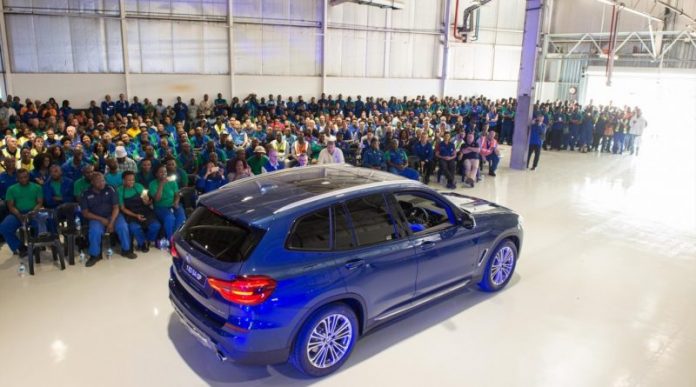
The Last BMW 3 Series Sedan Rolls Off The Production Line At BMW Group Plant Rosslyn

“We look back with great pride over an extraordinary career path of the production at Plant Rosslyn. Over the years, the development of our production and export programme has been the catalyst for our sustainable growth and contribution to the South African economy,” says Tim Abbott, Chief Executive Officer (CEO) of BMW Group South Africa.

In the next few months, Plant Rosslyn will launch the production of the BMW X3. In the future, the BMW 3 Series Sedan will also be manufactured at the new BMW Group plant in San Luis Potosí, Mexico.

One of the key milestones of the BMW 3 Series has been the success in founding the segment of the modern sports sedan, establishing itself as the embodiment of driving pleasure in its segment and becoming the world’s top-selling premium car. The enthusiasm for this model series was also shared by the production staff who expressed their passion for these cars by giving them legendary nicknames. Each generation of the BMW 3 Series produced at Plant Rosslyn had its own nickname: the third generation, for instance, was called Dolphin for its elegant contours. Limited edition models of the BMW 3 Series, such as the BMW 333i and 325iS, also emerged from the plant.

With the production of the new BMW X3 in the coming months, a new era will begin at Plant Rosslyn. In November 2015, BMW Group South Africa reaffirmed its long term commitment to South Africa by announcing that it will invest a total of R6 billion at Plant Rosslyn. The investment – one of the biggest in the local automotive industry – has enabled Plant Rosslyn to get ready to produce the new BMW X3. In October 2017, an additional R160 million was invested into the Rosslyn manufacturing facility to enhance production line speed.

SEIFSA Welcomes Rebound In Metals And Engineering Sector

Dr Michael Ade, Chief Economist of the Steel and Engineering Industries Federation of Southern Africa (SEIFSA).

The data indicated that production in the M&E sub-components increased by 5.1 percentage points in January 2018 on a year-on-year basis when compared to January 2017, and by 2.1 percentage points in January 2018 on a month-to-month basis when compared to December 2017.

“The output performance of the M&E cluster is welcomed and the expectation is for the positive growth path to continue, as all stakeholders within the cluster and the broader manufacturing sector step up efforts to boost overall production. The performance of the M&E cluster generally augurs well for the broader domestic economy and hopefully will significantly boost the real Gross Domestic Product (GDP) for quarter 1 of 2018,” Steel and Engineering Industries Federation of Southern Africa (SEIFSA) Chief Economist Dr Michael Ade commented.

Ade said although the past nine months to the end of quarter four 2017 have seen the real GDP recover from the contraction that marked the previous nine months, challenges to the supply side of the economy and especially in industrial production still prevailed. He said the benefits of a slight up-tick in production in the M&E cluster in 2017 was still not felt by local companies due to prevailing economic challenges, with the production trend still remaining variable and being largely pro-cyclical.

“It is clear that while the recent political forces of change have the potential to improve on perception, credit worthiness and the output stance of the domestic economy, there is still more work to be done in all industrial sectors in general and in the manufacturing sector in particular. The contribution of the manufacturing sector to the broader economy has declined over the years, from roughly a 24% contribution to GDP in the 1990s to a low 12.29% in 2017, with dire consequences on jobs levels,” Ade said.

He said that, moreover, the variability in output in the manufacturing sector – including its M&E sub-components in the years after the 2014 crisis – was still evident, underscoring the need to continue exploring ways of reviving the fortunes of the sector.

“Clearly, there is still more work to be done and all stakeholders have to pool resources together to ensure a return to the glorious growth levels last recorded in the early 1990s. Accordingly, a continuous rebound in production is needed if the manufacturing sector is to regain its position as the main contributor to the broader economy.

“This objective is possible, given the improvement in business confidence and sentiments since the beginning of this year, against the backdrop of a domestic political shift,” Ade concluded.

Critical Technical Infrastructure For Industrialization Efforts

The Deputy Director-General of Industrial Policy Development at the Department of Trade and Industry (the dti), Garth Strachan says that it is of the outmost importance for the Southern African Development Community (SADC) to get a superior understanding of the technical infrastructure and its capabilities to achieve common industrialization efforts.

Strachan was speaking at the 33rd SADC Technical Barriers to Trade (TBT) Structures Meeting in Johannesburg recently.

The annual meeting is co-hosted by the dti together with the SADC Secretariat and is attended by all 16 SADC Member States. It is aimed at laying the framework for the continued implementation of the Technical Barriers to Trade (TBT) Annex to SADC Protocol on Trade.

Strachan indicated that while the area of technical infrastructure was little understood and does not usually occupy the public discourse because of its technical and scientific nature, it had the ability to create cohesive and strong regional growth when implemented properly.

“Our biggest challenge is that we need to be looking at this as a region in order to get a superior understanding of how critical technical infrastructure institutions and their capabilities are for this common purpose. To do this we need to ensure that we secure intra-regional investment in trade and industrial integration and that together with the private sector we build industries that are characterized by a high-level of technology, value-addition and exports,” said Strachan.

The week-long programme centred on discussions to progressively eliminate unnecessary TBT amongst SADC members and other regional and international trading blocks and promote an infrastructure for quality.

“Achieving this would require policy coherence within the perimeters of national independent sovereignty. An education and skills strategy in support of this effort, a system of science technology and innovation to support this effort and economic infrastructure and what I refer to as the absolute necessity of technical institutional capabilities to support this effort,” he said.

Ford South Africa Introduces New Diesel Engine Assembly Line

This is only the second diesel engine to be introduced at the Port Elizabeth plant since opening its doors in 1964, and will be built alongside the current Duratorq TDCi four and five-cylinder diesel engines as used in the existing Ford Ranger and Everest models.

The new assembly line is located in a totally revamped 3 868 m2 section of the Struandale Engine Plant, and boasts the latest Ford technologies.

“Our new engine assembly line represents Ford’s latest, state-of-the-art manufacturing processes that guarantee the highest standards of workmanship, product quality and performance,” explains John Cameron, Plant Manager of the Ford Struandale Engine Plant.

“We invested in a sophisticated sub-assembly area for the cylinder head, incorporating four automated robotic stations which ensure maximum precision in the fitment of parts.

Throughout the line we have extensive errorproofing and traceability mechanisms in place with multiple camera and transponder systems,” Cameron says.

In addition, there are two cold-test cells at the end of the assembly line to check operating parameters and pressures, followed by a hot-test cell that evaluates the integrity and performance of the engine in normal running conditions. There is also a brand new engine dynamometer located at the plant to  conduct a wide range of performance and durability tests.

Eight derivatives of this engine will be assembled at the Struandale Engine Plant when production officially commences in the fourth quarter of 2018. Its most noteworthy application will be in the thrilling new Ford Ranger Raptor, which will be produced at Ford’s Silverton Assembly Plant in Pretoria for local release in 2019. Additional models set to receive this new diesel engine will be announced in due course.

The new assembly line has an installed capacity of 120 000 engines per annum, although the volumes will be significantly lower during the start-up phase, beginning with a single shift comprising 85 employees dedicated to this line. The assembly crew is drawn from Ford’s existing employees, who have undergone extensive training during the build-up phase over the past year, both at supplier companies overseas, and within the Struandale Engine Plant’s on-site training centre.

Strong Growth On Global Commercial Vehicle Market

The global market for heavy-duty commercial vehicles over 6 tonnes grew strongly in 2017. A good 3.3 million trucks were sold worldwide, which was a rise of 16 percent compared with 2016.

Matthias Wissmann, President of the German Association of the Automotive Industry (VDA), stressed, “this growth was driven by the keen demand in China, but also by the markets in Europe and the US and the growth in India. In addition, Brazil and Russia returned to the growth zone – in time for this year’s IAA Commercial Vehicles.” The IAA Commercial Vehicles 2018 will take place in Hannover from September 20 to 27, and is organized by the VDA.

Worldwide, four out of ten heavy-duty commercial vehicles were purchased in China. This took the Chinese market to a volume of 1.35 million vehicles. The year-on-year growth of 40 percent equates to 384,000 units. The robust market development was principally due to the purchases brought forward before the nationwide introduction of China’s new exhaust standard 5 in mid-year and to stricter controls to prevent overloading and the extra heavy trucks needed in their wake. In India, too, sales of heavy commercial vehicles increased markedly in 2017. The market expanded by 13 percent to reach 295,000 trucks.

After two years of double-digit growth, new registrations in Western Europe added 2 percent last year, climbing to 291,000 heavyduty commercial vehicles. This is the highest level since 2008. Among the large volume markets, the strongest growth rates were seen in Italy (+8 percent) and France (+7 percent). While the German market slightly exceeded its 2016 result (+0.3 percent), the Spanish market contracted minimally (-0.4 percent). The market in the United Kingdom lost rather more ground (-3 percent); despite positive developments in the first half-year, the final result moved further and further away from the previous year’s level.

The US truck market picked up a lot of speed in the second half of 2017 and made up for losses at the beginning of 2017. The market finished the year with growth of 4 percent, on 415,000 heavy trucks sold. The heavy-duty segment over 15 tonnes ultimately proved to be the most dynamic.

Last year, the Brazilian truck market began consolidation at a low level. Following three years of double-digit contraction, new registrations increased by 3 percent to 48,000 units. However, this is still less than one third of the record level from 2011. Recovery was much speedier on the Russian market for heavy-duty commercial vehicles, which had also sustained marked losses in recent years, and here sales added nearly 50%.

Rising industrial production and economic confidence ahead of IMTS 2018

Numerous major economic indicators signal that the U.S. manufacturing industry, the second largest market in the world with a value of nearly $9 trillion, will enjoy its strongest growth in more than a decade leading up to IMTS 2018, held Sept. 10-15, 2018 at McCormick Place in Chicago.

Overall manufacturing growth for 2018 is expected to increase by 8 to 9 percent compared to 2017, according to Patrick McGibbon, Vice President of Strategic Analytics, AMT – The Association For Manufacturing Technology, which produces IMTS.

“Economic indicators suggest a longer term, continued expansion. In the short term, we anticipate immediate acceleration in capital investment among IMTS 2018 visitor and exhibitor companies,” says McGibbon. “Changes to the U.S. tax law should further encourage purchasing during and after the show. Reduced tax rates will increase available capital. R&D tax credits expand innovation and fully expense capital expenditures which encourages purchasing.”

“The U.S. manufacturing sector is expressing economic confidence at levels not seen since the dot com boom. If there was ever a year to experience the energy, optimism and innovations offered at IMTS, this is it,” says Peter R. Eelman, Vice President – Exhibitions & Business Development at AMT, who has participated in every IMTS since 1980.

Orders for manufacturing technology in January 2018 were up 44 percent compared to January 2017, according to the latest U.S. Manufacturing Technology Orders (USMTO) report from AMT. It was the second-largest January in the 22 years recorded by AMT’s USMTO program.

The February 2018 Manufacturing ISM® Report On Business® notes that the PMI® (Purchasing Managers Index) registered 60.8 percent, an increase of 1.7 percentage points from the January reading of 59.1 percent and the 18th consecutive month of expansion. A reading above 50 percent indicates the manufacturing economy is generally expanding.

Other positive indicators include U.S. cutting tool shipments, a metric produced by the U.S. Cutting Tool Institute (USCTI) and AMT. With a year-to-date total of $2.195 billion, cutting tool shipments for 2017 was up 8.3 percent over 2016. The Michigan Consumer Confidence Index rose to 120 in March, the highest level in over 14 years.

Industry capacity utilization stands at 78 percent and is headed toward 80 percent, which economists consider a key metric that signals full utilization. At this point, supply chain and labor constraints can hinder further expansion. Some of the strongest U.S. segments include automotive (82.9 percent capacity utilization), aerospace (77.6 percent) and energy and power generation (79.8 percent) segments.

“Growth-minded visitors will attend IMTS 2018 looking for solutions that remove production bottlenecks,” says Eelman. “For many manufacturers, simply doing more of the same thing in a larger space or adding more people isn’t a viable option. Growth requires change and visitors view IMTS as a change agent. They come to the show knowing that they can find technologies that not just shave minutes off production cycles, but that can positively disrupt their manufacturing approach.”

As of March, more than 1,800 exhibitors have secured more than 1.3 million sq. ft. of exhibit space.

Airbus And Human Spaceflight – From ATV To Orion

Ten years as prime contractor for ESA – it’s just the beginning for Airbus in human spaceflight: The successful mission of the first Airbus-built ATV (Automated Transfer Vehicle) Jules Verne, launched on 9 March 2008, has become a key element of pioneering technologies for human spaceflight that includes Spacelab, the ATVs and the Columbus module of the International Space Station (ISS).

Together they pave the way to the Orion European Service Module (ESM), Europe’s latest contribution to human spaceflight developed by Airbus, again as prime contractor.

NASA’s Orion spaceship is designed to take humans to the Moon and beyond, with the possibility of even reaching an asteroid and maybe Mars in the 2030s. The ESM integral to the crew module is designed to supply power, propulsion, thermal control, water and air for future human deep-space missions.

Ten days after launch, the first ATV, the sophisticated space freighter executed a perfect manoeuvre to dock automatically with the ISS. The ATV then not only delivered vital supplies to the ISS but also successfully carried out its orbit-raising mission and became an integral part of the ISS. After six months docked to the ISS, the first ATV Jules Verne detached on 5 September 2008 and began its last journey in Space, which ended with a controlled burn up on re-entry into the Earth’s atmosphere on 29 September 2008. Four more ATVs (2011–2014) were sent to the ISS. Airbus was prime contractor to the European Space Agency (ESA) to developand build all the ATVs and prepare their missions to the ISS.

In total the ATVs shipped more than 31.5 tonnes of supplies to the ISS until 2015. They boosted the Space Station to raise its orbit numerous times and helped manoeuvre it out of the way of space debris. The ATVs demonstrated the ability to dock automatically with the ISS, which is vital technology for future space exploration missions. Airbus achieved this as part of a European partnership and thanks to the ATVs’ outstanding performance, the company became a full partner of NASA for major space programmes.

“Spacelab, Columbus and the ATVs have fully proved our capabilities to develop a highly reliable system that will play an integral part in the success of NASA’s future exploration missions: namely the European Service Module of the Orion Multi-Purpose Crew Vehicle,” said Nicolas Chamussy, Head of Space Systems at Airbus.

The ESM is cylindrical in shape and about four meters in diameter and height. It has four-wing solar arrays (19 meters across when unfurled) like the ATVs. The solar arrays are based on Airbus’ flight proven technology which are also installed on their highly reliable geostationary telecommunication satellites which operate for a minimum of 15 years in Space.

The ESM’s 8.6 tonnes of propellant will power one main engine and 32 smaller thrusters used to perform orbiting manoeuvres and attitude control. Once again, ESA will rely on the experience gained with the ATVs, which successfully used their thrusters to allow the ISS to evade space debris.

“The requirements for a mission to the Moon are of course very different to those for travel to the ISS in low Earth orbit. But the clever design of the ATV has allowed us to evolve the concept for new missions, for example by integrating one large main engine providing enough power to fly to the Moon and back,” said Nicolas Chamussy.

In 2019 / 2020, the Orion capsule will perform an uncrewed mission known as Exploration Mission-1, with the aim of travelling 64,000 kilometers beyond the Moon to demonstrate the spacecraft’s performance. The first human spaceflight mission, Exploration Mission-2, is expected to launch four astronauts on board Orion in 2023.

Indian Demand For New Aircraft Forecasted At 1,750 Over 20 Years

India will require 1,750 new passenger and cargo aircraft over the next 20 years to meet an exponential rise in both passenger and freight traffic, according to Airbus’ latest India Market Forecast.

To help meet this growth, India will need 1,320 new singleaisle aircraft and 430 widebody aircraft valued at US$255 billion.

While much of the air traffic growth is expected to be driven by the fast expanding economy, rising wealth and urbanization, ambitious government-backed regional connectivity programmes are also set to enhance demand for air travel. By 2036, Indians will each make four times as many flights as today. As a result, traffic serving the Indian market is forecast to grow 8.1 percent per year over the next 20 years, almost twice as fast as the world average of 4.4 percent.

Domestic Indian traffic is expected to grow five-and-half times over the next 20 years (2017–2036) reaching the same level as U.S. domestic traffic today, making it one of the world’s fastest growing markets, according to Airbus’ latest India Market Forecast for the period.

“Make in India is at the heart of our strategy. Airbus has the largest footprint in India of any international aircraft manufacturer, nationwide across all aircraft programmes. Our sourcing volume has grown 16 times over the past 10 years and it is currently at more than US$550 million annually,” said Srinivasan Dwarakanath, President – Airbus Commercial Aircraft in India.

India is set to become the world’s third-largest aviation market by 2019/2020 and Airbus is well positioned to partner its growth with backlog orders of over 530 aircraft to date.

SAMI And Boeing Joint Venture

Saudi Arabian Military Industries (SAMI) and Boeing recently signed a Memorandum of Agreement (MoA) to develop a new joint venture (JV) aiming to localize more than 55% of the MRO services for fixed and rotary-wing military aircraft in Saudi Arabia.

The agreement will also transfer technology to install weaponry on these aircraft as well as localize the supply chain for spare parts in the Kingdom.

The signing ceremony came in conjunction with HRH Prince Mohammed bin Salman’s visit to Seattle, which included an official visit and tour of Boeing’s aircraft manufacturing facilities. The agreement was signed by H.E. Ahmed Al-Khateeb, Chairman of SAMI, and Dennis Muilenburg, Chairman, President and CEO of Boeing, at Boeing’s commercial manufacturing facility in Everett, Washington.

The joint venture agreement will provide sustainment services for fixed- and rotary-wing military aircraft of the KSA military fleet and will be the sole provider of these services for all military aviation platforms of the KSA military fleet, strengthening the Kingdom’s defence capabilities and enhancing its deterrent potential.

The MoA will further solidify the relationship between Boeing and Saudi Arabia and result in the development of local research, design, engineering, manufacturing and MRO abilities. The JV will improve performance and growth, upgrade readiness of and increase confidence in the Saudi military fleet, while enhancing maintenance capabilities and reducing support costs throughout the fleet’s life. In addition, the agreement will create 6,000 jobs and training opportunities for Saudi youth.

Boeing Recognized By Guinness World Records For 10,000th 737

Thousands of Boeing employees gathered at the company’s Renton, Wash. factory recently to celebrate the 10,000th 737 to come off the production line.

With this airplane, a 737 MAX 8 for Southwest Airlines, the 737 has broken the GUINNESS WORLD RECORDS title for the most produced commercial jet aircraft model.

“This incredible milestone is a testament to the work we do every day to build the most reliable and efficient single-aisle airplane in the world,” said Boeing Commercial Airplanes president and CEO Kevin McAllister. “It represents more than 50 years of success and achievement on the part of thousands of Boeing employees past and present, our supplier partners, and our airline customers around the globe who put their confidence in the 737.”

The 737 previously held this GUINNESS WORLD RECORDS title in 2006 for the 5,000th airplane to come out of the Renton factory, a mark that took almost four decades to reach. Due to growing market demand and higher production rates, the 737 program reached the 10,000th airplane milestone only 12 years later.

“The speed at which Boeing achieved this new milestone is very impressive,” said Michael Empric, official adjudicator for GUINNESS WORLD RECORDS. “We are excited to once again recognize the 737 and the important role it plays in commercial aviation.”

Boeing will increase 737 production from the current rate of 47 airplanes per month to 52 airplanes per month later this year. The 737 program has more than 4,600 airplanes still on order fueled by sales of the newest version of the 737, the 737 MAX.