Home Blog Page 64

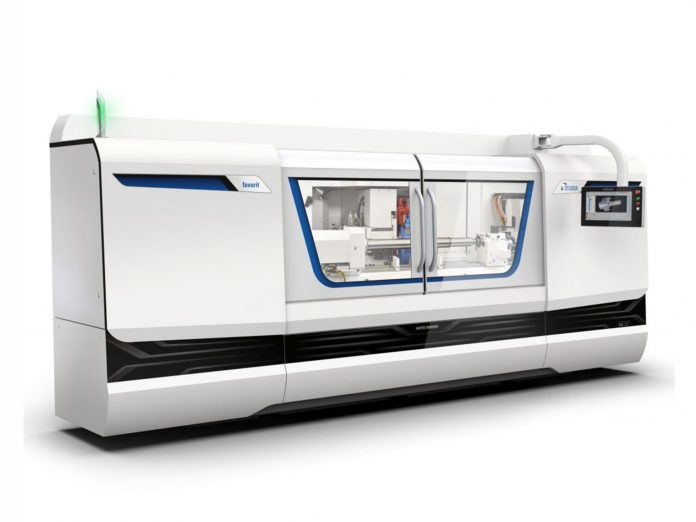
The New Studer Favorit

STUDER is expanding its product portfolio and bringing a new machine series to the market – the favorit. 

With centre distances of 400, 650, 1000 and 1600mm, the favorit line is suitable for short to long workpieces and can be used universally. It comes in a completely new design and scores especially with its price-performance ratio.

This CNC universal cylindrical grinding machine is designed for grinding in individual and batch production and can be automated. It can subsequently be easily adapted to other grinding tasks using various accessory kits such as in-process gauging, balancing system, contact detection and length positioning.

The favorit is a very cost-effective machine. As with all STUDER cylindrical grinding machines, the proven solid Granitan® machine base ensures the highest precision, performance and reliability. The full enclosure ensures an optimal view of the grinding process. The wheel-head, which can be automatically positioned every 3°, can take one beltdriven external and internal grinding spindle respectively.

Thanks to a 370mm long X-axis the dressing spindle can be placed behind the workhead or tailstock, without colliding with the grinding head. Geometrical clarifications are now a thing of the past. The dresser position can be manually adjusted in the T-slot.

The STUDER favorit has an integrated coolant tray and a machine base with temperature control. Potential deformations of the slide on the Z-axis are eliminated. At the same time the “active temperature control” option brings the machine to operating temperature faster.

The practical STUDER grinding software with its proven StuderPictogramming means that even less experienced users can quickly and practically program grinding and dressing cycles. The modern and user-friendly design is complemented with a touch-screen panel, which allows the operator to easily and directly control the machine. Service doors at the rear and on the right of the machine ensure high ergonomic efficiency during machine operation. Development, production, assembly and inspections of STUDER products all takes place in a processoriented manner and complies with the stringent directives stipulated in VDA 6.4 and ISO 9001.

For more information contact Retecon – Tel: 011 976 8600

Timesavers 42 Series Rotary Brush Machine

This add-on machine is placed in front of the machine, and serves to remove burrs from the underside of workpieces before they enter the main deburring process.

The advantage of this is that deburring can be done with one single pass – in half the time it previously took. In the world of fabrication today, there is overwhelming demand for increased speed of production, while still meeting quality requirements. The 42 series meets these requirements in full. With modern fibre laser technology, in some clients’ fabrication centres, the output of newly cut components has reached unprecedented rates. With the add-on machine, Timesavers has therefore ensured that the process of deburring and edge-rounding effectively eliminates any production bottlenecks and increases productivity and profitability accordingly.

In addition, the add-on machine allows the 42 Series to be more easily integrated into fully automated processing lines.

Not only does the 42 series offer improved deburring, rounding and finishing in one processing step, it is also able to process a large variety of sheet thicknesses and metal types. This machine is very versatile, as it can deburr and grind small parts from 30mm to large parts up to 1600mm, while being capable of processing a large variety of materials including stainless steel, aluminium, zincor, zinc and laser film products.

The machine features a centrally installed and user-friendly control panel and an automatic table opening of 0 – 100mm. To ensure a perfect finish, the machine has a carousel rotating brush head equipped with eight brushes, four rotating to the left and four to the right. The frequency-controlled conveyor belt feeds at speeds ranging from 0.2 to 8 m/min. Window panels and a well-lit interior make it easy to keep a visual check on processing.

The brushes have an extremely long service life of approximately 3,000 hours. However, when brushes or belts need to be replaced, there is a quick replacement system for virtually uninterrupted production. To monitor feed status, the machine is equipped with LED beams on the infeed and outfeed and the vacuum table has an automatic cleaning cycle.

While the most common finish achieved by the Timesavers wide belt machine is the straight line or grain finish for decorative or aesthetic purposes, some customers may require a random, circular or orbital scratch pattern. Timesavers offer machines for each of these requirements and will run samples to demonstrate the required finish results accordingly.

Alternatively, the component can be given a finish with the surfaces prepared for painting or for receiving a specific micro-finish. If any customer has a specific deburring challenge, the First Cut and Timesavers teams are always ready and willing to consult, in order to find an optimal deburring or grinding solution.

Many Timesavers customers have found that switching from time-consuming manual deburring to an automated Timesavers machine has not only saved them a substantial amount of operational time – but substantial costs as well.

Ultimately, for unmatched high-end finishes, the 42 Series is the ideal solution for the fabricator or manufacturer dedicated to supplying their customers with premium standard, quality-cut and finished components.

For more information contact First Cut – Tel: 011 614 1112

GF Machining Solutions’ Form Family Of Die-Sinking EDM Machines

The AgieCharmilles FORM X, FORM S, FORM P and FORM E series advance their forebearers’ software and technical innovation, such as the renowned AC FORM human-machine interface and GF Machining Solutions’ legendary EDM know-how.

Whether the requirement is a single machine for straightforward use or full automation, these new, easily integrable FORM solutions position users to meet every challenge, with greater flexibility and machining accuracy to eliminate costly manual operations.

These eco-friendly solutions offer Econowatt technology to save energy, a variety of Industry 4.0-oriented connectivity features to support manufacturers’ digital transformation and eTracking software for EDM process monitoring and full traceability.

From faster rib machining to micromachining, the AgieCharmilles FORM family of DSEDM solutions is evidence of GF Machining Solutions’ continued and significant investments to advance DSEDM research. The result is that AgieCharmilles FORM series users achieve performance like never before in machining with graphite and copper. Perfectly repeatable machining of micro cavities is just one example of the manufacturing challenges expertly resolved by this range of DSEDM solutions. In parallel, this series’ iGAP technology enables the rigidity of plastic injection molded end products with deep, plastic reinforced ribs; it ensures fast, accurate machining of rib cavities with superior respect for the required demolding taper and VDI homogeneity throughout the cavity surface.

Manufacturers requiring maximum use of their AgieCharmilles FORM machine can exploit the range’s eConnectivity features and MTConnect capability to stay informed of the machine’s status. Moreover, the FORM E 350 allows switching between DSEDM to drilling EDM, allowing extended use of the machine. Automation is another way AgieCharmilles FORM series machine users can extend their productivity: In today’s fast-paced manufacturing environment, unattended manufacturing is a must, so the AgieCharmilles FORM E, P, S and X series solutions can be connected to external robots and offer integrated pallet as well as electrode changing solutions.

AgieCharmilles FORM X – extreme and uncompromising accuracy

Extreme accuracy, highest precision in mass production, and unparalleled productivity come together as future-shaping solutions with the AgieCharmilles FORM X series. This series’ TECFORM ensures highest accuracy and reproducibility on both big and small parts. This is due to the fixed table and stiff machine base delivering perfect positioning accuracy along the entire axis travel. The result – high precision throughout the machining area.

Furthermore, manufacturers’ mass production of highly precise micro parts is assured by the AgieCharmilles FORM X series precision-enhancing qualities. High quality, automated mass production is easily within reach, thanks to these machines’ dynamic thermostabilization.

As manufacturers face ever-shorter delivery time, the AgieCharmilles FORM X series delivers high running time – no manual intervention necessary – thanks to its vast Automation capabilities. These include accommodation of linear, rotary or robot pallet and electrode changers, as well as smart features such as Part Express and Job List management. Users can ramp up their profitability by automating their production, thanks to the AgieCharmilles FORM X series’ ability to accommodate two front-oriented machines on each side of the robot.

AgieCharmilles FORM S: big success in micro-profiles

GF Machining Solutions’ AgieCharmilles FORM S solutions open new fields for miniaturization, optimize productivity, ensure lasting accuracy, and have the automation readiness to position users for the future.

New fields of miniaturization are opened by the maximum respect for details provided by these solutions’ Intelligent Speed Power Generator (ISPG) evolution and specific micro technologies. The latest-generation ISPG makes it possible to use a smallerthan- ever spark gap to remove minute amounts of material in order to achieve finest geometric details.

At the same time, AgieCharmilles FORM S 350 users achieve more with less by using fewer electrodes to achieve greater detail. Behind  this achievement lies this solution’s process, enabling such a small electrical current that electrode wear becomes insignificant. Consequently, only few electrodes are needed to machine cavities and this represents a significant advantage over similar products.

High, lasting accuracy is made possible by a specific controlled process during production of the AgieCharmilles FORM S series, so the machine retains stable accuracy across its lifetime. Stable performance is ensured by this solution’s standard thermostabilization equipment.

Moreover, the AgieCharmilles FORM S 350 is Automation-ready and GF Machining Solutions has a perfect automation configuration to meet every need, whether the requirement is a simple linear tool changer or any kindof robot in any cell.

AgieCharmilles FORM P

As the preferred choice for automated parts production with adapted investment cost, the AgieCharmilles FORM P series puts perfect results and high productivity at the user’s fingertips.

Perfect results are enabled by the intuitive, easy-to-learn and easy-to-use die-sinking EDM process ensured by GF Machining Solutions’ AC FORM human-machine interface (HMI). Designed for productivity, the FORM P series leads the way in high running time without manual intervention, thanks to the series’ multiple Automation choices from a linear, rotary or robot pallet or electrode changer as well as smart features like Part Express and Job List management.

Manufacturers’ speed and productivity are advanced by GF Machining Solutions’ diesinking EDM embedded in the FORM P series’ EDM process management. The ISPG, in association with the TECFORM EXPERT system, maximizes surface finish and homogeneity by generating the ideal EDM spark settings.

AgieCharmilles FORM E

This multifaceted performer delivers best value for the investment in the production of molds and parts. It offers superb accessibility, automated dielectric management, extended Automation capabilities, everevolving technological improvements and the availability of GF Machining Solutions Customer Services’ rConnect world of digital services.

Automatic dielectric management increases machining time while reducing human intervention. Filling and emptying the work tank is now automatic, and the dielectric height can be adjusted while running a program. Furthermore, the AgieCharmilles FORM E series offers extended Automation capabilities, including linear and rotary tool changers for machines produced in Switzerland. In addition, the FORM E 350 can accommodate an external robot.

Thanks to GF Machining Solutions’ continuous improvement of EDM technology, AgieCharmilles FORM E users get the EDM performance necessary to address their daily challenges. With rConnect, GF Machining Solutions continues to push technological boundaries to deliver the future of services— today. As the machine tool industry’s most in-depth digital service platform, rConnect represents this GF Division’s Industry 4.0 vision of intelligent and high-performing services. AgieCharmilles FORM X, S, P and E series machines are all rConnect ready.

For more information contact Retecon – Tel: 011 976 8600

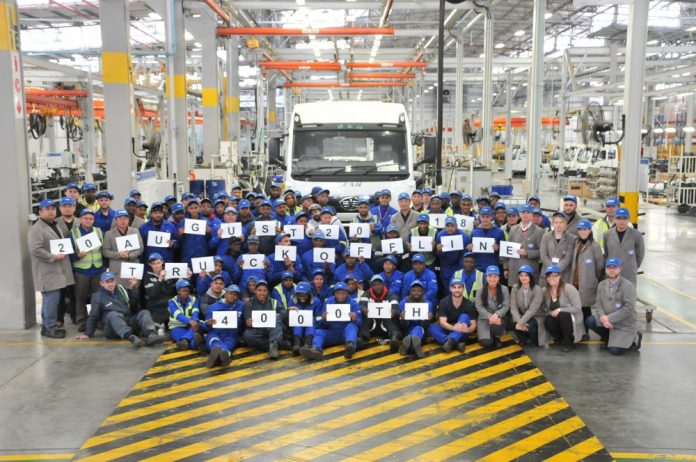
4 000th FAW Rolls Off COEGA Production Line

FAW’s assembly plant has become the bedrock for further investments in the Eastern Cape.

Inaugurated in July 2014, the plant was the first large-scale investment made by a China-based company in the region. In fact, it is still one of the largest foreign direct investments ever made in Coega.

FAW’s plant currently provides employment for 120 people on a permanent basis, contributing positively to the overall unemployment rate in the province.

The plant has increased production to include almost all FAW commercial vehicles sold in the sub-Saharan region today. It has produced 1 061 vehicles in the past 13 months alone which are either sold locally or exported into southern Africa.

To date, a total of 16 different models have been assembled at the plant in Coega, ranging from the ever popular 8.140 to the landmark vehicle, a 420hp FAW 33.420FT truck tractor, which is the newest model in the company’s extra-heavy commercial vehicle range and is the successor to the popular FAW 28.380FT.

Total FAW exports reached 159 units in 2016, which rose to 212 units in 2017, establishing FAW as the second largest commercial vehicle exporter in South Africa. This is further testament to the brands promise to build quality vehicles in South Africa for Africa.

Latest Metals And Engineering Production Figures – SEIFSA

Speaking after the release of metals and engineering production figures, Ade said although the annual growth in output is comparatively lower than that of June 2018, the data is encouraging as production is still trending positively.

SEIFSA Chief Economist Michael Ade.

He said the performance in July – which officially kick-starts quarter three – were against the backdrop of generally subdued domestic demand triggered by the technical economic recession and a plummeting exchange rate is welcome.

“Given that the contribution of the broader manufacturing sector to quarter-two GDP was lower than expected, the performance by its important cluster of industries will provide more impetus for a subsequently higher manufacturing contribution to domestic growth,” Ade said.

In line with the broader manufacturing sector, which increased by 2,9% in July 2018, the latest preliminary seasonally-adjusted data released by Statistics South Africa captures an increase in output in the M&E cluster in July 2018, when compared with July 2017. After accounting for heterogeneity through the sectoral contributions, the data indicated that production in M&E sub-components increased by 3,4% on a year-on-year basis, and by 3,2% on a month-on-month basis.

Ade said that despite welcoming the slow progression in production, SEIFSA notes that specific concerns which have the ability to inhibit the contribution of the cluster to quarter-three GDP still remain. These include high prices of both domestic and imported intermediary inputs, volatile variable costs (including fuel and energy costs) and exchange rate.

Ade said although a weak exchange rate favours exports, the net effect after accounting for higher intermediate input prices can significantly offset gains from exports. He said the tumbling Rand/Dollar exchange rate, which weakened to as high as R15.24/$ recently, adds to the cost of imported inputs and is generally counter productive.

“Moreover, with business confidence currently below the neutral level of 50, which is a rare and perturbing development, businesses may be compelled to pass on cost increases, thereby rendering their products less price competitive,” Ade said.

Close To Finalising SA Automotive Masterplan

The Department of Trade and Industry (dti) and the motor industry are now close to finalizing the South African Automotive Masterplan which will come into effect in January 2021 and run until 2035.

This was the message given by Lionel October, the director general of the dti, addressing delegates at the NAAMSA Automotive Conference, which was held at the Kyalami Grand Prix Circuit and Conference Centre.

October said that the dti and industry were 99% there in getting agreement on the Automotive Masterplan which is due to replace the Automotive Production and Development Programme.

He stressed the importance of the automotive industry as a player in the SA economy, where it formed half of annual manufacturing input. He said that increasing industrialization through more local content and higher production volumes were important components of the Masterplan.

“Higher production volumes result in economies of scale and improve an industry’s competitiveness, which impacts on its ability to localise components, with 60% local content being a Masterplan target,” explained October. “It is therefore very important that we hit the point where we are producing more than a million vehicles a year in South Africa, rather than the current level of about 600 000.”

He said another key component of the Masterplan was to speed up transformation of the industry with special focus on creating viable black-owned companies in the supply chain as well as the promotion of skilled black employees in the ranks of senior management at major manufacturers, with a score of 4 on the manufacturers’ scoreboard for Broadbased Black Economic Empowerment (BBBEE) being the target.

Local empowerment in companies operating in SA is a major pillar of BBBEE. So, last year the Big 7 in the SA vehicle manufacturing industry proposed creating a transformation empowerment capital fund of R3.5-billion over a 10-year period as the equity equivalent of having empowerment shareholders in the wholly-owned subsidiaries of multinational companies. The fund will be used to facilitate the entry of black companies and industrialists into all aspects of the local automotive value chain including component suppliers and dealerships.

SA Motor Industry To Overcome Major Challenges

Andrew Kirby, chairman of the National Association of Automobile Manufacturers of South Africa (NAAMSA) and president and CEO of Toyota SA Motors, says he is confident that the local motor industry will overcome its major challenges and that the industry will grow substantially into the future.

He was addressing delegates at the NAAMSA Automotive Conference recently.

Kirby said that in his view, there were five main challenges facing the SA automotive industry, including responding to market changes, optimizing regional integration, establishing infrastructure as an enabler, achieving global competitiveness and developing an inclusive value chain.

He said that the South African motor industry is undergoing its biggest disruption since the introduction of the Motor Industry Development Programme (MIDP) in 1995, when the country exported only 11 000 vehicles and imported 20 000, to the situation today where it is projected that production this year will total 609 000 vehicles and exports 340 000 units.

Kirby added that the market was changing fundamentally, driven by rapid technological developments in vehicles and the growth in digital media applications which were affecting customer behaviour as well as the overall automotive business environment, both wholesale and retail.

“Increasing exports into other African countries is a vital part of growing production volumes,” explained Kirby. “Increasing motorization on the continent through a growing middle class is a key which could lead to the African market expanding from the current 1.2-million new cars and commercial vehicles to 2-million vehicles in 5-10 years. However, a big obstacle to new vehicle sales growth is that many countries in Africa permit the importation of thousands of used vehicles. Fortunately, there are moves to curb this trend in the interests of growing the motor industry in several African countries.”

When discussing the infrastructural challenges faced by the local industry, Kirby said that one of the most important was the introduction of cleaner fuels, which will permit the importation of cleaner burning and more fuel-efficient engines. Most African countries still permit fuels to be sold which only meet requirements for Euro 2 or 3, at a time when many countries in Europe already require engines to meet Euro 5 or 6 standards.

Paved roads are another aspect of infrastructure that requires urgent attention when growing the vehicle market in SA, according to Kirby. He explained that only 21% of roads in SA are paved, amounting to 154 000km with a further 140 000km of roads in the planning stage but few new roads being built.

He added that ports and the rail network are other infrastructural aspects requiring attention if the SA motor industry is to become globally competitive and producing a million or more vehicles a year.

Kirby was adamant about the need for making the motor industry far more inclusive through empowerment and training initiatives in both down- and up-stream operations.

“Despite the many challenges we face, there is an air of optimism among all members of the South African motor industry regarding the aspirational vision of the upcoming Automotive Masterplan as the path to the future,” concluded the NAAMSA chairman.

The overall message from the NAAMSA Automotive Conference was that the South African motor industry is on the cusp of another growth spurt at a time when the global automotive environment is undergoing its biggest upheaval in more than 100 years.

Tapping – Challenge Inconel 718

The tough super alloy Inconel 718 features extremely high strength and extraordinary high corrosion – and temperature resistance.

Because of these properties, the material is often used in aerospace applications, where highest safety requirements are necessary for process reliability of thread production.

To meet these special requirements, REIME NORIS has developed a tap which, thanks to the use of powder metallurgical substrate (HSSE-PM) and a specially adapted cutting and clearance geometry, is convincing with extraordinary performance and highest process reliability. A PVD-TICN coating protects the cutting edges from abrasive wear and cold pressure weldings, while providing long tool life.

With over 100 years of experience in the production of threading tools and the use of state-of-the-art production technologies, REIME NORIS guarantees superior quality and performance for all its products.

For more information contact Sandvik Coromant – Tel: 011 570 9615

All-Directional Turning Goes Inside Out

Following last year’s launch of PrimeTurning™ methodology and tools for external turning operations, Sandvik Coromant is now introducing a dedicated CoroTurn® Prime SL head that makes this groundbreaking process available for internal turning operations.

The new SL head will cater for the needs of oil and gas, aerospace and other manufacturers machining diameters in excess of 90mm and overhangs up to 8-10xD.

“The inside-out machining capability provided by the CoroTurn Prime SL head solution in combination with PrimeTurning techniques, promotes excellent chip evacuation and chip control,” states Hakan Ericksson, Product Manager – General Turning, Sandvik Coromant. “In turn, manufacturers can achieve an excellent surface finish, matched by high productivity, longer tool life and high machine utilization.”

In contrast to conventional internal turning, PrimeTurning sees the tool enter the material at the chuck end of the component and remove metal as it travels back out towards the bore exit (inside-out direction). This allows for the application of a small entering angle that offers significant productivity gains. However, if required, another variant is also available with a reversed tip seat that makes it possible to perform PrimeTurning in the opposite direction (outside-in).

There are two insert types for internal PrimeTurning: A-type for profiling, finishing and light roughing and B-type for roughing to finishing operations.

Speed and feed rates can effectively be doubled with PrimeTurning. This is because the small entering angle and higher lead angle create thinner, wider chips that spread the load and heat away from the nose radius, resulting in increased cutting data and/or tool life. Furthermore, as cutting is performed in the direction moving away from the shoulder, there is no danger of chip jamming, a common and highly undesirable effect of conventional internal turning.

With CoroTurn Prime SL heads, customers can create a wide range of tool combinations from a small inventory of adaptors and cutting heads. SL heads are available in 40mm diameter and fit with solid steel bars  and carbide bars, as well as with Silent Tools™ damped boring bars for vibration-free internal machining.

In a further development, Sandvik Coromant now offers the new -H3 geometry to eliminate any concerns about chip control, which can be challenging when machining low-carbon and high-strength steels. The -H3 geometry is available for B-type inserts in grades GC4325, GC1115 and H13A.

For more information contact Sandvik Coromant – Tel: 011 570 9615

With The New MC232 Perform Milling Cutter Line, Walter Is Expanding Its Most Cost-Efficient Segment

With the MC232 Perform product line, Walter is adding to its range of solid carbide milling cutters.

Three new cutter types, with 2, 3 or 4 teeth, in a diameter range of 2 to 20mm from a 6mm shank diameter with a Weldon shank. It is the first time that solid carbide milling cutters have been included in the Perform line. The Perform line is designed to be highly economical and suitable for use in a wide range of applications, which is what makes it so advantageous, particularly when machining small and medium quantities. The properties of the new MC232 Perform milling cutters are beneficial for those users whose top priority is the universal applicability of their tools, not tool life – as a long tool life is often not measurable or exploitable when machining small quantities anyway.

Universal applicability is also mirrored in the MC232 Perform milling cutters’ technical features. Thanks to their geometry with centre cutting edge and 35° spiral, as well as the WJ30ED grade, the new corner/slot milling cutters are suitable for all common milling operations such as lateral milling, full slotting, pocket milling, ramping and helical plunging. They can be used in industries ranging from mechanical engineering, mould and die, to the automotive and energy industries. The milling cutters are universally applicable in all steel materials, stainless steels and cast iron (ISO P, M and K).

For more information contact Spectra Carbide Tooling Technology – Tel: 0860 23 23 23