The Germany-based lighting and electronics specialist HELLA is now embarking on strategic decision with their operations in Sub- Saharan Africa that will enable them to serve as the gateway into Africa.
The local operations office HELLA Automotive South Africa (Pty) Ltd. is currently situated in Uitenhage in the Eastern Cape and has been in existence in the Nelson Mandela Bay region for over 40 years. The HELLA brand, which has a stronghold and linkages within the automotive industry in South Africa, will with this new facility further strengthen its operations by building a facility that will cater for both the administration and logistics operations under one roof. The state of the art operations hub, to be built at the Coega Special Economic Zone (SEZ) in Zone 2 is valued to be over R30 million. HELLA is set to start operating out of their new facility middle next year.
“Nothing brings us greater joy than to diversify our value proposition with a focus on becoming a powerhouse in Africa, increasing both business and efficiency into the 18 Sub-Saharan African countries which we are already supplying to,” says Theo Theuner the Managing Director of Hella Automotive South Africa (Pty) Ltd. “Our move to the new facility will see HELLA strategically neighboring with some of the biggest automotive companies already in the development zone, namely First Automotive Works (FAW) and Beijing Automotive International Corporation South Africa (BAIC SA).”
HELLA consequently develops its aftermarket business which constitutes an important complement to its core automotive business. Thanks to central market trends, such as autonomous driving, electrification and digitalization, the demand for innovative electronics solutions on the independent aftermarket will further increase. Already today, HELLA has a comprehensive spare part range spanning more than 40 000 products of which 5 000 are stocked items.
The JEC reached agreement to cooperate on various areas ranging from Energy, Industry, Mineral resources, Finance and Banking, Agriculture, Tourism, Transport, etc. An agreement was also reached to cooperate on social areas like Education, Sport, Health and Labour, amongst others.
A key outcome was encouraging discussions around investment in the energy sector by Saudi Arabia into South Africa. Saudi Arabia is keen to collaborate with South Africa in developing its mining sector. According to Davies, progress was made in advancing discussions on investment in the energy sector in line with the investment pledge of $10bn by Saudi Arabia. A technical team on energy will be visiting South Africa to conduct a feasibility study shortly in accordance to the $10bn pledge.
In the area of Energy, agreement was reached to finalise an MOU on renewables between the two countries. This will advance closer cooperation and exchange of expertise in this field. ACWA Power from Saudi Arabia already invested in a solar plant in Bokpoort, Northern Cape which is operational. ACWA Power is at an advanced stage to build another renewable energy plant in the Eastern Cape.
The investment relationship between South Africa and Saudi Arabia was further strengthened with the signing of an investment cooperation agreement between Invest South Africa and Saudi Arabia General Investment Authority (SAGIA).
Davies addressed a South Africa-Saudi Arabia Business Forum that was hosted by the Riyadh Chamber of Commerce. His programme in Saudi Arabia included a number of bilateral meetings with relevant Saudi Ministries and Investors such as ACWA Power International Chairman Mr Mohammed Abunayyan and the Vice President of Islamic Development Bank Dr Mansur Muhtar.
South Africa and Saudi Arabia maintain good political and economic relations and cooperate in a number of fields. Saudi Arabia continues to be SA’s strategic partner in the Middle East region and is South Africa’s 2nd largest trading partner and largest source of imports from the Middle East region. Globally, Saudi Arabia is among South Africa’s top 5 import partners, largely due to the amount of the oil we import from the Kingdom. SA’s exports are led by mineral product, automotive, base metals, machinery and mechanical appliances.
In terms of bilateral trade, total trade between South Africa and Saudi Arabia amounted to R55.4 billion in 2017, with a trade surplus in favour of Saudi Arabia due to oil imports. The total trade has shown consistent increase from R39.1 billion in 2013 to R55,4 billion in 2017.
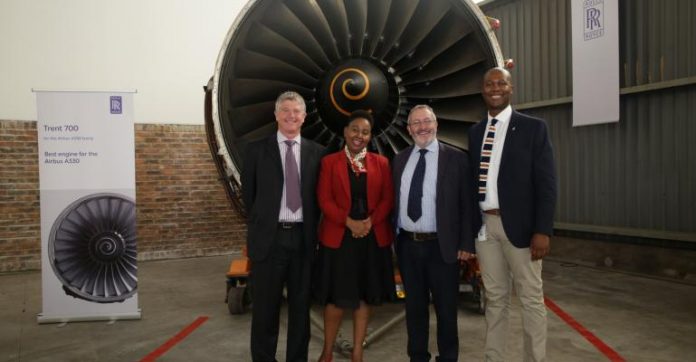
The Acting Deputy Director-General responsible for industrial development at the Department of Trade and Industry (the dti) Ms Thandi Phele has welcomed the investment by Rolls-Royce at South African Airways Technical (SAAT).
Phele welcomed the investment during the opening of Rolls-Royce’s first lease engine storage facility in Africa today.
“This partnership between Rolls-Royce and SAAT is critical in many respects. It will not only allow SAAT the ability to store engines at this facility in compliance with engine manual requirements of Rolls-Royce; but equips it with the capability and capacity to offer technical support on a full range of Rolls-Royce engine types to meet the requirements of airline and jet customers based or operating in Africa. This is key for South Africa as an investment destination in Africa,” said Phele.
According to Phele, the facility that will be based within the SAAT site at Johannesburg’s Oliver Tambo International Airport is incredible as the partnership is strategic and would support the economic development in South Africa and the rest of the African continent.
Phele further said that South Africa has a strong focus on improving investor and consumer confidence by fast-tracking structural reforms and higher levels of investment for economic growth. This, she said requires partnerships between government, business and labour which are critical in boosting investor confidence levels.
“There cannot be National Industrial Participation Programme (NIPP) without the partnership with international equipment manufacturers such as Rolls-Royce. As a country, we will benefit much from Rolls-Royce technical know-how. Going forward, we want to partner more on technology transfer and research and development in the aspects of engine maintenance, said Phele. We believe that SAAT is perfectly positioned to be able to support these customers, and we look forward to a long and lasting relationship with Rolls-Royce, said Phele.
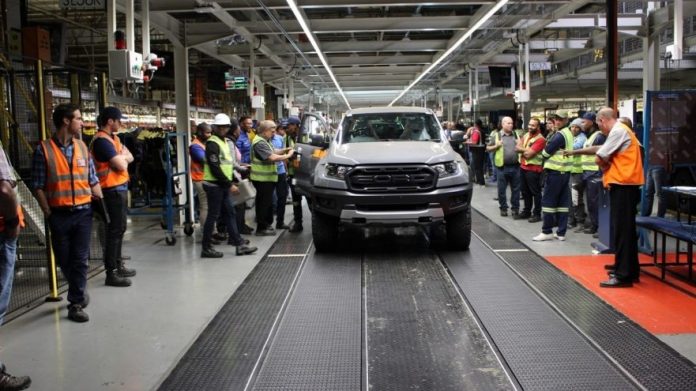
As the first Ranger model to be introduced as part of the Ford Performance family, this high-speed off-road bakkie will set an entirely new benchmark for its segment when it is launched in South Africa during the first half of 2019.
In the meantime, in preparation for full-scaleproduction of this exhilarating all-new model, the Silverton Assembly Plant produced its first 10 official Ranger Raptor units as part of the Tooling Trials (TT) build-up phase, validating its high-tech assembly line that received an extensive upgrade through Ford’s R3-billion investment in its local operations, announced last year.
“This is a momentous occasion for everyone at Ford, as we witnessed our first Ranger Raptor TT unit coming off the line after more than 18 months of extensive upgrades and modifications to the Silverton assembly plant,” said Ockert Berry, VP Operations, Ford Middle East and Africa.
“We continue to invest in our local operations to meet growing demand for the Ranger and are currently introducing new equipment on the assembly line to improve the handling of the chassis turn-over, adding incremental buffers in the Trim, Chassis and Final line as well as new shipping conveyors in the Fitment Centre,” Berry adds. “This is an additional R160-million investment in readiness for our expanded production capacity, commencing early next year.”
Powered by an all-new 157kW / 500Nm 2.0-litre Bi-Turbo engine assembled at Ford’s Struandale Engine Plant in Port Elizabeth, and utilizing a sophisticated new 10-speed automatic transmission, the Ranger Raptor has the punch to match its muscular and aggressive design and off-road capabilities.
Combined with Position Sensitive Damping (PSD) shock absorbers exclusively manufactured by FOX, an advanced Terrain Management System (TMS) that includes an exciting Baja mode, a toughened reinforced chassis, powerful all-disc braking system and specially developed BF Goodrich tyres, the Ford Ranger Raptor is truly a gem.
With extensive investments and far-reaching digitization initiatives, DMG MORI has extended and transformed the traditional Polish production plant FAMOT in Pleszew to one of the largest and most modern manufacturing facilities in the Group.
Founded in 1877, FAMOT Pleszew Sp. z o. o. with its around 700 employees is one of the most traditional of all DMG MORI plants. With investments amounting to a total of 60 million Euro, DMG MORI has extended the factory – one of the largest within the company – to a total area of 50,000mÇ, of which 21,000mÇ are production and assembly areas and has continuously modernized and digitized the manufacturing technologies in order to promote increased capacities and to further develop its own universal machine portfolio. The first DMG MORI plant that operates digitally end-to-end on all added value levels. With modular products from ISTOS, DMG MORI Software Solutions and WERKBLiQ this future-oriented project serves as an example for a digital production plant. FAMOT’s extensive innovations was presented to trade visitors at the Grand Opening from 8th to 12th of October 2018.
“DMG MORI supports its customers on their path to Industry 4.0 and IIoT. If we are to offer target-oriented end-to-end solutions, we also have to advance our own digitization, of course,” explains Dr. Michael Budt, CSO FAMOT / GRAZIANO / Ulyanovsk MT, making reference to the developments in FAMOT. “We are experiencing first-hand how digital transformation can be implemented in practice, because we are developing integral digital solutions for our own production.” In this respect the regenerated FAMOT factory marks a milestone for DMG MORI as well as – with exemplary character – for customers and suppliers.
By 2020 the capacity of FAMOT is to be doubled to accommodate more than 2,000 turning and milling machines in the CLX, CMX V and CMX U series – in addition to another 2,000 rump body machines.
The linking of the DMG MORI IT infrastructure with regard to order management, supply chain and customer relationship was particularly decisive. All added value levels including internal workflows, systems and both controlled and manual process steps had to be seamlessly networked by FAMOT at the same time. This ranged from incoming orders in sales to maintenance management and from integrated production planning to our own MDE/BDE software for monitoring elementary key figures for mechanical processing. Budt speaks about the objectives, “this concerns efficient, fast and safe production processes as well as a sustainable increase of productivity, quality, transparency and responsiveness. The specification sheet also listed the requirement to combine existing isolated solutions and new software systems to an integrated agile production network.” Digital sister companies in the Group – in particular ISTOS with its modular applications within the PLANNING SOLUTIONS – supported FAMOT here.
A core element of the digital factory at FAMOT is the so-called Manufacturing Service Bus. “This open bus system enables the integration of different plant-specific applications. These include overarching applications such as ERP, HR or tool management,” summarises Budt. Plus the production-oriented ISTOS application for production planning, MDE/BDE, central status visualization among other things and for master data management and variable personnel resource planning. Other applications that communicate via the Manufacturing Service Bus include the webbased service platform WERKBLIQ from the DMG MORI subsidiary of the same name. Alone the over 2,000 mappings produced indicate the relevance of the Manufacturing Service Bus. These are (in part bi-directional) links between the fields of the different applications.
In view of the order and production volume that has been growing continuously for years – in the area of rump body machines for the DMG MORI Group and in particular in the CLX and CMX series of our universal machine segment – modernization of the FAMOT plant with an investment amounting to a total of 60 million Euros became a necessity, says Budt and goes on, “we can now expand our capacity and ensure consistent growth in business development.” By 2020 the FAMOT factory is to produce more than 2,000 of its own CLX/CMX machine tools and additionally around 2,000 rump body machines plus several hundreds more components and parts for the sister companies in the Group.
The investments apply to our structures as well as our production technology. The production area today comprises a total of 21,000mÇ, a third of which is for assembly. There is also a large new rough casting store and a new logistics hall. 140,000 parts a day are distributed to the numerous stations in production and assembly via a KARDEX mini-load store. An inductive hardening facility – for the machining of components of the new CTX 5th generation series produced in Bielefeld – completes the enormous vertical integration of FAMOT. “At the heart of FAMOT is mechanical production – the largest within the group. Approximately 50 machine tools, mainly from the DMG MORI range, currently run networked around the clock to meet the huge demand.
The TRUMPF Group was able to significantly increase sales, orders received and profits in the 2017/18 fiscal year that ended June 30, 2018.
Sales rose by 14.6 percent to 3.57 billion euros (fiscal year 2016/17: 3.11 billion euros) – the highest figure in company history since its foundation in 1923. Orders received increased 12.5 percent to 3.8 billion euros – from 3.4 billion euros in 2016/17. Operating income before taxes rose by 52.3 percent to 514 million euros (fiscal year 2016/17: 337 million euros). The net operating margin amounted to 14.4 percent compared to 10.8 percent one year earlier.
EUV lithography system during installation – when completed, the system will weigh around 17 metric tons and comprise more than 450,000 parts.
Driven by an ongoing strong global economy, TRUMPF was able to significantly exceed its projections in some areas, the company announced. The company’s largest business division, Machine Tools, increased its sales by 11.3 percent. The Laser Technology division achieved sales growth of 21.5 percent. EUV lithography for the exposure of microchips performed particularly well, increasing by 57.3 percent over the previous year to 250 million euros. TRUMPF’s planning for the current 2018/19 fiscal year envisages further noticeable growth in EUV lithography. Even today, sales in this strategically important business segment exceed those of most of TRUMPF’s foreign sales markets.
Once again, Germany was the largest single market for TRUMPF, with sales up by 15.6 percent to 719 million euros, followed by China (up by 13.0 percent on the previous year to 457 million euros), and the United States (up by 5.4 percent on the previous year to 444 million euros) in second and third place respectively. Year-on-year sales in Italy grew by 31.8 percent to173 million euros, making the country the fourth-strongest single market for the first time. In addition to these markets, TRUMPF intends to intensify its business activities in countries such as Mexico and Canada as well as in the Asian countries Thailand, Malaysia, Indonesia, Singapore and Vietnam in an effort to achieve average annual growth of 10 percent, the company announced.
In the current fiscal year, despite the general slowdown of the global economy, TRUMPF expects to generate business with a similar level of profitability.
The Group-wide workforce grew by 12.9 percent in the reporting period to 13,420 employees as of the June 30, 2018 balance sheet date and has since exceeded the 13,500 mark. In Germany, there were 6,778 employees, around 3,900 of whom were employed at the company headquarters in Ditzingen. This equates to an increase of 12.5 percent. Outside of Germany, the number of employees rose by 13.3 percent to 6,642.
In the past fiscal year, TRUMPF invested in emerging technologies such as EUV lithography or metal 3D printing (additive manufacturing), as well as driving forward the AXOOM digital business platform. Expenditure on research and development rose by 5.9 percent to 337 million euros. The company’s R&D ratio in relation to sales amounted to 9.5 percent. The number of employees worldwide working on new products for TRUMPF increased by 13.2 percent to 2,087.
The company’s capital expenditure totaled 216 million euros in the 2017/18 reporting period. Real estate and construction projects accounted for 43 percent of the total sum invested, technical plant and machinery for 18 percent, and office and business equipment for 33 percent.
Investments in other European countries accounted for 13 percent of the Group’s total capital expenditure, while 15 percent concerned the Americas. The smart factory demonstration center in Chicago is an outstanding example, representing an investment of 26 million euros. Another major investment project was the creation of the TRUMPF Group’s largest-ever production site, operated by the Chinese joint venture JFY. The total cost of this investment was 14 million euros.
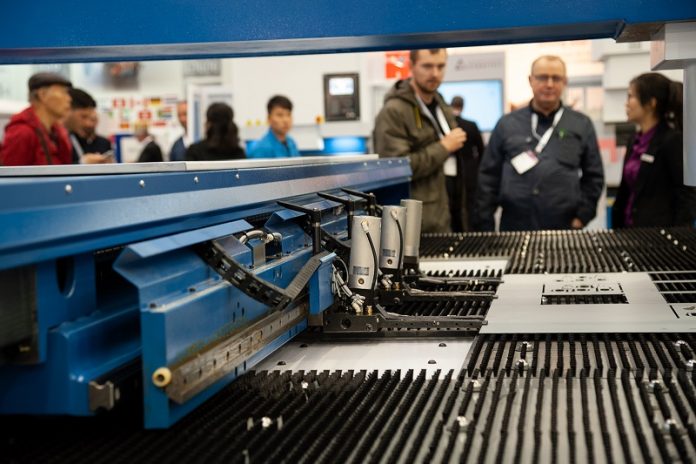
The 25th International Sheet Metal Working Technology Exhibition, EuroBLECH 2018, ended after four successful show days.
A total of 56,301 visitors from around the world came to Hanover to get an overview of the latest innovations and digital technologies for sheet metal working and to invest in new manufacturing machinery. A total of 1,507 companies from 40 countries exhibited at this year’s show.
Exhibitors showcased an enormous variety of new machinery and innovative solutions and many of these were, once again, demonstrated live at the exhibition stands”, says Evelyn Warwick, EuroBLECH Exhibition Director, on behalf of the organizers Mack Brooks Exhibitions. “There was a noticeable technological advancement within the last two years. Exhibitors demonstrated how well the industry is prepared for digitalization and how these new technologies can be used within a manufacturing environment”, continues Warwick.
EuroBLECH 2018 ends with a record floor space of 89,875 net square metres and an impressive visitor figure, which of course is also due to the booming industry. Many exhibitors reported positive sales figures”, concludes Warwick.
A total of 58% of exhibitors came from outside Germany at this year’s show. This represents a further increase in international attendance by 4%. The preliminary results of the exhibition survey show that 37% of visitors came to EuroBLECH from outside Germany, resulting once again in good international visitor attendance. Major visitor countries, next to Germany, included Italy, Switzerland, the Netherlands, Spain, Turkey, India, Great Britain, Poland, Austria and Belgium.
A great majority of the visitors came from the industry (73%), followed by visitors from workshops, trade and services. The most important sectors visitors belonged to include engineering, sheet metal & products, steel and aluminium construction, the automotive industry and its suppliers, electrical engineering, iron and steel production as well as rolling mills and heating, ventilation and air conditioning technology.
With 97% the percentage of trade visitors was again very high. Besides the high rate of international visitors, the exhibition could, once again, register a high percentage of visitors from top management with decisionmaking and buying capacity. The percentage of visitors involved in decision-making was almost consistent at 79%.
A rapidly transforming industry sparked IMTS 2018 – The International Manufacturing Technology Show, to set all-time records for show metrics. The 32nd edition of the show drew a record registration of 129,415 people and featured 1,424,232 sq. ft. of exhibit space representing 2,123 booths and 2,563 exhibiting companies. IMTS 2018 ran from Sept. 10 – 15 at Chicago’s McCormick Place.
“Connectivity, the digital transformation of manufacturing, automation, additive manufacturing and a strong economy drove record numbers at IMTS 2018,” says Peter R. Eelman, Vice President – Exhibitions & Business Development at AMT – The Association For Manufacturing Technology, which owns and produces IMTS. “Digitization collided with a robust manufacturing industry to create our most dynamic show ever.”
Historically, years between IMTS lead to incremental machine improvements, which are now reaching physical limits. “The velocity of change has become different,” observes Tim Shinbara – AMT Vice President – Manufacturing Technology. “Analog technology yields linear improvements. Digital technology creates exponential growth and transforms how manufacturers and job shops operate.”
Notable growth areas at IMTS 2018 included an expanded Additive Manufacturing Pavilion that featured 51 exhibitors and covered 31,550 sq. ft., the strong partnership with HANNOVER MESSE USA and its four colocated shows and 510 exhibitors.
Peter R. Eelman, Vice President – Exhibitions & Business Development at AMT – The Association For Manufacturing Technology, which owns and produces IMTS.
“IMTS witnessed an unprecedented degree of collaboration among exhibitors to develop additive manufacturing, automation and connected systems,” says Eelman. As an example, he points to the venture between 3D Systems and GF Machining, with their DMP Factory 500 metal 3D printing system unveiled to the public on the first day of the show.
Scott Harms, founder and President of MetalQuest Unlimited, has attended IMTS since 1996. After three days at this show, he was working on quotes for a load/unload robot, a shop floor CMM with an automation package, scheduling software and smart factory technology. He is also looking at cobots.
While Illinois Governor Bruce Rauner addressed the IMTS audience, he noted that Illinois is the 17th largest manufacturing economy in the world, which generates 600,000 manufacturing jobs, produces $100 billion dollars in manufactured products and creates the “most exciting and dynamic part of prosperity for everyone.”
“The machines that you see at IMTS 2018 are moving at the speed of digital technology. They’re able to take files and make something that you’ve imagined,” says LM Industries CEO and co-founder John B. Rogers, Jr.” The tagline of IMTS 2018 says it the best, Where dreamers and doers connect.
The HANNOVER MESSE USA co-located show hosted 510 exhibitors from around the world. At the center of HANNOVER MESSE USA was the Solutions Theater, which hosted more than 60 learning sessions that dove deeply into important topics such as IIoT, intelligent manufacturing and next-generation technology.
Dell Technologies, Microsoft and SAP joined other innovators in a new Digital Factory exhibition that showcased breakthrough products and solutions focused on integrated processes and IT solutions for plant operations. The show has increased its exhibition space by 26 percent over IMTS 2016 and by more than 440 percent since its first appearance eight years ago.
“We want all visitors to be more competitive in this global world. People need to connect and collaborate,” says Dr. Jochen Koeckler, CEO of Deutsche Messe AG, HANNOVER MESSE’s parent organization.
AMT President Douglas K. Woods adds that, “HANNOVER MESSE USA and IMTS bridge the gap between Silicon Valley technology and main street manufacturing. People find technologies here that change the spaces we work in.”
With digital technology, the pace of change makes it difficult to fully grasp the possibilities. IMTS 2018 directly addressed that issue with AMT’s Emerging Technology Center (ETC) on digital transformation, which featured demonstrations of how new science impacts manufacturing.
Cisco, an IT hardware company, exhibited at IMTS for the first time, bringing its expertise in the industrial security of data and connectivity to the ETC. Visitors learned about best practices to secure their plant floor and intellectual property. Security is now a top concern and manufacturing facilities need to manage modern security with legacy operating systems.
IMTS 2018 will be noted as the year of digital transformation, as exemplified by an automated cell linking a Hurco CNC, a Universal Robot arm and Hexagon CMM using the MTConnectTM standard.
“MTConnect is the building block that enables intelligent systems and decisionmaking based on data rather than instinct,” says Eelman. “Instead of asking ‘What’s a connected system?’, visitors now say to exhibitors, ‘Your systems use MTConnect, right?’”
Paul Gray, Hurco’s R&D Manager, notes that the only required connection between machines is an Ethernet cable. “Simple connectivity and software communication overcomes a major hurdle for job shops that focus on high-mix, low-volume and even custom parts,” he says.
Additive Advances
“Additive manufacturing is one of the most revolutionary technologies ever brought to IMTS, and that’s reflected in the ETC focusing on additive manufacturing,” says Eelman.
To show its speed and versatility, Oak Ridge National Laboratory created a die-in a-day demonstration that featured four stages of development: printing the die at Lincoln Electric, machining the printed die at Mazak, molding a part from the die at IACMI and 3D laser scanning the part at Quality Vision International.
“Traditionally it takes a minimum of six weeks to make molds, and it costs tens of thousands of dollars,” said Lonnie Love, Group Leader of Automation Robotics and Manufacturing at Oak Ridge National Laboratory. “We demonstrated every day of the show the ability to go from digital to actual production in less than 10 hours. This technology has practical uses that manufacturers can utilize now.”
This ETC also featured a “Knowledge Bar” hosted by America Makes where visitors learned about the development of education roadmaps, an online platform for members to exchange information and establishment of industry-wide additive manufacturing (AM) standards and specifications.
Multiple companies chose IMTS 2018 as their venue to debut high-volume AM systems, including HP and EOS. Stephen Nigro, President of 3D Printing, introduced the HP Metal Jet printer. Designed for high volume production, the HP Metal Jet has 50 times more productivity than any other binder jet or laser. EOS launched the M 300-4 system, a multi laser metal 3D printing system designed for digital industrial additive manufacturing.
Perhaps more than any other technology at IMTS, AM represents the opportunity for small and start-up companies, from the U.S. and abroad, to gain exposure to a large audience and grow their dreams.
Austin Kron, Business Development Manager for first-time exhibitor BeAM Machines Inc., Strasbourg, France, believes AM will continue to generate company creation and growth as it becomes more industrialized, meeting production levels required by manufacturing. He cites one customer with certified aerospace repair job that has more than three thousand parts in flight.
“Every building in McCormick Place featured AM technology,” says Eelman. “Four years ago when we produced the Strati vehicle on the show floor, large-scale AM was a novelty. At IMTS 2018, AM technology was part of the manufacturing processes used to produce the entrance hall impact units.”
Smarter Solutions
ATHENA, the industry’s first voice-operated assistant, debuted at IMTS in the Makino and OKK booths, as well as in AMT’s ETC where visitors could control a 5-axis DMG Mori CNC.
“With 5-axis milling technology becoming more prevalent, operators need to know more to be highly productive,” says Dan Bagley, VP Marketing & Sales at iTSpeeX. “People don’t operate machines. People produce parts in a cell, and the machine is an actor in that cell. ATHENA provides intelligent assistance to machinists to allow them to operate multiple types of controls.”
Index previewed its iXworld, an online portal with four distinct service areas under a single interface. FANUC’s FIELD system, an open platform that collects machine data in real time, was connected to more than 300 machines from 144 companies at the show. SAP focused on how to use blockchain to improve trust and transparency from source to consumption. After meeting at the previous show, Infor and FORCAM collaborated to create a bi-direction interface between FORCAM’S plant floor information-gathering solution and Infor’s backend ERP solution. Fraunhofer demonstrated the first 5G network in the world, which can record data at frequencies 10 to 100 times faster than LTE.
The TruLaser Cell 7040 is an inherently powerful and flexible machine, offering the largest range of beam sources and highest laser power on the market and capable of executing multiple machining processes.
To make the machine even more efficient, TRUMPF has worked on cutting down nonproductive time. This encompasses any activity before or after processing that does not add value to the process – re-tooling or loading and unloading, for instance. “When companies are making batches of products that change on a frequent basis, the cost of this non-productive time really adds up,” says TRUMPF product manager Thomas Kirchhoff.
The TruLaser 7040 saves time thanks to its smart optic set-up station, a swivel-mounted apparatus mounted on the machine frame that automatically orientates the optics within the work area. This improves accuracy, resulting in consistently reproducible, high quality cutting results.
Two different beam sources allow the machine to process a broad range of materials, including steel and light metals, without the need for timeconsuming re-tooling.
It also enables the operator to start producing batches much faster than before, since hardly any time needs to be spent on set-up. As a further improvement, TRUMPF engineers have also included optimized cutting parameters for both beam sources in the machine control system. Thanks to these integrated laser technology tables, operators need only select the material and thickness and the machine will automatically choose the right cutting parameters for settings such as power and gas pressure. That eliminates the need to hunt for the best parameters manually and enables operators to start the process quicker. What’s more, it increases machining quality and decreases scrap rates by locking in the optimal parameters right from the very first part.
In a bid to further boost productivity, TRUMPF experts have also drawn on the latest generation of TRUMPF lasers. The range of compatible products includes highly efficient TruDisk lasers up to 5kW as well as tried-and-tested CO2 TruFlow lasers offering as much as 6kW of laser power. During laser cutting, X-Blast technology ensures increased process reliability by enabling the nozzle to machine the sheet metal at twice the distance. That results in fewer collisions, guaranteeing higher quality, burr-free cutting results even in the case of highly complex components.
The TRUMPF experts have also set out to significantly boost part quality by integrating BrightLine Weld, a technology developed by TRUMPF for low-spatter laser welding. “With this technology, not only do we get a better quality of weld seam, we can also triple welding speed and achieve a major boost in overall productivity,” says Kirchhoff. The developers have also incorporated doors made of glass fiber composites into the new design. These are almost half the weight of their steel equivalent, shaving the time needed to open and close the doors by three seconds. That can help achieve time savings of up to 35 percent per processing cycle.
Last but not least, TRUMPF has taken operators’ needs very much into account in this new version of the TruLaser Cell 7040. Programming and teach-in are easier because operators can now see inside the machine without having to make unnatural movements. This improvement stems from a moveable, swivel- mounted control panel that operators can quickly adjust to their height and stature. The white paint finish and balanced lighting give operators a clear view of the work area at all times.
For more information contact Retecon – Tel: 011 976 8600
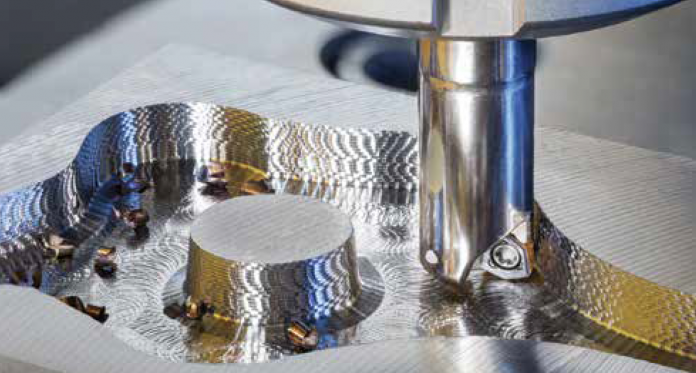
The new cutters have been designed to replace solid carbide endmills, providing the advantages of indexable tools to deliver an excellent cost benefit solution.
The new family, MICRO3FEED, is intended for productive rough milling compact parts, small-in-size cavities, pockets, etc., at high feed rates. MICRO3FEED should be applied in die and mold making and the manufacture of miniature parts and small components, among other applications. The new family is ideal for use in low power machining centers and turn-milling machine tools.
The cutters carry single-sided trigon inserts with three cutting edges and feature a maximal depth of cut 0.6mm, a 17° cutting edge angle, a positive rake angle and ramping-down capability. Coolant holes are directed to each individual cutting edge, for an efficient coolant supply through the cutter body.
The MICRO3FEED cutters are available in the following configurations: FFT3 EFM endmills in 10, 12 and 16mm diameters and FFT3 EFM-MM endmill heads with a MULTIMASTER threaded connection in 10, 12 and 16mm diameters.
The cutters carry FFT3 WXMT 030206 inserts that are secured by a central clamping screw. The inserts are available in two carbide grades for machining different workpiece materials: ISO P (steel, ferritic and martensitic stainless steel), ISO K (cast iron), ISO S (high temperature alloys) and ISO H (hardened steel and cast iron). The radius for programming of FFT3 EFM…-03 is 1.1mm.
For more information contact ISCAR South Africa – Tel: 011 997 2700