Home Blog Page 61

Heavy Machining Is What We Do

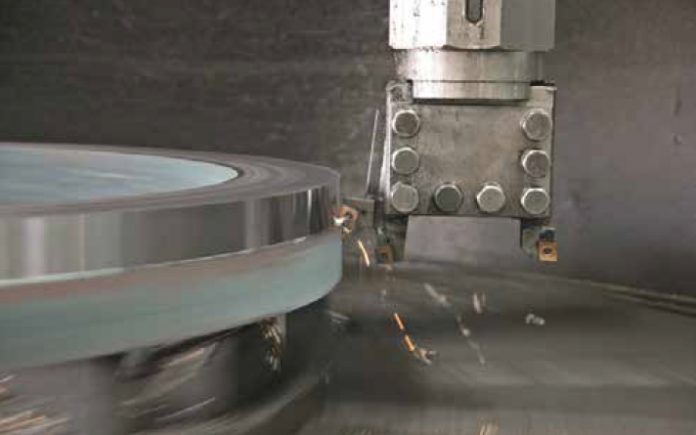
In the application area of heavy machining, Dormer Pramet supports high metal removal from large-scale forgings and castings, as well as welded and oxy acetylene-cut work pieces.

These operations require highly reliable cutting tools capable of working in very tough conditions. Through long-term cooperation with leading industries in many countries, Dormer Pramet has developed a wide assortment of products, all of which are featured in a dedicated brochure.

The Heavy Machining publication is available in print and as a downloadable pdf in English, German and Czech on www.dormerpramet.com

Dormer Pramet’s offer includes tools for heavy milling and turning applications, with typical customers including high-volume manufacturers, material suppliers and subcontractors supplying pre-machined blanks.

In heavy turning, the company has indexable inserts with cutting edge lengths from 25 – 50mm and tool holders with a range of approach angles to cover all common applications, conditions and variations in machine power. Depending on demands for productivity and machine rigidity, an assortment of positive or negative inserts and geometries are available.

For heavy milling, a range of cutters for face milling, 90° shoulder milling, helical milling, chamfer milling and special milling have been developed. The main priorities are high metal removal rates and reliability of cutting edge.

The Heavy Machining brochure also includes sections detailing tools for scarfing, special threading of pipes, chamfering and bar peeling applications.

Removing weld deposit is one of last operations during tube production and this process is called scarfing. The application requires very good surface quality and high productivity with minimum defects on the weld. Dormer Pramet offers a complete set of tool holders and a wide range of indexable inserts for external as well as internal operations.

In bar peeling applications, the most important criteria include high productivity, dimensional accuracy of machined bars and excellent surface quality. Dormer Pramet’s range of inserts feature specific geometries for steel, stainless steel and difficult to machine materials.

Also, a large line of threading tools for the tube industry is part of the assortment. These tools are designed for standard and special thread profiles. Precise indexable inserts are manufactured using specific technology to achieve unique cutting-edge quality and profile precision.
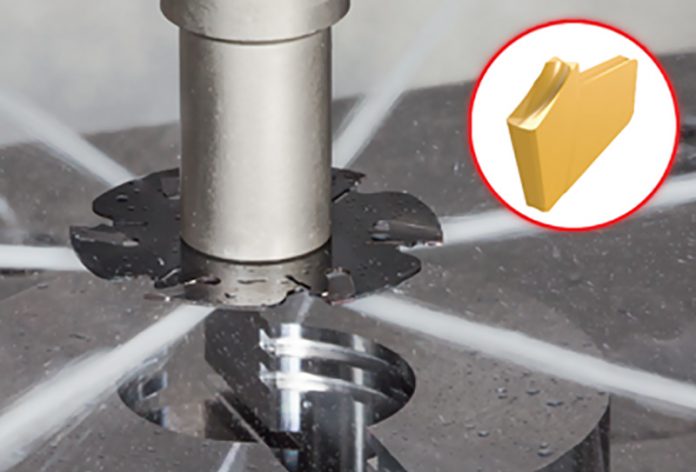
Slimslit – The Slimmest Indexable Cutter

ISCAR is introducing the narrowest indexable slitting tool in the market: indexable SGST disk slitting cutters featuring 0.8-1.2mm slitting widths and 32 – 63mm disk diameters with running capabilities of three times the speed and feed of HSS cutters.

The cutters are clamped on 16, 20 and 25mm diameter cylindrical shanks, featuring coolant channels with frontal radially oriented exits.

The tools carry new SLIM-GRIP GFT inserts featuring J-type chipformers made from IC1028 tough and IC1008 hard PVD coated grades to ensure high productivity.

For more information, please contact Iscar South Africa – Tel: 011 997-2700

Denel Appoints Wim De Klerk As Interim Group CFO

Denel has parted ways with its Group Chief Financial Officer, Mr Odwa Mhlwana, following a disciplinary process that dealt with various allegations relating to mismanagement.

This signifies one of the key steps that the Board of Denel has taken to stabilize the business and ensure effective oversight over the company since its appointment in April.

An external candidate Mr Willem Abraham De Klerk, otherwise known as “Wim” has been appointed as an interim Group Chief Financial Officer (GCFO). His appointment is with immediate effect and critical in strengthening the executive management capacity of the company. De Klerk is a certified Chartered Accountant with postgraduate Executive Programmes from Darden and Harvard. He joins Denel having recently vacated a Chief Executive Officer position at Arcellor Mittal SA.

De Klerk’s interim appointment, is intended to help build and strengthen a sound internal control environment to enable Denel to restore its position as a strategic national asset and a credible industry leader to key stakeholders.

Industrial Parks Can Be Turned Into Special Economic Zones

The Director-General of the Department of Trade and Industry, Mr Lionel October says with proper infrastructure, utilities and management, the twenty-six approved Industrial Parks across South Africa can in future, become Special Economic Zones (SEZ)s) that can contribute immensely to the economy of the country and create jobs. October was speaking at the opening of the two-day Industrial Parks Symposium hosted in Midrand, Gauteng.

The purpose of the symposium was to serve as a platform for engagement with key stakeholders and experts on the acceleration of the industrial parks as catalysts for developing the Rural and Township Industrial Economy.

According to October, with the support of the dti and the Department of Co-operative Governance and Traditional Affairs’ Municipal Infrastructure Grant, all the challenges that have been faced by the parks in the former homelands areas can be sorted out and made more productive, and attract other businesses to operate in them.

“When we talk about revitalizing the industrial parks, we are talking about having proper roads for transportation of goods, proper sub-stations to provide electricity, providing cheaper rentals and avoiding overcharging these businesses operating in the parks. If this is done properly this will lead to lowering the cost of doing business and making our manufacturing sector competitive and sustainable,” said October.

SA Government To Improve Investment Climate

The South African government is pulling out all the stops to improve the country’s investment climate with the aim of attracting more investments to achieve the target of $100 billion worth of investments set by President Cyril Ramaphosa. This was said by the Minister of Trade and industry, Dr Rob Davies.

He was speaking at a roundtable discussion hosted by the Southern African – German Chamber of Commerce and Industry in Johannesburg. The event was also attended by the President of Germany, Dr Frank-Walter Steinmeier,

“This event is happening in the early stages of what President Ramaphosa calls a new dawn. This new dawn is about setting our country up on a new trajectory where we are looking at raising the level of our investment by domestic and foreign companies by US$100 billion over five years. In order to achieve that it has been identified that we need to improve the investment environment of this country, hence the government is doing everything possible to improve the country’s investment climate and make it an attractive destination for investors,” said Davies.

He listed a number of interventions that the government has already implemented in order to make the country attractive as an investment destination. These include providing certainty to the mining industry through the mining charter and changes to the visa regulations.

“We have also worked energetically to try and facilitate improved service for foreign and domestic investors through our entity called Invest South Africa. It provides services from an expression of interest to post-investment support to assist investors to find their way through all of the country’s regulatory issues. We have recently added onto their suites of services that they assist investors in finding an appropriate black economic empowerment deal that will add to the wellbeing of the country by supporting black entrepreneurs and assist in broadening the country’s economic base,” added Davies.

Ford Commences Production Of All-New Ranger Raptor Engine

The Ford Struandale Engine Plant commenced production of the new generation diesel engines that are set to power the new Ford Ranger Raptor and selected Ranger and Everest models that will be launched in the first half of 2019.

Assembled on an all-new high-tech assembly line, the start of production for the new engine programme marks an important milestone for the Port Elizabeth facility, which opened its doors in 1964 and has produced over 3.4-million engines to date.

“With the launch of the new diesel engines, the Struandale Engine Plant embarks on a historic new journey, as it almost doubles our combined installed capacity to 250 000 units for our two engine programmes,” says John Cameron, Plant Manager of the Struandale Engine Plant.

As part of Ford’s 2017 investment of over R3-billion in its South African operations, the plant’s new assembly line has an installed capacity to produce up to 120 000 engines per year. The new engine programme starts off with low-volume production for the remainder of this year, then begins ramping up from early 2019.

The new assembly line will produce a total of eight derivatives of the new engines, including the advanced 157kW / 500Nm Bi-Turbo unit. All of these engines will be supplied to Ford’s Silverton Assembly Plant in Pretoria for installation in selected new Ford Ranger and Everest models and of course, the highly anticipated Ford Ranger Raptor. Ford’s local vehicle production supports domestic sales along with 148 export markets globally.

Allied Steelrode – Stretching Steel And Capacity With Second Stretcher Leveller

Local steel major Allied Steelrode made history in 2015 with the purchase and commissioning of South Africa’s very first dedicated stretcher leveller. This machine was ordered from Red Bud Industries, the leading original equipment manufacturer (OEM) in the United States. The stretcher leveller, which has a length of 120 metres, is capable of processing material up to 12mm thick, 2 metres wide and up to 15 metres in length, fed from coils weighing up to 33 tons.

With this innovative machine in place at their stretcher leveller facility in Midvaal, Allied Steelrode was able to far more effectively produce stretched and flattened steel. Coil steel tends to retain various inherent stresses and latent memory as a result of the hot rolling manufacturing process. In this state, when subjected to subsequent processes such as laser cutting, water jetting, turret punching, welding and bending, these latent stresses cause the steel to distort and lift. This, in turn, raises the cost of fabrication as considerable re-work is involved to correct these variances.

“The speed and tight tolerances of modern fibre laser steel processors leave no allowance for metal lifting or distorting while it is being cut. De-stressed flat steel is therefore critically important in avoiding laser head crashes,” explains the Executive Director of Allied Steelrode, Warne Rippon.

While there have been other methods of destressing and flattening raw steel in use in South Africa, these are not as effective as Allied Steelrode’s stretcher leveller. “The effectiveness of our stretcher leveller process has been evidenced by the ever-increasing demand for our iconic trademarked brand, Allied Steelrode Stretcher Material (ASSM); which, since 2015, has been growing rapidly,” comments Rippon.

As ASSM has had the stresses eliminated and is perfectly flat, this allows fabricators and manufacturers – in a wide variety of industries – to produce superior products far more efficiently, at a lower cost. Part of this lowered cost includes a significantly reduced scrap rate. However, the stretcher levelling process does not change the mechanical properties of ASSM sheets, which comply with the standard of 0 to 1 International Units of Flatness.

“As the demand for our ASSM grew, we soon saw the need for a second, even more powerful stretcher leveller, which we also procured from Red Bud Industries. This became fully operational in July 2018,” explains Rippon’s partner in Allied Steelrode, CEO Arun Chadha.

The installation of the second stretcher leveller will allow for greater operational efficiencies, resulting in shorter lead times to delivery. This, in turn, allows our customers to improve their service offering and become more competitive emphasises Chadha.

The two stretcher levellers have varying capabilities which also represent a noteworthy value-add to customers. The first stretcher leveller is able to process steel gauges from 1.2mm to 12mm; while the second processes gauges from 3mm to 12mm. Having two operational stretcher levellers allows Allied Steelrode to be a more flexible supplier and also more responsive to the market, as the respective levellers can simultaneously be dedicated to processing different types of materials for more extended periods.

“What this means for us is that we have been able to drastically reduce the time lost in setting up when changing from one type of material to another,” explains Rippon.

For example, one stretcher leveller can be used to process steel which still has mill residue adhering to it; while the other processes stainless steel, which, in contrast, requires the line to be scrupulously clean.

“To physically stretch steel requires immense forces to be applied, which in turn requires a machine of some considerable scale,” comments Chadha. The new stretcher leveller weighs in at some 250 tons, and to accommodate this machine, the Midvaal facility needed to be expanded to a total of 15,000mÇ under roof.

Continental’s Augmented Reality Head-Up Display

The technology company Continental reveals an industry-first full-color demonstrator of an automotive-specific Head-up Display (HUD) based on waveguide technology. This demonstrator is the result of the joint development with DigiLens Inc., one of the leading experts in projection technology enabled by switchable holographic gratings.

“Head-up Displays, particularly those with large-area augmentation, provide optimum driver support. Thanks to our early investment into waveguide technology, we are now taking a big step forward towards ultra-compact AR-HUDs. We have successfully overcome the most challenging hurdle which is the instrument size. As a result, industrializing the AR-HUD in the vehicle is now within reach,” said Dr. Frank Rabe, Head of the Continental business unit Instrumentation & Driver HMI.


Flat waveguides replace mirror technology to bring graphic augmentations in a realworld view. © Continental AG

HUDs with graphic augmentations in a real-world view offer intuitive driver support. Embedding the augmentations in the real world makes the driver immediately understand where their attention is required and why. For instance, virtual turn-by-turn navigation signs on the road make driving safer and easier. During automated driving, an AR-HUD can make the vehicle’s sensing and planning transparent. As an AR-HUD requires the option to embed augmentations in the complete forward field of view of the driver, the use of mirrors inside the instrument, which is state-of-the-art today, leads to ARHUD instrument volumes of around 30 liters – too much for most dashboards.

The new Continental AR-HUD with waveguide technology significantly reduces the packaging size. With this new, innovative technology, Continental achieves an augmentation area of 15° x 5° (= 2,60 meters x 0,87 meters at a projection distance of 10 meters) while bringing down device size to a mere 10 liters magnitude. At that level, device integration becomes possible in many vehicles.

Flat waveguides replace mirror technology

Up until very recently, AR-HUD development was still generally based on mirror technology, like in the windscreen HUD. However, what works well in the HUD is not an option for the AR-HUD, because the display area of a conventional HUD is small by comparison.

While a conventional windscreen HUD has a volume of 3 to 4 liters, mirror technology inevitably leads to spatial AR-HUD capacities that can be around 30 liters, which is almost ten times as much.

“Most vehicles simply do not offer this amount of space. That was clear from day one, and that is why we wanted a different solution in order to be able to offer the AR-HUD benefits to as many drivers as possible,” said Dr. Pablo Richter, Principal Expert Optical Technologies at Continental.

Technical components of the waveguide HUD. © Continental AG

That is also why Continental entered into a strategic partnership with the waveguide HUD expert DigiLens, located in Silicon Valley, in 2016 and increased this participation in 2018. The joint development work has now produced the first full-color demonstrator, which uses three flat waveguides stacked over one another to create the RGB color space – and no mirrors.

“The light rays from the projector enter the multi-layer waveguide from underneath. They get folded inside the waveguide and are finally projected upwards to create the virtual image through reflection on the windscreen,” Richter explained. “One of the many challenges was that while our development partner had produced solutions for the helmet visors of pilots or motorcycle drivers, the large-area application to a windscreen takes the technology to a whole different dimension.”

Continental’s demonstrator enables augmentations within a field of 2,60 meters x 0,87 meters at a projection distance of 10 meters and solves the previous size issue of the AR-HUD. Over the course of ongoing development, further necessary requirements to the vehicle application will be met individually.

Nissan Signs MOU With Ghana

Adding to its track record of investing in Africa, Nissan has committed to working with the government o Ghana to establish an automotive manufacturing industry in the country. The company will also make Ghana its hub for sales and marketing in West Africa.

The announcements were made recently in Accra, where Alan Kyerematen, Ghana’s minister of trade and industry and Mike Whitfield, managing director of Nissan Group of Africa, signed a memorandum of understanding.

Nissan aims to be the first carmaker to assemble vehicles in Ghana, building on its market leadership in the country. Nissan models accounted for 32.8% of vehicle sales in Ghana last year. The company’s cars, pickups and SUVs are sold through a national network of six sales and service outlets.

The memorandum seeks to unlock economic potential, promote development of the automotive sector and promote investor-friendly regulatory frameworks that encourage sustainable car manufacturing. The aim is to promote infrastructure development, job creation and skills development in Ghana.

Industry wide vehicle sales in Ghana have been growing steadily at an annual rate of about 10% and now stand at about 9,150 vehicles a year.

Working closely with the government of Ghana and with other members of the African Association of Automotive Manufacturers, Nissan will provide its global expertise to establish a sustainable auto manufacturing industry in the country.

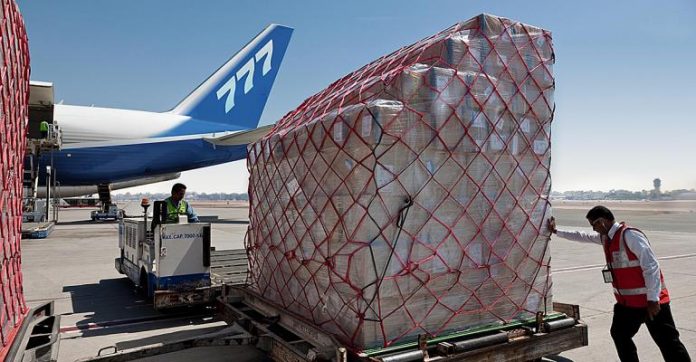
Boeing Forecasts Air Cargo Traffic Will Double

The 980 new medium and large freighters and 1,670 converted freighters will go toward replacing older airplanes and growing the global fleet to meet demand, according to the new World Air Cargo Forecast, released by Boeing recently at The International Air Cargo Association’s Air Cargo Forum and Exhibition.

“The air cargo market continues to be a major element of commercial aviation’s growth story,” said Darren Hulst, managing director of Market Analysis & Sales Support at Boeing Commercial Airplanes. “Our new forecast indicates strong long-term air cargo trends, which coincide with the market recovery that we have seen over the last few years across Europe, North America, and Asia.”

Some of the factors driving the growth in air cargo include a growing express market in China and the global rise of e-commerce, which is forecast to increase 20 percent annually to nearly $5 trillion in 2021 according to Boeing’s analysis.

To meet growing market needs, Boeing also forecasts that the world freighter fleet will expand by more than 70 percent, from the current total of 1,870 to 3,260 airplanes with new production freighter deliveries valued at $280 billion. Demand for regional express services in fast-developing economies will boost the standard-body share of the freighter fleet from 37 percent to 39 percent. 1,170 standard body and 500 medium widebody passenger airplanes will be converted into freighters over the next two decades.

Dedicated freighters, which provide unique capability that passenger belly-cargo cannot match, will continue to carry more than 50 percent of the world’s air cargo demand. The majority will be in the large widebody freighter category, such as the 747-8 Freighter and 777 Freighters. “With 90 percent share of the freighter market, Boeing is well positioned to capture this growth,” said Hulst. “We have invested in our freighter family to help express cargo and general freight operators carry out their missions around the world. Whether it’s our 777 Freighter or our 737- 800BCF program, Boeing offers the most capable family of freighters with the best combination of payload, range and fuel efficiency.” Since January 2017, Boeing has sold 128 freighters, including 80 production and 48 converted freighters.