Home Blog Page 19

MAPLE ME-SERIES – THE ULTIMATE ALL-ROUNDER

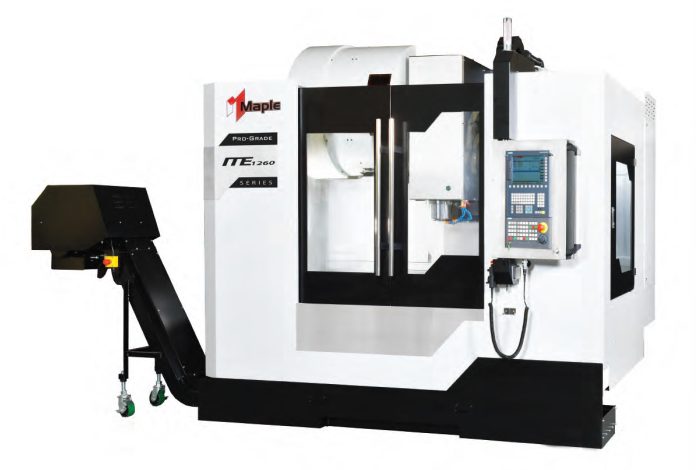
Maple ME - Series

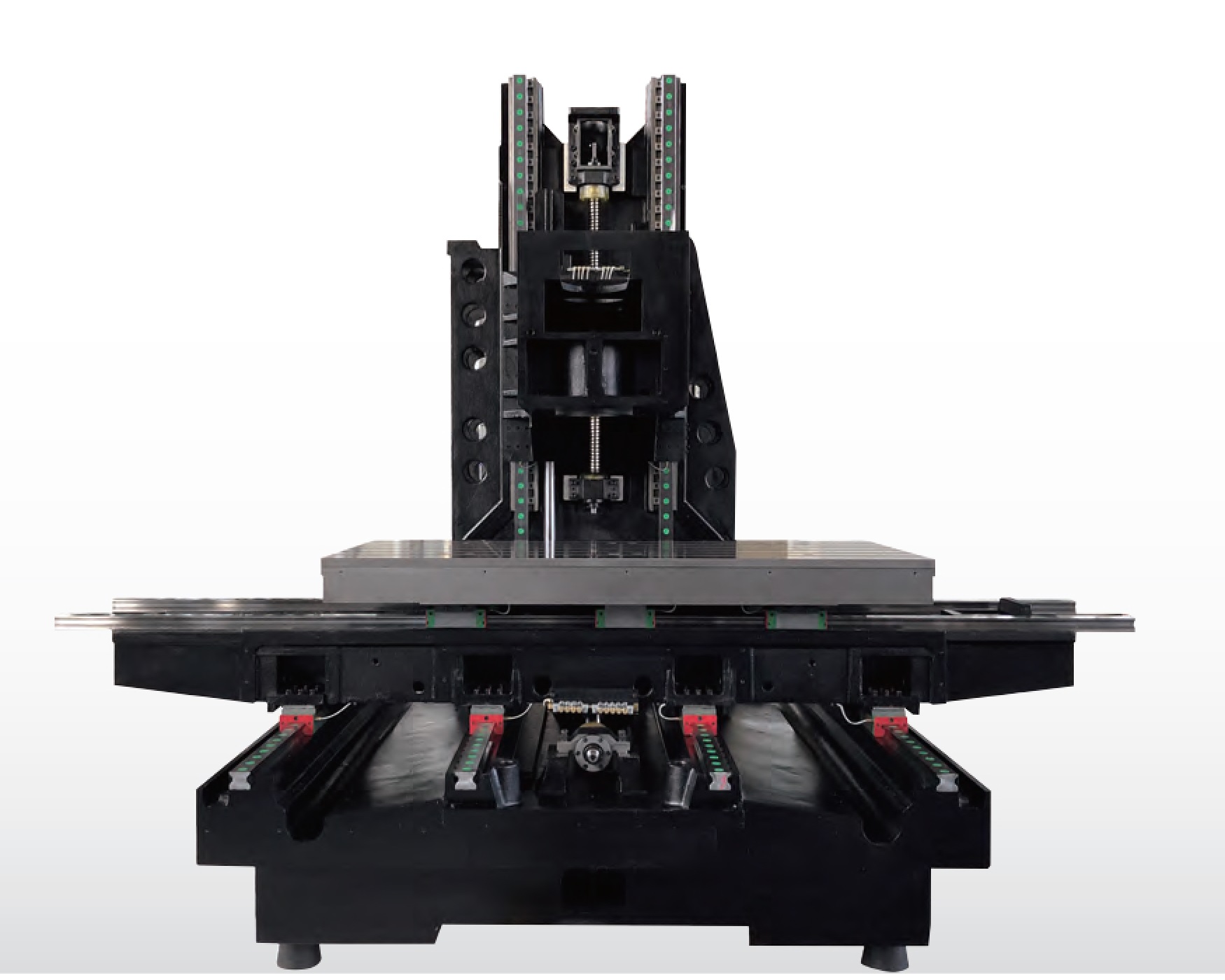
While every day presents different challenges, the Maple ME-Series has what it takes to tackle just about anything. Its super wide base design provides great balance providing a platform capable of supporting up to 2000 kg. With high-end servo motors that are directly connected to the ball screw no power is lost during transmission.

Featuring an innovative design combined with cutting-edge technologies make the ME-Series ideal for mould production and parts production. The machine has a clever solution for whatever challenge comes its way.

The ME-Series was designed with the most advanced FEM analysis software on the market. Maple consistently tests its design under many different stress conditions to perfectly satisfy customers’ requirements.

The advanced design of Maple’s spindles provides high axial- thrust capability, yet generates minimal heat. The spindle uses front and rear pre-load angular bearings with large spacer to enhance radial stability enabling heavy cuts on steel. To ensure long life of the spindle, high temperature grease is used to guarantee smooth operation of the spindle regardless of temperature.

The ME-Series is designed to carve through any material it meets-without sacrificing accuracy or finish along the way.

Without a perfect tool changer the machine cannot operate at its fully automatic potential. Therefore, the ME-Series uses the most high quality tool changer available. With a 1.8 second tool change time it is one of the fastest performing tool changers in the world.

For more information, contact 600 SA Machine Tools – Cell: 072 157 6003

Visit 600 SA Machine Tools

HIGH PRODUCTIVITY VERTICAL MACHINING CENTERS – DNM SERIES

New DNM series VMC

With a global installed base in excess of 30000 machines, the DNM series is a popular and proven mainstay in DN SOLUTIONS’s product line. With a range of different models, sizes and capacities, there is definitely a DNM machine to meet customers’ needs.

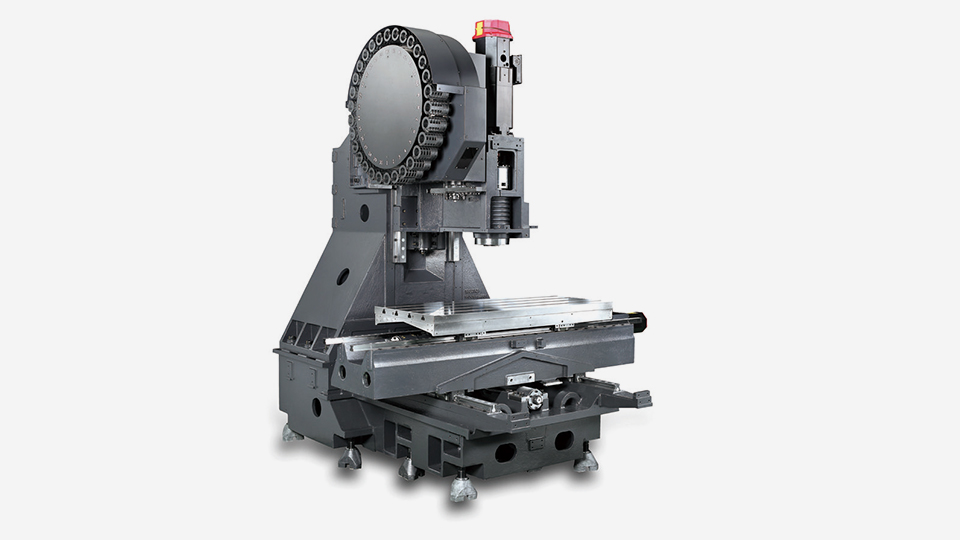
Featuring the largest machining area in its class the new DNM series vertical machining center offers increased Y-axis travel and a higher table load. The direct-coupled spindle for higher productivity improves the machines’ performance and environmental-friendliness, while higher productivity is achieved by reducing the tool change time and improving all axes feed rates plus acceleration/deceleration times.

DNM series VMC with the largest machining area in its class.

This environmental-friendly machine is designed for stable and easy operation with the EOP function that can be accessed via the pop-up window on the NC main screen. Grease lubrication for axis roller guideways is supplied as standard.

For further information, please contact PUMA MACHINE TOOLS – Tel: (011) 976 8600.

Visit PUMA Machine Tools

KITAMURA INTRODUCES MEDCENTER5AX

ULTRA COMPACT SIMULTANEOUS 5-AXIS HIGH PRECISION VERTICAL MACHINING CENTER FOR THE MEDICAL DEVICE MARKET

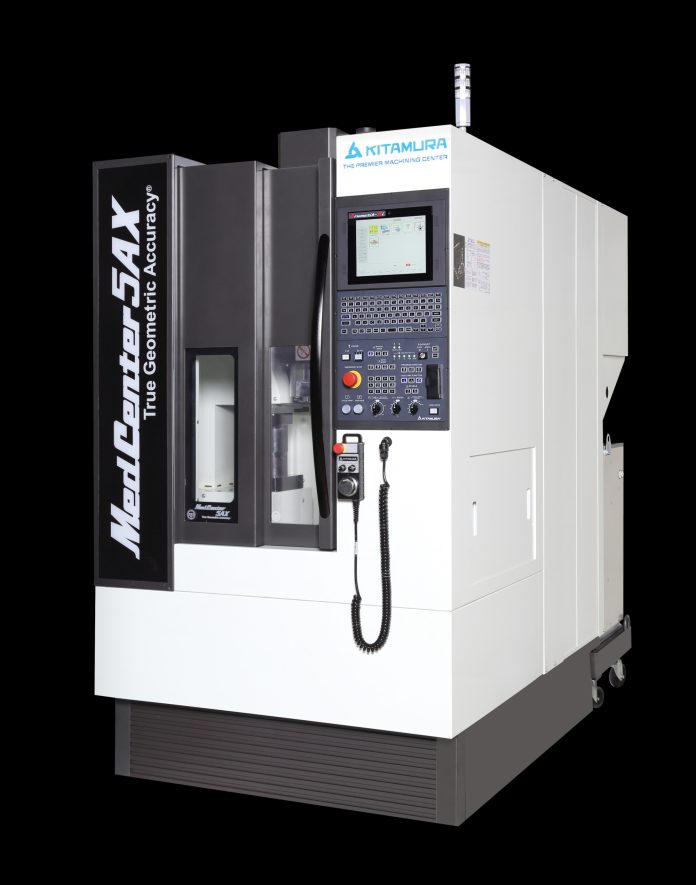
Kitamura Machinery, the premier manufacturer of precision horizontal, vertical and 5-axis machining centers, adds to its 5-axis line up with the MedCenter5AX vertical machining centre. This ultra-compact 5-axis VMC brings with it the largest work envelope in its class and offers unparalleled precision, accuracy and speed for expanded machining capability in the machining of highly complex, multi-sided parts in one setup.

The MedCenter5AX employs an X, Y & Z axis, and additional tilting A-Axis (+/-120 deg.) and a rotary C-Axis (360 deg.) with a 0.001 deg. minimum indexing command. Machining of high precision, complicated parts like orthopedic implants or aerospace parts can be completed in one operation, reducing the overall machining process. The maximum work piece size (Dia. xHeight) of Ø220mm (8.7”) x 175mm (6.9”) and maximum table load capacity of 20Kg (44lbs) allow for incredible flexibility and versatility in the machining of smaller highly precise, highly intricate parts.

Standard high speed, direct drive 4th and 5th axis rotary tables offer smooth simultaneous 5-axis movement for complex cutting applications. Rigid in design and equipped with high resolution optical scale feedback on all axes, the MedCenter5AX offers the precise accuracies needed (positioning accuracy of ±0.002mm (±0.000079”))/full stroke for a wide variety of small part machining.

Kitamura’s standard high speed 30,000minˉ¹ 18kw (24.5HP) direct drive, HSK-E40 spindle offers superb rigidity an ultimate stiffness in spindle construction and function while allowing for super fine finish capabilities. Ideal for small diameter tools and hard milling, the MedCenter5AX offers a standard air through spindle feature for dry cutting and is also equipped to handle up to 1000psi coolant thru the spindle for deep hole drilling requirements.

The MedCenter5AX may be compact but it is equipped with a large 40 tool magazine – a great benefit when machining more complex parts. Tool changes are a lightning fast 1.5 seconds. To assure optimum operator access and convenience when setting up tools or performing routine maintenance, the tool magazine is located toward the back side of the machine.

For increased productivity, Kitamura offers an optional 12-station automatic pallet system for running long hours of unmanned operating in the machining of both highly mixed or highvolume production parts.

Kitamura combines many standard features in our feature-rich Arumatik-Mi control. With a 5-times faster processing speed, the Arumatik-Mi CNC Controller offers a super-smooth control process for super-fast machining of complex work pieces. Featuring the latest in advanced, ultra-intuitive touch screen technology, dedicated 5-axis control functions and advanced 5-axis NC simulation and verification software, the Arumatik-Mi is your solution for easier programming, part setup and operation of complex components.

For More information, contact WD Hearn – Tel: 021 534 5351

Visit W D Hearn Machine Tools

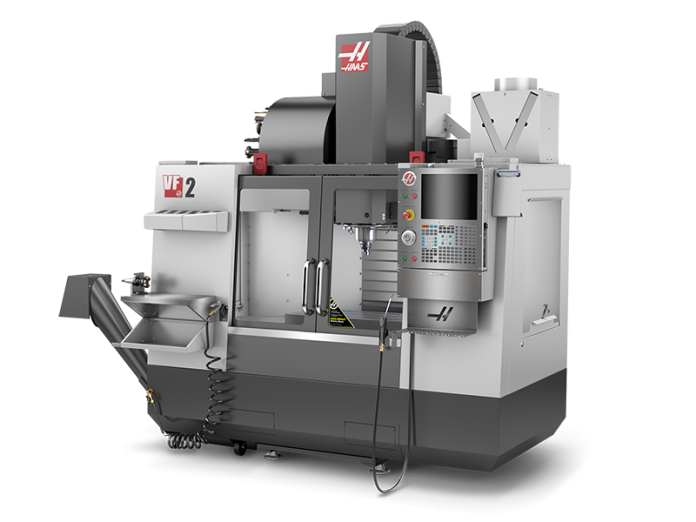
HAAS VERTICAL MILLING MACHINES

Vertical milling machines are a fundamental tool in the manufacturing industry, used to shape and cut various materials such as metal, wood, and plastics. Haas Automation, Inc. is a renowned name in the industry, offering a range of high-quality vertical milling machines that provide precision and efficiency to their users.

Haas Automation, Inc. was founded in 1983 and has since then established itself as a leading provider of CNC machine tools. Their vertical milling machines are designed to cater to the needs of a variety of industries, including aerospace, automotive, medical and more. The company offers a range of models that cater to different requirements and budgets, ensuring that there is a Haas milling machine suitable for every customer.

One of the key advantages of Haas vertical milling machines is their precision. These machines are equipped with advanced features such as high-speed spindles, precise linear guides and accurate positioning systems that enable them to produce parts with tight tolerances. Additionally, the machines are designed with easy-to-use controls and are low maintenance, making them user-friendly and efficient.

Another advantage of Haas vertical milling machines is their versatility. These machines can handle a wide range of materials and can perform various operations such as drilling, milling, tapping and boring. They also come with a range of options and accessories, allowing customers to customize the machines to their specific needs.

Haas Automation, Inc. is also known for its exceptional customer support. The company provides comprehensive training programs to help customers learn how to use their machines and get the most out of them. They offer timely technical support and maintenance services, ensuring that their customers’ machines are always running smoothly and efficiently.

Haas Automation, Inc.’s vertical milling machines are an excellent choice for anyone looking for precision, versatility and efficiency in their machining operations. With a wide range of models, advanced features and exceptional customer support, Haas has cemented its position as one of the leading providers of CNC machine tools in the industry.

For more information, please contact Haas Factory Outlet – Tel: (011) 974-2301.

Visit Haas Factory Outlet

HURCO MACHINING CENTRES SUPPORT SUBCONTRACTOR’S RAPID GROWTH

Installation of one Hurco vertical machining centre (VMC) per year between 2013 and 2017 plus the addition of a sixth in May 2021, partly to take advantage of the UK government’s 130% capital allowance, have coincided with a sustained improvement in the level of business at subcontract machining firm Kelvin Precision Products. Disregarding the first year, when the start-up firm’s income was relatively low and therefore unrepresentative, turnover has increased fivefold compared with the second year of trading.

Like many employees working at subcontracting firms, James Staniford dreamt of branching out on his own. After an eight-year stint at a company in nearby Horsham, he took the plunge in 2013 and started Kelvin Precision Products with Claire McGrath, now the Business Director, who invested capital and owned a suitable 4,000 sq ft unit within the Kelvin Business Centre in Crawley.

The enterprise had the help of his friend and mentor Alan Lamberth, who used his turning experience to help out at evenings and weekends. It boosted this side of the business at the time and allowed Kelvin to take on much more complex manual turning than would otherwise have been possible.

However it was prismatic machining that quickly took precedence and it now accounts for around 85% of turnover. An online auction on eBay secured the first contract to machine a range of small laboratory components from acetal and aluminium for a customer in the scientific industry, which was also a start-up. Soon afterwards a manufacturer of broadcasting equipment, another new company, discovered Kelvin via its website and placed an order for a range of milled components. Both companies are still regular customers, along with about a dozen others.

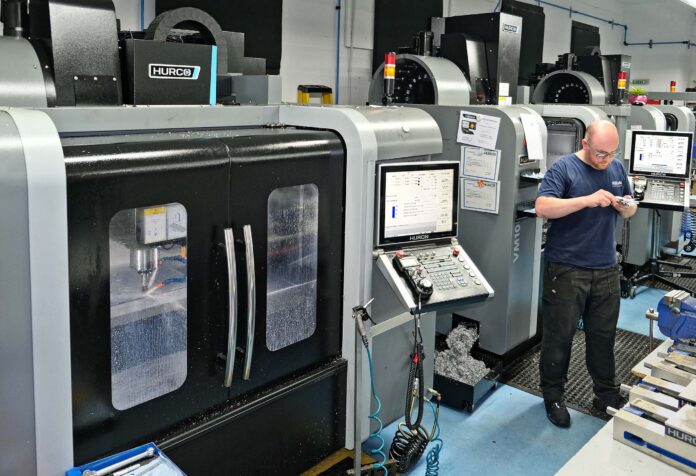
The contracts were fulfilled on a Hurco VM10 3-axis VMC, which was purchased new along with a manual lathe, a knee-type mill and a linisher when James started the business. A Hurco machine was chosen for the first major purchase due to the Windows-based conversational programming capability in the machine’s WinMax control.

James said, “At the outset we didn’t have a CAM system, so relied on WinMax and its menu-driven 3D graphics interface to prepare cycles for machining our customers’ components, some of which were quite complex.

“At that time, the other shortlisted machine had a G-code control and 2D graphics, so we regarded the Hurco offering as superior.

“As time went on and parts became even more complicated, we invested in Autodesk FeatureCAM Ultimate CAD/CAM software, but WinMax is quicker for programming simple components and we still use it about one-third of the time.”

Following the success of the first VMC, one year later another 3-axis machine was installed – a VM10i with more advanced control technology and diagnostics. Then the first 5-axis machine arrived, a VM10Ui, followed by a second in 2016. A larger VM20i 3-axis VMC with a 1,168 x 508 mm table was delivered a year later and then a third 5-axis VM10Ui in early 2021. Interspersed among these purchases were a sliding-head lathe in 2014 and a fixed-head lathe in 2018.

Having half of its prismatic metalcutting capacity able to produce components efficiently in fewer set-ups using three- plus two-axis cycles, with the rotary axes positioned and clamped, sets Kelvin apart from many of its competitors of similar size. It enables high quality work typically to tolerances of ± 0.05 mm to 0.10 mm to be turned around in short time scales. Normally, components are put on a 5-axis machine at Crawley for Op 1 and a 3-axis machine for Op 2 if it is relatively simple. Fully interpolative 5-axis milling and drilling on the Hurcos is available if suitable jobs come along.

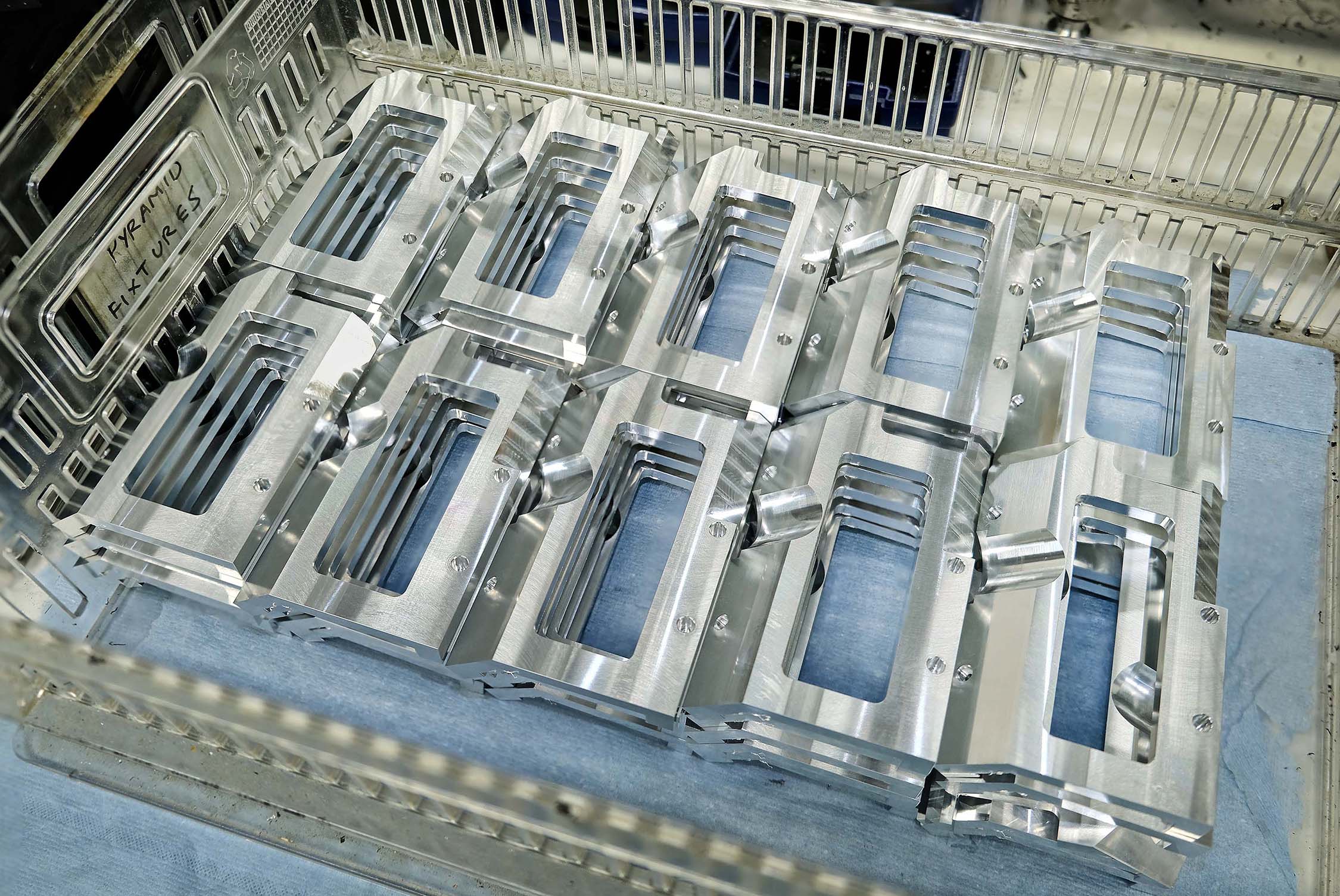
Aluminium base plate for a customer in the pharmaceutical industry

Based close to Gatwick airport, the subcontractor offers machining services with delivery to the south-east of England and to the rest of the UK and Europe via a mail order service, with customers emailing a drawing or CAD file. A regular part of the company’s activity is working for other contract machining firms that require more capacity to get an important job out on time.

Today, prismatic machining of a wide range of plastics and metals including stainless steel, mild steel, cast iron, aluminium, brass and copper are the mainstay of the company’s day-to-day work, some parts being over one metre in length. Sliding-and fixed-head turn-milling of components from 1 mm to 350 mm in diameter accounts for around 15% of turnover.

For more information, contact Hurco – Tel: (011) 012 259 1375

Visit TH Machine Tools

DMG MORI M1 FOR OUTSTANDING MILLING PERFORMANCE

The DMG MORI M1 milling machine locally available from Retecon offers perfect machining performance and high surface quality thanks to superior stiffness, while large heat capacity of the components guarantees thermal stability. The unique design of the machine is based on a monolithic bed.

The perfectly suited working area is combined with a compact footprint of only 6 m2 and the fixed and rigid table has a maximum load capacity of up to 600 kg assuring high machining performance.

The outstanding quality of the DMG MORI inline spindle is well proven with more than 3,000 units installed worldwide.

Design based on monolithic Bed

APPLICATION EXAMPLES

Bracket (Aerospace)
Support plate (Automotive)


Assembly plate (Engineering)
Electronic housing (Engineering)


For further information, please contact RETECON – Tel: (011) 976 8600.

Visit RETECON

LOGIQ-8-TANG NEW 90° CUTTERS CARRYING TANGENTIALLY CLAMPED INSERTS WITH 8 CUTTING EDGES

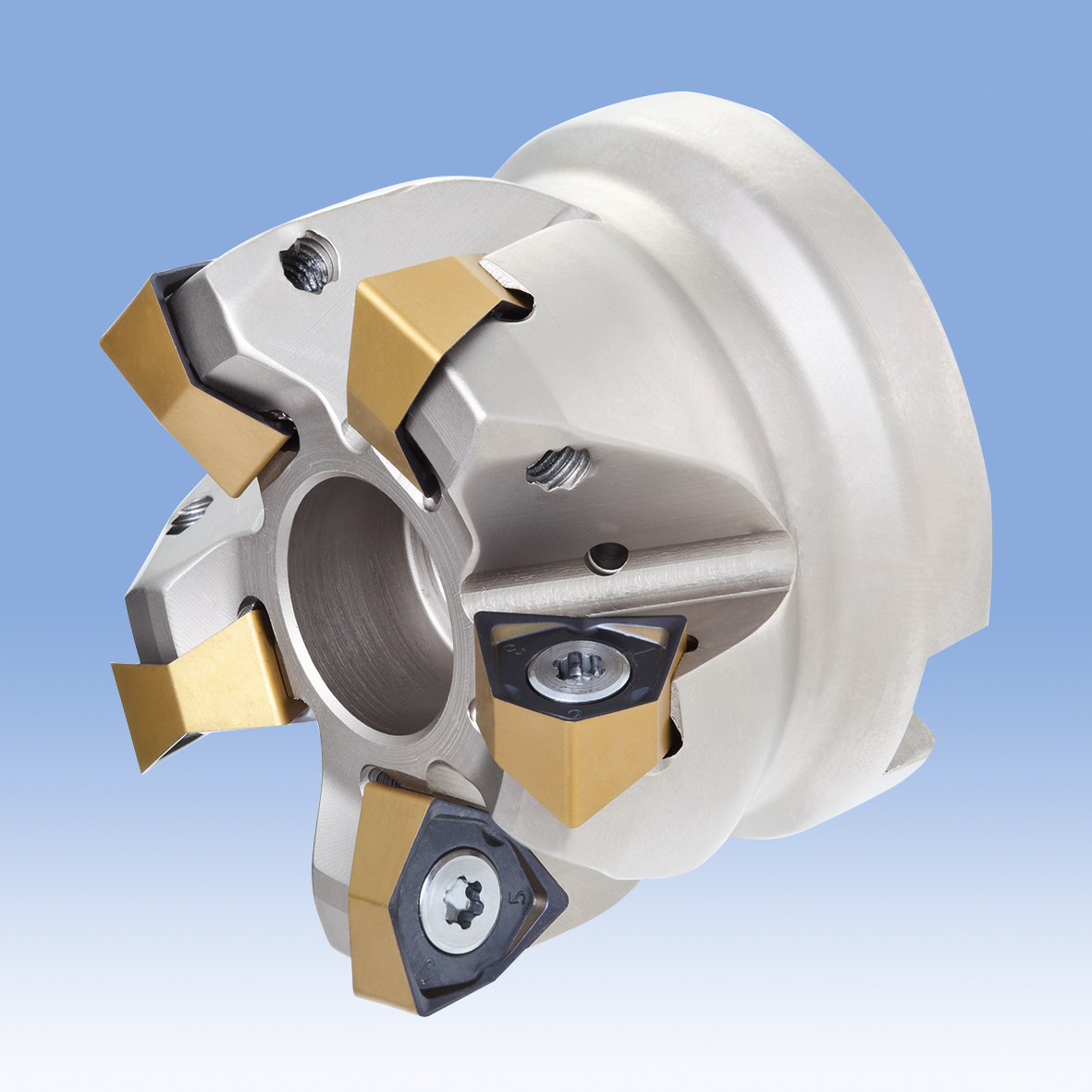
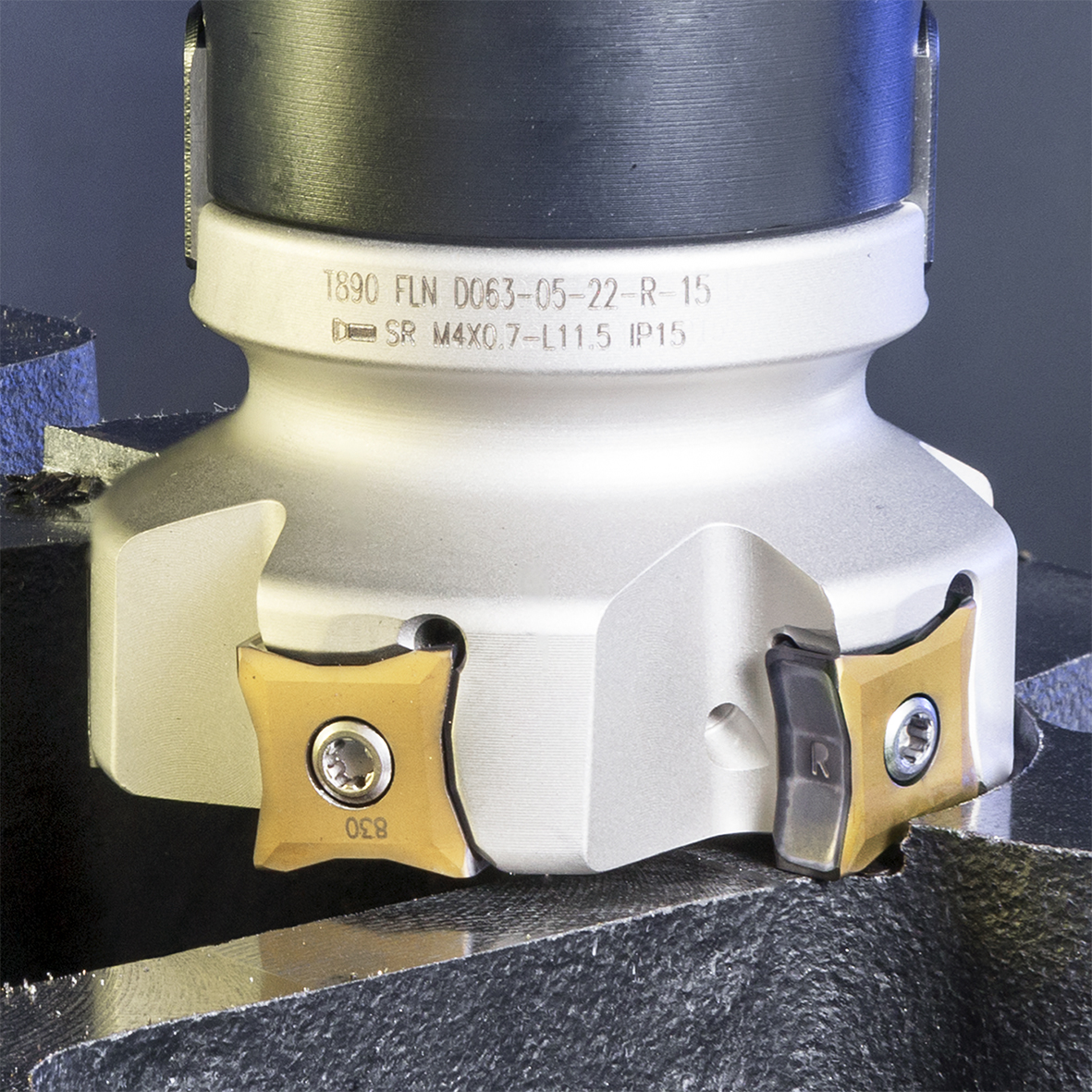
ISCAR is introducing new cutters that carry tangentially clamped inserts with 8 right-hand cutting edges, intended for face and shoulder milling. They are suitable for a wide range of workpiece materials including different types of steel, stainless steel and cast iron and are designed for roughing and finishing operations in the automotive, die and mould industries and for general engineering.

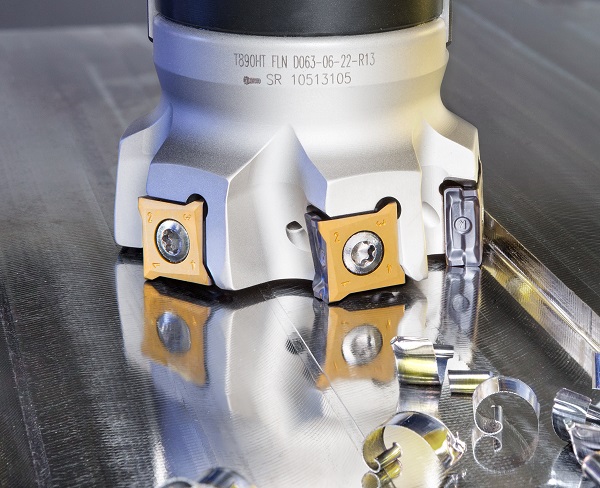
The new T890HT cutters feature 90° cutting edge angle and a rigid dovetail clamping configuration. Coolant channels are directed to each cutting edge, while polished coating of the cutter body facilitates chip flow and protects against corrosion and wear.

The tools include T890HT ELN endmills in 32 and 40 mm diameters with cylindrical and Weldon shanks and T890HT FLN Face mills in 40, 50, 63, 80, 100 and 125 mm diameters with coarse and fine pitch. The endmills and face mills are intended for machining square shoulders, slots and face milling.

The following new inserts are produced from ISCAR’s latest SUMO TEC carbide grades, which significantly increase productivity:

  • T890 LNHT 1306PNTR, a four-sided tangentially clamped insert for general use, featuring 8 right-hand cutting edges, 0.8 mm corner radii and a 9.5 mm maximum depth of cut.
  • T890 LNAT 1306PN-W, a wiper insert with 4 cutting edges for finishing operations, 0.6 mm x 45 deg. chamfer and a wiper for high surface quality.

For more information, please contact ISCAR South Africa (PTY) LTD – Tel: 011 997-2700.

Visit ISCAR

FACE AND SHOULDERS

The world of metalworking is undergoing major changes. Complex machining processes are unimaginable without the utilization of face milling operations. Face milling processes facilitate the preparation of datum surfaces by producing planes and flats, and enable improving precision and surface quality parameters. Moreover, the production of many rotating parts is incomplete without face milling. Face milling is the very operation that cannot be undermined.

In face milling, the axis of a cutter is normal to the machined surface. A large majority of face mills or surface milling cutters are common indexable tools in shell mill configuration. They feature various tool cutting edge angles (entering angles) such as 45°, 60°, 65°, 75°, 90°. Face mills intended specifically for productive rough machining by use of high feed milling (HFM) methods have a significantly smaller cutting-edge angle, typically 10°-17°. In some cases, shell mills that mount round inserts enable extremely strong cutting edges. The cutting-edge angle has an impact on the decomposition of the cutting force, which acts on the plane of the cutter axis, on radial and axial components referred to as radial and axial cutting forces. With all else being equal, this angle defines the maximum depth of cut. The cutting-edge angle largely determines the application field of a face mill making 45° face mills most versatile. Such mills have an important advantage that stipulates a first-choice selection of 45° cutters in face milling, specifically when machining open plane surfaces. These cutters assure a good balance of radial and axial cutting forces, a high-quality machined surface, and favourable cutting conditions when a tool enters or exits the material being machined. The most common face mill types are 45° cutters.

However, 45° face mills have certain disadvantages with an emphasis on forming rectangular profiles. Although machining square shoulders characterizes end milling applications, there is a need for rectangular profiles as well. All plane surfaces of a machined part are bound by shoulders. Applying 45° face mills even when cutting near to shoulders may entail difficulties. Face mills with 90° cutting edge angles are regularly in demand for rectangular profiles. In addition, 90° tools assure low axial forces providing good reason for machining parts with thin-walled structures or cutting under poor clamping conditions. Beyond that, inserts for 90° face mills provide a higher depth of cut when compared to the same-size inserts, intended for 90° endmills.

The correct and sensible method to design 90° face mills utilizes the same inserts that are intended for 90° endmills. This concept provides high insert versatility and remains prevalent. To ensure a good surface finish, the inserts of large diameter multi-toothed indexable face mills should be designed with a wiper flat that is significantly larger compared to an endmill, which is characterized by fewer teeth. Tool manufacturers maintain various principles in their developments which focus on productivity solutions, shoulder profile accuracy, and the efficient utilization of tungsten carbide being the main material of indexable inserts. The ideal design provides excellent solutions and complies with competitive machining requirements.

NEODO S90° is a family of 90° face mills that mount 8 mm double-sided square carbide inserts.

This family of inserts is intended for rough and semi-finish machining of steel and cast iron. The double-sided insert concept shows a durable insert structure and facilitates 8 indexable cutting edges. The insert may appear simple, but when looking closely, the insert side surface features a complex shape that provides a wide wiper flat on every cutting edge. The face mills have a positive radial and negative rake angle and ensure an exact 90° profile when milling with depths of cut up to 5 mm. The NEODO S90° cutters enable face and shoulder milling while providing an additional option for machining close to shoulders where workpieces or work holding fixtures entail constraints.

In small tool diameter ranges between 32-63 mm, ISCAR introduces a family of the HELIDO Trigon Line.

This family of tools is characterized by high-tooth density face mills with double-sided trigon-shaped inserts for true 90° profiles at a depth of cut up to 4 mm for ultra-high productivity. The insert’s trigon shape provides 6 indexable cutting edges and forms positive tool rakes in both radial and axial directions. Combined with a wide wiper flat, the insert’s design contributes to an improved surface finish and easily performs ramp-down milling.

LOQIQ-8-TANG face mills mount tangentially clamped inserts with 8 cutting edges and provide a cost-beneficial solution for rough machining planed surfaces near square shoulders.

The tangential insert mounting concept combined with a dovetail clamping principle and a durable insert structure results in a strong and rigid tool design to withstand heavy loads in roughing applications.

ISCAR has upgraded the HELIQUAD family of 90° mills with traditionally designed single-sided square inserts. Specifically, the new inserts are intended for machining titanium and heat-resistant super alloys (HTSA), especially when milling near-to-shoulder faces.

In milling applications that require small tool diameters, MULTI-MASTER solid carbide exchangeable face milling heads in diameters of 12-25 mm can provide effective results.

Due to the multi-tooth design, the heads guarantee productive cutting at high feed speeds. An important advantage of this unique face milling head is its high precision attributes, which are comparable with those of solid carbide tools. Such precision levels result in increased machining accuracy and excellent surface finish.

For more information, please contact ISCAR South Africa (PTY) LTD – Tel: 011 997-2700.

Visit ISCAR

PFERD’S CC-GRIND ROBUST – REVOLUTIONISING METAL FABRICATION PROCESSES WITH ITS EXTREME STOCK REMOVAL RATE, IMPROVED EFFICIENCY AND COMFORTABLE OPERATION

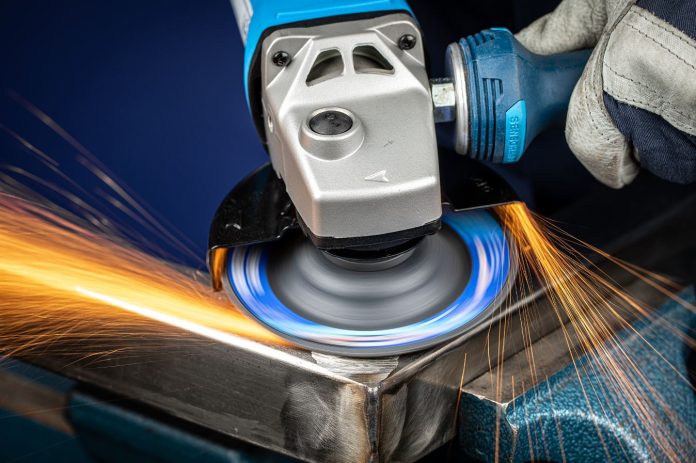
Transform your metal stock removal applications with the CC-GRIND ROBUST—the optimum solution for increased productivity, cost-effectiveness and improved operational efficiency. Its high-performance and ergonomic design surpasses that of conventional grinding discs, flap wheels and fibre discs, making it a modern choice for achieving unparalleled stock removal rates.

Extreme Stock Removal Rate of PFERD’s VICTOGRAIN

“The CC-GRIND ROBUST is PFERD’s latest generation grinding disc developed with ergonomics and efficiency improvement in mind. The CC-GRIND ROBUST consists of ceramic grains, optimally aligned on a glass fibre backing. The SGP version is part of PFERD’s VICTOGRAIN family consisting of triangular-shaped ceramic grain. The product achieves an extremely high stock removal rate, which significantly reduces processing time resulting in improved overall operator productivity”, explains Dennis Phillips, National Sales Manager at PFERD-South Africa.

Compared to conventional abrasive grains such as Aluminium Oxide, Ceramics have a significant advantage due to their ability to continuously self-sharpen. As Ceramics are used, their grains break down gradually, revealing new sharp cutting edges that consistently and aggressively cut throughout the product’s lifespan.

The ROBUST’s self-sharpening characteristics and cutting performance are even more pronounced. “VICTOGRAIN starts as triangles and is constructed to break down in a pre-defined and controlled manner, Phillips states. When the triangular grain breaks down, new and extremely sharp cutting edges are ready to continue the abrasive’s aggressive and fast grinding”.

ROBUST Optimises Grinding Processes and Improves Operational Efficiency

“The extreme stock removal rate and long tool life of the ROBUST provide a significant advantage for metal manufacturing operations. By reducing component processing times, more work can be completed in the same amount of time. Despite its aggressive stock removal rate, the ROBUST still achieves a consistent and high-quality surface finish. Accordingly, PFERD’s CC-GRIND ROBUST greatly optimises grinding processes and significantly enhances operational efficiency”, Phillips explains.

The high-performance ceramic abrasive grain removes metal quickly, substantially reducing the temperature in the grinding zone. As a result, there is no need for additional processing steps to remove heat discolouration.

Increased Comfort, Safety and Precision

The ergonomic design of the grinding wheel results in significantly reduced levels of dust, noise and vibration.

According to Phillips, operators who use the ROBUST grinding wheel experience significantly less fatigue due to its reduced vibration levels. Additionally, the use of this consumable results in less strain on machinery, reducing the need for frequent replacement and ultimately leading to lower operational expenses.

The improved air quality in the workspace and lower noise levels also contribute to a safer and more comfortable working environment for operators, further enhancing their comfort and safety levels.

Furthermore, the lightweight ROBUST means an operator can easily guide the abrasive on the workpiece for precise and accurate stock removal.

Variety of Applications on Steel and Stainless Steel

The ROBUST product range includes 115mm and 125mm grinding wheels that can be used for a wide range of applications—both portable and stationary. It’s ideal for tasks on steel and stainless steel such as surface grinding, weld dressing, deburring, chamfering and removing imperfections. Due to the tool’s dimensional stability, the ROBUST can produce flat surfaces while its adapted tool geometry eliminates the need for special clamping flanges, making it compatible with all commercially available angle grinders.

On-site Demonstrations and Assessments

Phillips encourages those who want to experience the CC-GRIND ROBUST to contact PFERD. “Our Application Specialists are available for on-site product demonstrations and application assessments—this way they can determine how the ROBUST can be implemented to help optimise your operations, “he concludes.

For more information contact Pferd Tel: 011 230 4000 or E-Mail: sales@pferd.co.za.

Visit PFERD

DYNAPATH WINDELTA

CNC Control System for Machine Tool Applications

The WinDelta Control system is a PC-based, fully closed loop CNC control solution featuring advanced motion control, built-in software PLC and a Windows-based HMI. The CNC hardware can be configured for up to 4-axis simultaneous motion control using an analogue voltage command interface or an optional digital interface. The system includes standard built-in motion, PLC and HMI modules, with the capability for custom development.

DynaPath’s specific strengths

DynaPath is a flexible, powerful, yet user friendly control solution at a reasonable price. The control provides solutions for the beginner to the most advanced in one easy to use platform, while remaining versatile for manual, semi-automatic and full production operations. This is all enabled by the intuitive touchscreen user interface, DRO + semi-auto mode operation, conversational editor + CAD edit + import programming capabilities and ability to run any standard G-Code program. Furthermore, the control also applies advanced motion control to execute the programmed tool path quickly and smoothly while accounting for the limits of the machine, a feature only found on high-end controls in the market. DynaPath provides consistency of product function and operation modes coupled with excellent price to feature ratio.

DynaPath controls feature every way of operation on a single platform in a format that is easy to learn and use from simple manual plus operations to doff downloads and offline Fanuc format G-code downloading.

DynaPath offers manual users DRO and semi-automatic operation of the machine via electronic handwheels so the machine can be operated directly without knowing any CNC or programming. Then on the same control DynaPath runs standard G-Code programs and macros that any CAD CAM can post to, so the control is essentially FANUC G-Code compatible. Finally,  Conversational Programming is available on the control that is quick to use and easy to learn with a built-in CAD system that can import and edit DXF files directly via the touchscreen.

DynaPath – Interesting Facts

The history of DynaPath controls began in 1970s with the System 10/20 series, then from 1980s to present the Delta 10/20/30/40/2000 series, then from 2010 to now the WinDelta 600/1000/H/M/T series. To date over 20000 control units were sold and most of these systems are still fully supported from the DynaPath Detroit main office. DynaPath OEM’s have provided a worldwide customer base throughout Europe, United Kingdom and Asia, with a majority of sales in the USA, however, the launch of the WinDelta series has seen more growth recently in Taiwan and China.

Dynapath has provided Mill, Lathe and Punch controls to OEM industry leaders including Tree Machine Tool, Republic Lagun, Chevalier Machinery, Mighty Enterprises, Monarch Cortland, Clausing, Machining Systems, South Bend, & LVD (US, Europe & UK).

Customers in the US include Ford, General Motors, General Electric, Honeywell Inc., Caterpiller Inc., Gradall Inc., Testron, Naval Surface Warfare Center, Lockheed Martin, JPL, USAF, Martin Automatic, Asyst Technologies, Electronic Theatre Controls, Monroe Mold and others.

A customer from Shelter Logic in Illinois says: “Our program time was reduced from 6 hours to 30 min with the new WinDelta DXF feature. This not only reduced programming time but also enabled our machinists to stay focused on the manufacturing process instead of re-entering part program numbers.”

Time savings using DynaPath

In general, programming a conversational program on the control takes less than 10 minutes. If a DXF file of the part is provided, programming takes even less time. If running a G-Code program, due to advanced path planning and smoothing, the cycle times are even quicker on the DynaPath control, often saving 10% to 40% machining time, particularly for programs containing fine contouring operations.

Advantages when investing in a DynaPath

A company representative from DynaPath says: “Strong advantages include features, cost, flexibility and plethora of programming formats plus our response time and availability. We are trying to beat the competition, not join them. So, to achieve this, we must employ a better tool.

“As a controls company offering unique machine tools, DynaPath makes machine tools that are specially integrated with the control in such a way that is feature-rich and oriented for that user segment, compared to other machine tool providers who simply integrate standard controls on standard frames.

“The DynaPath control combines ease of use, manual DRO operation, conversational programming, DXF editing, standard G-Code and macro compatibility, while measuring up extremely well against competitors.  The control offers advanced path planning with look-ahead, feed-forward, smoothing and dynamic roughing or finishing parameters to produce excellent machining quality. Additionally, there is remote assistance and remote diagnostics service built into the control,” he concludes.

DynaPath CNC training

For a novice, basic operation takes at around 1 hour to introduce each operating mode and screen navigation. Intermediate operation takes around 2 hours to set up work offset, tool offset, program a part and to run it. Advanced operation can be open-ended, but with remote training, customers can remote link anytime, while learning what is required from trained technicians and at their own pace. For any operator already familiar with other common CNC’s such as FANUC, the operator can almost seamlessly inter-operate between the two machines with minimal additional training.

For further information, please contact MJH Machine Tools – Tel: (031) 705 7514.

Visit MJH Machine Tools