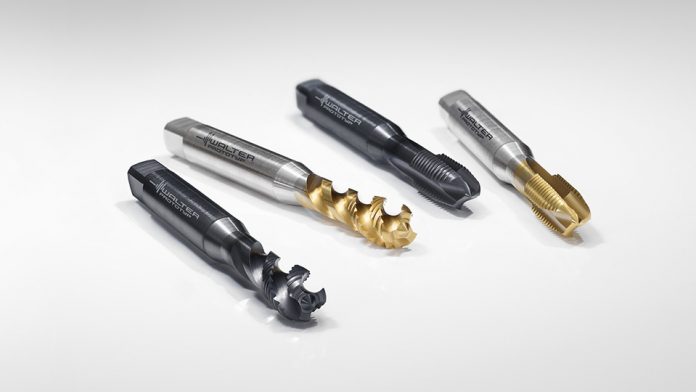
Manufacturer for precision tools, Walter, is extending its Perform line with new metric fine taps from the Walter Protoyp TC115/TC216 Perform line for blind-hole and throughhole machining operations.
The same benefits apply to metric fine taps with regard to the excellent profitability of small and medium-sized batches and the extensive range of applications in the Perform line.
Other advantages that also apply to the new metric fine taps in dimensions M8 Å~ 1 up to M18 Å~ 1.5 include threads on load-bearing components which need higher load-bearing capacity, threads for adjusting screws, e.g. on measuring devices which require a high level of precision during adjustment.
Another benefit is the self-clamping system due to the lower thread pitch. Like their metric counterparts, Walter also offers the new metric fine taps with two different coatings, including TiNcoated for exceptionally long tool life, vaporised for excellent chip control and reduced weld formation. For UNC threads, the ANSI shank diameter has been added to the product range.
These variants which differ from the DIN version are primarily of interest for countries in the NAFTA market. The primary applications of the new taps are ISO P: 350–1000 N/mm2, for ISO M: < 800 N/mm2 and for ISO K: GJS (GGG). Secondary application for blind-hole machining operations and additional primary application for through holes is ISO N aluminium wrought alloy and AlSi < 4% silicon.
For more information contact Spectra Carbide Tooling Technology – Tel: 0860 23 23 23
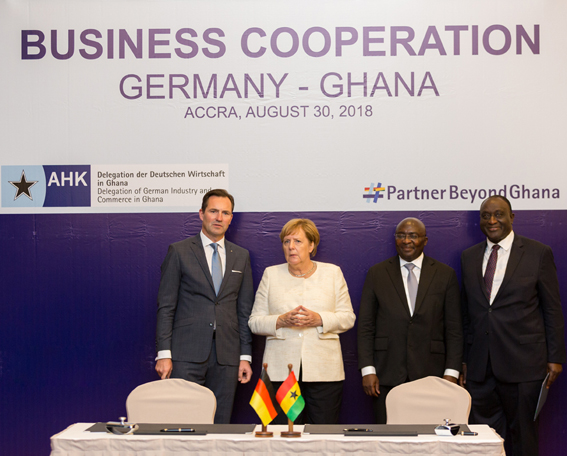
Thomas Schaefer, VW Head of the Sub-Saharan Region and the Minister of Trade and Industry, Alan Kyerenmaten of Ghana signed a Memorandum of Understanding (MOU) in the presence of Angela Merkel, Chancellor of Germany and Mahamudu Bawumia, Vice-President of the Republic of Ghana to establishing a vehicle assembly facility and to assess the feasibility of a modern Mobility Concept for Ghana.
This would also include developing a fully-fledged sales and service network in Ghana as well as establishing a Training Academy for production and after sales.
Volkswagen undertook to commence with a feasibility study for an integrated mobility solution which will include a review of the commercial viability of introducing car sharing, ride hailing and shuttle services by way of a Ghanaian subsidiary of VWSA or the appointment of a local service provider.
In turn, the Ghanaian Government undertook to develop a comprehensive Automotive Industry Policy which will incentivise and facilitate vehicle manufacturing and assembly in Ghana. This includes a preferential procurement policy for locally assembled vehicles.
Schaefer commented, “we are impressed with the determination and desire of the Ghanaian Government to develop a motor industry. As the second biggest economy in West Africa, Ghana is the ideal next building block in our Sub-Saharan Africa development strategy. The realization of the MOU should see our assembly locations increase from four to five, the other locations are in South Africa, Kenya, Rwanda and Nigeria. Our long term commitment to this region is real and sustainable. We believe that our committed actions and delivery of the last two years are proof of this.“
“The first locally assembled vehicles are planned to be on the streets in Accra in early 2019,“ added Schaefer.
During the visit of the Chancellor of Germany Angela Merkel to Nigeria, Volkswagen took the opportunity to sign a Memorandum of Understanding (MoU) in the presence of both, the Chancellor, and President of the Federal Republic of Nigeria, Muhammadu Buhari in Abuja to develop a joint vision for an automotive hub in that country.
The Head of Volkswagen Sub-Saharan Region, Thomas Schaefer signed the agreement on behalf of Volkswagen with the Nigeria’s Minister of Industry, Trade and Investment, Dr. Okey Enelamah.
The Volkswagen Brand thus took the next step in expanding its influence and presence in Sub-Saharan Africa. This comes a day after the signing of the MoU in Ghana in the presence of Chancellor Merkel and Vice President of Ghana, Mahamudu Bawumia whereby Volkswagen committed to set up a vehicle assembly and conduct a detailed feasibility study for the development of an integrated Mobility Solution in Ghana.
In the MoU, Volkswagen undertakes to implement a phased approach in relation to the assembly of vehicles, initially from assembly kits with the long term view of establishing Nigeria as an automotive hub on the West Coast of Africa. This will include establishing a training academy in conjunction with the German Government, which will train initial employees. The academy will also provide broader technical training in automotive skills.
In turn the Nigerian Government undertakes to accelerate the approval of the Nigerian Automotive Policy, currently under consideration. This includes the gradual transition from the importation of used cars to the manufacture and distribution of new passenger vehicles.
The Government has committed to providing a conducive legislative environment that will encourage the manufacturing of motor vehicles in Nigeria.
Volkswagen has a fully-fledged manufacturing facility in South Africa, and assembles vehicles in Kenya, Algeria as well as in Rwanda, in conjunction with an Integrated Mobility Solution offering Community Car Sharing and shortly to be launched Ride Hailing.
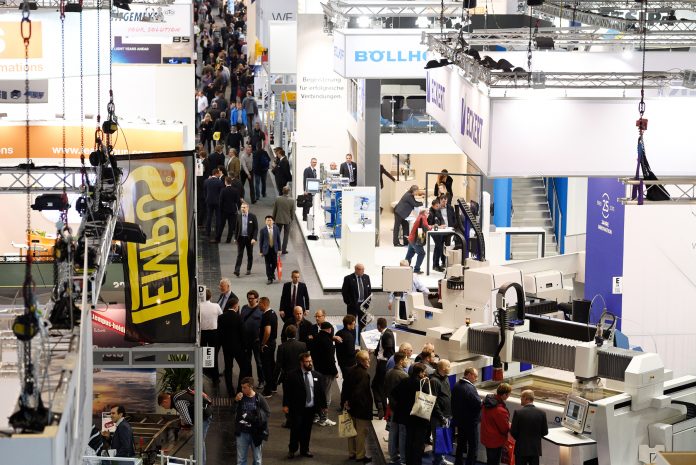
This year’s 25th International Sheet Metal Working Technology Exhibition will take place from 23rd – 26th October 2018 in Hanover, Germany.
A total of 1,500 exhibitors from 39 countries secured their stand at the world’s leading sheet metal working technology exhibition. This year, the show is mainly influenced by the topics Digitalization and Industry 4.0. The Online Show Preview, which was recently published, provides an overview of new products and technological innovations which will be presented at the show in October.
A total of 1,500 exhibitors from 39 countries have booked their stands at the world’s leading exhibition for the sheet metal working industry. EuroBLECH 2018 will feature more than 89,000 square metres net exhibition space, another growth of around 2% compared to the previous event. The most important exhibitor countries are Germany, Italy, China, Turkey, the Netherlands, Spain, Switzerland, Denmark and the USA.
For this year’s 25th edition of EuroBLECH, the main topics are Industry 4.0, big data and digitalization. Especially for small and medium-sized companies these developments offer enormous potential. These new business approaches offer advantages in terms of streamlined and less complex processes as well as improvement of productivity and efficiency. “While an app for maintenance control of machines or the interaction of machines and robots across the whole production process were still a vision of the future a couple of years ago, today this is the reality in sheet metal working. Currently, not only large companies are gaining ground in this area, SMEs have also recognised their potential here. Their company size usually allows them to react flexibly and quickly to such transitions, therefore they are in a good position to use digitalization to their advantage”, says Evelyn Warwick, Exhibition Director of EuroBLECH on behalf of the organisers Mack Brooks Exhibitions. “At EuroBLECH 2018 as the world’s largest sheet metal working exhibition, visitors can expect the most comprehensive technology range in terms of industrial digitalization of sheet metal working.”
The comprehensive Online Show Preview, with detailed information on many exhibitors and their products, is now available. In preparation of their visit, users will be able to sort entries by product categories or halls, to discover their personal highlights of this year’s exhibition. In this way, visitors can search exhibitor profiles including products and services presented at EuroBLECH 2018 and create their personalised version of the show preview.
Digitalization, E-mobility, Lightweight construction – these topics currently play a crucial role in the sheet metal working industry. Networked manufacturing is a key development in Industry 4.0 to increase productivity and reduce downtime of machines. E-mobility bears a lot of challenges for sheet metal working, due to the different manufacturing processes and materials required for electric cars. This goes hand in hand with lightweight construction, where composites and new technologies become increasingly important and bear certain challenges when joining or separating materials. The new EuroBLECH White Papers covering these three topics will shed some light on the recent developments within these areas and will provide some insight into new trends in the industry. All three White Papers are now available free of charge on the exhibition website www.euroblech.com
Aluminium recycling is gaining in importance as a source of raw materials.
Today, aluminium scrap is already one of the most economically valuable secondary raw materials. Around 20 percent of the world’s aluminium requirements are covered by post-consumer scrap. ALUMINIUM – the world’s largest industry event – will present the latest developments and potential of aluminium recycling from 9 to 11 October in Düsseldorf.
Its significance is increasing in a time of shrinking raw material reserves and scarce and above all expensive, energy. Recycled aluminium is produced in the form of cast and wrought alloys. There are no qualitative differences between alloys made from the primary metal and those made from recycled aluminium.
Scrap supply is the bottleneck for the aluminium material cycle, since aluminium is used mostly in products with long service lives, e.g. in construction applications like windows or in cars. Windows, e.g., can have a service life of well over 50 years. That makes it necessary to wait a long time before the scrap can be recycled.
Long before the need for sustainable development became a widely discussed topic, the global aluminium industry had already been running its material through a largely closed-loop cycle of metal production, processing, use and recovery. Product-related material cycles from production to processing and use to recovery of the metal are already largely closed today – depending on the application market. This has always been true for long-lived applications in cars and buildings – with recycling rates of about 95 per cent – and now for relatively short-lived product applications in packaging. Recycling rates of more than 80 per cent have been reached in this segment in Germany and recycling rates continue to rise in the EU area, as well.
According to estimates by the International Aluminium Institute, about 17 million tonnes of post-consumer scrap accumulated worldwide in 2016. This volume will increase to about 21 million tonnes in 2020, representing a share of more than one third of today’s global production of primary aluminium. Today, about 20 per cent of aluminium demand is covered by old scrap – i.e. metal from products that have served their purpose. Another source of raw materials besides old scrap is new scrap. New scrap refers to, for example, waste generated in the production of semi-finished goods, sprues from casting foundries, or shavings from the mechanical processing of semi-finished goods and other products. Initially, increasing aluminium demand leads to higher demand for semi-finished goods, which results in a higher volume of scrap – unless process optimization steps can be implemented to reduce the amount of accrued scrap. This is done to the extent possible, in part because it’s economically beneficial to companies: more scrap means less product and thus less efficient production.
Aluminium scrap is among the most economically valuable secondary raw materials. Recovering and recycling it conserves resources and makes an important contribution to limiting the rise of greenhouse gases. For that reason alone, using existing scrap is in the aluminium industry’s very own interest.
Recycling Pavilion at ALUMINIUM 2018
From 9 to 11 October, the ALUMINIUM trade fair in Düsseldorf will present the latest developments and potential of light metal recycling. The world’s largest industry event for the aluminium industry will dedicate its own exhibition space to the subject of recycling. A total of around 1,000 exhibitors and 27,000 visitors from 100 nations are expected. This year, the exhibition area will grow to 80,000 square metres – a record and a clear sign of the current dynamism in the aluminium industry.
In six exhibition halls, global players, specialists and young innovative companies will present the complete range of the industry, from aluminium production to machines and plants for processing, semi-finished products, products for the application industries and recycling.
In addition to the aluminium producing and processing industry, the fair will also focus on processes and product innovations for the most important aluminium application industries: automotive, mechanical engineering, construction, aerospace, electronics, packaging and rail transport.
The future is airborne. Drones may soon become the key to relieving the burden of traffic on our streets, optimizing deliveries and improving the safety and efficiency of firefighting.
But there are still a few hurdles to cross before the technology reaches the maturity required for large-scale commercial rollout. In particular, a suitable communication system to control and determine their location remains a challenge. Drone communications must be stable and widely available, should cost as little as possible and work reliably even when out of sight. Scientists at the Fraunhofer Institute for Telecommunications, Heinrich Hertz Institute, HHI in Berlin have found a solution: call a drone.
Drone technology holds great promise. In the foreseeable future drones could replace delivery vehicles on the roads, in turn relieving the traffic burden and reducing CO2 emissions. Drones would also make delivery routes considerably shorter and cut the time it takes for parcels to arrive. In the event of a fire, drones could fly ahead of firefighters and send them images of the situation at the site. There are many more probable scenarios for putting drones to work. But there are still a few hurdles to cross before drones can be rolled-out for large-scale commercial use. A secure communication to control and determine their location remains a challenge. Today’s drones are typically controlled by regular remote control. The limited range of this solution, however, severely restricts the scope of where drones can be used. An alternative possibility would be to exchange information using data channels of the mobile network. But this option also has its flaws which, as things stand, rule out reliable, commercial use on a large scale. These channels are not designed to offer a constant, real-time connection; instead they provide a temporary connection sufficient for transferring data packets, to upload a website, for example. This means the connection is subject to frequent interruptions. What’s more, there’s a risk of network overload when the data channels are used in busy city centers or at major events. Another solution would be to set up a drone-specific infrastructure for controllers to communicate with the devices. But in addition to the complexity and expense this would involve, the radio resources required for this endeavor are scarce. The available frequency ranges are often plagued by disruptions and capacity overloads, making a solution of this kind neither a safe, secure nor economically feasible option.
Experts from Fraunhofer HHI, however, have developed a solution that is stable, affordable, not limited in range and essentially, ready to go: controlling drones using the voice channels in mobile networks. “A major advantage is that – unlike the data connections – the voice channels are available almost everywhere and they’re highly reliable, too,” explains Tom Piechotta, research associate at Fraunhofer HHI. “Even in areas where there is only a limited data connection, or even none at all, there is usually still network coverage for voice channels.” An additional benefit is the near absence of any extra costs involved, because no new infrastructure or special contracts with network providers to prioritize data connections are required. A simple audio connection is all that is needed – as already exists with every prepaid sim card.
Drone control works on the basis of two-way communication: controllers on the ground transmit commands to the device and the device returns information on its position, altitude or battery status. “Relatively speaking, the control commands and positioning information are fairly small amounts of data, but they must nevertheless be transmitted reliably,” says Piechotta. “We convert the commands into audio signals, in much the same way as modems used to. A small module on the drone then translates the audio signal back into a command. Transmitting the information in this way is extremely favorable given that it works in real-time and is highly resilient to failures and connection disruptions. Another advantage is that no new radio standards or infra-structure are required; the requisite technology is already available today – all over the world.” Since the information is transmitted via standard mobile networks, a connection to the drone can be established at almost any point on earth – it’s no different to making a long distance phone call.
Future-proof control in real time
But how can you control a drone when it is out of sight, perhaps even on the other side of the world? The drone’s location can be visualized using an online map service such as Google Maps. Also shown on the map are the drone’s position and altitude, which the device transmits in real-time. Another option is to install sensors on the drone to detect and avoid unexpected obstacles, such as other drones, helicopters, or cranes. Drones can be controlled either by an operator on the ground, or by using transmitting waypoints. The latter option is particularly appealing for applications such as parcel delivery.
“With our system we rarely come across any dead spots. If a network is down, the connection switches to another mobile communications standard, from LTE to GSM or UMTS, for example. If the connection is lost, the drone has an automatic call-back function that activates almost immediately,” explains Piechotta. “Another advantage of the technology is that it’s one hundred percent future-proof. Mobile communications standards come and go – but voice channels are a permanent feature. Mobile networks will always provide voice channels and, as long as this remains the case, the system we propose is a reliable and affordable alternative to conventional data connections.” In other words, it’s now possible to communicate with drones anywhere, at any time.
If recent investments in the manufacturing industry are indicative of the trend going forwards, then the future is looking bright for this often beleaguered market sector.
In addition, the South African government recently announced that it was embarking on an offensive to attract $100-billion (approximately R1.3-trillion) in foreign direct investment (FDI) over the next five years to bolster the local economy.
Charlene Hefer, portfolio director for Specialised Exhibitions Montgomery, says that a number of notable manufacturing plant projects have created a sense of hope for the country, including the R50-million Automotive Industry Centre (AIDC) mega-development in Rosslyn near Pretoria. Fuchs Lubricants South Africa also recently opened its R125-million grease plant expansion in Isando and Russian rolling stock manufacturer Transmasholding (TMH) launched a R500-million investment in a South African manufacturing facility through its subsidiary TMH Africa.
Not only does the manufacturing industry in the country provide income and job opportunities to those people directly employed in the sector, but furthermore it has high economic multipliers in its linkages to upstream production sectors (mining and agriculture) and downstream sectors, including services.
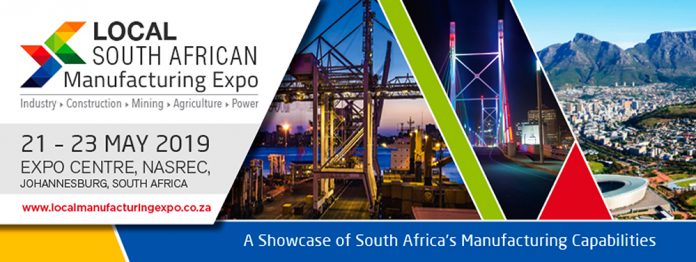
Recognizing the importance of promoting local manufacturing to other countries, Specialised Exhibitions Montgomery, in association with the South African Capital Equipment Export Council (SACEEC), is launching the Local Southern African Manufacturing Expo (LME) in Johannesburg between 21 and 23 May 2019.
Endorsed by the Premier of Gauteng, David Makhura, LME will provide an interactive, educational and practical platform for local manufacturing businesses to showcase their capabilities to a captive target audience. Significantly, AREI (Association of Representatives for the Electronics Industry) is partnering with LME 2019 to provide both its members and the industry with added value.
The 4th industrial revolution is not science fiction. Experts from across the globe will affirm the reality, scope and scale of technological advancement world-wide at the inaugural African Advanced Manufacturing and Composites Show in South Africa from November 7-9.
Headlining the seminar speaker line-up for the Show are German-based light-weighting giants Dr Michael Effing – Chairman of the Board, Composites Germany and Dr Michael Emonts, CEO of the Aachen Centre for Integrative Lightweight Production (AZL) of RWTH Aachen University.
Addressing aspects of industry 4.0 and its potential to disrupt or change the normal course of business are Disruptas Founder Dr Harry Teifel, Mesopartner Director Dr Shawn Cunningham, and Makerspace Foundation CEO Steve Gray.
Key note addresses and panel discussions will be incorporated into four half day seminars addressing the themes Strategy And Policy, Additive Manufacturing (3d printing), Automation and AI, Future Production Technologies, and Composites Materials of The Future.
South African Composites Cluster MD, Andy Radford, formerly an industrialist at the CSIR is the visionary behind the Show, which he says is “an essential stepping stone to uniting the country’s stakeholders around a common vision.”
“The Advanced Manufacturing sector is highly fragmented in South Africa. Many associations and industry bodies promote advanced manufacturing but generally there is a lack of integration and awareness of even our own capabilities, which are substantial,’’ Radford said.
The Show to be held at the Nelson Mandela Bay Stadium in Port Elizabeth, features the four seminars and the Third International Conference on Composites, Bio-composites and Nano-composites which run concurrently with a two day exhibition, demonstrations, factory tours and the first national awards for advanced manufacturing.
“While manufacturing remains an essential part of South Africa’s economy – contributing around 19% of GDP, our efforts towards Advanced Manufacturing in South Africa are highly fragmented, but we do have significant pockets of excellence,’’ Radford said.
In the face of growing international competition in Sub-Saharan Africa, South African-based companies need to take a long-term strategic view of the region and how best to take advantage of the opportunities presented by the industrial and energy evolution that is taking place, combined with increasing urbanization in many African countries.
Infrastructure development is viewed as a crucial ingredient to foster growth and productivity in the region.
Many businesses think of countries or regions in Africa as singledriver opportunities, which when buoyant, offer great short-term opportunities, but when depressed, signal the time to leave. But Sub-Saharan Africa’s mining and energy belts that were initial drivers of development have opened up support for infrastructure opportunities that offer growth prospects in the longer term.
Africa is urbanizing at breakneck speeds, which means the need for infrastructure such as bypasses, bridges, new highways and new technologies need to be deployed in congested areas where traditional methods cannot work. The total population in the continent is projected to reach almost 2.5 billion people by 2050 with about 55% living in urban areas. This is a significant increase given that less than 10% of Africa’s population resided in urban areas in 1950. Most of the increase in urban population is taking place in small- and medium-sized cities. The growth of existing villages and towns is also transforming rural landscapes into urban areas.
This evolution of infrastructure and the underlying drivers will be highlighted at the Infrastructure Africa 2018 conference on 9th and 10th October 2018 at the Sandton Convention Centre. With discussions on specific project development opportunities from infrastructure players operating on the ground, the Infrastructure Africa Business Forum offers businesses the opportunity to set their regional strategies for long-term growth. Sub-Saharan countries, Zimbabwe, Botswana, Zambia and Namibia, will feature a host of infrastructure project development opportunities at the event, with a desire to grow the private sector participation in their respective projects.
Many new products will be unveiled and visitors will also have the opportunity to watch live product demonstrations, engage with technical experts and participate in the daily free-to-attend seminars, as well as enter lucky draws and competitions.
“Over 850 local and international exhibitors will be showcasing their latest innovations at this year’s Electra Mining Africa,” says Gary Corin, Managing Director of Specialised Exhibitions Montgomery, organisers of the show. “It will be a highly informative and interactive environment.”
Gary Corin, Managing Director of Specialised Exhibitions Montgomery.
“These new technologies are influencing the way we do business and it’s imperative that those in the industry keep up-to-date with these trends,” explains Corin. “It’s the way to ensure their businesses keep future-fit and that they don’t get left behind. We need to know where Industry 4.0 is taking us, and we need to know how the new products and machinery on the market can optimise our production and increase profits. We provide that knowledge and learning environment at Electra Mining Africa and it’s enhanced even further with the addition of the co-located industry conferences and the free-to-attend daily seminars. Many of our exhibitors will also have knowledge-sharing presentations on their stands.”
New at this year’s show, each day will focus on a different theme. “Day one will centre on the future of skills development and one of the highlights at Electra Mining Africa will be the Skills Development Area, developed in partnership with the Artisan Training Institute and the South African Capital Equipment Export Council (SACEEC),” says event director, Charlene Hefer.
“Taking place in Hall 8, this will be a fully functional workshop where learners will be demonstrating the skills that they learn at the Artisan Training Institute,” Hefer explains. “Artisans visiting Electra Mining Africa can test their skills against the highest standards of industry – and could win a prize.”
Top new products will be the focus on day two whereas on day three, visitors will be part of the Local is Lekker South Africa day – a day to celebrate Electra Mining Africa’s local heritage. Safety takes the spotlight on the fourth day, whereas diversity takes centre stage on the final day of the show, celebrating the diverse reach of Electra Mining Africa which has been showcasing the future of mining, manufacturing, electrical and power since 1972.
Further knowledge and learning will be central to the daily free-to-attend seminars, hosted by the South African Institute of Mechanical Engineers (SAIMechE). Leading experts will be presenting highly informative topics that align with the five daily themes.
Top industry speakers will be presenting at the conferences hosted by the foremost industry associations SAIMM, LEEASA and WiMSA, which will be taking place alongside Electra Mining Africa.



 Today, aluminium scrap is already one of the most economically valuable secondary raw materials. Around 20 percent of the world’s aluminium requirements are covered by post-consumer scrap. ALUMINIUM – the world’s largest industry event – will present the latest developments and potential of aluminium recycling from 9 to 11 October in Düsseldorf.