Home Blog Page 59

Interactive Control To Guide Industrial Robots

Scientists at the Fraunhofer Institute for Machine Tools and Forming Technology IWU have developed an innovative technology enabling people and large industrial robots to work together in an intuitive way that feels a lot like human teamwork.

Using the benefit of this technology, robots can recognize gestures, faces and postures to make this collaboration that much safer and more efficient. Fraunhofer IWU presented this innovation at the Hannover Messe Preview in January, 2019 as well as presenting it at Hannover Messe in April 2019.

A cursory glance at shop floors is all it takes to see human-robot collaboration has gone mainstream in manufacturing. However, a second glance reveals that this is more to each his own than we’re in this together. Heavy-duty robots operate alongside their human coworkers without safety fencing, but direct interaction is a no-go. Safety precautions dictate that the robot freezes as soon as a human sets foot in a sizable surrounding safety zone.

Safe, effective and direct – a better way of working together

The Fraunhofer Institute for Machine Tools and Forming Technology IWU has come up with an unprecedented technology to make human-machine teamwork more efficient, benefiting the entire manufacturing workflow.

Various safety zones around the robot determine whether and how robot and human can work together in each zone. © Fraunhofer IWU

“We have added effective, secure and flexible interaction to legacy technology. This is the first time humans can communicate and collaborate directly with heavy-duty robots based on hand gesture in the industry,” says Dr. Ing. Mohamad Bdiwi, head of department for robotics at Fraunhofer IWU. This collaboration goes something like this on the shop floor: The machine recognizes human gestures, faces and postures when a person enters the robot’s work zone. This data serves to make the teamwork safe and to control the robot. The human simply gestures, using hands and arms to instruct the mechanized coworker to perform a task. The robot is able to interpret even complex movements. “Our technology brings gesture control to industrial applications. To date, it has been used mainly in gaming applications, for example, consoles,” adds Bdiwi. The robot does not only track hands, it also scans faces. For example, if the human glances sideways or rearward to talk to another coworker, the machine knows to ignore gestures meant for others. Human and robot can work together directly and even pass parts and tools back and forth. The robot sees when a hand is too close to the worker’s face and waits for it to be extended out of the danger zone before handing the object over. This human-robot interaction comes courtesy of smart algorithms and 3D cameras that lend the robot the power of sight.

The algorithms are ready for action. Visitors to Hannover Messe can see a gesture-controlled, interactive demo application at Hannover Messe in April, 2019.
Spectrum Machine Tools Africa Appoints New MD

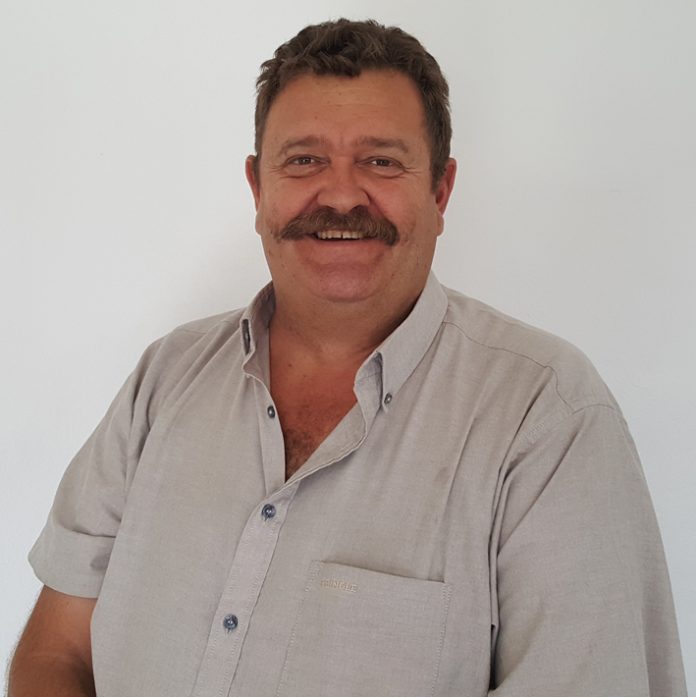
Spectrum Machine Tools Africa recently appointed Vaughn Hanwith-Horden as its new managing director.

Vaughn, previously the managing director at F&H Machine Tools, brings vast experience to the new company which evolved from the restructuring of Durma SA.

Spectrum Machine Tools Africa’s line-up of agencies include Durmazlar, Hyundai, Eurostamp, Hypertherm, Precitec, Centri Cut, Matrix, Tamsan, LissMac, Coiltech and Herrblitz.

Denel Strategy Gathering Momentum

Denel remains positive about its future as the issues raised by Fitch Ratings will be resolved through the successful implementation of the company’s recently approved strategy. Fitch Ratings recently down-graded the company’s national long-term rating from ‘AA-(zaf)’ to ‘B(zaf)’.

“We know that Government is cognisant of the fact that Denel is in need of additional liquidity to rebuild its business,” says recently appointed Denel Group Chief Executive Officer, Danie du Toit.

During the Minister of Finance budget speech in February, Minister Mboweni announced a contingency reserve of R13 billion for 2019/20 which Denel is preparing to submit a funding application.

Denel has undertaken a strategic review of its business to establish the extent and timing of the required government support, taking into account the benefits to be realized as implementation of the company’s strategic plan gains traction.

A lot of headway has been made by the current Board in support of the turnaround and growth of the business.

“The Board has taken far-reaching steps to restore good corporate governance. We have a new experienced management team, with a number of executive positions currently being filled as we speak. We have a new strategy and a management structure that has recently been approved to stabilise Denel and achieve long-term growth”, says Du Toit.

As part of the company’s new strategy, Denel will dispose of non-core assets, including under-utilized properties and enter into strategic equity partnerships in some of its businesses to strengthen market access and enable the development of new technology, whilst ensuring the protection and growth of strategic defence capabilities.

Part of the turnaround has seen the company put systems and processes in place to strengthen governance, improve programme management, drive efficiencies and grow revenues.

“We are confident that the outlook for Denel will be further improved once the implementation of the new strategy and operational plan are in place and all corporate governance issues have been successfully dealt with,” says Du Toit.

Denel has established a team to investigate all cases of possible irregular expenditure and recommend corrective action. “There will be consequences for those executives implicated in irregularities including disciplinary and legal action taken against the individuals” says Du Toit. The company is also cooperating with the judicial commission into state capture – Zondo Commission of Inquiry – and investigations by the Special Investigating Unit (SIU) and other applicable state agencies.

Key issues identified by the Auditor General in the last assessment of Denel’s financial statements are being addressed. An independent audit firm was appointed to bridge the IFRS technical skills gap within the organizations and Denel’s supply chain management policies are currently being reviewed.

Du Toit says the Board together with management are committed to not only strengthening corporate governance within Denel, but are further working on rebuilding the loss of public trust in the company.

Building Sustainability Through Local Manufacturing

According to Eric Bruggeman, CEO at SACEEC, part of the Council’s mandate is to organise outward selling and inward buying missions.

“We identified a need to showcase the offerings of the SADC region’s local manufacturers in an interactive manner. The result is the inaugural Local Southern African Manufacturing Expo (LME) being held at the Expo Centre, Nasrec from 21 to 23 May 2019.”

“Endorsed by the Premier of Gauteng, David Makhura, we believe that the exhibition will enable exhibitors to meet with top decision makers from the inward buying missions already committed to the event. As Industry 4.0 continues to transform the way that manufacturers do business, LME 2019 will provide them with an opportunity to grow their customer base, with the knock-on potential for fostering job creation,” says Charlene Hefer, portfolio director for Specialised Exhibitions Montgomery.

“It is critical for the sustainability of local manufacturing operations that they aggressively pursue opportunities to increase their market share. Not only is this relevant to their increased permeation of the overseas market, but furthermore, they need to capture market share that is currently being monopolized by importers. Recent statistics indicate that South Africa currently imports products to the value of a staggering $83.2-billion. If we were able to shift this demand to the local manufacturing sector, we could realistically create 1.329-million jobs,” says Bruggeman.

LME 2019 will give local manufacturers from South Africa and other SADC regions a chance to not only display their capabilities and capacities to a captive audience, but furthermore it creates a forum for the exhibitors to network with their peers.

“We are excited about the prospect that local manufacturing operations have to evolve and expand by interacting with the inward buying mission representatives. Added to this are the benefits derived by the support of SACEEC, together with AREI (Association of Representatives for the Electronics Industry) and the dti (Department of Trade & Industry). We urge local manufacturing companies throughout southern Africa to capitalise on the unique marketing opportunities of exhibiting at LME 2019,” says Hefer.

Jo’burg To Host Doyens In Africa’s PVP Sector

The largest and most comprehensive African trade show dedicated to industries involved in the conveyance of liquids, gases and slurries will in June bring together key buyers, engineering professionals, leading manufacturers, suppliers and agents to exhibit, network, learn and do business.

INDUTEC Africa recently announced that for the first time ever, its 11th edition of Pumps, Valves & Pipes Africa, taking place 11-13 June, will now be co-located with African Construction Expo and Totally Concrete Expo – both part of the Big Five portfolio of construction events under the umbrella of dmg events.

Says Project Manager, Nico Loretz: “The event will feature and showcase latest technologies and innovations in pump, valve and pipe manufacturing, engineering, installation, maintenance, refurbishment and all else related.”

According to Sales Manager, Dale Magaya, leading manufacturers, suppliers and service providers for pumps, valves, pipes and all related equipment within the following industry sectors will exhibit at the event:

Extractive industries (mining and minerals), construction (infrastructure), energy (oil, gas and petrochemicals), water and wastewater, power generation (solar thermal, hydropower, nuclear, geothermal), agriculture, food and beverage and pulp and paper.

Loretz adds that the event will not only feature a trade exhibition, but will also include a free-to-attend joint keynote session, workshops and interactive panel discussions that will provide practical, applicable knowledge sharing – not only for visitors to gain knowledge and improve their skills, but also to expand their professional network for years to come.

“Africa has enormous growth potential in all the growth and investment areas as mentioned by Dale Magaya. Not only are terms like Internet of Things (IoT) and Big Data on everybody’s lips these days, but localization and skills developments are just as important in order for Africa’s economy to elevate to the next level. These issues will form part interactive panel discussions among technical case studies during the event”, he concludes.

SA Government Prioritizes Investment In The Mining Sector And Mineral Beneficiation

The Minister of Trade and Industry, Dr Rob Davies says the South African government has prioritized investment and mineral beneficiation due to its capacity to grow the economy and create jobs. Minister Davies was speaking at the South African Mining Investment Roundtable that took place on the margins of the Mining Indaba in Cape Town.

The purpose of the roundtable which was organized by the South African government was to provide potential investors from targeted countries with the opportunity to interact with the South African political and business leadership in order to obtain firsthand information on the issues relating to the South African mining environment. Investors from various countries including Canada, United States of America, India, Japan, China, Saudi Arabia, Australia, United Kingdom and Russia attended the roundtable.

“The beneficiation of our minerals is one of the most critical issues that we as government have prioritized because value-addition will go a long way in creating jobs and growing our economy. We can no longer afford to export raw minerals so that they can be beneficiated in other countries. Beneficiation increases the value of our minerals and if we are stuck on exporting raw minerals we will not be able to build an economy that will enable us to create jobs and develop our country and the continent in general,” said Davies.

He added that there were opportunities for investment in the beneficiation of the South African minerals and invited investors attending the session to take advantage of them.

“As a department we are engaged in various initiatives that are aimed at adding value to our minerals. There is a variety of beneficiation projects that offer opportunities for investment,” said Davies.

He listed the development of hydrogen fuel cell-powered busses and vanadium batteries as some of the initiatives aimed at beneficiating South African minerals. The Minister of Mineral Resources, Mr Gwede Mantashe and the Minister of Science and Technology, Ms Mmamoloko Kubayi-Ngubane also addressed the session.

Mantashe spoke about the deepening of stakeholder relations between government, business, labour and communities and the opportunities the policy certainty provided by the mining charter. Kubayi stressed the importance of technology and skills and developing a sustainable mining sector.

Meanwhile, Exxaro Resources Limited committed to investing R20 billion in Limpopo and Mpumalanga, while Vedanta Zinc International committed to phase 2 and to conduct a feasibility to develop a zinc smelter in the Northern Cape.

SEIFSA Welcomes President Ramaphosa’s Inspiring Sona

The Steel and Engineering Industries Federation of Southern Africa (SEIFSA) welcomes President Cyril Ramaphosa’s inspiring State of the Nation Address. SEIFSA Chief Executive Officer Kaizer Nyatsumba said the President’s speech was both rich in content and much welcoming of the important role that business plays in the country.

“After nine frustrating years of terrible leadership, during which the Government had a very hostile stance towards business, it feels very good to be able to say that South Africa has solid leadership again. We are very encouraged by the President’s grasp of the serious challenges facing South Africa and more importantly, his acknowledgement of the obvious fact that the Government alone does not have all the answers to the country’s problems. We are very encouraged by the fact that he understands that all stakeholders have an important role to play and that he places such a welcome emphasis on the need for a meaningful partnership with business, Nyatsumba said.

He said like other business organizations, SEIFSA – which is part of the manufacturing sector – stands ready to partner with the Government in an effort to grow South Africa’s economy. “We hope that the President will ensure that his Ministers also come to the party.”

In conclusion Nyatsumba said the Federation commended the President for his war on corruption and fully shared his desire to see the country’s law enforcement agencies rigorously prosecuting all those who have been implicated in State capture and other forms of corruption and malfeasance.

SEIFSA Awards For Excellence 2019

The Steel and Engineering Industries Federation of Southern Africa (SEIFSA) invites companies operating in the metals and engineering sector to submit their entries for the 2019 SEIFSA Awards for Excellence – which are open to all employers in the sector, including those which are not members of SEIFSA.

Now in their fifth year, the annual SEIFSA Awards for Excellence were born out of the need to encourage growth and celebrate excellence in the metals and engineering sector. The Awards offer a wonderful opportunity for companies operating in this crucial sector to receive well-deserved acknowledgement and respect by industry peers for their capabilities, expertise and innovation.

“In the current tough economic conditions, we at SEIFSA believe that it is critically important for those companies that excel at what they do to get the acknowledgement and recognition they so richly deserve,” SEIFSA Chief Executive Officer Kaizer Nyatsumba said.

Entrants will be assessed on their performance in the period July 1 2017 to December 31 2018 in seven different categories, namely:

  • The Most Innovative Company of the Year, which will be awarded to a company that showed the best level of innovation in research and development or production in 2018;
  • The Health and Safety Award of the Year will be offered to a company with the best legal compliance record in Health and Safety or the lowest Lost- Time Injury Frequency rate in 2018;
  • Entries are also invited from companies whose Corporate Social Investment (CSI) programme/s in 2018 had a major impact on the lives of their beneficiaries;
  • The company rated the highest in customer service performance in 2018 will receive the Customer Service Award of the Year;
  • The Most Transformed Company of the Year Award will be received by a company that showed the highest transformation level in ownership, the composition of its Board of Directors, Executive Management and Managerial Team in 2018 (this award category pits companies employing fewer than 100 people against those of similar size and companies employing more than 100 companies against others of similar size);
  • This is the Decade of the Artisan and an award will be made to the company that trained the highest number of artisans in 2018;
  • The Environmental Stewardship Award will go to a company that has successfully implemented greening initiatives in its day-to-day business operations in 2018.

Nyatsumba encouraged manufacturers operating in the metals and engineering sector to take advantage of the opportunities for recognition offered by the increasingly prestigious SEIFSA Awards for Excellence and submit their entries for the seven categories before the deadline date of Friday, 26 April 2019. Participants can enter by visiting the SEIFSA Awards website www.seifsaawards.co.za

Winners of the Awards will be honoured at a ceremony that will take place at the IDC Conference Centre in Sandton on 23 May 2019.

Encouraging Performance For Metals And Engineering Sector Projected To Continue

SEIFSA Chief Economist Michael Ade.

This is according to the Steel and Engineering Industries Federation of Southern Africa (SEIFSA), who recently released its authoritative State of the Metals and Engineering Sector Report for 2019-2020.

Given the auspicious performance of the M&E cluster of industries in recent years, this year’s Report was published under the theme of Sharpening the saw – continuously improving industry activity and competitiveness.

SEIFSA Chief Economist Michael Ade said the Federation’s forecast is for the entire M&E sector to expand moderately by 1.8% in 2019. However, the various sub-sectors will register varied levels of growth, with some expanding and others contracting in 2019.

“The prognosis aligns with the outlook for both a moderating global growth and domestic growth in 2018, underpinned by a slowdown in the pace of recovery in commodity exporters, deceleration of growth in commodity importers, a slowdown of growth in global goods and industrial activity during the first half of 2018 and the imposition of broad-based tariffs by the United States on steel and aluminium imports. These developments have serious implications for the growth prospects of the M&E sector, which exports the bulk of its iron and steel products,” said Ade.

Prices of most metals weakened in 2018, largely due to concerns about the effects of tariffs on global growth and trade, with industrial metals particularly responsive to these concerns, given their many uses in the manufacture of tradable goods. However, the expectation is for metal prices generally to stabilize in 2019 and 2020, thereby strengthening exports and improving growth prospects for commodity exporters – including the M&E cluster of industries – along with enhanced capital inflows.

However, this view is not without downside risks. These include the persistence of trade tensions, diminishing industrial activity, softening of international trade and investment and substantial financial market pressures on some large emerging market and developing economies (EMDEs). Ade said that trade tensions between the US and China, including the imposition of tariffs on an array of products, have had varying effects on metal and agricultural commodities. He said the tensions, which affected roughly 2.5% of global goods trade and had implications for South Africa, continue to remain elevated.

Ade said tighter external financing conditions – which contributed to significant capital outflows and more significant currency pressures in more vulnerable EMDEs, including South Africa – have the propensity of increasing external borrowing costs and the general cost of doing business, also negatively affecting production and foreign fixed investment into the sector.

“To confront this increasingly difficult environment, the most urgent priority is for EMDE policymakers to prepare for possible bouts of financial market stress and rebuild macroeconomic policy buffers as appropriate. Equally importantly, policy makers have to foster stronger potential growth by boosting human capital, removing barriers to investments and promoting trade integration within a rules-based multilateral system,” said Ade.

He said that despite these downside risks, the M&E sector’s moderate growth prospects in 2019 are influenced by the positive growth prospects for key industries which are important markets for the M&E sector’s intermediary products and are crucial in the sector’s value chain. The performance of the domestic economy, which is forecast to grow at 1.3% in 2019 and 1.7% in 2020, supported by continuous improvement of regional markets in Africa, would also impact positively on the sector’s growth prospects.

According to Ade, Sub-Sahara Africa is envisaged to improve moderately in 2019 (3.4%) and in 2020 (3.6%), providing a basis for more exports from the M&E sector. It was likely that this would translate into continued exports, bringing in much-needed foreign currency. This was especially so given the fact that Africa is the highest export destination for goods produced by companies in the M&E cluster.

Ade said that 2018 was yet another better year for the M&E sector as it expanded for the second consecutive year, registering an improved estimated annual growth of 2.0%, despite facing serious structural headwinds, including a technical recession in the broader economy. The momentum was expected to continue in 2019.

Ade said notwithstanding continuous constraints to the current potential to improve on margins in the M&E sector, all indications are that the sector will record another increase in growth during 2019, barring any major disruptions to production

“Given the recent resilience in production in the M&E sector, despite companies facing domestic headwinds, a need exists to ensure that the sector remains attractive by directly reducing increasing intermediate input costs and managing borrowing costs in order to improve consistently on the bottom line, exists,” Ade concluded.

Airbus Opens Commercial Pilot And Maintenance Training Centre Near Delhi

Airbus has inaugurated a world class training centre for commercial pilots and maintenance engineers in the National Capital Region of Delhi, as part of its continuing efforts to support the exponential growth of the civil aviation sector in the country.

Airbus forecast a need for more than 25,000 new pilots in India over the next 20 years to keep pace with the current double-digit growth in its commercial aviation industry. The training centre incorporates an A320 flight simulator for full-flight simulation, along with programmes on aircraft procedure training, computer-based classroom training and standard pilot transition training, including an Upgrade to Command course aimed at improving skills and maturity of co-pilots as they transition to commandership. The facility will complement Airbus India’s training centre in Bengaluru which has trained more than 4,500 maintenance engineers since its inception in 2007.