ISCAR is introducing the CHAMFMILL family of indexable milling cutters carrying PNMT 06 pentagonal inserts with five cutting edges for front chamfering and five for back chamfering, providing an economical machining solution. The new economical cutters carry star-shaped (pentagonal) doublesided inserts with 10 cutting edges and are produced from ISCAR’s advantageous IC830 SUMO TEC carbide grade. The CHAMFMILL family ensures cost-effective milling of 45° chamfers and productive machining due to the high cutting speed. Main applications include machining main engineering materials: steel (ISO P), stainless steel (ISO M) and cast iron (ISO K). The tools are intended for front chamfering, back chamfering and removing burrs, which eliminates hand de-burring. The maximum width of a machined 45° chamfer is 1.5 mm. Two shank configurations are available: cylindrical shank and replaceable milling heads with MULTI-MASTER adaptation. The tools are available in 11.70, 16.70 and 18.70mm tool diameters and are suitable for back milling chamfers in 10mm minimum diameter holes. A polish coating ensures better chip flow and tool protection from corrosion and wear.
For more information, please contact ISCAR South Africa (PTY) LTD – Tel: 011 997-2700.
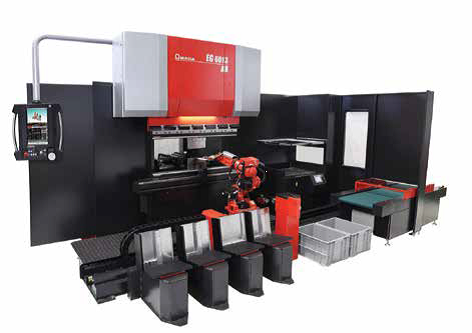
EG 6013 – With light weight robotics for bending automation
By Barry Page, AMADA
Machinery is becoming more eco-friendly, thanks to the reduction or in some cases elimination of oils in their drive systems. Some of the latest technological advances allow more machinery and bigger machinery to be operated with less power consumption and a smaller carbon footprint, while ensuring higher throughput. These advantages are seen through the new A.C. servo drive systems used on punching, bending and stamping machines, as well as through the newer fiber technology on lasers.
As a market leader in the design, production, supply and support of sheet metal machinery, AMADA has taken the efficiency challenge one step further, by ensuring that machine manufacturing facilities and processes are also as efficient and eco-friendly as possible. Amada has been able to incorporate many unique features in their manufacturing plants around the world which all contribute towards environmental wellbeing. Today’s technology in the fiber laser field is something that not many people saw coming. The efficiency of fiber systems is greatly attributed to the eradication of costly internal components such as tubes, internal optics, turbo blowers, vacuum pumps etc, as well as the elimination of laser gas being used to generate the laser beam. The latest generation 3 fiber laser systems is even more compact and efficient than the 1st and 2nd generation units. Amada has incorporated features that subsequently contribute towards reducing costs, such as automatic nozzle changing, automatic nozzle cleaning and automatic nozzle recalibration. An added advantage is a scheduler function, which can be used, while full production planning and scheduling is executed in the planning office.
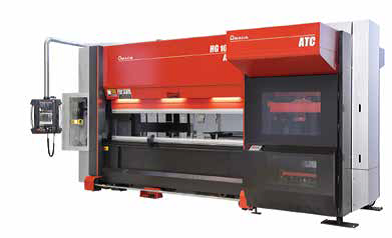
HG1003 ATC – Automated tool loading, unloading and robotics for automated bending
Automatic material handling systems can be supplied with machines or retro-fitted at a later stage. These systems are capable of storing materials, while automatically feeding them to the machine as required. Amada offers automated material storage and manipulation systems for full blanking and bending operations. The “entry level” manipulation systems referred to as “MPL’s” consist of two material pallets and are capable of holding up to 2000kg raw material each. There is a third pallet for offloading of finished sheets with parts either held in by micro-joints or not.
HG1003 ATC – With Automated tool loading unloading.
The MPL uses an array of vacuum suction cups to lift and separate the sheets from sticking together, while loading the cutting or punching table. Checking of material thickness according to the part or nesting program is accomplished by the sheet thickness detector. While the sheet is being processed, the MPL will then prepare and lift the next sheet and get ready for changeover. Priority is given to unloading the cut sheet and reloading a new sheet before the stacking of the processed sheet happens. This ensures speedy changeover and minimal machine idle time. The same principle applies to the Amada ASF series of sheet storage and manipulation systems. These systems have various shelves for raw materials with each shelf holding up to 2 tons of different thickness and types of materials. The advantage of these systems is that longer, uninterrupted production runs are possible. Both these systems, MPL & ASF, can be enhanced with the addition of a “TKL” automatic parts removal system which can be retro- fitted. The TKL also uses an array of different sized suction cups to pick desired components out of the skeleton and sorting them into desired piles depending on the next process required. This is especially advantageous when cutting nestings of different jobs. Parts are automatically sorted from the skeleton before the operator intervenes. Up to 3 different packing stations are available for part-sorting. A higher level of automation can be achieved with the Amada MARS system, which is designed according to customers’ requirements. Accessible from either side, each shelf can hold up to 2 tons of different materials. Machinery is then connected to the MARS system via intermediate MPL systems. Material is fetched, checked for thickness and loaded automatically. Once sheets are processed, the full sheet can be removed or the TKL can be used before the skeleton is taken away for storage. Parts are then returned to the MARS system for storage until they are needed for the next process. By utilizing this latest technology, 24 hour production is possible without the need for staff to be present.
Semi-automatic or fully automatic bending available from Amada, offers the latest technology, namely the HG – ATC press brake series. Available in either a 100 ton x 3 meter or 220 ton x 4 meter configuration, these ATC machines are ideal for the reduction of tool change down-time, especially in today’s production environment of small batch runs, requiring quick change over times.
All programming, sequencing and tool fitting is done in the production office before reaching the shop floor. The programs are sent via network to the machine, where the operator can see a full 3D view of the component, both blank and bent. The machine automatically loads the required tooling into position from the onboard tooling magazine. Once the bending process is completed, the machine will automatically change tooling again. A full 3 meter tool change can now be done in just over 3 minutes, while a similar manual tool change would take 15 to 45 minutes. Tool life is substantially extended and incorrect tool usage and tool damage are eliminated. Programming software identifies tool capabilities such as maximum permitted tonnages etc. thanks to each tools’ unique identification code. For longer production runs together with total operator elimination, Amada offers the “AR series” of robotic benders. These benders incorporate robotics which pick the parts, bend the parts and stack or place as required. These, too, are available for different tonnages Added to these advantages is the fact that Amada has a fully trained service department, fully capable of backing up all equipment through their local offices.
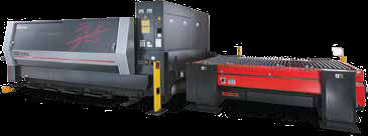
ENSIS-3015AJ 9kW/6kWis designed for high-speed stable cutting over the entire range of machining, from thin to thick sheet metals, which has been made possible by the evolution of AMADA’s original beam control technology (ENSIS technology) and the expansion of oscillator output from the conventional 3kW to 9kW/6kW. High quality cutting over the thick material range is achieved by overcoming problems related to fiber lasers through reduced dross and bevel and improved surface roughness. NC equipment is provided with the AMNC 3i, which can be operated easily like a smartphone. It is adapted to AMADA IoT V-factory and visualizes machine operating results including power consumption and processing costs, contributing to performance. Furthermore, it enables smart manufacturing through maintenance and support to maximize machine capacity, as well as proposals to improve production efficiency. AMADA’s high-output oscillator provides for maximum output of 9kW/6kW to enable high-speed and high-quality cutting over the entire processing range (thin, medium thickness and thick sheet metals), based on energy saving and high-quality beams. ENSIS technology allows the laser beam to be controlled freely into the optimum beam form according to material quality and thickness. Additionally, the auto collimation mechanism is provided as a new feature. The variable range of the condensing diameter has been expanded greatly to achieve excellent stable cutting over the entire thickness range. Furthermore, combined with a high-output oscillator, the technology enables high-speed stable cutting of thick sheet metals, cutting with reduced dross and bevel and improved surface roughness. The fiber laser cutting machine employs Clean Fast Cut (CFC) technology and Easy Fast Cut (EZFC) technology to dramatically reduce the consumption of assist gas during nitrogen cutting, which is used mainly to cut stainless steel. It applies an original non-contact nozzle developed by AMADA that supplies assist gas at a low pressure to reduce processing costs, while maintaining cutting quality.
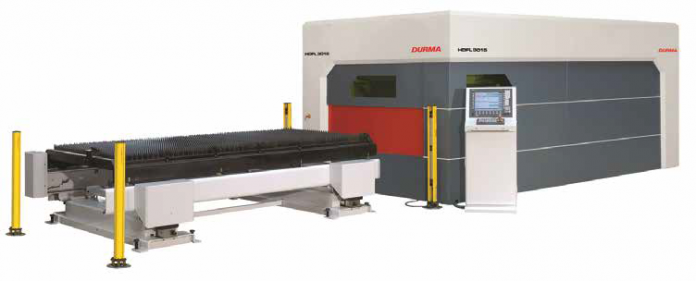
The Durma HDF/HDFL 3015 fiber laser machine features a rigid stress-relieved welded steel frame construction with a stiff gantry axis system moving the cutting head. Highly accurate parts even when cutting with fastest speeds and under highest accelerations are guaranteed. An integrated shuttle table maximizes productivity and minimizes material handling times. The shuttle table and pallet change system allows convenient loading of new sheets or unloading of finished parts, while the machine is cutting another sheet inside the working area. The available shuttle table is fully electric and maintenance free; there are no hydraulic oils to handle and table changes are fast, smooth and energy-efficient. An optional lateral automatic scrap conveyor allows the removal of scrap pieces from the working area without the need to interrupt the cutting process. The sideways operation of the short conveyors allow for easy maintenance and trouble-free running. The Durma HDF/HDFL 3015 fiber machine achieves highest dynamics and fastest laser processing cycle times thanks to the combination of rigid mechanics and a state-of-the-art numerical control and drive system.
Programmes can be loaded easily into the machine with a USB stick or over a fast Ethernet connection with the company network. In the high-pressure auto-focus cutting head for the fiber laser the cutting lens is shielded from the laser process by an exchangeable lowcost protection window. The 1μm wavelength light is very sensitive to dust or other contamination produced in the cutting or piercing process, therefore the cutting head is being well protected in an additional cover to ensure that all critical parts remain as clean as possible.The integrated capacitive distance sensor is capable of having the head follow height differences in the sheet even at the extreme high cutting speeds that can be achieved with the fiber laser technology, while stateof- the-art linear motors promote accuracy and increase productivity. The CAD/CAM software provided has all the tools to import or draw parts, prepare and optimize automatically different geometries for the laser cutting process and make efficient nests. The all-solid-state fiber laser technology reduces maintenance requirements, and offers the lowest possible running cost with a wall-plug efficiency of 30% and without the need of any laser gas. When the application requires a broader spectrum of material types to be cut and the maximum thickness range is limited, the fiber laser is the ideal solution and it will cut faster at lower cost than any CO2 laser at the same laser power.
The Eco-Bend Expert CNC hydraulic press brake offers a wide variety of options on top of its standard features. The machine is user-friendly and provides a cost effective production solution. A high resolution controller comes standard with all Eco-Bend press brakes, while the 2D screen and high programming capacity are the two major features enjoyed by users. Available at a low investment cost the machine offers high efficiency, ergonomic and compact design, minimum space requirement, high resolution 2D graphic screen and a 1 axis (X) motorized backgauge. While the Ecobend Expert CNC hydraulic pressbrake is a durable choice for precise cutting, the machine is easily installed. Specifications include a bending force of 80 ton to 200 ton, bending length of 2600mm to 4100mm, 3 axis – Y1, Y2, X as standard and optional manual crowning.
As the need for machining smaller volume work pieces made from cast iron and steel has grown, so has the need for smaller size tools that can enhance productivity and reduce operating cost. Therefore TaeguTec offers a smaller size insert for its highly popular Chase2Hepta milling line. The Chase2Hepta 6mm inserts and cutters are available to meet the challenges posed by technical trends in forging and casting technologies which is demanding higher productivity and economical tools that can handle lower depth of cut conditions. The Chase2Hepta line is renowned for offering 14 corners on one insert.
The double-sided and highly effective 45 degrees entry angle is the ideal solution for high performance on cast iron and steel machining, while its positive cutting edge geometry lowers cutting loads during rough machining making it an efficient and smooth set of tools. Covering a wider range of machining applications, the dual usage TaeguTec Chase2Hepta 6mm inserts are screw type. The line of mini cutters comes in three geometries – the M, MM and ML.
M Geometry
MM Geometry
The M geometry 6mm Chase2Hepta line is used for roughing applications of steel and cast iron work pieces and its smooth machining with good tool life is due to its reinforced, positive rake angle. For general cast iron machining applications, the optimized cutting edges of TaeguTec’s MM geometry chip breakers on the Chase2Hepta 6mm line means low cutting forces in cast iron machining.
ML Geometry
The ML geometry for the 6mm line is ideal for cast iron light machining and difficult to cut materials such as stainless steel and heat resistant alloys. Its sharp, positive cutting edge was designed for minimal cutting force.
Ermaksan heavy duty press brakesmeet the needs of all sectors engaged in the production of heavy machinery such as transportation, wind turbines, power plants and the defence industry. Benefits of this remarkable machine include a 17″ 3D, LCD touch screen controller, perfect configuration for heavy tonnage bends, while offering an absolute solution for deep and full-sized bends. Continuous precision with a dynamic motorized crowning system, a 6 axis servo motor backgauge system and AP3 / AP4 front sheet support system complement each other. This machine is a durable choice for precise cutting works and special top and bottom tools with 610mm throat depth. The Ermaksan heavy duty press brake allows for work at maximum capacity putting an end to time consuming manufacturing processes.
DURMA shortened process time by improving centering with the newly added laser sensor centering option added to the HDTC machines. It is possible to control the size and irregular structure of the profile during cutting or before cutting with the help of sensors to ensure that the internal contours to be cut are at the right point. In existing HD-TC machines, the centering measurement is achieved by scanning the profile surface through capacitive sensors. The advantage of the laser sensor system is that it gives more precise results in a shorter time. The user can take measurements at the distance determined by the user, and precise results are obtained in a shorter period of time as the process of measuring by the sensor is shortened for parts requiring precise measurement with internal contours. The advantage being fast set-up time, less problems during cutting, best solution in a short time and measurement frequency is dependent on operator request.
The MicroMark G3 is an extremely compact laser marking system which integrates all the components inside the machine. In this way there is no risk of dust intrusion which ensures the optimal environment for both, electrical components and laser source itself. In addition, having all the components integrated allows a well-organized workstation and eases the relocation of the machine whenever required. The use of the motorized Z axis is extremely simplified by the use of the joystick which is an essential tool if combined with the SmartFocus system. In particular, it allows the operator to easily determine the correct position of the scanning head for optimal marking, both on flat and complex surfaces with curves and edges. The door of the MicroMark G3 has a vertical opening on the three sides of the machine to allow easy and comfortable access to the marking chamber. In addition, working with the door open wearing the safety goggles, it is possible to mark even bigger parts that would not normally fit in the machine. Upon request the MicroMark G3 can be equipped with a motorized three sides door which allows for speeding up of the loading/unloading process. In fact, once the part is inside the marking cabinet and the operator pushes the starting cycle button, the door closes automatically and once the marking is completed it opens up again. The 20mm thick work table measures 530 x 410mm. It is made of surface ground aluminium with a 30μm hard-anodized coating. The standard hole pattern is 50mm center to center. Each hole is ø8H7 at the top with M6 threads at the bottom. This makes it easy to affix guides, jigs or accessories with either pins or screws. The exhaust system is fundamental for the operator’s health and the cleanliness of the machine. The pump with lateral channels, which has a die-cast aluminium structure, ensures a high air speed flow. The 3-stages filter has both HEPA H14 and activated carbon elements which remove potential smells, odors and micro-particles. In order to simplify machine programming, it is possible to use the reader to scan production orders. LASIT software, using the key read by the scanner, can access a database and collect the variable fields as well as select the drawing that needs to be marked. The Smart Focus provides for fast and accurate focus. By controlling the Z axis with the joystick, users can immediately and precisely focus the laser by intersecting the dot of the red lighted diode laser with the red lighted line of the scanning head. The red lighted line is electronically produced and it can be moved to obtain a marking that is out of focus when required. The exclusive Lasit capability of projecting on the part to be marked virtually every pattern with the safe red light makes the centering of complex parts quick and easy for everyone.
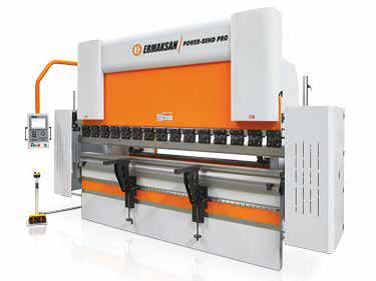
While redesigned, based on users’ preferences, this machine is unique offering individual electronic and mechanical features for increased productivity. With its user friendly CNC controller costs are kept at a minimum and equally, economical hydraulic maintenance is another highlight. Power-Bend Pro is ideal for production where complicated, sensitive, single or multiple high speed bends are required. Featuring optimal configuration and economic solutions for precise bending works, a perfect result for deep and full-sized bends is guaranteed. Add to this a high resolution 2D graphic screen, permanent precision with optimal crowning equipment and a CNC controlled X axis backgauge. Specifications include a bending force of 40 to 600 ton, bending length of 1270 to 6100mm, 3 axis – Y1, Y2, X as standard and manual crowning of 220 ton and above.