With the DC118 Supreme solid carbide drill, Walter is signalling the start of a new performance class for challenging applications. The “180° drills” differ from standard solid carbide drills in particular due to the high rigidity they provide against deflection, the good centring accuracy and four chamfers, which enable excellent guidance after plunging. The reason for this is the 180° point angle, among other features. This means that the DC118 Supreme is ideal for plunging into angled or round surfaces because the drill is guided quickly on the external faces and centred accurately. At the same time, burr formation remains extremely low. A protective corner chamfer on the cutting edges protects them against rapid wear, which significantly increases tool life compared to drills without a protective chamfer. The excellent rigidity of the drill is a third feature which sets it apart from other products on the market. It is the result of the flat 15° helix angle, which minimises deflection forces and ensures a high level of stability and precision during ramping.
Initially designed for pilot drilling of deep bores on crankshafts, the current DC118 Supreme drill versions are now suitable for universal application with all materials and components. Practical applications, in addition to bores in angled or round surfaces, also include operations involving a flat hole face (such as for threads), components with an uneven surface (due to forged skin, for example) or chain drilling. In these applications, the DC118 Supreme impresses with long tool life and a high degree of precision and process reliability. The precision tool manufacturer offers the Supreme drill in the highest performance class with a diameter of 3–20 mm up to 2 × D as standard or as a special tool up to 5 × D via Walter Xpress with a delivery time of two weeks.
For more information, please contact Spectra Carbide Tooling Technology – Tel: 021 555 4144.
With the MD177 Supreme and the MD173 Supreme, Walter is for the first time launching solid carbide milling cutters with seven cutting edges. Developed for the aerospace industry, their performance is excellent not only in titanium, but in steel and stainless steel, too. The two Supreme tools are set apart from standard solid carbide milling cutters by their geometry, among other features. The version with seven teeth achieves excellent productivity, while its uneven pitch reduces vibration, ensuring excellent operational smoothness. The entire length of the cutting edge can be used, meaning that wear is relatively uniform – in turn extending the tool life of the milling cutters.
This statement applies particularly to the MD173 Supreme. This is because the roughing cutter was designed specifically for dynamic milling and for reducing machining time. Its cutting edges equipped with chip breakers enable excellent chip breaking, and therefore outstanding process reliability with high metal removal rates, as you will be familiar with from dynamic rough milling. This is advantageous, for example, for users with unmanned production processes. The MD177 Supreme finishing face milling cutter creates very smooth surfaces without “waterlines” because the entire length of the cutting edge is used during chamfering. As a package, the milling cutters therefore promise outstanding productivity and process reliability, with excellent surfaces in ISO S, ISO P and ISO M.
For more information, please contact Spectra Carbide Tooling Technology – Tel: 021 555 4144.
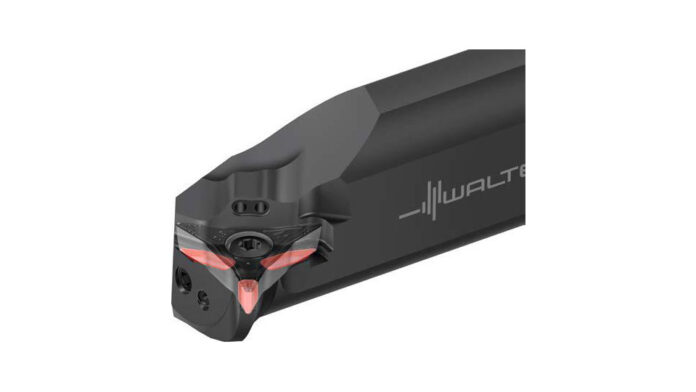
With the W1211/W1210 copy turning system, Walter is transferring to internal machining the positive features of its W1011/W1010 turning system for external machining that is already established on the market. The boring bars and indexable inserts with WL positive engagement solve a common problem. High forces occur when copy turning with V-style inserts, which cause micro movements of the insert in the toolholder and therefore widen the insert seat. This results in increased wear, less precision and a lack of indexing accuracy with indexable plate types such as VBMT or DCMT. Due to their positive-locking insert seat design with three-point support, the W1211/W1210 boring bars and WL25 inserts achieve outstanding stability. This increases the tool life while enabling users to use the tools in both directions of travel, which increases the indexing accuracy by 50%.
Walter offers two versions of the boring bars with diameters of 25, 32 and 40 mm: W1210 for profiling angles of up to 72.5° and W1211 for profiling angles of up to 50°. The positive WL25 indexable inserts with three cutting edges are available in four insert types, depending on the requirements of the application. Neutral, left-hand, right-hand and full-radius versions fit into the same tool. In addition to the wear-resistant Walter Tiger·tec® Silver grades that are currently used, Tiger·tec® Gold inserts will be available soon. The dual rake face cooling and the optional axial cooling for flushing out the chips during blind-hole machining also result in longer tool life and therefore greater cost-efficiency. These special features and the versatility of the system make it the current benchmark for the market.
For more information, please contact Spectra Carbide Tooling Technology – Tel: 021 555 4144.
With the Tiger·tec® Gold grade WSP45G, Walter developed a generation of indexable inserts capable of approx. 30 percent more performance, which represents a technological leap in ISO P, M and S; in steel they even achieve up to 75 percent higher performance. After Walter had initially introduced the indexable inserts for the latest milling tools, Xtra·tec® XT, Walter BLAXX and M4000, the second phase of the launch added indexable inserts for further Walter milling cutters, such as the Xtra·tec® shoulder, helical and slotting milling cutters, as well as for high-feed and copy milling cutters. With the third phase of the launch, the PVD grade WSP45G, now complete, Tiger·tec® Gold can now be used universally: The user can now use the latest Tiger·tec® Gold grade WSP45G in all manufacturer milling cutters.
Vital to the grade’s performance, which is unrivalled on the market, is the coating technology and its special layer structure: The gold-coloured ZrN top layer facilitates exceptional friction characteristics as well as excellent wear detection. The multi-layered aluminium oxide coating (Al2O3) makes the inserts temperature-resistant. The TiAlN layer and the carbide substrate as a foundation increase the wear resistance. These properties make the inserts ideal for challenging conditions, such as interrupted cuts, long overhangs with a tendency to vibrate or for wet machining. With the new grade, users can now harness the full benefits of Tiger·tec® Gold in all Walter milling cutters, be it the much longer tool life, higher cutting values or more process reliability.
For more information, please contact Spectra Carbide Tooling Technology – Tel: 021 555 4144.
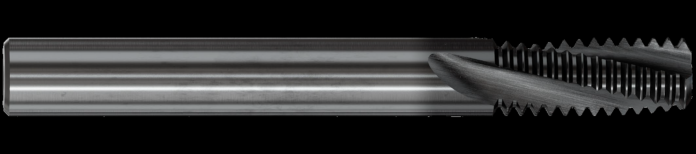
As an innovative manufacturer of threading tools, REIME NORIS offers an extensive range of products for the economic production of threads in a wide variety of materials. The company is now expanding its successful thread mill series NORIS SF R15. In addition to the thread types M, MF and G, this tool is now offered for the production of UNC and UNF threads.
The NORIS SF R15 is a multi-row thread mill for processing a wide range of materials. It guarantees short machining times and high tool life. It should be particularly highlighted that the thread is efficiently produced over the entire depth of the core hole with only one turn, for the type SF SE even with countersinking. With a helix angle of 15° right, these thread mills can withstand high mechanical stress. Optimum results are achieved by the specially adapted interaction of the TiAlN coating with its high hardness and temperature resistance and the profile-corrected geometry.
From now on, the NORIS SF R15 is available from stock in all common standard sizes. For special applications the REIME NORIS team of experts with excellent know-how in thread machining is available.
For more information, please contact Duncan Macdonald – Tel: 011 444-4345.
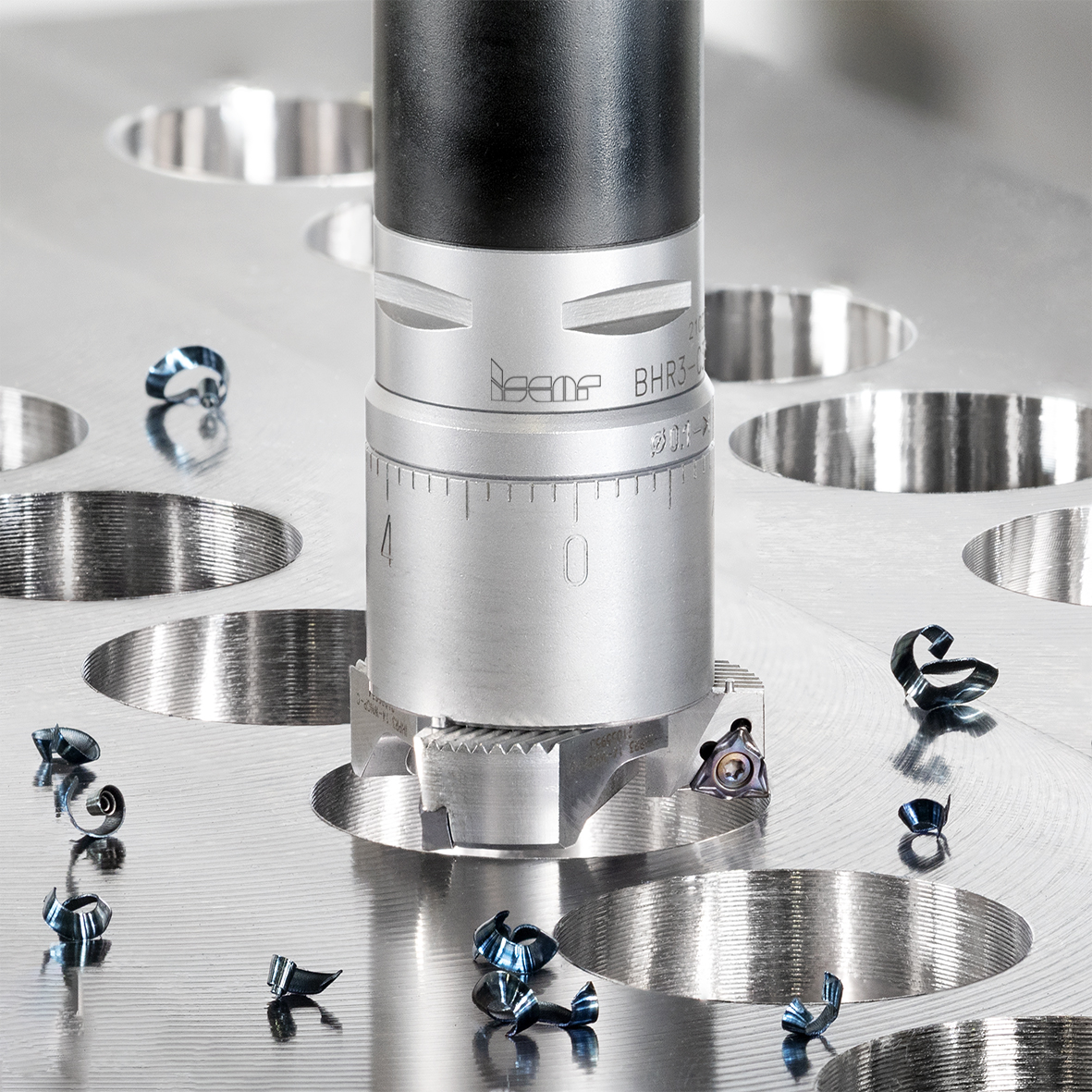
ISCAR expands the MULTI-MASTER interchangeable milling heads line with concave radius disc-type milling heads.
Featuring a ground, positively inclined rake face and 6 teeth with T10 threaded connection, the milling heads have a radius profile on both sides and are available in 1.0, 2.0, 3.0 and 4.0 mm corner radii.
The milling heads feature corner rounding (straight or profiles) and chamfering (less burrs than 45° straight chamfering) on either upper or bottom corners and are made from IC528, a versatile PVD coated carbide grade.
Due to the 6 flute design, the new milling heads can run at very high table feeds and consequently facilitate higher productivity.
For more information, please contact ISCAR South Africa (PTY) LTD – Tel: 011 997-2700.
The "Quick Cut" and "Laserscan" functions ensure an optimized process for tube processing.
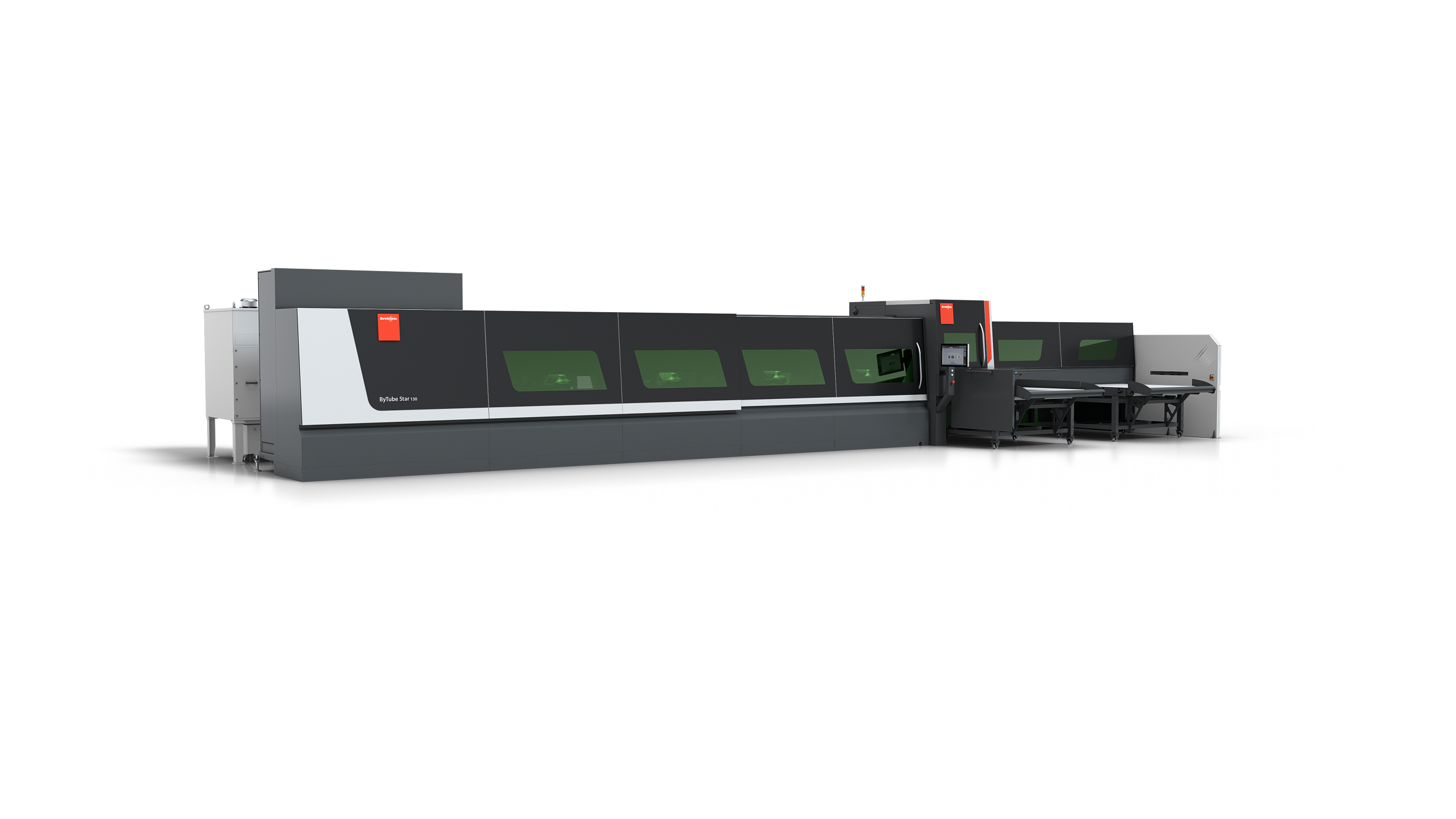
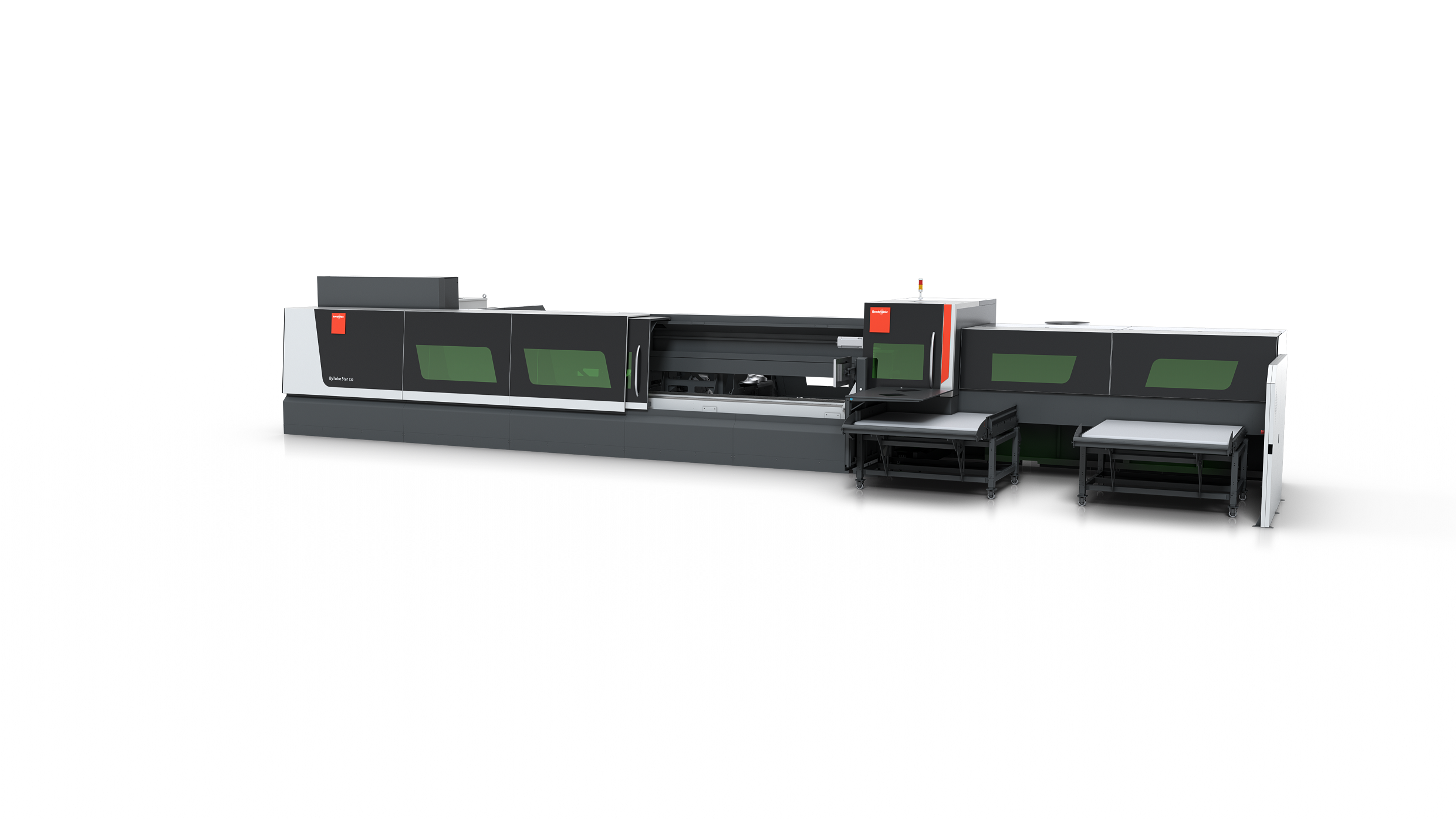
Sheet metal processors accelerate their tube laser business with Bystronic’s new ByTube Star 130, the high-end tube laser with the most features. Accuracy, ease of use, and a fully automatic setup with open profiles and ellipses lead to more flexibility and higher quality in production.
Bystronic supports its customers with solutions that make them even more competitive. Thanks to high-performance machines and optimized processes, they can look to the future with confidence. With the ByTube Star 130 laser cutting system, sheet metal production companies can easily and quickly enter the tube processing business and thus access new customer groups.
Fully automatic setup
With the ByTube Star 130, sheet metal processors who want to expand their portfolio have the perfect solution for tube processing at their fingertips: fast, simple, efficient, and with the most functions. The wide range of applications for all metallic materials in sizes from 10 to 130 millimetres and raw material lengths of up to 8.5 meters opens up new possibilities.
The automated system reduces manual intervention to a minimum, making it particularly easy to get started in tube processing. At the same time, the machine covers an extremely wide range of requirements: Since 85 percent of the market potential lies in the small tube segment, the ByTube Star 130 is geared toward processing tubes with diameters from 10 to 130 millimetres. The machine has a loading capacity of up to 17 kilograms per meter. With the 2D cutting head, 90 percent of all customer requirements can be met, as vertical cuts account for the largest market share.
Fast and precise machining of workpieces from 10 to 130 mm throughout the entire range, including open profiles.
Available in two power levels, 2 or 3 kilowatts, the fiber laser unit of the ByTube Star 130 impresses with excellent energy efficiency as well as consistently uniform cutting quality.
Additional options increase precision
Additional options can be configured individually and enable further operating convenience as well as increased production quality:
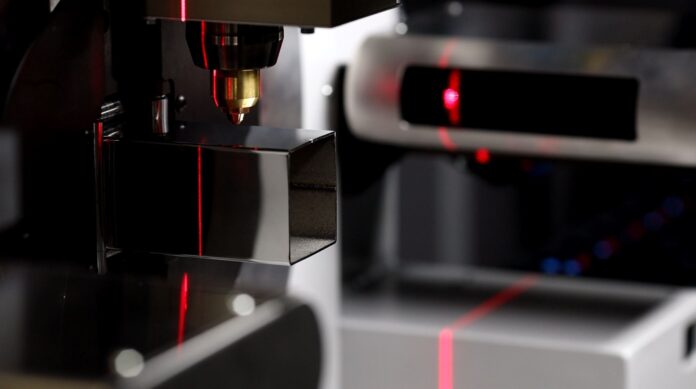
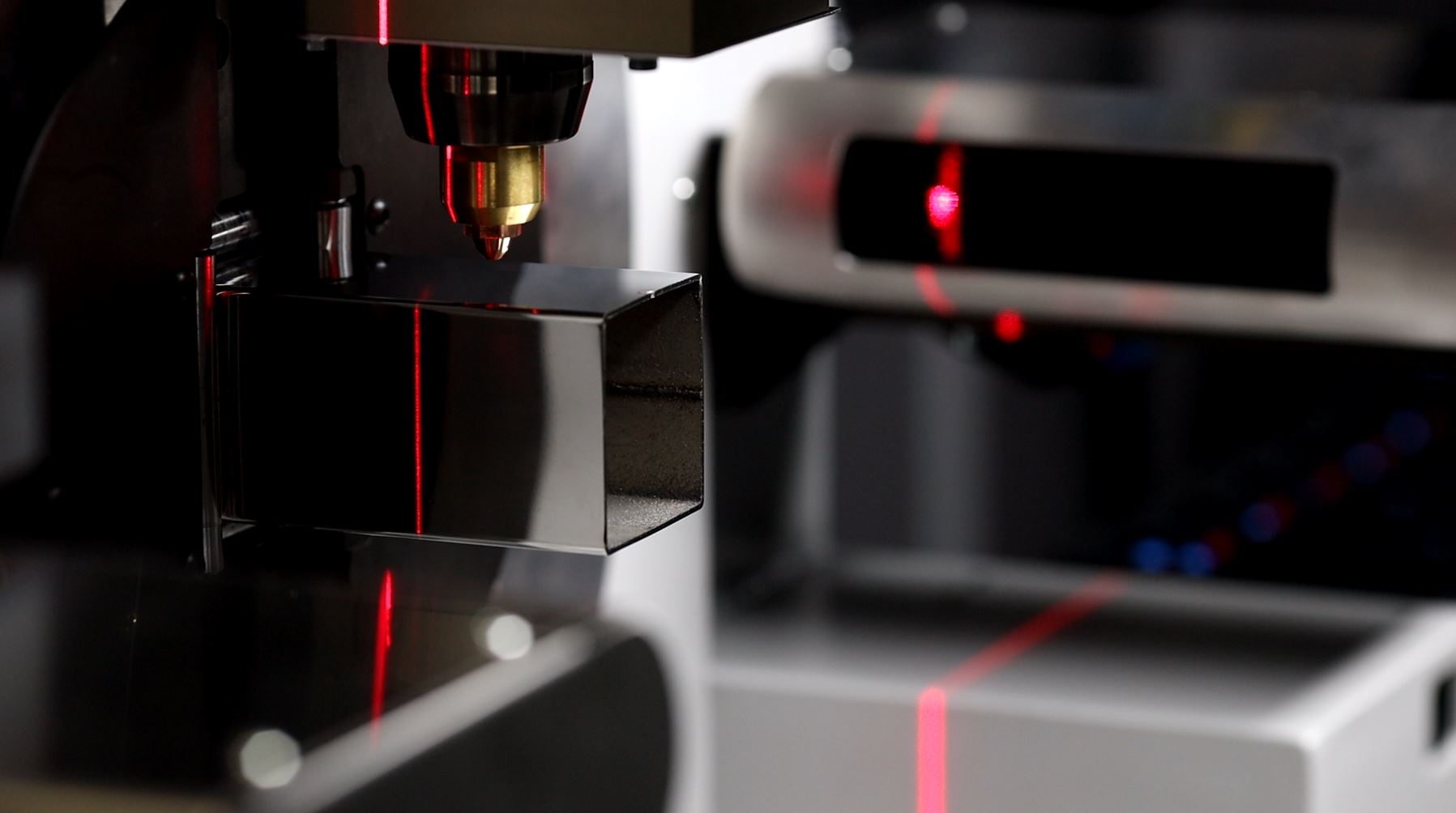
The “Quick Cut” and “Laserscan” functions ensure an optimized process for tube processing.
“Laserscan”: real-time compensation of pipe bending to improve cutting precision, meaning high accuracy is guaranteed in all cutting conditions, even with low-quality material.
“Quick Cut”: greater speed for better performance thanks to an additional linear axis.
Automatic weld seam detection enables the weld seam to be automatically oriented to the desired position. Via Laserscan, the function independently detects and compensates for geometric deviations of tubes, thus ensuring the accuracy of cutting operations regardless of raw material quality.
Easy and convenient to use
Modern and efficient sheet metal production is no longer conceivable in this day and age without powerful software. With the proven ByVision Tube user interface, Bystronic puts the control of all functions related to the laser cutting of tubes on a touchscreen. Beginners do not need extensive experience to start production on the ByTube Star 130. Cutting jobs are set up quickly, and the interface is intuitive and easy to understand.
ByVision Tube builds on the proven Bystronic software ByVision, which Bystronic uses for all other cutting and bending systems. The intuitive software supports users in importing and creating cutting plans, which makes the operation of cutting sequences on the ByTube Star 130 particularly convenient. Visualizing parts and models, creating cutting plans, monitoring production processes, be they small batches or large orders — thanks to ByVision Tube, users progress productively and quickly from entering orders to delivering finished parts.
Left or right is irrelevant
As the only supplier worldwide to do so, Bystronic also offers the ByTube Star 130 laser cutting system in a version with a “mirrored” configuration upon request. This enables customers to select the optimal layout for their individual production flow. Though simple at first glance, this “mirroring” presents advantages: Loading and unloading areas no longer get in each other’s way. This not only reduces logistical effort, but also saves space and labour. And thanks to faster throughput times, productivity can be significantly increased.
Flexibility and high productivity with fast loading and unloading.
The ByTube Star 130 combines intelligent machine design and leading cutting technology. Its simple operation, wide range of applications, and sophisticated options ensure that Bystronic customers are always one step ahead of others in ever-tougher competition.
For more information on the please see www.bystronic.co.za or contact Bystronic on 010 410 0200.
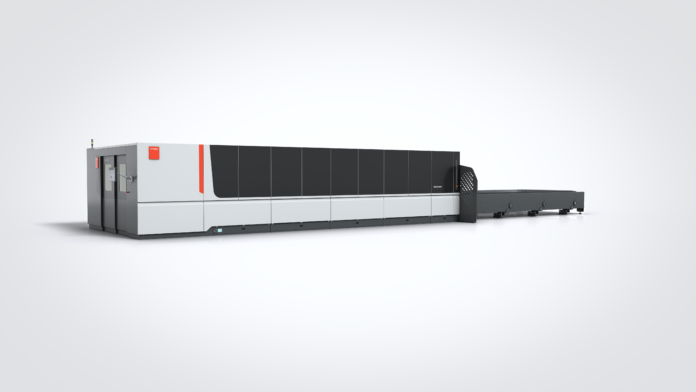
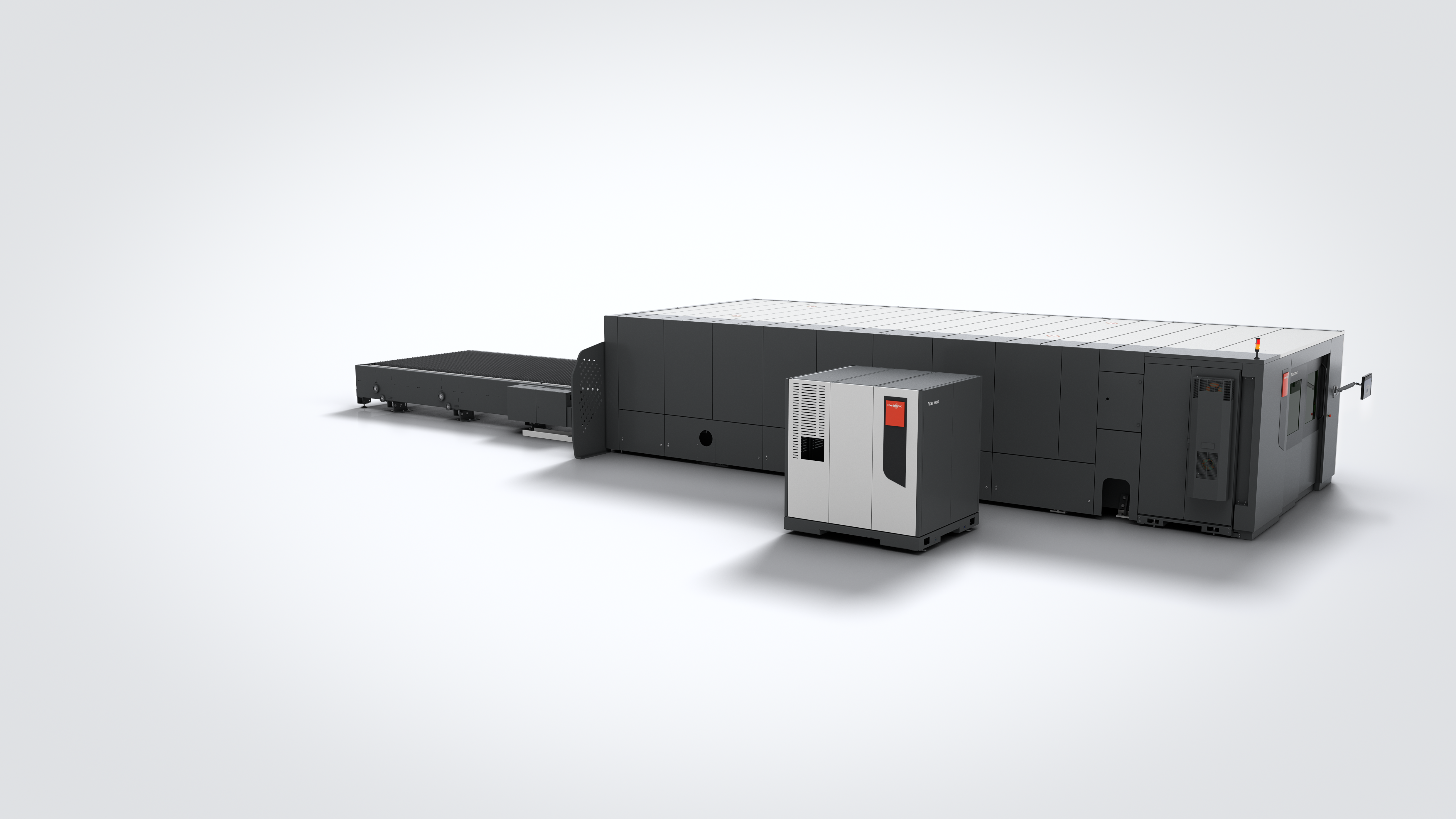
The ByCut Smart 6225 can be equipped with the Fiber 3000, 4000, 6000, 8000, or 10000 laser sources, depending on the user’s requirements.
More sheet metal, more parts, more variety, and a new design. The latest generation of Bystronic’s ByCut Smart 6225 takes the optimization of sheet metal utilization to a new level thanks to the 6225 cutting format. A laser output of up to 10 kilowatts and the optional BeamShaper are the real highlights of the new system; all this at a favourable price.
More sheet metal, more parts, more variety. Large-format laser cutting systems enable users to stand out against competitors without huge financial expenditures. This is why Bystronic is expanding the ByCut Smart product line with the 6225 format in a new design. The machine can be equipped with the Fiber 3000, 4000, 6000, 8000, or 10000 laser sources, depending on the user’s requirements.
Thanks to the new large format, users can process metal sheets on the ByCut Smart with a length of up to 6.2 meters and a width of 2.5 meters. On the one hand, this increases the machine’s productivity, because large metal sheets allow the cut parts to be nested more efficiently. On the other hand, this also significantly reduces undesirable raw material offcuts thanks to a high degree of material utilization. Apropos, the BySoft CAM process software supports the user in this process with intelligent nesting procedures.
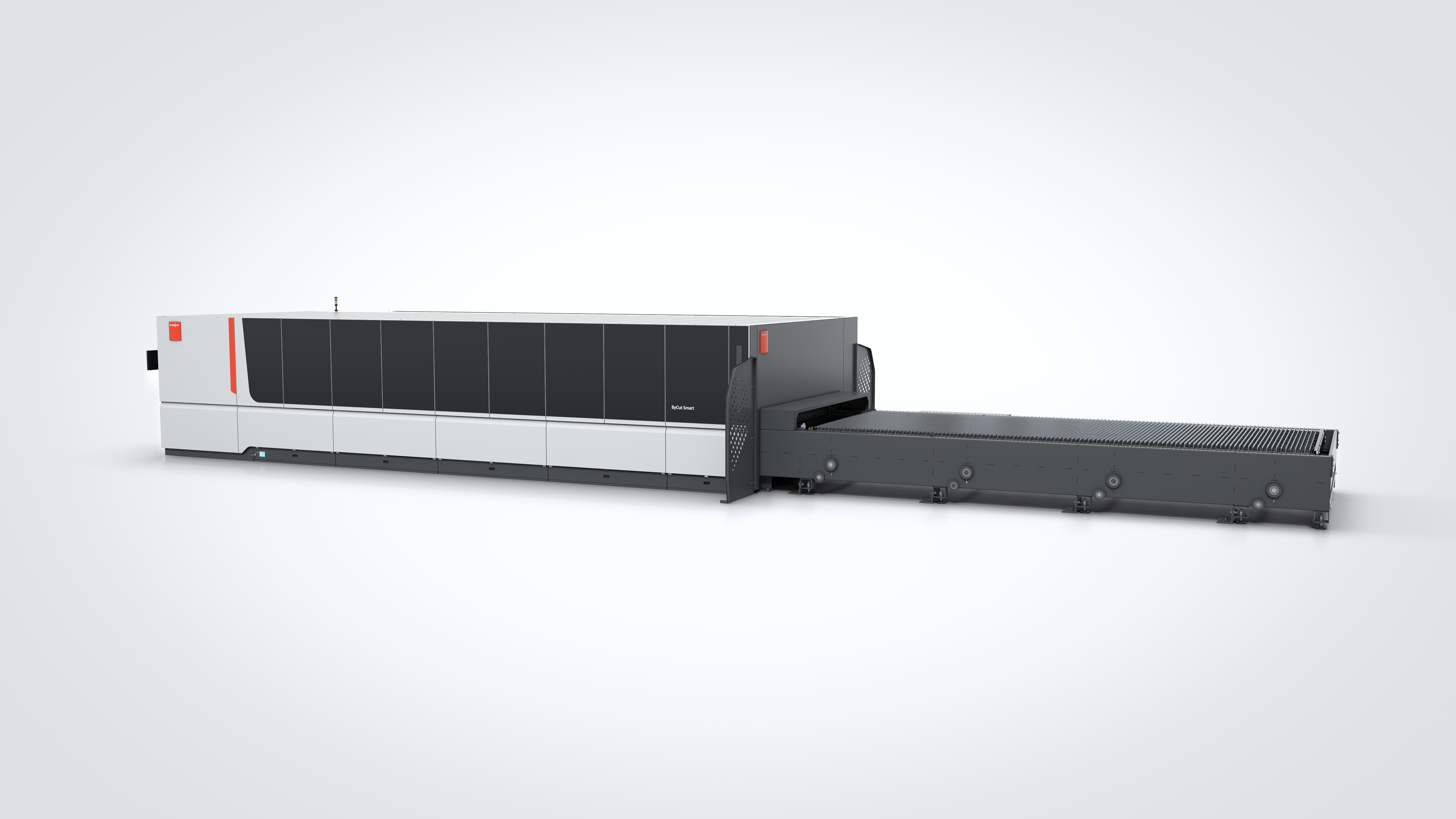
Now in the large format of 6.2 x 2.5 meters: Bystronic launches the ByCut Smart laser cutting system in the 6225 large format.
Wide range of cutting applications
In addition, the new format increases the variety of cutting applications on the ByCut Smart. If required, large-format metal sheets allow large parts to be cut in addition to diverse small parts, without requiring the machine to interrupt the laser cutting process. This provides an additional competitive advantage that laser cutting systems in the common standard formats cannot offer.
In addition to cutting applications with extra-large metal sheets, it is also possible to process smaller sheets by lining them up on the ByCut Smart’s long cutting table. Users can simply prepare sufficient raw material, in order to subsequently allow the fiber laser cutting system to cut without interruptions for a longer period of time.
In addition to the ByCut Smart 6225, Bystronic also offers the fiber laser in the 12020, 8020, 6520, 4020, and 3015 formats.
More sheet metal, more parts: The 6225 format increases productivity thanks to a high degree of material utilization.
For more information on the please see www.bystronic.co.za or contact Bystronic on 010 410 0200.
Everising’s H series bandsaws are well-suited for heavy duty cutting applications as their column- type design allows for maximum cutting stability.
EVERISING FULLY AUTOMATIC BANDSAWS
Everising has four pivot-type bandsaws in its S-250HB – S 460HB range. The bandsaws feature full PLC control of all electrical and hydraulic functions. The raising and lowering of the cutting head is controlled by a single lifting cylinder which makes for quick, efficient operation. Work-pieces are secured during cutting by a hydraulically controlled dual-vice clamping system.
Blade tension, a factor that can extend the life of a blade, on Everising’s S machines is controlled hydraulically for optimal blade life. Blade speed is controlled by an inverter giving infinitely variable speeds of between 20 to 100 m/min. The machines also feature automatic shuttle-type feeding systems.
Everising’s S-250HB – S 460HB range of bandsaws features full PLC control of all electrical and hydraulic functions.
A pre-set counter shuts off the S Series bandsaws after a given number of items have been cut, while an idler-wheel motion-detector shuts down the machine should the blade stall or break. In addition, the saws detect when stock has run out and automatically shut down.
In its column type H Series bandsaw range, Everising offers 11 different models. These range from the H-250HA with a 250mm cutting capacity to the large H-1100HANC capable of cutting workpieces of 1000mm x 1100mm dimension. The machines at the larger end of the range have progressively more features, such as the ability to use tungsten-carbide tipped blades. However, all of the H series bandsaws are well- suited for heavy duty cutting applications as their column type design allows for maximum cutting stability.
Should the blade on an H series machine break, the machine will automatically shut down to protect both the operator and the machine. The bandsaws are fitted with automatic chip conveyors which keep the inside of the machine clean and save on operator time. In terms of the operator’s time, the H series are fitted with user-friendly NC touchscreen controls with a self- diagnostic control system. As with the S series, the H series’ hydraulic system and electrical devices are controlled by PLC.
When there is need to cut bundles of steel rod, on the H series S-250B to the H-460 HB models, a hold-down device ensures that the material being cut stays secure in the machine thereby offering consistent quality. For larger work-pieces, the bandsaws in the H series are equipped with a hydraulic full-stroke, dual-vice clamping system.
For machines capable of cutting diameters greater than 700mm, the guide arm travels on linear guide-ways for greater stability during cutting. On the larger H Series models, an anti-vibration roller not only eliminates vibration but extends blade life as well. The anti-vibration roller and the saw blade clamp are automatically adjusted.
Optional H-Series devices feature an out-of-square detection system which automatically shuts the machine down while adjusting dual wire blade cleaning brushes which also serve to extend blade life. Everising’s automated functions allow for a minimum of skilled supervision allowing workers to be deployed to more productive activities.
For more information, please contact First Cut – Tel: 011 614-1112.
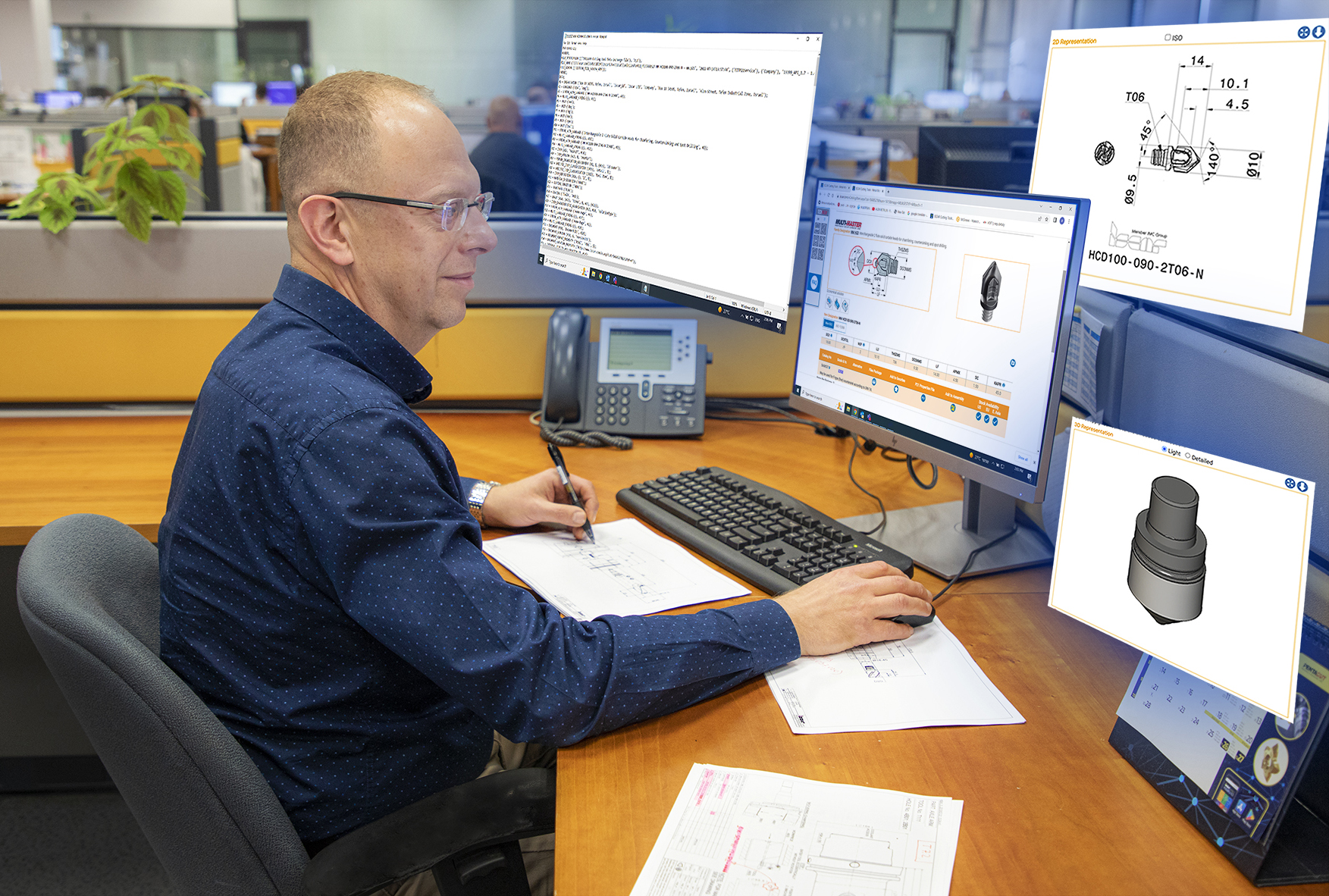
.p21 files, 3d and 2D tool representations, and other virtual products for advanced CNC technology, form ISCAR's digital tool package.
The history of computer numerical control (CNC) machines dates back seven decades. During the 1950s, CNC technology was difficult to introduce due to manufacturers’ scepticism. Today, it is hard to imagine the world of manufacturing without CNC machines. In material-removal processes, a CNC machine has become the central link that determines the functional capabilities of a manufacturer. CNC machining centres are complex machines that continue to evolve and improve. The advancement of CNC technology is based on the progress in various fields such as main spindle and its bearing units, machining slideways, high-velocity drives, computer engineering, hydraulics, electric motors, robotics, sensors, etc. When compared to a conventional machine with mechanical parts, the share of modern digital CNC machines is significantly higher.
CNC technology will continue to be the backbone of machining methods in the near and far future. The development of CNC machines is intended to increase versatility, productivity, stability, reliability, and accuracy of a given machine. These targets are ongoing milestones that assure contemporary machining results. The leap forward relates to machining centres that combine subtractive and additive technologies being CNC machining and 3D printing. At the same time, a complete rethink of CNC advancement has been brought about by INDUSTRY 4.0 and the concepts of smart manufacturing. In a smart metalworking factory, there is information exchange between the real world of CNC machines and a virtual world that functions according to features of the machined parts and their respective theoretical characteristics. Smart balancing on the boundaries of these worlds and analyzing the real-time information contributes to decisions and corrections that are made by computer-controlled units.
The element, which is much smaller, substantially cheaper, and considerably less complicated when compared to a CNC machine, is a cutting tool which is the link that directly removes material from a workpiece and closes the process of “machine-workpiece”. Due to objective reasons, this element is subjected to less fundamental changes and frequently identifies the cutting tool to be the weakest link in the processes, which also limits system capabilities. Therefore, appropriate upgrading of cutting tools should be considered as an integral part in the progress of CNC technology.
The complex shape of replaceable cutting inserts is evidence of today’s technological capabilities.
A conventional approach to making cutting tools relates to designing innovative cutting geometries, using advanced cutting materials, and applying leading production technologies intended to improve tool life, ensure greater material removal rate (MRR), provide higher accuracy, and increase reliability. Nevertheless, INDUSTRY 4.0 trends in the development of CNC technology place priority on the digital component of a cutting tool.
Information has constantly accompanied cutting tools even before INDUSTRY 4.0. Catalogue data, tool drawings, and recommendations regarding applications were provided in printed formats and later as electronic formats and continue to be essential for metalworking. Computerization has affected customer support by providing expanded capabilities in the form of data. Various software applications have enabled selecting optimal tools and estimating tool life under specific machining conditions. The combination of ISCAR’s NEO-ITA and Power Consumption applications enable quick calculation of cutting forces, bending load, power consumption, finding suitable cutting material grade, the right tool for a specific application, and analyzing competitors’ products alongside other useful functions. Customers can easily access data and related information by use of computers and mobile devices. Notwithstanding, advancements in network communications have introduced the world of metal cutting to the virtual electronic world.
Adjusting accurately is a typical feature of various modern tools.
Digital twin technologies complement manufacturing processes. Machining modelling, collision checking, process optimizing to find best cutting strategies are only some examples. In a smart factory, the digital twin is the most significant brick of the foundation. Understandably, only a tool having its digital twin is acceptable for the smart factory’s toolroom.
The progress of CNC technology leads to new demands for cutting tools. A tool producer is expected to be a provider of a product that ideally combines a tool as a material object, its real-time digital twin, and an appropriate software environment. This allows the seamless incorporation of the tool data in CAD/CAM and virtual manufacturing, direct transmitting by Internet of Things (IoT) networks – tool packages and virtual assemblies.
To make tool representation clear for various computer systems, the ISO 13399 standard was developed and assures the platform’s independence. This standardization is necessary for other digital components of the tool package to unify data related to tool life, calculated loads, machining conditions, etc.
ISCAR’s digital tool component, which is based on the ISO 13399 standard, includes the following characteristics.
.p21 files, 3d and 2D tool representations, and other virtual products for advanced CNC technology, form ISCAR’s digital tool package.
E-catalogue with various search functions, updated promotion information and reference data.
The .p21 file (a STEP file) includes a product identification class for a comprehensive tool data representation and exchange.
3D tool representation for computer modelling and CNC programming in accordance with the ISO 10303 standard (STEP).
A 2D tool representation in DXF format for a planned process documentation, drawings, tool layouts and setup sheets.
Virtual tool assembly options for turning, milling and hole making tools intended for generated digital assembly twins in both 3D and 2D representations.
NEOITA – ISCAR Tool Adviser, an expert system that recommends optimal tooling solutions for a specific application.
The machining calculator and the cutting material grade optimizer software applications.
A rapid pace of industrial digitizing takes CNC technologies to new heights. This gives a boost to appropriate changes in the product range of a tool manufacturer and demands strong links between a cutting tool and its virtual digital component.
For more information, please contact ISCAR South Africa (PTY) LTD – Tel: 011 997-2700.