Home Blog Page 22

FIRST CUT AND GSI WOMEN IN GAS SAFETY TRAINING, CUTTING AND WELDING SECTORS

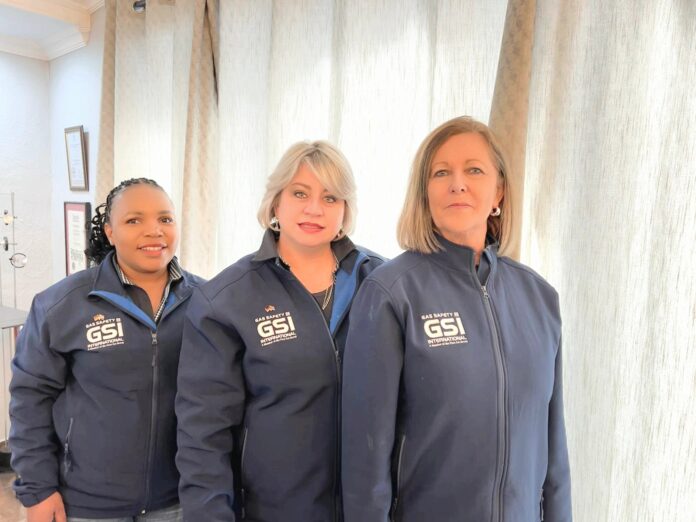
L - R Thabelo Rabedzwana, Anneke Hofmeyr and Melanie Kearns.

While many may still think that the cutting, welding and grinding industry is an exclusively male domain, five women in pivotal roles at First Cut – a leading South African provider of cutting, welding and grinding consumables and equipment – and its sister company Gas Safety International (GSI) show unequivocally that this is a commonly-held misperception.

So says Ian McCrystal, First Cut CEO, who explains: “We are very proud that our company culture fosters the growth and progression of women within the industry sectors that we service – which includes a strong focus on engineering and mining.

There are no barriers to entry for women at First Cut or at our sister company GSI. This is proven when we look at the example of five key women in our companies, who work across various divisions in different roles.”

Melanie Kearns, National Product / Sales Manager – Equipment and Seminars, manages the sales for the compressed gas training provided by GSI, as well as oxyfuel product sales. GSI provides certified compressed gas safety training and quality gas equipment to a wide range of sectors, including welding, to ensure a safe and efficient working environment.

Kearns says, “Our compressed gas safety training courses are of critical importance, because of the high risk attached to working with compressed gases.

“The training we offer enables attendees to identify risk factors, and empowers their employees to manage these risks accordingly. GSI training is also accredited by the ECSA (Engineering Council of South Africa).

“Typically, our seminar attendees include management, artisans and operators; as well as laboratory employees and other support staff. Although many are from the mining industry, the training is applicable to all users of compressed gas.
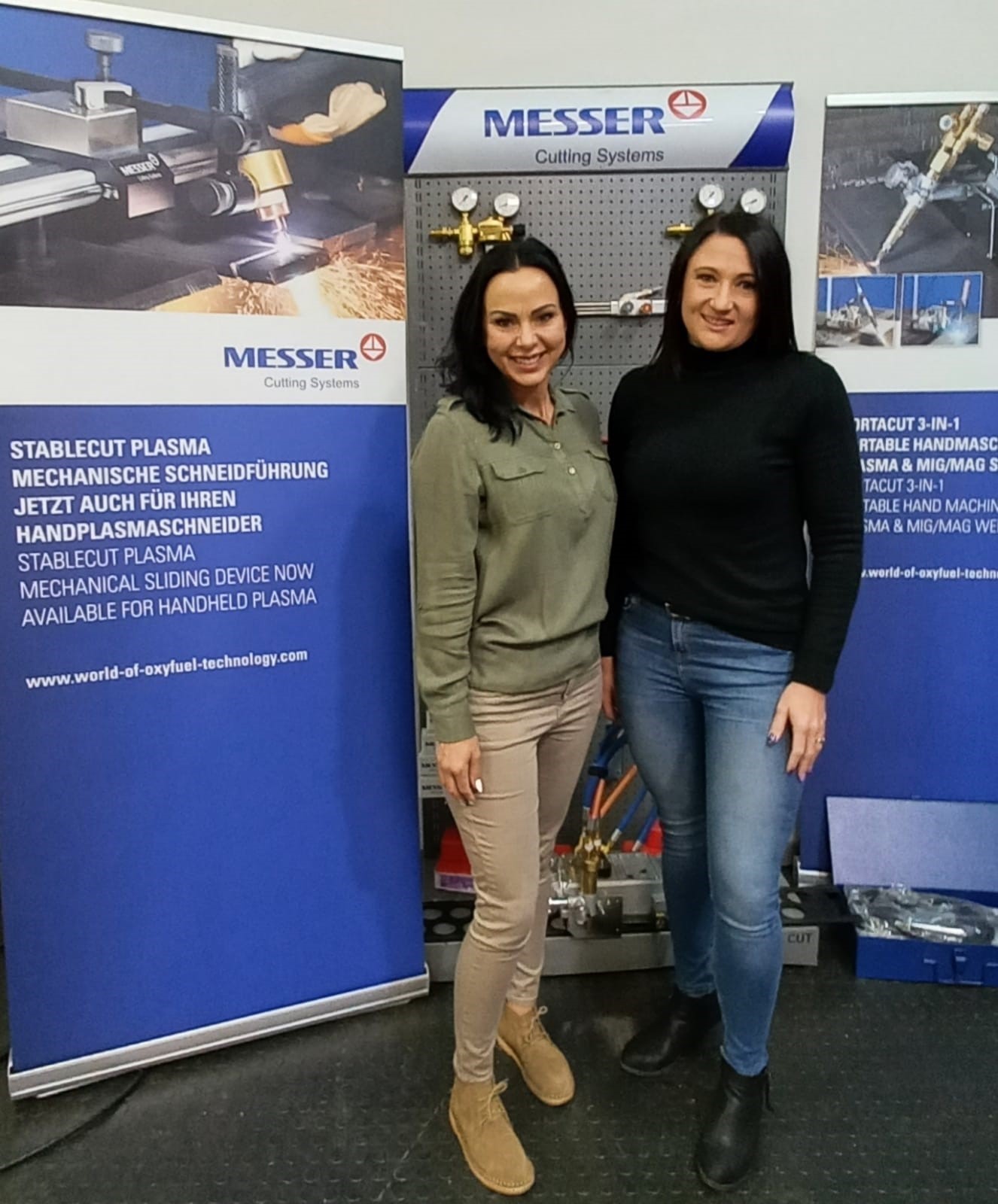
L – R Jacolene Fourie and Zelda.

“I am so excited to see a lot more female delegates attending our training too. The number of women in technical roles today – in comparison with a decade ago – is extremely heartening! Gender diversity in industries such as mining is definitely gaining traction, and I trust will continue to do so.”

Kearns’s longstanding colleague, Executive Assistant Anneke Hofmeyr, is another key member in the GSI team. She supports GSI’s Managing Director Peter Rohlssen, demonstrating that administration and organisational excellence contribute enormously to GSI’s compressed gas safety training success. Hofmeyr and Kearns are both dedicated to promoting compressed gas safety in industry, and are testimony to the success of women in this sector.
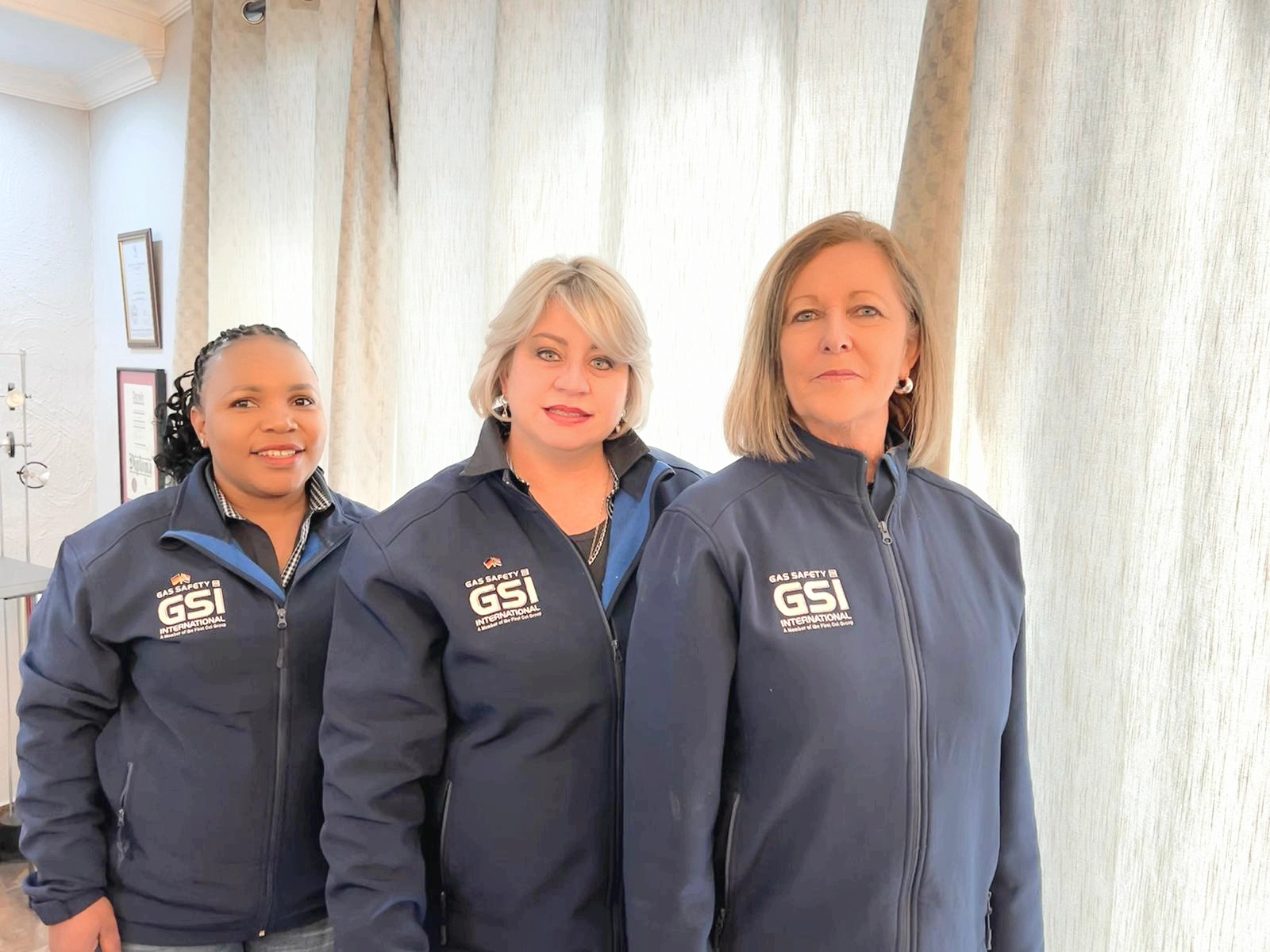
L – R Thabelo Rabedzwana, Anneke Hofmeyr and Melanie Kearns.

Demonstrating her expertise in the gas safety training and risk assessment arena is GSI’s Training and Risk Assessment Officer Thabelo (‘Thabs’) Rabedzwana. With over 20 years of experience, Rabedzwana is passionate about gas safety training.

“Stringent safety is imperative when it comes to welding as well as gas cutting, heating and brazing,” she says, “and this applies across all industries.”

Rabedzwana endorses colleague Melanie Kearns’s input when she adds: “I am seeing an increasing number of women interested in welding. I have also seen female welders being promoted to the role of boilermakers, which is relatively new in recent years and a very encouraging sign.”

First Cut’s Regional Sales Manager for Mpumalanga, Zelda Vorster, also believes that women are now able to take their rightful place within the industrial arena.

With regards to the issue of being ‘a woman in a man’s world’, Vorster notes: “In my opinion, this has definitely been changing over the past five to ten years. I am certainly seeing more women throughout industry. I think the playing fields are being levelled, and I welcome this.

Jacolene Fourie, Sales Representative at First Cut, is also of the opinion that the industry is opening up to women. “I think it is fair to say that more and more women have been able to enter the industrial sector over the past few years,” she says.

“I have seen the situation changing throughout all areas of engineering and manufacturing: from the warehouse to the shopfloor and in procurement. Women are easily able to play a key role in our industry, especially considering their strong attention to detail. I have observed our GSI colleague Thabi Rabedzwane’s training courses, and in addition to commending her for her skill, I am also very impressed by her patience, which I believe is a strength that many women bring to the work situation – including in training roles.”

“At First Cut and GSI, we value the dynamic diversity which the women in our companies contribute,” adds McCrystal. “Our five ‘leading ladies’ also offer a wide variety of skills and attributes which – along with their fellow team members’ – all contribute to provision of cutting-edge cutting and welding training, products and service – to the ultimate advantage of our customers and industry as a whole,” he concludes.
ADVANCED NEW BODY SHOP PRIMED FOR PRODUCTION OF FORD’S NEXT-GEN RANGER

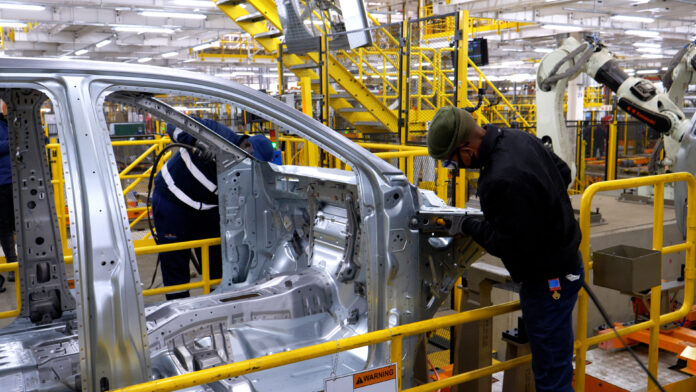
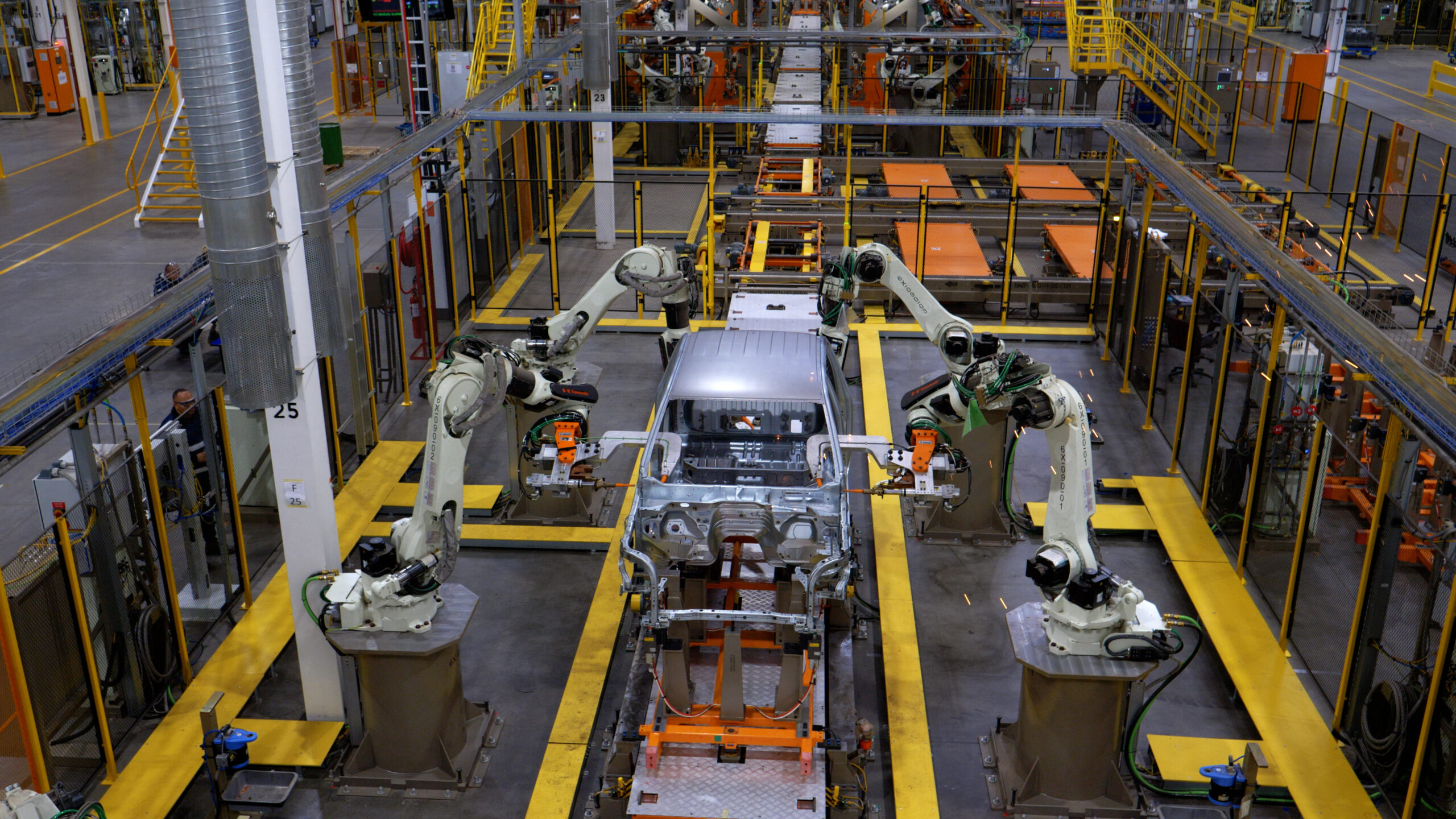
As part of Ford’s R15.8-billion investment in its Silverton Assembly Plant operations, a completely new high-tech Body Shop has been constructed featuring the highest-ever levels of automation and quality control for the facility, which will be producing the next-generation Ford Ranger for domestic sales and export to more than 100 markets globally.

The new 44 000m2 Body Shop and its supporting warehouse are located adjacent to the recently completed Stamping Plant, providing a seamless flow of stamped panels to the line where the body and load compartment of the Ranger pick-up are assembled and welded.

“Building a new Body Shop was essential for the Silverton Assembly Plant to achieve our highest installed capacity to date of 200 000 vehicles per year,” says Ockert Berry, VP Operations for Ford South Africa. “This necessitated a much higher level of automation to reach our production targets, while also introducing the latest quality control systems and technologies that are essential for delivering consistent, world-class quality vehicles for our local and export customers.”

The new highly automated production line is designed around 493 robots that transform the numerous stamped body panels – including the underbody, floor, roof, body sides, cab framing and load box – into a complete Ranger body, ready for transfer to the Paint Shop. The robotic welding guarantees the highest level of consistency, employing the latest 100-percent adaptive controllers with servo guns to deliver spatter-free body welds. The plant manufactures a wide variety of configurations including Single Cab, SuperCab and Double Cab, as well as left-hand drive and right-hand drive derivatives.

“Designing and building our new Body Shop from the ground up has allowed us to integrate IIOT (Industrial Internet of Things) into the manufacturing areas. This gives our production teams access to in-depth and always up-to-date analysed data trends, which allows them to make concise decisions to consistently improve productivity and quality,” says Adheer Thakurpersad, Area Manager for the Body Shop.

Significant investment has been made in quality control technologies, including two inline Perceptron measuring systems that measure and record every vehicle manufactured in Body Shop along with their respective Geometric pallets that they are assembled on. Vision systems attached to sealer application robots provides further error-proofing, supporting Ford’s commitment to setting an even higher standard for quality, reliability and durability with the next-gen Ranger. Even the handling of the vehicle body during construction has been automated on the line, totally eliminating the need to move parts manually which could result in damage.

As with the new Stamping Plant, Body Shop is equipped with the sophisticated GOM ATOS ScanBox blue light scanner system that provides a full 3D body scan for comparison with a stored design specification to highlight any potential issues. Furthermore, a twin-column fixed bed CMM (coordinate measurement machine) performs a range of probe measurements that are accurate down to microns, or thousandths of a millimetre, to ensure that production remains within specification. The team also has access to a portable FaroArm CMM, and a portable GOM unit.

“To assess our weld quality, we conduct non-destructive testing and ultrasonic verifications, and we have a fully equipped destructive teardown facility to test the integrity of the weld spots,” Thakurpersad explains.

It’s not just the high-tech equipment and systems that contribute to quality and efficiency, as the production team continues to play a critical role, with the Body Shop team comprising 38 salaried and 500 hourly employees. “Being in a highly automated environment, ongoing skills development is a priority,” Thakurpersad adds. “Therefore we have plans to install an advanced skills development facility in the body construction area, which will enable employees to continue developing their skills in automation and problem-solving.”

FORD LAUNCHES NEW HIGH-TECH 10 320M2 STAMPING PLANT FOR NEXT-GEN RANGER

Ford Motor Company’s R15.8-billion investment in its Silverton Assembly Plant operations in Pretoria is coming to fruition, with the completion of one of its largest and most ambitious projects to date – the high-tech new Stamping Plant, which is now in operation. The vast facility measures a staggering 10 320m2, equivalent to almost 1.5-times the size of a standard soccer field (7 140 m2).

“Our new Stamping Plant is a first for Ford in South Africa,” says Rhys Davies, Site Transformation Manager at the Ford Silverton Assembly Plant. “Previously we used external suppliers to stamp our metal body parts, but we decided to set up our own Stamping Plant for the Next-Gen Ranger, which will go into production later this year.

“With our focus on delivering the highest levels of quality and efficiency for the Next-Gen Ranger, it was essential that we brought the stamping operations in-house. This ensures that we are able to control the production quality throughout the stamping process, validate that all parts are within specification, and then seamlessly deliver them directly to our new Body Shop located adjacent to the Stamping Plant.

The Stamping facility boasts an advanced GOM ATOS ScanBox blue light scanner system

“The new Stamping facility also dramatically improves our plant capacity and efficiency with a higher level of automation, while eliminating the time, cost and potential damage incurred when transporting these parts by road,” Davies says. “Most importantly, it allows us to deliver vehicles of the highest quality to our customers in South Africa and more than 100 markets around the world.”

The Stamping Plant comprises five tandem presses, including a 2 500-ton draw press, a 1 600-ton press and three 1 000-ton presses that stamp the flat sheet metal into the various inner and outer body panels required for all three body styles of the Ranger: Single Cab, SuperCab and Double Cab. The presses are housed in a complete sound abatement enclosure to significantly reduce the noise generated by the stamping operations, with an automated inter-press feeder system transferring the stamped panels along the process to the end of line. The entire line is fully automated, with an installed capacity of 16 strokes per minute.

“We have 47 die sets with a total of 208 dies producing 67 different parts, including the floorpan, body sides, roof, bonnet, doors and loadbox,” says Jan Groenewald, Area Manager for the Stamping Plant. To facilitate the movement of the heavy dies, the facility is equipped with a 50-ton automated sling crane, two 60/20 sling cranes, and a 50-ton semi gantry crane.

“The Silverton Assembly Plant now has an installed capacity for 200 000 vehicles per year. When running at full capacity, the Stamping Plant will be processing 272 tons of steel per day over a three-shift system,” says Groenewald, who heads up the team of 22 salaried employees and around 270 hourly employees in the facility.

With an unwavering focus on achieving the highest production quality yet from the Silverton Assembly Plant, the Stamping facility boasts an advanced GOM ATOS ScanBox blue light scanner system. “This is one of our important new technologies that enable us to measure the perimeter and surface dimensions of each part, and generate an accurate 3D model that is compared to the stored 3D model on our computer system,” Groenewald adds.

“The ScanBox has reduced the scanning and measurement of parts from more than an hour with the previous CMM machines to less than three minutes,” Groenewald explains. “We have three-hour production runs scheduled at a time, and the ScanBox measures 30 consecutive parts during each production run.

“This gives us the analysed data for the parts before they are moved across to the warehouse, or fitted to a vehicle in the Body Shop, which simply wasn’t possible with the previous system,” Groenewald says. “Following the Six Sigma process, it ensures that we have a 99.997-percent probability that all parts produced are within specification, which means that all of the body parts that go into a Ranger will be of the highest production quality.”

FORD COMMENCES PRODUCTION OF NEW 3.0L V6 AND UPDATED 2.0L DIESEL ENGINES

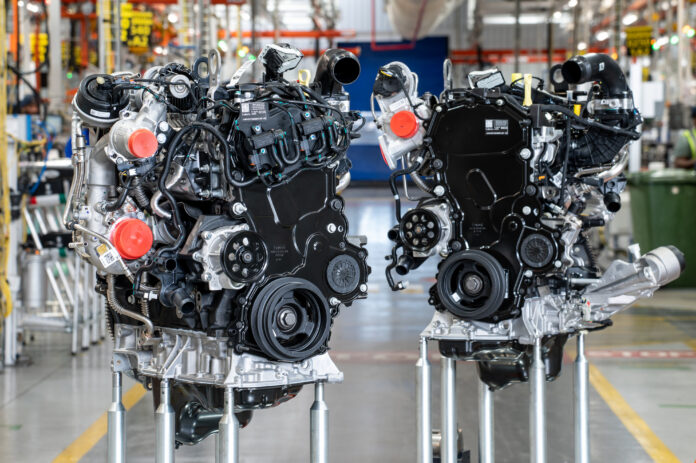
In preparation for the upcoming launch of the Next-Generation Ford Ranger later this year, the Ford Struandale Engine Plant in Gqeberha has commenced production of the latest addition to its engine family – the 3.0L V6 Diesel, which will power the range-topping Ranger pick-up models to be produced at the Silverton Assembly Plant in Pretoria.

3L V6 Diesel Engine

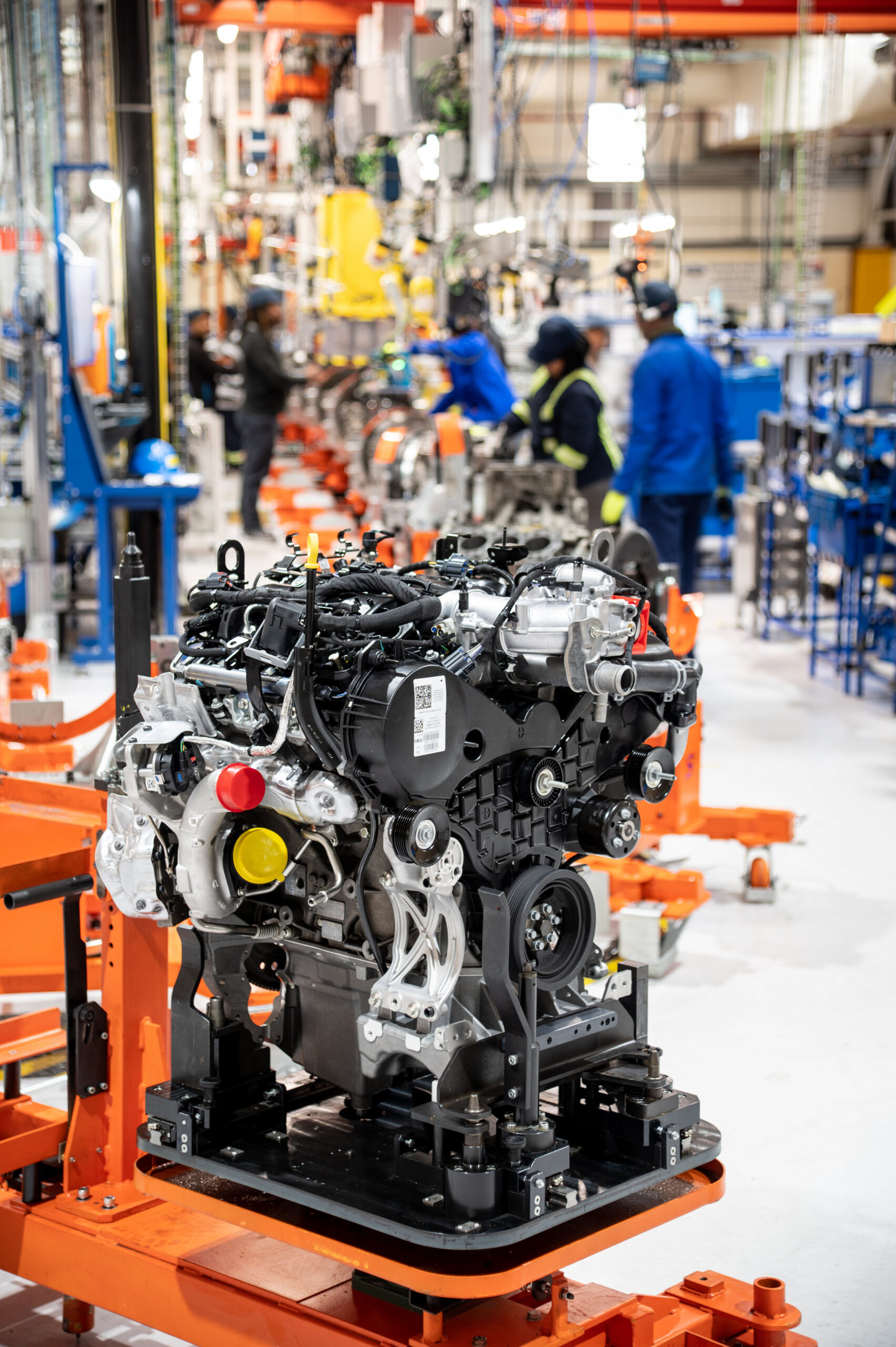
3L V6 Diesel Assembly

This forms part of Ford’s R600-million investment in the Struandale Engine Plant operations, which has also facilitated upgrades to the existing assembly line for the 2.0L Single Turbo and Bi-Turbo diesel engines. Design changes and additional derivatives of the engines have been added for the Next-Gen Ranger, which will be sold locally and exported to more than 100 global markets.

“The modernisation and upgrades to the Struandale Engine Plant began in July 2021, and the construction was completed on time in December, ready to begin our tooling trials and pre-production runs this year in preparation for Job 1 for both engine programs commencing in August,” says Shawn Govender, Plant Manager of the Ford Struandale Engine Plant.

“In its updated and extended format, the assembly line that is now producing the new 3.0L V6 turbodiesel continues with production of the existing 2.2 and 3.2 Duratorq TDCi engines, making it the only facility of its kind in the Ford world that produces both V-configuration and in-line engines on the same line,” Govender says. “Although this was a major challenge for our team and required a lot of creative and innovative thinking, it was essential to make optimal use of our facilities to contain the total investment required, and ensure that we are competitive from a cost-per-unit perspective.”

Relying on a flexible production format, with scheduled batches of the two different engine programs being assembled, the line incorporates 40 stations that are common to both units and a further 25 stations that are unique to the 3.0L V6 Diesel. The total installed capacity for this line is 130 000 engines per year.

“The investment in extending and re-tooling this assembly line allowed us to modernise the facility by introducing the latest advancements in traceability and quality management technologies, including highly accurate GPS tool positioning systems, torque-to-turn monitoring for every bolt on the engine, and multiple camera stations that validate and record the accurate fitment of parts throughout the production process,” Govender explains. “This guarantees that every engine we produce is of the highest quality, and will complement the significant improvements in performance, efficiency and refinement that will be hallmarks of the Next-Gen Ranger.

“Our employees have undergone extensive training with our in-house team and global Powertrain Manufacturing Engineering specialists to ensure that they are fully equipped to manage the complexity and maximise the efficiencies of the flexible production format for the two engine programs.”

The Struandale Engine Plant is also responsible for machining of the cylinder heads for the 3.0L V6 Diesel, which is performed in a completely revamped facility using new and redeployed machines that have been updated with the latest tooling, operating and quality control systems.

2.0L Single Turbo and Bi-Turbo

The R600-million Struandale Engine Plant investment introduced numerous changes for the latest versions of the highly rated 2.0L Single Turbo and 2.0L Bi-Turbo diesel engines that will be the core line-up for the Next-Gen Ranger. Around 23 design changes were implemented for the new application, while the number of derivatives produced on the dedicated assembly line for this engine program has increased from nine to 13.

“Most of the updates introduced were to accommodate the design of the Next-Gen Ranger, while further improvements have been made to the noise, vibration and harshness (NVH) characteristics of the engines for even greater comfort and refinement,” Govender says. “The quality, reliability and durability of this engine program is exceptional matched to superb fuel economy, and these are traits that will shine through in the Next-Gen Ranger.”

To support the increased demand for the 2.0-litre diesel engines, the plant has gone from the previous two shifts to 2.5 shifts, with a total installed capacity for producing up to 120 000 engines per year.

Tested to the limit

Head Machining 3L V6 Diesel

As with any new or updated engine program, the new 3.0L V6 Diesel and latest specification 2.0L Single Turbo and Bi-Turbo engines are subjected to exhaustive in-process and off-line testing. Additionally, the existing Duratorq TDCi engines have also undergone extensive tests to ensure that the advanced production systems, tooling and technologies used on the modernised flexible assembly line are within specification.

Using the most advanced engine dynamometer to be installed at the Struandale Engine Plant to date, the 3.0L V6 Diesel endured a rigorous testing regime, including a series of 10 conformity of production (COP) tests spanning 20 hours each. This is a standardised control test used to qualify vehicles or components throughout the world.

Three 275-hour engine fatigue tests (EFTs) were conducted, with the accelerated test evaluating the engine’s robustness against structural fatigue caused by repetitive mechanical loading at high speeds and cylinder pressures. A further 100-hour engine fatigue test was also completed as part of the validation process.

Thereafter a 115-hour GloTherm accelerated dynamometer test was done to validate the engine sealing system (including the cylinder head gasket) and certain structural engine components through exposure to extreme thermal cycling. And, finally, a 150-hour GloSys test was performed to evaluate the durability and reliability of the engine under simulated customer driving conditions.

On the updated 2.0L SiT/BiT engines a total of four 20-hour COP tests were done, along with three 275-hour engine fatigue tests, and two 100-hour GloSys tests. Similarly, the Duratorq TDCi engines underwent three 20-hour COP tests and a 154-hour durability test.

“The extensive and rigorous dynamometer tests are essential in validating the training of our employees, the application of the production processes and systems, as well as the performance and durability of the engines as part of our commitment to delivering world-class quality for our customers,” Govender says.

MARTINA BIENE TO SUCCEED ROBERT CISEK AS MANAGING DIRECTOR OF VWSA

Robert Cisek will leave Volkswagen Group South Africa (VWSA) on 31 October 2022 to take up the position of Head of Volkswagen Small and Compact Product Line in Wolfsburg, Germany, reporting to Thomas Schaefer, CEO of the Volkswagen Passenger Cars Brand.

Martina Biene, who is currently the Head of Volkswagen Small and Compact Product Line, will succeed Cisek as the Chairperson and Managing Director of VWSA once all the necessary regulatory approvals have been attended to.

Cisek took over the reins at VWSA in November 2020 at the height of the Covid-19 pandemic. He successfully led VWSA through a turbulent period of semiconductor shortages, which impacted Kariega plant production and vehicle sales. Cisek also ensured that no jobs were lost at VWSA during this period.

Biene is returning to VWSA for her second spell, following her tenure as the Head of Volkswagen Passenger Brand from October 2018 until August 2020.Biene has 20 years of experience in the Volkswagen Group, having worked in Sales, Marketing, Product Planning and Product Marketing for Luxury Vehicles and the Volkswagen Brand in Germany, Belgium, Luxembourg and South Africa.

“I would like to thank Robert for steering VWSA to a stable position during a highly challenging period for the local and global automotive industry. I am looking forward to having him back in Wolfsburg to head our small and compact product line, which will play an important part in the future of our product portfolio in emerging markets like South Africa,” said Schaefer.

“Martina is returning to the market which she knows very well after her successful time as the Head of the Volkswagen Brand Sales and Marketing. Her mandate is to sustain VWSA’s strong position in South Africa, and to continue to pursue Volkswagen’s plans to grow the Brand in the Sub-Saharan Africa markets,” added Schaefer.

“I wish both Robert and Martina success in their new roles. I am confident that their experience and commitment to Volkswagen will benefit their teams positively,” concluded Schaefer.


WALTER PRESENTS DC118 SUPREME FOR DIFFICULT HOLEMAKING APPLICATIONS

With the DC118 Supreme solid carbide drill, Walter is signalling the start of a new performance class for challenging applications. The “180° drills” differ from standard solid carbide drills in particular due to the high rigidity they provide against deflection, the good centring accuracy and four chamfers, which enable excellent guidance after plunging. The reason for this is the 180° point angle, among other features. This means that the DC118 Supreme is ideal for plunging into angled or round surfaces because the drill is guided quickly on the external faces and centred accurately. At the same time, burr formation remains extremely low. A protective corner chamfer on the cutting edges protects them against rapid wear, which significantly increases tool life compared to drills without a protective chamfer. The excellent rigidity of the drill is a third feature which sets it apart from other products on the market. It is the result of the flat 15° helix angle, which minimises deflection forces and ensures a high level of stability and precision during ramping.

Initially designed for pilot drilling of deep bores on crankshafts, the current DC118 Supreme drill versions are now suitable for universal application with all materials and components. Practical applications, in addition to bores in angled or round surfaces, also include operations involving a flat hole face (such as for threads), components with an uneven surface (due to forged skin, for example) or chain drilling. In these applications, the DC118 Supreme impresses with long tool life and a high degree of precision and process reliability. The precision tool manufacturer offers the Supreme drill in the highest performance class with a diameter of 3–20 mm up to 2 × D as standard or as a special tool up to 5 × D via Walter Xpress with a delivery time of two weeks.

For more information, please contact Spectra Carbide Tooling Technology – Tel: 021 555 4144.

Visit Spectra Carbide

WALTER MD177 AND MD173 SUPREME SOLID CARBIDE MILLING CUTTERS FOR ISO S, P AND M

With the MD177 Supreme and the MD173 Supreme, Walter is for the first time launching solid carbide milling cutters with seven cutting edges. Developed for the aerospace industry, their performance is excellent not only in titanium, but in steel and stainless steel, too. The two Supreme tools are set apart from standard solid carbide milling cutters by their geometry, among other features. The version with seven teeth achieves excellent productivity, while its uneven pitch reduces vibration, ensuring excellent operational smoothness. The entire length of the cutting edge can be used, meaning that wear is relatively uniform – in turn extending the tool life of the milling cutters.

This statement applies particularly to the MD173 Supreme. This is because the roughing cutter was designed specifically for dynamic milling and for reducing machining time. Its cutting edges equipped with chip breakers enable excellent chip breaking, and therefore outstanding process reliability with high metal removal rates, as you will be familiar with from dynamic rough milling. This is advantageous, for example, for users with unmanned production processes. The MD177 Supreme finishing face milling cutter creates very smooth surfaces without “waterlines” because the entire length of the cutting edge is used during chamfering. As a package, the milling cutters therefore promise outstanding productivity and process reliability, with excellent surfaces in ISO S, ISO P and ISO M.

For more information, please contact Spectra Carbide Tooling Technology – Tel: 021 555 4144.

Visit Spectra Carbide

INTERNAL MACHINING WITH WALTER TURN W1211 AND W1210 BORING BARS

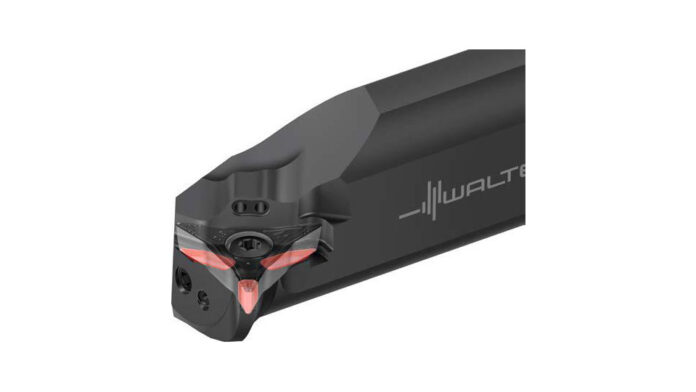
With the W1211/W1210 copy turning system, Walter is transferring to internal machining the positive features of its W1011/W1010 turning system for external machining that is already established on the market. The boring bars and indexable inserts with WL positive engagement solve a common problem. High forces occur when copy turning with V-style inserts, which cause micro movements of the insert in the toolholder and therefore widen the insert seat. This results in increased wear, less precision and a lack of indexing accuracy with indexable plate types such as VBMT or DCMT. Due to their positive-locking insert seat design with three-point support, the W1211/W1210 boring bars and WL25 inserts achieve outstanding stability. This increases the tool life while enabling users to use the tools in both directions of travel, which increases the indexing accuracy by 50%.

Walter offers two versions of the boring bars with diameters of 25, 32 and 40 mm: W1210 for profiling angles of up to 72.5° and W1211 for profiling angles of up to 50°. The positive WL25 indexable inserts with three cutting edges are available in four insert types, depending on the requirements of the application. Neutral, left-hand, right-hand and full-radius versions fit into the same tool. In addition to the wear-resistant Walter Tiger·tec® Silver grades that are currently used, Tiger·tec® Gold inserts will be available soon. The dual rake face cooling and the optional axial cooling for flushing out the chips during blind-hole machining also result in longer tool life and therefore greater cost-efficiency. These special features and the versatility of the system make it the current benchmark for the market.

For more information, please contact Spectra Carbide Tooling Technology – Tel: 021 555 4144.

Visit Spectra Carbide

TIGER·TEC® GOLD FOR UNIVERSAL USE IN ALL WALTER MILLING TOOLS

With the Tiger·tec® Gold grade WSP45G, Walter developed a generation of indexable inserts capable of approx. 30 percent more performance, which represents a technological leap in ISO P, M and S; in steel they even achieve up to 75 percent higher performance. After Walter had initially introduced the indexable inserts for the latest milling tools, Xtra·tec® XT, Walter BLAXX and M4000, the second phase of the launch added indexable inserts for further Walter milling cutters, such as the Xtra·tec® shoulder, helical and slotting milling cutters, as well as for high-feed and copy milling cutters. With the third phase of the launch, the PVD grade WSP45G, now complete, Tiger·tec® Gold can now be used universally: The user can now use the latest Tiger·tec® Gold grade WSP45G in all manufacturer milling cutters.

Vital to the grade’s performance, which is unrivalled on the market, is the coating technology and its special layer structure: The gold-coloured ZrN top layer facilitates exceptional friction characteristics as well as excellent wear detection. The multi-layered aluminium oxide coating (Al2O3) makes the inserts temperature-resistant. The TiAlN layer and the carbide substrate as a foundation increase the wear resistance. These properties make the inserts ideal for challenging conditions, such as interrupted cuts, long overhangs with a tendency to vibrate or for wet machining. With the new grade, users can now harness the full benefits of Tiger·tec® Gold in all Walter milling cutters, be it the much longer tool life, higher cutting values or more process reliability.

For more information, please contact Spectra Carbide Tooling Technology – Tel: 021 555 4144.

Visit Spectra Carbide

REIME NORIS – PRODUCT RANGE FOR UNIVERSAL THREAD MILLING CUTTERS EXPANDED

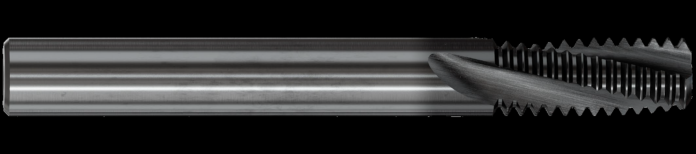
NORIS SF R15 K20-TiAlN mKB

As an innovative manufacturer of threading tools, REIME NORIS offers an extensive range of products for the economic production of threads in a wide variety of materials. The company is now expanding its successful thread mill series NORIS SF R15. In addition to the thread types M, MF and G, this tool is now offered for the production of UNC and UNF threads.

The NORIS SF R15 is a multi-row thread mill for processing a wide range of materials. It guarantees short machining times and high tool life. It should be particularly highlighted that the thread is efficiently produced over the entire depth of the core hole with only one turn, for the type SF SE even with countersinking. With a helix angle of 15° right, these thread mills can withstand high mechanical stress. Optimum results are achieved by the specially adapted interaction of the TiAlN coating with its high hardness and temperature resistance and the profile-corrected geometry.

From now on, the NORIS SF R15 is available from stock in all common standard sizes. For special applications the REIME NORIS team of experts with excellent know-how in thread machining is available.

For more information, please contact Duncan Macdonald – Tel: 011 444-4345.

Visit Duncan Macdonald