Home Blog Page 13

OPTIMIZATION AND COST TRANSPARENCY IN SHEET METAL PROCESSING

TRUMPF spin-off Optimate at Blechexpo 2023 in Stuttgart – Hall 1, Booth 1106-1

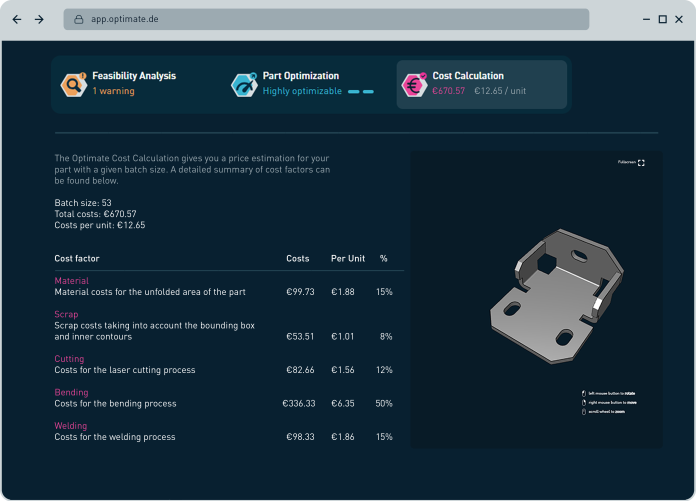
In November, Blechexpo opens its doors and Optimate, the specialist for AI-based part analyses in the cloud, will be represented with its own booth directly in Hall 1. In addition to feasibility analyzing and automated part optimization, the new cost calculation will be presented to the expert audience for the first time. In the interview, CEO Jonas Steiling and CSO Sebastian Beger provide an up-to-date insight into the TRUMPF spin-off from Stuttgart.

Mr. Steiling, how has your start-up developed since you began three years ago?

Jonas Steiling: What began with the idea of an automated feasibility check for sheet metal processing has since developed into a digital companion for design and work preparation that has proven itself many times over. With just a few clicks, a user receives the feasibility analysis, part optimization and associated cost calculation for his parts in just a few seconds.

­ Jonas Steiling with an optimized sheet metal part in a before-and-after comparison.

“What good is it if manufacturing is optimized and automated in the direction of Industry 4.0 and Smart Factory, but a part or assembly cannot be manufactured at all?”

And where are you today?

Steiling: The App can now generate significantly more optimization suggestions – and also twice as fast as in the beta version, and we can optimize ten percent more parts. This know-how is developing from day to day, thanks to our artificial intelligence. At Blechexpo, we would therefore like to show visitors how we have managed to make AI easy to use and experience – for design engineers as well.

Optimate CSO Sebastian Beger.

“Our big highlight is definitely the new cost calculation functionality and that we can digitally map the three critical steps from CAD to the handover to fabrication. I’m absolutely convinced that sheet metal processing companies can ill afford not to use Optimate in the long run.”

Mr. Beger, how does Optimate help to avoid unnecessary costs for parts?

Sebastian Beger: We want to take a holistic approach to the challenges of the transfer from product creation to manufacturing. The questions that arise along the way are: ‘Can I manufacture the part like this”, ‘Are there any better variants?’ and finally ‘What does the designed part cost?’. And this is exactly where our integrated cost calculation comes in. Right at the start of the App, the user is shown three options for digital support: Feasibility analysis, part optimization and cost calculation.

Are there different packages?

Beger: Yes, we currently offer three packages of our cloud solution. These are precisely tailored to the individual needs of our customer groups. The ‘Essential Package’ is made for contract manufacturers and focuses on the features feasibility analysis and calculation. For companies with their own product and design, there is the ‘Professional Package’, which also includes the potential recognition and automated optimization. For portal operators who offer sheet metal processing in their web shops, we have the ‘Integration Package’ – here the Optimate services run in the background and our entire stored sheet metal knowledge is available via an API interface.

Which user groups are you targeting and which license models do you offer for them?

Beger: Within the packages, we have the option of offering licenses that depend on the number of users. For large companies or enterprises, we offer a flat rate in order to be able to reach different user groups, from purchasing to design engineers to managing directors. The number of users does not matter at this point, and Optimate can be used throughout the entire company, from design to work preparation, by a wide range of specialist departments without higher costs.

How can users apply the Optimate software?

Steiling: It is possible to use the feasibility analysis, cost calculation and part optimization directly in the browser-based web app without installation. For contract manufacturers or production-related work preparation, this basically means no effort. For those companies that want to use the tool in their CAD system for designing, we have developed a CAD plug-in for SolidWorks. We will also be presenting this integration to trade fair visitors for the first time at Blechexpo. And for those who want to access Optimate’s sheet metal knowledge across the board, we have developed an API interface that can be used, for example, to connect online web shops.

­Highlight at Blechexpo from TRUMPF spin-off Optimate – new digital cost calculation for parts in sheet metal processing.

Do you also address international markets?

Beger: That is an important question. Although we mainly address sheet metal processing companies from the DACH region at Blechexpo, we are also open to international trade fair visitors. We are currently in the process of actively targeting further markets. Specifically, we are talking about China, Great Britain and the USA, because the first customers there are already using our App.

How do you manage to make the savings potential transparent for customers?

Steiling: Our Automated Optimization shows the savings potential in percentage terms. Supplemented by our new cost calculation, this is now further specified and broken down into the factors of material and scrap as well as manufacturing processes. The generation of the suggestions themselves, including cost calculation, does not require much effort. Our App does it with the push of a button.

How does Optimate support designers in expanding their existing sheet metal knowledge?

Steiling: In our App, we provide decades of knowledge and access to valuable sheet metal know-how as a ‘digital consulting service’. The App supports the designer like a consultant in finding potential and shows him what he can change. Optimization suggestions are automatically displayed, giving the designer a huge head start in terms of design ideas. If the design engineer decides in favour of a particular suggestion, all it takes is a mouse click and the re-design is presented to him, including drawing data for download. With this sheet metal knowledge, we not only provide the design and work preparation departments with greater process reliability, but also eliminate time-consuming queries with the customer and expensive manual redesigns.

How does the cost calculation for individual parts and assemblies differ?

Beger: Within the assembly, we also determine the costs for the individual parts, which results in the total for the entire group. The assembly is of course exciting because it usually represents an entire function. We also identify standard parts, such as screws or nuts within the assembly, which do not need to be optimized. All other sheet metal parts get analysed.

How does the App specifically support the analysis of assemblies?

Beger: There are two points to consider when analyzing assemblies. On the one hand, we can dismantle assemblies into their individual parts and analyze them. Currently, these are assemblies with up to 25 individual parts. On the other hand, it is also interesting for some users to look at the complete assembly in terms of cost reduction. For the optimization of complete assemblies, we are currently using a hybrid approach. We combine our digital services with manual visualizations.

Can you give a concrete example of a consulting case for the savings from the hybrid optimization approach?

Beger: I can gladly give you an example of a customer: In this case, his order volume for a special assembly amounts to almost 222,000€. Thanks to Optimate’s hybrid optimization approach, the savings achieved are 30.4 percent. This means that over the course of the year, the optimization achieves considerable savings of almost 70,000€. In addition, the part will continue to be manufactured on an ongoing basis, which means that the customer can plan for this saving every year.

­Cost savings calculator – Even a handful of parts inspected each month can demonstrably save costs.

For further information, please contact RETECON – Tel: (011) 976 8600.
Visit RETECON

AMADA AUTOMATION SOLUTIONS

Ever-growing need for production has resulted in companies looking for unique methods of manufacturing with faster production times, less human intervention and ultimately less cost.

Labour costs play a huge role in production and the faster a product can be produced, the higher the profits.

In sheet metal applications, this is a difficult target due to the various stages of production such as blanking, bending, welding, grinding, painting, assembly, testing and packaging. These various processes are each a headache on their own.

Beginning with the blanking process, the designer needs to have a good understanding of the completed product and its intended use or application. This person also needs to have a good understanding of the capabilities of the machinery being used as well as the materials being processed.

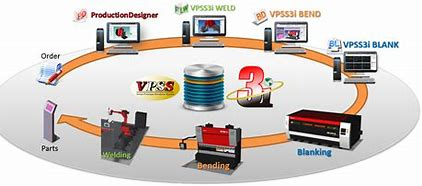
The automation process begins by use of a CAD drawing system. Rendering a 3D model in Amada’s Sheetworks 3D software, the full product can be viewed, operated / animated and broken down into single part items. This process eliminates trial production and the waste of materials, time and resources.

Ultimately, all proto-typing can be done on a PC in the 3D environment, while the customer can sign off for the start of production before a single part or sample is physically produced. The process from creating the drawing to tool fitting and programming is executed by a few clicks on the PC mouse. The automated system will then separate material types and material thicknesses, it will nest the parts according to the parameters set and will program it accordingly for the selected machine.

Once completed at the programming stage, the programs are transferred from the PC to the machine by employment of a job card with a bar code attached. The use of a bar code scanner at the machine control will instantly display the program and rendering it immediately ready for production.

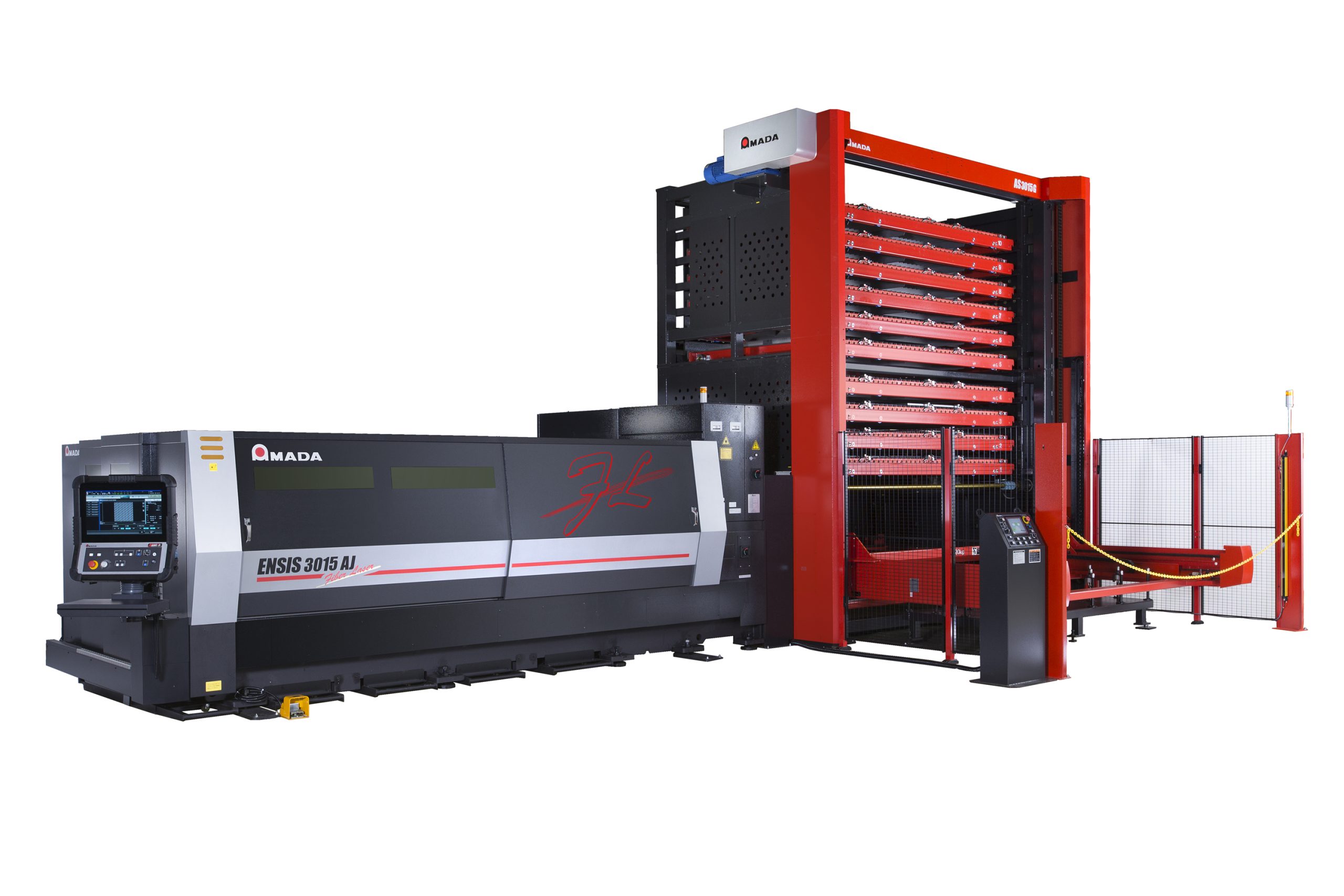
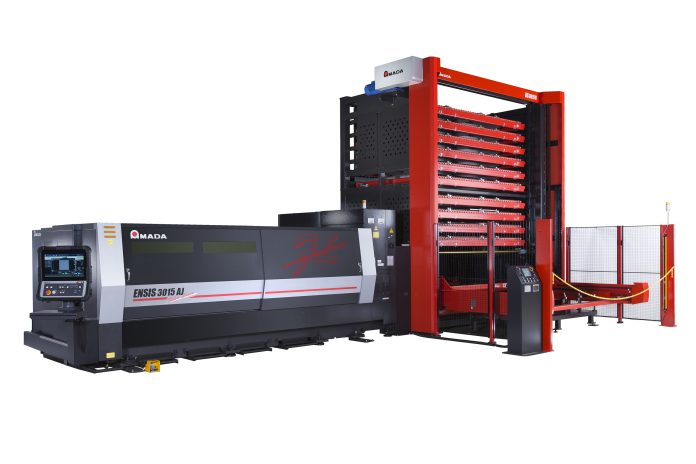
The scanning of the bar code will ensure that production throughput is handled in the correct sequence, thanks to the programmer who creates a production schedule according to the importance of the work. Once ready to begin with actual production, there is an additional automation option for material storage and material handling, too. These systems (ASF-H or ASR tower storage systems) & MPL (material manipulation system) are capable of loading the raw materials onto the table of the machine, ready for production to begin. All of this is possible without the operator having to touch the sheet. Once the sheet has been processed, it is offloaded by means of the manipulator system. It then is either stacked on a pallet complete with skeleton and parts or it can be separated by means of a “TK” system. The TK system is ideal for the removal and sorting of cut parts from a nested sheet. This “picker” will remove each individual part by means of numerous suckers and will place them onto different stacking pallets – sorting parts for their next processes needed onto individual pallets. Different customers’ jobs that were nested onto the same sheet can now be separated and stacked individually without any human intervention.

Bending can also be automated according to customers’ needs by utilizing Amada’s 4ie Bend software and creating all bending programs from the initial drawing. Sequencing and tool fitting is done on the PC and trial bending on the machine is eliminated. The “teach” function on the control of the bender will assist and indicate the precise positioning of each tool as required, while prompting the operator through the bending process. In the case of the ATC (Automatic Tool Changer), the machine will automatically load and unload tooling as required for the job at hand. The ATC will drastically reduce setup times between jobs as it can load a full three meters of top and bottom tooling in just 3 minutes. Suddenly the small batch runs or single part production becomes a much faster process with far less down-time.

For long constant production runs, robotics are available to replace operators. The robotic benders are ideal for constant bending of the same parts or very large production runs. These systems are available from very small robotic systems on the EGB press brakes, right up to the large – heavy duty press brakes handling parts that are too heavy for the operator.

Amada provides a total automation solution for all requirements from single sheet manipulation (MPL), to multiple sheet storage and manipulation (ASFH or ASR) to high volume sheet storage and manipulation (MARS). Everything is programmed through a central Amada data-base (VPSS4ie) and fully backed by Amada’s dedicated service and applications teams.

For more information, please contact Amada – Tel: 011 453-5459.

Visit AMADA

DRILLING ALUMINIUM WITHOUT ADHESIONS


Walter presents the DC166 Supreme with innovative new thinner web


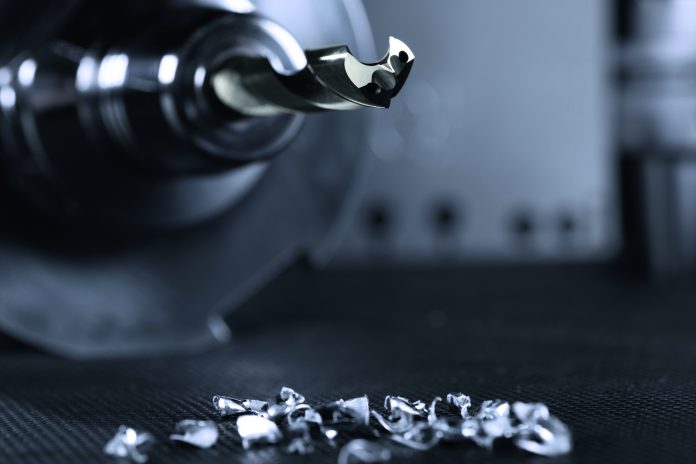
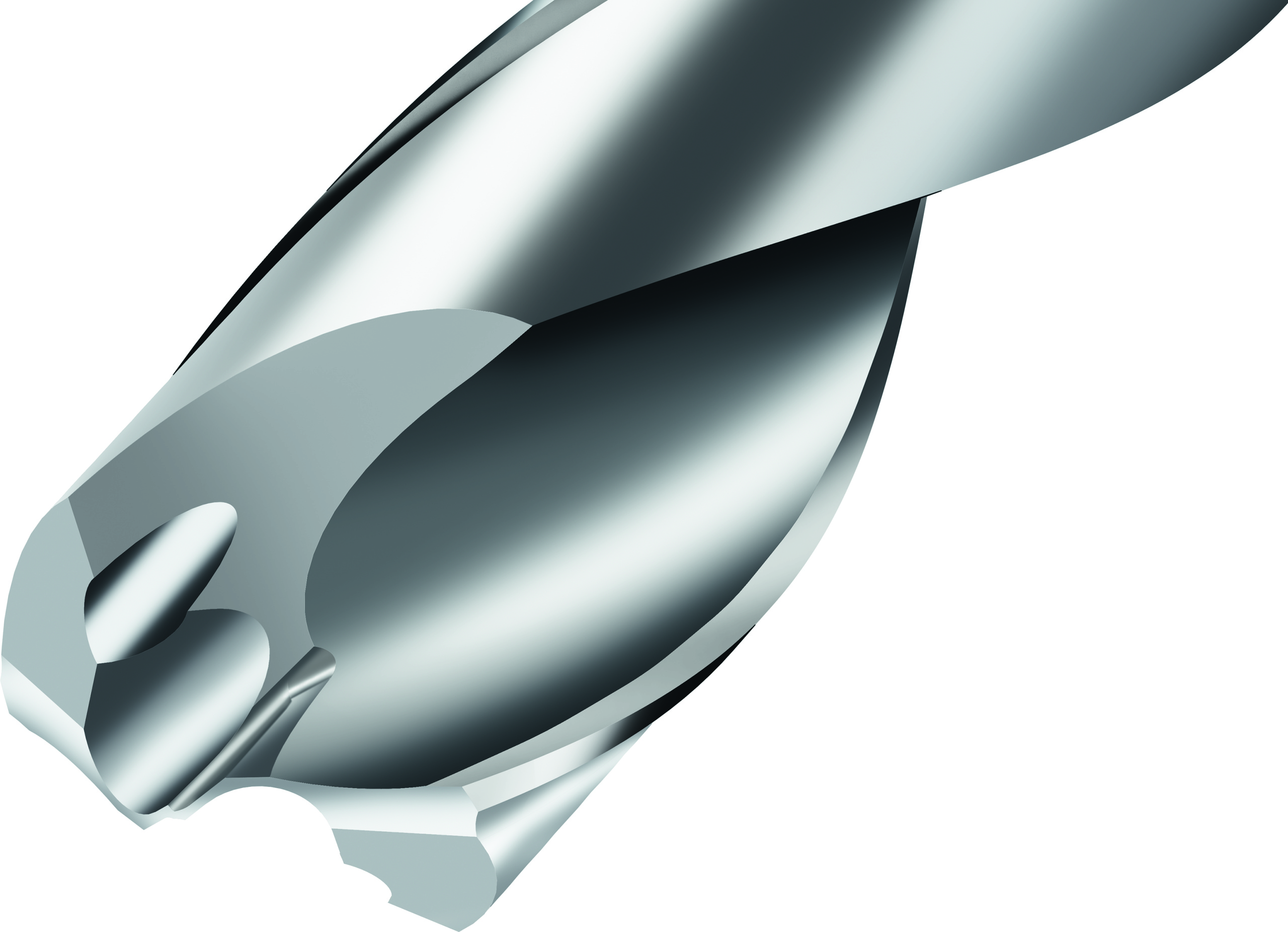
In the field of aluminium machining, operators often look for more specialist tools since their requirements are often very specific. But with their new DC166 Supreme, premium tool manufacturers Walter have demonstrated just how special a standard drill can be. The solid carbide drill with internal coolant has been specially developed for machining aluminium and other ISO N materials, which is why it boasts certain distinctive features, including all key surfaces on the drill, such as flutes, lands or clearance angles are polished. This reduces friction and prevents adhesions in the highly adhesive material, which in turn increases tool life and process reliability of the drill. The highly innovative, patent-pending thinner web of the DC166 Supreme is like nothing else on the market. It prevents edge from building up and improves chip removal and supply of cooling lubricant.

The aluminium specialists’ innovative design facilitates exceptionally high cutting speeds in conjunction with excellent drilling quality – especially in terms of the roundness of the hole and surface quality. Walter is launching the DC166 Supreme, which can be used with emulsion, oil or minimum quantity lubrication (MMS), in 5 × D, with a diameter of 3–12 mm. By having it available as standard, the company is able to quickly show the drill’s performance in action to potential users. At the same time, however, Walter also offers the drill as a special tool (up to 30 × D; dia. 3–20 mm) via the Walter Xpress Service with a shorter delivery time of maximum two weeks. The DC166 Supreme is of interest for all areas of application dealing with ISO N materials, especially the automotive sector and supply industry and aircraft construction.

For more information, please contact Spectra Carbide Tooling Technology – Tel: 021 555 4144.

Visit Spectra Carbide

NOT A MINOR DETAIL – MAJOR STABILITY


Walter introduces the new WL17 indexable inserts


Tool specialist Walter is expanding its WL copy turning system with the introduction of the new WL17 indexable inserts for Swiss type auto lathes and small Dmin. Used on the W1011-S-P external turning toolholder, which is also new and the W1210/W1211 boring bars, they bring the benefits of the existing WL25 inserts to smaller dimensions. The W1011-S-P toolholders with square shank in the most common shank sizes, 12×12 mm and 16×16 mm are specially designed for use on automatic lathes and multi-spindle machines. Walter is the only manufacturer to offer a turning system for automatic lathes with positive engagement and three-edge turning inserts. As with the WL25 turning inserts and toolholders, the smaller indexable inserts facilitate equally high cost-efficiency. This is partly thanks to the three cutting edges, as well as stability and higher indexing accuracy (+50 percent compared with ISO inserts). The targeted Walter precision cooling on the rake and flank faces also increases tool edge life.

When it comes to internal turning, the inner diameter (Dmin) of the workpiece is often a limiting factor. ISO turning inserts, such as the VBMT11, have only two cutting edges and can be used at a 93° approach angle from a Dmin of 22 mm. By contrast, the new Walter boring bars W1210 and W1211 with WL17 inserts can be used for internal turning from Dmin 18 mm and have one more cutting edge. Plus, the operator can use the indexable inserts for both forward and reverse turning. Just like all WL inserts, the WL17 inserts can be used in a neutral, right-hand and left-hand version and are coated in the latest cutting tool materials, such as Tiger·tec® Gold. Thanks to its high stability and cost-efficiency, the WL17 copy turning system is ideal for internal turning of small diameters and for use on automatic lathes.

For more information, please contact Spectra Carbide Tooling Technology – Tel: 021 555 4144.

Visit Spectra Carbide

NEW SGTBU C-14 HEAVY DUTY BLOCKS FOR HBR/L/N-IQ DOVEIQGRIP BLADES

ISCAR introduces SGTBU C-14 blocks with a wide fixing prism suitable for 10-14 mm width DOVEIQGRIP blades.

Until now, the only standard option to clamp the THBR/L/N-IQ DOVEIQGRIP blades was on the existing blocks, designed for 8 mm wide blades. These blocks were not ideal holders due to their narrow prism.

The new SGTBU C-14 blocks feature a wide prism which enables a much more rigid clamping for 10-14 mm blade widths.

The new blocks feature internal coolant and they are available with 32, 40 and 50 mm shanks carrying 52.6 mm height blades.

For more information, please contact ISCAR South Africa (PTY) LTD – Tel: 011 997-2700.

Visit ISCAR

WALTER ROUNDS OFF ITS RANGE OF SOLID CARBIDE UNIVERSAL MILLING CUTTERS


Xill·tec® – Powerful milling in a plug & play solution


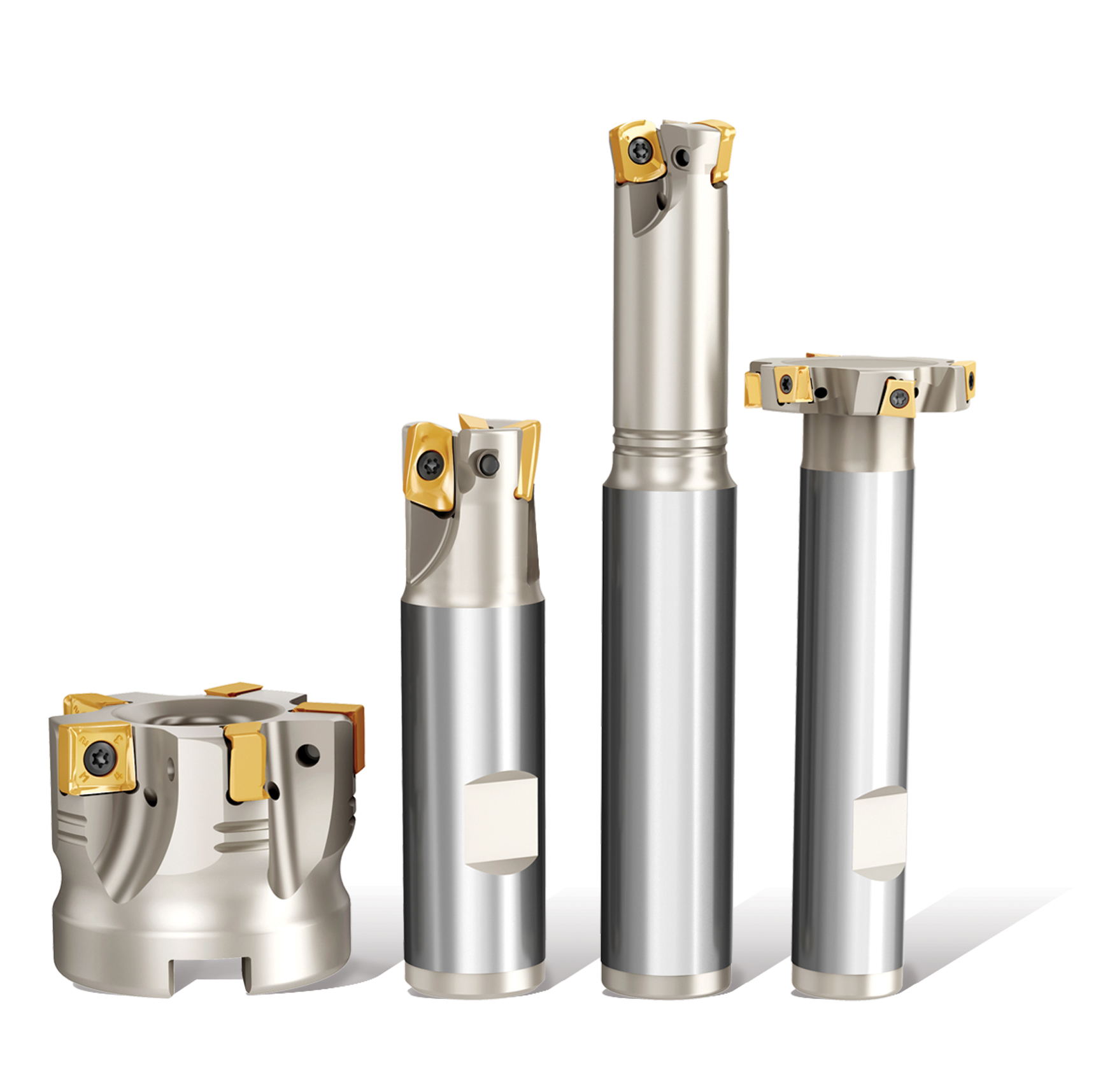
With the Xill·tec® MC230 and MC233 Advance milling cutters, Walter already introduced two ranges of solid carbide milling cutters that are powerful and can be used universally – for all ISO materials from groups P, M, K, N and S, as well as for all standard roughing and finishing applications and milling strategies. As part of a second launch stage, the tool manufacturer is now rounding off its range with Xill·tec® two-edge and eight-edge milling cutters, offering diameters of between 2 mm and 25 mm and cutting lengths from 1 to 5 × Dc. With these long cutting lengths, Walter is embracing the trend for dynamic milling as a standard application in the universal range. One of its major advantages is that the entire tool length can be used with high material removal rates. There are also various geometries, each developed for a particular application, material or machining strategy.

The Xill·tec® MC230 Advance basic range also sees the addition of new Xill·tec® milling cutters from the MC233 Advance range. These are designed with chip breakers and are therefore suitable for high chip volumes, such as for dynamic roughing. In other words, they are suitable for applications where the chips need to be kept short, despite using long cutting edges and safely carried away. When compared to competitors, both milling cutters have a tool life that is around 30% longer when used at the same cutting speed and with the same material. This is thanks to geometries whose variable helices are coordinated with the number of teeth and cutting edge length, combined with the new tough WK40TF universal grade with TiAlN coating. The latter was developed and manufactured by Walter for Xill·tec® solid carbide milling tools.

For more information, please contact Spectra Carbide Tooling Technology – Tel: 021 555 4144.

Visit Spectra Carbide

BETTER SURFACES THANKS TO NEW INTERNAL COOLANT


Walter launches M5460 profile milling cutter


Walter is presenting a new profile milling cutter of the Xtra·tec® XT generation in the form of the M5460. The milling cutter (dia. 8–32 mm or ⅜–1″) has an internal coolant supply which can be used with compressed air MQL (minimum quantity lubrication) or emulsion depending on the material and application. This optimises chip removal and therefore surface quality and process reliability. The Xtra·tec® XT milling cutter, designed for finishing, semi-finishing and hard milling, is suitable for profile milling of complex freeform surfaces, for example those on blisks, as well as for deep cavities in steel, stainless steels, cast iron, materials with difficult cutting properties and for hard machining up to 63 HRC. The double-edged, precision-ground indexable inserts combine proven geometries with Walter’s universal, wear-resistant cutting tool materials for ISO P, K, M and S and with the WHH15X high-performance grade for machining ISO H.

Walter offers the profile milling cutter in five different interface versions: With cylindrical shank (steel and solid carbide), Weldon, ScrewFit and cylindrical modular. The M5460 can be used universally owing to these options and also due to the wide variety of cutting tool materials, for example in general mechanical engineering, the aviation or energy industries. Since the cylindrical modular interface is mainly used in the mould and die making industry, users are given a “plug & play solution” for this. Other benefits include the higher cutting speeds that are possible and less rework due to the improved surface quality.

For more information, please contact Spectra Carbide Tooling Technology – Tel: 021 555 4144.

Visit Spectra Carbide

WIN-SFEED IS METALWORKING’S WINNING SOLUTION

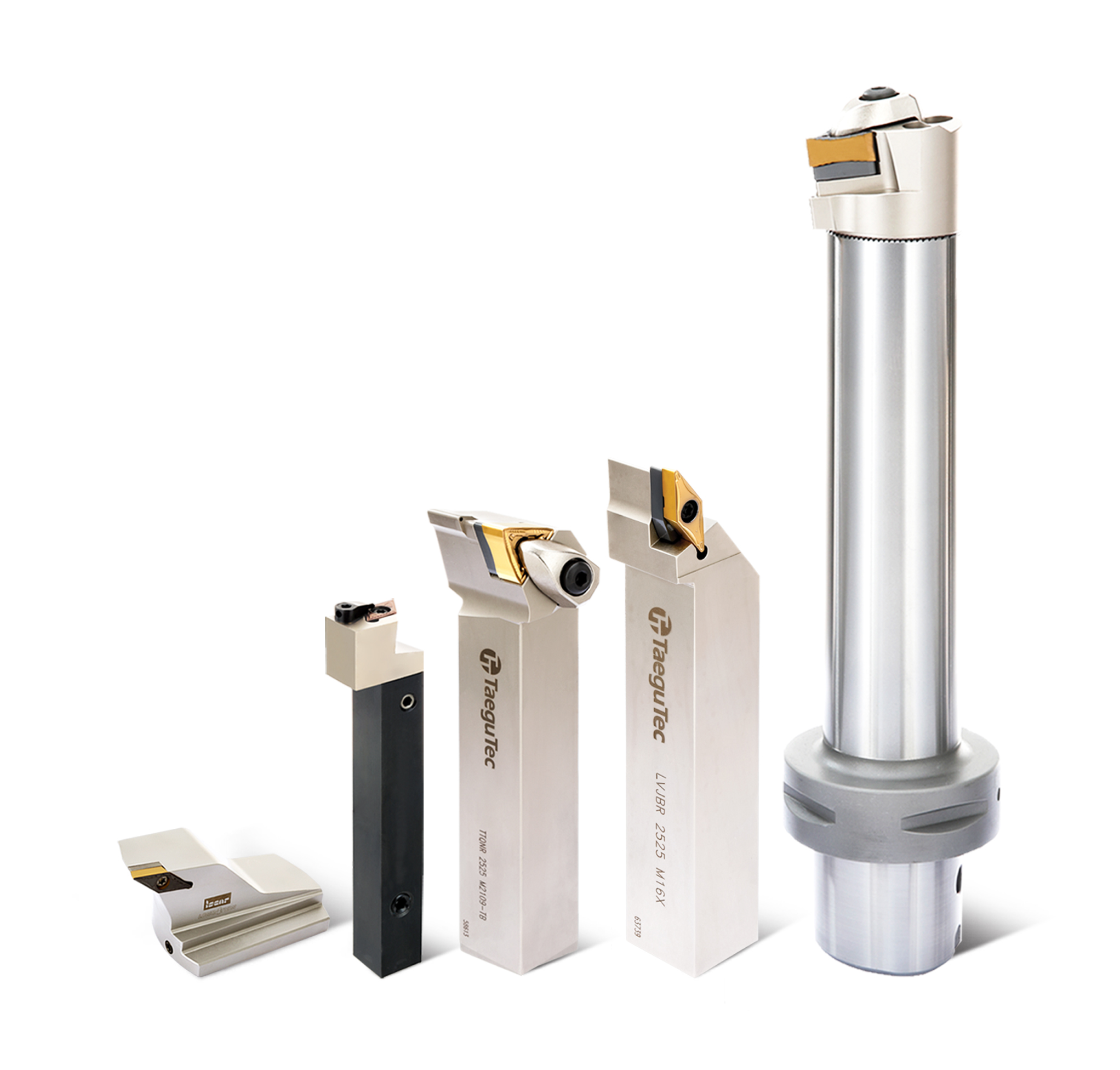
A few years ago, TaeguTec introduced its advanced line of performance-driven cutting tools specifically formulated for the Industry 4.0 revolution.

Just a short three years later, TaeguTec went further and improved upon the incredible performance of the SFEED-TEC line with its next-generation cutting tools. The premium WIN-SFEED line is a high-speed and feed machining marvel that gives customers that competitive edge with fast, accurate, productive and profitable machining.

Every family of tools under the TaeguTec banner is equipped with the potent, new WIN-SFEED cutting-edge technology. TaeguTec has also updated and renewed its current lines to exceed today’s challenges.

The global metalworking giant consistently collaborates closely with its clients to push the boundaries of product design and innovation in order to create highly useful and inventive tool solutions that go beyond current machining requirements and catapult clients’ manufacturing processes to an entirely new level of productivity.

The results of the manufacturers who have already benefited from the enhanced WIN-SFEED family of cutting tools have not only met customers’ expectations but exceeded them by increasing their production output.

Manufacturers who have already profited from the improved WIN-SFEED family of cutting tools said that the new line has not only exceeded their expectations by raising their manufacturing output but also fulfilled those goals.

Additionally, all alloys used in every industry may be simply machined using the new line of technologically superior WIN-SFEED tools. These tools feature innovative cutting geometries and clamping mechanisms for stable, vibration-free machining with improved repeatability. The real strength of this exciting new line, though, is how fast and effectively it handles materials that are challenging to cut.

The optimized new tools’ innovative cutting geometries and clamping mechanisms, as well as their complex chip formers and cutting-edge geometries, enable WIN-SFEED’s potent indexable inserts to generate soft cuts at high feed rates with ease.

Out of the inventive and inspiring product lines that include strong holders, resilient inserts, and robust cutters, a few exceptional brands have been chosen as TaeguTec’s flagship performers because of their unmatched and exhilarating Speed and Feed advance qualities that maximize equipment utilization and optimize performance.

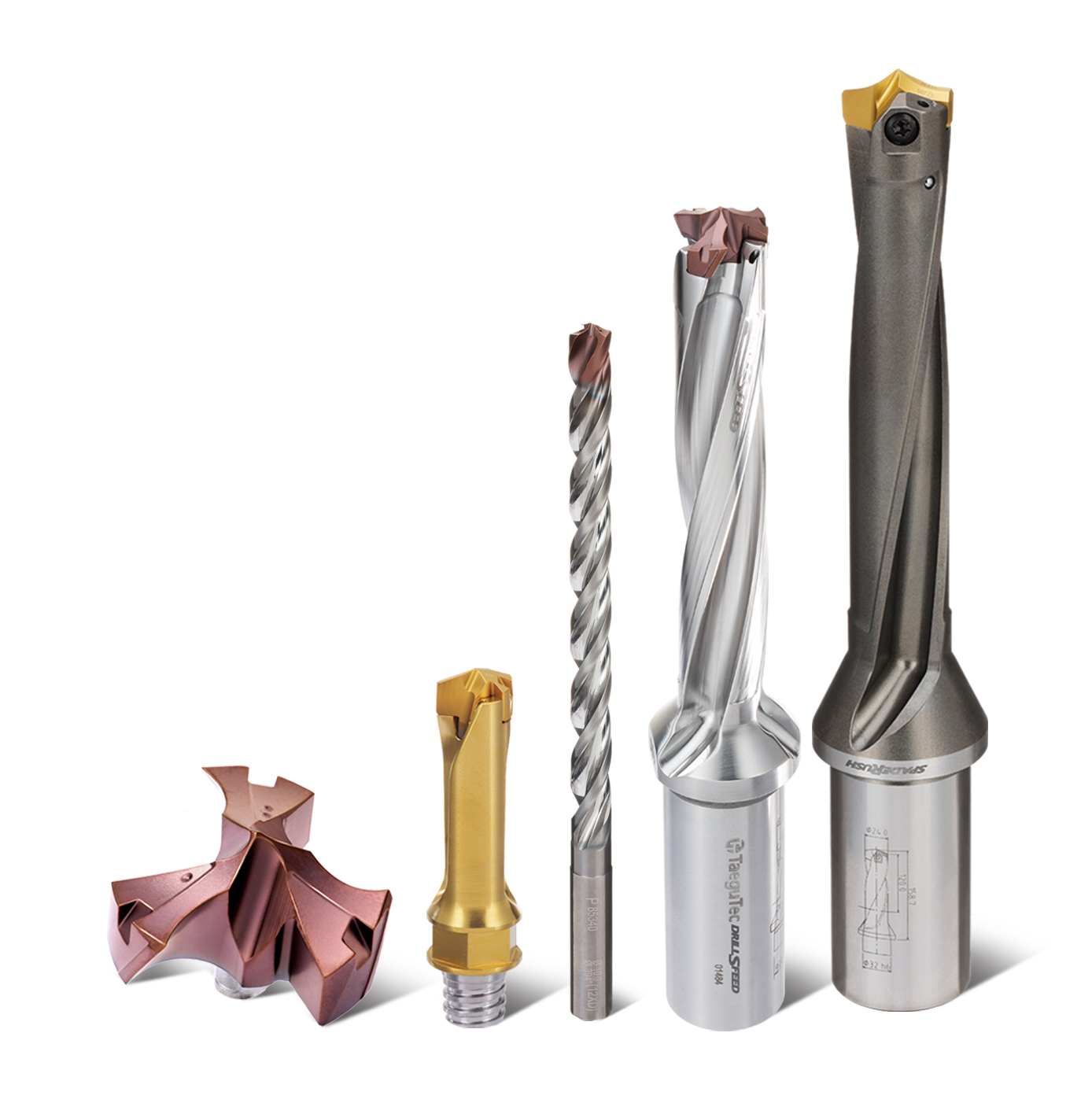
The smart head-changeable WIN-DRILL line comes with a unique, cutting-edge design that improves productivity as well as reduces the cost for small hole applications. Its features effectively make the WIN-DRILL family the most innovative small-diameter hole machining solution.

  • Small diameter: 4.0-5.9 mm
  • Available in two holder depths: 3xD and 5xD
  • Shanks are compatible with a wide range of diameter heads.
  • Excellent machining performance and high productivity
  • No set-up time and no head change offsetting required

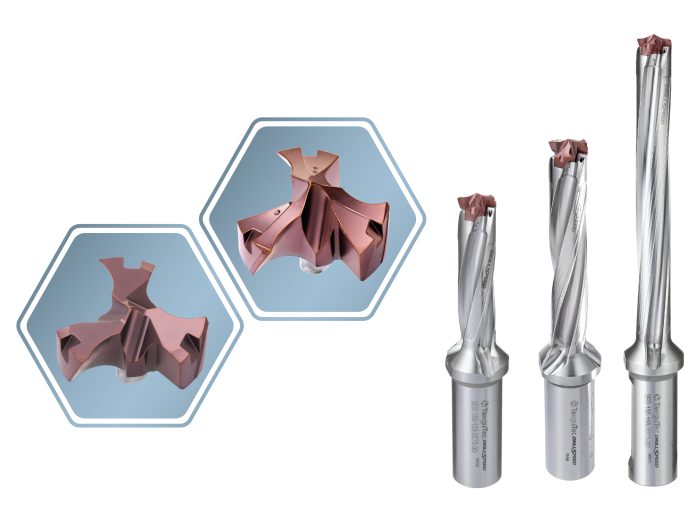
The DRILL-SFEED 3ED line is a 3-flute, head-changeable marvel that ensures superior performance and enhances machining stability during high-speed machining operations. Furthermore, its unique self-centring capability offers outstanding performance compared to conventional 3-flute solid carbide drills.

  • Self-centring P+ geometry and premium hole quality
  • Higher productivity thanks to 3-effective cutting edges
  • No set-up time with user-friendly clamping
  • New grade for high-speed machining
  • Diameter 12.0 mm-25.9 mm range

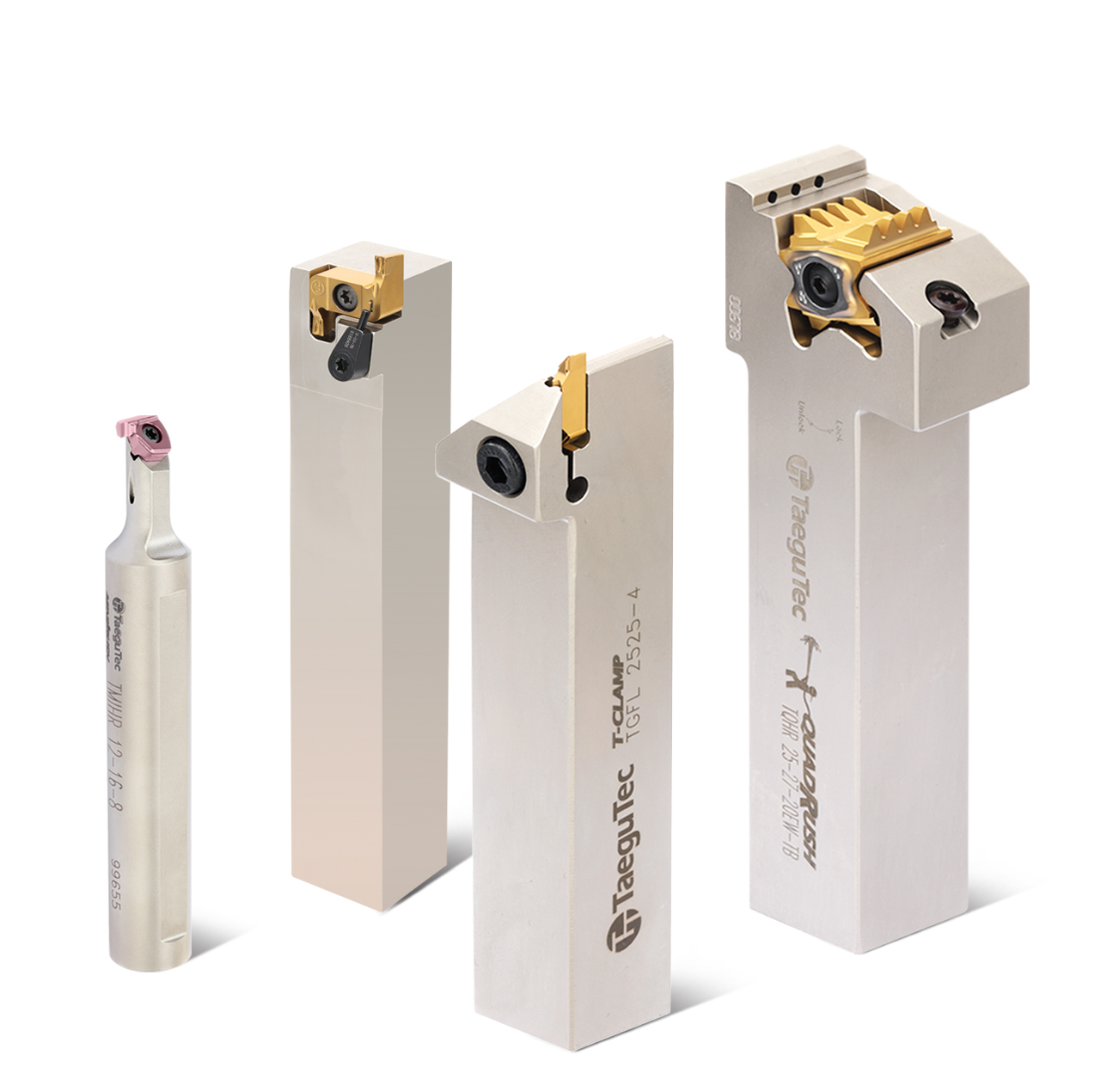
Milling solutions have been answered with the simplicity of use and remarkable power of the WIN-MILL line. TaeguTec’s premium WIN-MILL line, featuring AVKT inserts and dedicated holders, enhances productivity in the single-sided, two-corner shoulder milling insert market for diverse applications.

  • Insert’s V-shape contact face enables strong and stable clamping
  • Insert’s higher ramping angle for improved productivity
  • Higher insert rake angle over conventional inserts enables soft cutting
  • Along with being applicable to the same applications as the existing APKT type insert, it also features larger ramping that once applied, does not require lowering the feed when performing ramping down operations.

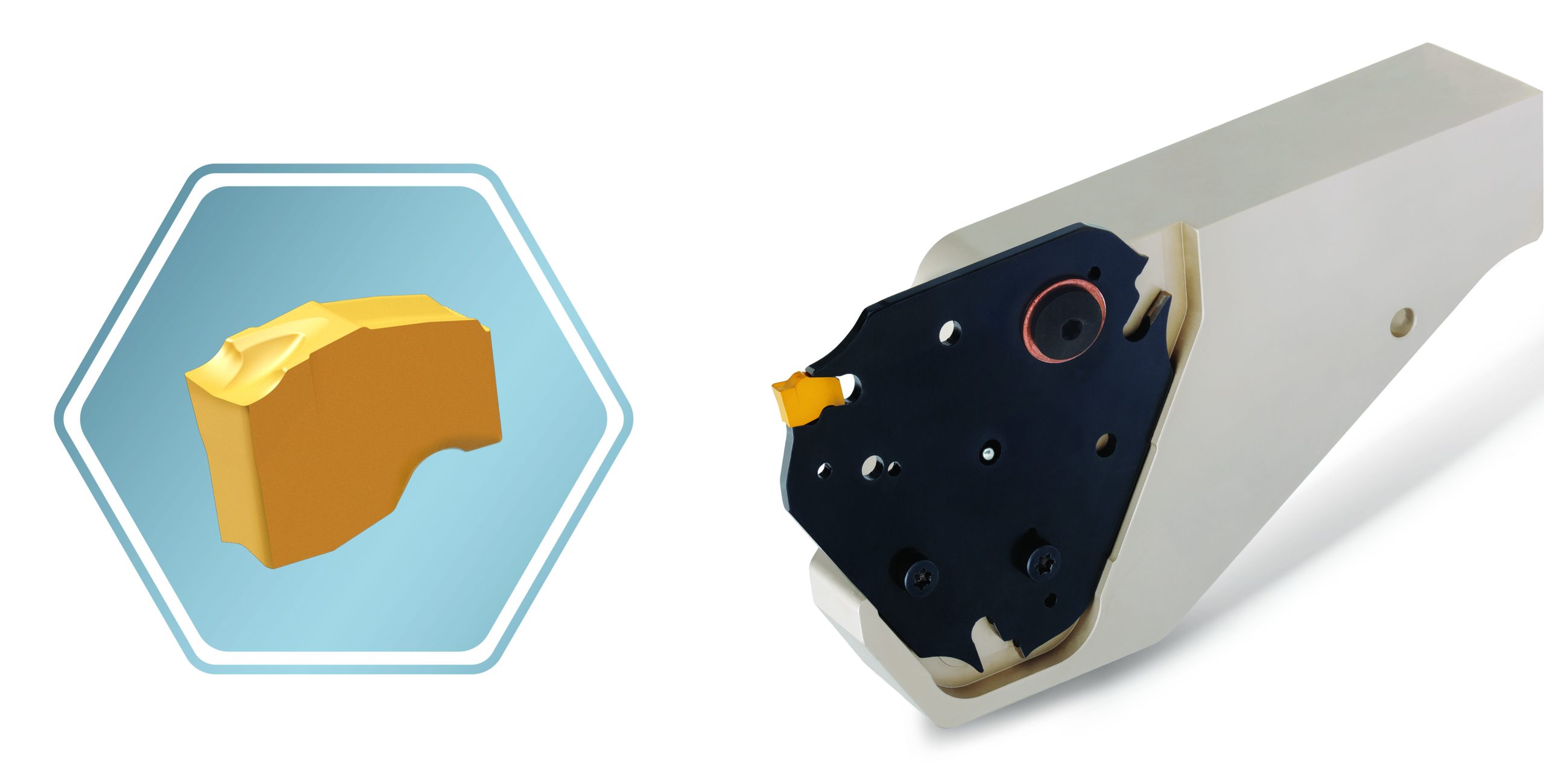
For parting and grooving applications, the ability to supply high-pressure coolant is imperative for good chip breaking, reduced cycle times and increased tool life.

Hence, end users looking for advancements in parting do not have to look any further than the WIN-CUT and CUT-SFEED lines. Both are designed as a thicker height insert and include a specialized three-area contact with a bottom stopper, which is more robust and stable than the conventional self-grip type. Therefore, it enables improved surface roughness, insert position repeatability and tool life even under tough machining conditions.

  • High-rigidity single-ended inserts for parting and deep grooving
  • Ultra-rigid 3-pocket triangular blades and blocks
  • High-rigidity blades and integral-type holders
  • Ultra-stable machining under general and unstable conditions
  • High productivity with high feed and stable machining
  • Good chip evacuation and tool life with high-pressure coolant
  • Maximum cutting diameter up to 120 mm

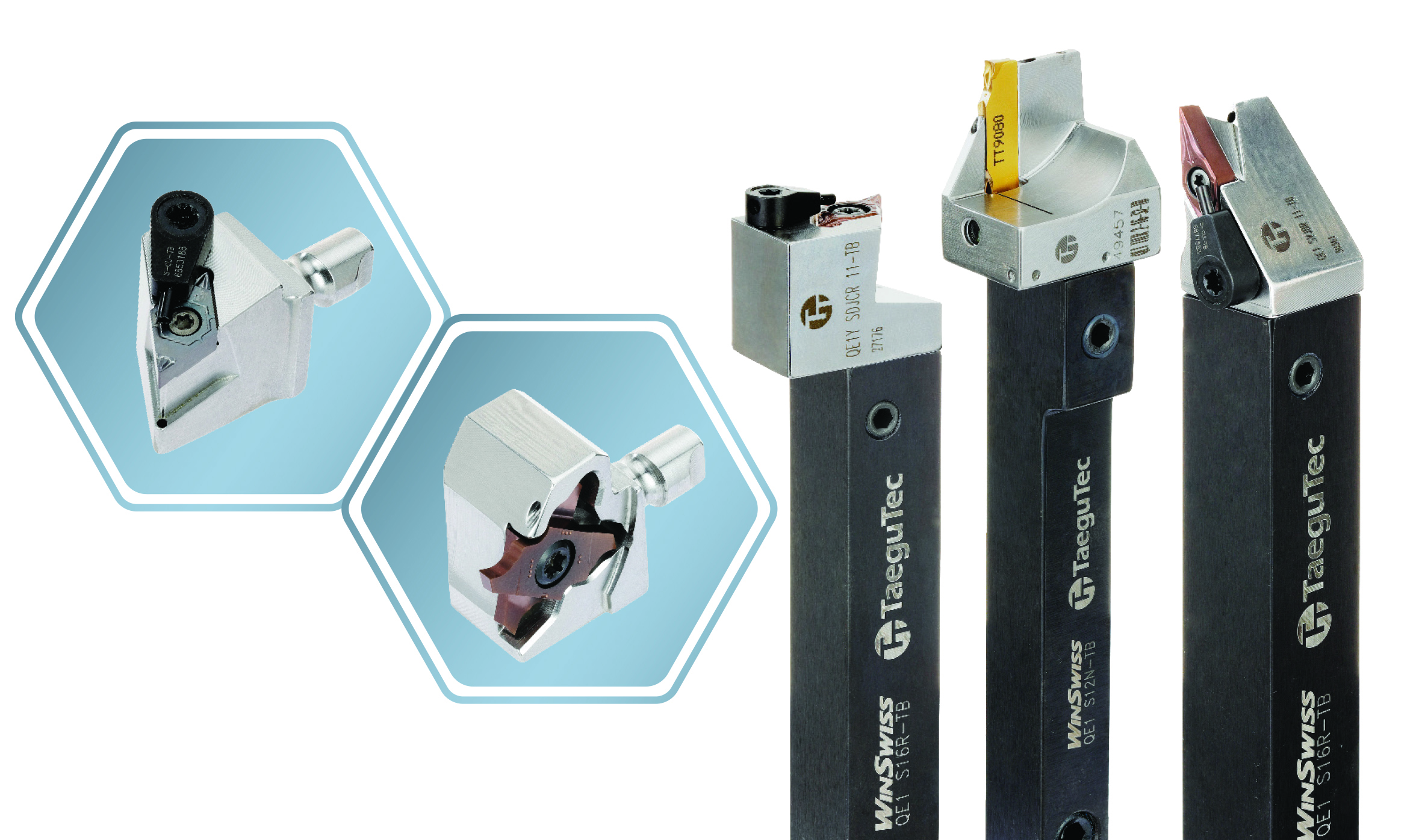
TaeguTec’s unique WIN-SWISS line, which specializes in turning operations, has piqued the interest of the miniature sector thanks to its creative technology, which enables inserts to be replaced outside of the machine by simply removing the modular head. Production is increased as a result of this tool’s decreased insert changing time.

Additionally, unlike the integrated holders, there is no risk of losing the holder’s spare parts and inserts by dropping them in the machine when replacing inserts, making the WIN-SWISS family more convenient to use.

  • Easy replacement of modular heads and inserts
  • Improved productivity owing to reduced set-up time
  • Rigid clamping between shanks and heads and good repeatability
  • Reduced inventory due to the ability to mount multiple heads on one shank
  • An error-proof modular head and shank assembly system

The innovative WIN-TURN provides high-productivity multidirectional turning without replacing the holder thanks to its 6-corner negative TNMV inserts and holders. Small entry angles, which enable increased productivity for both longitudinal turning and facing in the backward direction with a single tool, are the reason for its remarkable high feed feature.

  • The same rake angle as standard positive inserts when mounted to the holders
  • Serrated cutting edge enables excellent chip control
  • Multidirectional turning and multiple applications without exchanging the tool holder reduce downtime and increase productivity
  • High feed, backward solution that maximizes productivity
  • Forward machining maximum cutting depth is 3.5 mm, which completely replaces the function of CNMG 12 mm size inserts.
  • The same T-HOLDER’s simple clamping operation and strong clamping force

For more information please contact TaeguTec – Tel: 011 362-1500.

Visit TaeguTec

UNITED GRINDING GROUP LAUNCHES C.O.R.E. — CUSTOMER-ORIENTED REVOLUTION

When the public discussion about the fourth industrial revolution, Industry 4.0, intensified a few years ago, the UNITED GRINDING Group made the decision to invest more in the digital future together as a group — not only in the future of the group but above all the future of its customers. And thus the development of C.O.R.E. began. The aim and central focus of this development were to ensure increasing connectivity, i.e. the exchange of data between people, machines and the production environment plus to create the basis for the operation of modern IoT applications. In addition, an intuitive operation was to be enabled to make the work easier for machine setters, machine operators and maintenance staff. C.O.R.E. has turned this vision into reality in a revolutionary way.

Intuitive Operation

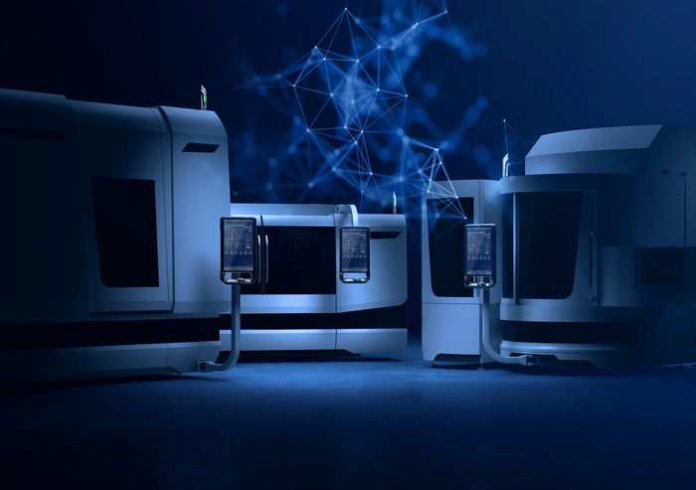
It is reminiscent of a gigantic smartphone: The 24-inch full HD multitouch display identifies the next-generation machine tools equipped with the new C.O.R.E. technology. Navigation works like on a smartphone, using “touch” and “swipe.” Customers can also configure the user interface according to their individual requirements and arrange the most important functions and operating displays according to personal preferences similar to the app overview on a smartphone home screen.

Thanks to the new access system, which works via a personalized RFID chip, the individual user profile is automatically loaded. This not only makes it easier to log in and out of the machine, but is also significantly more secure. Another advantage is that a  roles profile is stored for each user, so users only see information relevant to them, which reduces complexity and helps prevent errors.

When it comes to reducing complexity, it is also noticeable that the new C.O.R.E. panel has virtually no keys. There is a prominent rotary switch for feed rate override, allowing the axes to be regulated with a simple turn.

The uniform use of the C.O.R.E. Panel across all brands also simplifies machine operation and makes training easier, meaning that anyone who knows how to operate one UNITED GRINDING machine can operate all of them.

C.O.R.E. is “More than Just an Innovative Control Panel”

The eye-catching new control panel is, of course, only the visible aspect for machines equipped with the new C.O.R.E. technology. “There were also major innovative developments behind the machine enclosure,” stresses Christoph Plüss, CTO of the UNITED GRINDING Group. C.O.R.E. OS. A full operating system is installed on a high-performance industrial PC, the C.O.R.E. IPC which serves as an IoT gateway and is home to all software applications. C.O.R.E. OS is also compatible with all CNC controls used at UNITED GRINDING.

Furthermore, the new technology opens up a wealth of opportunities for connectivity. Not only can all machines with C.O.R.E. technology from the UNITED GRINDING Group be networked, but also third-party systems via implemented interfaces such as umati. This opens up direct access to UNITED GRINDING Digital Solutions’ offerings on the machine from remote service to the service monitor and production monitor. For example, support from the Group’s Customer Care Team can be requested directly at the C.O.R.E. panel. A chat feature ensures fast and easy support, and the integrated front camera even enables video calls.

Highest Benchmark – User Experience

In the development process of C.O.R.E., which lasted several years, software and process experts from all brands of the UNITED GRINDING Group pooled their expertise to design an unparalleled software architecture. “The user experience, i.e. the immediate experience of the users, has always been our top priority,” explains CTO Plüss. It is for a good reason that the abbreviation C.O.R.E. stands for Customer Oriented REvolution.

In the area of operating systems and software architectures of machine tools, C.O.R.E. is a quantum leap, emphasizes company CEO Stephan Nell. “This means that our machines are ready for the digital future.” The C.O.R.E. technology presented for the first time at the EMO 2021 in Milan is still under development. “It lays the foundation upon which we can build,” explains Plüss. “Development will continue on an ongoing basis. Thanks to the flexible, modular structure of the software architecture, we will continuously add new features and applications. We intend to harness the concentrated software development power of our group for the benefit of our customers.” Our goal is to inspire customers with a regular stream of new C.O.R.E. software releases and thus actively help to shape the digital future. In this way, the Group remains true to its ultimate goal of making its customers even more successful.

The industrial production of the future is connected. Machine connectivity is the key phrase. A number of requirements must be met before networking is either possible or usable. UNITED GRINDING C.O.R.E. – Customer Oriented REvolution ensures these requirements. “The digital future begins with C.O.R.E.,” stresses CEO Stephan Nell. The groundbreaking new hardware and software architecture was developed by the group’s specialists and premiered at the EMO 2021 in Milan. It opens up remarkable possibilities for networking, controlling and monitoring the production process and thus also for process optimization. And more: C.O.R.E. brings the user experience of operators into the world of the smartphone generation.

For further information, please contact RETECON – Tel: (011) 976 8600.
Visit RETECON

BYSTRONIC INTRODUCES THE LASER CUTTING SYSTEM FOR EXTRA-LARGE PARTS


Anyone who wants to cut large parts or quantities needs a large laser cutting machine – the new ByCut Smart 12025 with its possibilities is the ideal tool for this purpose.


The latest model from the ByCut Smart series is called 12025 and also represents the new generation of Bystronic laser cutting systems. This laser cutting system also impresses with its sharp and modern design with large capacity and laser powers for every need.

Plenty of power

After the “small one”, now comes the XXL machine – Bystronic brings the new ByCut Smart 12025 for optimum use of material. With a huge cutting length of up to 12.2 meters and a width of 2.5 meters, the ByCut Smart 12025 is an imposing presence. Thanks to the extra-large cutting format, one can effortlessly and quickly cut both very large and many small parts efficiently, thanks to outstanding nesting processes.

Bystronic’s latest laser cutting machine optimizes sheet utilization thanks to the 12025 cutting format, up to 15 kilowatts of laser power and the optional BeamShaper at an advantageous price.

The clever features make the difference

The laser cutting systems of the ByCut Smart series are extremely flexible and impress with their maximum configurability. Smart features such as the Nozzle Control Tool (NCT) and KerfScan, the Parameter Wizard or cutting with MixGas, in addition to plenty of laser power, ensure high cutting quality and also increased productivity.

Better access here, too

Like the 6225, the other member of the family, new, modern contours give the 12025 a sharp look to match the machine’s performance. Ease of use is greatly enhanced by the new design. In addition to the front access, there are several windows along the entire length with a direct view of the cutting process.

For more information please see www.bystronic.co.za or contact Bystronic on 010 410 0200.

Visit Bystronic