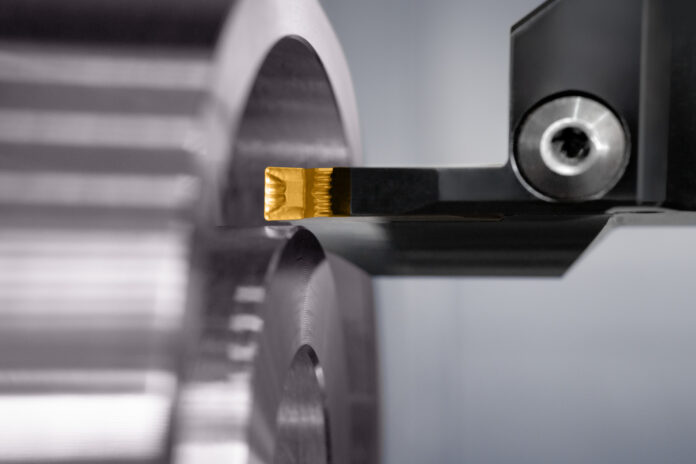
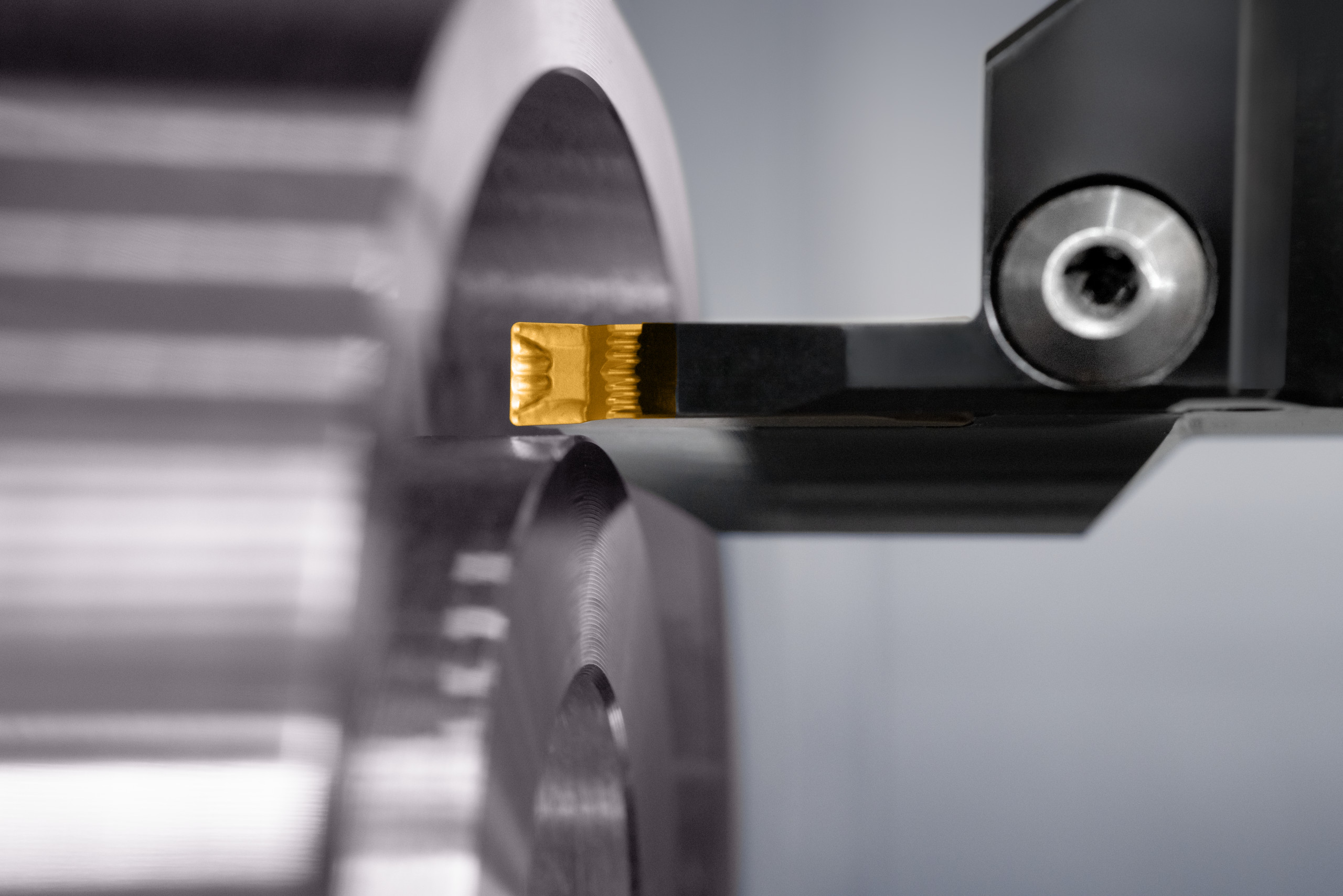
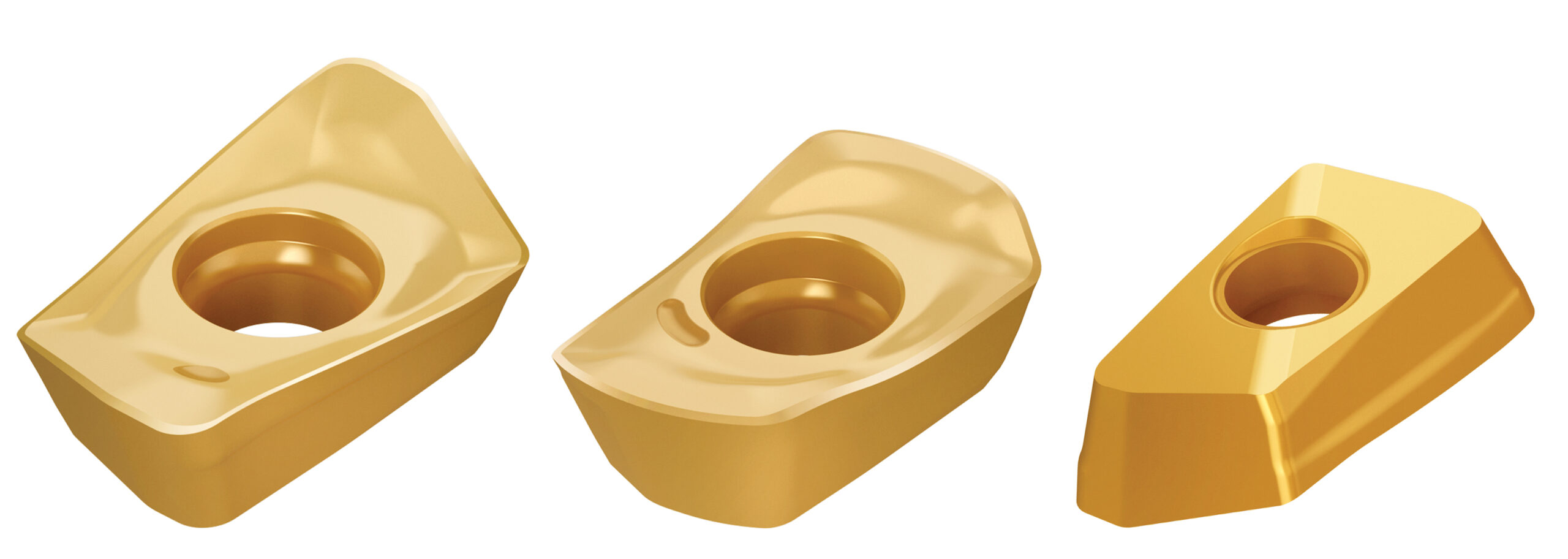
With the Groov·tec™ GD G5111 axial grooving system, Walter achieves significantly higher stability than conventional grooving systems thanks to the double-serration profile.
New Parting Blades and Toolholders complete the Walter Groov·tec™ program
Walter AG is completing its Groov·tec™ GD grooving tool range with new offering, making it universally applicable for all applications in grooving/parting-off, groove turning and copy turning. Reinforced G5041 and neutral G5042 parting blades are new to the range. Both variants are available with or without integrated precision cooling. The range is complemented by the G5111 axial grooving system and Walter Capto™ turning holders (C3-C6) for the G5011 Groov·tec™ GD grooving system for radial grooving. Walter now offers users a particularly flexible solution for radial and axial machining in all common materials from steel and cast iron to difficult-to-cut materials. The system also impresses with high process reliability and performance for deep grooving operations and complex geometries.
The comprehensive product portfolio enables the user to select a universal tool for almost all diameter ranges and machining requirements. The stable Groov·tec™ GD serrated profile sets new standards for maximum process reliability and stability, as it increases the tool life of the indexable insert and toolholder by up to 50 %, according to Walter.
At the same time, the double-serration profile enables simple and secure installation of the cutting insert and prevents it from being pushed out sideways during the operation, often a common problem in groove turning. The combination of integrated precision cooling and double-serration also allows significantly higher cutting parameters and thus contributes to increased efficiency. The same applies to the seven available, highly wear-resistant Tiger·tec® Gold grades (3 CVD, 4 PVD), which further increase productivity. Walter offers new Walter Capto™ lathe holders G5011-C for radial machining with insert widths of 3-6 mm. Axial machining operations up to a cutting depth of 25 mm can be carried out precisely and reliably with the new G5111 tool. Walter offers the new G504 parting blades in neutral or reinforced versions, with self-clamping or screw clamping.
With the Groov·tec™ GD G5111 axial grooving system, Walter achieves significantly higher stability than conventional grooving systems thanks to the double-serration profile.
For more information, please contact Spectra Carbide Tooling Technology – Tel: 021 555 4144.
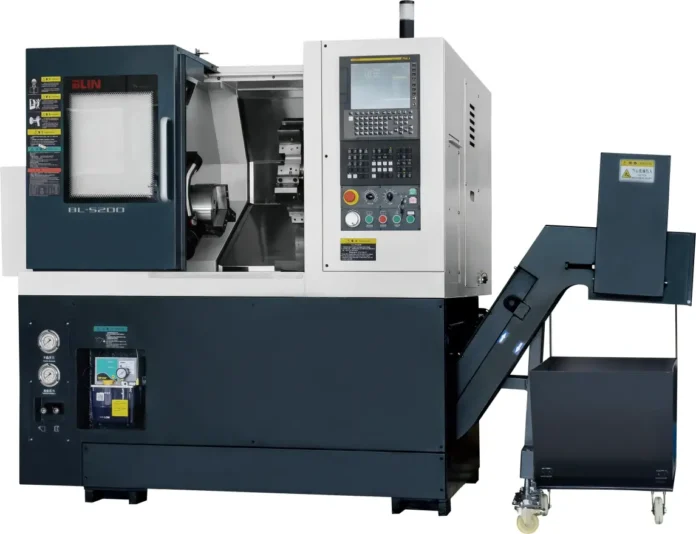
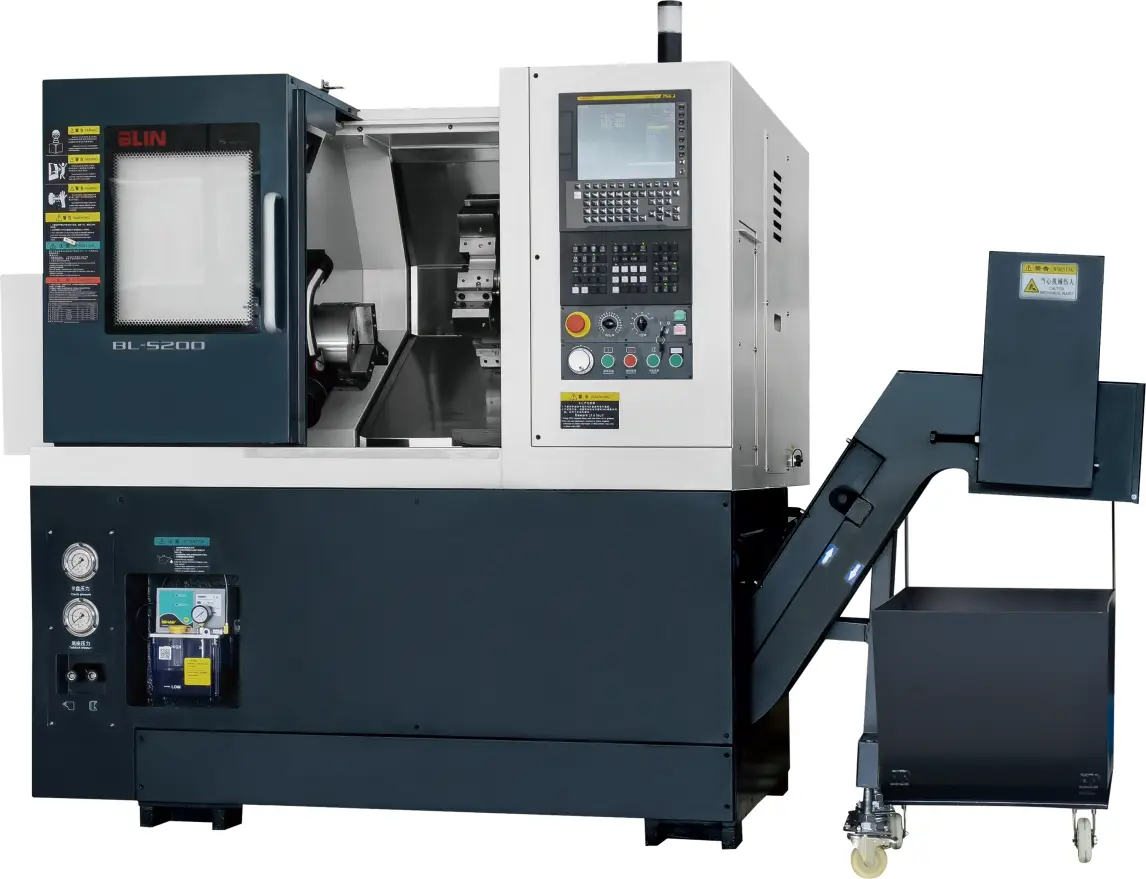
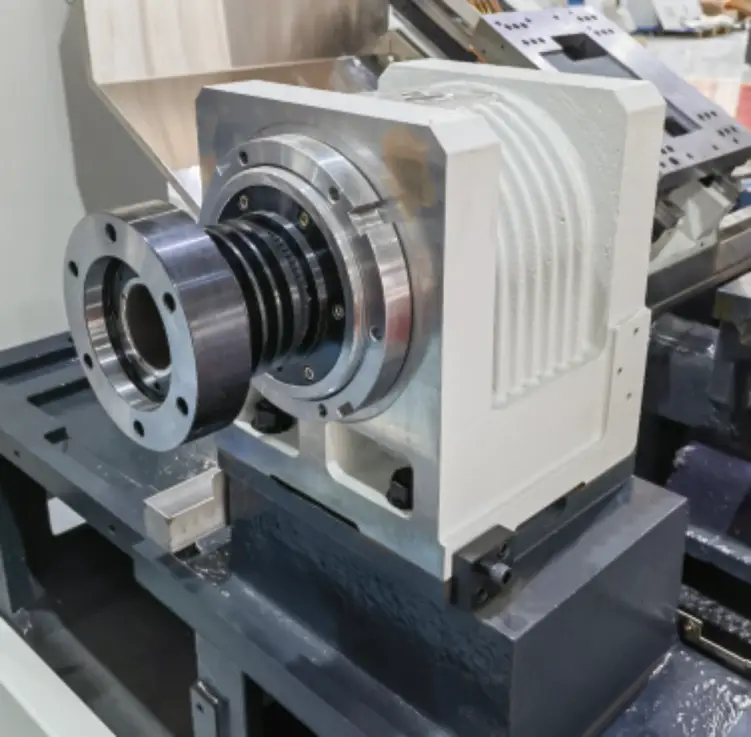
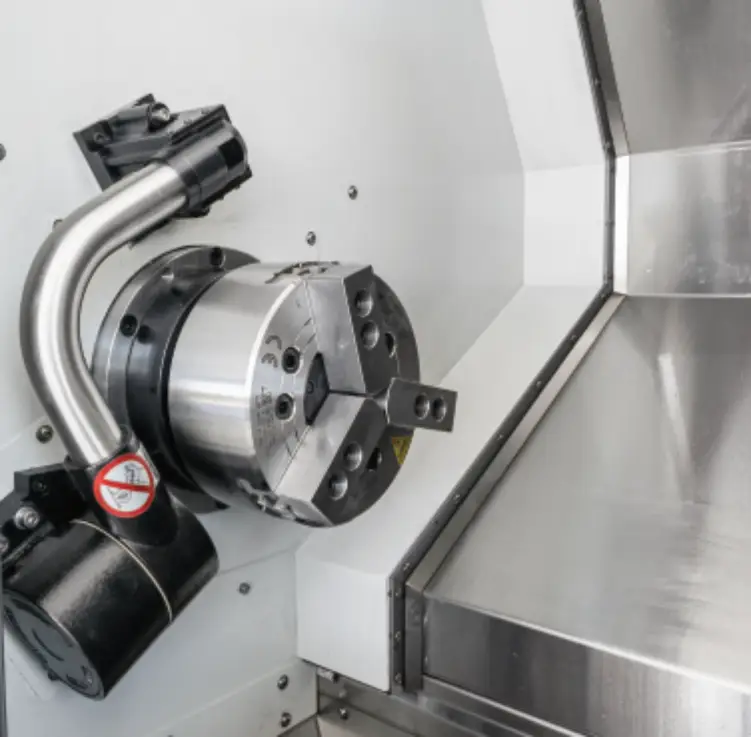
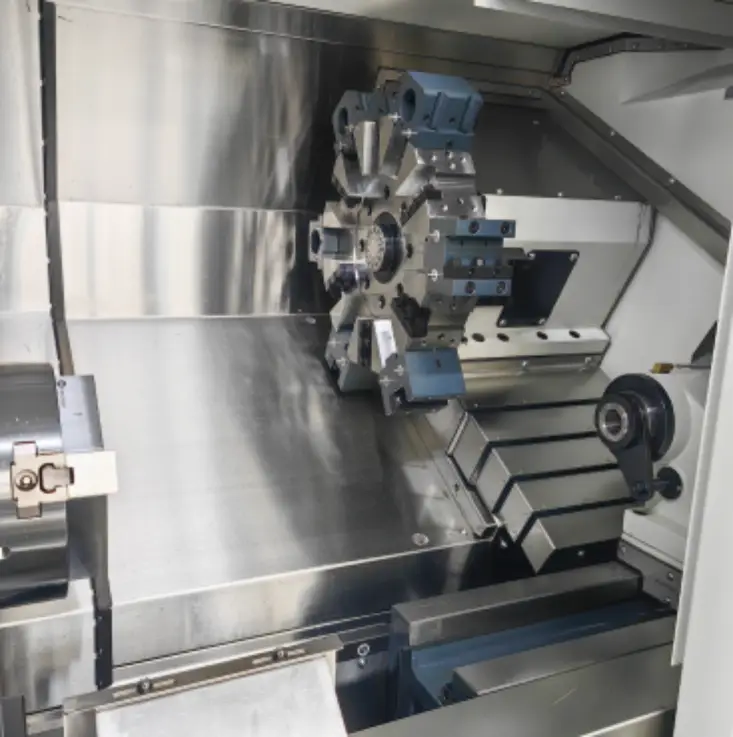
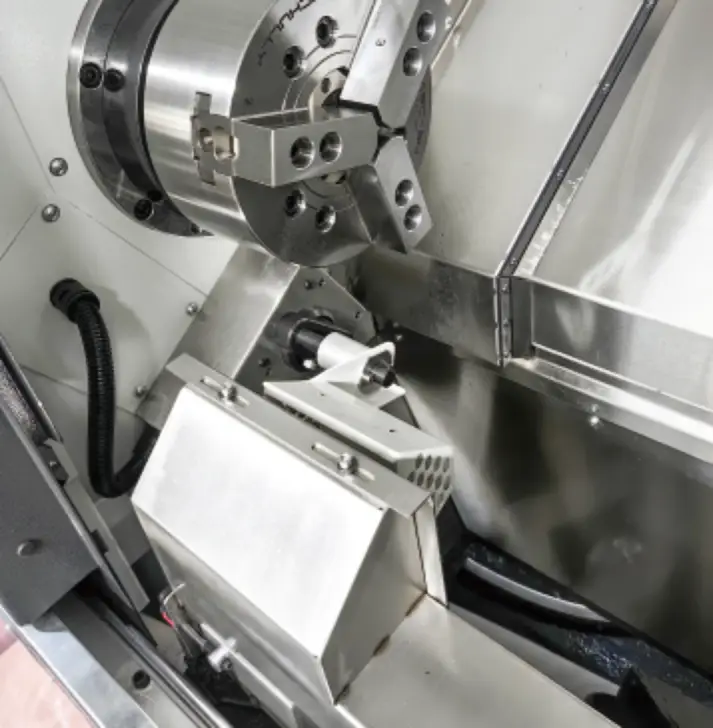
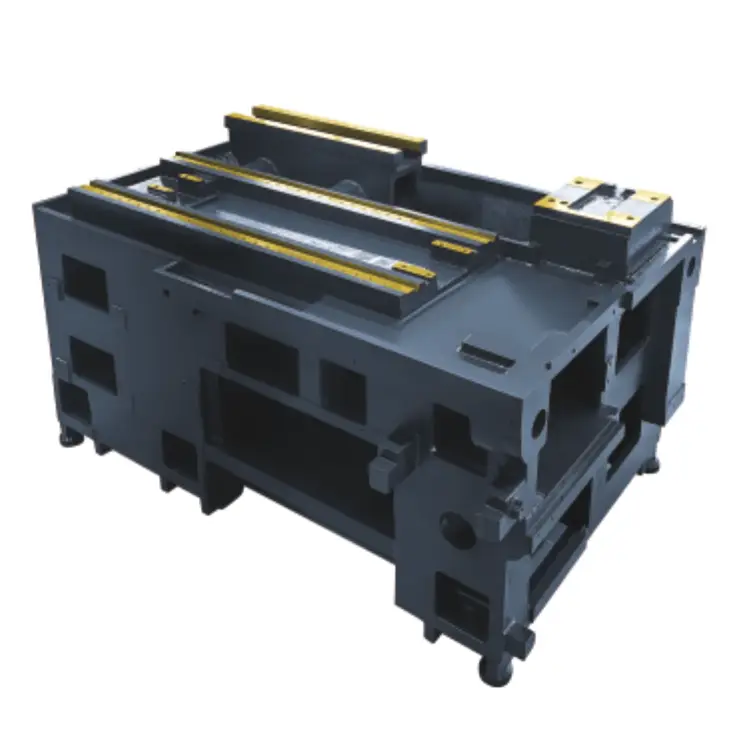
BLIN MACHINERY is a highly reputed Machine Tool manufacturer and exporter in CHINA. Blin’s main products are CNC turning machines, CNC milling machines and CNC drilling and tapping machines.
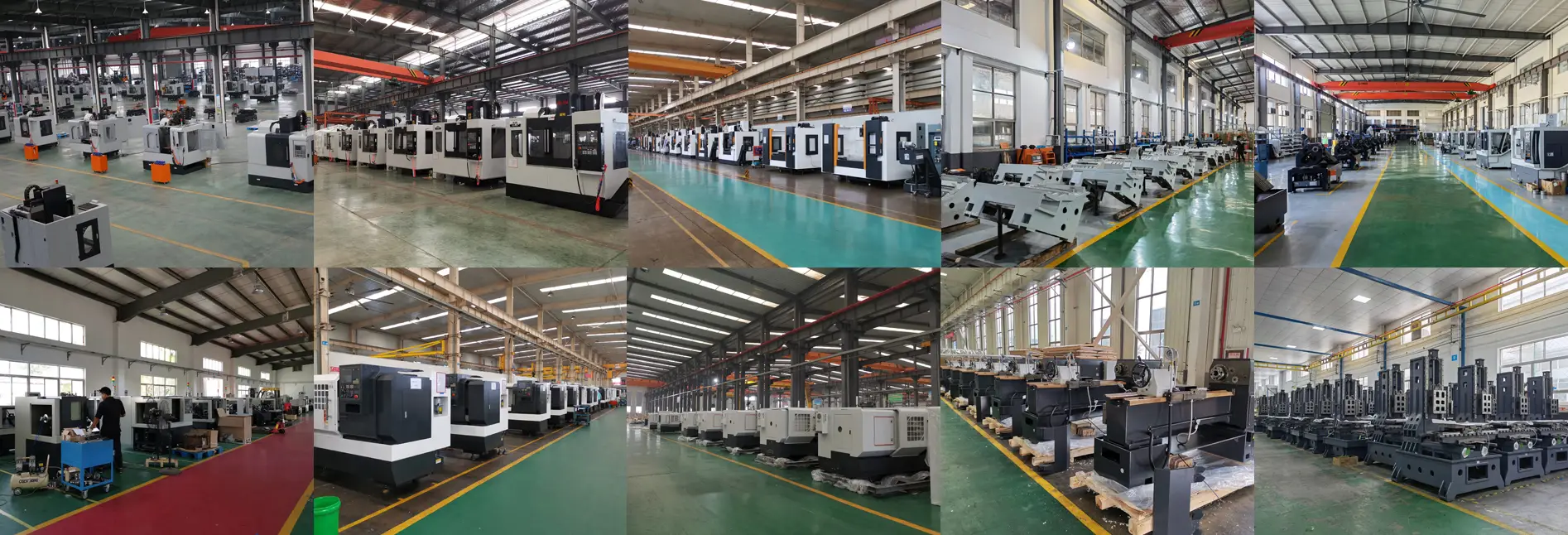
The company has three manufacturing bases in China, covering 40000㎡workshop space with more than 40 years history in machine tool manufacturing. Blin cooperates with German and TAIWANESE specialists, including a set up Design& Research Center in TAIWAN. Blin has an export sales Center in NINGBO City, including warehouse and showroom covered areas.
By Barry Page, Sales Manager, Amada – Johannesburg
The ever-growing need for streamlined production has resulted in companies looking for unique methods of manufacturing with faster production times, less human intervention and ultimately less cost. Labour costs play a massive role in production and the faster a product can be produced, the better the profits.
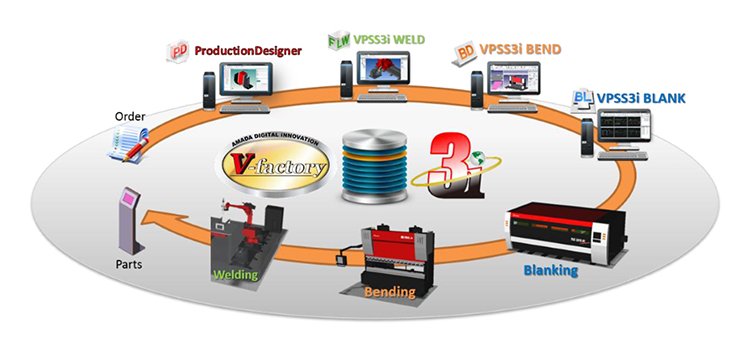
In the sheet metal industry, this is a difficult target, due to the various stages of production required such as designing, programming, blanking, bending, welding, grinding, painting, assembly, testing and packaging. These various processes are each a headache on their own.
Automation plays a big role in streamlining processes of manufacturing by simplifying processes as well as reducing human intervention.
Blanking – Beginning with the blanking process, the designer needs to have a good understanding of the completed product and its intended use or application. This person also needs to have a good understanding of the machinery being used as well as their distinctive capabilities. They also need to understand the materials being used in the manufacturing process.
The automation process begins in the office with the use of a CAD drawing system. Rendering a 3D model in Amada’s Sheetworks 3D software, the full product can be viewed, operated / animated and broken down into single part items. One drawing is now able to program either the punching, bending or laser operation without having to duplicate anything, thus already saving manpower and effort. This process eliminates trial production and the waste of materials, time and resources.
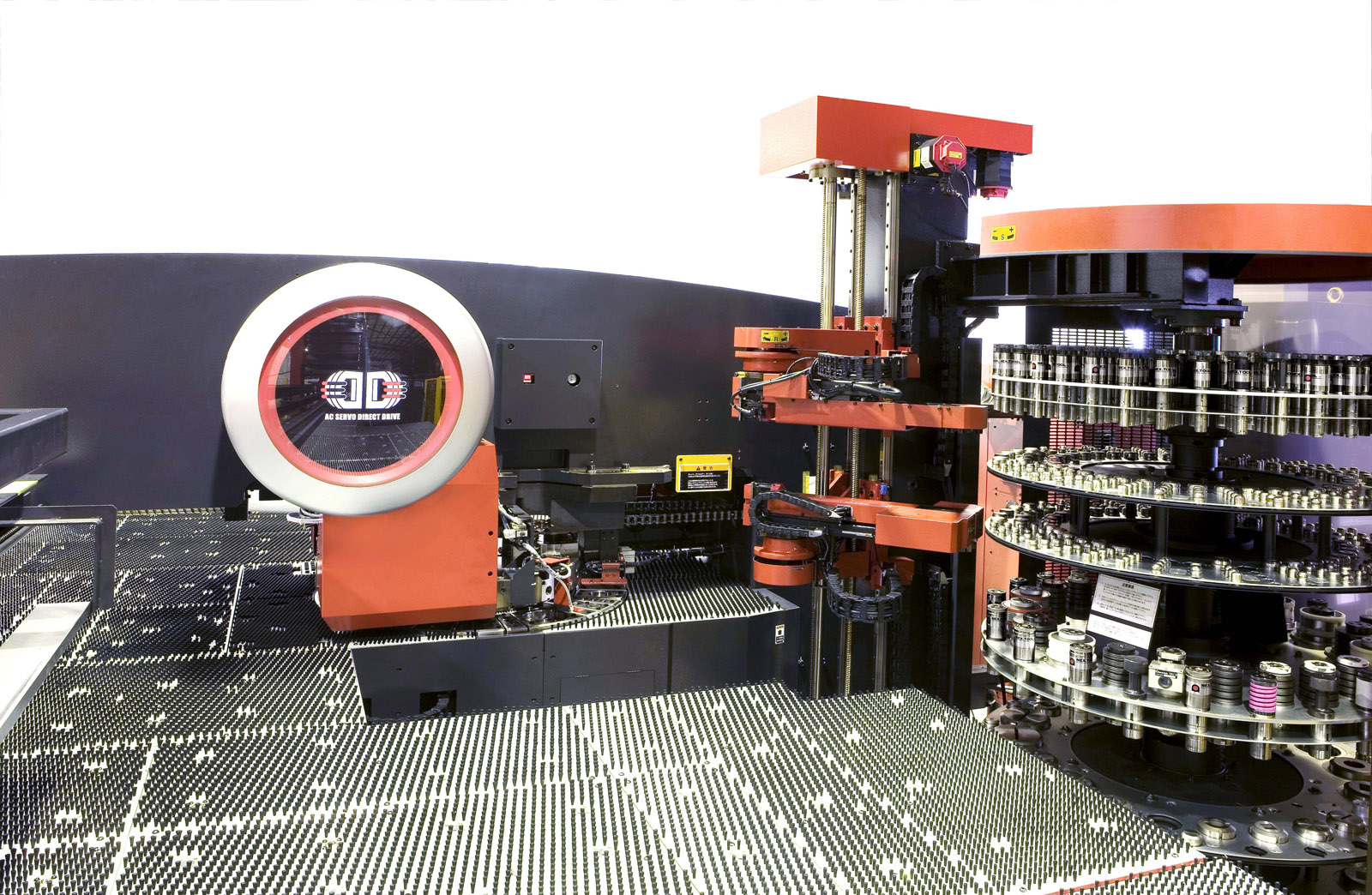
Automated tool change & setup – The options of the Amada PDC (Punch & Die Changer)- holding up to 220 different tools each with 2 dies or the TSU (Tool Storage Unit) – holding up to 300 tools each with 2 dies, will automate the loading and unloading of tooling between jobs on the punching machines or laser / punch combination machines.
The tooling is scanned when loaded into the “magazine”, thus tying it up with the programming software. Each time a tool is selected to be loaded, it is again scanned by the machine to ensure it is the correct tool and at the correct orientation before loading into the turret. The human error factor is thus eliminated.
Automatic tool hit count on the blanking machine will notify the operator when the tool is due to be re-sharpened, ensuring continuous quality production.
Proto-typing – Ultimately, all proto-typing can be done on a PC in the 3D environment, allowing the customer to sign off for the start of production before a single part or sample is physically produced. The process from creating the drawing to tool fitting and programming and simulating is executed by a few clicks on the PC mouse. The automated system will then separate material types and material thicknesses, it will nest the parts according to the quantities required and parameters set, then it will program the layout accordingly for the selected blanking machine.
Easy program transfer – Once completed at the programming stage, the programs are transferred from the database to the machine control by means of a job card with a bar code attached. The use of a bar code scanner at the machine control will instantly display the program and render it immediately available for production to commence.
The scanning of the barcode will ensure that production throughput is handled in the correct sequence as required, thanks to the ability of the programmer who creates a production schedule according to assembly or delivery needs.
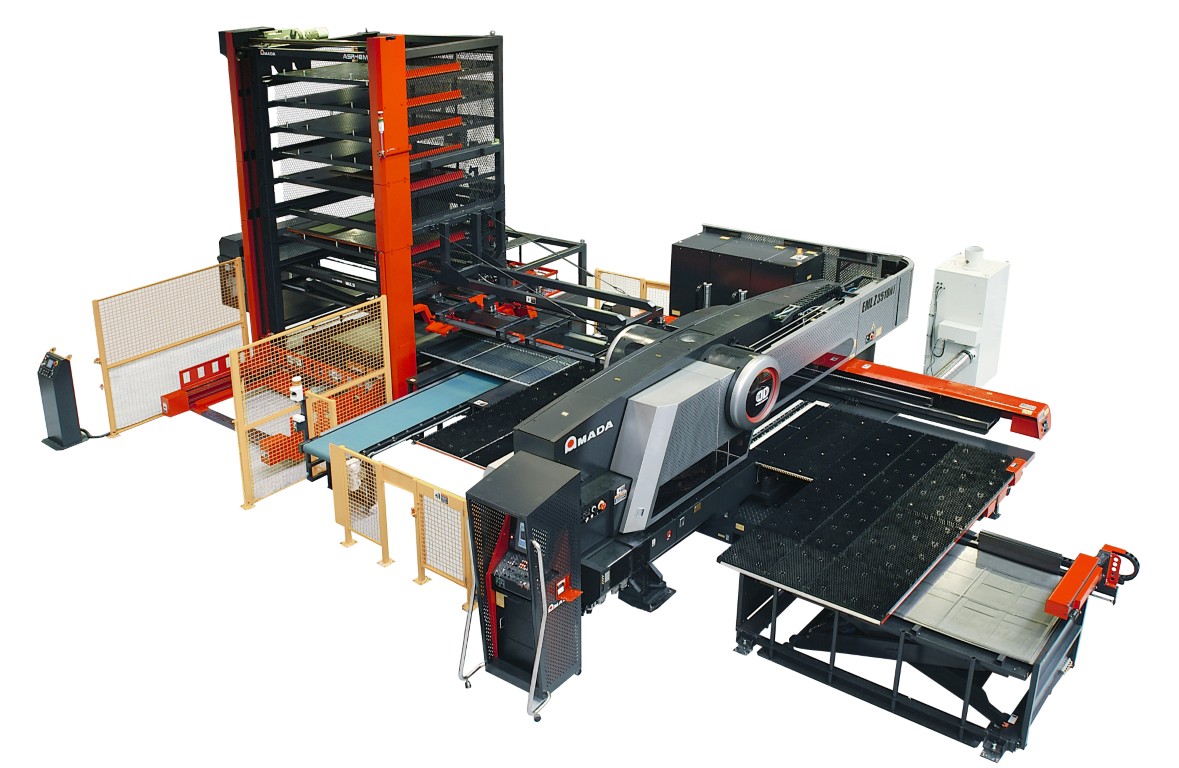
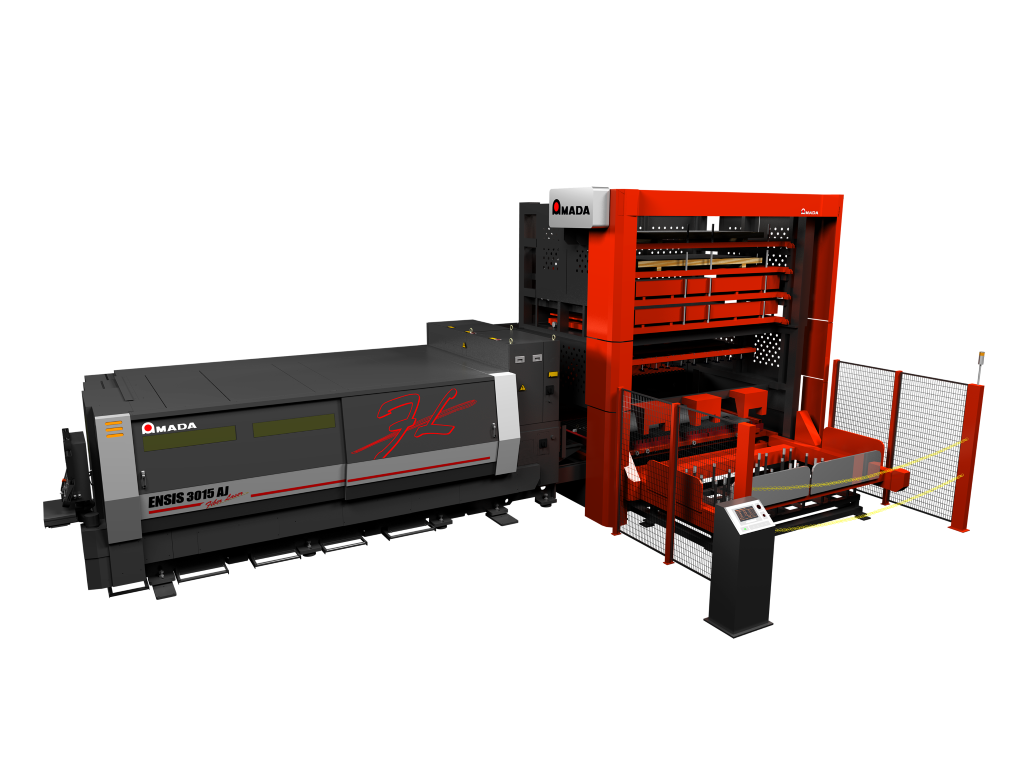
Automated machine attendance – Once ready to begin with the actual production, there is an additional automation option for material storage and material handling, too. These automation (retrofittable) systems – ASFH or ASR (Tower Storage Systems) and MPL (Material Manipulation System) are capable of loading the raw material sheets onto the table of the blanking machine after confirming the sheet thickness, ready for production to begin. All of this is possible without the operator having to touch the sheet.
Automated sheet removal / part sorting – Once the sheet has been processed, it is off-loaded by means of the manipulator system. It then is either stacked on a pallet, complete with skeleton and parts or it can be separated by means of a “TK” system. This “TK” (Take Out) system is ideal for the removing and sorting of cut parts from a nested sheet. The part “picker” will remove each individual part from the skeleton by means of numerous individually controlled suckers and will place them onto different stacking pallets, thus sorting parts for different customers or for different secondary processes. Different customers’ parts that were nested together on one sheet can easily be sorted without any human intervention. Continuous, unmanned production is now possible around the clock.
Repeat production of the same components is simplified, thanks to the electronic storage of all machinery setup data in the VPSS database, processing sequences, tooling requirements and bending data are all stored for future need.
Once the blanking process is taken care of, it becomes a bending issue. This is where the final products’ appearance and appeal will come to light.
Bending automation – Bending can also be automated according to the customers’ needs by utilizing Amada’s VPSS4ie Bend Software and creating all bending programs from the initial 3D drawing that was used in the blanking process. Sequencing and tool fitting is done on the PC automatically and allows for human intervention / over-ride. Program simulation on the PC eliminates trial bending on the machine. The “teach’ function on the control of the bender will assist and indicate the precise positioning of each tool as required, while prompting the operator through the bending process.
Automated tool load / unload – In the case of the ATC (Automatic Tool Changer), the machine will automatically load and unload tooling as required for the bending job at hand. The ATC automated tool placing function will drastically reduce setup times between jobs as it can load a full three meters of top and bottom tooling in just 3 minutes.
Suddenly the small batch production runs or single part production becomes a different game and a faster process with far less down- time.
Robotic bending – For long constant production runs, robotics are available to replace operators, thus ensuring continuous around the clock bending. The robotics are ideal for constant bending of the same parts or very large production runs. These systems are available in a variety of sizes of machine capacities, from the very small robotic systems on the EGB press brakes, right up to the large, heavy duty press brakes handling parts that are too heavy for the operator.
The age old saying goes, “every sport has its injuries” and this saying bodes so true in the production environment of a busy workshop. Traceability and accountability is the next headache and is key to any successful production system.
Automatic production feedback & traceability – Amada can now also offer their “My V-Factory” production monitoring software package. This monitoring system is linked to the Amada equipment on the shop floor and provides feedback on the status of the equipment being used. Things like production times, set-up times, alarm times and stand-by times are all recorded and allow constant monitoring of the productivity of individual machines. Continuous problems can be identified and attended to, in order to streamline production.
The remote log-in from an authorized mobile device allows authorized personnel to stay up to date and to keep customers updated on the progress of their production when deadlines are tight.
Automatic satisfaction – All equipment supplied by Amada is designed, developed and fully supported by Amada directly. The Japanese ethos of quality and reliability resonates through the thousands of machines supplied and hundreds of satisfied customers around the world.
With this total solution, ONE company supplies everything, all support is in-house and everything is programmed through a central Amada data-base (VPSS4ie).
Amada’s dedicated sales, applications and service teams are eager and available to explain and demonstrate the full Amada solution at your request and at your leisure.
For more information, please contact Amada – Tel: 011 453-5459.
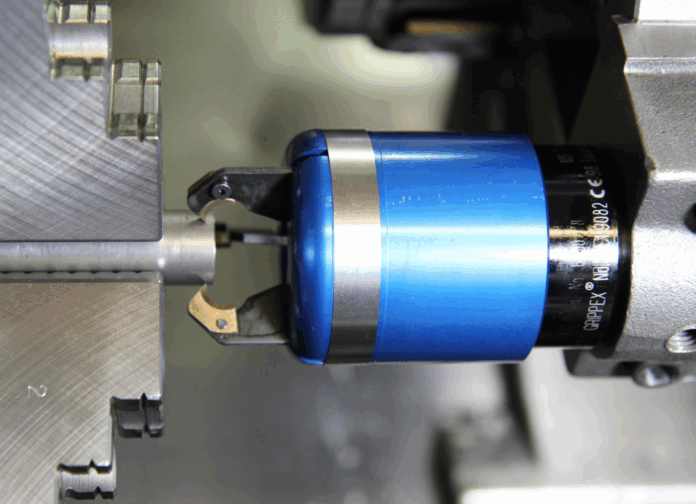
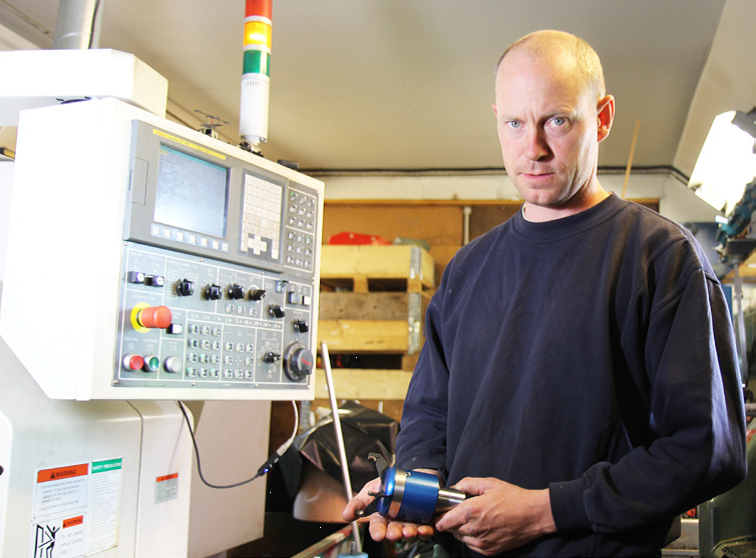
Grippex is the bar puller that makes a CNC lathe more effective right away
For various reasons, such a high costs or limited floor space in workshops, a small percentage of the CNC lathes are equipped with some kind of magazine-type bar feeder. In small-batch production, however, the machine spindle itself, in addition to its inserted guiding tube and Grippex, provides you with a simple and highly efficient bar feeder.
Highlights include instant setup and gripping secured without any adjustment within the whole gripping range. The pick-up unit is compact and light and adjacent turret tool positions need not be empty. While powerful and standing high pressure up to 20 bar, Grippex doesn’t need high pressure for pulling properly. It can work from 0,5 bar onward.
Grippex clamps very close to the chuck, allowing short overhang of the bar, while clamping hexagon bars without need for spindle orientation. It can also be used as a pick-up unit with robot jaws.
For more information, contact Duncan MacDonald – Tel: 011 865 4090.
In the competitive landscape of South African manufacturing, efficiency and cost-effectiveness are paramount, and the manufacturing sector in South Africa is diverse and dynamic, encompassing industries, such as automotive, aerospace mining and heavy machinery. These industries are pivotal to the country’s economic growth, providing employment opportunities and contributing significantly to the GDP. However, they face challenges such as rising operational costs, the need for technological advancements and global competition.
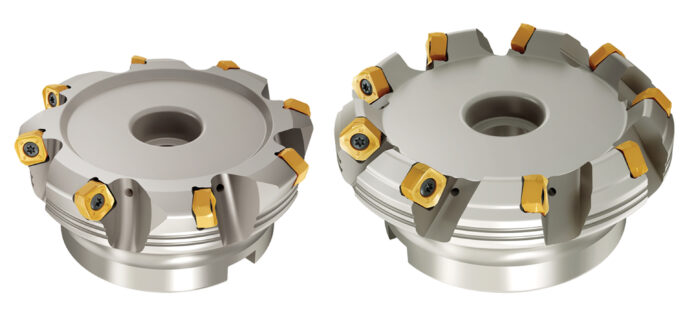
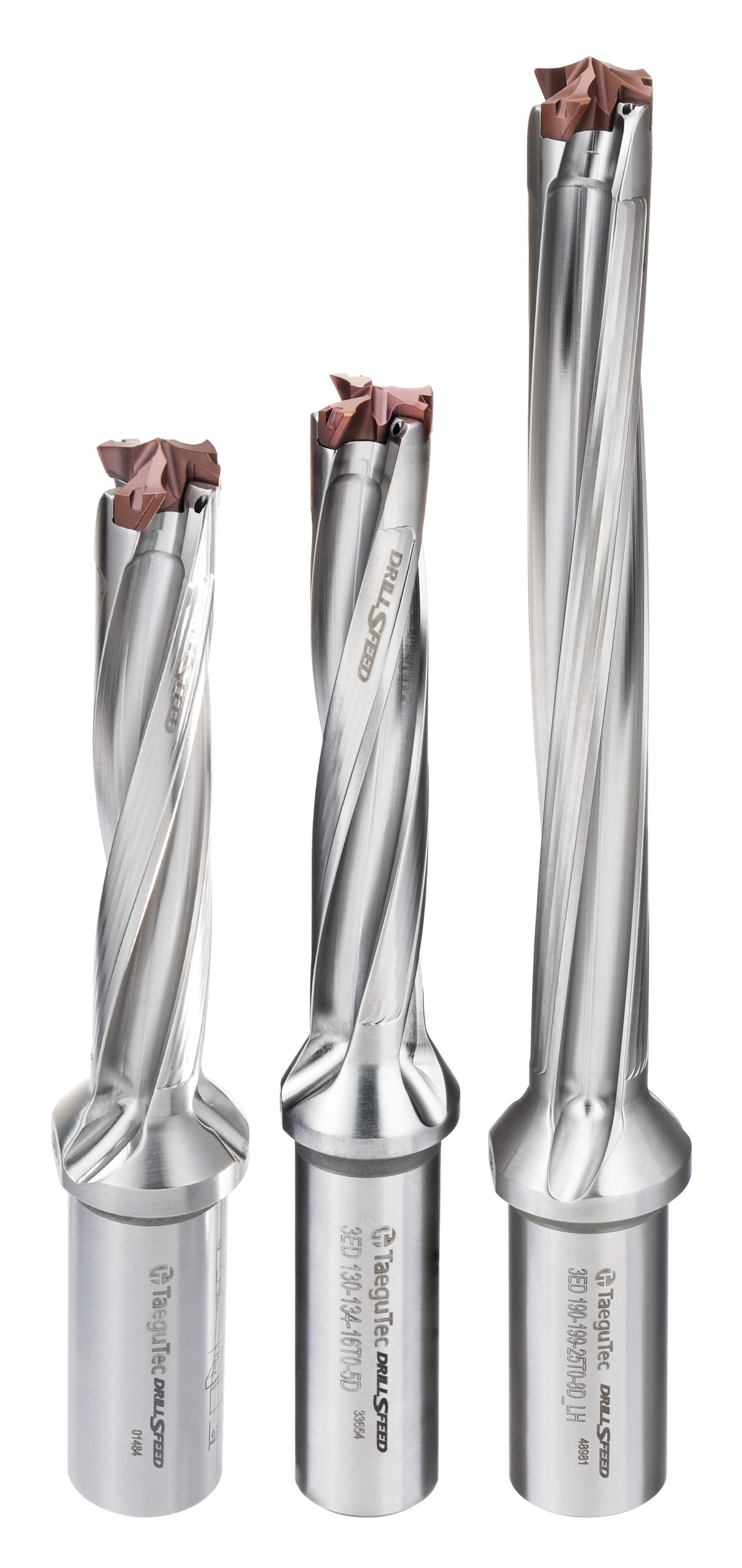
To thrive in this environment, South African manufacturers must adopt innovative solutions that enhance productivity and reduce costs. TaeguTec’s cutting-edge solutions include the SOLID-3-DRILL, DRILL-SFEED, RHINO-TURN, SFEED-BARREL, CHASE-8-SFEED and WIN-MILL lines.
These innovative tools are designed to revolutionize machining processes, offering unparalleled benefits that can significantly enhance productivity and reduce operational costs.
SOLID-3-DRILL – Precision and Performance
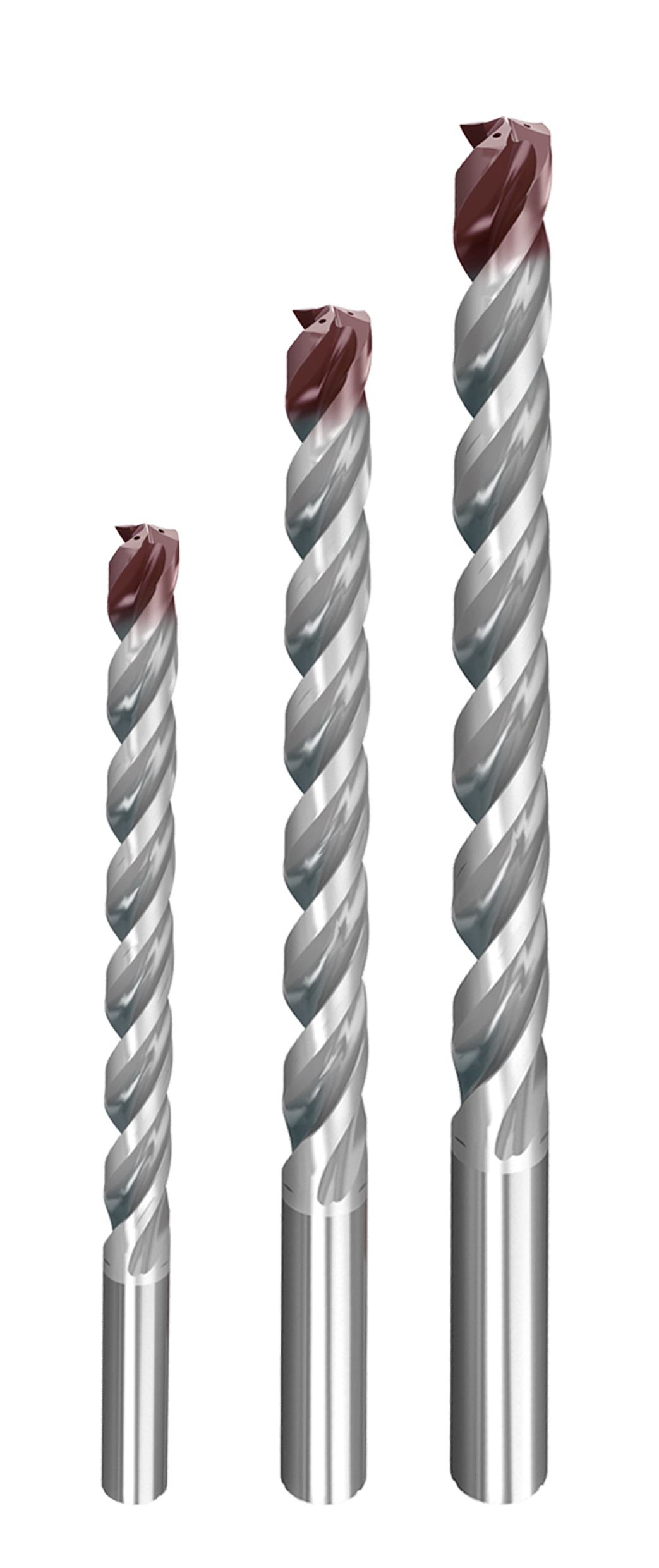
The SOLID-3-DRILL is a game-changer for industries, requiring high-precision drilling. Its higher number of teeth increases productivity, while its unique three-flute design ensures superior chip evacuation, reducing cycle times and enhancing hole quality.
This drill is particularly beneficial for industries, such as automotive and aerospace, where precision is non-negotiable, as well as for companies that demand excellent performance in steel and cast iron machining. By minimizing tool wear and maximizing cutting efficiency, the SOLID-3-DRILL helps manufacturers achieve higher throughput and lower per-unit costs.
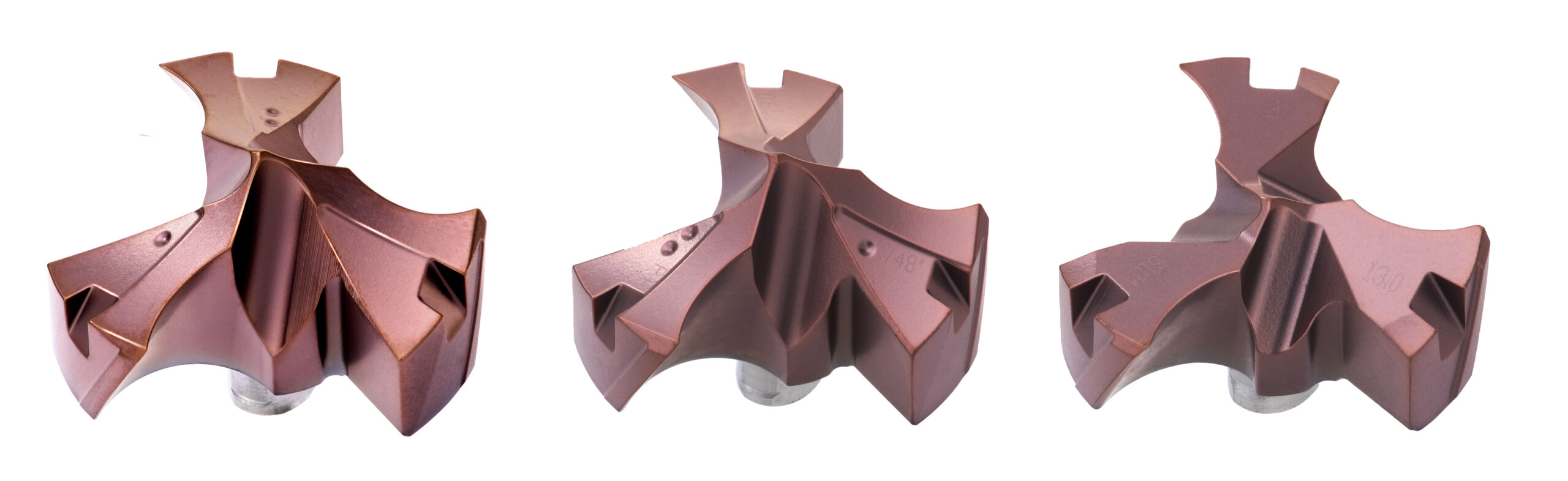
For industries looking to boost their drilling speed without compromising on quality, the DRILL-SFEED is the ideal solution. This high-feed drill is engineered to operate at higher speeds and feeds, significantly reducing machining time. Its robust design, strong cutting edges and latest coating technology combine stability, longevity and high productivity, making it a cost-effective choice for high-volume production environments.
By reducing cycle times and increasing tool life, the DRILL-SFEED enables manufacturers to meet tight deadlines and reduce overall production costs. Its original clamping structure allows for the simple replacement of drill heads, as well as varying sizes of heads onto a single tool body, thus facilitating economical end-user drill stock management.
RHINO-TURN – Versatility and Durability, Small but Strong
Turning operations are a critical aspect of many manufacturing processes and the RHINO-TURN line offers unmatched versatility and durability. Designed to handle a wide range of materials, from steel to exotic alloys, RHINO-TURN tools provide consistent performance and extended tool life.
This versatility reduces the need for frequent tool changes, thereby minimizing downtime and increasing productivity. Additionally, the enhanced durability of RHINO-TURN tools translates to lower replacement costs, further driving down operational expenses.
SFEED-BARREL – Innovation in Milling
The SFEED-BARREL line represents the pinnacle of innovation in milling technology. Its unique barrel-shaped design allows for larger step-over distances, reducing the number of passes required to achieve the desired surface finish. This not only speeds up the milling process and reduces machining time, but also improves surface quality.
The SFEED-BARREL is particularly advantageous for industries, such as mould and die, where surface finish and dimensional accuracy are critical. By optimizing milling operations, this tool helps manufacturers achieve higher productivity and lower costs.
CHASE-8-SFEED – High-Feed Milling Excellence
The CHASE-8-SFEED line is designed for high-feed milling applications, offering exceptional performance in roughing operations. Its innovative geometry allows for higher feed rates, reducing machining time and increasing productivity.
The robust construction of CHASE-8-SFEED tools ensures long tool life, making them a cost-effective choice for demanding milling tasks. By enhancing material removal rates and minimizing downtime, CHASE-8-SFEED tools help manufacturers achieve significant cost savings.
WIN-MILL – Precision and Flexibility
WIN-MILL tools are engineered for precision milling applications, providing excellent surface finish and dimensional accuracy. Their versatile design and V-bottom for rigid clamping allow for use in a wide range of materials, making them ideal for industries, such as mould and die, aerospace and automotive.
The high-performance capabilities of WIN-MILL tools reduce the need for secondary operations, thereby increasing productivity and reducing overall production costs.
TaeguTec Advanced Edge
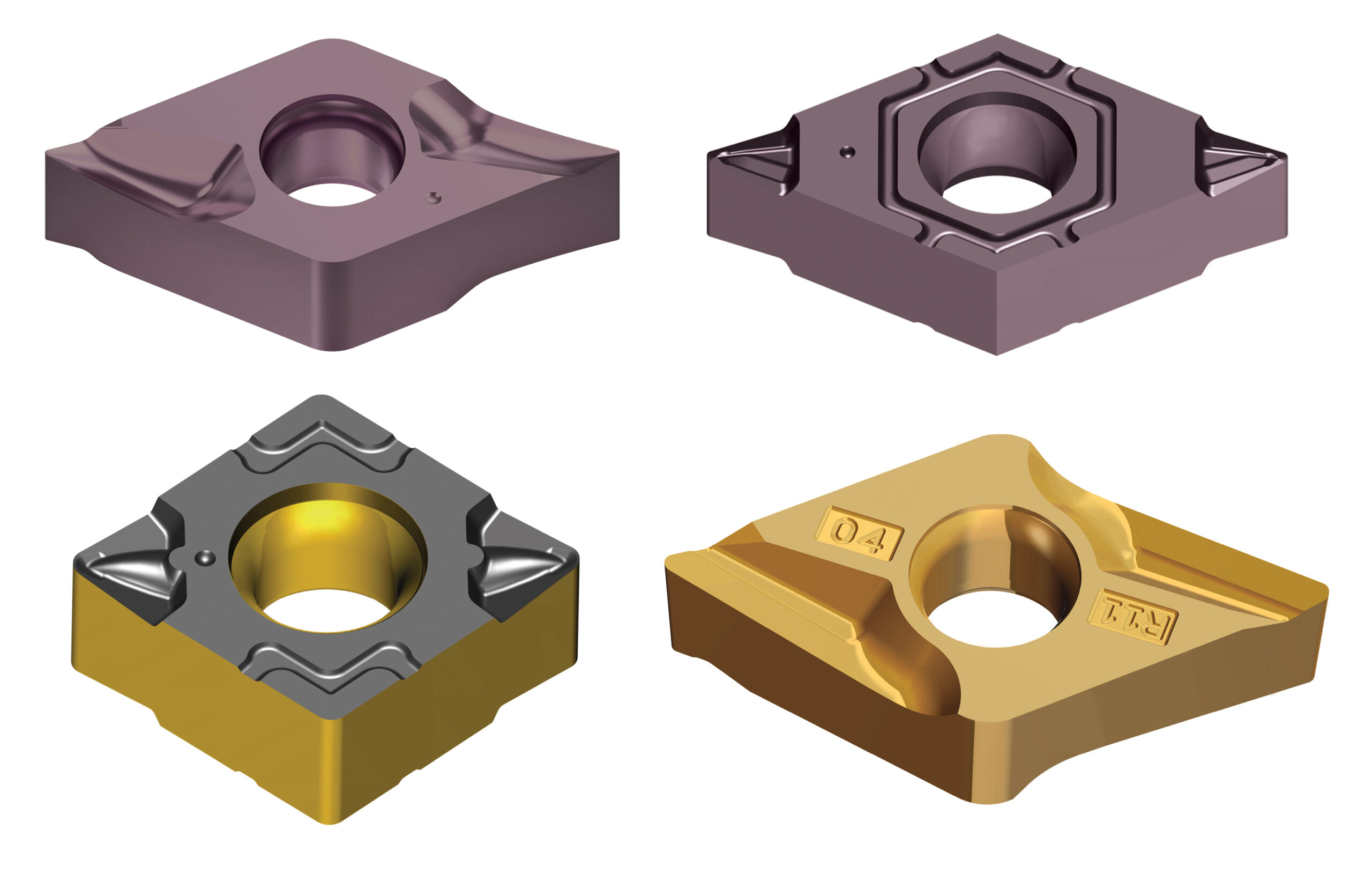
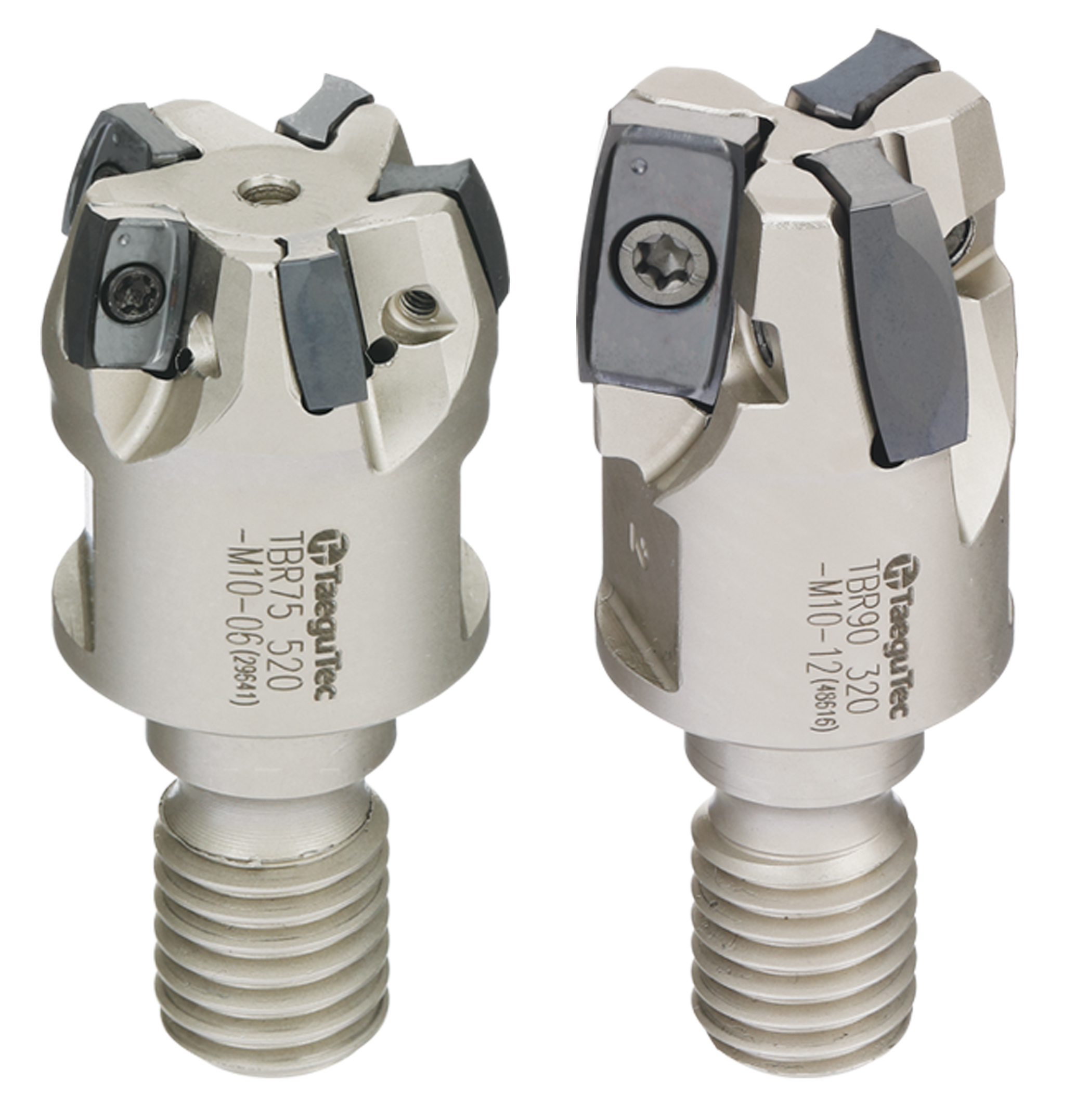
The SFEED-TEC and WIN-SFEED family of cutting tools offer advanced solutions for various machining applications. SFEED-TEC tools are designed for high-speed and high-feed operations, providing superior performance and extended tool life. WIN-SFEED tools, on the other hand, are optimized for stability and precision, ensuring consistent results in demanding environments. Both lines contribute to increased productivity and reduced operational costs, making them valuable assets for South African industries.
TaeguTec’s SOLID-3-DRILL, DRILL-SFEED, RHINO-TURN, SFEED-BARREL, CHASE-8-SFEED, WIN-MILL, SFEED-TEC and WIN-SFEED lines offer South African industries a competitive edge. These cutting tools are meticulously designed to enhance productivity, reduce cycle times and lower operational costs. By integrating TaeguTec’s innovative solutions into their manufacturing processes, South African manufacturers can achieve greater efficiency and profitability, positioning themselves for success in the global market.
For more information please contact TaeguTec – Tel: 011 362-1500.
The well-known software suite, MCOSMOS, is recognized as the go-to data processor for Mitutoyo’s range of top-of-the-line CMMs. Supported by an extensive line-up of optional software applications, users have full control over a wide range of probe systems ready for any kind of workpiece.
MCOSMOS helps you carry out all your measuring and test jobs at lightning speed, simply and safely. MCOSMOS handles large amounts of data with ease, making it available across all the networked areas of the production chain. This streamlines the measuring process, optimizes the flow of information and minimizes non-conformances. The result is increased efficiency throughout the production process with significantly reduced costs.
With its specialist expansion modules, MCOSMOS can focus on your company’s very specific measurement requirements. With Mitutoyo software, you are best prepared for every imaginable 3D coordinate measurement challenge, both now and in the future with maximum flexibility.
MCOSMOS is the smart software platform from Mitutoyo, setting international standards for sophisticated 3D coordinate measurement. With MCOSMOS, your coordinate measuring machines become efficient information centers – powerhouses of design, production, and quality control. Streamlined measurements, as well as convenient and reliable data, are at your fingertips throughout the production process.
Modelled with a modern design, this New Graphical User Interface (GUI) improves on the previous version with a simplified and attractive module display, while an Improved Search Function has been designed to assist users in their quest for specific elements of their measuring program, and thus editing has become even easier when compared to version 4. Added in this new version of MCOSMOS, is the possibility of using a 3D Display Of The Geometry And Microstructure of technical surfaces including visualized tolerance zones, providing operators with a more detailed overview of the workpiece.
The function “Support of Two-Point Size Of Planes according to ISO 14405-1″ gives MCOSMOS the capability to evaluate the two-point size of two selected planes, which both were calculated by least squares (Gaussian) method.
A large amount of progress has been made in Mitutoyo’s Optimization For Large CAD Files over their previous versions of software, lowering process time and improving the overall operation of MCOSMOS and toolbars are replaced by Ribbon Control, Including Contextual Tabs.
For more information, please contact RGC Engineering – Tel: 011 887-0800.
The world premiere of the S23 and ground-breaking grinding technologies underline the innovative strength of the Swiss cylindrical grinding specialist for the competitiveness of its customers.
“Fritz Studer AG looks back on a successful EMO 2025 in Hanover. We are delighted that our innovations in grinding technology attracted such great interest from international trade visitors,” said CEO Sandro Bottazzo. The Swiss manufacturer of high-quality cylindrical grinding machines presented numerous innovations at the world’s leading trade fair for manufacturing technology from September 22 to 26.
World premiere of the S23 and new generation of favoritCNC
A highlight was the world premiere of the new S23 universal cylindrical grinding machine. This versatile CNC machine offers state-of-the-art grinding technology for maximum precision and reliability in a space-saving design. Thanks to its high-quality features, the S23 perfectly complements the portfolio between the entry-level and premium segments. It impresses with features such as the modern CORE hardware and software architecture, an automatic B-axis with 1° Hirth gearing for up to three grinding tools, and a Granitan® machine bed with outstanding thermal and vibration properties.
The new generation of the favoritCNC, which STUDER has equipped with modern capabilities and optimizations, also garnered significant attention. The popular entry-level machine now features an updated CNC control (FANUC 0i-TFP), an automatic operator door and loader interface for automation solutions, a resource-saving belt-driven spindle system, and a machine frame with a larger X-guideway spacing for even greater stability. Furthermore, the new Conventional Mode facilitates the transition between manual and CNC grinding.
Innovative axis system and WireDress® for internal cylindrical grinding
On the S31 universal cylindrical grinding machine for small to large workpieces, STUDER demonstrated an innovative axis system that sets new standards in automated precision cylindrical grinding. The long W-axis enables automatic adjustment of the tailstock position to different workpiece lengths, while the active R-axis, equipped with an in-process measuring system, can scan complex geometries on the workpiece. A special feature of the system is the direct measurement of the clamping force. This ensures precisely reproducible clamping conditions for workpieces. The clamping force is also displayed on the control screen for the machine operator.
A further leap in innovation was presented with the introduction of the WireDress® non-contact dressing system for internal cylindrical grinding. This wire EDM-based technology opens up new geometric manufacturing possibilities with diamond and CBN grinding wheels featuring a sintered metal bond. This is made possible by a new internal grinding spindle capable of transmitting current at full grinding speed.
“At EMO 2025, STUDER was able to demonstrate how we will continue to contribute to our customers’ success in the future. A smart combination of reliable and innovative grinding technology offers decisive advantages for competitiveness,” summarized Pascal Schärer, Sales Manager for Central Europe.
The new axis system for the S33 and S31 enables automatic adjustment to different workpiece lengths.
For further information, please contact RETECON – Tel: (011) 976 8600.
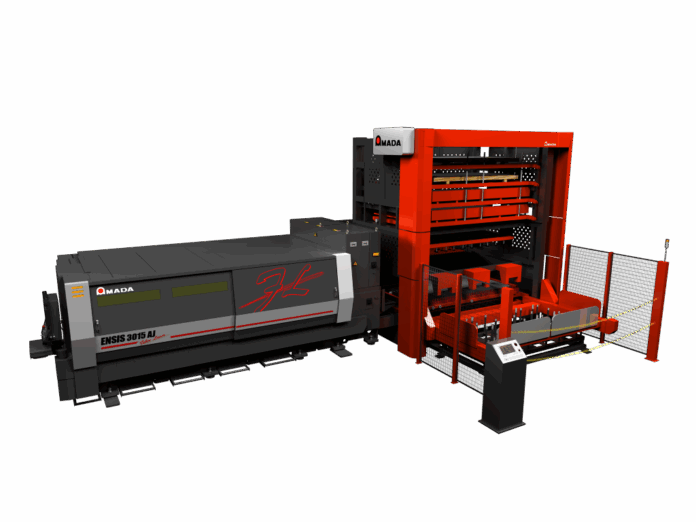
Laser cutting with speed – Automated loading and unloading of laser systems
The ByTrans Modular is an advanced loading and unloading automation. It injects extra speed into your Bystronic laser cutting machine, both for large series and for small jobs.
The variety of configurations and layouts allow choosing the best solution. This eliminates the need for manual loading and unloading. The system takes care of it for you.
Straightforward control – User-friendly touch screen
The new software features enable you to easily control your automation from the touch screen of your laser cutting system. In addition to the standard scope of supply you can also connect additional control panels to have a better overview and management of the overall cutting cell.
Automation drives high productivity – Perfectly tailored to your requirements
The ByTrans Modular offers you an extremely high level of configurability, allowing you to choose the best solution to improve the productivity of your laser systems, easing also your operator’s workload.
The ingenious system architecture enables native interfacing with Bystronic’s next-generation storage solutions. Reach the next level of productivity by connecting the system to BySort. You can even use your ByTrans Modular to manage two laser systems within the same automation setup.
For more information, please contact Cutronic – Tel: 010 410 0200.
Increase your level of automation with Bystronic’s BySort
BySort is the new extension module for the ByTrans Cross loading and unloading automation system. The upgrade sorts the completed cut parts and thus accelerates the automation cycle of all the processes related to fiber laser cutting.
With the newly developed BySort upgrade, the ByTrans Cross is now an even more versatile unloading solution. An additional bridge is installed on the ByTrans Cross system, which can accommodate up to two sorting heads. These heads are automatically tooled using the available gripper modules.
The BySort is designed to deposit the completed parts on an additional unloading position next to the laser cutting system, which offers ByTrans Cross users an even higher degree of flexibility. Amongst other things, this supports users with the processing of large series where the individual cut parts need to be unloaded and sorted separately according to jobs. The repetition accuracy with which the BySort deposits the parts is a great advantage. Particularly with large cut parts, this is difficult to achieve manually. The accurate positioning of parts on palettes facilitates the automation of subsequent processes, because it allows the precise position detection of the parts to be further processed.
Moreover, BySort increases the speed of the entire unloading process. Bystronic achieves this thanks to the efficient design of the system unloading routes. In a first step, BySort unloads and sorts the cut parts. Subsequently, using a different route, the ByTrans unloads the residual sheet. This ensures that the laser cutting system’s shuttle table is more quickly available for the loading of the next sheet, which the ByTrans Cross fetches from its own stock or from the connected warehouse.
Integrated control on the touch screen
Both, the BySort and the ByTrans Cross are controlled using the laser cutting system’s touch screen. To achieve this, Bystronic developed the ByVision Cutting user interface, which is already being used with the latest generation of Bystronic’s fiber lasers. ByVision Cutting integrates all the cutting processes and the connected automation solutions. During everyday production this allows laser cutting and the automated material feeding and removal process to be closely interlinked. Nowadays, no user should waste time, walk long distances, and carry out unnecessary procedures, just because the laser cutting system and the connected automation solution have to be operated using separate terminals. After all, for the operator, automation also means convenience.
For more information, please contact Cutronic – Tel: 010 410 0200.
By Paul Savides, Managing Director, PBS Machine Tools
Generally, to meet High-Mix Low-volume production, you require numerous standard machining approaches that need to use drawn-out, multi-step processes with single-spindle machines, which are not a great fit for high-precision engineering shops, especially, those looking to expand from one-offs to production orders.
Paul Savides Managing Director, PBS Machine Tools
Parts with complex milled features or multiple milled faces that require a secondary machining operation on a separate machine after initial turning not only extended cycle and setup times but also introduced the risk of tolerance stacking and alignment errors, due to re-fixturing or relocating to the second operation. Even parts with seemingly larger permitted tolerances can require closer attention to dimensional stacking, demanding even tighter tolerances.
As an example, to make medical parts, even in the hands of a skilled machinist, creating the tool paths that can accurately machine these part shapes, is ineffective. Unfortunately, the part geometries are mostly outside a standard CNC machine’s capability range, due to time-consuming processes on single-spindle, single turret machines.
Multitasking – Where High Requirements Meet High Volumes
Purchasing a Multi-Tasking machine to handle complicated turning geometries like gear cutting, five-axis work and more.
Twin-spindle, twin-turret setups with live tooling and Y-axis machining capabilities provide more flexibility than most machine shops are familiar with.
While machine rigidity will prove useful right away for you, it will take time before you fully trust the machine’s advanced features and then fully utilize them. By cautiously experimenting with simultaneous Pinch-Turning and Pinch-Milling, you will be amazed how processing this way maintains tight concentricity and straightness, especially on long, thin parts and how it cuts cycle times, by enabling simultaneous roughing and finishing operations.
Pinch-Turning can also reduce setup times by eliminating the need for steady rests and rotating centers for some operations, making you more agile and efficient as it progressively allows for increased annual part volumes.
New Features, New Parts
High Dynamic and Eccentric Milling capabilities sharply cut setup and cycle times, and therefore, by taking advantage of Tongtai Group’s numerous Multi-Tasking solutions that provide rigidity, advanced cutting features and a done-in-one architecture to reduce setup and cycle times, will make you more competitive.
Our TMS series represents Tongtai’s commitment to process integration and machining efficiency. Designed as a full multi-tasking turning center, TMS combines live tooling, symmetric Y-axis movement, dual spindles and substantial structural rigidity, making it ideal for gear machining and complex shaft-type components.
The C-axis indexing accuracy and servo synchronization between spindles ensure precise angular positioning , essential for gears and coupling components. Five-axis milling integrated into a multitasking platform, significantly reduces the need for multiple setups and fixturing and will have a substantial impact on repeatability, throughput and overall process efficiency, especially for high-value, low- to mid-volume components.
Cycle times can be reduced by up to 50% and setup time by up to 75%, depending on part complexity.
High Dynamic and Eccentric turning can be particularly impactful
In Dynamic turning, programmers can adjust the approach angle of the cutting tool in mid-operation. Also, tools with different cutting edges, suited to roughing, profiling and finishing, can mean performing multiple operations without tool changes.
Eccentric turning enables the machining of off-centre bores without specialty off-centre work-holding thus, eliminating the cost of custom fixturing and work-holding, while improving productivity, accuracy and setup time.
Bonus Features
While Multi-Tasking machines can expand your current capabilities, it can help you gain a foothold in gear cutting. Across South Africa’s manufacturing landscape, gear production plays a vital role in industries, such as mining, heavy equipment and the automotive aftermarket.
These sectors demand gears and splined shafts that meet tight tolerances. They must be produced efficiently, despite smaller batch sizes and growing part complexity. Implementing Gear cutting and the newer High Dynamic and unconventional Eccentric turning features will require use of digitaltwin simulation software and advanced Espirt Edge CAD/CAM software, to match the physical machine and its kinematics, so every tool index or collision risk that could exist is anticipated and addressed in the programming office.
Servicing an Ever-Increasing Pace
As these complex machines can complete nearly every part that crosses the shop floor, downtime could significantly hamper operations, most of it due to user error or lack of maintenance, however, thankfully Tongtai machines rarely see downtime. Even in these situations, our Intelligent Software assists with a troubleshooting feature that displays likely problem areas, such as Axis overloads and oil levels etc., while operators can quickly bring the machine back online, making a service call unnecessary.
To meet the production levels for newer jobs, it’s feasible to run two 12-hour shifts, one staffed and one unstaffed.
To prevent issues with outdated programs and help with traceability for high-requirement jobs, it is recommended to setup a programming department to ensure all changes to part programs are done in the right environment.
All these machine features will help expand your business significantly. By adding robotics, a custom ERP and continued investment in capable machines will help users grow even further.
We’re not just suppliers — we’re solution partners.
At PBS Machine Tools, we specialize in helping partners upgrade production, optimize capacity and access reliable equipment, not just by offering good pricing, but by delivering fit-for-purpose solutions, tailored to real production goals.
With our 35-year network of long-standing manufacturers and engineering teams, we support:
New and certified pre-owned machines
Custom-built lines for special parts or applications
Spare parts, tooling, installation and post-sale support
Government-level cooperation on industrial programs
We’d be glad to learn about your current focus, whether you’re exploring upgrades or future investments.
Special Note: I’d like to leave you with this:
From Defining to Preventing Errors
Four techniques to have in your toolbox for averting errors are
For more information please contact PBS Machine Tools – Tel: 011 914-3360.