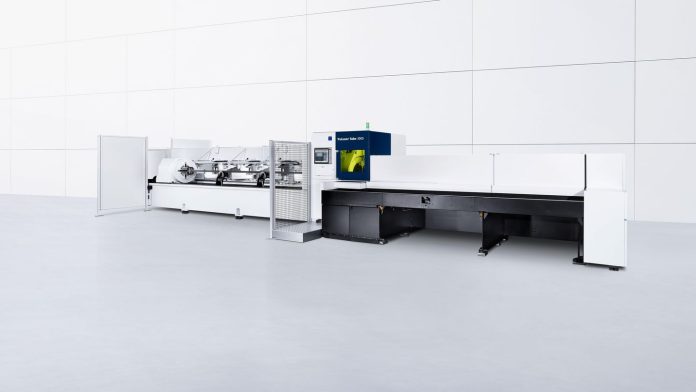
The TruLaser Tube 3000 fiber is suitable for companies that want to enter this technology and for companies that want to expand their manufacturing capacity.
A TRUMPF machine for getting started with laser tube processing or as an addition to existing machinery – Cost-effective even with low capacity utilization – Easy to operate thanks to numerous automated features
TRUMPF introduced a new laser tube cutting machine, the TruLaser Tube 3000 fiber, a cost-effective choice even at low to medium capacity utilization. It is therefore equally suitable for companies that are entering this technology as it is for companies seeking to expand their production capacity. The machine enables the versatile processing of tubes and profiles and replaces conventional tube processing steps such as sawing, drilling and milling.
Starter kit to enter the world of tube processing
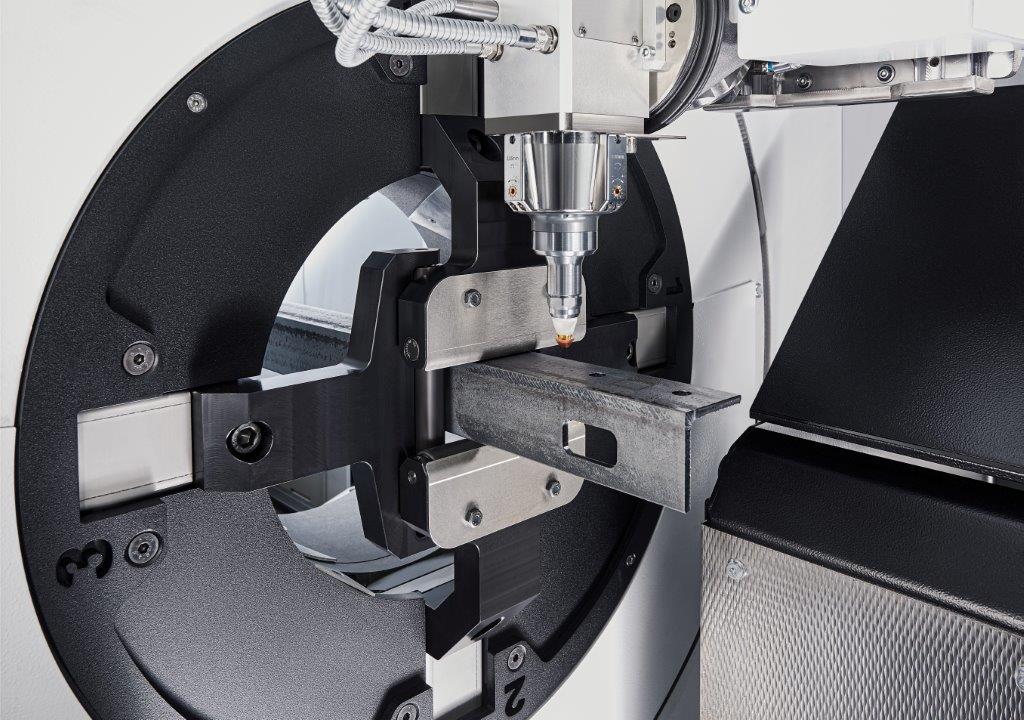
The TruLaser Tube 3000 fiber covers a broad range of applications including profiles, round tubes and flat steel bars. It also offers the option of L and U profiles. The two-kilowatt solid-state laser performs high-speed cutting of mild steel, stainless steel, aluminium and nonferrous metals such as copper and brass. An extensive set of cutting data is already stored on the machine. The TruLaser Tube 3000 fiber can cut tubes with diameters of up to 152 millimetres and profiles with an outer circumference of up to 170 millimetres. The self-centring clamping technology, which is designed to hold the tube in place and position it correctly during machining, adapts automatically to the tube dimensions without requiring manual setup by the operator. The TruLaser Tube 3000 fiber also configures other important settings automatically.
The self-centring clamping system fixes and positions the tube, thus ensuring optimal finished part quality.
The AdjustLine function modifies cutting parameters at the touch of a button to ensure reliable cutting of lower-quality materials. SeamLine Tube detects weld seams and markings on the inner and outer surfaces of the tubes, helping operators check that the tubes are correctly aligned in the machine and that the weld seam is in the desired position in the finished part. With its easy setup and high degree of automation, the TruLaser Tube 3000 fiber is a user-friendly machine that represents a cost-effective option for small batch sizes.
Reliable and precise parts handling
The TruLaser Tube 3000 fiber cuts tubes weighing up to 18.5 kilograms per meter with material thicknesses of up to 8 millimetres. It is available in two lengths that accommodate either 6.5 or 8 meters of material. Thanks to the optional LoadMaster Tube automated loading system, the machine is also a cost-effective choice for high-volume production runs.
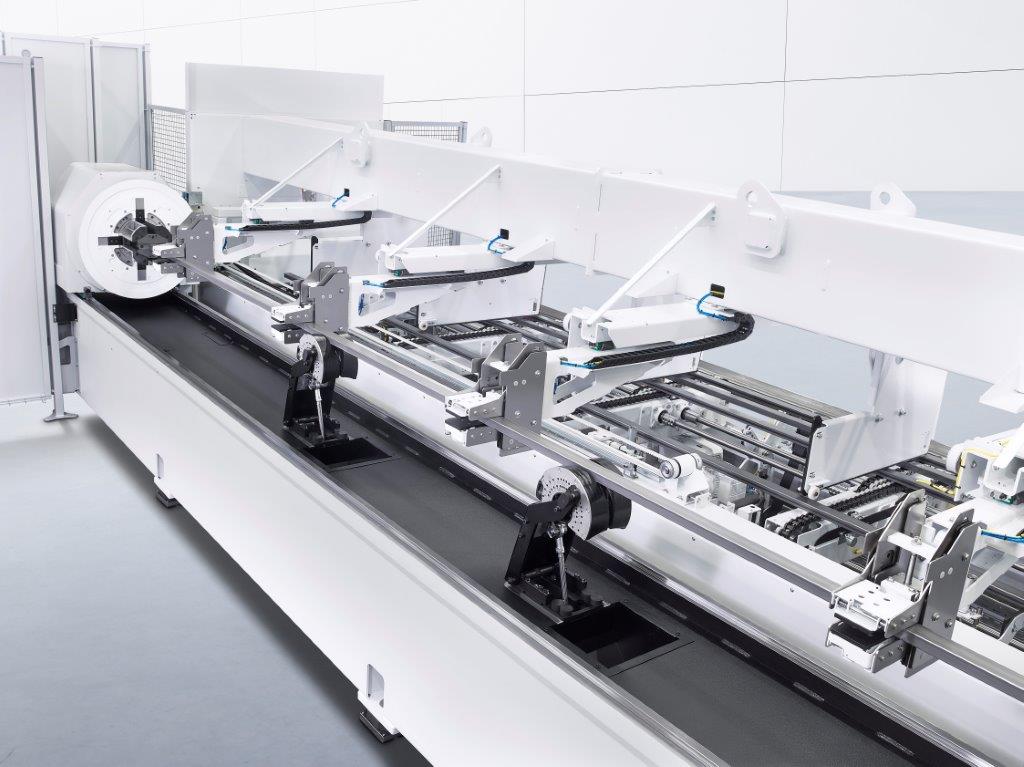
Thanks to the LoadMaster Tube loading automation, the machine can profitably perform large-scale production as well.
An integrated materials store known as the “bundle space” provides a buffer store that can hold up to 4 metric tons of raw material, or up to 5 tons with the machine version designed for an 8-meter loading length. The LoadMaster Tube system separates and measures the tubes parallel to production and transfers them to the machine. To ensure top-quality parts, step rollers support the tubes and guide them to the machining station.
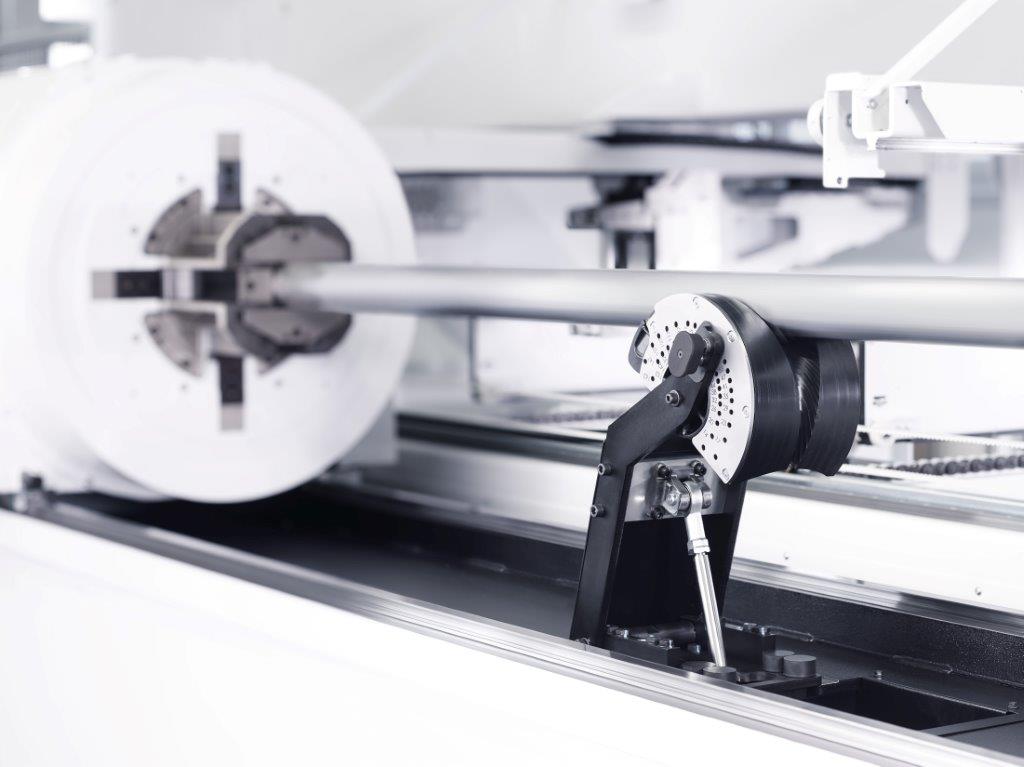
Step rollers support and guide the tubes to the processing station. They can be manually adapted to the respective tube diameter in no time.
These rollers can be adjusted to the current tube diameter in one simple action. The machine also features guide rollers on the unloading side which provide more support to long tubes during processing. The TruLaser Tube 3000 fiber ejects finished parts onto a rack. Set to the correct ergonomic height, this allows the operator to remove them comfortably while the machine continues working. Shorter parts can be ejected straight into a box. The TruLaser Tube 3000 fiber automatically separates cutting slugs and scrap metal from the finished parts and disposes of them in containers.
Key components easy to access at any time
Thanks to the design of the machine’s beam guard, the operator can easily access the loading and unloading sides of the machine at any time – for example to load individual tubes into the machine to process a smaller job between bigger ones. There is no need for a complete housing. A large, laser-safe viewing window makes it easy to keep an eye on the machining process.
Ready for the smart factory
Users can make changes to the machine’s production schedule or keep an eye on the machine using an app, making it even easier for the operator to keep track of the entire machining process in the TruLaser Tube 3000 fiber. A secure, OPC UA-based data interface is included to connect the machine to an ERP or MES system or to a cloud application, for example. TRUMPF machine apps provide information on program runtimes and machine capacity utilization.
For further information, please contact RETECON – Tel: (011) 976 8600.
Back in 1946, when a Japanese gentleman by the name of Mr. Iasmu Amada had a vision of building quality and reliable machinery that would change the way people would look at and use their machinery, nobody was aware of the future technological advances his company -called “Amada”- would make.
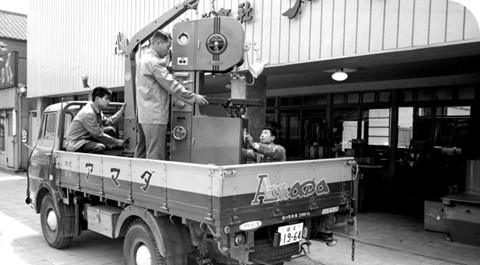
Vertical Contour Bandsaw on demonstration at a customer’s site.
While offering a different approach to the market than the competitors, nobody would have guessed back then that Amada would become a world leading machine manufacturer so fast.
Amada’s humble beginnings started with the manufacturing of bandsaws and soon thereafter expanded into various different sheet metal machines. Marketing of these machines was done by physically taking the machine to the customer site and performing live demonstrations with potential customers, all the time, listening to the customer’s needs.
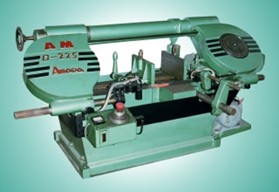
First horizontal bandsaw produced by Amada.
Fast-Forward 80 years to 2026 and Amada has grown into a market leading manufacturer of not only bandsaws, but shears, turret punch presses, press brakes, laser cutting machinery, laser welding equipment, robotics, automation and all associated software & tooling. Eight decades of never forgetting their roots or “DNA” and by utilizing the “Voice of the customer” philosophy, Amada has managed to become a market leader producing solutions to meet even the toughest demands in the manufacturing industry.
Today, the bandsaws still uphold a massive part of Amada’s reputation through their reliability, quality and accuracy. This, coupled with the bandsaw blades offered, has been the basis of many users’ success stories and has made others envious of Amada’s reputation, thanks to their longevity and cutting accuracy.
The eight decades of Amada’s ongoing growth and success can be dedicated to the important philosophy of – “The voice of the customer”! This philosophy has taken Amada into avenues that are highly specialized, requiring extensive R&D together with massive investment in both personnel and associated resources.
Amada “FORUM 246” hotel at the Amada Headquarters – Kanagawa – Japan.
This is where the basis of any machine designs or improvements has begun. Through working closely with customers, Amada has not only built unique relationships, but also a unique product range that not only meets but exceeds customer’s expectations, while pushing the boundaries of technology.
As a publicly listed company in Japan and with over 90 subsidiaries around the world, Amada prides itself on innovation and technology through their global foot-print of professional sales and after-sales support offices. Through the “One Voice” philosophy, Amada has managed to offer global support that is efficient and professional in almost every corner of the world. The DNA has remained “Amada” which shows that there is no compromise on quality when producing machinery or backing them up. If it doesn’t carry the Amada name, then it isn’t an Amada.
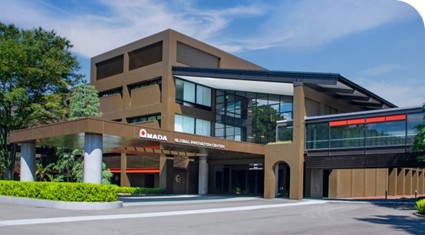
Amada Global Innovation Centre – Kanagawa – Japan.
Over the 80 years of Amada’s existence, technology has changed drastically through the product range. The world’s emphasis has focussed of late on the environment and how the planet can be protected from harmful machinery emissions and waste.
Earlier models of machinery relied heavily on large quantities of oils in their drive systems. These were good machines, but environmentally, they were harmful in many ways.
Today, oils are still used in some models, but in far less quantities, while AC servo drives also offer an oil free option in some machines.
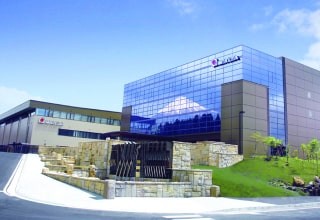
Amada Fujinomiya Factory.
The same applied to the older Co2 lasers which were heavily gas dependant in order to run. Today, this has also changed drastically, reducing not only the carbon footprint, but the overall running cost and maintenance costs, too.
With the re-invention of the laser market when fibre technology was revealed, Amada took a leading role in ensuring a self-sufficient after-sales service by developing their own power sources, thus controlling the quality during the infancy stages. Later, once the technology had been “perfected”, Amada partnered with some of the top oscillator manufacturers to offer different options to the market, depending on customers’ requirements and needs. These systems still undergo Amada’s stringent quality checks and are adjusted or tuned according to Amada’s needs and expectations, further setting themselves apart.
Today, these different oscillator models are used on a variety of Amada laser cutting machines, namely, the ENSIS, VENTIS, REGIUS, BREVIS and the latest addition, the ORSUS. Different machine models offer different power options as well as different features, beam delivery options, automated operation options and drive systems.
Fibre laser technology quickly evolved into welding, too, which has now become quite the norm in the manufacturing industry. Here Amada has also taken a slightly different view of the market requirements and has firstly ensured that safety is the most important factor, together with quality. With fibre technology having the potential of being extremely dangerous, Amada has not compromised in any way and will only offer a solution that fully meets all safety standards not only for the operator but for anyone in the near vicinity during operation.
Amada’s fibre technology has been ground-breaking in many aspects, such as the production of highly specialized items in the transport, communications, rail, automotive, electrical, communications and medical industries, to name but a few.
The medical industry has been one of the intriguing industries, where the attention to the finest detail and quality has resulted in machines being produced to manufacture items, such as pace-makers and different prostheses, too.
The emphasis on fibre welding has been the ease of use together with the quality of the weld. These factors are the main contributors to a profitable production shop. Amada ensures both, by offering different options of either handheld systems or robotic systems.
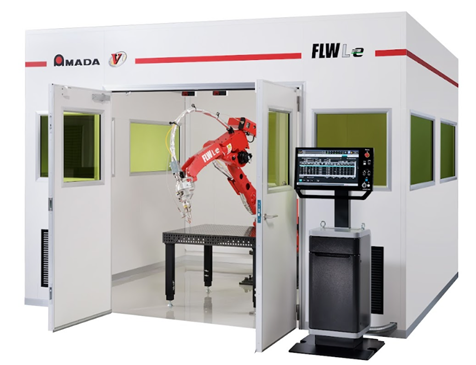
FLW Le 3kW.
With hand-held being the most commonly used, the Amada FLW1500MT (1,5kW) fibre welder has proven that there is no compromise to quality. Even a semi-skilled operator is able to successfully weld using this system thanks to the pre-set welding conditions for different materials.
The bigger FLW – Le fibre welder is a 3kW welding system mounted on a 6axis robotic arm, designed for ease of use and the enhancement of most manufacturing environments. Again, safety is ensured through the employment of a full cabin enclosure and an off-line programming software system.
Various functions are offered, such as a slim nozzle for tight access points, a filler nozzle for filler wire when needed, beam weaving mechanism, Z axis indicator, cameras and a collimator adjustment mechanism. All of these features assist in making robotic welding simpler for the operator.
Beam Weaving System
This unique system rotates the actual laser beam using a weaving lens, rather than relying on the robot creating the rotational motion. This allows wider gaps to be cleanly welded and results in smoother, more consistent part production.
TAS (Teaching Assistant System)
In order to minimise setup requirements and increase production time, the FLW-Le is programmed offline. This eliminates the need to manually teach the robot all the welding positions and movements.
However, experience proves that there will always be a slight difference in programmed position and actual part position. This is where the TAS feature is employed. The operator can load a new program and quickly verify the weld positions via the CCD camera which is built into the welding head.
Focal Control System / Collimator Axis Adjustment
The FLW Le has a collimator axis adjustment mechanism which is able to change the beam diameter according to the welding application. A manual focal adjustment system for the focal lens is built into the welding head. This allows the operator to set the focal position before each job based on the part geometry being processed.
CCD Camera
The CCD camera, which is mounted in the welding head, is utilized to assist the operator when fine tuning the off-line generated program.
One touch – quick change welding torch system
The FLW Le is equipped, as standard, with 2 different nozzles – being one coaxial nozzle and one water cooled nozzle. These 2 different nozzles allow for a wide range of welding applications to be carried out with one machine.
The coaxial nozzle enables welds to be performed in very tight spaces, while the water-cooled nozzle is utilized for thicker material welding applications. The one touch – quick change welding torch system allows the nozzle to be changed in less than 1 minute without the need for any tools.
System Controller
The system controller divides and controls the laser welding robot and associated equipment. This unit enables automatic operation of the robot as programmed, as well as the manual operation of the robot from the AMNC 4ie control stand and teaching hand box. It also controls the associated equipment, such as the laser oscillator and chiller, as well as the safety enclosure for operator protection.
Z Axis Indicator
The Z axis indicator is used to save set-up time. By using this system, the operator can easily and precisely check the welding head position by means of the LED cross target, which is projected onto the part to be welded.
In staying with the idea of simple controller utilization, the numerical control of the FLW Le offers features, such as facial recognition, guidance mode, welding date library, built in bar code reader and ecology reports.
The AMNC 4ie control depicts the different factors of Amada’s philosophy:
These 4ie factors play an important role throughout Amada’s technology. The simplistic method of doing things on the machinery, as well as in the software make it easy for operators to produce quality parts on time.
As an additional option in production planning and monitoring, Amada now offers additional features, such as “My V-Factory”. This factory monitoring system allows for the continuous monitoring of the production environment from a desktop or smart device in real time.
My V-Factory displays all current machinery states, as well as running and completed programs. In addition, it also provides information about the exact running and set-up times, including precise distinction between idle – and downtimes.
My V-Factory offers practical solutions to counter bottlenecks and downtimes in advance. This is ideal for machinery with the AMNC 4ie control and the use of VPSS4ie software.
Amada’s aim is to provide a total solution to your manufacturing needs. The systems offered are modular, so, as company growth allows, additions can be made to the manufacturing facility and its supporting software systems. Proto-typing can now be done virtually to reduce costs and wastage, while improving quality and speed of delivery.
With the next 80 years in sight, Amada is eager to continue leading the technological advances and producing machinery that exceeds market demands.
For more information, please contact Amada – Tel: 011 453-5459.
Raw tungsten material pricing continues to climb, and for many shops that pressure shows up quickly right on the bottom line. When raw material costs rise, the gap between a “good enough” machining setup and a truly optimized one becomes measurable in dollars per part, spindle uptime and how often tools are being changed. In today’s environment, productivity and tooling strategies aren’t just technical decisions, they’re margin protection.
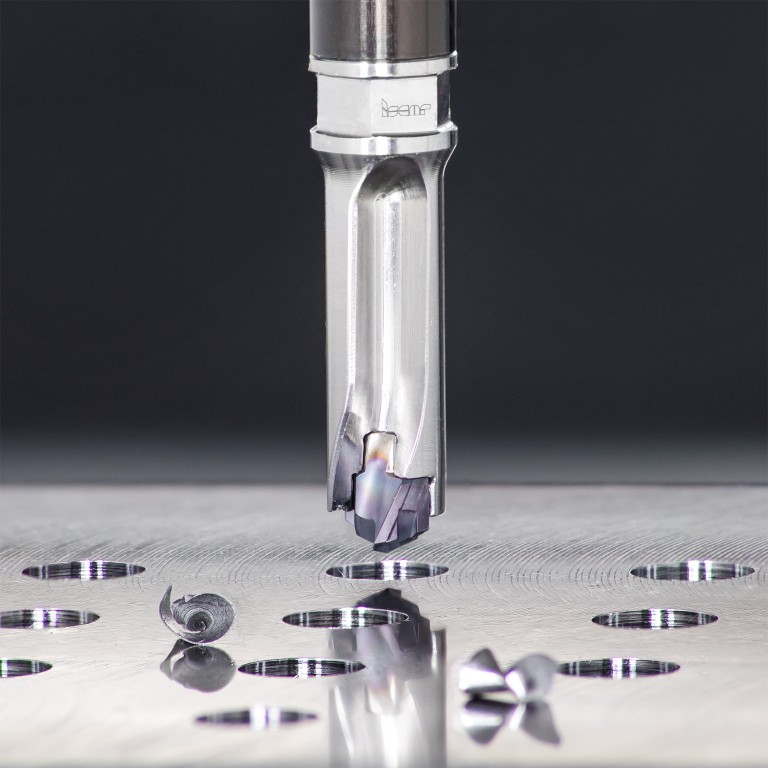
ISCAR is addressing this challenge head-on with its MAXOUT strategy, a calculated approach designed to help manufacturers achieve MINIMUM COST and MAXIMUM OUTPUT. The message is simple, when you choose ISCAR, MAXOUT becomes MAXVALUE, higher productivity and improved machining economics.
ISCAR’s MAXOUT strategy provides productive, stable machining with improved tool economy for turning, milling, holemaking, parting and grooving.
ISCAR’s approach centres on stable, repeatable machining performance that supports aggressive cutting data, while protecting consistency and tool life. The goal is to maintain throughput even when input costs are moving in the wrong direction, using tooling solutions that balance performance with economics.
MAXIMUM OUTPUT – More Parts
High-performance turning geometries combined with rigid, stable setups help shops increase feeds and speeds without sacrificing process stability. The payoff shows up in shorter cycle times, improved chip control and more parts out the door per shift, more parts, less time.
MINIMUM COST – Spend Less Per Cutting Edge
The cost of tooling, specifically solid round endmills and drills, increase significantly when carbide prices rise. Substituting these expensive tools for indexable insert options reduces cost since only the cutting edge is replaced not the entire tool. In many cases, ISCAR’s indexable options can meet the machining economics of the best round tools reducing cost per cutting edge, improving tool utilization and reducing disposal requirements for used tools. ISCAR solutions help stretch tooling budgets further while maintaining production demands. More parts, less carbide used, less tooling cost.
MAXVALUE – Repeatable Results That Protect Quality
Repeatability is critical, especially in long-running production. ISCAR’s insert grades and geometries are engineered for reliable, consistent results, supporting predictable surface finish and dimensional control, while reducing the risk of rework and scrap. With the rising cost of inputs in the machining process, rejected parts are not acceptable. Consistency of process is a competitive advantage. Less inputs, less time, MAXVALUE.
When rising material costs squeeze margins, ISCAR’s MAXOUT strategy is a practical way to maximize machining performance and minimize machine shop inputs.
Stop profit erosion, MAXOUT your machining performance with ISCAR.
For more information, please contact ISCAR South Africa (PTY) LTD – Tel: 011 997 2700.
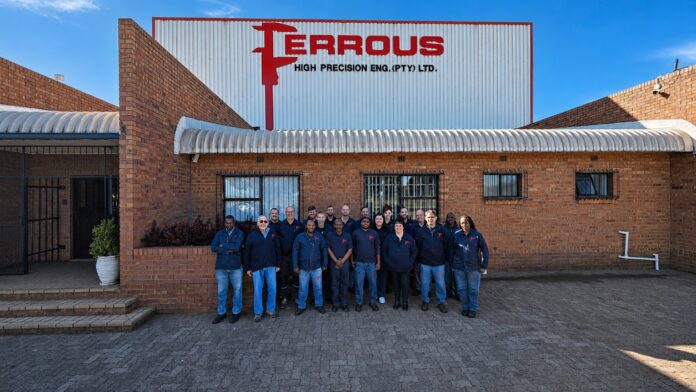
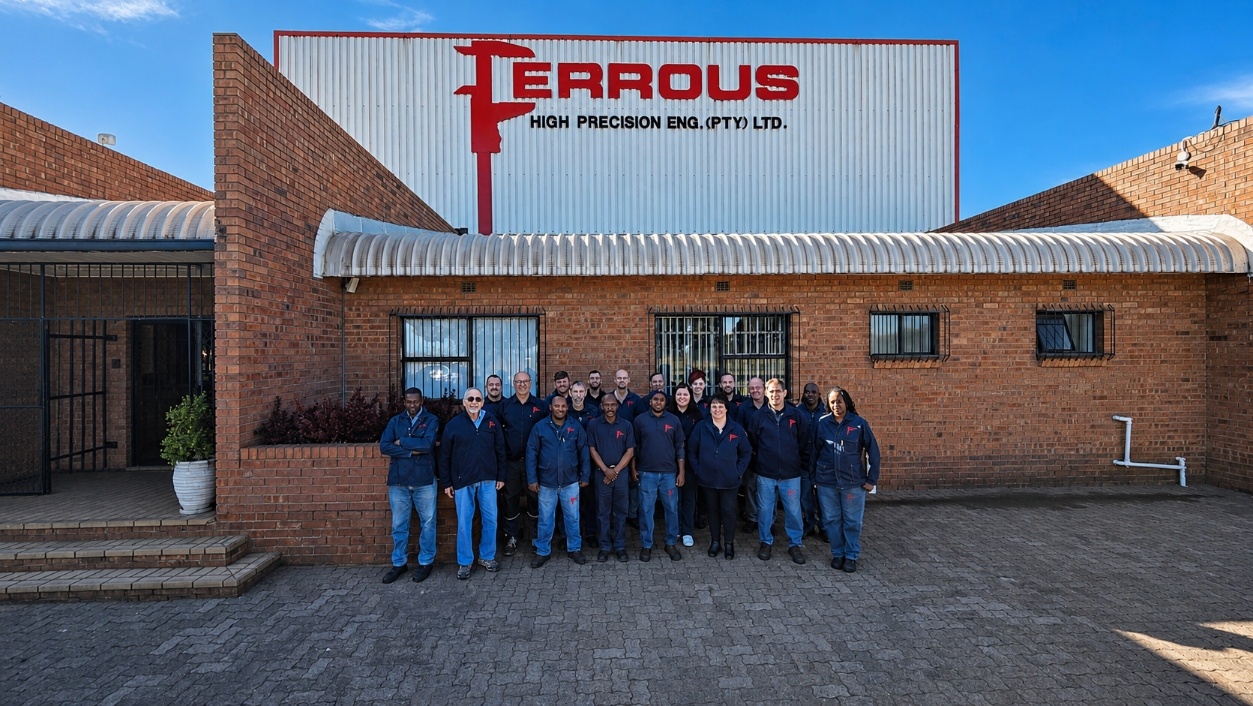
Ferrous High Precision Engineering was founded on March 10, 1981, by Giuseppe Cadamuro from Italy and Norman Carradus from Britain. Both founders brought a wealth of experience from their careers in the engineering industry.
Guiseppe Cadamuro was working at OIL Precision Engineering at the time and felt that he didn’t get enough support from the owner to take on complicated high precision engineering jobs at the time. Machining to high precision standards and tolerances had always been his passion.
During its initial years, the company operated from rented premises, focusing on meeting the growing demand for precision-engineered components. The business expanded steadily, necessitating the purchase of additional machines to enhance production capabilities.
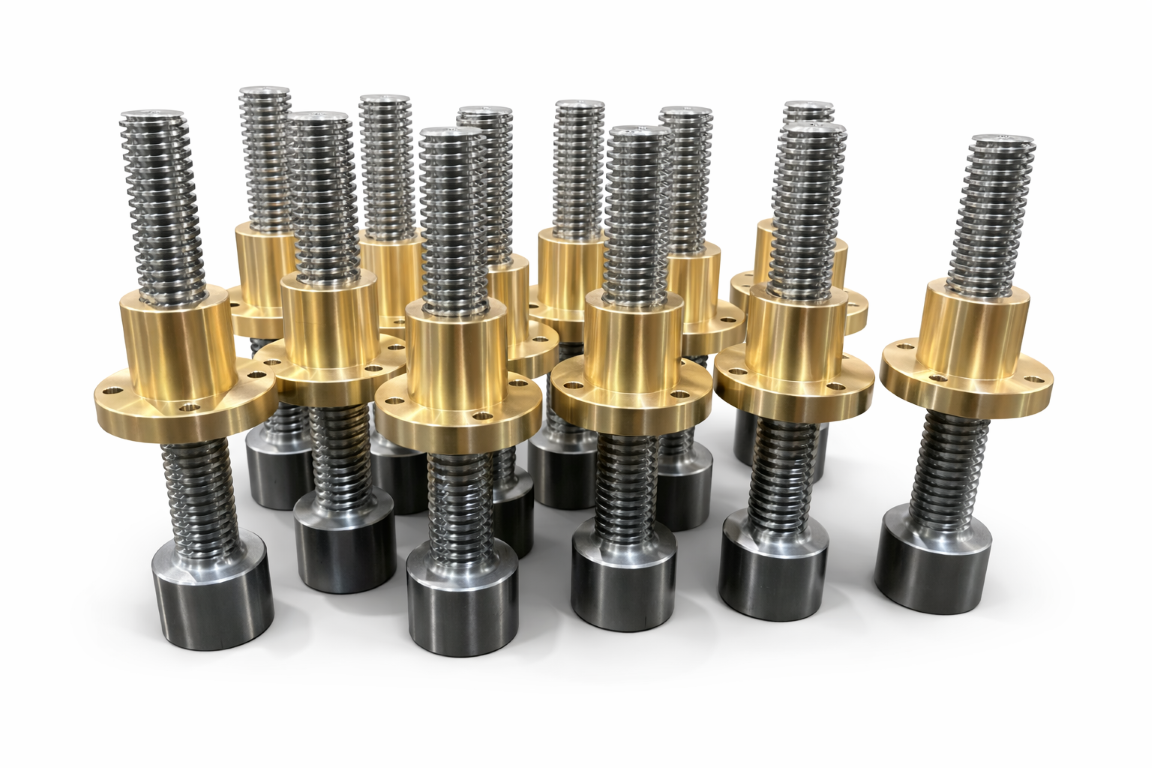
Initially the company focused on maintenance items specifically for Natref, Sasol, Air Products, Dorbyl Roll Works etc. They concentrated on items that other companies were unable or unwilling to manufacture and made a name for themselves as a company who could do very high quality jobs that others couldn’t’ do. Later on they identified the need for producing trapezoidal lead screws and nuts.
Ferrous Engineering relocated to its own purpose-built facility on Fairbanks Street, Vanderbijlpark. This move marked a significant milestone, providing larger and more efficient premises to accommodate expanded operations and continued growth.
In April 2024, ownership of the company changed, marking a new chapter in Ferrous High Precision Engineering’s history. Under new leadership, the company continues its legacy of precision engineering excellence, serving diverse industries with innovative solutions and superior quality.
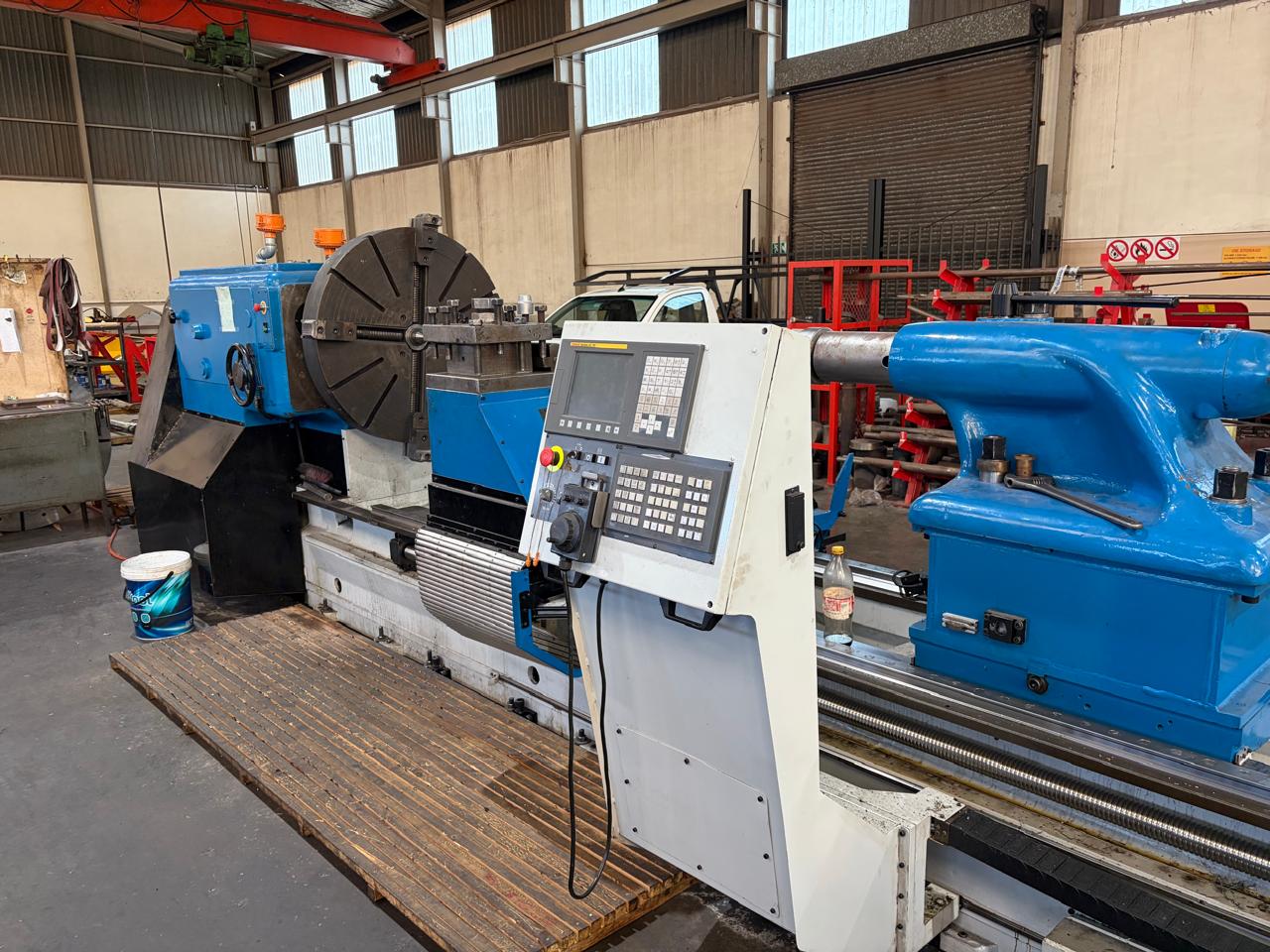
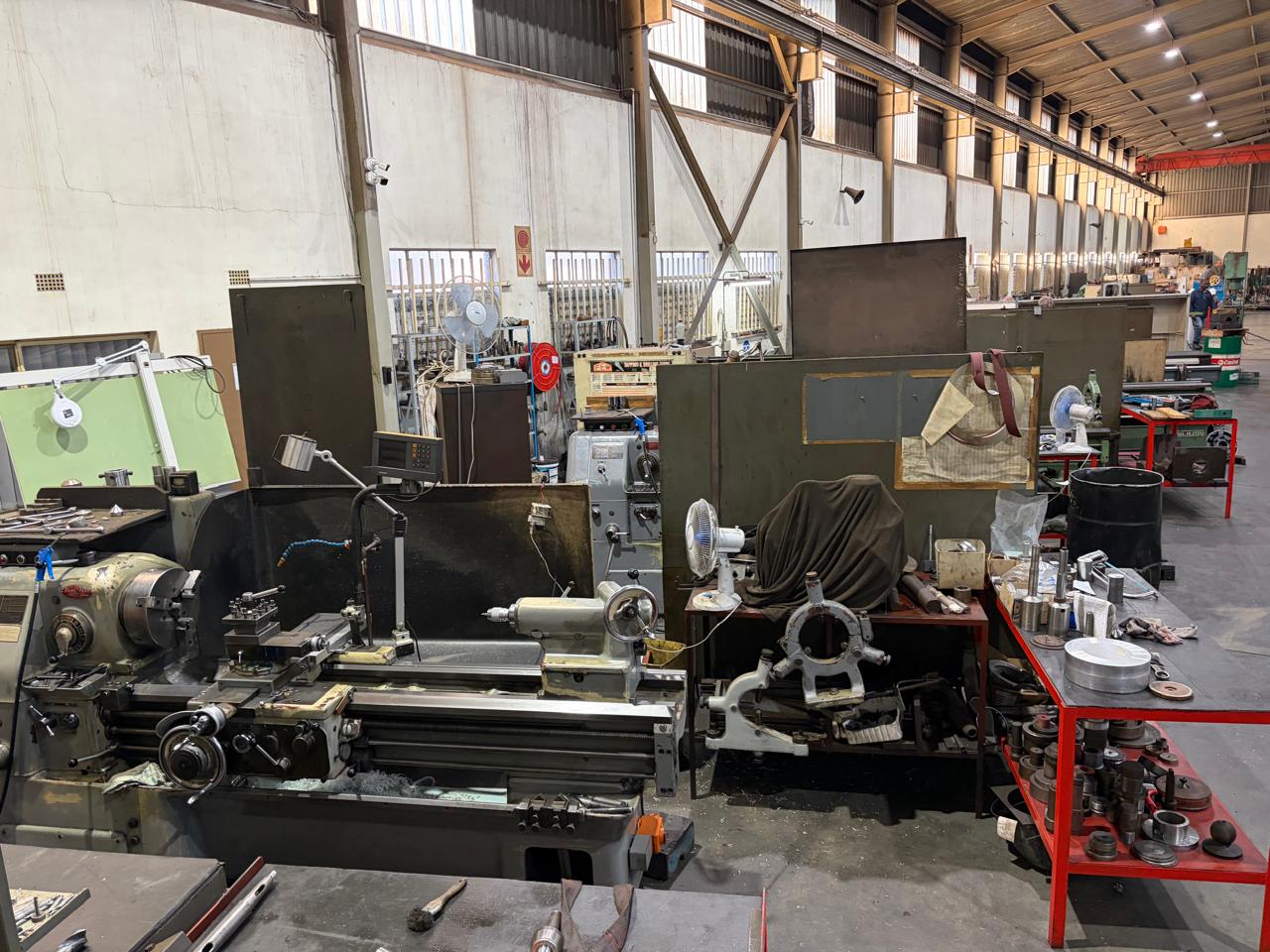
FERROUS HIGH PRECISION ENGINEERING’s equipment includes conventional lathes, milling machines, surface grinders, cylindrical grinders, CNC lathes, a VMC and lead screw manufacturing machines.
While working from a +/- 1200 sqm factory space, the company employs 23 people.
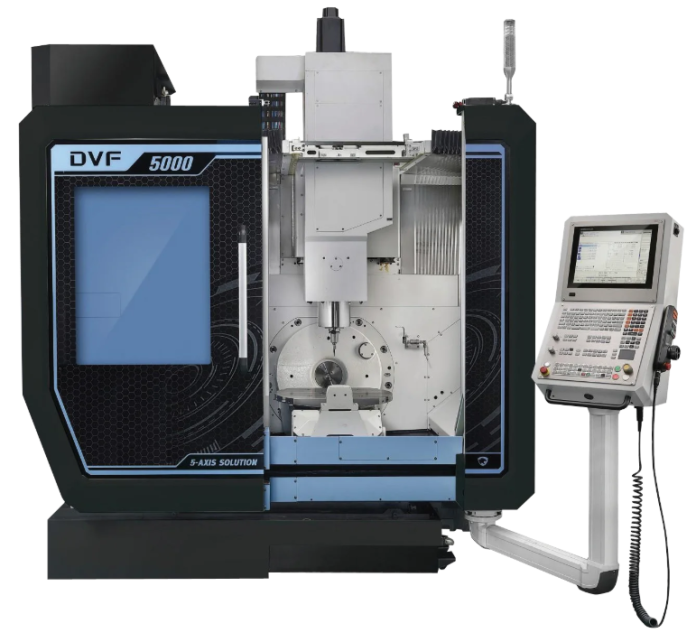
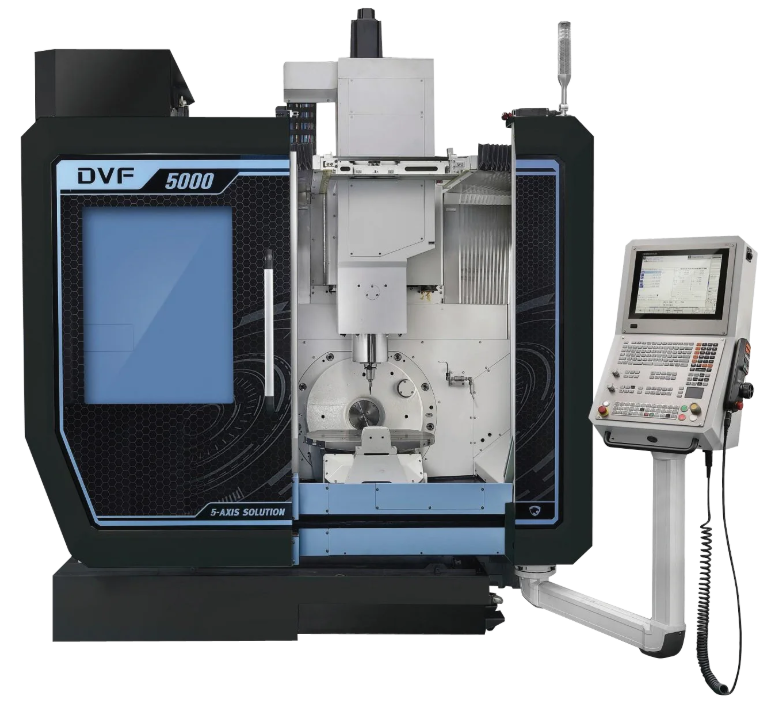
The DVF 5000 Second Generation simultaneous 5-axis vertical machining centre from DN Solutions is designed to elevate productivity and machining capabilities to unprecedented heights.
Serving as the flagship 5-axis machining centre for DN Solutions, the DVF 5000 facilitates the seamless machining of complex shapes and curved surfaces in a single setup. By addressing issues of time, cost and quality inherent in repetitive setup processes, it streamlines operations while enhancing efficiency.
Building upon the success of its predecessor, the DVF 5000 Second Generation raises the bar even higher. Equipped with an industry-leading cooling system and standard thermal displacement compensation, it ensures unparalleled precision, even during prolonged operation. Its robust bed structure enables precise machining of workpieces weighing up to 400 kg, empowering manufacturers to tackle diverse projects with ease. The integration of a built-in Auto Workpiece Changer (AWC) and round magazine facilitates a compact automation system, while various features such as the auto kicking device enhance profitability for customers.
Productivity Enhanced with Astonishing Speed
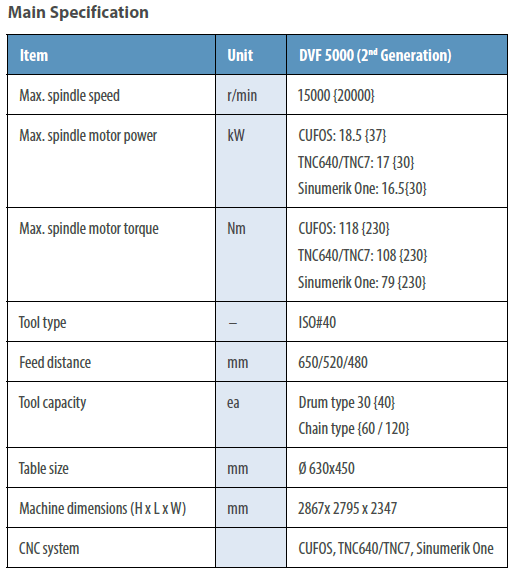
With remarkable speed, the DVF 5000 Second Generation redefines productivity, boasting significantly faster X, Y, and Z-axis feed rates that double the speed of its predecessor, achieved through an acceleration and deceleration rate of 0.4g. Additionally, it showcases a 25% increase in B- and C-axis rotation speed, now at 25 r/min, alongside an impressive Tool to Tool (T.T.T) time of 1.3 seconds and a Chip to Chip (C.T.C) time of 3.8 seconds, making it 28% faster than its forerunner. This remarkable advancement positions the DVF 5000 Second Generation as the epitome of productivity in its class.
Moreover, the DVF 5000 Second Generation comes standard with a 15000 r/min spindle, elevating its versatility and performance. Equipped with a high-rigidity high-speed spindle and a robust columnar structured table, it delivers impeccable surface finishes, facilitating the machining of a wide array of materials, from high-speed aluminium to challenging-to-cut metals like titanium, Inconel, and CoCr (Cobalt Chromium). Furthermore, opting for the built-in spindle capable of achieving speeds of up to 20000 r/min enhances precision machining capabilities, enabling fine surface finishing and intricate 5-axis contouring. Additionally, the inclusion of a high-torque spindle (max. 230Nm) enables the machining of exceptionally tough-to-cut materials, further expanding its capabilities.
Advanced Thermal Displacement and Precision Compensation
The DVF 5000 Second Generation showcases a meticulously engineered symmetrical structure, designed to thwart any deformation. To curtail heat generation within the rotation and feed axes, it integrates multiple cooling units strategically positioned in key drive locations, including the spindle, feed axis and rotary table. Embracing a smart thermal displacement compensation function as standard, it guarantees impeccable precision even during prolonged machining sessions. Moreover, active sensors embedded within the spindle head, column and bed diligently monitor thermal displacement throughout the machining process, automatically adjusting to minimize thermal expansion and distortion.
Elevating productivity and machining stability, the DVF 5000 Second Generation includes a high-speed servo magazine as a standard feature. With its high-rigidity and precision roller-type LM guideways, capable of accommodating a maximum load of 400kg, it ensures steadfast machining performance. The incorporation of a 0.0001-degree high-precision B- and C-axis rotation mechanism guarantees exceptional accuracy. For added precision, the optional IKC (Intelligent Kinematic Compensation) solution adeptly compensates for rotary axis centre errors, mitigating deviations in workpiece shape with precision and finesse.
Upgraded Machining Flexibility
The DVF 5000 Second Generation presents expanded machining capabilities, providing greater flexibility with enlarged workpiece and clamping tool sizes. Featuring a table size of Ø630 x 450 mm and accommodating a maximum workpiece size of Ø600 x H500 mm, it boasts a remarkable 26% increase in table size and a substantial 32% expansion in maximum machining area. This enhancement opens doors to a wide spectrum of industries, catering to the needs of manufacturing diverse parts, from intricate, high-precision medical components to small and medium-sized parts vital to the automotive, aerospace, and semiconductor sectors.
Additionally, the DVF 5000’s extended travel distances for the X, Y, and Z axes—now at 650 mm, 520 mm and 480 mm, respectively, represent a significant 20% increase. This expanded space allows seamless integration of automation units for material loading and unloading, further enhancing operational efficiency and versatility.
Compact Automation Solutions
Positioned as the prime choice for compact automation, the DVF 5000 sets the standard for streamlined automation capabilities. Elevating its automation prowess, the DVF 5000 2nd Generation features an easy-to-install and operate AWC, a round magazine system that enables 24/7/365 unmanned operation, accommodating up to 40 workpieces. Notably, the AWC unit seamlessly integrates with the previous generation, ensuring compatibility and ease of transition.
Enhanced Operator Convenience Features
The DVF 5000 Second Generation offers users the flexibility to select and apply NCs from FANUC, HEIDENHAIN and SIEMENS, each equipped with cutting-edge NC technology. It boasts accelerated data and PLC (Programmable Logic Controller) processing speeds, spanning from programming and program verification to machine setup and actual machining. Notably, FANUC NCs stand out with their collision prevention system (CPS), which actively monitors internal materials, tools and axis feed units in real time to avert potential collisions and prevent damage.
Moreover, the machine enhances operator accessibility with the relocation of the magazine window for tool setup to the front, streamlining access. An auto kicking device has been incorporated to facilitate seamless tool changes, while the reduced distance between the operator and the table centre simplifies workpiece setup. Improvements in chip handling are achieved through the installation of six flood coolant nozzles on the spindle’s front, aiding cooling and chip removal during machining, alongside a flushing nozzle on the machine bed to minimize chip accumulation. As a testament to its commitment to environmental sustainability, the DVF 5000 Second Generation features grease lubrication as a standard feature, reducing oil consumption and rendering it a more eco-friendly machining centre.
For further information, please contact PUMA MACHINE TOOLS – Tel: (011) 976 8600.
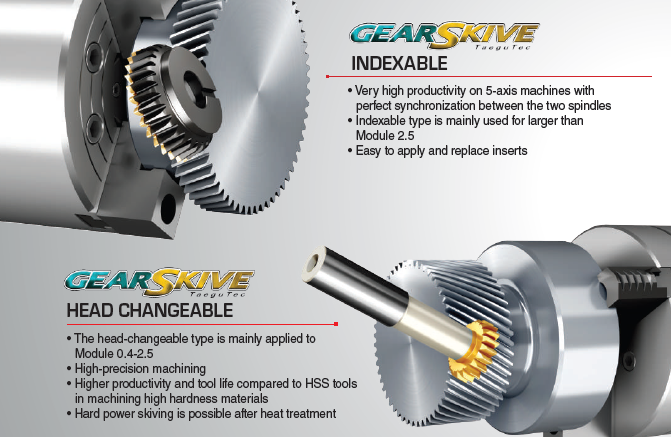
It is expected that the machining of automobile transmission gears will continue into the future with 7-speed and 8-speed transmissions, even with the introduction of EV reducers. The core component of these gears and reducers is the planetary gear set, with the power skiving being an innovative method for machining ring gears.
Power skiving was conceived in the beginning of the 20th century. Though highly productive and flexible, this method was difficult to implement because it required precision equipment and tools. Today, however, the development of new geometries and grades of tools, as well as improved machine control, makes the power skiving process an interesting alternative for gear manufacturing.
Power skiving is basically an operation where a workpiece is machined into the shape of a desired gear. The two axes rotate according to the gear ratio, due to the intersecting angle between the gear axis and the tool axis, resulting in skiving cutting in the direction of the gear’s tooth line, and continuous skiving cutting occurs with a combination of hobbing and shaping.
Advantages of Power Skiving Machining Method
The advantages of the power skiving machining method are as follows:
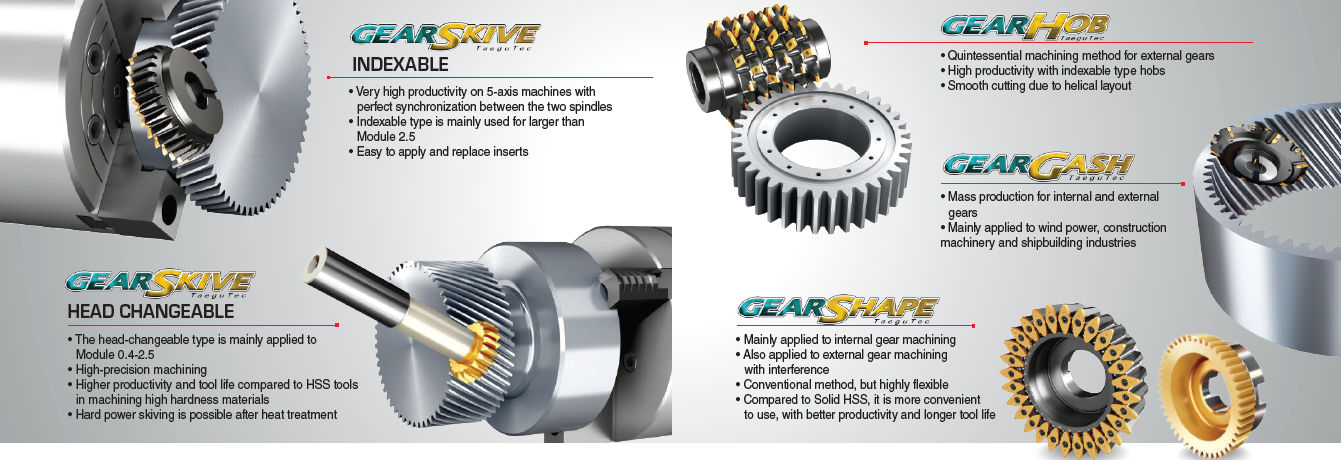
Power skiving replaces most of the conventional gear machining methods: Such methods include broaching, shaping and hobbing, which are used depending on internal/external gear machining and interference issues. Power skiving is more flexible than broaching, because it can be applied to blind and through hole gears. Hobbing can only be applied to external gear processing but cannot be applied if there is interference, whereas power skiving can also be applied when there is interference with internal/external tooth processing. In shaping, compared to power skiving, the tool has a longer contact time with the workpiece and generates much cutting heat, which is disadvantageous to tool life. Another advantage to power skiving is its excellent profile accuracy in the lead direction.
High productivity: In the power skiving process, the cutting speed is in the tooth line direction of the gear, so the milling rotation speed of the cutter must be multiplied by sinΣ (intersection angle).
Although there is a difference, depending on the angle of intersection, the revolutions per minute (RPM) of the spindle must be about 4 times faster than that of conventional milling in order to obtain the desired speed with a carbide tool.
At this time, the workpiece rotates according to the gear ratio, and since continuous cutting is performed according to the way the gear is generated, the cutting speed becomes very fast.
Power skiving differs depending on conditions, such as the module and pressure angle, but it is generally 4 times faster than hobbing and about 10 times faster than shaping. Therefore, it is possible to significantly reduce the number of machines used in the machining process. For example, one power skiving machine can do the work of 10 installed shaper machines. This is the basis for reducing space, minimizing equipment investment and reducing manpower costs.
One machine for turning, milling and gear machining: Traditional gear machining requires separate machines for each process; for example, shaping is usually done on the shaping machine and hobbing is done only on the hobbing machine. However, in the case of power skiving, all the work is done on one 5-axis multitasking machine, making it possible for the operator to complete turning, grooving, milling, drilling and chisel machining, all in one setting. This eliminates the need for separate setup time and can dramatically shorten the cycle time.
High compatibility: With the same module and pressure angle tool, power skiving processes of spur gears and helical gears are machined within the range of formed crossing angles in the production of internal and external gear teeth. In addition, it is also able to machine the various numbers of teeth.
Less interference when machining: Hobbing can only be applied to external teeth and cannot be applied when there is workpiece interference, but power skiving can reduce the component size and weight when machining gear parts. Gear tooth profiling using shaping has relatively even less interference than hobbing, but the productivity is low and undercutting is essential when machining blind hole types. However, power skiving avoids this issue with a programmed tool path, even if there is no undercutting required.
Hard power skiving for internal gears: After gear cutting, partial deformation occurs when heat treatment is performed to increase the hardness of the gear surface. Hard power skiving refers to finishing the deformed part with a carbide power skiving tool. Previously, there was no way to efficiently process heat-treated small and medium-sized internal gears, therefore, power skiving will become a game changer in gear cutting in the future.
TaeguTec’s Power Skiving Tool Technology
TaeguTec is a leader and innovator of advanced metal cutting tools including insert types and head changeable solid carbide tools with advanced technology in the production of power skiving tools.
Essentially, carbide tools have very high cutting speeds and high hardness, compared to HSS tools; this reduces machining time and increases tool life. The insert type is applied to gears in large sizes with the diameter of the tool being relatively large. In addition, the head changeable solid carbide tool is suitable for the gear processing of small sizes, such as automobile parts.
Usually, there is a high probability of problems, such as chip tangling, due to the rotation of the workpiece during internal gear processing, but TaeguTec’s cutting tools solve these challenges using an internal coolant supply. The head changeable type solid carbide tools not only guarantee high-precision because of its rigid and precise fastening structure but also eliminates the need for setup intervals, due to simple indexable head replacement, which enables high cost reduction.
For more information, please contact TaeguTec – Tel: 011 362-1500.
The MULTI-MASTER system, an innovative range of assembled tools with exchangeable cutting heads, was originally introduced by ISCAR at the start of the 21st century, making the product as old as the era itself. Despite its age, the MULTI-MASTER has demonstrated remarkable longevity and remains highly popular in the metal cutting industry. Moreover, although the concept provoked widespread doubts initially, it paved the way for numerous competitors to develop similar solutions based on the same elements.
The MULTI-MASTER design centers the cutting head in the tool body using a short taper, ensuring face contact through elastic deformation of the body’s female taper area, while the head is secured in place by a threaded connection. Initially, the use of threads was met with significant scepticism, as threading can act as a stress concentrator in cemented carbide, the hard but brittle material used for the exchangeable heads. Such conditions can present a potential weakness, an Achilles’ heel, in the design. However, the introduction of a specially engineered thread profile provided an elegant solution to this problem, effectively settling these hesitations. This innovation inspired many companies to adopt threaded connections for cutters with exchangeable carbide heads. As a result, almost every leading brand now includes such cutters in their product ranges.
What benefits of the MULTI-MASTER family explain its longevity? Which features contribute to the product’s enduring success in the industry? These frequently asked questions are worth further consideration.
First, the MULTI-MASTER concept is based on three key elements, the product’s design triad, taper centering, face contact and the connection thread, which together provide significant advantages. Taper centering ensures high accuracy, while face contact uses the head overhang within strict tolerance limits, resulting in excellent dimensional repeatability of the assembly. The threaded connection makes replacing the heads simple and operator friendly.
Owing to its high accuracy, the MULTI-MASTER stands as a strong competitor to solid carbide tools. Maintaining the head overhang within close tolerances meets the requirements of the important “no-setup time” principle, as replacing a worn head does not require additional setup operations. The head can be changed without removing the tool from the machine, which significantly reduces machine downtime. This is an important attribute of assembled tools for tomorrow’s smart manufacturing.
The thread connection allows the tool body to mount different cutting heads and vice versa, transforming the body into a universal holder and thereby reducing both tool inventory and storage needs. The bodies (referred to as “shanks” in MULTI-MASTER terminology) are made of steel, cemented carbide with considerable stiffness, or heavy metal, which offers excellent vibration-dampening properties. Moreover, the wide selection of MULTI-MASTER adapters, extensions and reducers simplifies tool customization, ensuring the optimal tool configuration for specific applications and diminishing the need for special tools.
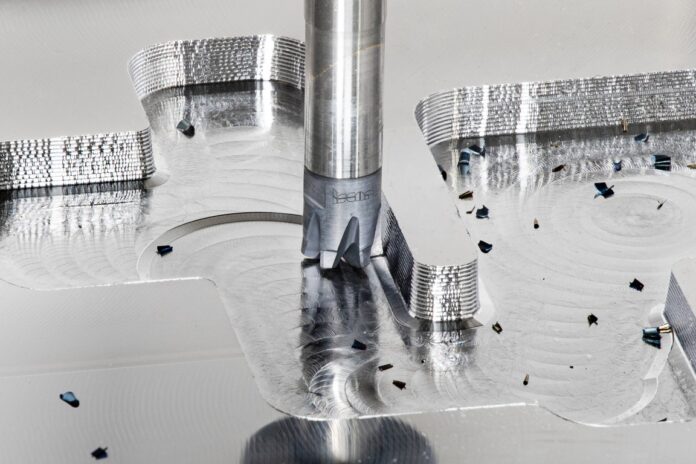
All of this enables thousands of efficient assembled tool combinations for a broad range of machining applications, including milling, holemaking, threading, engraving and even gearing.
Additionally, the MULTI-MASTER system features another characteristic that makes it particularly relevant today. In recent years, the prices of tungsten-containing ores and raw materials have risen rapidly, due to various factors. This has led to a significant increase in the cost of tungsten carbide, a primary material for cutting tools, which in turn, has had a major impact on overall tooling costs.
As a result, manufacturers in the metalworking industry are reassessing their priorities, and the need for cost-effective tooling solutions that can substantially reduce expenses has become more important than ever. Given these circumstances, the MULTI-MASTER system stands out, as it offers impressive opportunities for economizing on tungsten carbide. This makes it a truly groundbreaking solution for today’s challenges. A MULTI-MASTER assembly approaches the performance of a solid tool not only in terms of accuracy. The extremely rigid connection between the head and shank gives the assembly stiffness comparable to that of a monolithic design. In the MULTI-MASTER system, the advantageous combination of accuracy and rigidity, enhanced by the system’s versatility, offers a valuable, cost-effective alternative to solid carbide tools.
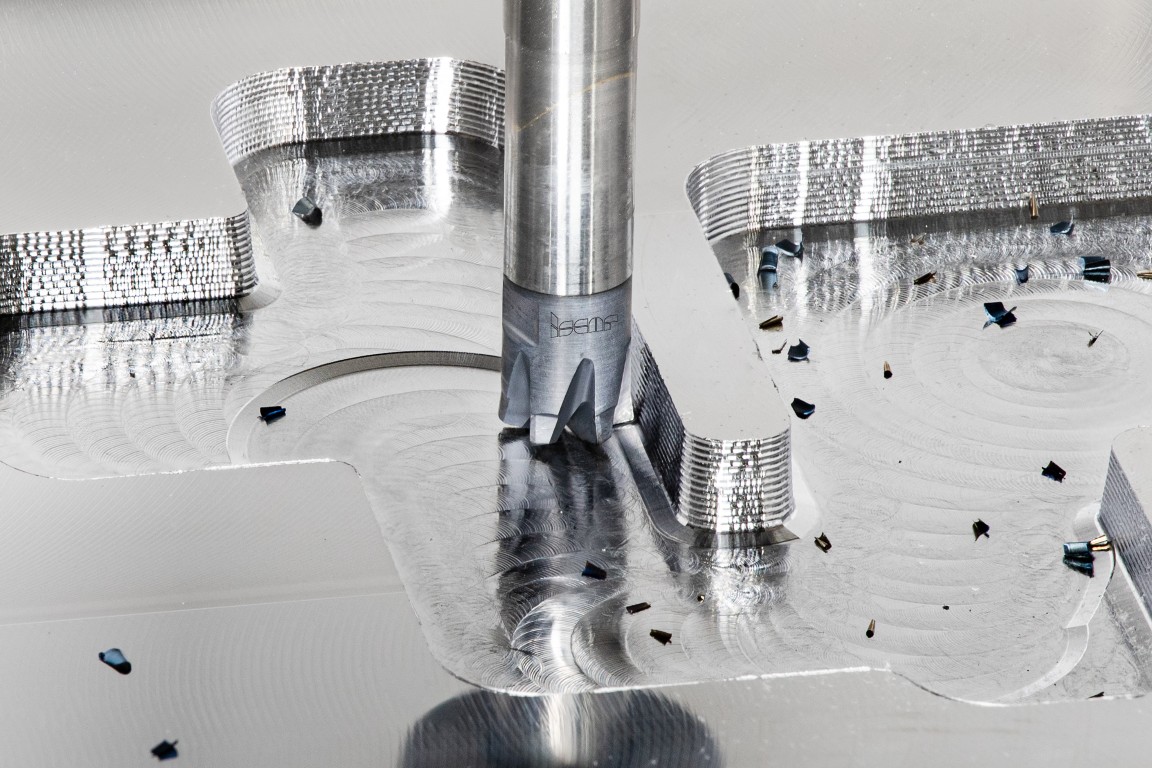
Over its more than 25-year history of continuous innovation, the MULTI-MASTER system has developed a rich product portfolio. Its application range includes milling shoulders, slots, planes, 3D surfaces, threads, gears, splines, chamfering, drilling and countersinking. Beyond exchangeable solid carbide heads, the system now incorporates heads with indexable inserts, significantly expanding its versatility. Though major developments have reached their natural limit, ISCAR engineers continue to introduce new products, keeping the MULTI-MASTER family fresh and dynamic. These new designs, whether prominent or subtle, demonstrate that the MULTI-MASTER story logically (logIQally!) continues. Let’s look at several recent additions.
Solid Carbide Milling Heads
The assortment of MULTI-MASTER’s standard-line solid carbide heads is extensive, encompassing a wide variety of shapes, including cylindrical, tapered, ball-nose, disc-type, toroidal and others, within a nominal diameter range of 5–32 mm. While it may seem that this diversity fully satisfies design requirements, ISCAR continues to expand the line with new products each year.
Among the latest additions are six-flute high-feed milling (HFM) heads for efficient roughing, capable of machining steels hardened up to HRC 65; six-flute dovetail groove milling heads with cutting edge angles of 120° and 135°; and four-flute, 32-mm-diameter heads for milling aluminium and other ISO N materials, featuring an anti-chatter design, sharp cutting edge and polished rake face. The increased number of flutes is intended to promote productive machining combined with rational and sustainable utilization of carbide material.
Shanks
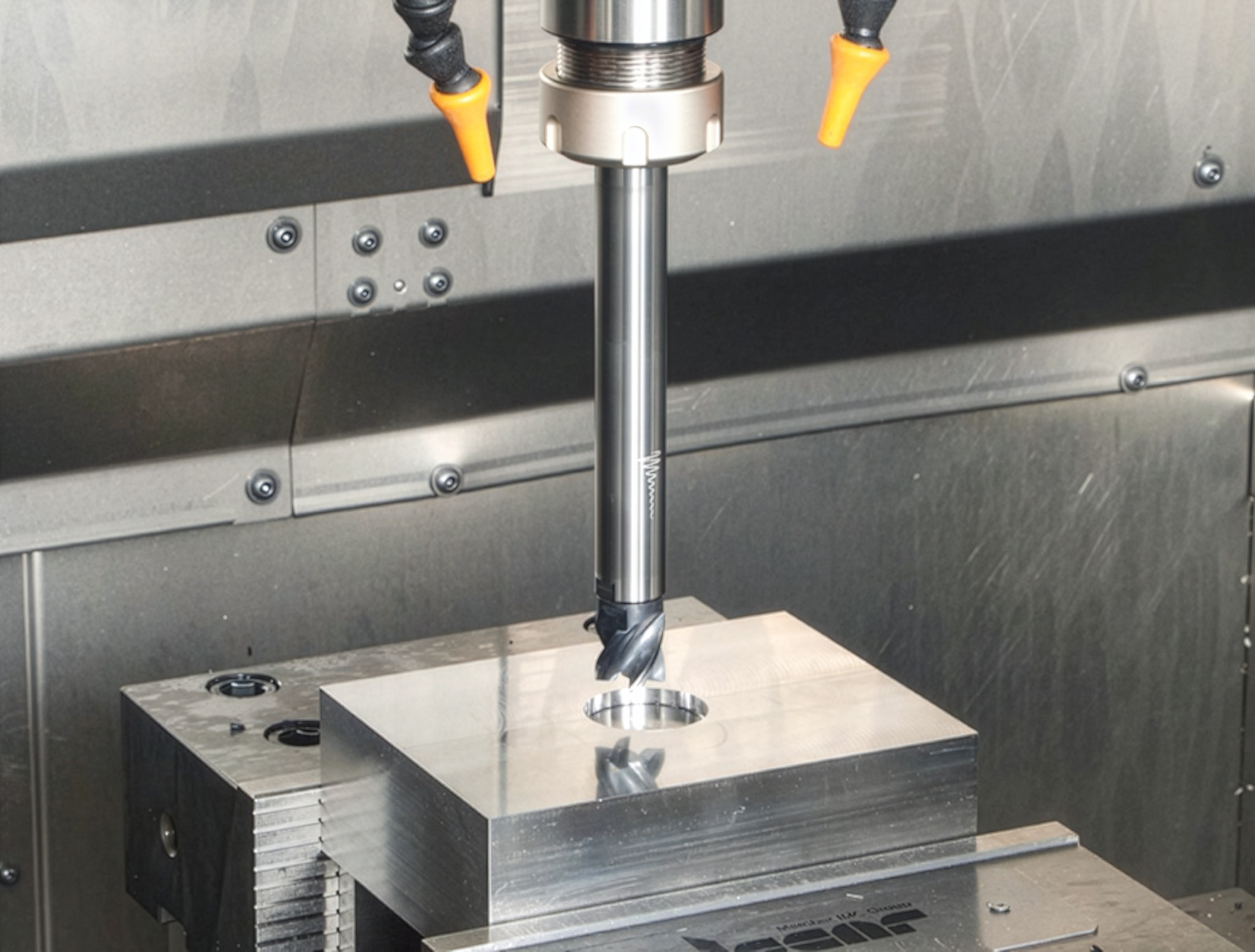
Recently, ISCAR introduced new MULTI-MASTER anti-vibration shanks featuring an innovative assembled-structure concept, a carbide body integrated with a built-in vibration-damping mechanism. Such a combination of a high-stiffness material and an oscillation-absorbing mechanism dramatically improves dynamic performance by minimizing vibrations during cutting. As a result, these shanks enable enhanced performance in long-reach applications and under unstable machining conditions.
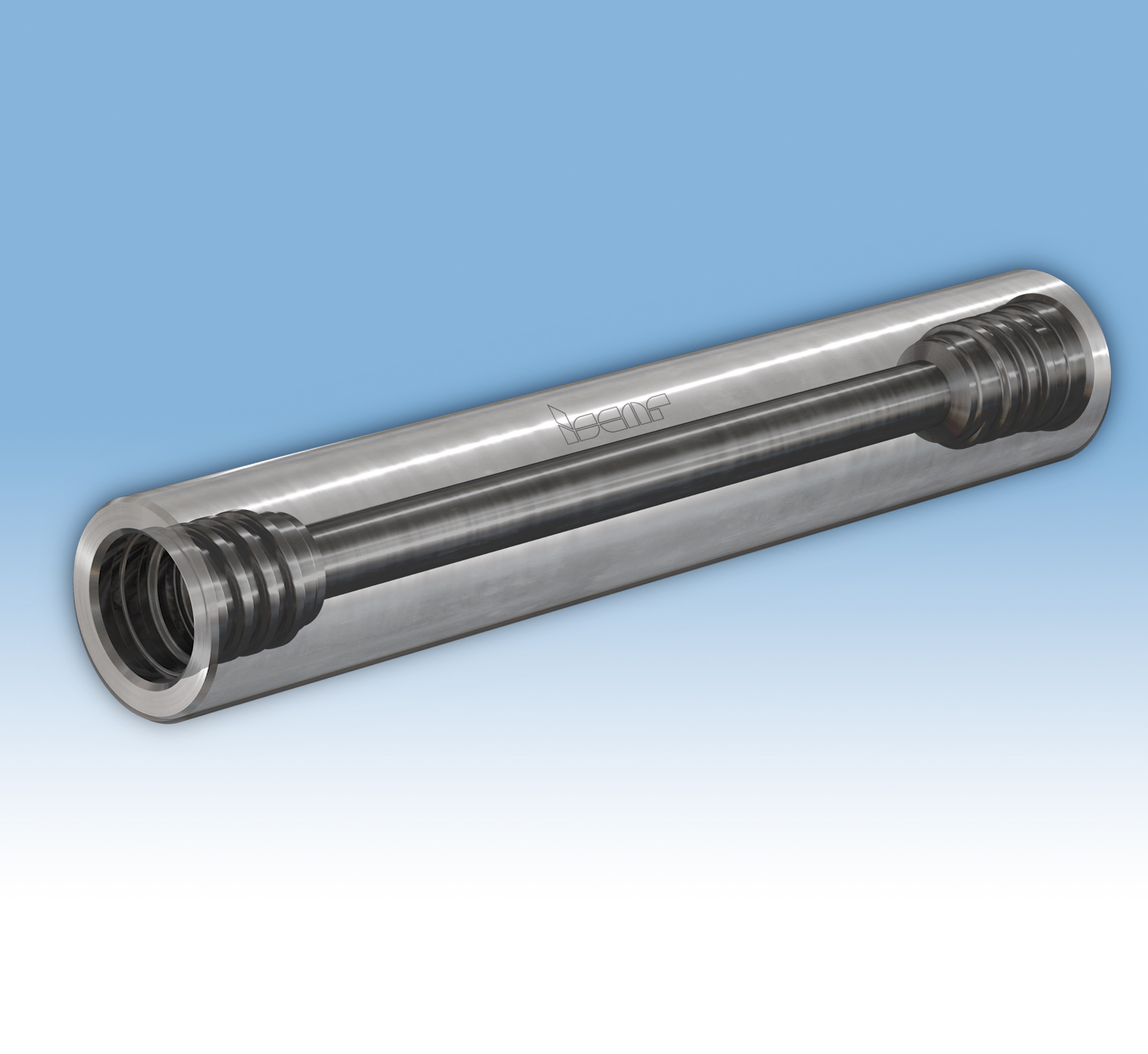
Another seemingly minor, yet highly valuable, addition is the double-sided shank design. This design incorporates two head pockets on opposite ends of the shank and a central through-coolant hole, offering a cost-effective solution that can help reduce customer tool inventory.
Threading Solutions
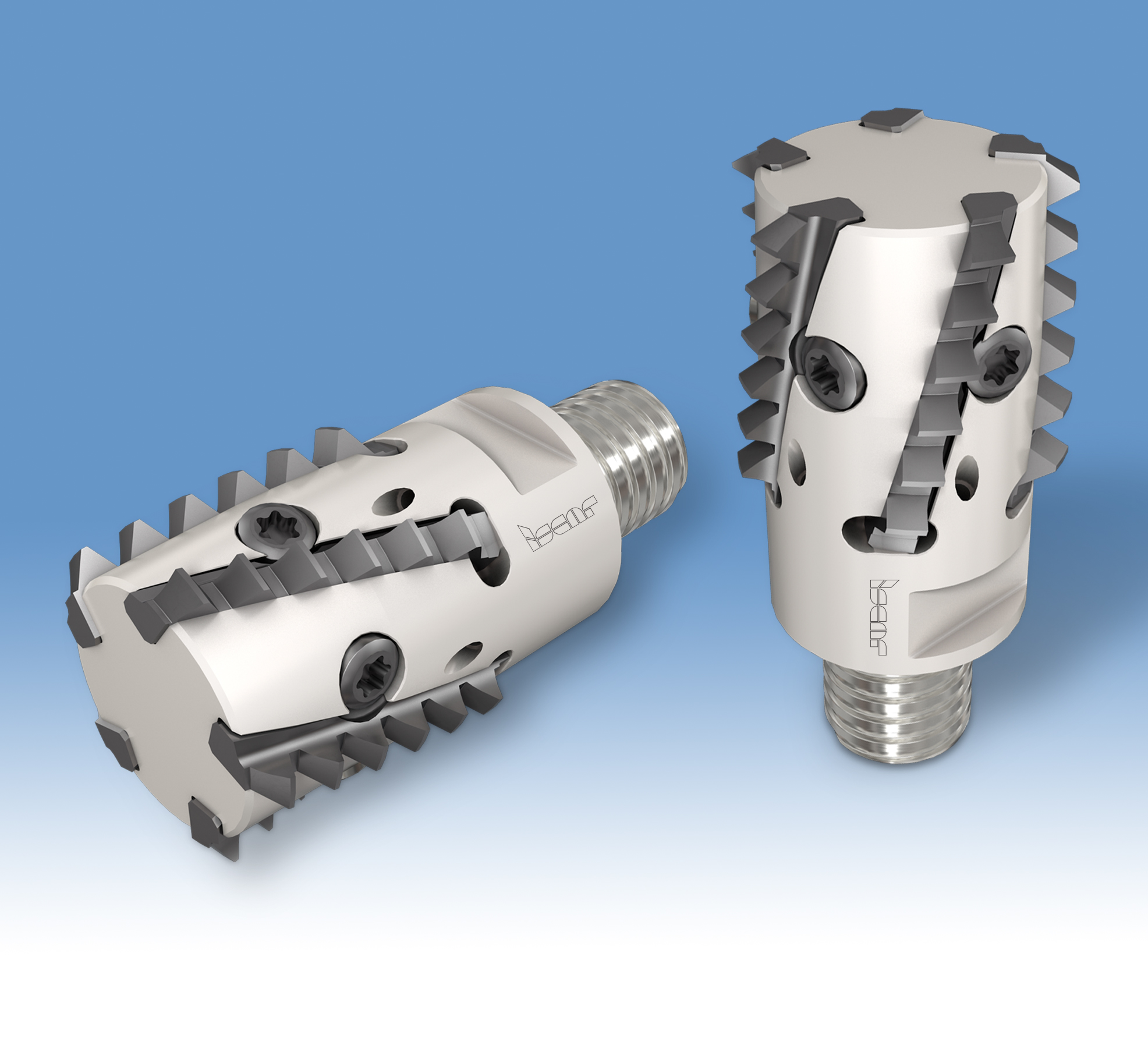
MULTI-MASTER threading products include various exchangeable heads with both full and partial thread profiles of 60° and 55°, known for their impressive reliability and dimensional repeatability. This range is continually expanding with the introduction of new heads. One of the latest developments is the high-performance thread milling head with spiral single-sided inserts.
The helical cutting edge ensures smooth and stable cutting, which significantly reduces cutting forces and power consumption. The benefits of the helical edge are especially pronounced when thread milling with a high tool overhang, particularly when using the new anti-vibration shanks.
Holemaking Products
In hole making applications, the MULTI-MASTER line now offers three-flute solid carbide heads. These heads combine the highly efficient three-flute concept, which originates from ISCAR’s LOGIQ-3-CHAM family, with the exceptional robustness of the MULTI-MASTER system. Thanks to this combination, the tool is particularly effective for shallow drilling operations, especially when machining materials that produce short chips.
A similar interfamily combination is seen in the modular drilling heads that incorporate key design elements from the successful SUMOCHAM family into the MULTI-MASTER platform.
This new development provides the customer with a flexible drilling solution that is easily adaptable and simple to set up for a range of applications.
The history of MULTI-MASTER, which began more than a quarter-century ago, continues to be a story of success. Its versatile tool system has not only withstood the test of time but has also made a significant impact on the development of cutting tools. The MULTI-MASTER concept has yet to reach its full potential and continues to evolve, consistently providing masterful solutions for a wide range of metal cutting operations.
For more information, please contact ISCAR South Africa (PTY) LTD – Tel: 011 997 2700.
By Paul Savides, Managing Director, PBS Machine Tools
“Discussion sharpens one’s interest in any subject and accordingly inspires reading and corrects errors.”-Nelson Mandela (1918-2013)
When evaluating machine tools, value for money is not determined by purchase price alone. The real measure lies in the machine’s ability to produce quality parts profitably over its lifetime.
Paul Savides Managing Director, PBS Machine Tools
A more accurate way to assess value is through Total Cost of Ownership (TCO) and overall machine optimization, a combination of structural integrity, availability and utilization. In simple terms, the cheapest machine is not always the most cost-effective machine.
Key Indicators of Value for Money:
Structural Integrity
Machine weight is often used as an indicator of structural rigidity, which contributes to accuracy, vibration control and long-term durability. A rigid machine typically delivers better consistency and longevity.
However, true structural value goes beyond physical mass. The real question is, how quickly does the machine pay for itself? A machine that improves productivity, increases output, reduces scrap and lowers labour or maintenance costs often delivers stronger long-term value than a cheaper alternative.
High Uptime and Reliability
Reliability is one of the clearest indicators of value. A machine with minimal unplanned downtime, low maintenance requirements and dependable performance contributes directly to productivity and profitability. Lost spindle time is lost revenue.
Lower Cost per Part
Many manufacturers continue operating at traditional speeds and feeds without fully evaluating their cost-per-part performance. Cost per part is typically influenced by Machine Hourly Cost, Cycle Time, Tooling Cost and Number of Parts Produced.
When these factors are optimized, premium machine tools can often reduce cost per part by more than 15%, while significantly improving gross profit per component compared with lower-cost alternatives.
Practical Method for Assessing Value:
Analyse Total Cost of Ownership (TCO)
TCO looks beyond the purchase price and considers the machine’s full lifecycle cost:
TCO = Acquisition+Operating+Maintenance+Training+Disposal-Residual Value
A lower-cost machine may appear attractive initially, but can result in significantly higher long-term costs, due to maintenance, downtime, inefficiency or poor resale value.
Compare Market Value
Benchmarking similar new or used machines helps establish fair value. Factors such as machine age, condition, performance history and remaining useful life, should all be considered before making a purchasing decision.
Evaluate Used Equipment Carefully
When assessing a used machine, maintenance history is critical. Review maintenance logs for signs of neglect, excessive wear or improper servicing. Machine hours should align with overall condition, as heavily worn components may be costly to replace or in some cases no longer available.
Match the Machine to the Application
The best machine is the one suited to the job. Purchasing decisions should be based on production requirements, such as material removal rate, precision, repeatability and output expectations rather, than simply selecting the machine with the most advanced features or the machine with the fastest delivery time.
Value versus Price – Understanding the Difference
Quality over Cost
Higher-performance machines often generate a better return on investment than lower-cost alternatives. While the initial purchase price may be higher, improved productivity, reduced scrap, greater reliability, and lower cost per part frequently justify the investment.
Watch for Hidden Costs
The purchase price is only one part of the equation. Training, electricity consumption, spare parts availability, tooling compatibility, maintenance requirements and downtime costs, should all form part of the buying decision.
Consider Resale Value
High-quality machines generally retain value better over time, reducing ownership costs and improving long-term investment returns.
Final Thoughts/Conclusion
Although Total Cost of Ownership is still not a common purchasing approach in many manufacturing environments, it is becoming increasingly important for maintaining competitiveness.
In an industry facing growing pressure from imported products and tighter margins, investing in equipment based on lifecycle value rather than upfront cost, can provide a meaningful competitive advantage.
For more detailed, industry-specific guidance on calculating machine ownership costs and evaluating value for money, feel free to contact us.
For more information please contact PBS Machine Tools – Tel: 011 914-3360.
In a major development, Lead Machine Tools recently became the sole South African agent for German CNC Machinery giant, GROB.
With 100 years of experience and almost 10 thousand employees globally, GROB is one of the largest manufacturers Lead has ever signed with.
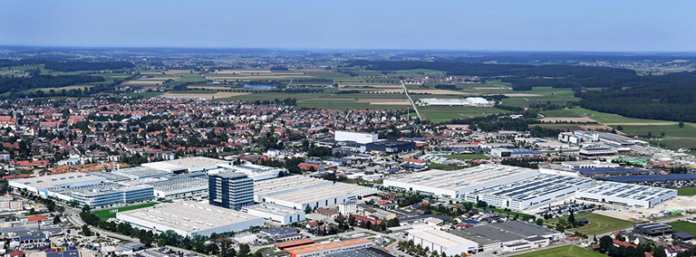
For half a century, the city of Mindelheim has been the headquarters and heart of the GROB Group. With a production space of more than 210,800 m² and around 6,100 employees, the German plant is the biggest employer in the Unterallgäu region and continues to offer more and more people from the region secure employment.
The Mindelheim plant is the central hub of the global growth strategy and, with the Research and Development Department, is home to two of GROB’s key competences. The large-scale production facility ensures the globally renowned vertical integration and guarantees the best value creation with maximum cost-efficiency.
From innovative manufacturing lines to complete assembly systems through to universal machining centers and electric drives – the company’s entire product range is made here in its headquarters.
GROB has production facilities in Germany, Brazil, China, USA, Italy and India, as well as worldwide service centers and sales subsidiaries.
Equipped with twin turrets and twin spindles this is a multi-tasking fully intelligent turning-milling CNC lathe for complex machining.
Opposed left and right spindles and turrets allow independent machining by each spindle/turret system with interchange between the systems to reduce cycle times for highly complex machining, while the compact working area with twin machining stations is designed for flexibility and fast component transfer for highly cost effective machining. Full roller guideways allow higher speeds that shorten cycle times to enhance capability for mass production. Increased distance between linear guideways on each axis improves rigidity and stability for highly accurate machining, while the gantry loading option allows high speed mass production with minimal operator intervention.
An option to equip the MX-800 with a gantry loading system and parts conveyor radically shortens component handling times and coupled with the design of the twin turret/twin spindle system for the highest machining speeds, it provides the perfect solution for high-speed mass production.
For more information, contact 600 SA Machine Tools – Cell: 072 157 6003.