Home Blog Page 17

DMG MORI M1 FOR OUTSTANDING MILLING PERFORMANCE

The DMG MORI M1 milling machine locally available from Retecon offers perfect machining performance and high surface quality thanks to superior stiffness, while large heat capacity of the components guarantees thermal stability. The unique design of the machine is based on a monolithic bed.

The perfectly suited working area is combined with a compact footprint of only 6 m2 and the fixed and rigid table has a maximum load capacity of up to 600 kg assuring high machining performance.

The outstanding quality of the DMG MORI inline spindle is well proven with more than 3,000 units installed worldwide.

Design based on monolithic Bed

APPLICATION EXAMPLES

Bracket (Aerospace)
Support plate (Automotive)


Assembly plate (Engineering)
Electronic housing (Engineering)


For further information, please contact RETECON – Tel: (011) 976 8600.

Visit RETECON

LOGIQ-8-TANG NEW 90° CUTTERS CARRYING TANGENTIALLY CLAMPED INSERTS WITH 8 CUTTING EDGES

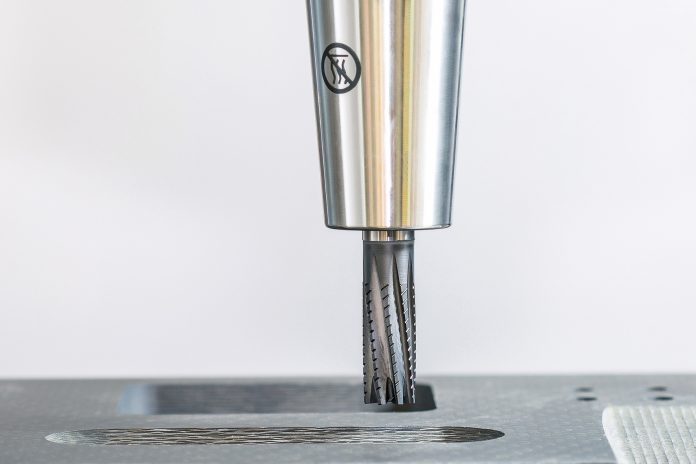
ISCAR is introducing new cutters that carry tangentially clamped inserts with 8 right-hand cutting edges, intended for face and shoulder milling. They are suitable for a wide range of workpiece materials including different types of steel, stainless steel and cast iron and are designed for roughing and finishing operations in the automotive, die and mould industries and for general engineering.

The new T890HT cutters feature 90° cutting edge angle and a rigid dovetail clamping configuration. Coolant channels are directed to each cutting edge, while polished coating of the cutter body facilitates chip flow and protects against corrosion and wear.

The tools include T890HT ELN endmills in 32 and 40 mm diameters with cylindrical and Weldon shanks and T890HT FLN Face mills in 40, 50, 63, 80, 100 and 125 mm diameters with coarse and fine pitch. The endmills and face mills are intended for machining square shoulders, slots and face milling.

The following new inserts are produced from ISCAR’s latest SUMO TEC carbide grades, which significantly increase productivity:

  • T890 LNHT 1306PNTR, a four-sided tangentially clamped insert for general use, featuring 8 right-hand cutting edges, 0.8 mm corner radii and a 9.5 mm maximum depth of cut.
  • T890 LNAT 1306PN-W, a wiper insert with 4 cutting edges for finishing operations, 0.6 mm x 45 deg. chamfer and a wiper for high surface quality.

For more information, please contact ISCAR South Africa (PTY) LTD – Tel: 011 997-2700.
Visit ISCAR

FACE AND SHOULDERS

The world of metalworking is undergoing major changes. Complex machining processes are unimaginable without the utilization of face milling operations. Face milling processes facilitate the preparation of datum surfaces by producing planes and flats, and enable improving precision and surface quality parameters. Moreover, the production of many rotating parts is incomplete without face milling. Face milling is the very operation that cannot be undermined.

In face milling, the axis of a cutter is normal to the machined surface. A large majority of face mills or surface milling cutters are common indexable tools in shell mill configuration. They feature various tool cutting edge angles (entering angles) such as 45°, 60°, 65°, 75°, 90°. Face mills intended specifically for productive rough machining by use of high feed milling (HFM) methods have a significantly smaller cutting-edge angle, typically 10°-17°. In some cases, shell mills that mount round inserts enable extremely strong cutting edges. The cutting-edge angle has an impact on the decomposition of the cutting force, which acts on the plane of the cutter axis, on radial and axial components referred to as radial and axial cutting forces. With all else being equal, this angle defines the maximum depth of cut. The cutting-edge angle largely determines the application field of a face mill making 45° face mills most versatile. Such mills have an important advantage that stipulates a first-choice selection of 45° cutters in face milling, specifically when machining open plane surfaces. These cutters assure a good balance of radial and axial cutting forces, a high-quality machined surface, and favourable cutting conditions when a tool enters or exits the material being machined. The most common face mill types are 45° cutters.

However, 45° face mills have certain disadvantages with an emphasis on forming rectangular profiles. Although machining square shoulders characterizes end milling applications, there is a need for rectangular profiles as well. All plane surfaces of a machined part are bound by shoulders. Applying 45° face mills even when cutting near to shoulders may entail difficulties. Face mills with 90° cutting edge angles are regularly in demand for rectangular profiles. In addition, 90° tools assure low axial forces providing good reason for machining parts with thin-walled structures or cutting under poor clamping conditions. Beyond that, inserts for 90° face mills provide a higher depth of cut when compared to the same-size inserts, intended for 90° endmills.

The correct and sensible method to design 90° face mills utilizes the same inserts that are intended for 90° endmills. This concept provides high insert versatility and remains prevalent. To ensure a good surface finish, the inserts of large diameter multi-toothed indexable face mills should be designed with a wiper flat that is significantly larger compared to an endmill, which is characterized by fewer teeth. Tool manufacturers maintain various principles in their developments which focus on productivity solutions, shoulder profile accuracy, and the efficient utilization of tungsten carbide being the main material of indexable inserts. The ideal design provides excellent solutions and complies with competitive machining requirements.

NEODO S90° is a family of 90° face mills that mount 8 mm double-sided square carbide inserts.

This family of inserts is intended for rough and semi-finish machining of steel and cast iron. The double-sided insert concept shows a durable insert structure and facilitates 8 indexable cutting edges. The insert may appear simple, but when looking closely, the insert side surface features a complex shape that provides a wide wiper flat on every cutting edge. The face mills have a positive radial and negative rake angle and ensure an exact 90° profile when milling with depths of cut up to 5 mm. The NEODO S90° cutters enable face and shoulder milling while providing an additional option for machining close to shoulders where workpieces or work holding fixtures entail constraints.

In small tool diameter ranges between 32-63 mm, ISCAR introduces a family of the HELIDO Trigon Line.

This family of tools is characterized by high-tooth density face mills with double-sided trigon-shaped inserts for true 90° profiles at a depth of cut up to 4 mm for ultra-high productivity. The insert’s trigon shape provides 6 indexable cutting edges and forms positive tool rakes in both radial and axial directions. Combined with a wide wiper flat, the insert’s design contributes to an improved surface finish and easily performs ramp-down milling.

LOQIQ-8-TANG face mills mount tangentially clamped inserts with 8 cutting edges and provide a cost-beneficial solution for rough machining planed surfaces near square shoulders.

The tangential insert mounting concept combined with a dovetail clamping principle and a durable insert structure results in a strong and rigid tool design to withstand heavy loads in roughing applications.

ISCAR has upgraded the HELIQUAD family of 90° mills with traditionally designed single-sided square inserts. Specifically, the new inserts are intended for machining titanium and heat-resistant super alloys (HTSA), especially when milling near-to-shoulder faces.

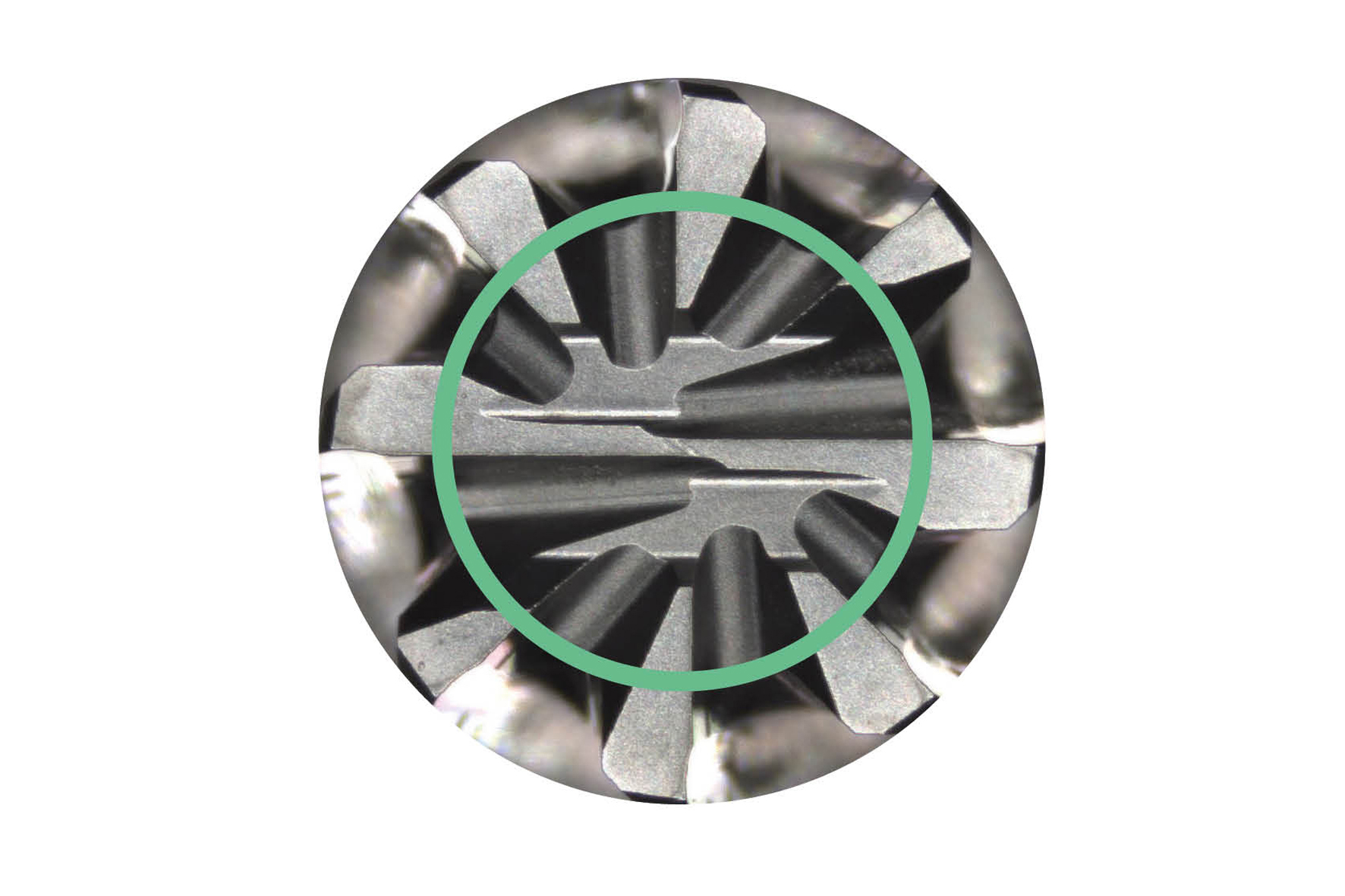
In milling applications that require small tool diameters, MULTI-MASTER solid carbide exchangeable face milling heads in diameters of 12-25 mm can provide effective results.

Due to the multi-tooth design, the heads guarantee productive cutting at high feed speeds. An important advantage of this unique face milling head is its high precision attributes, which are comparable with those of solid carbide tools. Such precision levels result in increased machining accuracy and excellent surface finish.

For more information, please contact ISCAR South Africa (PTY) LTD – Tel: 011 997-2700.
Visit ISCAR

PFERD’S CC-GRIND ROBUST – REVOLUTIONISING METAL FABRICATION PROCESSES WITH ITS EXTREME STOCK REMOVAL RATE, IMPROVED EFFICIENCY AND COMFORTABLE OPERATION

Transform your metal stock removal applications with the CC-GRIND ROBUST—the optimum solution for increased productivity, cost-effectiveness and improved operational efficiency. Its high-performance and ergonomic design surpasses that of conventional grinding discs, flap wheels and fibre discs, making it a modern choice for achieving unparalleled stock removal rates.

Extreme Stock Removal Rate of PFERD’s VICTOGRAIN

“The CC-GRIND ROBUST is PFERD’s latest generation grinding disc developed with ergonomics and efficiency improvement in mind. The CC-GRIND ROBUST consists of ceramic grains, optimally aligned on a glass fibre backing. The SGP version is part of PFERD’s VICTOGRAIN family consisting of triangular-shaped ceramic grain. The product achieves an extremely high stock removal rate, which significantly reduces processing time resulting in improved overall operator productivity”, explains Dennis Phillips, National Sales Manager at PFERD-South Africa.

Compared to conventional abrasive grains such as Aluminium Oxide, Ceramics have a significant advantage due to their ability to continuously self-sharpen. As Ceramics are used, their grains break down gradually, revealing new sharp cutting edges that consistently and aggressively cut throughout the product’s lifespan.

The ROBUST’s self-sharpening characteristics and cutting performance are even more pronounced. “VICTOGRAIN starts as triangles and is constructed to break down in a pre-defined and controlled manner, Phillips states. When the triangular grain breaks down, new and extremely sharp cutting edges are ready to continue the abrasive’s aggressive and fast grinding”.

ROBUST Optimises Grinding Processes and Improves Operational Efficiency

“The extreme stock removal rate and long tool life of the ROBUST provide a significant advantage for metal manufacturing operations. By reducing component processing times, more work can be completed in the same amount of time. Despite its aggressive stock removal rate, the ROBUST still achieves a consistent and high-quality surface finish. Accordingly, PFERD’s CC-GRIND ROBUST greatly optimises grinding processes and significantly enhances operational efficiency”, Phillips explains.

The high-performance ceramic abrasive grain removes metal quickly, substantially reducing the temperature in the grinding zone. As a result, there is no need for additional processing steps to remove heat discolouration.

Increased Comfort, Safety and Precision

The ergonomic design of the grinding wheel results in significantly reduced levels of dust, noise and vibration.

According to Phillips, operators who use the ROBUST grinding wheel experience significantly less fatigue due to its reduced vibration levels. Additionally, the use of this consumable results in less strain on machinery, reducing the need for frequent replacement and ultimately leading to lower operational expenses.

The improved air quality in the workspace and lower noise levels also contribute to a safer and more comfortable working environment for operators, further enhancing their comfort and safety levels.

Furthermore, the lightweight ROBUST means an operator can easily guide the abrasive on the workpiece for precise and accurate stock removal.

Variety of Applications on Steel and Stainless Steel

The ROBUST product range includes 115mm and 125mm grinding wheels that can be used for a wide range of applications—both portable and stationary. It’s ideal for tasks on steel and stainless steel such as surface grinding, weld dressing, deburring, chamfering and removing imperfections. Due to the tool’s dimensional stability, the ROBUST can produce flat surfaces while its adapted tool geometry eliminates the need for special clamping flanges, making it compatible with all commercially available angle grinders.

On-site Demonstrations and Assessments

Phillips encourages those who want to experience the CC-GRIND ROBUST to contact PFERD. “Our Application Specialists are available for on-site product demonstrations and application assessments—this way they can determine how the ROBUST can be implemented to help optimise your operations, “he concludes.

For more information contact Pferd Tel: 011 230 4000 or E-Mail: sales@pferd.co.za.

Visit PFERD

DYNAPATH WINDELTA

CNC Control System for Machine Tool Applications

The WinDelta Control system is a PC-based, fully closed loop CNC control solution featuring advanced motion control, built-in software PLC and a Windows-based HMI. The CNC hardware can be configured for up to 4-axis simultaneous motion control using an analogue voltage command interface or an optional digital interface. The system includes standard built-in motion, PLC and HMI modules, with the capability for custom development.

DynaPath’s specific strengths

DynaPath is a flexible, powerful, yet user friendly control solution at a reasonable price. The control provides solutions for the beginner to the most advanced in one easy to use platform, while remaining versatile for manual, semi-automatic and full production operations. This is all enabled by the intuitive touchscreen user interface, DRO + semi-auto mode operation, conversational editor + CAD edit + import programming capabilities and ability to run any standard G-Code program. Furthermore, the control also applies advanced motion control to execute the programmed tool path quickly and smoothly while accounting for the limits of the machine, a feature only found on high-end controls in the market. DynaPath provides consistency of product function and operation modes coupled with excellent price to feature ratio.

DynaPath controls feature every way of operation on a single platform in a format that is easy to learn and use from simple manual plus operations to doff downloads and offline Fanuc format G-code downloading.

DynaPath offers manual users DRO and semi-automatic operation of the machine via electronic handwheels so the machine can be operated directly without knowing any CNC or programming. Then on the same control DynaPath runs standard G-Code programs and macros that any CAD CAM can post to, so the control is essentially FANUC G-Code compatible. Finally,  Conversational Programming is available on the control that is quick to use and easy to learn with a built-in CAD system that can import and edit DXF files directly via the touchscreen.

DynaPath – Interesting Facts

The history of DynaPath controls began in 1970s with the System 10/20 series, then from 1980s to present the Delta 10/20/30/40/2000 series, then from 2010 to now the WinDelta 600/1000/H/M/T series. To date over 20000 control units were sold and most of these systems are still fully supported from the DynaPath Detroit main office. DynaPath OEM’s have provided a worldwide customer base throughout Europe, United Kingdom and Asia, with a majority of sales in the USA, however, the launch of the WinDelta series has seen more growth recently in Taiwan and China.

Dynapath has provided Mill, Lathe and Punch controls to OEM industry leaders including Tree Machine Tool, Republic Lagun, Chevalier Machinery, Mighty Enterprises, Monarch Cortland, Clausing, Machining Systems, South Bend, & LVD (US, Europe & UK).

Customers in the US include Ford, General Motors, General Electric, Honeywell Inc., Caterpiller Inc., Gradall Inc., Testron, Naval Surface Warfare Center, Lockheed Martin, JPL, USAF, Martin Automatic, Asyst Technologies, Electronic Theatre Controls, Monroe Mold and others.

A customer from Shelter Logic in Illinois says: “Our program time was reduced from 6 hours to 30 min with the new WinDelta DXF feature. This not only reduced programming time but also enabled our machinists to stay focused on the manufacturing process instead of re-entering part program numbers.”

Time savings using DynaPath

In general, programming a conversational program on the control takes less than 10 minutes. If a DXF file of the part is provided, programming takes even less time. If running a G-Code program, due to advanced path planning and smoothing, the cycle times are even quicker on the DynaPath control, often saving 10% to 40% machining time, particularly for programs containing fine contouring operations.

Advantages when investing in a DynaPath

A company representative from DynaPath says: “Strong advantages include features, cost, flexibility and plethora of programming formats plus our response time and availability. We are trying to beat the competition, not join them. So, to achieve this, we must employ a better tool.

“As a controls company offering unique machine tools, DynaPath makes machine tools that are specially integrated with the control in such a way that is feature-rich and oriented for that user segment, compared to other machine tool providers who simply integrate standard controls on standard frames.

“The DynaPath control combines ease of use, manual DRO operation, conversational programming, DXF editing, standard G-Code and macro compatibility, while measuring up extremely well against competitors.  The control offers advanced path planning with look-ahead, feed-forward, smoothing and dynamic roughing or finishing parameters to produce excellent machining quality. Additionally, there is remote assistance and remote diagnostics service built into the control,” he concludes.

DynaPath CNC training

For a novice, basic operation takes at around 1 hour to introduce each operating mode and screen navigation. Intermediate operation takes around 2 hours to set up work offset, tool offset, program a part and to run it. Advanced operation can be open-ended, but with remote training, customers can remote link anytime, while learning what is required from trained technicians and at their own pace. For any operator already familiar with other common CNC’s such as FANUC, the operator can almost seamlessly inter-operate between the two machines with minimal additional training.

For further information, please contact MJH Machine Tools – Tel: (031) 705 7514.

Visit MJH Machine Tools

MULTITRADE 3D SYSTEMS NOW A RESELLER FOR AMAZEMET IN SUB-SAHARAN AFRICA

Multitrade 3D Systems recently announced its partnership with AMAZEMET, a leading manufacturer of metal additive manufacturing equipment from Warsaw in Poland. The partnership will see Multitrade 3D Systems become the exclusive reseller of AMAZEMET equipment for the Sub-Saharan region.  This will add more products to Multitrade’s metal additive manufacturing portfolio, while providing AMAZEMET with a strong local market presence.

The AMAZEMET product range includes rePowder ultrasonic atomizer for metal powder production, inFurner – a compact high vacuum furnace, and safeEtch – a device for automated support removal from metal 3D-printed parts. By becoming the exclusive reseller for the Sub-Saharan Africa region, Multitrade 3D Systems will now be able to offer its customers access to the latest and most advanced metal additive manufacturing technology available. They are the authorized GE Additive and Meltio sales representatives for South Africa and the Sub-Saharan region, respectively.

“We are excited to partner with AMAZEMET, while bringing their cutting-edge equipment to the local and  Sub-Saharan market,” said Pamela van Jaarsveld, Managing Director of Multitrade 3D Systems, adding that it will help customers to improve their productivity and efficiency while reducing costs and supply chain risks.”

The partnership will also allow AMAZEMET to spread its mission of contributing to worldwide metal additive manufacturing development, and Multitrade 3D Systems will be providing its customers with the best installation, training and support services.

For more information contact Multitrade Distributors – Tel: 011 453 8034

Visit MULTITRADE 3D SYSTEMS

PRODUCTION TECHNOLOGIES ASSOCIATION OF SOUTH AFRICA

INTRODUCTION

The Production Technologies Association of South Africa (PtSA), established in 2006, is a membership-based organisation with the mission of promoting, protecting and supporting the collective interests of the Tool, Die, Mould and Special Machining industries (TDM Industry) of South Africa, in order to support the growth and development of all manufacturing sectors.

As part of this mission, the Association has entered into a partnership agreement with government (the dtic), the INTSIMBI Future Production Technologies Initiative, to develop programmes to address the needs of the TDM Industry in order to rehabilitate and grow the industry for the benefit of the manufacturing sector.

The Association offers various programmes and benefits to its members through its own project management and implementation agency.  These include improvements in efficiency, competitiveness and profitability of the member companies, as well as ensuring that the required skills are available to the members.

PtSA has a co-operation agreement with the Werkzeugbau Akademie (WBA) in Germany which is the leading world partner of the TDM industry in the areas of consulting, further education and research.

PtSA is a member of the International Special Tooling and Machining Association which gives the members access to a number of international associations and member companies, and also has partnership agreements with a number of national organisations for the benefit of its members.

PtSA Management Services (Pty) Ltd is a wholly owned subsidiary of the Production Technologies Association of South Africa NPO (PtSA). It is a special purpose vehicle and the operational capacity of PtSA, in addition it is the implementation agency responsible for the facilitation and management of all INTSIMBI FPTI programmes. 

INFORMATION ABOUT PRODUCTION TECHNOLOGIES ASSOCIATION OF SOUTH AFRICA

Mission:

Promoting, protecting and supporting the collective interests of the Tool, Die, Mould and Special Machining Industries of South Africa in continual support of the growth and development of all manufacturing sectors.

  • PtSA is the only Association which focusses exclusively on the TDM Industry in South Africa
  • PtSA has a partnership agreement with government to support the TDM Industry

PtSA Membership Benefits

Through membership of PtSA, companies join the national and global tooling industry fraternity.

Connectivity

  • PtSA members have the opportunity to become part of the national and global network of TDM companies.

PtSA is the collective voice of the TDM industry

  • PtSA regional executive committees coordinate inputs from members in each region in order to assist with formulating national strategies for engagements with government and authorities;
  • PtSA members have the opportunity to participate in interactive dialogue with government and authorities regarding the development of the industry;
  • The PtSA partnership agreement with government (INTSIMBI Future Production Technologies Initiative) facilitates dialogue between its own (TDM) industry and government.

Improvement of competitiveness of PtSA members

  • PtSA offers an international benchmarking process to its members;
  • PtSA facilitates the implementation of productivity improvement programmes in member companies;
  • PtSA, through the INTSIMBI partnership agreement, facilitates the funding of selected productivity improvements in member companies;
  • PtSA, through the process of improving the competitiveness of companies, facilitates the growth of the supplier base for the benefit of the larger corporates, and in particular the OEM’s.

Training and upskilling programmes

  • PtSA developed a number of SAQA approved artisan qualifications and training programmes for the tooling industry;
  • PtSA is a provider of toolmaking and machinist training programmes that ensure trained artisans are available to the industry;
  • PtSA has accredited training facilities in Western Cape, Eastern Cape, Gauteng and KwaZulu-Natal as the base for these artisan training programmes;
  • PtSA short courses are available to its members in order to continuously improve the level of skills within member companies, and in particular with regard to new technologies.

Networking, matchmaking and information programmes

  • PtSA hosts regular Networking meetings in the Western Cape, Eastern Cape, Gauteng and KwaZulu-Natal;
  • PtSA has a large and comprehensive database which is utilised for the benefit of members;
  • PtSA facilitates Business to Business (B2B) introductions;
  • PtSA hosts an annual convention to facilitate interaction amongst members and to assist with the communication of developments in the industry.

Better understanding of the Fourth Industrial Revolution (4IR)

  • PtSA facilitates the understanding of technology developments for its members by means of information programmes, demonstrations, publications and networking;
  • PtSA represents the TDM industry at a strategic level in formulating policies;
  • PtSA training programmes are continuously adapted to changing technologies.

PtSA facilitates international connections for its members through its membership of the International Special Tooling and Machining Association (ISTMA World)

  • Access to over 21 Associations in 20 countries/8000-member companies;
  • PtSA hosts attendance at International Conferences organised by ISTMA;
  • PtSA organises Trade Delegations.

PtSA promotes sustainable development within the industry to ensure long term growth of the industry

  • PtSA facilitates opportunities for members to have access to information, training, workshops, etc. on sustainable development.

Join the Best

Become part of the network of companies which forms the Tool, Die, Mould and Specialised Machining industry in South Africa:

  • Participate in the benefits of membership;
  • Support the growth of manufacturing in South Africa.

Who is eligible for Membership?

Membership of PtSA is open to any company or organisation involved in the Tool, Die, Mould and Specialised Machining Industries in South Africa, and companies which are wholly dependent on tooling for their production processes:

  • as manufacturers;
  • as suppliers;
  • as support services.

Membership Categories

Industry Membership

For companies actively involved in the design and manufacture of Tools, Dies, Moulds and Manufacturing systems, as well as companies undertaking Specialised Machining and companies which are wholly dependent on tooling for their production processes.

Associate Membership

Generally, for companies which are customers of, or suppliers to, the Tool, Die, Mould and Specialised Machining industry.

Institutional Membership

Generally, for associations, academic institutions or colleges, etc.

Registered Professional Membership

Generally, for toolmakers, technicians, engineers or relevant interested parties employed in the Tool, Die, Mould and Specialised Machining industries.

PARTNERSHIP FOR SKILLS DEVELOPMENT

To strengthen South Africa’s capacity to produce tool, die, mould and special machining skills, the TDM industry, as rep-resented by PtSA, partnered with the Department of Trade, Industry and Competition (the dtic) to form the INTSIMBI Future Production Technologies Initiative (IFPTI).

The Initiative was designed to meet the demands of the South African manufacturing industry for high-tech future-orientated toolmaking skills.

The PtSA TDM Powered Toolmaker Apprenticeship Programme is presented by PtSA Management Services (Pty) Ltd.

PtSA, as the Development Quality Partner (DQP), has developed a number of SAQA approved artisan qualifications and apprenticeship programmes for the Tool, Die, Mouldmaking (TDM) and Special Machining industry in South Africa.

How does it Work?

A 4-year apprenticeship that combines:

  • Trade Theory (theoretical training)
  • Simulated practical workshop training.
  • Work experience with participating companies (OJT).

What are the Trades and Qualifications?

  • SAQA registered and QCTO and merSETA accredited Toolmaker NQF Level 5 (SAQA ID 103177)
  • Tooling Machinist NQF Level 5 (SAQA ID 103142)

THE PtSA TDM POWERED TOOLMAKER APPRENTICESHIP TRAINING PROGRAMME

MINIMUM ENTRY REQUIREMENTS

Interested applicants must have successfully completed one of the following National Qualification Framework (NQF) Level 4 qualifications:

  • Grade 12 with Mathematics (35%), Physical Science (35%) and English (40%)
  • NC(V)4 with Mathematics (40%), Physical Science (50%) and English (40%)
  • N3 with Mathematics (40%), Engineering Science (40%) as well as Gr 12 or NC(V)4 English (40%)

THE PROGRAMME

L-R: Carlos Barbosa, Manager, Procurement and Facility Management, Joanne Canossa – representing Bystronic and Chairperson MTMA, Boitumelo P Mosupyoe, Intergovernmental Relations, Alroy Suvides – representing PBS Machine Tools and MTMA.

The Occupational Certificate: Toolmaker

On successful completion of the Toolmaker Trade Test the student will be awarded The Occupational Certificate: Toolmaker (NQF Level 05) – SAQA ID 103177. The Programme is modular and competency-based (not time-based) with a typical duration of 4 years (full time study) to achieve the Occupational Certificate: Toolmaker.

The design of the PtSA TDM Powered Toolmaker Apprenticeship Programme allows students to enter and exit the Programme at different stages enabling them to complete credential modules over a period of time.

Tooling Machinist

Specialised machining has always been a part of tool, die and mouldmaking. The industry therefore  has a significant need for trained machinists. A student who, for any reason, is unable to complete the PtSA TDM Powered Toolmaker Apprenticeship Programme can still obtain a part qualification as Tooling Machinist. This qualification consists of a specific number of conventional and advanced machining credential modules successfully completed by the student.

This allows students to exit at different levels and be employable prior to completing a full qualification. On successful completion of the Tooling Machinist External Integrated Summative Assessment the candidate will be awarded NQF Level: 05 Occupational Certificate: Tooling Machinist (NQF Level 05) SAQA ID 103142.

The Programme is modular and competency-based (not time-based) with a typical duration of 3 years (full time study) to achieve the Tooling Machinist qualification.

National Institute of Metalworking Skills (NIMS) Certified Machinist

The NIMS Certified Machinist qualification is an international qualification and forms the core of the tooling and machining qualifications offered by the PtSA TDM Powered Toolmaker Apprenticeship Programme.

On successful completion of the NIMS Certified Machinist Programme the candidate will be awarded the NIMS Certified Machinist qualification. The Programme is modular and competency-based (not time-based) with a typical duration of 2.5 years (full time study) to achieve the NIMS Certified Tooling Machinist qualification.

PtSA Tool, Die and Mouldmaking (TDM) Part Qualification Programmes

PtSA, as the Development Quality Partner (DQP), has developed a number of SAQA approved part qualification programmes for the TDM, Special Machining- and manufacturing industries in South Africa.

  • Occupational Certificate CNC Milling Machinist (SAQA ID: 102996)
  • Occupational Certificate CNC Turning Machinist (SAQA ID: 103099)
  • Occupational Certificate EDM Wire Operator (SAQA ID: 103017)
  • Occupational Certificate EDM Plunge Operator (SAQA ID: 103016)

Supporting Comment by the MTMA (Machine Tool Merchants Association):

South Africa is facing a critical shortage of skilled artisans, mostly because artisans are in high demand worldwide, particularly if they have completed the vocational training programmes.

In November 2022, Minister of higher education, science and innovation, Blade Nzimande, indicated that for South Africa to meet the demand of the skilled artisan drain, 60% of school leavers would need to qualify in an artisan trade. It is imperative that this issue is addressed promptly to ensure South Africa can start growing its talent base enough that the allure of overseas careers does not impact our manufacturing and engineering sectors.

It is up to South African industry associations, such as the MTMA, to give these skills development programmes a voice. This is why the MTMA plans to investigate how it, as an association, can strategically partner with the right institutions and help artisan skills development in South Africa in 2023.

For more information on the please see www.ptsa.co.za or contact PTSA on 012 760 0300.

Visit PTSA

TAMSEN MARITIM HOUSES THE LARGEST 5-AXIS MILLING MACHINE IN EUROPE

The entire hall is the work envelope - the largest 5-axis CNC milling machine in Europe.

After a retrofit, a HEIDENHAIN TNC 640 now controls one of the two portals

Factory hall = Work envelope. This simple equation is probably the best way to describe the huge 5-axis portal milling machine at the Tamsen Maritim shipyard. Installed nearly 20 years ago, one of the two portals has now been given a comprehensive retrofit, including a HEIDENHAIN TNC 640.

“In terms of enclosed space, our machine is the largest 5-axis CNC milling machine in Europe,” says Jörg Wicklein, head of Design at Tamsen Maritim in Rostock, as he proudly describes the impressive structure made up of two portals floating through the huge shipyard hall at a height of nearly 10 m. Thanks to their slender carbon lattice structure, each of the gantries weighs only 3 t, with a traversing range of 65 m in the X axis and 12.5 in the Y axis. The portals split the maximum machining height of 7 m: Portal 1, where the retrofit took place, services the lower machining heights from 1 m to 4 m, while Portal 2 machines the upper heights. The two height ranges overlap for 1.5 m. “We can’t attain the complete height of 7 m with a single portal because of the required spindle traversing ranges,” says Jörg Möller, the user of this enormous machine, explaining the two-portal solution. For smaller parts, there is therefore also a 4 m high machining table, on which workpieces can be placed within the overlapping range of the two portals for simultaneous machining.

A major wish: getting closer to the point of machining

This completely revamped portal machines the lower workpiece heights of approximately 1 m to 4 m.

Jörg Möller also had many wishes for the planned retrofit. For despite its size, the machine is mainly operated by him alone. Additional colleagues provide assistance only on projects that require machining across multiple shifts. “Flexibility was very important to me. When using the control, I like to be as close as possible to the actual point of machining,” says Möller, describing one of his most important requirements.

For this purpose, the TNC 640 is operated on a movable stand and is connected to the control cabinet located halfway down the hall by 100 m long cables. As a result, Jörg Möller can go anywhere in the hall with the control. If necessary, he even hangs it from a crane in order to move it to a platform or place it on the workpiece. “I now also have a wireless handwheel, which saves me a lot of legwork and often the need for a second man because it allows me to control numerous functions during setup,” he says, pleased with new the capabilities. After all, “there is nothing better than an unobstructed view of the workpiece.”

Also part of the retrofit – the portal’s motors.

 “What can I actually see when my cutter is working on something 80 meters away? Nothing! I need to be closer to the point of machining,” says Jörg Möller,the machine user.


Greater stability and accuracy

The control wasn’t the only component replaced during the retrofit; the retrofit team from the HEIDENHAIN agency TEDI also replaced the four motors that move the portal, as well as the way in which the motors act on the gear rack—a design developed by Tamsen Maritim itself.  A third bearing was also installed for each carriage, thus ensuring considerably smoother motion and permitting adjustment of the contact pressure between the drive belt and the gear rack, as well as allowing the individual motors to be mutually tensioned. “The belt is now in better contact with the gear rack, resulting in less play,” says Jörg Wicklein, explaining the reason for the measures. “Even though the accuracy requirements in shipbuilding and large-part construction are not the highest, our post-retrofit goal was a machine accuracy of 0.3 mm to 0.4 mm over a machining length of 80 m.”

Now, thanks to the handwheel, Jörg Möller can always get very close to the Tool Center Point.

However, mechanical modifications are not the only factors in achieving this. Following the retrofit, the entire machine will be measured by the Fraunhofer Institut for the creation of compensation tables. This is because the extremely long guide rails are not absolutely straight, and the huge portal also exhibits a certain amount of sag. All of these factors will be measured in order to be compensated for by the control, which is one of the strengths of the TNC 640 with its KinematicsOpt and KinematicsComp functionality. “It was precisely these compensation calculations that pushed the old control system to its limits,” reports Jörg Möller. “It simply lacked the computing power, which took a noticeable toll on performance.”

Cautious approach

Despite these noticeable limitations, Tamsen Maritim initially decided to convert only one of the portals. “There were three key reasons for this,” explains Jörg Wicklein: “Firstly, we didn’t want to completely shut down the plant for the duration of the retrofit. Secondly, no one at our company had experience with such an extensive project, so we wanted to wait for the outcome of optimizing the first portal. And thirdly, a retrofit like this incurs enormous costs, which we wanted to avoid for two portals at the same time.” Jörg Wicklein can hardly wait to complete the project: “The Fraunhofer Institute is already in the starting blocks to measure the system.” Wicklein won’t have to wait much longer: the technicians from TEDI are already configuring the axes on the new control and tuning the spindle.

What the portal milling machine produces

The vast hall dwarfs the TEDI technician team as they set up the control.

Tamsen Maritim predominantly uses its enormous machine to manufacture master models and master moulds for large plastic components, including 35 m long wind turbine blades and ship hulls. More than one of the huge, predominantly rigid- foam workpieces are often machined in the hall simultaneously. From Rostock, the master models and prototypes are then shipped throughout the world, including to Asia and the U.S. The sheer size of these parts makes not only their production but also the shipping logistics a challenge for Tamsen Maritim. As a shipyard, the company can use its location on the water to its advantage.


For more information, please contact Mafema – Tel: 083 263 5995.

Visit Mafema

THE NEW MAXXTURN 65 G2

The new MAXXTURN 65 G2

The new MAXXTURN 65 G2 has undergone an extensive redesign and, in addition to two powerful motor spindles, now also offers an optional BMT turret with direct drive. For the first time, three spindle sizes can be offered. A steady rest is available for shaft machining if required. While the proven two-part basic design has been retained, the integration of the chip conveyor has been optimized.

The generously dimensioned work area provides space for a large number of tools on the tool turret and, with an angle of inclination of 40°, ensures continuous chip flow even during low-manpower operations. An optional drag steady rest enables precise and safe machining of long shaft components. When not in use, it can be removed quickly and easily. The work area is optimally accessible, which also facilitates the setup for small batch sizes.

There are three spindle sizes to choose from. One is the 65 spindle with A2-6 and for larger bar parts once the 76 and the 95 spindle with A2-8. For complex milling operations, the spindle can be moved interpolating. The direct drive ensures extremely precise and dynamic positioning.

The counter spindle is available for complete workpiece machining. Turning, milling and drilling operations can thus also be performed on the back of the workpieces. The concentric takeover of the workpieces offers another advantage: the possibility to maintain a very high level of accuracy with regard to the coaxiality, concentricity and angular position values.

Fast 12-fold servo turret with very short switching times for VDI 30 or VDI 40 tools. The angle holders are equipped with ground alignment plates. This eliminates the need for time-consuming alignment of the tool holders. All stations are driven and the swivel speed is adjustable.

For the economical production of complex turning/milling work- pieces with a predominantly milling component, a 12- or 16-position BMT turret with direct drive is available as an option. With up to 12000 rpm, this turret offers optimum conditions for complete machining. The stable BMT interface allows coolant pressures of up to 50 bar as standard and up to 150 bar as an option. Further advan- tages are the changeover accuracy and stability of the interface.

The hydraulically operated steady rest with a centring range of ø 8 – 101 mm sits on a sliding carriage which is dragged and positioned over the tool slide. It is hydraulically clamped into position by a clamping device. Equipped with chip protection and end position control, the steady rest is connected to the central lubrication system.

In order to support slim components, the MAXXTURN 65 G2 includes a fully automatic tailstock. It is hydraulically moved over a length of 500 mm. The centre with MT4 cone is directly included in the tailstock body. This ensures compactness and highest stability.

The 90° offset machine base with the broad-based, pre-stressed guide rails ensures short overhangs and top stability for complete machining.

TECHNICAL DATA

For more information, please contact Elcomp – Tel: 011 238-7996/7

Visit Elcomp

SA CAR MAKER RETIRES TONGTAI VERTICAL LATHES AFTER 23 YEARS OF DEDICATED SERVICE

By Paul Savides, PBS Machine Tools

First installed in 1999, Tongtai’s vertical lathes were used as a fully automated cell to produce brake discs and brake drums.

These automated lines have run in full production since they were first designed and installed by Tongtai engineers and now they are being re-purposed to continue manufacturing parts; this is part of our commitment to reduce carbon emissions.

Obviously, while reducing carbon emission, the new range of Tongtai machines are vastly improved compared to the lathes installed in 1999.

But how do you improve something that has been so successful? At TIMTOS 2023 recently running in Taiwan, Tongtai has demonstrated the transformation to Green Economy with the help of the digital transformation they have applied since 2018.

Tongtai’s Line Management (TLM) system is already connected through the Industrial Internet of Things (IIOT) to 96 production lines which include 1,241 machines. Additionally, more than 2,000 machines of different brands are connected via the IIOT.

This is also available with subtractive hybrid machines.

In Tongtai’s endeavour to reach carbon neutral, they have entered into a program to redesign and upgrade the full range of machines.

The first step was to get Carbon Footprint Verification (CFV) so as to understand the technical requirement and regulations and then to assist customers with the process. This has enabled Tongtai to achieve 21.51% in energy saving performance and reduce carbon footprint by 23.19%.

It was achieved with a variety of functions including additive manufacturing, power consumption monitoring, carbon conversion, digital twin solution and energy saving modes built into the machines.

Power consumption monitoring is key in a country like South Africa.

For more information please contact PBS Machine Tools – Tel: 011 914-3360.

Visit PBS Machine Tools