
CUTTING CIRCLES FOR MILLING SLOTS
Modern Indexable Disc-Type Cutters and Exchangeable Heads for Efficient Slot and Groove Milling
“A circle is a round straight line with a hole in the middle” – Mark Twain
Disc type side and face milling cutters, often called slotting cutters and known as side mills in shop terminology, have long been an effective solution for slot and groove milling.
Compared with smaller diameter solid endmills, which are also used successfully for slotting operations, side and face cutters generally have a substantially larger diameter and can accommodate a greater number of cutting teeth. Consequently, even if the feed per tooth must be reduced somewhat, their higher tooth-pass frequency can permit a considerably higher table feed and metal-removal rate (MRR).
In the machining of deep slots and grooves, side and face cutters can also offer greater rigidity than long, small diameter end mills. This is another important factor in improving cutting efficiency and process reliability.
The effective cutting width of a side and face cutter determines the width of the slot. Therefore, a full-width slot can often be produced in a single pass.
Side and face cutters are available in non-indexable and indexable versions. In the latter, worn cutting edges can be renewed by indexing or replacing the inserts rather than by replacing the entire tool. Compared with solid carbide end mills, this can reduce tooling costs, particularly when carbide prices are high.
The principal advantages of side and face cutters are therefore high efficiency full-width slot milling, effective machining of deep and narrow slots, and, where indexable versions are used, the economic benefits of the exchangeable insert concept.
At the same time, the use of side and face cutters for milling slots and grooves involves several specific challenges.
In side and face milling cutters, teeth are provided on one or both side faces (“sides”) and on the outer periphery (“outer face”). Unlike cylindrical (plain) milling cutters, which remove material primarily with their peripheral teeth, side and face cutters combine peripheral cutting for producing the slot bottom with side cutting for forming one or both slot walls.
The cutting conditions of the peripheral and side teeth are not identical and their chip thicknesses and effective cutting speeds may differ. This can lead to unequal tooth loading and non-uniform wear of the cutting edges.
The peripheral teeth generate most of the tangential and radial cutting forces, while the side teeth produce axial forces. When teeth on both sides are engaged, the axial forces may partly oppose one another, however, they are not always balanced. The resulting cutting force distribution can deflect the cutter and shift the cutter laterally, causing it to be drawn toward one of the slot walls.
Side and face cutters are very sensitive to runout, especially in axial direction. Axial runout leads to unequal loading of the side teeth, may induce vibration and reduces tool life. Radial runout also contributes to irregular loading of the peripheral teeth. Together, these effects lower milling performance, worsen surface quality and diminish the dimensional accuracy of the machined slot.
Moreover, the tooth corners simultaneously participate in machining the slot bottom and walls. They therefore experience considerably higher mechanical and thermal loads than other parts of the cutting edge. These corners often become the cutter’s weakest points, its “Achilles’ heel,” limiting the cutting parameters. Chip evacuation is also difficult, especially in deep, narrow slots, where chips may be recut or may clog the cutting zone.
A similar situation is observed with slitting cutters (slitting saws) disc type milling cutters used for parting workpieces. These tools are typically made as thin as possible to produce narrow kerfs and, consequently, minimize material loss during slitting operations. However, this reduced thickness also lowers cutter rigidity. During parting, particularly of large workpieces, the tool remains engaged with the material for an extended period, which increases heat generation and makes chip evacuation more difficult, thereby accelerating tool wear. Insufficient coolant delivery further worsens these effects.
T-slot and angle cutters can, to some extent, be regarded as derivatives of side and face mills. In addition to the difficulties discussed above, the critical structural feature of a T-slot cutter is its neck, which largely determines the cutter’s relatively low rigidity. In angle cutters, particularly dovetail designs, the inclined geometry of the peripheral teeth increases radial loads, reducing both static and dynamic stiffness.
The need to overcome the identified limitations and improve the performance of slotting and slitting operations defines the main directions in the development of side and face milling cutters. Among the traditional approaches are the use of advanced cutting material grades and coating technologies, optimization of tooth geometry, improved dimensional accuracy and appropriate design of the chip spaces between the teeth to ensure efficient, unobstructed chip flow. In addition, manufacturers seek to increase tooth density, maximize service life and vibration resistance and provide effective coolant delivery.
In indexable milling cutter designs, particular emphasis is placed on the rigidity of insert clamping, economical use of cutting materials, especially tungsten carbide, rake-face geometry and internal coolant supply through the cutter body.
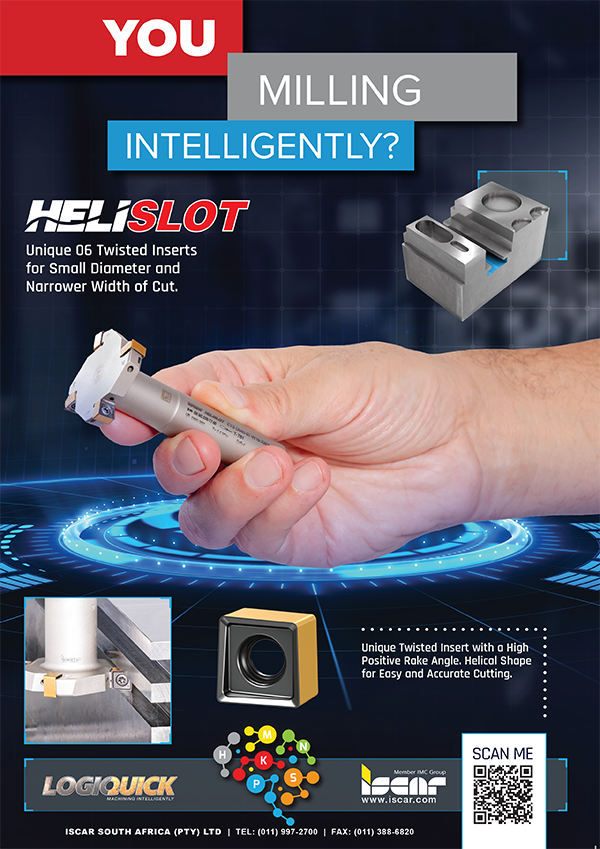
Over recent years, ISCAR’s range of side and face milling cutters has been expanded through the introduction of new products and the upgrading of existing designs. One of the examples is HELISLOT, a family of indexable slotting cutters that use cost effective, double sided square inserts with eight cutting edges – four right-hand and four left-hand. In addition to the existing 09 and 13 insert sizes, the range was expanded several years ago with the smaller 06 size for machining slots and grooves as narrow as 7 mm (0.275 in.). Subsequently, the insert portfolio has been supplemented with inserts specifically designed for machining aluminium and non-ferrous metals (ISO N application group). Compatible with the existing cutters, these inserts are available in all three sizes and feature ground insert side surfaces and polished rake faces to promote chip flow and eliminate the formation of built-up edge (BUE).
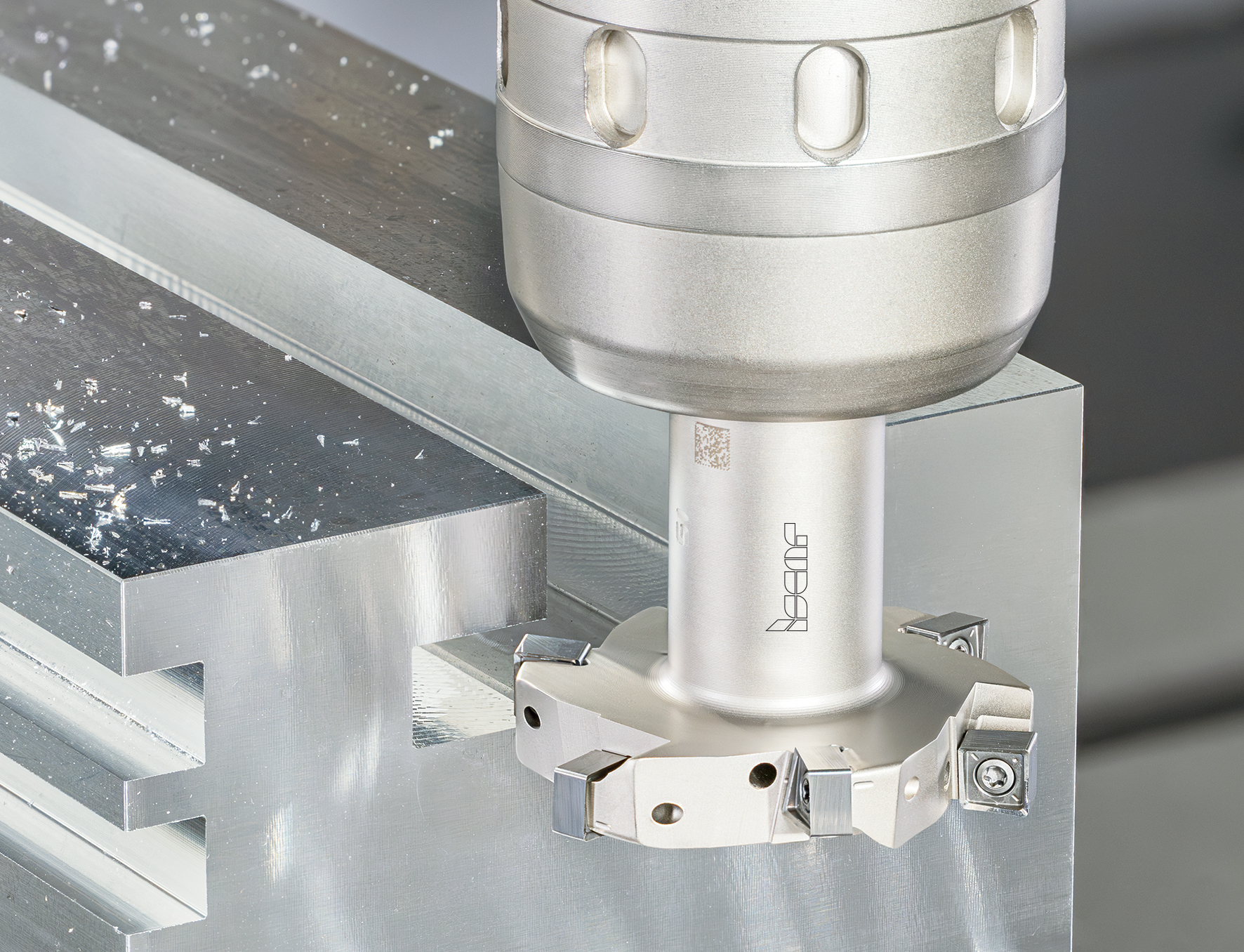
TANGSLOT is ISCAR’s well proven family of indexable slotting cutters, which employs a tangential insert concept. Cost effective TANGSLOT inserts provide four cutting edges and feature a unique rake face geometry that improves chip formation, reducing cutting forces and power consumption. Building on this development, the company has significantly expanded the range of insert corner radii to meet the requirements of slot milling applications.
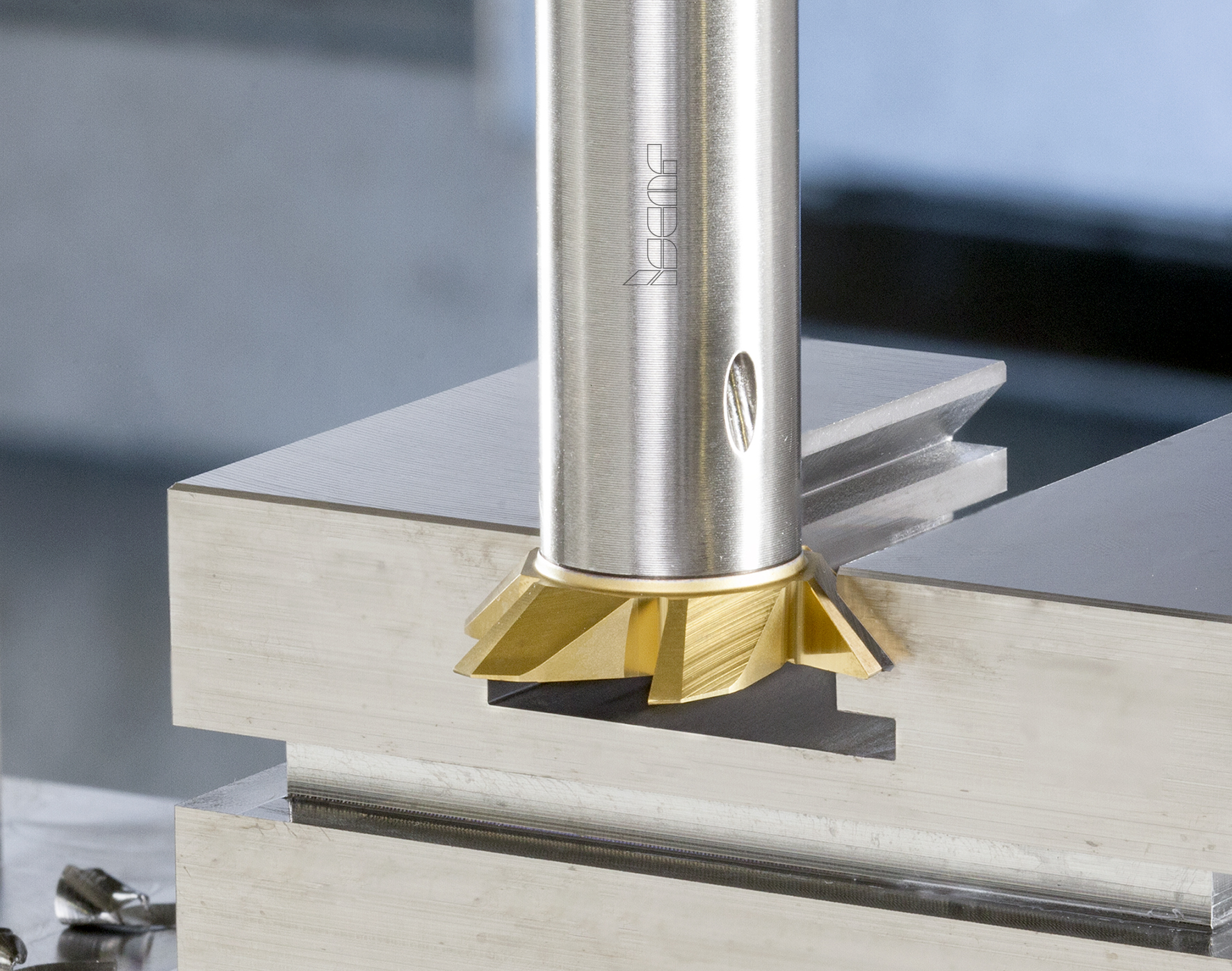
MULTI-MASTER is a versatile family of cutters with exchangeable heads and a true all-around solution for machining with relatively small diameter rotating tools has added new solid carbide dovetail milling heads in diameters ranging from 10.5 to 25 mm (0.413 to 0.984 in.). These precise multi-flute heads have six teeth, enabling higher feed rates and improved productivity. They are designed for milling dovetail slots with included angles of 90° and 120°, mainly in steel, stainless steel and cast-iron workpieces (ISO P, M and K application groups). The heads can also be used for back chamfering and deburring.
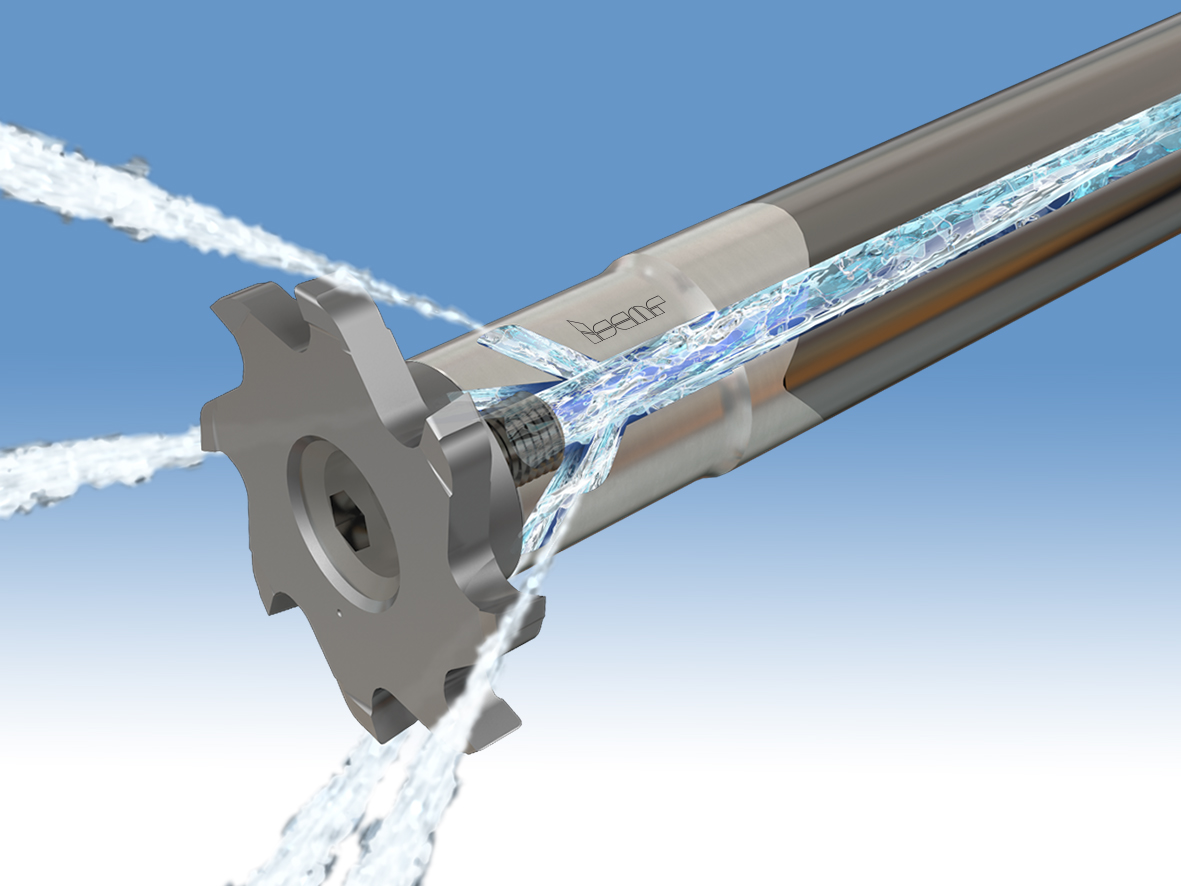
Another ISCAR system of assembled tools with exchangeable solid carbide milling heads is T-SLOT. In this system, the milling head is accurately centred by a cylindrical locating surface and secured with a screw, while torque is transmitted from the tool body to the head through a specially designed spline connection. Recently, carbide tool bodies (shanks) with an internal coolant option have been added to the range. A central coolant channel branches to each flute of the milling head, delivering coolant directly to the cutting zone. This arrangement improves cooling and chip evacuation and can significantly extend tool life.
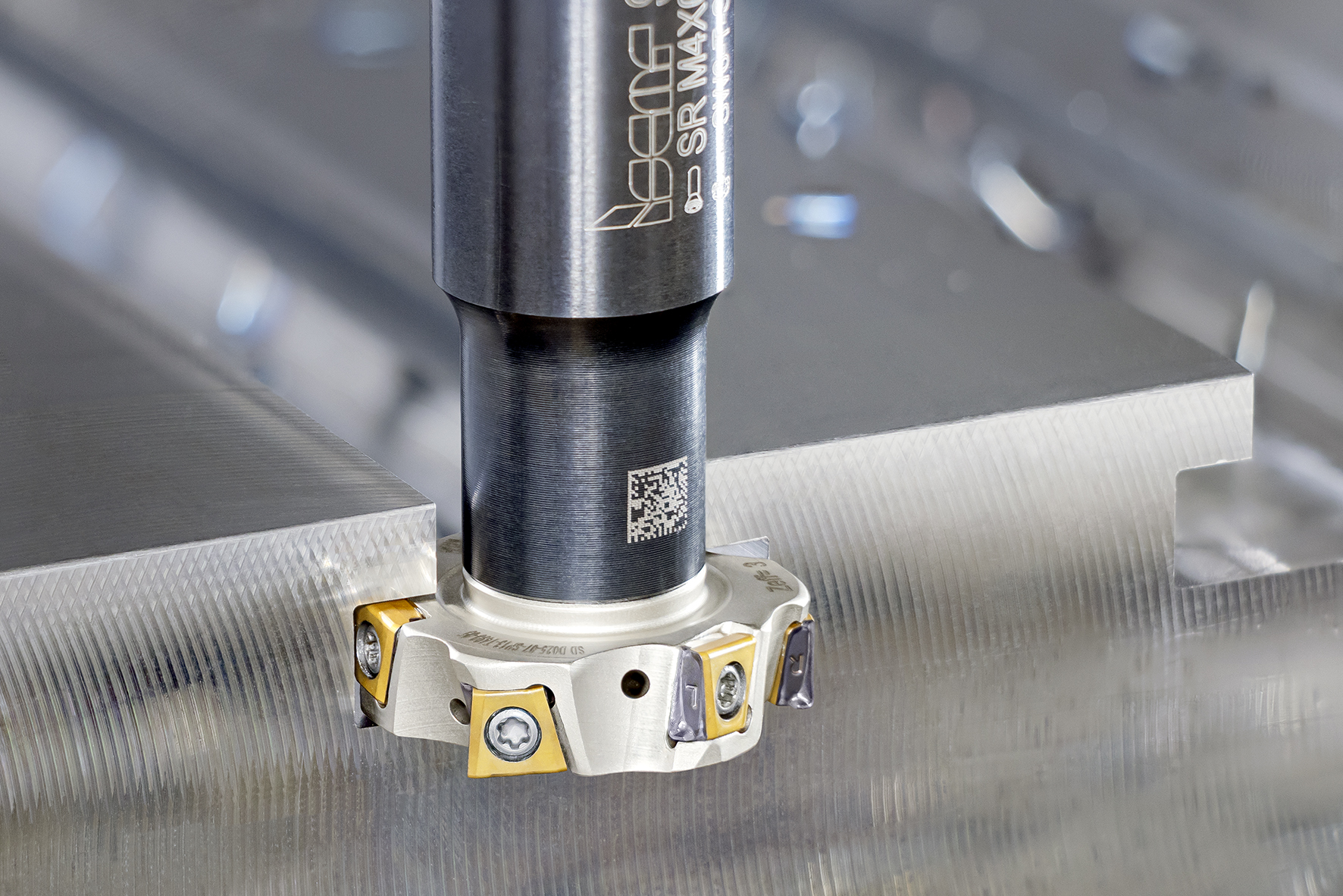
The robust spline connection concept used in T-SLOT, which enables the assembly to withstand the substantial loads and bending forces encountered in slot milling, has subsequently been extended to indexable tooling. TANG-DISC, a new family of assembled cutters, applies this principle to an indexable design. Its exchangeable heads carry compact, tangentially mounted inserts with a 5 mm (0.197 in.) inscribed circle diameter. Each insert provides four cutting edges, two right-hand and two left-hand. The new tools offer particularly effective performance in the machining of small industrial components and, through their economical miniature indexable insert approach, provide a practical means of reducing machining costs.
The continued development of slotting cutters demonstrates that productive slot and groove milling depends on more than increasing cutting speed or feed rate. Cutter rigidity, balanced cutting forces, reliable insert clamping, effective chip evacuation and precisely directed coolant supply are equally important. By combining these features with economical indexable and exchangeable-head concepts, modern side and face cutters enable manufacturers to machine slots, grooves, dovetails and perform parting operations with greater productivity, process reliability and cost efficiency.
For more information, please contact ISCAR South Africa (PTY) LTD – Tel: 011 997 2700.